

North America Calcineurin Inhibitors Market Size & Forecast:
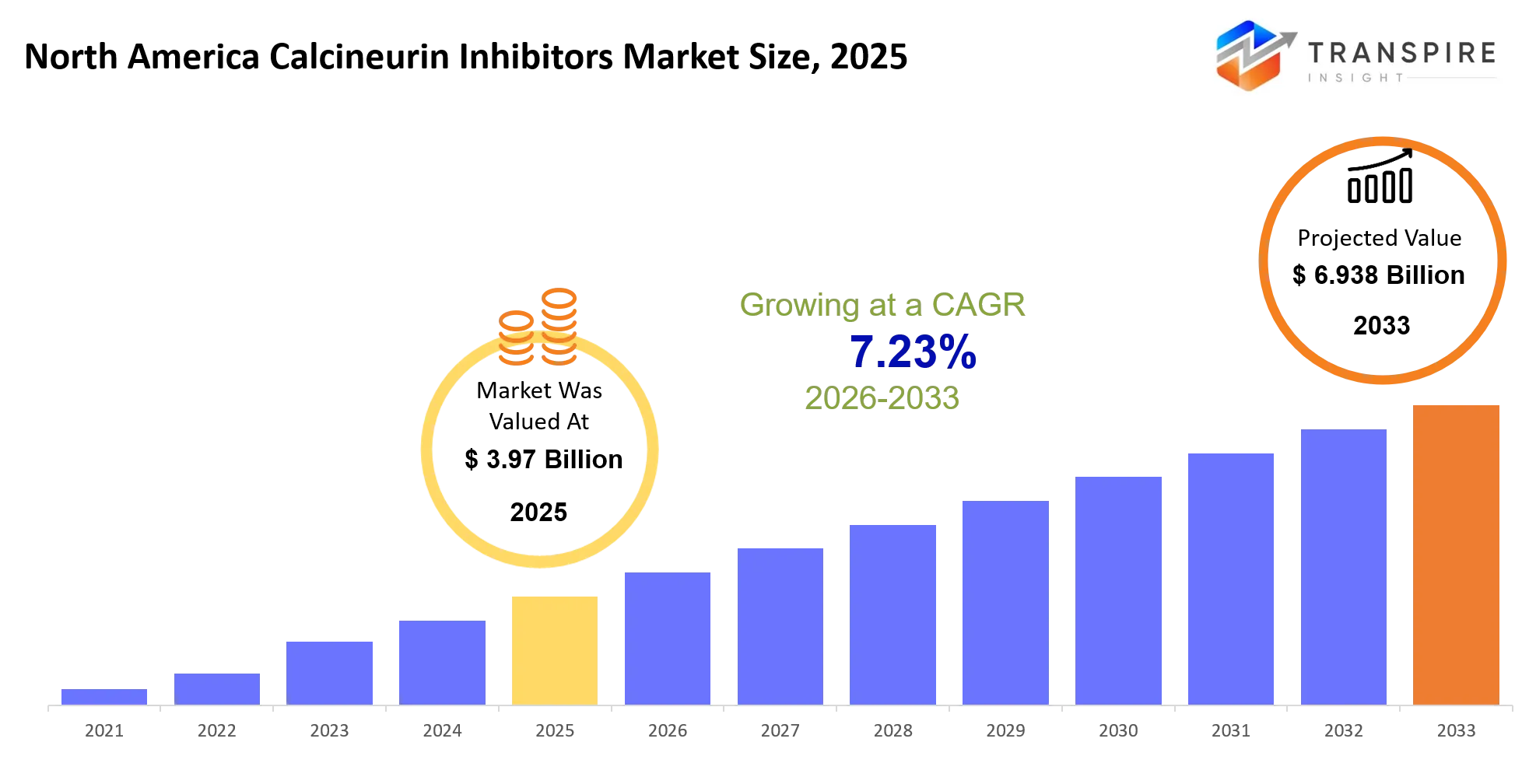
- North America Calcineurin Inhibitors Market Size 2025: USD 3.97 Billion
- North America Calcineurin Inhibitors Market Size 2033: USD 6.938 Billion
- North America Calcineurin Inhibitors Market CAGR: 7.23%
- North America Calcineurin Inhibitors Market Segments: By Drug Type (Tacrolimus, Cyclosporine, Pimecrolimus, Voclosporin, Others), By Application (Organ Transplantation, Atopic Dermatitis, Lupus Nephritis, Autoimmune Diseases, Others), By Distribution Channel (Hospital Pharmacies, Retail Pharmacies, Online Pharmacies, Others), By End User (Hospitals, Specialty Clinics, Transplant Centers, Others).
To learn more about this report,  Download Free Sample Report
North America Calcineurin Inhibitors Market Summary:
The North America Calcineurin Inhibitors Market size is estimated at USD 3.97 Billion in 2025 and is anticipated to reach USD 6.938 Billion by 2033, growing at a CAGR of 7.23% from 2026 to 2033.Calcineurin inhibitors really play a critical part in stopping organ transplant rejection, and also in handling immune mediated disorders. Basically, they work by suppressing those overactive immune responses which can get out of hand. In real practice, these therapies let transplant centers boost long term graft survival, and at the same time help clinicians manage ongoing autoimmune conditions without having to jump to far more intensive interventions. You can see their importance across hospital networks , specialty clinics, and those long-term patient management programs throughout North America.
Over the last three to five years, the market has shifted in a more structural way, like toward individualized immunosuppression plans. This direction is supported by therapeutic drug monitoring, and also by precision medicine approaches that are more tuned in. At the same time, the COVID-19 pandemic changed transplant routines, patient monitoring, and even how healthcare resources are allocated, so adoption of digital check-ins and remote patient management models moved faster. Those changes have made treatment continuity stronger, and adherence tends to stay better. Market momentum is being pushed by rising transplant volumes , better long-term survival rates in transplant recipients, and broader use of calcineurin inhibitors when doctors deal with complicated autoimmune disease. And as patient lifespans extend after transplantation, the treatment timeline goes longer too , which creates steady revenue opportunities across the whole care continuum.
Key Market Insights
- The United States is basically leading the North America Calcineurin Inhibitors Market, with something like 78–82% share in 2025, mostly because of advanced transplant infrastructure. Like, it’s not just the market, it’s the whole system behind it.
- Canada looks like a growing secondary hub, and that momentum comes from transplant programs that keep expanding, plus better reimbursement frameworks.
- Mexico comes off as the fastest emerging region through 2030, largely driven by wider access to specialty immunosuppressive therapies and related patient pathways.
- In the U.S. , urban transplant centers really steer the overall regional market share, and also affect how quickly treatment is adopted across different patient groups.
- Tacrolimus based formulations still take the leading share, they’re roughly over 55% of the North America Calcineurin Inhibitors Market demand.
- Cyclosporine stays in the second place, and it’s carried by cost sensitive therapeutic protocols, especially in chronic cases where budgets matter.
- Extended release tacrolimus is the fastest growing segment from 2024–2030, mainly due to better adherence, and dosing convenience that feels less disruptive.
- At the same time, generic formulations are picking up fast, and they’re reshaping pricing dynamics , which in turn improves therapy accessibility.
- When you look at applications, organ transplantation dominates , holding around 65–70% share, and this is tied to kidney and liver transplant procedures in particular.
- Autoimmune disease management is the fastest growing application segment, because off label and adjunct use cases keep rising, and clinicians are using these agents in more contexts.
- Dermatology related immunosuppressive applications are also expanding steadily, especially within specialty care settings where treatment routines are more specialized.
- Another major driver is that post-transplant survival rates keep improving, so patients remain on therapy for longer periods.
- For end users, hospitals and transplant centers lead adoption, and together they contribute nearly 60% of the North America Calcineurin Inhibitors Market share.
- Specialty clinics are the fastest growing end user category, and that’s supported by decentralized immunology care models, where care delivery is more spread out.
What are the Key Drivers, Restraints, and Opportunities in the North America Calcineurin Inhibitors Market?
North America Calcineurin Inhibitors Market is kinda pushed mostly by the steady climb in organ transplantation procedures, specially kidney and liver transplants, and yeah that is aided by better surgical outcomes and more standardized immunosuppressive protocols. Also the move toward tacrolimus based regimens has sped up after clinical guideline updates that kinda lean toward lower rejection risk and better long term graft survival. This change has bumped up the prescription duration per patient directly, so you see stronger recurring revenue for the North America Calcineurin Inhibitors Market across hospital pharmacy networks and specialty transplant centers, you know how it is.
Still, there are constraints that don’t really go away quickly, like nephrotoxicity and the longer term safety worries linked with calcineurin inhibitor use. Those issues act more like a fixed structural limitation, not some temporary hiccup. The side effects mean patients still need continuous therapeutic drug monitoring plus dose fine tuning, which adds to clinical workload and also inflates overall treatment costs. In a number of situations, clinicians end up delaying initiation or switching to other immunosuppressive combinations, and that limits full market reach, even while transplant activity keeps rising, so sustained volume growth can feel capped.
At the same time there is an emerging opportunity in precision immunosuppression, kind of enabled by pharmacogenomic guided dosing and longer acting formulations. For instance, in the U.S., some transplant programs are integrating genetic CYP3A5 testing to tune tacrolimus dosing more tightly, lowering toxicity risk while also supporting adherence outcomes. Meanwhile investment in once daily extended release tacrolimus products is growing in academic transplant centers. That combination opens a path for better patient compliance and, more importantly, it could unlock the next growth phase for the North America Calcineurin Inhibitors Market.
What Has the Impact of Artificial Intelligence Been on the North America Calcineurin Inhibitors Market?
Artificial intelligence plus advanced analytics are getting more and more blended into calcineurin inhibitor therapy management systems, sort of changing the way clinicians tune dosing and keep an eye on transplant patients across North America. At several top transplant centers, AI driven clinical support tools basically help automate therapeutic drug monitoring by continuously looking at tacrolimus and cyclosporine blood level information together with patient specific details like kidney function, and the whole co medication profile situation. So there’s less back and forth manual dose tweaking, and dosing accuracy tends to get better for post transplant follow up paths.
Meanwhile, machine learning is also showing up for predicting graft rejection risk and for improving long term immunosuppressive performance. These models sift through older transplant registry records as well as up to date electronic health records, then they try to guess where adverse immune responses might show up. The practical effect is earlier action and a lower chance of hospitalization. Some hospital networks even mention smoother medication adherence processes and less dose swing over time, and that indirectly helps graft survival prospects while also pushing down total treatment costs.
On the operations side, AI based platforms make workflows move along faster by cutting down the clinician minutes spent on repetitive dose recalculations. They also help coordination between transplant pharmacists and physicians, and that tends to produce more uniform treatment protocols. In turn post surgical patients often stabilize sooner, which improves how resources get used across specialty care units, and people feel the difference in day to day care routines.
Though, a key limitation is still there, the clinical data gets kind of fractured and uneven, like it’s not always consistently good, which then messes with how well these models learn. On top of that , the transplant registries vary a lot, and the hospital systems don’t really “talk” to each other well—there’s limited interoperability between them. So, in real world use , the model accuracy gets restricted, and that ends up slowing down large scale deployment, even if the clinical potential looks really promising.
Key Market Trends
- Tacrolimus adoption climbed to almost 60% of prescriptions by 2025, and it sort of replaced the older cyclosporine-heavy immunosuppression playbooks across many transplant centers, more or less.
- From 2020 to 2025, U.S. transplant programs pushed digital drug monitoring harder, which helped cut calcineurin dose variability by about 20% , depending on the site.
- In 2023, FDA-aligned post-transplant guidelines were updated and that speeded up the move toward extended-release formulations , and patients seemed to stick with treatment much better.
- Starting in 2022, hospital systems rolled out therapeutic drug monitoring platforms, and that reduced the amount of manual dose tweaking done by transplant pharmacists in big centers.
- Novartis and Astellas Pharma also broadened lifecycle management strategies, they released upgraded tacrolimus formulations aimed at once daily dosing convenience, by 2024.
- Then generic options from Sandoz and Teva came in, creating pricing pressure, and the branded calcineurin inhibitor market share fell steadily since 2021, not just a little.
- AI-assisted transplant monitoring tools showed up in major U.S. hospitals, boosting early rejection detection by roughly 15–18% across 2023–2025.
- After COVID, transplant recovery normalized, so procedure volumes rose again and immunosuppressant demand kept growing across North America, from 2021 onward .
- Meanwhile, pharmacogenomic testing took off in academic settings, helping CYP3A5 guided dosing decisions, and lowering toxicity-related hospital readmissions.
North America Calcineurin Inhibitors Market Segmentation
By Drug Type
The By Drug Type segment in the North America Calcineurin Inhibitors Market is more or less led by Tacrolimus, with Cyclosporine coming next. After that, there are growing contributions from Pimecrolimus, Voclosporin, and other smaller-scope immunosuppressants. Tacrolimus really stays on top because there’s a strong clinical preference within kidney and liver transplantation protocols, and also because its efficacy for stopping rejection is often seen as stronger, so prescribing habits have edged away from older molecules since 2020. Cyclosporine keeps a pretty steady footing in cost-sensitive treatment regimens, especially for long term maintenance therapy , where clinicians like the balance it offers.
Meanwhile newer options like Voclosporin are getting more attention in lupus nephritis management, helped along by regulatory approvals and pretty targeted real world use cases. Overall the segment is moving toward extended-release formats and precision-formulated options, which helps adherence a bit more and lowers toxicity risks. Manufacturers are also leaning into lifecycle extensions and generic penetration tactics, and that sort of points to a gradual shift toward value based pricing plus more differentiated formulations across transplant care and autoimmune care pathways.
By Application
By Application segment in the North America Calcineurin Inhibitors Market kind of hangs on organ transplantation, especially kidney, liver and heart procedures. This area, collectively holds the dominant share, largely because immunosuppressive needs stay in place for quite a while. Then there are autoimmune diseases and atopic dermatitis, which sit as secondary but still rising uses. They grow not only because of broader off label adoption, but also because clinicians are now more willing to accept calcineurin inhibitors for reasons beyond transplantation, over time.
Lupus nephritis has also surfaced as a higher value growth zone after newer approvals of targeted therapies such as Voclosporin. That shifted the treatment boundaries since 2021, and it seems to keep pushing momentum. Organ transplantation remains the steady engine for demand, mainly through long term therapy cycles and transplant survival rates that keep climbing. Still, autoimmune applications appear to be growing faster, partly due to earlier diagnosis and newer biologic combination approaches. Going forward, development efforts will likely zoom in on expanding non transplant indications. That should open up diversification options for manufacturers while also easing the heavy reliance on transplant centric revenue streams.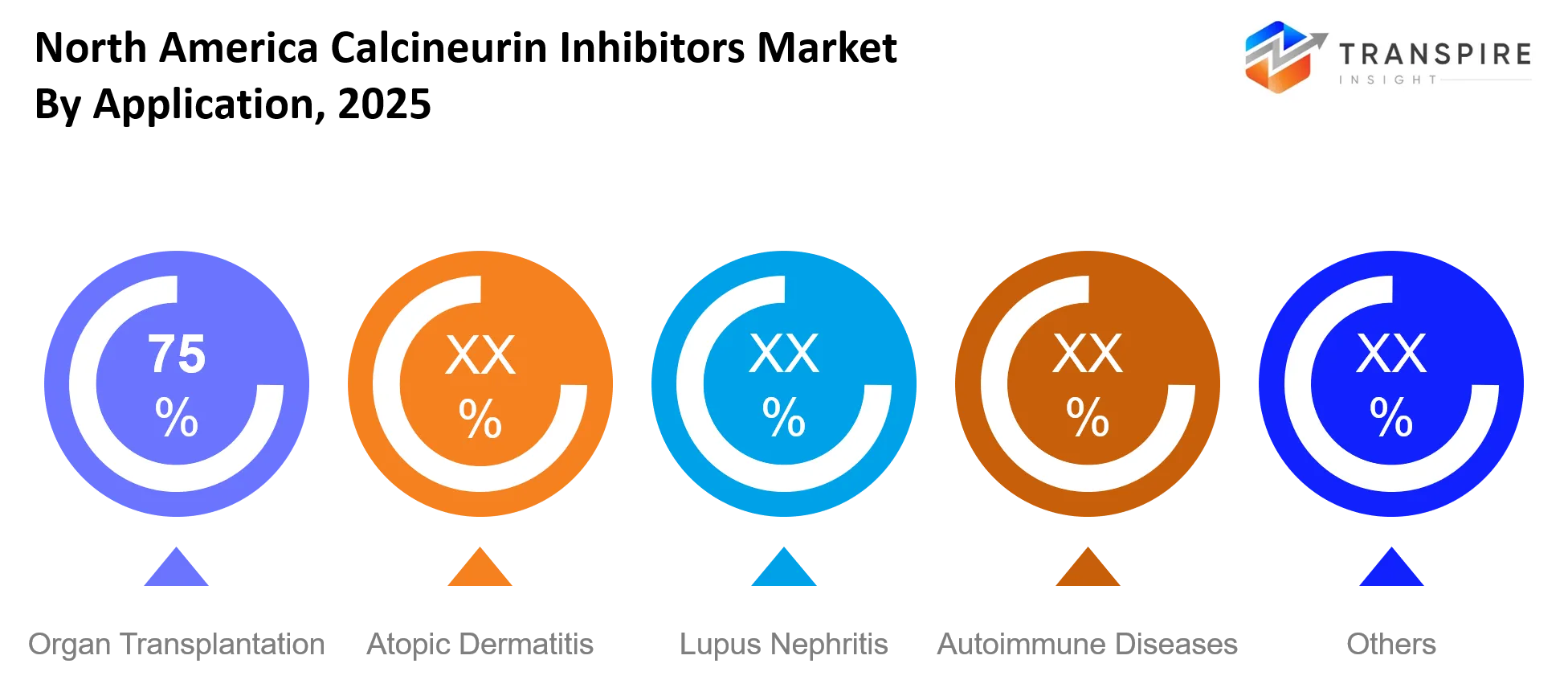
By Distribution Channel
To learn more about this report, Download Free Sample Report
By Distribution Channel segment in the North America Calcineurin Inhibitors Market is more or less led by hospital pharmacies, which handle post-transplant immunosuppressive schedules and keep up very strict therapeutic drug monitoring, like, no shortcuts. Specialty hospital pharmacies inside transplant centers, manage most of the higher-value prescriptions because close clinical supervision matters a lot, plus dose adjustments that happen in real time. Retail pharmacies stay kind of secondary here , mainly helping with maintenance therapy after the patient is stabilized.
Online pharmacies have grown gradually since 2020, largely because e- prescriptions are getting better and there is more demand for home delivery of long-term medicines. Still, rules around immunosuppressants keep the digital channel from going fully mainstream. At the same time the segment is moving toward connected pharmacy networks that tie in with hospital EHR systems, so continuity of care improves, a bit smoother. Looking ahead, growth will hinge on better digital prescription infrastructure and centralized procurement models, these both support compliance tracking and can lower medication mishaps.
By End User
By End User segment in the North America Calcineurin Inhibitors Market is mostly driven by hospitals and transplant centers, they contribute most of the demand because handling post-operative immunosuppression is complicated, and really needs careful follow up. Transplant centers take the biggest specialized slice, largely due to clustered surgical volumes and strong immunological surveillance know-how. Specialty clinics are growing fast, especially for autoimmune disease programs and extended follow up support, which shows a move toward more decentralized treatment styles since 2022.
Other end users, like ambulatory care facilities, still represent a smaller share but it is rising, since outpatient immunosuppressive management is becoming more well organized. Overall, the segment is shifting into distributed care pathways, where hospitals kick off the therapy then specialty clinics do the continued maintenance. This kind of handoff is expected to widen access to treatment while at the same time lifting demand for standardized dosing procedures and digital monitoring tools across, basically every care setting.
What are the Key Use Cases Driving the North America Calcineurin Inhibitors Market?
Organ transplant immunosuppression still kinda stays as the main core use case pushing the North America Calcineurin Inhibitors Market , especially when it comes to kidney and liver transplant programs. Hospitals tend to lean on tacrolimus and cyclosporine to stop acute rejection from happening, so long term post operative survival becomes the biggest demand driver. Because high transplant numbers keep showing up in advanced tertiary care centers, prescribing remains steady and protocol led , nearly all the time.
Outside of transplant medicine, more use cases keep showing up, like lupus nephritis care and severe atopic dermatitis management, usually handled in specialty clinics plus hospital outpatient departments. In lupus nephritis, voclosporin uptake has noticeably reinforced demand across nephrology oriented units . Meanwhile, dermatology clinics are using topical calcineurin inhibitors more often, aiming for steroid sparing therapy in ongoing skin issues, rather than just short bursts.
On top of that, emerging use cases are moving forward too, including pharmacogenomic guided immunosuppression and AI supported dose optimization inside transplant centers. Some academic hospitals are already piloting CYP3A5 based dosing models to lower toxicity risk , and digital monitoring platforms are being tested with the goal of improving adherence while helping predict early rejection in higher risk patients.
|
Report Metrics |
Details |
|
Market size value in 2025 |
USD 3.97 Billion |
|
Market size value in 2026 |
USD 4.257 Billion |
|
Revenue forecast in 2033 |
USD 6.938 Billion |
|
Growth rate |
CAGR of 7.23% from 2026 to 2033 |
|
Base year |
2025 |
|
Historical data |
2021 - 2024 |
|
Forecast period |
2026 - 2033 |
|
Report coverage |
Revenue forecast, competitive landscape, growth factors, and trends |
|
Country scope |
North America (Canada, The United States, and Mexico) |
|
Key company profiled |
Astellas Pharma, Novartis, AbbVie, Sun Pharmaceutical, Viatris, Pfizer, Glenmark Pharmaceuticals, Sanofi, Teva Pharmaceuticals, Lupin, Bristol Myers Squibb, Horizon Therapeutics, Aurinia Pharmaceuticals, Dr. Reddy’s Laboratories, Cipla |
|
Customization scope |
Free report customization (country, regional & segment scope). Avail customized purchase options to meet your exact research needs. |
|
Report Segmentation |
By Drug Type (Tacrolimus, Cyclosporine, Pimecrolimus, Voclosporin, Others), By Application (Organ Transplantation, Atopic Dermatitis, Lupus Nephritis, Autoimmune Diseases, Others), By Distribution Channel (Hospital Pharmacies, Retail Pharmacies, Online Pharmacies, Others), By End User (Hospitals, Specialty Clinics, Transplant Centers, Others) |
Which Regions are Driving the North America Calcineurin Inhibitors Market Growth?
The United States pretty much leads the North America Calcineurin Inhibitors Market, mostly because it has this huge transplant infrastructure , and the immunosuppression protocols are really structured across a lot of major medical centers. Plus the FDA keeps a strong regulatory grip, and the organ allocation systems are already well established, so therapy adoption stays pretty steady. Kidney and liver transplant procedure volumes are high too, so the demand for tacrolimus and cyclosporine therapies keeps moving without much interruption. You also get a mature web of transplant hospitals and specialized pharmacies, which helps the treatment continuity run long term, and it kinda reinforces prescription standardization in a practical way.
Canada is more like a stable secondary region. It benefits from universal healthcare coverage and transplant programs that keep expanding through provincial health systems. But compared with the United States, the growth is less about sheer volume, and more about reliable public funding, plus coordinated care delivery. The provincial transplant networks support fairly uniform adoption of immunosuppressive protocols, which cuts down on access variability , even when cases differ. Strong reimbursement policies and centralized procurement systems also help make demand patterns feel more predictable. So even if overall transplant volumes are lower than in the U.S., Canada can still stay a dependable contributor to regional revenues.
Mexico is kind of the fastest growing regional contributor, and it is likely driven by expanding healthcare spend plus a gradual modernization of the transplant infrastructure in big city hospitals. Lately, there are also improvements in specialist training programs and more public private partnerships which has broadened access to complicated transplant procedures. At the same time, medical tourism is climbing for cost efficient transplantation, and that extra pull seems to reinforce demand. So this momentum, more or less, points to fresh entry opportunities for manufacturers and distributors aiming at underserved clinical networks. From 2026 to 2033, Mexico’s growth path is expected to draw investment into supply chain expansion and localized specialty drug distribution, in a more deliberate way.
Who are the Key Players in the North America Calcineurin Inhibitors Market and How Do They Compete?
The North America Calcineurin Inhibitors Market shows a sort of moderately consolidated competitive set up, kind of ruled by just a small cluster of long-standing pharmaceutical firms that basically steer most branded immunosuppressant prescriptions. Rivalry is mostly pushed by formulation tweaks, molecule lifecycle care for what already exists, and pricing pressure as generic penetration keeps speeding up. The key players defend their turf via extended-release approaches, physician engagement initiatives, and long-term arrangements with transplant centers. Yet meanwhile, biosimilar and generic manufacturers keep nudging the pricing picture, so originators are pushed to lean harder on differentiated delivery systems and more refined safety profiles rather than trying to grow through sheer volume alone.
Novartis improves its stance through lifecycle optimization of tacrolimus therapies, emphasizing extended-release options that make once daily adherence easier for transplant patients. The key players defend their turf by using these extended-release tactics, and physician outreach campaigns that feel a little more patient-facing, plus longer term agreements with transplant centers. Still, at the same time biosimilar and generic companies keep shifting the pricing picture, so the originators end up pushed to work harder on differentiated delivery methods, and more careful safety profiles , not just trying to grow through raw volume alone.
Novartis strengthens its position via lifecycle optimization for tacrolimus therapies, with a clear push toward extended-release choices so once daily adherence becomes easier for transplant patients. The company also differentiates through continuity programs that are actually linked to transplant centers, and that kind of reinforcement helps lock in long term prescribing habits , in real world practice.The edge they get comes from scaling their supply routes and locking in formulary placements where healthcare systems are super price sensitive, and then it becomes this sort of loop where more volume means better unit economics. Their expansion depends on deeper penetration into public hospital networks and also expanding portfolios that feel biosimilar-like for immunosuppressants , which then ramps up the price rivalry across the North America Calcineurin Inhibitors Market.
Company List
- Astellas Pharma
- Novartis
- AbbVie
- Sun Pharmaceutical
- Viatris
- Pfizer
- Glenmark Pharmaceuticals
- Sanofi
- Teva Pharmaceuticals
- Lupin
- Bristol Myers Squibb
- Horizon Therapeutics
- Aurinia Pharmaceuticals
- Dr. Reddy’s Laboratories
- Cipla
Recent Development News
In April 2026, Sun Pharma to Acquire U.S. Drugmaker Organon for $11.75 Billion: Organon markets a broad portfolio of established medicines in North America, including products used in immunology and specialty care. The acquisition represents one of the largest pharmaceutical transactions involving a North American drug company in 2026 and may influence commercialization strategies across immunosuppressive therapy segments.
Source: https://www.reuters.com
In May 2026, Astellas Announced Presentation of New Clinical Data at ASCO 2026: Astellas reported the presentation of multiple clinical datasets from its development portfolio at ASCO 2026. The update underscores the company’s ongoing investment in R&D and reinforces its position as a major specialty pharmaceutical company with a strong presence in North America, including the transplant and immunology sectors linked to calcineurin inhibitor therapies.
Source: https://www.prnewswire.com
What Strategic Insights Define the Future of the North America Calcineurin Inhibitors Market?
The North America Calcineurin Inhibitors Market is shifting, structurally, toward precision-guided and formulation differentiated immunosuppression rather than that old volume led expansion logic. Growth is going to hinge more and more on how well manufacturers stitch together therapeutic drug monitoring, pharmacogenomics, and extended release drug delivery into routine post transplant care routines. And honestly this shift is being pushed by stricter clinical protocols at transplant centers, plus a growing insistence on lowering long term graft failure expenses
There is also a less obvious risk underneath. Like a slow substitution pressure, coming from newer non-calcineurin immunosuppressant classes and biologic based regimen options. It might lower the long term reliance on traditional therapies, yet without causing an immediate jolt in prescribing behavior. Eventually, that could squeeze revenue visibility for the older tacrolimus and cyclosporine portfolios
On the opportunity side, something that is starting to look very real is the integration of AI enabled transplant decision systems with real time drug monitoring platforms. This is especially visible in bigger academic hospital networks across the United States. Those systems are beginning to standardize personalized dosing at scale, which helps outcomes while also tightening protocol driven drug usage. Market players should consider digital clinical partnerships with transplant centers, and should also push pharmacogenomic compatible formulations—so they can keep a durable position in a treatment ecosystem that is becoming more and more data driven over time.
North America Calcineurin Inhibitors Market Report Segmentation
By Drug Type
- Tacrolimus
- Cyclosporine
- Pimecrolimus
- Voclosporin
- Others
By Application
- Organ Transplantation
- Atopic Dermatitis
- Lupus Nephritis
- Autoimmune Diseases
- Others
By Distribution Channel
- Hospital Pharmacies
- Retail Pharmacies
- Online Pharmacies
- Others
By End User
- Hospitals
- Specialty Clinics
- Transplant Centers
- Others
Frequently Asked Questions
Find quick answers to common questions.
The Approximate North America Calcineurin Inhibitors Market size for the Market will be USD 6.938 Billion in 2033.
The key Segments of the North America Calcineurin Inhibitors Market are By Drug Type (Tacrolimus, Cyclosporine, Pimecrolimus, Voclosporin, Others), By Application (Organ Transplantation, Atopic Dermatitis, Lupus Nephritis, Autoimmune Diseases, Others), By Distribution Channel (Hospital Pharmacies, Retail Pharmacies, Online Pharmacies, Others), By End User (Hospitals, Specialty Clinics, Transplant Centers, Others).
Major Players in the North America Calcineurin Inhibitors Market are Astellas Pharma, Novartis, AbbVie, Sun Pharmaceutical, Viatris, Pfizer, Glenmark Pharmaceuticals, Sanofi, Teva Pharmaceuticals, Lupin, Bristol Myers Squibb, Horizon Therapeutics, Aurinia Pharmaceuticals, Dr. Reddy’s Laboratories, Cipla.
The Current Market size of the North America Calcineurin Inhibitors Market is USD 3.97 Billion in 2025.
The North America Calcineurin Inhibitors Market CAGR is 7.23%.
- Astellas Pharma
- Novartis
- AbbVie
- Sun Pharmaceutical
- Viatris
- Pfizer
- Glenmark Pharmaceuticals
- Sanofi
- Teva Pharmaceuticals
- Lupin
- Bristol Myers Squibb
- Horizon Therapeutics
- Aurinia Pharmaceuticals
- Dr. Reddy’s Laboratories
- Cipla
About the Authors

Pankaj Ghogare Patil
I am Pankaj Ghogare Patil, a Senior Research Analyst at Transpire Insight, specializing in the Pharmaceutical, Chemicals & Materials, Healthcare IT, and Biotechnology industry. My expertise lies in conducting comprehensive market research, analyzing industry trends, evaluating competitive landscapes, and translating complex data into actionable insights. At Transpire Insight, I closely follow emerging technologies, regulatory developments, and market innovations to create accurate, well-researched, and informative content that helps businesses and professionals make informed decisions. I am committed to producing credible, evidence-based articles that reflect industry best practices while making technical topics accessible and valuable for a broad audience.

Chakradhar Khansole
Chakradhar serves as the Research Director at Transpire Insight, bringing over 8 years of experience in technology, innovation, and strategic market intelligence. He specializes in transforming complex market data into actionable business insights that enable organizations to make informed, growth-oriented decisions. Recognized for his strategic vision and analytical expertise, Chakradhar leads high-impact research initiatives, delivering comprehensive market assessments, competitive intelligence, and forward-looking industry analysis.
Recently Published Reports
-
Jul 2026
Alopecia Treatment Market
Alopecia Treatment Market Size, Share & Analysis Report By Disease Type (Alopecia Areata, Cicatricial Alopecia, Traction Alopecia, Alopecia Totalis, Androgenetic Alopecia, Alopecia Universalis, and Other Disease Types), By Treatment Type (Topical Treatments, Oral Medications, Injectable Therapies, and Hair Transplantation), By Gender (Male, and Female), By Distribution Channel (Hospitals and Clinics, Retail Pharmacies, and Online Retailers), and Geography (North America, Europe, Asia-Pacific, Middle East and Africa, South and Central America), 2021 - 2031
-
Jul 2026
Medical Ultrasound Probe Market
Medical Ultrasound Probe Market Size, Share & Analysis Report By Type (Linear Type, Convex Type, Endocavitary Probe, Phased Array/Cardiac Probe, Transesophageal (TEE) Probe, and Others), By Application (Ophthalmology, Cardiology, Musculoskeletal, Oncology, Obstetrics & Gynecology, General Imaging, and Others), By End User (Hospitals & Clinics, Diagnostic Centers, Ambulatory Surgical Centers, and Others), and Geography (North America, Europe, Asia-Pacific, Middle East and Africa, South and Central America), 2021 – 2031
-
May 2026
Biosimilars Market
Biosimilars Market By Product Type (Monoclonal Antibodies, Recombinant Hormones, Erythropoietin, G-CSF, Others), By Indication (Oncology, Autoimmune Diseases, Blood Disorders, Diabetes, Others), By Manufacturing Type (In-House Manufacturing, Contract Manufacturing), By Distribution Channel (Hospital Pharmacies, Retail Pharmacies, Online Pharmacies), By Industry Analysis, Size, Share, Growth, Trends, and Forecasts 2021-2033
-
Apr 2026
Gastrointestinal Endoscopy Market
Gastrointestinal Endoscopy Market By Type (Rigid Gastrointestinal Endoscope, Flexible Gastrointestinal Endoscopes, Disposable Gastrointestinal Endoscope), By Procedure Type (Colonoscopy, Gastroscopy, Duodenoscopy, Enteroscopy, Flexible Sigmoidoscopy, Others), By Application (Diagnosis, Treatment), By End-Users (Hospitals, Ambulatory Surgical Centers, Specialty Clinics, Laboratories, Others), By Industry Analysis, Size, Share, Growth, Trends, and Forecasts 2021-2033