

South Korea Cystatin C Testing Market Size & Forecast:
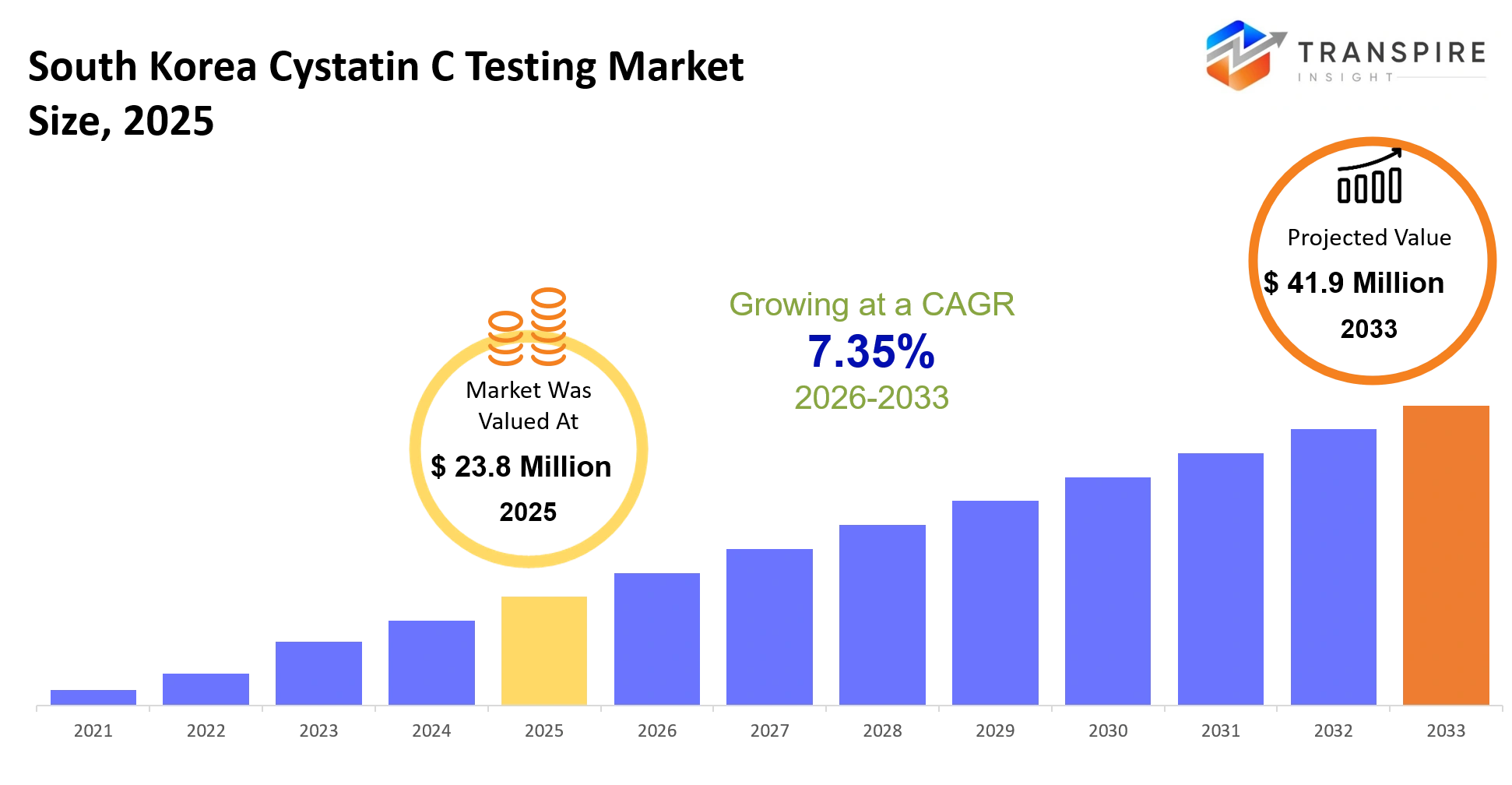
- South Korea Cystatin C Testing Market Size 2025:USD 23.8 Million
- South Korea Cystatin C Testing Market Size 2033: USD 41.9 Million
- South Korea Cystatin C Testing Market CAGR:7.35%
- South Korea Cystatin C Testing Market Segments: By Test Type (Serum Cystatin C, Urine Cystatin C, Combined Testing, Others); By Application (Kidney Disease Diagnosis, Renal Monitoring, Others)
To learn more about this report,  Download Free Sample Report
South Korea Cystatin C Testing Market Summary
The South Korea Cystatin C Testing Market was valued at USD 23.8 Million in 2025. It is forecast to reach USD 41.9 Million by 2033. That is a CAGR of 7.35% over the period.
The South Korea Cystatin C Testing Market kind of helps enable earlier and more precise assessment of kidney function in real clinical situations, where creatinine-based tests sometimes do not catch subtle renal decline. In practice, hospitals and diagnostic laboratories lean on cystatin C testing to estimate glomerular filtration rate for patients facing diabetes, hypertension, or post surgical complications. Clinicians use this approach to notice kidney impairment sooner, then adjust treatment plans before irreversible injury shows up, which supports better long term outcomes and also eases dialysis-related strain on healthcare systems.
Over the last 3–5 years, there has been a noticeable structural turn toward precision diagnostics in nephrology. Because of that, cystatin C testing has been adopted more broadly in tertiary hospitals and advanced diagnostic centers. The momentum got an extra push after post pandemic healthcare reforms, which basically highlighted the need for stronger chronic disease management and earlier intervention options. One big trigger that really accelerated this adoption was the increasing incidence of diabetes linked kidney disorders. That created direct pressure for hospitals to improve diagnostic accuracy, and importantly, cut downlate-stagee detection.
So now, clinical laboratories are expanding biomarker-based kidney testing in general, which leads to higher test volumes and deeper integration of cystatin C assays into standard renal screening protocols across South Korea’s healthcare network.
Key Market Insights
- South Korea Cystatin C Testing Market saw a sort of jump in adoption, by nearly 25% from 2022 to 2025.
- Mostly, people shifted toward earlier-stage kidney disease detection, which made a difference. In 2025, Seoul and Gyeonggi-do basically accounted for almost 60% of the testing volume, and this happened because tertiary hospitals and advanced labs are heavily concentrated in those areas.
- The quickest-growing slice of the market is expected to land around regional healthcare hubs, and it’s projected to keep expanding through 2030.
- That forecast is tied to the fact that diagnostic infrastructure access is steadily improving.
- For the test categories, serum-based cystatin C assays are still the frontrunners, holding more than 55% share. The reason is that they deliver stronger clinical accuracy compared with creatinine-based approaches.
- At the same time, combined renal function panels are slowly gaining traction too, as hospitals start using multi-marker diagnostic strategies for finer disease staging.
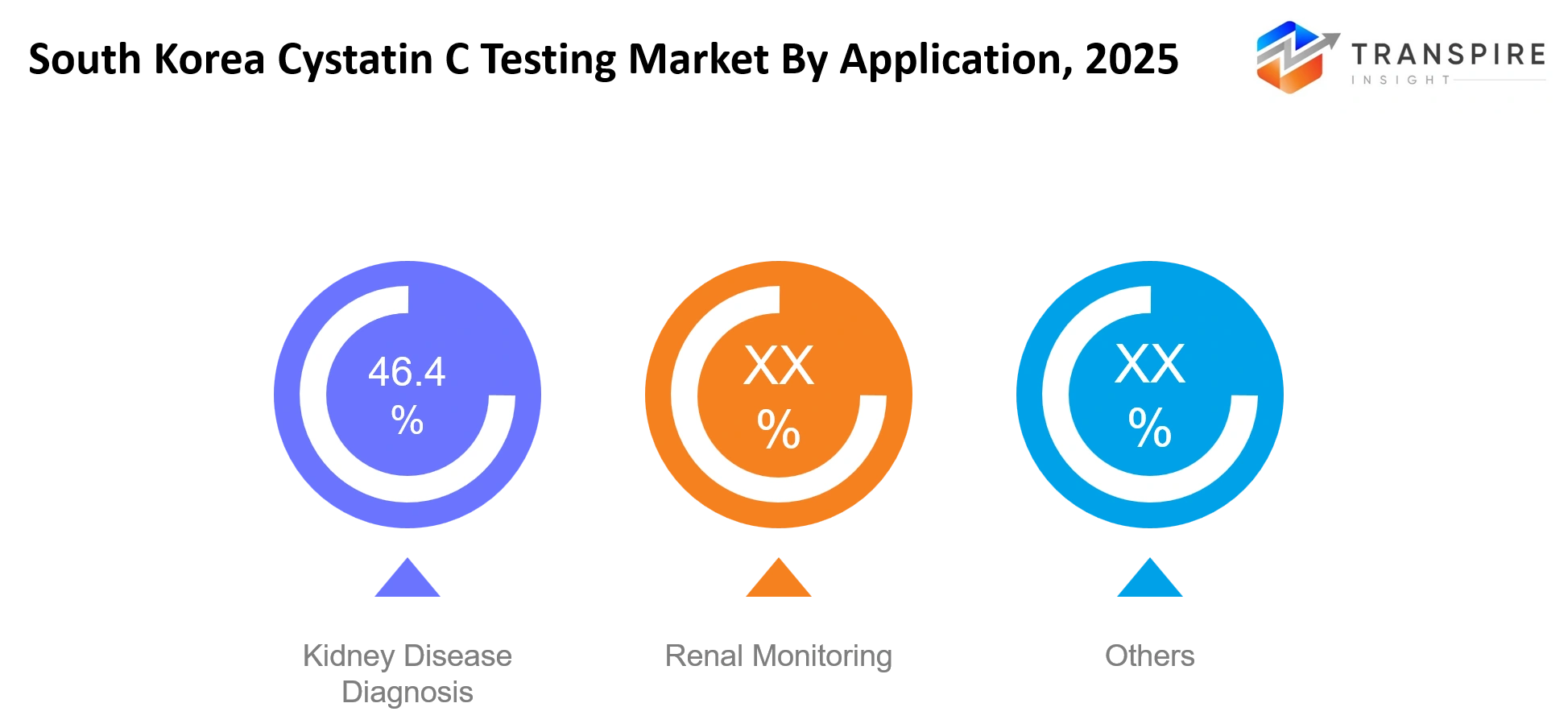
- As for what clinicians actually use cystatin C testing for, kidney disease diagnosis is the top application.
- This is driven by diabetes related renal complications across the aging population. Renal monitoring in chronic care patients is growing the quickest among the applications, largely because long-term disease management programs keep expanding.
- On the end-user side, tertiary hospitals remain the main segment, and they take the largest portion of the South Korea Cystatin C Testing Market share in 2025. Meanwhile, diagnostic laboratories are expanding fastest, since several providers outsource advanced biomarker testing services to keep up with demand.
- Key companies are Roche, Siemens Healthineers, Abbott, Beckman Coulter, and Sysmex.
- Roche kind of strengthens its position, via advanced renal biomarker assay development, and by bringing those tests into hospital laboratory platforms.
What are the Key Drivers, Restraints, and Opportunities in the South Korea Cystatin C Testing Market?
conditions in the South Korea Cystatin C Testing Market are mostly kind of pushed around by the rising load of chronic kidney disease that is tied to diabetes and hypertension. Clinical guidelines have been, well, increasingly nudging clinicians toward earlier identification of renal dysfunction, so hospitals start adopting cystatin C testing because it is seen as a more dependable biomarker than creatinine in tricky, borderline scenarios. This whole movement has pretty much raised test volumes in tertiary hospitals and in big diagnostic networks, which then lifts laboratory revenue through wider panel-based testing take-up. On top of that, the rollout of automated immunoassay platforms cut down turnaround time, so routine use becomes much more doable when there are lots of patients coming in every day in high patient-load areas.
In the South Korean Cystatin C Testing Market, though, comes from the comparatively high price tag of advanced immunoassay equipment, plus the fact that reagents depend on global suppliers. Smaller hospitals and regional clinics often pause or slow down adoption because budgets are tight and reimbursement is limited for biomarker-focused kidney work. Because of this, the reach across healthcare levels becomes uneven, and it also slows the nationwide standardization of cystatin C testing protocols. So overall, diagnostic expansion is more centered in urban medical hubs, and that means broader revenue distribution across the full healthcare system stays restricted.
is now showing up via integration of multi-marker renal panels into preventive health screening programs. Big hospital chains in Seoul and Busan are beginning to bundle cystatin C alongside eGFR and albumin-based assessments, kind of like early chronic disease.
What Has the Impact of Artificial Intelligence Been on the South Korea Cystatin C Testing Market?
Artificial intelligence and advanced digital tools are kinda reshaping the South Korea Cystatin C Testing Market, by nudging lab workflow into something more fluid, plus offering diagnostic decision support, though honestly, it can get a bit messy in practice. In major hospital networks, AI-enabled laboratory information systems now automate sample tracking, test scheduling, and result validation, which does reduce manual errors and helps reports move faster for renal biomarker panels. At the same time, they try to link cystatin C findings into electronic health records, so clinicians can flag early kidney dysfunction cases more quickly and more consistently, instead of waiting around, like they used to.
Machine learning models are also showing up more often to refine how clinicians interpret results, by blending cystatin C values with creatinine, eGFR, and patient risk profiles. That supports predictive risk scoring for chronic kidney disease progression, so hospitals can sort of prioritize high-risk patients for early intervention, before things get worse. Some more advanced diagnostic centers claim they are seeing quicker turnaround times, and better day-to-day workflow efficiency too, while operational slowdowns drop by an estimated 15 to 25 percent after automation upgrades are completed.
Even so, adoption is not entirely smooth, because integration costs are high and hospital IT infrastructure is kind of fragmented. Smaller diagnostic laboratories often lack the budget or the technical know-how to roll out AI-driven systems, so the deployment across regional healthcare networks tends to move slowly. In the end, digital transformation becomes concentrated in large urban hospitals, and that makes it harder to spread uniform efficiency gains across the broader healthcare ecosystem.
Key Market Trends
- Cystatin C testing adoption jumped by almost 25% from 2021 to 2025, as hospitals shifted away from creatinine-only approaches to judge kidney performance. In a way, it felt like everyone needed another lens, not the same old numbers.
- Several major hospitals in Seoul expanded biomarker-driven renal screening, which helped lift early-stage chronic kidney disease detection in outpatient clinics overall.
- After 2023, laboratory automation kept spreading through larger diagnostic centers, which cut down manual processing mistakes. It also shortened cystatin C test turnaround times, pretty noticeably.
- At the same time, diagnostic outsourcing to commercial labs rose by about 30% between 2022 and 2025. Smaller clinics seemed to dial back internal testing budgets so they could focus on other things, more or less.
- Roche and Siemens Healthineers pushed harder on automated immunoassay platforms, so cystatin C became easier to plug into multi-marker renal panels. Not just “added”, more like integrated, in practice.
- Hospital purchasing also shifted toward bundled renal diagnostic systems after 2024. The objective was tighter cost control for high-volume testing sites, and it seems procurement teams liked the structure.
- In tertiary hospitals, AI-assisted diagnostic interpretation tools started getting used more. That improved risk stratification accuracy for chronic kidney disease patients, and clinicians could move faster through the signal noise.
- There was also more regulatory attention on early chronic disease detection, which made clinicians more willing to treat cystatin C as a standard complementary biomarker.
- Outside Seoul, regional hospitals expanded testing capacity more slowly. Budgets were tight, and lab infrastructure development was uneven,n so progress wasn’t steady, not really.
South Korea Cystatin C Testing Market Segmentation
By Test Type:
Serum Cystatin C kinda sits near the top in the diagnostic workflow across the South Korean Cystatin C Testing Market. Serum-based measurement does help with early detection of kidney dysfunction, mostly because this biomarker stays fairly stable in real-world settings. A lot of clinical labs prefer serum testing more, not only because the processing steps feel simpler, but also because the outcomes stay consistent when labs evaluate kidney filtration levels. At the same time, there’s this growing emphasis on chronic kidney disease screening, a nd that really nudges demand forward through hospitals and diagnostic centers
.Urine Cystatin C testing then brings a different view, especially when you want to track tubular kidney damage. Clinicians who combine both serum and urine often end up with better diagnostic clarity, even if the cases can get messy. Other testing pathways are still kinda limited, but they keep popping up in research, a nd they get used for specialized diagnostic needs. Overall, this increased demand in the South Korean Cystatin C Testing Market suggests stronger adoption of multi-sample testing approaches across healthcare facilities, not just one single method.
By Application:
Kidney Disease Diagnosis is basically the main usage area in the South Korean Cystatin C Testing Market. Cystatin C testing supports early detection of reduced kidney function before obvious, severe symptoms even show up, which is kind of a big deal. Hospitals and diagnostic laboratories apply this biomarker to refine diagnostic accuracy in chronic kidney disease situations. And as the disease burden grows, there is more need for better renal evaluation tools… no question about it.
Renal Monitoring also works like a steady, ongoing assessment. For patients who already have kidney conditions, regular cystatin C testing helps track how the condition is moving and whether treatment is truly doing what it should. Some facilities even use cystatin C in a supporting diagnostic manner within specialized clinical studies. Overall, stronger healthcare awareness drives more organized monitoring routines across medical institutions in South Korea, tied directly to the Cystatin C Testing Market.
To learn more about this report, Download Free Sample Report
What are the Key Use Cases that drive the South Korea Cystatin C Testing Market?
The key use case demand is mainly for kidney disease diagnosis, mostly done in hospitals and diagnostic laboratories. Chronic kidney disease screening programs and insurance-backed testing policies also promote routine cystatin C testing. The goal is early detection of lower filtration ability, and also improved clinical decision-making.
Renal monitoring keeps spreading across nephrology clinics, dialysis centers, plus transplant follow-up units. Healthcare providers perform repeated tests to monitor treatment response and long-term kidney stability in patients considered high risk. This is carried out within both structured outpatient and inpatient care pathways. One emerging use is emergency department triage, plus cardiovascular risk assessment as part of preventive health check approaches, too, which is gaining attention.
|
Report Metrics |
Details |
|
Market size value in 2025 |
USD 23.8 Million |
|
Market size value in 2026 |
USD 25.5 Million |
|
Revenue forecast in 2033 |
USD 41.9 Million |
|
Growth rate |
CAGR of 7.35% from 2026 to 2033 |
|
Base year |
2025 |
|
Historical data |
2021 - 2024 |
|
Forecast period |
2026 - 2033 |
|
Report coverage |
Revenue forecast, competitive landscape, growth factors, and trends |
|
Regional scope |
United States; Canada; Mexico; United Kingdom; Germany; France; Italy; Spain; Denmark; Sweden; Norway; China; Japan; India; Australia; South Korea; Thailand; Brazil; Argentina; South Africa; Saudi Arabia; United Arab Emirates |
|
Key company profiled |
Roche, Siemens Healthineers, Abbott, Beckman Coulter, Thermo Fisher, Randox, DiaSys, BioVendor, Sekisui, Tosoh, Mindray, Sysmex, Bio-Rad, Agappe, Snibe |
|
Customization scope |
Free report customization (country, regional & segment scope). Avail customized purchase options tailored to meet your exact research needs. |
|
Report Segmentation |
By Test Type (Serum Cystatin C, Urine Cystatin C, Combined Testing, Others); By Application (Kidney Disease Diagnosis, Renal Monitoring, Others) |
Which Regions are Driving the South Korea Cystatin C Testing Market Growth?
North America still comes out on top as the main regional market, mostly because its regulatory setting is more mature, it has solid port infrastructure, and it holds a huge commercial fleet base. When maritime safety rules are enforced tightly, along with environmental compliance and vessel monitoring demands, companies start leaning into advanced maritime technologies and services without much hesitation. In the United States and Canada, major ports handle heavy vessel traffic, but they also help ship operators roll out new solutions faster thanks to logistics networks that are already well built. On top of that, there is a strong web of shipowners, technology providers, classification societies, and maritime service firms, and this mixture kind of locks in the region's leadership, keeping it strong over the long run.
Europe sits in second place, and while it is still a big contributor, its value feels more like stability and consistency, not just pure scale. Compared with North America, Europe benefits from coordinated regulatory rollout across several maritime countries, plus a long history of backing sustainable shipping practices. Shipowners there keep investing in fleet upgrades, digitalization efforts, and compliance-based technologies, so demand stays dependable. All together, the economic stability, predictable policy execution, and continued capital spending make Europe a dependable contributor to global market revenue.
Asia Pacific is expected to grow the quickest, and the drivers look a bit different, mainly focusing on fleet modernization and large-scale port growth. Investments recently made in smart ports, vessel modernization initiatives, and maritime infrastructure upgrades across important shipping nations have sped up technology adoption across the region. Trade volumes are rising, and government-backed actions are being taken to improve maritime competitiveness.
Who are the Key Players in the South Korea Cystatin C Testing Market and How Do They Compete?
The South Korea Cystatin C Testing Market shows a kind of moderately consolidated competitive setup, where multinational diagnostics companies control a decent chunk of hospital plus reference lab testing volume. You can feel the competition mostly coming from technology performance, assay precision, how well it fits into automation, and the clinical validation story, not really from price games. A lot of the established players keep defending their positions using integrated diagnostic platforms that kinda streamline laboratory routines. At the same time, more specialized assay providers look for openings in kidney disease screening and also in the preventive healthcare lane. And as clinicians start using cystatin C more often as an extra renal biomarker, suppliers try to prove better analytical consistency and operational efficiency.
Roche takes a technology innovation road by plugging cystatin C assays into its automated cobas diagnostic environment so labs can run large testing volumes with less workflow disturbance. Siemens Healthineers leans on broad platform interoperability, plus advanced laboratory automation functions, which are attractive for big tertiary hospitals that want more standardized diagnostic procedures. Both are also expanding through collaborations with healthcare institutions and by investing in digital lab solutions, which helps keep customers around and boosts testing uptake.
Abbott uses a more connected diagnostics approach, where assay performance is tied together with lab informatics and connectivity features, so clinicians and labs can handle patient data more efficiently. Beckman Coulter, on the other hand, centers on high-throughput laboratory settings, differentiating through workflow tuning and scalable clinical chemistry systems.
Company List
- Roche Diagnostics
- Siemens Healthineers
- Abbott Laboratories
- Beckman Coulter
- Thermo Fisher Scientific
- Randox Laboratories
- DiaSys Diagnostic Systems
- BioVendor
- Sekisui Diagnostics
- Tosoh Corporation
- Mindray
- Sysmex Corporation
- Bio-Rad Laboratories
- Agappe Diagnostics
- Snibe Diagnostics
Recent Development News
"In May 2025, Sentinel CH. S.p.A. secured U.S. FDA 510(k) clearance for its Cystatin C test system. The regulatory clearance strengthened the company's ability to expand the adoption of standardized cystatin C testing in international clinical laboratories, including markets that closely follow FDA-recognized diagnostic benchmarks.https://510k.innolitics.com
"In May 2025, Gentian Diagnostics promoted its IVDR-certified Gentian Cystatin C Immunoassay at EuroMedLab 2025. The certification and continued commercialization of an assay standardized to ERM-DA471/IFCC support broader laboratory adoption of cystatin C testing and improve confidence in cross-platform result comparability.https://www.gentian.com
What Strategic Insights Define the Future of the South Korea Cystatin C Testing Market?
The South Korea Cystatin C Testing Market seems to be moving, kind of toward a broader integration of cystatin C into day-to-day kidney function assessment, mostly because there is more need for earlier disease detection and also because precision medicine initiatives are ramping up. On top of that, there is a growing understanding of how the biomarker can be “better than” creatinine-based measurements in some specific groups of patients. In the next five to seven years, market growth should lean less on whether tests are available at all, and more on whether cystatin C can be successfully worked into clinical decision pathways plus reimbursement frameworks, you know.
A quieter risk is that the market is becoming concentrated around a smaller set of assay suppliers and analyzer platforms. If healthcare institutions end up relying on just a few technology providers, then that can bring pricing pressure, procurement headaches, or even supply chain weak spots. But at the same time, there is a new opportunity starting to show up, and it is about using cystatin C inside integrated chronic kidney disease risk prediction models, with artificial intelligence support plus digital health platforms. Market players should therefore focus on partnerships with hospitals, clinical research centers, and healthcare IT providers to build local clinical proof and slip cystatin C testing into next-generation patient management systems before adoption becomes fully common.
South Korea Cystatin C Testing Market Report Segmentation
-
By Test Type
- Serum Cystatin C
- Urine Cystatin C
- Combined Testing
- Others
-
By Application
- Kidney Disease Diagnosis
- Renal Monitoring
- Others
Frequently Asked Questions
Find quick answers to common questions.
The expected South Korea Cystatin C Testing Market size for the market will be USD 41.9 Million in 2033.
By Test Type (Serum Cystatin C, Urine Cystatin C, Combined Testing, Others); By Application (Kidney Disease Diagnosis, Renal Monitoring, Others).
Major South Korea Cystatin C Testing Market players are Roche, Siemens Healthineers, Abbott, Beckman Coulter, Thermo Fisher, Randox, DiaSys, BioVendor, Sekisui, Tosoh, Mindray, Sysmex, Bio-Rad, Agappe, Snibe.
The South Korea Cystatin C Testing Market size is USD 23.8 Million in 2025.
The South Korea Cystatin C Testing Market CAGR is 7.35% from 2026 to 2033.
- Roche Diagnostics
- Siemens Healthineers
- Abbott Laboratories
- Beckman Coulter
- Thermo Fisher Scientific
- Randox Laboratories
- DiaSys Diagnostic Systems
- BioVendor
- Sekisui Diagnostics
- Tosoh Corporation
- Mindray
- Sysmex Corporation
- Bio-Rad Laboratories
- Agappe Diagnostics
- Snibe Diagnostics
About the Authors

Pankaj Ghogare Patil
I am Pankaj Ghogare Patil, a Senior Research Analyst at Transpire Insight, specializing in the Pharmaceutical, Chemicals & Materials, Healthcare IT, and Biotechnology industry. My expertise lies in conducting comprehensive market research, analyzing industry trends, evaluating competitive landscapes, and translating complex data into actionable insights. At Transpire Insight, I closely follow emerging technologies, regulatory developments, and market innovations to create accurate, well-researched, and informative content that helps businesses and professionals make informed decisions. I am committed to producing credible, evidence-based articles that reflect industry best practices while making technical topics accessible and valuable for a broad audience.

Chakradhar Khansole
Chakradhar serves as the Research Director at Transpire Insight, bringing over 8 years of experience in technology, innovation, and strategic market intelligence. He specializes in transforming complex market data into actionable business insights that enable organizations to make informed, growth-oriented decisions. Recognized for his strategic vision and analytical expertise, Chakradhar leads high-impact research initiatives, delivering comprehensive market assessments, competitive intelligence, and forward-looking industry analysis.
Recently Published Reports
-
Apr 2026
AI in Diabetic Retinopathy Market
AI in Diabetic Retinopathy Market Size, Share & Analysis Report By Type (Screening AI Systems, Diagnostic AI Systems, and Predictive AI Models), By Application Segment (Hospitals, Ophthalmology Clinics, Diagnostic Centers, and Research and Development), and Geography (North America, Europe, Asia-Pacific, Middle East and Africa, South and Central America), 2021 - 2031
-
Apr 2026
Psychometric Tests Market
Psychometric Tests Market Size, Share & Analysis Report By Type (Personality Tests, Ability/Aptitude Tests, Skill/Knowledge Tests, and Others), By Application (Talent Acquisition and Talent Management), and Geography (North America, Europe, Asia-Pacific, Middle East and Africa, South and Central America), 2021 – 2031
-
Apr 2026
Rare Biological Sample Collection Market
Rare Biological Sample Collection Market Size, Share & Analysis Report By Type (Isolation Kits & Reagent, Blood Collection Tubes, and Others), By Application (Oncology, Transcriptomics, Pharmacogenomics, and Others), and Geography (North America, Europe, Asia-Pacific, Middle East and Africa, South and Central America), 2021 – 2031
-
Jul 2026
Diabetic Retinopathy Market
Diabetic Retinopathy Market Size, Share & Analysis Report By Type (Proliferative Diabetic Retinopathy, and Diabetic Macular Edema (DME)), By Treatment Type (Anti VEGF Drug, Steroid Implants, Laser Surgeries, and Vitrectomy), and Geography (North America, Europe, Asia-Pacific, Middle East and Africa, South and Central America), 2021 – 2031
Our Clients







