
North America Wearable Heart Monitoring Devices Market Size & Forecast:
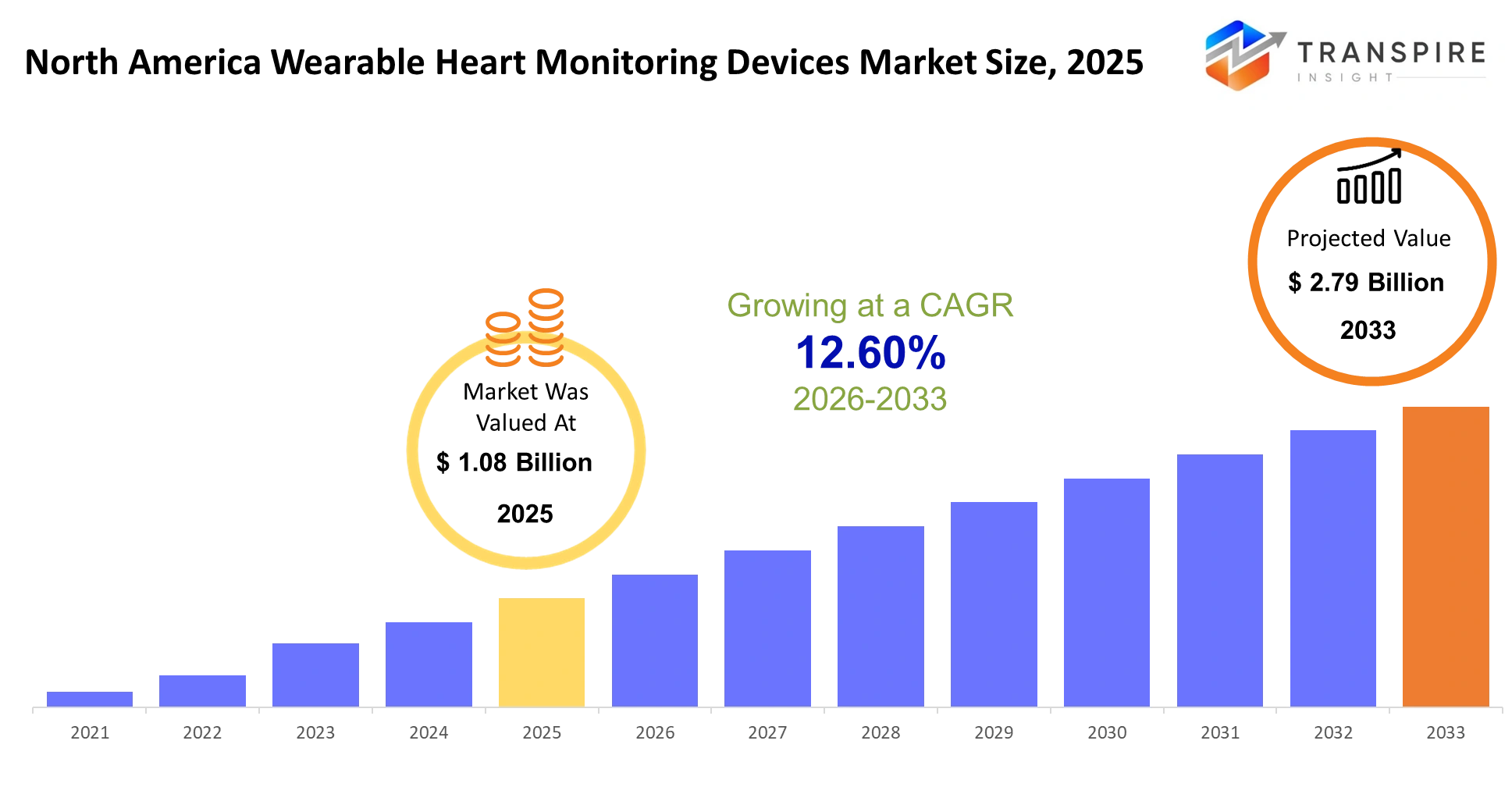
- North America Wearable Heart Monitoring Devices Market Size 2025: USD 1.08 Billion
- North America Wearable Heart Monitoring Devices Market Size 2033: USD 2.79 Billion
- North America Wearable Heart Monitoring Devices Market CAGR: 12.60%
- North America Wearable Heart Monitoring Devices Market Segments: By Product Type (Smartwatches, ECG Monitors, Chest Straps), By Application (Cardiac Monitoring, Fitness Monitoring), By End-User (Hospitals, Consumers).
To learn more about this report,  Download Free Sample Report
North America Wearable Heart Monitoring Devices Market Summary:
The North America Wearable Heart Monitoring Devices Market size is estimated at USD 1.08 Billion in 2025 and is anticipated to reach USD 2.79 Billion by 2033, growing at a CAGR of 12.60% from 2026 to 2033. The wearable heart monitoring devices market in North America which includes Canada and the United States and Mexico operates within the digital healthcare and medical technology sector which will make personal health tracking a common part of everyday life. Consumers will expect discrete, precise devices which match their daily activities instead of appearing to be medical equipment. The market will move toward solutions that provide constant monitoring together with instant risk notifications and mobile application-based information. The development of sensor technology together with artificial intelligence-based analysis will determine the design of future products. Regulatory bodies will tighten validation standards which will require manufacturers to achieve clinical-grade product reliability. The market will evolve from fitness-oriented devices to reliable health monitoring systems which people will use to prevent and monitor their heart health from home.
Key Market Trends & Insights:
North American consumer buying patterns will change because people become more aware of preventive healthcare. People will use wearable heart monitoring devices more frequently to track their heart rhythms and detect any unusual patterns. The transition will happen because users trust digital health ecosystems which provide them with immediate alerts and complete application interaction and personalized cardiovascular pattern reports.
The development of new technologies will create new possibilities for devices because advanced biosensors and AI-based analytics will boost their measurement precision. Wearable devices will advance from their current function of monitoring heart rates to their future capability of identifying both arrhythmia conditions and stress symptoms. People can share their health information with medical professionals through integrated systems that connect their smartphones to cloud services which provide continuous heart rate monitoring.
Healthcare organizations throughout Canada, the United States and Mexico will start using wearable technology data for their patient treatment processes. Remote patient monitoring programs will expand their reach to include more people who need constant medical support for their age-related health issues and their ongoing heart disease treatment needs. The trend will prompt device manufacturers and medical facilities to work together because they need to create systems which collect data according to medical standards while enabling prompt medical responses.
The development of regulatory systems will lead to improved regulations which focus on safeguarding data security while validating the accuracy of medical devices and their clinical evaluation process. Authorities will introduce stricter approval pathways which encourage companies to prioritize reliability and transparency. Medical organizations will form new partnerships with technology firms to create trustworthy systems which meet the needs of patients and healthcare professionals.
North America Wearable Heart Monitoring Devices Market Segmentation
By Product Type
Smartwatches- Smartwatches will evolve from their current functions of measuring steps and basic heartbeat detection to become essential tools for tracking daily heart health. Future models will integrate multi-sensor systems capable of tracking heart rhythm variations continuously without interrupting daily activities. Consumers will expect stylish designs paired with medical-grade insights which will lead to wider adoption between younger users and older individuals who want convenient health monitoring solutions.
ECG Monitors- The demand for ECG monitors will increase because users need more accurate heart tests which they can use outside of medical facilities. People will use portable and wearable devices to take electrocardiogram measurements when they experience symptoms. These devices will increasingly connect with mobile applications which allow users to share their data with doctors. The devices will achieve higher accuracy during home usage which will allow users to receive test results that match professional diagnostic standards.
Chest Straps- The users who require accurate workout measurements will use chest straps for their exercise sessions. Athletes and fitness-focused individuals will continue to rely on these devices for real-time heart rate tracking under intense conditions. The upcoming product version will enhance user comfort through better wireless connectivity which will improve training platform compatibility while.maintaining its track record of producing accurate performance metrics.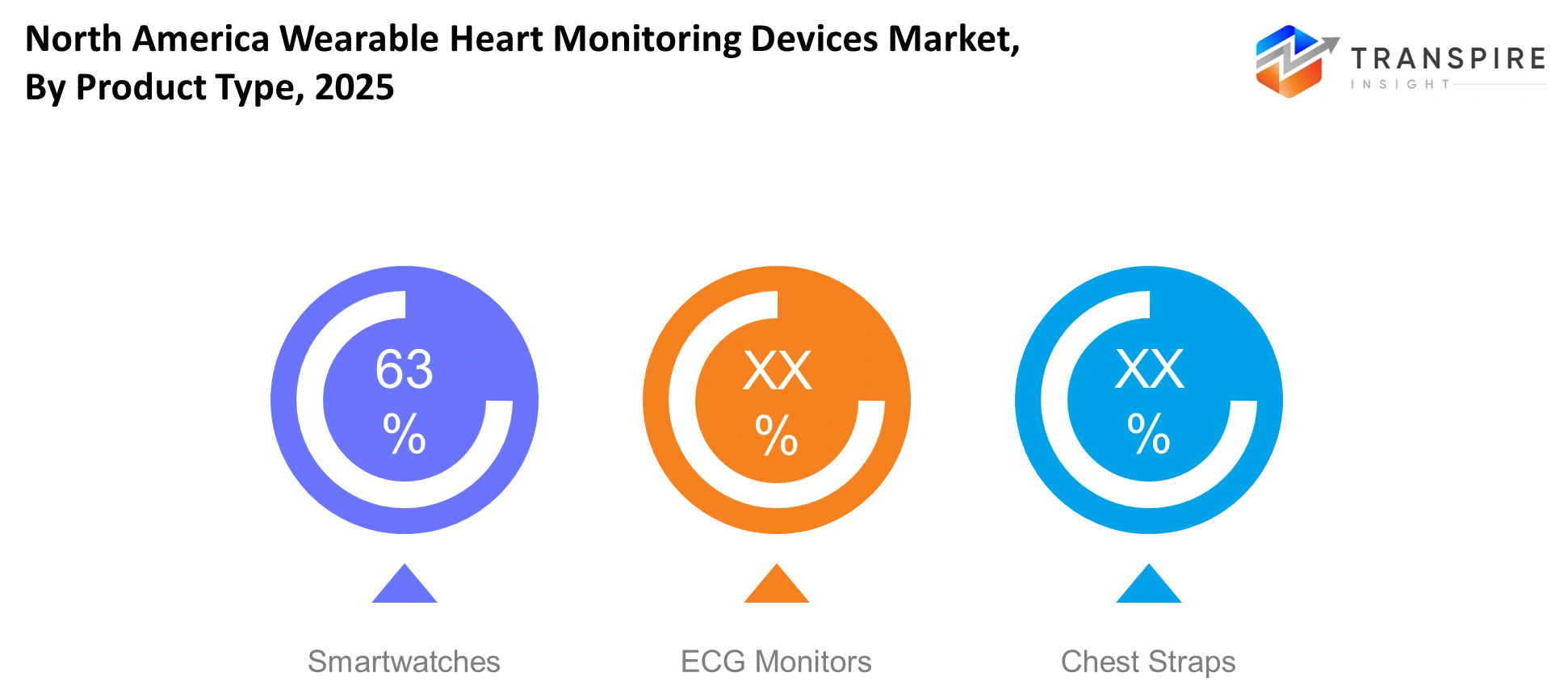
To learn more about this report, Download Free Sample Report
By Application
Cardiac Monitoring- The primary application of cardiac monitoring will begin to emerge when people start to understand heart-related disorders. People will use wearable technology to identify abnormal heart rhythms and assess their recovery and monitor their continuous heart health. Healthcare providers will also advocate for their application as remote monitoring solutions which enable early risk detection and decrease the need for patients to visit hospitals multiple times.
Fitness Monitoring- The practice of fitness monitoring will maintain its capacity to attract new users who belong to younger demographics that practice active living. The information obtained from wearable devices will provide users with greater understanding of heart function during their workout sessions and recovery times and periods of stress. Users will want their exercise data to provide them with practical advice which will assist them in creating better workout plans and achieving their health goals.
By End-User
Hospitals- Hospitals will start to use wearable heart monitoring technology for patient treatment procedures which include both post-treatment monitoring and chronic illness treatment programs. The remote monitoring tools will enable medical staff members to observe patient development while eliminating the need for patients to attend clinics. The hospital system will obtain data through integration which enables healthcare professionals to make better clinical choices.
Consumers- The main user segment for this product will consist of consumers who want to monitor their health and prevent illness because their interest in self-monitoring grows. People want to find health tracking devices which are user-friendly and attractive and produce valuable health information. As trust in wearable technology strengthens, more people will adopt these solutions as part of their daily routines to stay informed about their heart health.
Regional Insights
The United States will lead regional adoption, supported by strong digital health infrastructure and high consumer spending on wearable technology. Users will increasingly seek devices that deliver clinical-level accuracy alongside everyday convenience. Physicians will use telehealth services to monitor patients and respond to abnormal cardiac patterns which connected wearable systems detect.
Canada will show steady progress through public healthcare initiatives that promote preventive care and remote monitoring solutions. Rural and underserved areas will see gradual adoption of wearable heart monitoring devices within their patient management programs. Consumers will value reliability and privacy which leads manufacturers to establish data protection standards that comply with healthcare requirements in different provinces.
Mexico will experience growing interest because urban populations become more aware of cardiovascular health issues. Affordable wearable options will gain traction which will enable more people to monitor their heart health. Healthcare providers will start using these technologies for early detection and follow-up care in cities with expanding digital connectivity and smartphone adoption.
North America will see regional dynamics which create equilibrium between technological advancement and regulatory frameworks. Healthcare institutions and governments will require better device accuracy and data security, while consumers will expect smooth user experiences. The market environment will develop through this combination because technology adoption will depend on medical reliability. Wearable devices will become vital tools for managing heart health over extended periods.
Recent Development News
United States: Regulatory Clarity and Advanced ECG Breakthroughs
Recent developments in the United States highlight a shift toward clearer regulatory direction and more advanced home-based cardiac tools. In 2026, the FDA signaled a balanced approach by easing rules for low-risk wellness wearables while maintaining strict standards for medical-grade claims. At the same time, new cable-free ECG systems with 12-lead capabilities received clearance, enabling detailed heart monitoring outside hospitals.
Canada: Gradual Integration of Clinical-Grade Wearables
Canada is witnessing steady progress through the adoption of clinically validated wearable solutions within healthcare systems. Devices cleared in North America are increasingly being considered for remote patient monitoring programs, particularly for chronic heart conditions. Regulatory alignment with U.S. approvals is encouraging faster acceptance, while public healthcare frameworks are supporting trials that connect wearable data with physician-led care models.
Mexico: Expanding Access Through Affordable and Connected Devices
Mexico is seeing momentum through increased accessibility and awareness of wearable heart monitoring technologies. The availability of smartwatch-based ECG tools and app-connected monitoring systems is improving heart health tracking among urban populations. These devices, capable of continuous rhythm detection and real-time alerts, are gradually shifting cardiac care from clinics to everyday environments, making early detection more practical and widely achievable.
|
Report Metrics |
Details |
|
Market size value in 2025 |
USD 1.08 Billion |
|
Market size value in 2026 |
USD 1.216 Billion |
|
Revenue forecast in 2033 |
USD 2.79 Billion |
|
Growth rate |
CAGR of 12.60% from 2026 to 2033 |
|
Base year |
2025 |
|
Historical data |
2021 – 2024 |
|
Forecast period |
2026 – 2033 |
|
Report coverage |
Revenue forecast, competitive landscape, growth factors, and trends |
|
Country scope |
North America (Canada, The United States, and Mexico) |
|
Key company profiled |
Apple Inc., Fitbit (Google), Garmin Ltd., Samsung Electronics Co. Ltd., Philips Healthcare, Medtronic plc, GE HealthCare, Omron Healthcare Inc., AliveCor Inc., BioTelemetry Inc., Abbott Laboratories, Polar Electro Oy, Withings SA, Dexcom Inc., iRhythm Technologies Inc. |
|
Customization scope |
Free report customization (country, regional & segment scope). Avail customized purchase options to meet your exact research needs. |
|
Report Segmentation |
By Product Type (Smartwatches, ECG Monitors, Chest Straps), By Application (Cardiac Monitoring, Fitness Monitoring), By End-User (Hospitals, Consumers). |
Key North America Wearable Heart Monitoring Devices Market Company Insights
The competitive landscape in this market will be determined by major companies that combine consumer electronics with clinical-grade technological advancements. The ECG analytics and remote diagnostics solutions of AliveCor and iRhythm will use AI technologies while Apple and Samsung will develop improved monitoring capabilities for their smartwatch products. Medical technology companies will focus on maintaining precise data measurement which will enable them to provide immediate cardiac information and achieve better results for their patients.
Company List
- Apple Inc.,
- Fitbit (Google),
- Garmin Ltd.,
- Samsung Electronics Co. Ltd.,
- Philips Healthcare,
- Medtronic plc,
- GE HealthCare,
- Omron Healthcare Inc.,
- AliveCor Inc.,
- BioTelemetry Inc.,
- Abbott Laboratories,
- Polar Electro Oy,
- Withings SA,
- Dexcom Inc.,
- iRhythm Technologies Inc.
North America Wearable Heart Monitoring Devices Market Report Segmentation
By Product Type
- Smartwatches
- ECG Monitors
- Chest Straps
By Application
- Cardiac Monitoring
- Fitness Monitoring
By End-User
- Hospitals
- Consumers
Frequently Asked Questions
Find quick answers to common questions.
The Approximate North America Wearable Heart Monitoring Devices Market size for the Market will be USD 2.79 Billion in 2033.
Key Segments for the North America Wearable Heart Monitoring Devices Market By Product Type (Smartwatches, ECG Monitors, Chest Straps), By Application (Cardiac Monitoring, Fitness Monitoring), By End-User (Hospitals, Consumers).
Major Players in the North America Wearable Heart Monitoring Devices Market are Apple Inc., Fitbit (Google), Garmin Ltd., Samsung Electronics Co. Ltd., Philips Healthcare, Medtronic plc, GE HealthCare, Omron Healthcare Inc., AliveCor Inc., BioTelemetry Inc., Abbott Laboratories, Polar Electro Oy, Withings SA, Dexcom Inc., iRhythm Technologies Inc.
The Current North America Wearable Heart Monitoring Devices Market size is USD 1.08 Billion in 2025.
The North America Wearable Heart Monitoring Devices Market CAGR is 12.60%.
- Apple Inc.,
- Fitbit (Google),
- Garmin Ltd.,
- Samsung Electronics Co. Ltd.,
- Philips Healthcare,
- Medtronic plc,
- GE HealthCare,
- Omron Healthcare Inc.,
- AliveCor Inc.,
- BioTelemetry Inc.,
- Abbott Laboratories,
- Polar Electro Oy,
- Withings SA,
- Dexcom Inc.,
- iRhythm Technologies Inc.
Recently Published Reports
-
May 2026
Biosimilars Market
Biosimilars Market By Product Type (Monoclonal Antibodies, Recombinant Hormones, Erythropoietin, G-CSF, Others), By Indication (Oncology, Autoimmune Diseases, Blood Disorders, Diabetes, Others), By Manufacturing Type (In-House Manufacturing, Contract Manufacturing), By Distribution Channel (Hospital Pharmacies, Retail Pharmacies, Online Pharmacies), By Industry Analysis, Size, Share, Growth, Trends, and Forecasts 2021-2033
-
Apr 2026
Gastrointestinal Endoscopy Market
Gastrointestinal Endoscopy Market By Type (Rigid Gastrointestinal Endoscope, Flexible Gastrointestinal Endoscopes, Disposable Gastrointestinal Endoscope), By Procedure Type (Colonoscopy, Gastroscopy, Duodenoscopy, Enteroscopy, Flexible Sigmoidoscopy, Others), By Application (Diagnosis, Treatment), By End-Users (Hospitals, Ambulatory Surgical Centers, Specialty Clinics, Laboratories, Others), By Industry Analysis, Size, Share, Growth, Trends, and Forecasts 2021-2033
-
Apr 2026
Rare Inherited Metabolic Disorder Drug Market
Rare Inherited Metabolic Disorder Drug Market By Drug Class (Enzyme Replacement Drugs, Gene Therapy Drugs, Substrate Reduction Drugs, Small Module Drugs, Protein Drugs), By Route of Administration(Parenteral, Oral, Intrathecal), By Clinical Development (Marketed Drugs, Late Stage Clinical Phase III, Early Stage Clinical Phase I-II, Preclinical Candidates), By Indication (Lysosomal Storage Disorders, Urea Cycle Disorders, Amino Acid Metabolic Disorders, organic Acidemias, Peroximal Disorders), By Industry Analysis, Size, Share, Growth, Trends, and Forecasts 2021-2033
-
Jan 2026
Pharmaceutical Cleanroom Technology Market
Pharmaceutical Cleanroom Technology Market By Product (Equipment, Consumables, Services); By Cleanroom Type (Standard Cleanrooms, Modular Cleanrooms); By End Use (Pharmaceutical Companies, Biotechnology Companies), By Industry Analysis, Size, Share, Growth, Trends, and Forecasts 2021-2033