

North America Pneumococcal Vaccines Market Size & Forecast:
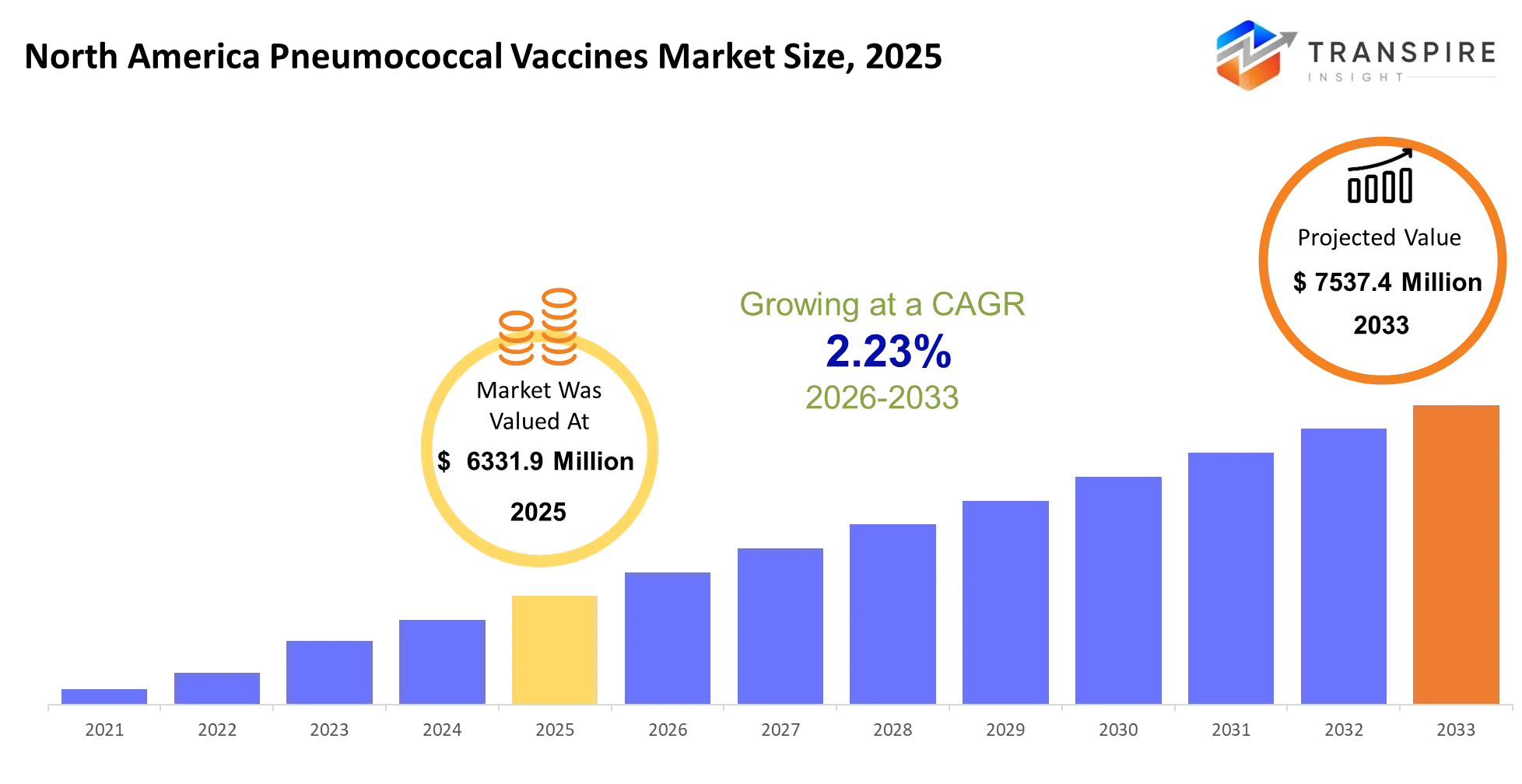
- North America Pneumococcal Vaccines Market Size 2025: USD 6331.9 Million
- North America Pneumococcal Vaccines Market Size 2033: USD 7537.4 Million
- North America Pneumococcal Vaccines Market CAGR: 2.23%
- North America Pneumococcal Vaccines Market Segments: By Vaccine Type (Conjugate Vaccines, Polysaccharide Vaccines, Combination Vaccines, Others), By Application (Pneumonia Prevention, Meningitis Prevention, Otitis Media Prevention, Others), By End User (Hospitals, Vaccination Centers, Clinics, Government Programs, Others), By Age Group (Pediatric Population, Adult Population, Geriatric Population, Others).
To learn more about this report,  Download Free Sample Report
North America Pneumococcal Vaccines Market Summary:
The North America Pneumococcal Vaccines Market size is estimated at USD 6331.9 Million in 2025 and is anticipated to reach USD 7537.4 Million by 2033, growing at a CAGR of 2.23% from 2026 to 2033. The North America Pneumococcal Vaccines Market kinda plays a critical role in reducing both the clinical and economic burden from pneumococcal infections, like pneumonia, meningitis and bloodstream infections. In real practice, these vaccines support healthcare systems so they can avoid severe disease in infants, older adults and immunocompromised populations too, which then lowers hospitalization rates and also the cost of treatment, kind of across the board.
Over the past three to five years the market has seen a structural shift toward higher valency conjugate vaccines, these give broader serotype coverage and better long term protection. That whole change has reshaped procurement strategies , immunization guidelines, and even how companies position themselves competitively across the region. One major catalyst was the COVID-19 pandemic. It sort of exposed how vulnerable at risk groups are to respiratory diseases , and it pushed many healthcare providers to emphasize preventive vaccination programs more.
Right now the market expansion is being fueled by updated adult immunization recommendations, wider reimbursement backing, and the launch of next generation vaccine formulations. As healthcare systems lean harder toward prevention rather than treatment, vaccine adoption is spreading across wider age brackets. This creates more durable revenue possibilities for manufacturers and also for public health stakeholders, yes in a sustained way.
Key Market Insights
- In North America, the United States pretty much leads the Pneumococcal Vaccines Market, bringing in more than 85% of the regional revenue, mainly because vaccination coverage is so broad. It kind of makes things pretty clear, right.
- Canada comes in next as the second-largest market , supported by government paid immunization schemes and a pretty solid healthcare system.
- Mexico is expected to become the fastest-growing regional market through 2032, largely due to easier vaccine access plus extra public health spending.
- When it comes to product type, pneumococcal conjugate vaccines, or PCVs, dominate the market, taking up over 65% of the share, mostly because they cover a wider set of serotypes.
- After that, higher valency PCVs have become the second-biggest segment as immunization guidance gets updated across North America.
- Also, next generation conjugate vaccines are likely to post the quickest growth during the forecast, since manufacturers are working on stronger coverage for additional serotypes.
- For applications , pediatric immunization still stays on top, making up around 55% of total vaccine demand across the region.
- Adult vaccination is growing faster, helped by aging demographics and revised vaccination guidelines that are showing up in more programs.
- Hospital-based preventive programs continue to generate newer, extra demand for pneumococcal vaccine delivery among high risk populations.
- Public health agencies, along with government vaccination programs, account for over 50% of the vaccine procurement and distribution volume.
- Hospitals remain the second-largest end user segment, driven by routine immunization initiatives and how they manage patient risk.
- Meanwhile, retail pharmacies are seeing quick expansion as convenient vaccination access encourages more consumers to actually participate.
What are the Key Drivers, Restraints, and Opportunities in the North America Pneumococcal Vaccines Market?
The most powerful push moving the North America Pneumococcal Vaccines Market forward is basically the broadening of adult immunization recommendations and the roll out of higher valency pneumococcal conjugate vaccines. Alongside that, there are regulatory approvals ,and refreshed vaccination guidance coming from public health authorities which have widened the eligible group well beyond the usual pediatric categories. So, even healthcare providers, pharmacies, and insurers are more willing to weave broader pneumococcal vaccination plans into standard preventive checkups. And as more adults 50 years old and up start qualifying for vaccines, the companies involved usually see larger addressable markets, better procurement volume, and more durable recurring income streams.
The biggest drag, though, is the expensive and somewhat involved reality of vaccine research, development, and manufacturing. Pneumococcal products depend on advanced conjugation techniques, long multi phase clinical studies and careful regulatory reviews. All of this adds up to major hurdles for new entrants and it also narrows the field of competing suppliers. Since production sites need years of investment and regulatory sign off, you cannot simply scale up overnight. This built in limitation reduces supply flexibility, slows down the arrival of fresh competitors and dampens revenue growth in price-sensitive areas, where budgets are tight.
A big future chance is in building next generation vaccines with wider serotype coverage and better real world effectiveness for older adults. Some companies are pouring a lot of money into advanced conjugate platforms that can aim at more pneumococcal strains, sort of like expanding the reach. Because populations are aging across North America, and healthcare systems are still under pressure to cut down hospitalization expenses. these upgraded vaccines could open up fresh vaccination initiatives, support premium pricing plans, and honestly spark the next wave of market growth.
What Has the Impact of Artificial Intelligence Been on the North America Pneumococcal Vaccines Market?
Artificial intelligence , and advanced digital technologies are going on to transform the North America Pneumococcal Vaccines Market more and more . Mostly it is happening because they help with vaccine development , boost manufacturing efficiency , and also make immunization program management feel a lot smoother. Pharmaceutical companies are leaning on AI driven analytics in order to automate antigen selection, clinical data processing, and manufacturing quality control. In practice , these systems can examine large biological datasets quicker than older routines, which in turn shortens development timelines a bit , and makes production steadier.
At the same time , machine learning models are sharpening predictive skills across the whole vaccine value chain. Researchers use AI for locating promising vaccine targets, estimating immune reactions , and fine tuning clinical trial setups. Meanwhile , public health agencies and healthcare providers use predictive analytics to guess vaccine demand, spot geographic coverage gaps, and manage inventory with more care . In the end it can cut vaccine wastage, reduce stock shortages, and help with distribution planning that is less stressful.
On the operational side, digital monitoring platforms improve manufacturing uptime, enable faster batch release decisions , and support stronger regulatory compliance. AI assisted quality systems may catch production irregularities earlier, lowering the chance of expensive batch failures, and lifting overall operational efficiency. Still, even with all of that , there is a stubborn limitation that keeps coming up : high quality healthcare data is not always easy to find, and integration is often messy. Vaccine developers frequently deal with scattered clinical , epidemiological, and real world datasets, so the model accuracy can drop and large scale AI deployment across the pneumococcal vaccine ecosystem may move slower than expected.
Key Market Trends
- Since 2021 , healthcare authorities have been expanding adult vaccination recommendations , and procurement priorities are now less tied to pediatric programs, more like broad population coverage.
- Over time, higher valency conjugate vaccines kept edging out older formulations, so manufacturers are trying to win on serotype breadth , not just raw volume.
- Since 2020 , pharmacies have grabbed a bigger slice of vaccine administration , because consumers seem to favor easier community based immunization services.
- Big names, including Pfizer and Merck , have pushed clinical development harder to get earlier regulatory approvals , and to create clearer market differentiation.
- Public health agencies have also shifted from reactive disease management to preventive vaccination approaches, kind of a “lessons learned” effect after COVID-19 , even if the messaging feels uneven at times.
- At the same time, manufacturers are using AI enabled analytics more often to improve vaccine forecasting, which helps reduce inventory mismatches and makes distribution run smoother across healthcare networks.
- Procurement choices now lean toward long-term value scoring, with payers more focused on lowering hospitalizations and avoiding healthcare costs , rather than only unit pricing.
- Since 2022 , vaccine developers have put more money into next generation conjugate platforms, aiming to deal with the changing pneumococcal serotype replacement patterns.
- Cross sector collaborations—between pharma companies, healthcare systems, and public health groups— have become more frequent, mainly to lift adult vaccine uptake.
- And supply chain strategies have moved away from strictly cost focused sourcing, toward resilience focused manufacturing, cutting down the risk from future production or distribution disruptions.
North America Pneumococcal Vaccines Market Segmentation
By Vaccine Type
Conjugate vaccines kinda hold the leading position in the vaccine type slice, mostly because they cover more serotypes, show better immunogenicity, and they get rolled into many national immunization schedules. Healthcare providers are also starting to lean more toward higher valency conjugate formulations as public health agencies push for more comprehensive protection, against pneumococcal disease in general.
Polysaccharide vaccines still matter a lot, especially for some adults and high-risk groups, even if their market influence has been slowly slipping as conjugate technologies keep advancing. Combination vaccines, plus other more emerging formulations, take up a smaller share but they’re getting more attention due to the ability to make immunization steps easier and to support patient adherence, so it feels less disruptive. Growth in this segment seems to come from constant product tinkering, additional regulatory approvals, and clinical data that backs improved protection overall. Looking ahead, the real competition will probably revolve around wider strain coverage and lasting effectiveness , which may open doors for manufacturers that can distinguish themselves with advanced vaccine platforms while still showing clear economic value to healthcare systems.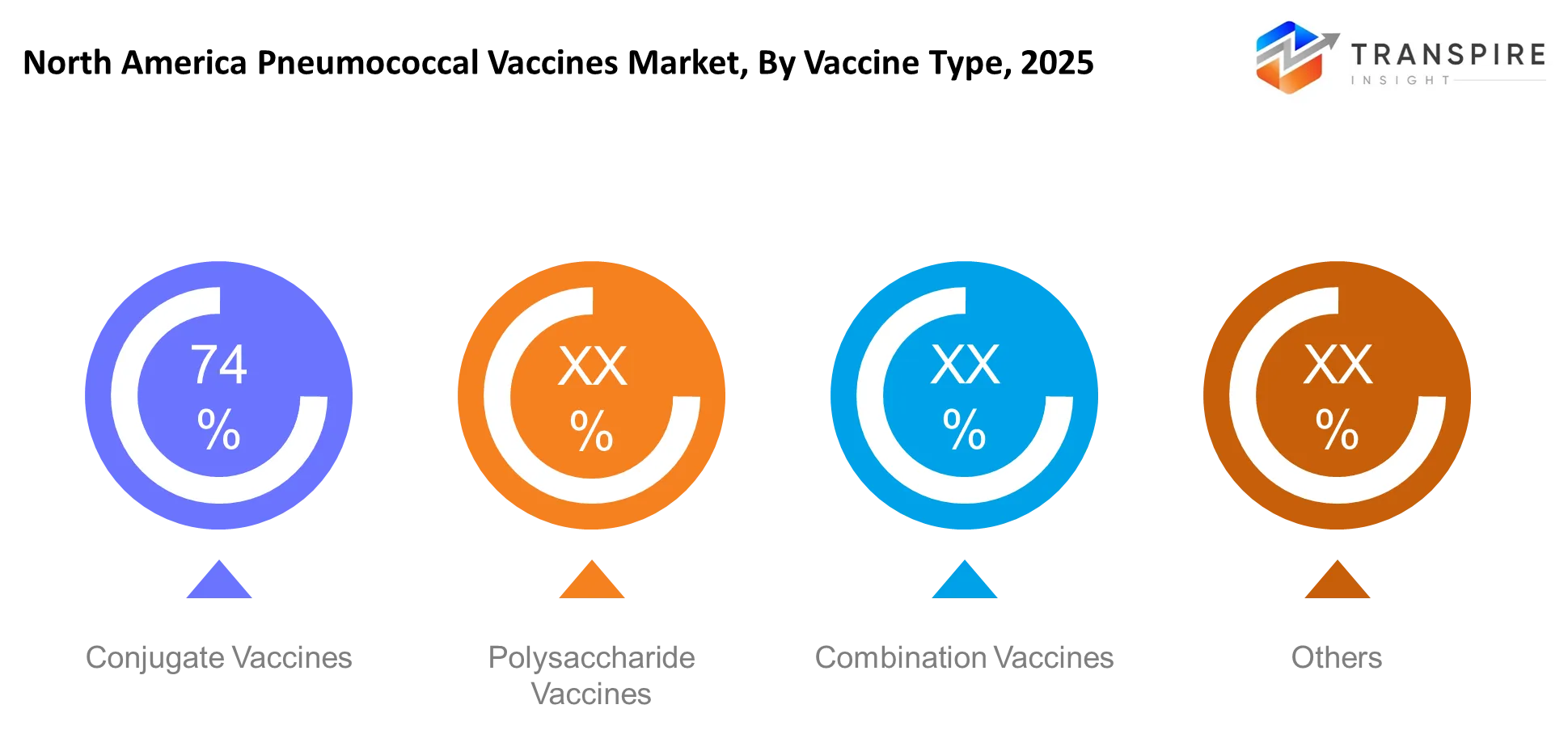
To learn more about this report, Download Free Sample Report
By Application
Pneumonia prevention ends up taking the biggest share of application demand, mostly because pneumonia still is the most common and also the most economically heavy manifestation of pneumococcal disease. There is strong attention on lowering hospitalization numbers and pushing down treatment costs, which keeps nudging vaccine use in this space.
Meningitis prevention comes in as the second most meaningful application, largely because invasive infections can end up with really severe clinical consequences, especially for at risk groups. Otitis media prevention still matters in pediatric healthcare, yet day to day priorities often end up leaning more toward stopping complications that could be life threatening. Other applications add smaller pieces of demand, kind of through wider disease prevention tactics.
You can also see different growth behaviors where healthcare systems are increasingly prioritizing prevention options instead of just acute management. Looking ahead, future development will probably move toward more complete disease prevention frameworks that, instead of only clinical endpoints, look at vaccine worth via reduced healthcare utilization. That approach should help encourage broader adoption and, at the same time, open more room for suppliers able to show solid clinical and economic outcomes.
By End-User
Government programs kinda sit at the top, as the main end user segment, since public immunization initiatives still make up a big chunk of vaccine procurement, and distribution across North America. There are also large purchasing deals in place, plus a pretty well established vaccination infrastructure. Together this helps the market push in pretty strongly through this route.
After that, hospitals are next, especially when you look at high risk patient groups and preventive care programs that get built into everyday clinical workflows. Vaccination centers and clinics keep growing too, because they provide practical spots for administration , so access feels less complicated. Meanwhile, other healthcare providers add some extra coverage, mostly at the local level or with more targeted outreach.
Over time, demand trends seem to be shifting toward decentralized vaccine delivery, and that’s where retail and community based channels start to matter more strategically. Future growth is going to hinge on how well end users can improve access, boost vaccination rates, and also plug in digital tracking systems. Manufacturers that can match up with different distribution networks and support fast administration models should end up in a stronger long term position.
By Age Group
The pediatric population stays the largest age group segment, since regular childhood immunization schedules pretty much keep folding in pneumococcal vaccination as a standard safety step. It’s mainly high coverage plus steady public health backing that keeps the segment out in front, still.
Then there is the geriatric population, which has started to grow a lot, because people tend to be more vulnerable to invasive pneumococcal disease and, also, there’s this rising healthcare emphasis on healthy aging. Adult populations are another steadily widening opportunity, as newer immunization directions extend who can get vaccinated and also push preventive vaccination beyond only the classic, high-risk groups.
Other demographic categories add smaller volume but they still matter, especially for more focused disease prevention efforts. Overall, the growth momentum is tilting toward the older groups, because healthcare systems are trying to cut down on hospital stays and the longer-term spending linked to respiratory infections. Looking ahead, market expansion will likely hinge on vaccination approaches that are tuned for age-specific risk patterns, while still supporting wider preventive healthcare goals.
What are the Key Use Cases Driving the North America Pneumococcal Vaccines Market?
The main use case for pneumococcal vaccines is basically to stop pneumonia as part of routine pediatric and adult immunization programs. In practice, this is where the highest demand comes from , because healthcare systems really focus on lowering hospital admissions, cutting down intensive care use and also reducing treatment expenses tied to serious respiratory infections, you know.
Other use cases are starting to get broader too. For example, meningitis prevention is a big part of it, plus targeted vaccination for high risk populations through hospitals, clinics , and government funded immunization initiatives. Providers are also more often embedding pneumococcal vaccination into chronic condition management, like when they are working with people who have cardiovascular conditions, diabetes, or compromised immune systems. Sometimes it feels less like a “one time shot” and more like ongoing preventive care.
Then there are emerging applications, developing inside precision public health approaches and preventive care plans that focus on aging populations. Healthcare orgs are using more advanced risk stratification tools to spot vulnerable adults earlier, while long term care facilities are widening their vaccination protocols to reduce outbreak risk and improve population health results across the forecast period.
|
Report Metrics |
Details |
|
Market size value in 2025 |
USD 6331.9 Million |
|
Market size value in 2026 |
USD 6458.8 Million |
|
Revenue forecast in 2033 |
USD 7537.4 Million |
|
Growth rate |
CAGR of 2.23% from 2026 to 2033 |
|
Base year |
2025 |
|
Historical data |
2021 - 2024 |
|
Forecast period |
2026 - 2033 |
|
Report coverage |
Revenue forecast, competitive landscape, growth factors, and trends |
|
Country scope |
North America (Canada, The United States, and Mexico) |
|
Key company profiled |
Pfizer, Merck & Co., Sanofi, GSK, Moderna, Novavax, CSL Seqirus, Bavarian Nordic, Emergent BioSolutions, AstraZeneca, Johnson & Johnson, BioNTech, CureVac, Serum Institute of India, Panacea Biotec |
|
Customization scope |
Free report customization (country, regional & segment scope). Avail customized purchase options to meet your exact research needs. |
|
Report Segmentation |
By Vaccine Type (Conjugate Vaccines, Polysaccharide Vaccines, Combination Vaccines, Others), By Application (Pneumonia Prevention, Meningitis Prevention, Otitis Media Prevention, Others), By End User (Hospitals, Vaccination Centers, Clinics, Government Programs, Others), By Age Group (Pediatric Population, Adult Population, Geriatric Population, Others) |
Which Regions are Driving the North America Pneumococcal Vaccines Market Growth?
The United States sort of represents the dominant regional market because of broad immunization policies , solid reimbursement coverage, and large-scale vaccine procurement efforts. Federal guidance for both kids and adults vaccination gives a more organized structure that, in practice , helps drive very high adoption rates across many healthcare places. Then you have this sort of mature setup with pharmaceutical manufacturers, distributors, pharmacies, hospitals and public health agencies , all of which makes the overall leadership position hold steady. Add continuous investment into vaccine research and fast uptake of newly approved formulations, and the country’s stance gets even stronger.
Canada lands in the second-largest role, but the growth story is not really the same as the United States. In Canada, provincial healthcare systems tend to push consistent vaccine access through publicly funded immunization programs rather than leaning too much on private healthcare pathways. With steady healthcare spending plus public health planning that is coordinated , procurement patterns stay relatively predictable, and long-term vaccination coverage doesn’t swing wildly. That setting gives manufacturers a steadier revenue foundation, while keeping demand from turning into sharp fluctuations.
Mexico, meanwhile, is showing up as the fastest-growing market . Healthcare authorities there are expanding immunization coverage, and they’re also strengthening disease prevention initiatives in a more noticeable way. More recent investments in healthcare infrastructure , and better vaccine accessibility, have improved distribution reach into communities that historically were underserved. There’s also growing focus on adult vaccination and preventive healthcare, so the target group now goes beyond the “classic” pediatric programs alone. From 2026 to 2033, these shifts are expected to open up interesting opportunities for manufacturers, distributors , and investors who want expansion in a healthcare market that’s still rapidly developing.
Who are the Key Players in the North America Pneumococcal Vaccines Market and How Do They Compete?
The competitive landscape is sorta highly consolidated, it is mostly run by a small group of multinational vaccine manufacturers that end up controlling a lot of the supply contracts and the immunization programs. In practice the competition seems to be about things like higher-valency formulations , serotype expansion, and those long-term procurement deals with governments , and also healthcare systems. Because the regulatory barriers are high, and manufacturing is capital intensive, it is difficult for new entrants. So the incumbents usually end up defending their share by leaning on clinical differentiation, and very importantly supply reliability.
Pfizer is pushing a technology-led approach that is centered on PCV20 , aiming for broader serotype coverage so it can lock in adult and pediatric contracts across North America. Merck goes after Vaxneuvance PCV15 and puts weight on differentiated clinical efficacy, then tries to expand adult vaccination through hospital partnerships. GSK leans on its Synflorix legacy for pediatric immunization networks, but it’s also shifting toward collaboration based distribution inside public health systems.
Sanofi looks like it strengthens its position via diversified vaccine portfolios, plus long-term public procurement agreements that basically keep institutional demand steady. Bavarian Nordic instead focuses on niche vaccine platform technologies and strategic collaborations, trying to reach broader immunization networks despite having limited pneumococcal exposure. Johnson & Johnson, meanwhile, uses its integrated healthcare ecosystem and hospital partnerships, to help preventive immunization become part of adult care pathways , through system level agreements.
Company List
- Pfizer
- Merck & Co.
- Sanofi
- GSK
- Moderna
- Novavax
- CSL Seqirus
- Bavarian Nordic
- Emergent BioSolutions
- AstraZeneca
- Johnson & Johnson
- BioNTech
- CureVac
- Serum Institute of India
- Panacea Biotec
Recent Development News
In May 2026, Pfizer Reports Strong Mid-Stage Results for Next-Generation 25-Valent Pneumococcal Vaccine: Pfizer announced positive Phase 2 data for its investigational 25-valent pneumococcal conjugate vaccine (25vPnC), a key development aimed at expanding protection beyond its blockbuster Prevnar 20 franchise. The study showed substantially stronger immune responses against important disease-causing serotypes in infants, and Pfizer has already initiated a late-stage trial program. This marks a significant product-development milestone for the North American pneumococcal vaccine market.
Source: https://www.reuters.com
In May 2026, Pfizer Advances Pivotal Pediatric Pneumococcal Vaccine Program: Pfizer disclosed progress across its pneumococcal vaccine portfolio in May 2026, highlighting advancement of its pivotal pediatric vaccine program and plans for a broader adult vaccine candidate. The company stated that its next-generation adult pneumococcal vaccine is expected to enter clinical development by the end of 2026, reinforcing its long-term investment in pneumonia prevention technologies.
Source: https://www.pfizer.com
What Strategic Insights Define the Future of the North America Pneumococcal Vaccines Market?
Over the next 5–7 years, the North America Pneumococcal Vaccines Market is kind of structurally moving toward precision-guided immunization, where vaccine selection is more and more tied to serotype surveillance data and age based risk modeling, kind of in a very direct way. T his shift is helped by tighter linking between public health analytics and procurement decisions, which is steadily pushing buyers toward higher valency conjugate vaccines and data supported vaccination timing. A less obvious risk is still there too, namely concentration dependency on only a few global manufacturers, which creates systemic vulnerability if production interruptions or regulatory delays hit even one major supplier, that could then tighten regional vaccine availability even while demand signals look stable on paper.
There’s also an emerging opening, it is in AI enabled epidemiological forecasting platforms that can dynamically steer vaccine deployment tactics across states and healthcare networks, especially when real-time pathogen tracking is more widely taken up. This capability is still early stage, but it has been gathering traction through pilot programs in big hospital systems. For market participants, the most practical strategy is to put money into integrated vaccine and data partnerships with public health agencies, rather than just leaning on product innovation. Procurement is increasingly rewarding predictive effectiveness over single standalone clinical differentiation, so it makes sense to play that game where the data is.
North America Pneumococcal Vaccines Market Report Segmentation
By Vaccine Type
- Conjugate Vaccines
- Polysaccharide Vaccines
- Combination Vaccines
- Others
By Application
- Pneumonia Prevention
- Meningitis Prevention
- Otitis Media Prevention
- Others
By End User
- Hospitals
- Vaccination Centers
- Clinics
- Government Programs
- Others
By Age Group
- Pediatric Population
- Adult Population
- Geriatric Population
- Others
Frequently Asked Questions
Find quick answers to common questions.
The Approximate North America Pneumococcal Vaccines Market size for the Market will be USD 7537.4 Million in 2033.
The key Segments of the North America Pneumococcal Vaccines Market are By Vaccine Type (Conjugate Vaccines, Polysaccharide Vaccines, Combination Vaccines, Others), By Application (Pneumonia Prevention, Meningitis Prevention, Otitis Media Prevention, Others), By End User (Hospitals, Vaccination Centers, Clinics, Government Programs, Others), By Age Group (Pediatric Population, Adult Population, Geriatric Population, Others).
Major players in the North America Pneumococcal Vaccines Market are Pfizer, Merck & Co., Sanofi, GSK, Moderna, Novavax, CSL Seqirus, Bavarian Nordic, Emergent BioSolutions, AstraZeneca, Johnson & Johnson, BioNTech, CureVac, Serum Institute of India, Panacea Biotec.
The Current Market size of the North America Pneumococcal Vaccines Market is USD 6331.9 Million in 2025.
The North America Pneumococcal Vaccines Market CAGR is 2.23%.
- Pfizer
- Merck & Co.
- Sanofi
- GSK
- Moderna
- Novavax
- CSL Seqirus
- Bavarian Nordic
- Emergent BioSolutions
- AstraZeneca
- Johnson & Johnson
- BioNTech
- CureVac
- Serum Institute of India
- Panacea Biotec
About the Authors

Pankaj Ghogare Patil
I am Pankaj Ghogare Patil, a Senior Research Analyst at Transpire Insight, specializing in the Pharmaceutical, Chemicals & Materials, Healthcare IT, and Biotechnology industry. My expertise lies in conducting comprehensive market research, analyzing industry trends, evaluating competitive landscapes, and translating complex data into actionable insights. At Transpire Insight, I closely follow emerging technologies, regulatory developments, and market innovations to create accurate, well-researched, and informative content that helps businesses and professionals make informed decisions. I am committed to producing credible, evidence-based articles that reflect industry best practices while making technical topics accessible and valuable for a broad audience.

Chakradhar Khansole
Chakradhar serves as the Research Director at Transpire Insight, bringing over 8 years of experience in technology, innovation, and strategic market intelligence. He specializes in transforming complex market data into actionable business insights that enable organizations to make informed, growth-oriented decisions. Recognized for his strategic vision and analytical expertise, Chakradhar leads high-impact research initiatives, delivering comprehensive market assessments, competitive intelligence, and forward-looking industry analysis.
Recently Published Reports
-
Jul 2026
Alopecia Treatment Market
Alopecia Treatment Market Size, Share & Analysis Report By Disease Type (Alopecia Areata, Cicatricial Alopecia, Traction Alopecia, Alopecia Totalis, Androgenetic Alopecia, Alopecia Universalis, and Other Disease Types), By Treatment Type (Topical Treatments, Oral Medications, Injectable Therapies, and Hair Transplantation), By Gender (Male, and Female), By Distribution Channel (Hospitals and Clinics, Retail Pharmacies, and Online Retailers), and Geography (North America, Europe, Asia-Pacific, Middle East and Africa, South and Central America), 2021 - 2031
-
Jul 2026
Medical Ultrasound Probe Market
Medical Ultrasound Probe Market Size, Share & Analysis Report By Type (Linear Type, Convex Type, Endocavitary Probe, Phased Array/Cardiac Probe, Transesophageal (TEE) Probe, and Others), By Application (Ophthalmology, Cardiology, Musculoskeletal, Oncology, Obstetrics & Gynecology, General Imaging, and Others), By End User (Hospitals & Clinics, Diagnostic Centers, Ambulatory Surgical Centers, and Others), and Geography (North America, Europe, Asia-Pacific, Middle East and Africa, South and Central America), 2021 – 2031
-
May 2026
Biosimilars Market
Biosimilars Market By Product Type (Monoclonal Antibodies, Recombinant Hormones, Erythropoietin, G-CSF, Others), By Indication (Oncology, Autoimmune Diseases, Blood Disorders, Diabetes, Others), By Manufacturing Type (In-House Manufacturing, Contract Manufacturing), By Distribution Channel (Hospital Pharmacies, Retail Pharmacies, Online Pharmacies), By Industry Analysis, Size, Share, Growth, Trends, and Forecasts 2021-2033
-
Apr 2026
Gastrointestinal Endoscopy Market
Gastrointestinal Endoscopy Market By Type (Rigid Gastrointestinal Endoscope, Flexible Gastrointestinal Endoscopes, Disposable Gastrointestinal Endoscope), By Procedure Type (Colonoscopy, Gastroscopy, Duodenoscopy, Enteroscopy, Flexible Sigmoidoscopy, Others), By Application (Diagnosis, Treatment), By End-Users (Hospitals, Ambulatory Surgical Centers, Specialty Clinics, Laboratories, Others), By Industry Analysis, Size, Share, Growth, Trends, and Forecasts 2021-2033