North America Graves Disease (Overactive Thyroid) Market Size & Forecast:
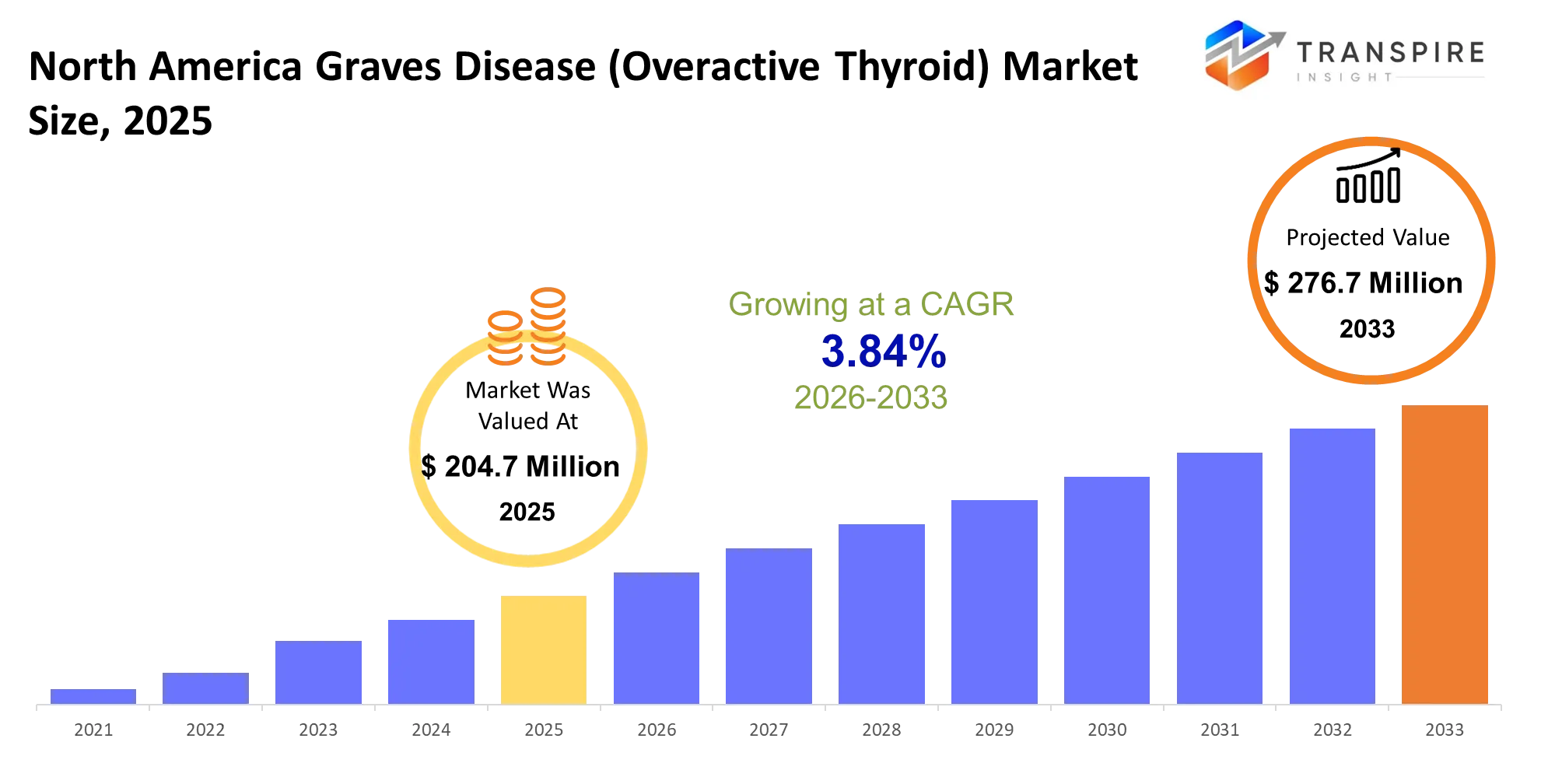
- North America Graves Disease (Overactive Thyroid) Market Size 2025: USD 204.7 Million
- North America Graves Disease (Overactive Thyroid) Market Size 2033: USD 276.7 Million
- North America Graves Disease (Overactive Thyroid) Market CAGR: 3.84%
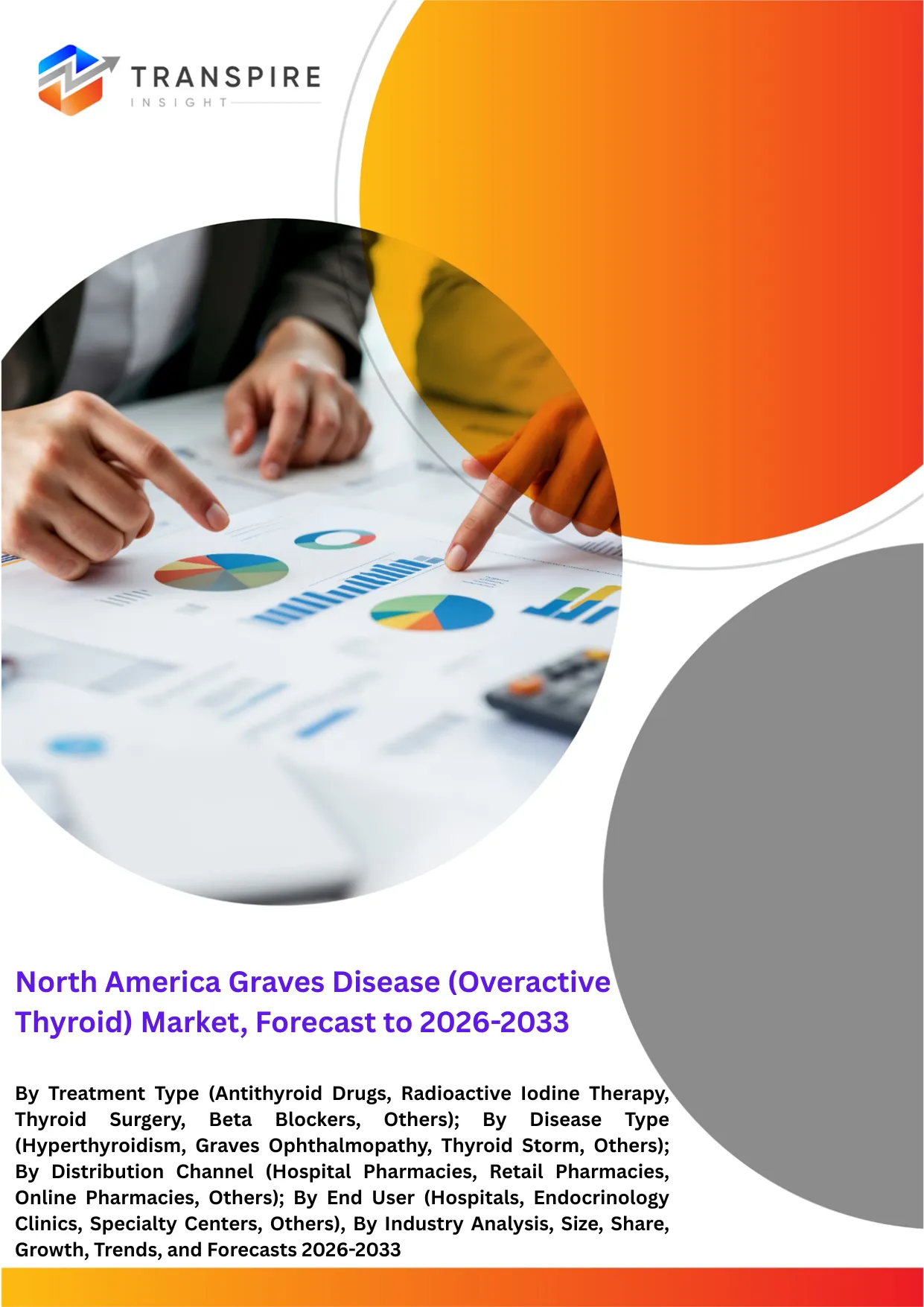
- North America Graves Disease (Overactive Thyroid) Market Segments: By Treatment Type (Antithyroid Drugs, Radioactive Iodine Therapy, Thyroid Surgery, Beta Blockers, Others); By Disease Type (Hyperthyroidism, Graves Ophthalmopathy, Thyroid Storm, Others); By Distribution Channel (Hospital Pharmacies, Retail Pharmacies, Online Pharmacies, Others); By End User (Hospitals, Endocrinology Clinics, Specialty Centers, Others)
To learn more about this report,  Download Free Sample Report
North America Graves Disease (Overactive Thyroid) Market Summary
The North America Graves Disease (Overactive Thyroid) Market was valued at USD 204.7 Million in 2025. It is forecast to reach USD 276.7 Million by 2033. That is a CAGR of 3.84% over the period.
The North America Graves disease market is mostly about trying to get thyroid hormone balance back on track, especially for patients where the immune system keeps doing too much thyroid activity, and that then shows up as a pretty messy mix of symptoms, like fast heart rate, weight loss, and metabolic instability. Because of that, long term clinical oversight is usually needed, not something short term. In the real world, the market ends up backing endocrinology clinics and hospitals that help stabilize people using antithyroid medications, radioactive iodine treatment, and surgery , but only if the drug response doesn’t hold.
Over the last five years there’s been a noticeable change, a sort of structural pivot, toward precision dosing and ongoing pharmacological care, which means fewer patients get pushed to surgery at the beginning. A lot of this has been supported by stronger diagnostic antibody testing, plus better risk sorting tools that help clinicians choose the right path sooner. Then COVID-19 kind of became a real life disruptor , routine endocrinology visits got interrupted, and tele-endocrinology showed up more quickly than before. In turn it helped with continuity of care, especially for people managing chronic thyroid disease. Put together, digital care delivery plus improved diagnostics has allowed earlier action and a steadier treatment adherence pattern.
So, the outpatient centered treatment protocols have ended up improving revenue stability for endocrine drug providers and specialty clinics across North America.
Key Market Insights
- United States kind of dominates the North America Graves Disease (Overactive Thyroid) Market ,with close to 80% share in 2025, mainly because advanced endocrine care infrastructure is already pretty solid there.
- Canada keeps a relatively steady share , backed by universal health coverage and fairly standardized treatment pathways for thyroid issues.
- Mexico shows the quickest momentum from 2025 to 2032, pushed by better access to endocrinology and a broader diagnostic reach.
- Antithyroid drugs are leading at about 52% share, largely since they’re used as a first-line option for Graves disease when the approach is non-invasive.
- Radioactive iodine therapy stays in the number two spot because it’s very effective for repeat hyperthyroidism situations.
- Surgical interventions grow the fastest through 2032, especially for severe, treatment-resistant cases across tertiary care centers.
- Hyperthyroidism care takes the biggest portion, nearing 60% share in the North America Graves Disease (Overactive Thyroid) Market , because the overall disease burden stays high.
- Thyroid eye disease management is the fastest-moving application, supported by more biologic therapy uptake and earlier detection rates.
- Post-treatment monitoring use is also rising, thanks to longer-term endocrine follow-up programs.
- Hospitals hold the largest slice, around 55%, mainly due to the complicated diagnostic and treatment steps that really need specialist oversight.
What are the Key Drivers, Restraints, and Opportunities in the North America Graves Disease (Overactive Thyroid) Market?
The North America Graves Disease (Overactive Thyroid) market is mostly pushed by a growing shift toward earlier outpatient endocrine care, kinda supported by sharper diagnostic accuracy, and yeah this part matters. With high-sensitivity thyroid-stimulating immunoglobulin testing plus newer imaging methods, clinicians can detect autoimmune hyperthyroidism sooner. After that, antithyroid drug therapy can begin faster, like before complications start stacking. What happens in real life is that it reduces how often providers move toward delayed surgical options, and it also sustains prescription demand, which means pharmaceutical revenue gets a direct bump across endocrinology networks and hospital outpatient departments. So naturally investors keep a close eye on it, because the money path is pretty clear, even when things get complicated.
A notable restraint is the continuing dependence on long-running pharmacological management, while true curative choices stay limited to radioactive iodine therapy or surgery. That reliance brings adherence hurdles for patients, especially with chronic antithyroid drug use, where relapse remains a recurring issue. Also because Graves is autoimmune , treatment outcomes can vary a lot, and that variability slows down standardized care pathways. When pathways slow , revenue forecasting gets weaker too, and predictable growth feels harder to achieve. On top of that, the follow-up load on endocrinology clinics is heavy, which in some healthcare systems reduces clinic throughput and creates bottlenecks.
Still, there’s this sort of emerging opening linked with expanding biologic treatments for Graves orbitopathy, where targeted monoclonal antibodies are slowly getting more traction in those specialty ophthalmology and endocrinology circles. Like, therapies that go after insulin-like growth factor 1 receptor pathways are getting more investment in the United States, little by little. Over there, advanced hospital systems are rolling out multidisciplinary thyroid eye disease programs , so follow up and care coordination are becoming tighter, more disciplined. That’s likely to open the door for a more premium type of treatment category, and in turn it may help revenue diversification last longer across the North America Graves Disease (Overactive Thyroid) Market.
What Has the Impact of Artificial Intelligence Been on the North America Graves Disease (Overactive Thyroid) Market?
Artificial intelligence and newer digital technologies are kind of changing the North America Graves disease (overactive thyroid) market, mainly by boosting diagnostic accuracy, making treatment more individualized, and helping with long-term disease watching across endocrine care systems. AI-enabled clinical decision support tools now help endocrinologists read thyroid hormone panels and also handle thyroid-stimulating immunoglobulin measurements, in a more repeatable way. That reduces diagnostic drift ,and it can make treatment start faster in outpatient settings, at least in many practical workflows. Digital health platforms meanwhile, track patients more or less automatically for antithyroid drug adherence, so the care stays steadier during chronic hyperthyroidism management.
Machine learning models also get used for predictive risk sorting. They look at patient data over time and try to estimate relapse chances after antithyroid therapy withdrawal. This sort of forecast can help clinicians tweak dosing strategies sooner, which may lower recurrence related hospital stays and improve overall treatment steadiness. In hospital networks across the United States, integrated analytics platforms have shown a general improvement in appointment flow and a drop in needless repeat testing. That can translate into lower operating costs for endocrine clinics.
Still, adoption is held back by fragmented electronic health record systems and limited interoperability between hospital networks and specialty clinics. As a result, training data at scale is less readily available, and model performance can slip in real-world clinical environments. So even with strong technological momentum, full-scale AI integration across the North America Graves disease market stays uneven.
Key Market Trends
- After 2021, thyroid function screening kinda expanded a bit, and that meant more early Graves disease got spotted sooner across North American primary care networks, which overall increased detection rates in a pretty noticeable way.
- At the same time, antithyroid drug prescriptions kept rising post 2020 , because clinicians seemed to lean away from immediate radioactive iodine interventions especially for outpatient care.
- Then COVID-19 hit, and tele-endocrinology adoption went up , so follow-up care shifted from hospital halls to remote monitoring platforms across the United States.
- Around after 2022, thyroid eye disease treatment started moving toward biologics, and Amgen was mentioned as driving IGF-1R targeted therapy innovation.
- A similar pattern was also spotted in hospitals too endocrine units saw surgical referral numbers drop after 2021, partly because early stage Graves disease was now managed medically with better outcomes, so fewer patients were being sent onward.
- In 2023, AI based diagnostic support tools started to get stitched into day to day workflows, which made it easier for clinicians to read thyroid antibody results and hormone test panels, even if it felt a bit incremental at first.
- Then radioactive iodine therapy usage sort of steadied after 2022, because patient preferences turned toward longer-term pharmacological management options instead.
- And specialty endocrinology clinics expanded quite quickly post 2021, pulling in more outpatient traffic that previously used to be handled through the older hospital based thyroid care routines.
- Meanwhile Novartis increased investment in autoimmune thyroid pipelines between 2022 and 2025, so biologic focused treatment development got more momentum.
- And after 2023 , payer reimbursement policies tightened , nudging providers toward cost efficient outpatient Graves disease management protocols, like it was basically unavoidable.
North America Graves Disease (Overactive Thyroid) Market Segmentation
By Treatment Type
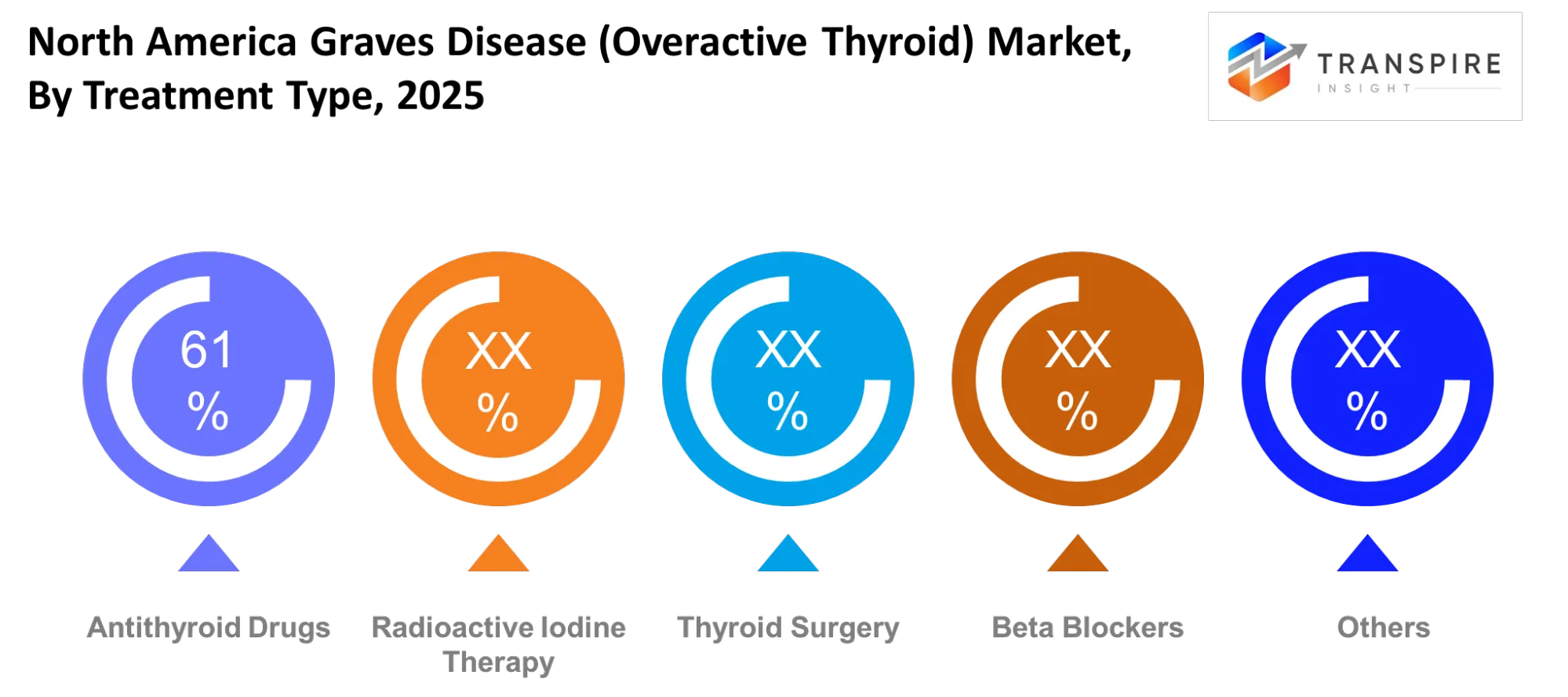
Antithyroid drugs kinda keep the dominant position in the whole treatment landscape, mainly because they’re used a lot as first-line therapy for hyperthyroidism, especially in Graves disease situations. There’s also this strong clinical preference for options that are not invasive and can be reversed, so their share stays high across endocrinology clinics and in hospital outpatient departments. Radioactive iodine therapy holds a fairly stable secondary place, mostly since it’s been proven effective for definitive thyroid ablation for a long time. Thyroid surgery, plus beta blockers, end up playing more narrow roles, like for severe, or resistant cases, and for symptom control , respectively.
The growth with antithyroid drugs is usually linked to higher early diagnosis rates and a broader preference for outpatient centered management. Radioactive iodine usage tends to move with patient selection habits, where people are steered toward non-surgical definitive treatment once drug therapy doesn’t work. Surgical intervention is limited by the higher procedural risk and also by longer recovery timelines. Beta blockers stay fairly steady, they’re more for supportive symptom relief rather than actually modifying the underlying disease.
Looking at the forecast period, antithyroid drugs will continue to anchor these treatment pathways, especially as long-term management gets more organized. Radioactive iodine therapy should stay important in refractory cases. Surgery uptake is expected to level off at a low volume, while supportive therapies will continue to see dependable demand in acute care settings.
To learn more about this report, Download Free Sample Report
By Disease Type
Hyperthyroidism is still the biggest chunk of the overall disease picture, largely because of its close clinical tie to Graves disease and the strong diagnosis rates seen across endocrine care systems. Graves ophthalmopathy takes a smaller slice, but it is slowly widening, mostly as clinicians increasingly notice orbital complications that show up alongside autoimmune thyroid dysfunction. Thyroid storm stays uncommon, yet it’s very intense, and it’s usually handled in emergency rooms and intensive care units. The remaining thyroid conditions add only a modest share when you look across broader thyroid disorder groups.
When you zoom in on momentum, growth for hyperthyroidism treatment is being helped by better screening, plus earlier intervention steps in both primary care and specialty settings. Graves ophthalmopathy is also trending upward, driven by the broader use of biologic therapies that aim at inflammatory pathways in the orbit. Thyroid storm management doesn’t expand much because the whole issue is acute by nature, and its incidence remains low. Even so, more clinical awareness is gradually tightening up how teams detect the related complications, across many care networks.
Looking ahead, future expansion will focus on better linking ophthalmic care with endocrine care for Graves ophthalmopathy. Hyperthyroidism should stay the main treatment driver throughout the period. For thyroid storm, emergency-based care will likely stay fairly steady, but it will still require very specialized resources, meaning high-acuity hospital infrastructure and fast response protocols.
By Distribution Channel
Hospital pharmacies seem to take the biggest slice, mostly because treatment begins in a centralized way for complex thyroid disorders that need specialist oversight. Retail pharmacies keep a solid presence in the picture too, especially when it comes to dispensing maintenance antithyroid medications for patients who are stable and basically outpatient. Online pharmacies are smaller but still moving upward, they are supported by telehealth activity and the habit of chronic prescription refills. The other channels are pretty restricted, mostly tied to institutional procurement systems, with not much else happening.
The momentum in hospital pharmacies comes from the early diagnosis stage plus the acute needs that show up in endocrine and emergency care environments. Retail growth lines up with the broader shift to long term oral therapy management outside hospitals, not everyone wants to stay in that setting. Online adoption picked up more quickly after 2020, mainly because digital consultations became more common, and people can continue refills with less friction. Still, prescription verification rules and similar regulatory constraints make it hard for online channels to reach full scale penetration.
Over time, hybrid distribution models will likely dominate as hospital initiation gradually transitions to retail and digital continuation paths. Pharmaceutical companies will also push further cooperation with specialty pharmacy networks. And digital platforms are expected to matter more as healthcare systems expand remote monitoring, especially for chronic thyroid conditions where follow-ups can be handled at a distance.
By End User
Hospitals take the lead in end-user demand because they’re the ones doing the diagnosing and handling more complex or acute thyroid problems, often requiring multidisciplinary care. Endocrinology clinics show up as a fast-growing slice of demand supported by more outpatient visits moving over time, plus chronic disease management models that keep getting refined. Speciality centres also keep expanding, mainly because more people are seeking concentrated thyroid and autoimmune treatment services. Still, other end users remain somewhat scattered, spread across general health providers and local practices.
For hospitals, growth is mostly pulled by high patient inflow during severe hyperthyroidism episodes and emergency thyroid storm situations. Endocrinology clinics, on the other hand , tend to benefit from higher early diagnosis rates and more structured, long-term management pathways. Specialty centers continue to grow as access to focused endocrine know-how improves, and because treatment cycles become shorter. Altogether these changes point to a broader decentralization of how chronic conditions get managed.
Over the forecast period , endocrinology clinics are likely to grab more share as outpatient treatment becomes the default care approach. Hospitals still matter a lot, especially for acute, complicated cases. Specialty centers will also keep strengthening their role in ongoing disease monitoring, and in the administration of biologic therapies.
What are the Key Use Cases Driving the North America Graves Disease (Overactive Thyroid) Market?
Hyperthyroidism management is kinda the main use case in the North American Graves disease market, since most clinicians focus on restoring thyroid hormone equilibrium to avoid cardiac issues and metabolic ups and downs. Antithyroid drug therapy pretty much leads this route because it can quickly adjust hormone levels in outpatient endocrine care, and in hospital settings too, all without any kind of invasive steps or whatever.
Graves ophthalmopathy treatment, plus ongoing monitoring after diagnosis, is getting bigger too. This shows up especially in specialty endocrinology clinics and in multi discipline hospital wards where care is coordinated. Biologic therapies ,and also more structured follow-up programs, help with better day to day disease control while long term patient tracking tends to improve how well people stick to therapy plans. Thyroid storm emergency management places additional strain on intensive care units, though its incidence remains low.
On the newer side, you can see preventive screening for high risk autoimmune patients, and also combined endocrine ophthalmology care models. Tele endocrinology platforms are climbing as well, for chronic thyroid monitoring, they help catch problems earlier and slowly reduce the need for hospital dependency as time goes on.
|
Report Metrics |
Details |
|
Market size value in 2025 |
USD 204.7 Million |
|
Market size value in 2026 |
USD 212.5 Million |
|
Revenue forecast in 2033 |
USD 276.7 Million |
|
Growth rate |
CAGR of 3.84% from 2026 to 2033 |
|
Base year |
2025 |
|
Historical data |
2021 - 2024 |
|
Forecast period |
2026 - 2033 |
|
Report coverage |
Revenue forecast, competitive landscape, growth factors, and trends |
|
Regional scope |
North America (Canada, The United States, and Mexico) |
|
Key company profiled |
AbbVie, Pfizer, Merck & Co., Novartis, Sanofi, Bayer, AstraZeneca, Eli Lilly, Takeda Pharmaceutical, Bristol Myers Squibb, Johnson & Johnson, Roche, Teva Pharmaceuticals, Bausch Health, Horizon Therapeutics |
|
Customization scope |
Free report customization (country, regional & segment scope). Avail customized purchase options to meet your exact research needs. |
|
Report Segmentation |
By Treatment Type (Antithyroid Drugs, Radioactive Iodine Therapy, Thyroid Surgery, Beta Blockers, Others); By Disease Type (Hyperthyroidism, Graves Ophthalmopathy, Thyroid Storm, Others); By Distribution Channel (Hospital Pharmacies, Retail Pharmacies, Online Pharmacies, Others); By End User (Hospitals, Endocrinology Clinics, Specialty Centers, Others) |
Which Regions are Driving the North America Graves Disease (Overactive Thyroid) Market Growth?
The United States leads the North America Graves disease market maybe because it has a more mature endocrine care setup, better diagnostic reach, and it has been quicker to roll out these focused thyroid therapies. The FDA-backed regulatory pathways, help speed up approvals, and then you actually see quicker clinical take-in for antithyroid drugs and biologics used in Graves ophthalmopathy. Big hospital systems and dedicated endocrinology centers tend to push early identification, plus structured treatment routines, for patient groups that really vary. On top of that, a solid reimbursement ecosystem and well-established pharmaceutical distribution routes keep treatment access steady over time.
Canada comes next as the second main region, largely supported by its publicly funded healthcare system. That model helps keep diagnostics for thyroid problems and treatments within reach, in a consistent way. Still, compared with the United States, Canada growth seems less about fast innovation cycles, and more about continuing with established clinical guideline adoption across provinces. Endocrinology services are also quite integrated inside public hospitals, so uptake for hyperthyroidism and the related problems stays more predictable. In other words this calm structure supports long-run demand, without wild swings in prescribing behavior.
Mexico is the fastest-growing area, mostly tied to expanding healthcare infrastructure, more people getting insurance coverage, and wider availability of specialized endocrine services. New spending on diagnostic labs plus the expansion of urban hospitals has improved early detection of Graves disease and other thyroid disorders. Growth in private care meanwhile makes antithyroid therapies easier to access and also increases availability of specialist consultations. For investors and new entrants, this looks like a meaningful expansion runway between 2026 and 2033, particularly through local partnerships and distribution network development.
Who are the Key Players in the North America Graves Disease (Overactive Thyroid) Market and How Do They Compete?
The North America Graves disease market shows a moderately consolidated competitive structure, where established pharmaceutical firms more or less dominate prescription drug supply while specialty biotech developers lean into niche autoimmune and endocrine innovations. Competition is mostly about treatment differentiation not pricing, and the conversation stays on safety profiles, durable disease control, and biologic efficacy for Graves ophthalmopathy. Incumbents defend their positions via strong clinical trial pipelines and ongoing physician engagement, but newer entrants kinda aim at specific sub-segments like orbitopathy and precision immunotherapy. Even so, technology-driven differentiation is starting to outweigh geographic expansion as the main competitive lever, slowly, more than before.
AbbVie strengthens its stance with endocrine-leaning drug portfolios that stretch into autoimmune thyroid management, using oral therapy platforms to support outpatient adherence and longer-term prescribing steadiness. Novartis keeps its focus on specialty care innovation, especially in ophthalmology-linked Graves disease, leveraging biologic development know-how and hospital network partnerships to quicken adoption. Sanofi differentiates through immunology expertise, stitching autoimmune research pipelines into thyroid disorder therapeutics, and expanding clinical collaboration programs across North American endocrinology centers.
Pfizer uses a broad endocrine plus primary care distribution approach, depending on long standing physician networks to keep strong penetration in antithyroid drug markets while pushing into next generation therapies. Merck & Co. leans on immunomodulatory research strengths, moving pipeline candidates that target autoimmune pathways tied to Graves disease complications. These companies also grow through strategic clinical partnerships, real-world evidence generation programs, and targeted regulatory filings that strengthen formulary access across hospital and specialty care systems.
Company List
- AbbVie
- Pfizer
- Merck & Co.
- Novartis
- Sanofi
- Bayer
- AstraZeneca
- Eli Lilly
- Takeda Pharmaceutical
- Bristol Myers Squibb
- Johnson & Johnson
- Roche
- Teva Pharmaceuticals
- Bausch Health
- Horizon Therapeutics
Recent Development News
“In October 2025, AbbVie completed its acquisition of Gilgamesh Pharmaceuticals’ lead asset bretisilocin for major depressive disorder.” While primarily CNS-focused, this strategic acquisition expands AbbVie’s footprint in neuroendocrine signaling pathways (serotonergic and hormone-linked systems), which are increasingly relevant in endocrine-immune interaction research.https://www.prnewswire.com/news-releases/abbvie-completes-acquisition-of-gilgamesh-pharmaceuticals-bretisilocin-302587587.html
What Strategic Insights Define the Future of the North America Graves Disease (Overactive Thyroid) Market?
The North America Graves disease (Overactive Thyroid) Market is kind of moving, toward earlier-stage detection and longer outpatient follow up, driven by precision diagnostic improvements and the steady expansion of tele-endocrinology networks. Because of this, providers rely less on those on and off hospital based episodes, and more on continuous treatment lanes backed by antithyroid drugs and biologics. In the next 5 to 7 years, the value side will likely gather around therapies and services that keep the disease steadier over time, while also cutting down relapse cycles tied to autoimmune thyroid issues.
There’s also a quieter risk, one that doesn’t always get noticed right away. Payer systems are pushing for higher treatment standardization which can tilt attention toward low-cost generic antithyroid drugs and, at the same time, reduce reimbursement flexibility for higher-priced biologics aimed at Graves ophthalmopathy. So even if the next-gen options look clinically strong, adoption could end up slower than expected. Another limitation is that diagnostic infrastructure is not even across smaller healthcare networks, which causes delays in early intervention, and then it drags down overall treatment uptake efficiency.
Still, an opportunity is forming in integrated endocrine-ophthalmology care models, supported by biologic innovation. This is especially relevant for thyroid eye disease management within tertiary care hospitals across the United States. Firms that can sync clinical trials with real world outcome data, and also get early payer conversations started, should see better formulary traction. Strategic emphasis should lean into evidence building that proves long-term cost reduction via relapse prevention, rather than just optimizing short term treatment expense.
North America Graves Disease (Overactive Thyroid) Market Report Segmentation
By Treatment Type
- Antithyroid Drugs
- Radioactive Iodine Therapy
- Thyroid Surgery
- Beta Blockers
- Others
By Disease Type
- Hyperthyroidism
- Graves Ophthalmopathy
- Thyroid Storm
- Others
By Distribution Channel
- Hospital Pharmacies
- Retail Pharmacies
- Online Pharmacies
- Others
By End User
- Hospitals
- Endocrinology Clinics
- Specialty Centers
- Others
Frequently Asked Questions
Find quick answers to common questions.
The expected North America Graves Disease (Overactive Thyroid) Market size is USD 276.7 Million in 2033.
Key segments for the North America Graves Disease (Overactive Thyroid) Market are By Treatment Type (Antithyroid Drugs, Radioactive Iodine Therapy, Thyroid Surgery, Beta Blockers, Others); By Disease Type (Hyperthyroidism, Graves Ophthalmopathy, Thyroid Storm, Others); By Distribution Channel (Hospital Pharmacies, Retail Pharmacies, Online Pharmacies, Others); By End User (Hospitals, Endocrinology Clinics, Specialty Centers, Others).
Major North America Graves Disease (Overactive Thyroid) Market players are AbbVie, Pfizer, Merck & Co., Novartis, Sanofi, Bayer, AstraZeneca, Eli Lilly, Takeda Pharmaceutical, Bristol Myers Squibb, Johnson & Johnson, Roche, Teva Pharmaceuticals, Bausch Health, Horizon Therapeutics.
The North America Graves Disease (Overactive Thyroid) Market size is USD 204.7 Million in 2025.
The North America Graves Disease (Overactive Thyroid) Market CAGR is 3.84% from 2026 to 2033.
- AbbVie
- Pfizer
- Merck & Co.
- Novartis
- Sanofi
- Bayer
- AstraZeneca
- Eli Lilly
- Takeda Pharmaceutical
- Bristol Myers Squibb
- Johnson & Johnson
- Roche
- Teva Pharmaceuticals
- Bausch Health
- Horizon Therapeutics
Recently Published Reports
-
Apr 2026
AI in Diabetic Retinopathy Market
AI in Diabetic Retinopathy Market Size, Share & Analysis Report By Type (Screening AI Systems, Diagnostic AI Systems, and Predictive AI Models), By Application Segment (Hospitals, Ophthalmology Clinics, Diagnostic Centers, and Research and Development), and Geography (North America, Europe, Asia-Pacific, Middle East and Africa, South and Central America), 2021 - 2031
-
Apr 2026
Psychometric Tests Market
Psychometric Tests Market Size, Share & Analysis Report By Type (Personality Tests, Ability/Aptitude Tests, Skill/Knowledge Tests, and Others), By Application (Talent Acquisition and Talent Management), and Geography (North America, Europe, Asia-Pacific, Middle East and Africa, South and Central America), 2021 – 2031
-
Apr 2026
Rare Biological Sample Collection Market
Rare Biological Sample Collection Market Size, Share & Analysis Report By Type (Isolation Kits & Reagent, Blood Collection Tubes, and Others), By Application (Oncology, Transcriptomics, Pharmacogenomics, and Others), and Geography (North America, Europe, Asia-Pacific, Middle East and Africa, South and Central America), 2021 – 2031
-
May 2026
Patient Lift Pendant Market
Patient Lift Pendant Market By Product Type (Wired Pendants, Wireless, Programmable), By Operation Type(Manual, Electric), By End-Users (Healthcare Professionals, Patients), By Application (Hospitals, Homecare, Rehabilitation Centers, Others), By Industry Analysis, Size, Share, Growth, Trends, and Forecasts 2021-2033
Our Clients
.jpg)