

North America Pingueculum Drugs Market Size & Forecast:
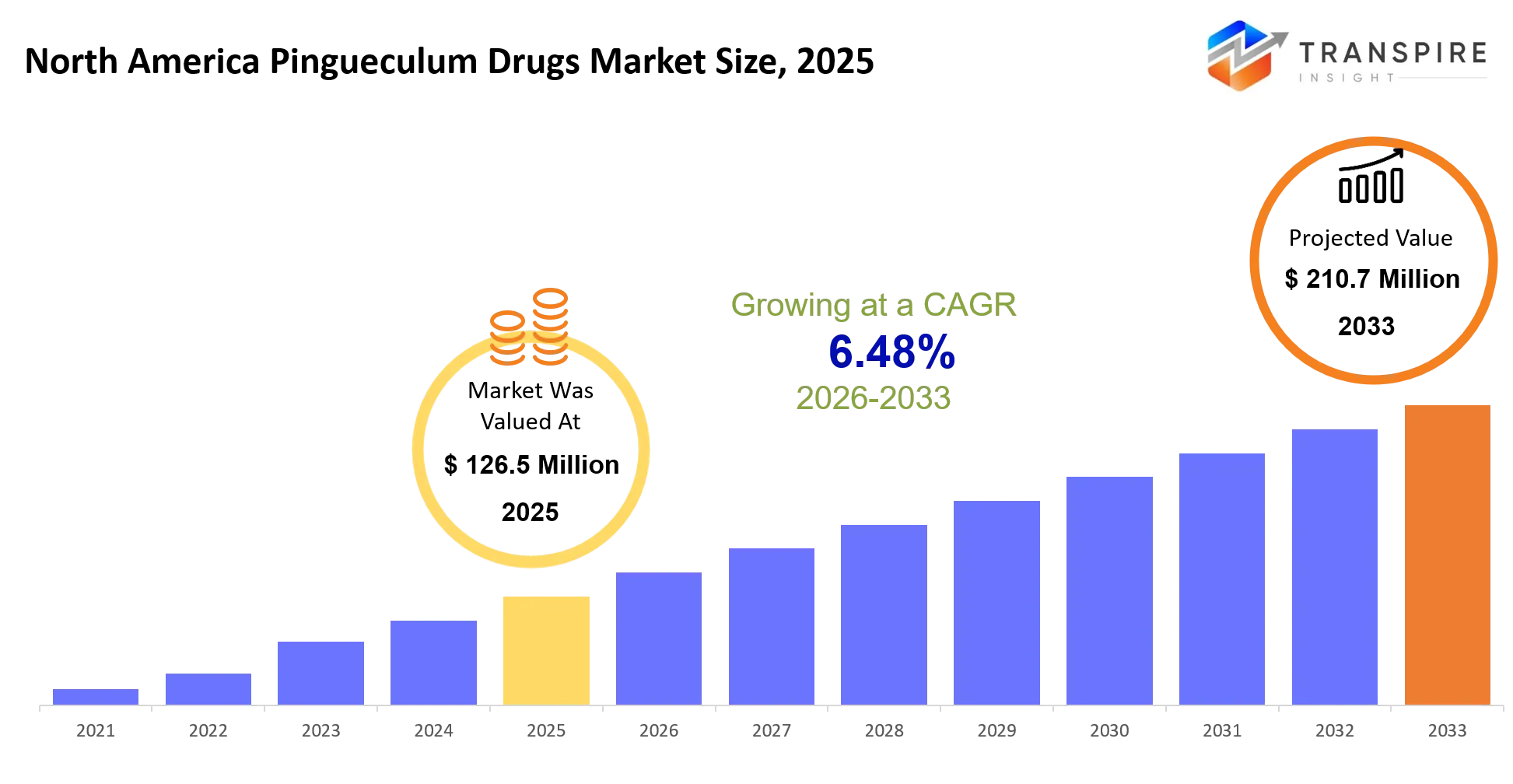
- North America Pingueculum Drugs Market Size 2025: USD 126.5 Million
- North America Pingueculum Drugs Market Size 2033: USD 210.7 Million
- North America Pingueculum Drugs Market CAGR: 6.48%
- North America Pingueculum Drugs Market Segments: By Drug Type (Lubricating Eye Drops, Corticosteroid Eye Drops, Anti-inflammatory Drugs, Antibiotic Eye Drops, Others), By Application (Eye Irritation Relief, Inflammation Reduction, Dry Eye Management, Others), By End User (Hospitals, Ophthalmology Clinics, Specialty Eye Centers, Others), By Distribution Channel (Hospital Pharmacies, Retail Pharmacies, Online Pharmacies, Others).
To learn more about this report,  Download Free Sample Report
North America Pingueculum Drugs Market Summary:
The North America Pingueculum Drugs Market size is estimated at USD 126.5 Million in 2025 and is anticipated to reach USD 210.7 Million by 2033, growing at a CAGR of 6.48% from 2026 to 2033.North America Pingueculum Drugs Market kinda grabs a real ophthalmic need, managing eye irritation and inflammation , also dryness and that annoying cosmetic discomfort that shows up with pinguecula. This common conjunctival degeneration tends to grow alongside long-term ultraviolet exposure, plus dust, and dry environmental stress. So, drug therapies let patients rein in symptoms, calm inflammation, and help slow down progression that might otherwise chip away at comfort and daily quality of life.
In the last three to five years, the market has shifted in a more structural way, moving toward earlier action and long-term ocular surface care instead of treating symptoms in a sort of “only when it flares up” pattern. That change has boosted the place of prescription anti-inflammatory agents, lubricating formulations, and even combination therapies inside standard eye care routines. One big real-world catalyst was the jump in screen time and the extended indoor outdoor environmental pressure right after the pandemic, which then pushed dry eye type complaints higher and also nudged more patients into ophthalmology visits. Since more people now look for care for chronic ocular surface issues, physicians are also leaning into more targeted therapies, and that tends to raise treatment adherence, widen product usage, and support stronger revenue across the regional market .
Key Market Insights
- The United States accounts for the largest share (around 82%) of the North America Pingueculum Drugs Market share in 2024 and it is expected that the US would continue its dominance over the market because of its advanced eye care facilities.
- The second largest market share in the North America Pingueculum Drugs Market share goes to Canada because of its accessible ophthalmic services and rising spending on healthcare.
- Mexico is the fastest growing market share during the forecast period because of increasing use of special eye treatments.
- Anti-inflammatory drugs held the largest market share of approximately 45% in 2024 and these drugs are important because of their use to treat irritation and controlling inflammation in pingueculum.
- Lubricating eye drops held second largest market share due to its effective use to treat chronic irritations and dry eye induced symptoms of pingueculum.
- The fastest growing market share in combination therapies through 2032 is expected to be due to the increasing usage of overall treatment of ocular surface treatments.
- The market share for symptomatic pingueculum management accounts for around 60% in 2024 and its major function is to reduce inflammation.
- Post-surgical and advanced ocular surface care is the fastest growing application segment in the forecast period due to the increasing usage in eyes after surgeries.
- Growing needs to have preventive ocular health management system has created opportunity for rise in the sales for ophthalmology practices.
- The ophthalmology clinics hold largest market share of 55% due to specialist driven treatment for pingueculum.
- Second largest market share is held by the hospitals due to large ophthalmic treatment facilities available at hospitals.
- Ambulatory surgical centers hold largest fastest growing market share due to the increase in ophthalmic surgery.
What are the Key Drivers, Restraints, and Opportunities in the North America Pingueculum Drugs Market?
The main force, kinda pushing the North America Pingueculum Drugs Market ahead, is a broader shift toward proactive management of ocular surface disease. In the past few years, ophthalmologists have become more and more used to treatment protocols that tackle chronic inflammation and that eye surface irritation, even before the discomfort turns so bad that surgery gets mentioned. That change didn’t just appear out of nowhere, it was triggered by better diagnostic capabilities, and honestly by a growing clinical focus on keeping long-term ocular health intact. So now, physicians are starting to prescribe anti-inflammatory therapies and more advanced lubricating formulations earlier, like in the very first parts of the treatment cycle. With earlier action, the treated patient base gets bigger, prescription volumes go up, and manufacturers start seeing recurring revenue chances, more often than before.
The biggest restraint is still the limited availability of drugs that are specifically approved for pingueculum treatment. A lot of what’s used today is really meant to manage symptoms, rather than aim directly at the underlying condition. This becomes a structural issue, because creating dedicated ophthalmic drugs means long clinical trials, regulatory approvals, and heavy investment, even though the overall patient population is relatively small. In the end, product innovation moves slower, treatment differentiation stays restricted and there are missed revenue opportunities tied to patients who either aren’t treated at all, or they depend on over-the-counter alternatives.
A major opportunity lies in building the next-generation eye drug delivery systems, like sustained-release eye drops and nanoparticle based formulations. More money is getting pushed into these technologies across North America’s ophthalmology sector, mainly because they can enhance drug retention, and also boost patient adherence. There are companies that if they manage to commercialize these platforms, they could end up expanding treatment effectiveness, strengthening physician adoption, and opening up a new phase for premium product growth.
What Has the Impact of Artificial Intelligence Been on the North America Pingueculum Drugs Market?
Artificial intelligence and advanced digital technologies are, um, starting to sway the North America Pingueculum Drugs Market more and more, mainly because they improve clinical decision- making, but also the day to day pharmaceutical operations. AI-driven image analysis platforms are getting built into ophthalmology routines, so they can appraise ocular surface issues from high resolution eye images , pretty much on their own. In practice this kind of setup lets clinicians spot inflammation signatures, track how lesions are changing over time, and back up treatment selection with steadier consistency. From an operations angle, pharmaceutical companies are leaning on AI to handle clinical data processing, patient sourcing, and real world evidence interpretation, so the paperwork load drops, and the development clock seems to move quicker.
Machine learning models are also sharpening what they call predictive insight across the ophthalmic therapeutics ecosystem. They look at patient demographics, past treatments, environmental exposure details, and progression signals, then they can forecast treatment outcomes, which in turn helps steer toward more individualized therapy plans. That often boosts patient follow through, and it assists providers in picking prescriptions that make more sense. At the same time, digital analytics platforms are tightening inventory oversight and demand projections , cutting down supply chain hiccups and lowering operating costs.
So overall, you get quicker diagnosis, stronger treatment monitoring, better resource allocation, and smoother commercialization of ophthalmic products. Still, one major catch stays there, namely the availability of large, high-quality ophthalmic datasets. A lot of AI models hit accuracy walls when they are used across varied patient groups, and that can delay wider clinical rollouts and complicate regulatory review.
Key Market Trends
- The uptake of preservative-free eyedrop was sped up from 2021-2025 with the increasing importance of long-term ocular surface health and patient compliance by clinicians.
- Adoption of digital eye screening platforms grew across North America post-2020 thereby speeding up detection of long-term ocular surface diseases in outpatient settings.
- There was a redirection of pharmaceutical companies R&D investments toward combination formulations to address inflammation, irritation, and lubrication with a single prescription course.
- Incidences of screen-related eye strain spiked after the pandemic and led to increased clinical assessment of ocular surface disease.
- Companies reduced dependency on a single-source ingredient suppliers post-2021 as a reaction to pharmaceutical supply chain disruption and logistically volatile conditions.
- Novartis, Alcon and Bausch + Lomb expanded ophthalmology portfolios with strategically driven products and partnerships.
- There was an increase in the significance of real-world evidence studies post-2022 which helps manufacturers validate treatment efficacy and support payer negotiations.
- AI-enabled ophthalmic imaging tools became a burgeoning clinical trend with enhanced diagnostic accuracy and early treatment.
- Over the last five years outpatient ophthalmology practices accounted for a higher proportion of treatment volume with the focus on cost-effective care delivery systems.
North America Pingueculum Drugs Market Segmentation
By Drug Type
So by drug type, lubricating eye drops kind of stay in the lead position because most patients want quick relief from irritation, dryness, and that foreign body sensation tied to pingueculum. They’re broadly available , the treatment costs are lower, and they work well for long-term use, so adoption is pretty strong across outpatient settings too. Anti-inflammatory drugs come in as the second-largest category. This is mostly because ophthalmologists are increasingly targeting the underlying ocular surface inflammation, instead of just focusing on symptom management all the time.
Corticosteroid eye drops keep a more specialized use, mainly for short-term treatment during acute inflammatory episodes, while antibiotic eye drops go to a smaller patient group when the risk of secondary infection starts to show up. The other therapies take up a smaller slice, but they still help, especially as formulations improve over time. Going forward, growth is expected to lean toward advanced combo products and preservative-free formulations , which should let manufacturers stand out more in their portfolios while also offering added therapeutic value for patients and healthcare providers.
By Application
By application, eye irritation relief is still the leading segment, largely because discomfort and redness are usually the main triggers that make patients ask for clinical help. This segment keeps doing well since the treatment needs come back, and because lubricating together with other supportive therapies are used very broadly. Inflammation reduction has also been moving up in priority, as ophthalmologists seem to put more focus on slowing disease progression, and helping long-term ocular surface well being.
Dry eye management meanwhile stays a big category, since a lot of people report similar overlapping symptoms, so they end up needing ongoing care. Other applications take up a smaller share, but they still matter, and often they lean toward supportive plus preventive treatment strategies. Looking forward, the gap between these applications should become less clear cut, as integrated treatment methods start to get more traction. Pharmaceutical companies that can build therapies to handle multiple symptoms at once are likely to draw more market attention and, in turn, strengthen doctors’ prescribing preferences.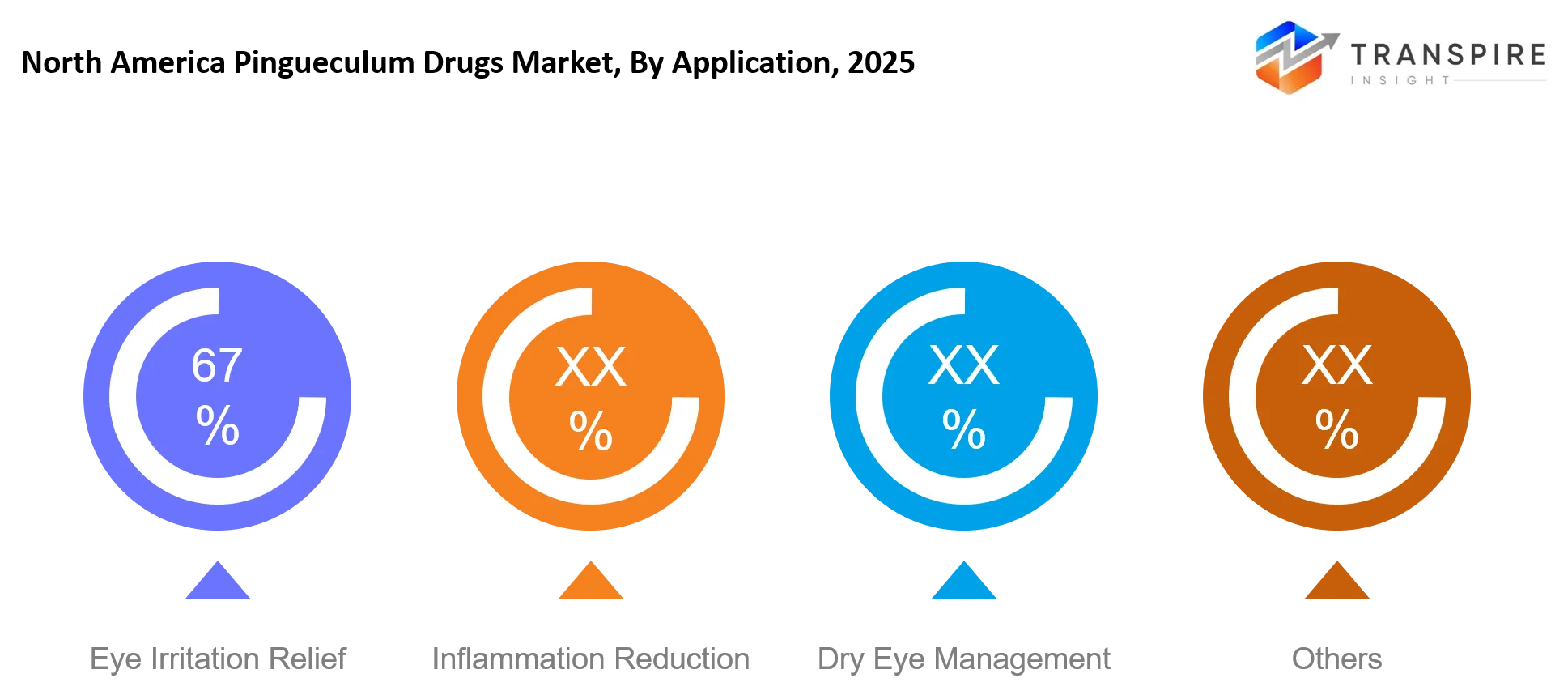
To learn more about this report, Download Free Sample Report
By End-User
By end user, ophthalmology clinics sort of run the market, mainly because they see a lot of patients, bring specialized know how and handle ocular surface troubles on a routine basis. Those places end up being the first stop for diagnosis and the whole treatment kickoff, so they help keep prescription activity pretty steady. Hospitals still have a meaningful presence too , since they offer broad eye care services and they’re easier to connect with when a patient needs advanced assessment and a multidisciplinary team.
Specialty eye centers also keep growing , because providers are leaning into dedicated ophthalmic offerings and more personalized treatment pathways. Other healthcare settings play a smaller role, but they do help with access in areas that are underserved. For what comes next in this segment, development will likely revolve around expanding outpatient care, using digital diagnostic tools more often, and setting up smoother patient management systems. In turn, these shifts might push manufacturers to deepen ties with specialized providers, while investors will likely lean toward facilities that can deliver efficient eye care that’s enabled by technology.
By Distribution Channel
From the perspective of distribution channel, the distribution channel for retail pharmacies occupies the largest part as people consider more on convenient purchasing and direct access to common prescription and OTC eye care products. The hospital pharmacy distributes important drugs, which is necessary for a completion of prescriptions after the specialty consultation or hospitalization of patients. In recent years, the online pharmacy market is expanding at a rapid rate with increasingly wide acceptance of e-health services, the trend of offering promotional prices and home delivery, other distribution channels is keeping their share though negligible in a localized market.
With increasing need for convenient purchase and online shopping preference for consumers not simply based on traditional purchasing habit anymore; it is predicted that pharmaceutical companies will be investing in customer relations with consumers directly when the online pharmacy's inventory and prescription-related capabilities develop well. With such a move, consumers are possible to have a more direct access to the variety of eye care products while distributors with both physical and virtual operation abilities may obtain further advantages.
What are the Key Use Cases Driving the North America Pingueculum Drugs Market?
The main reason behind adoption in the North America Pingueculum Drugs Market is basically getting relief from eye irritation and that dryness thing tied to long term ultraviolet exposure, dust, and overall environmental strain. In real practice, ophthalmology clinics end up pulling in most demand, since patients tend to look for help with persistent redness, discomfort, and a sort of foreign body sensation that messes with everyday routines and even work output.
More and more the applications are broadening too, like inflammation control and long term care for the ocular surface especially in specialty eye centers and departments inside hospitals. Those places are prescribing anti inflammatory therapies, and also newer lubricating formulations, for people who keep getting recurring symptoms, experience irritation after procedures, or have coexisting dry eye disease that really needs ongoing observation and continued treatment.
On top of that, the emerging use cases include AI supported evaluation of the ocular surface, and then more tailored treatment planning based on exposure patterns in their surroundings, plus their symptom history. Tele-ophthalmology programs, along with digital eye screening initiatives show potential as well, because they could spot symptomatic patients earlier and route them to targeted pharmacologic therapy before things become more severe or complicated.
|
Report Metrics |
Details |
|
Market size value in 2025 |
USD 126.5 Million |
|
Market size value in 2026 |
USD 135.8 Million |
|
Revenue forecast in 2033 |
USD 210.7 Million |
|
Growth rate |
CAGR of 6.48% from 2026 to 2033 |
|
Base year |
2025 |
|
Historical data |
2021 - 2024 |
|
Forecast period |
2026 - 2033 |
|
Report coverage |
Revenue forecast, competitive landscape, growth factors, and trends |
|
Country scope |
North America (Canada, The United States, and Mexico) |
|
Key company profiled |
AbbVie, Alcon, Bausch + Lomb, Santen Pharmaceutical, Novartis, Pfizer, Regeneron Pharmaceuticals, EyePoint Pharmaceuticals, Sun Pharmaceutical, Johnson & Johnson Vision, Cipla, Rohto Pharmaceutical, Sentiss Pharma, Akorn Pharmaceuticals, Ocular Therapeutix |
|
Customization scope |
Free report customization (country, regional & segment scope). Avail customized purchase options to meet your exact research needs. |
|
Report Segmentation |
By Drug Type (Lubricating Eye Drops, Corticosteroid Eye Drops, Anti-inflammatory Drugs, Antibiotic Eye Drops, Others), By Application (Eye Irritation Relief, Inflammation Reduction, Dry Eye Management, Others), By End User (Hospitals, Ophthalmology Clinics, Specialty Eye Centers, Others), By Distribution Channel (Hospital Pharmacies, Retail Pharmacies, Online Pharmacies, Others) |
Which Regions are Driving the North America Pingueculum Drugs Market Growth?
The United States shows up as the leading area within the North America Pingueculum Drugs Market because it has a big ophthalmology patient pool, strong healthcare foundations, and an effective reimbursement scheme. In practice, early uptake of targeted eye care medicines plus the broad reach of ophthalmologists seems to push prescription numbers higher than in most other parts of the region. Also, the regulatory routes that lean toward innovation and commercialization have helped widen the availability of newer ophthalmic formulations. You can also see a maturing ecosystem of pharmaceutical companies, research organizations , specialty practices, and hospital networks keeping market momentum steady and basically cementing leadership.
Canada sits as the second-largest regional market, though the growth pattern is not identical to the United States. With universal healthcare coverage and well-defined care pathways, the country has a fairly dependable setting for identifying patients, treating them, and keeping long term follow up under control. Steady public healthcare funding supports continued use of ophthalmic therapies even when economic conditions feel uncertain. That kind of stability makes Canada a reliable contributor to regional revenue even if the population is smaller and total prescription volumes are comparatively lower.
Mexico is emerging as the fastest-growing market, mainly as access to healthcare improves, and spending on focused eye care services increases. The spread of private ophthalmology chains, along with easier availability of prescription treatments, has improved patient reach during recent years. Urban growth, environmental exposure drivers, and a higher tendency toward preventive eye check ups are quietly creating fresh opportunities for pharmaceutical suppliers. For newcomers , and for investors too, Mexico offers major room for expansion between 2026 and 2033 as healthcare infrastructure keeps improving .
Who are the Key Players in the North America Pingueculum Drugs Market and How Do They Compete?
Competition in the North America Pingueculum Drugs Market is sort of moderately consolidated, with a small set of ophthalmology - focused pharmaceutical companies holding a meaningful share of prescription treatments. Competitive advantage seems to come mostly from formulation innovation, clinical proof, physician connections, and distribution reach, not just price swings alone. Established manufacturers keep defending their spot by portfolio expansion and lifecycle management, while smaller specialty firms often chase niche ocular surface conditions using more differentiated therapies. As treatment strategies keep moving toward long-term disease management, the players that show stronger efficacy, better tolerability, and higher patient adherence are gaining more weight in the market
Novartis is really focused on technology - driven ophthalmic innovation, with lots of clinical research capability behind it. They differentiate through a wide eye care portfolio and solid relationships with ophthalmology specialists across North America. Alcon goes for an integrated eye care model, blending pharmaceuticals with surgical products and diagnostic technologies. That approach lets Alcon work with providers across different points of the patient journey, while they continue expanding via product launches and investments in digital ophthalmology tools
Bausch + Lomb competes via deep specialization in ocular health and a fairly broad range of prescription and over - the - counter eye care products. Strong brand recognition with clinicians and patients helps keep demand steady across multiple treatment categories. AbbVie, using its ophthalmology portfolio, leans on research know-how in inflammatory disorders to design targeted.
Company List
- AbbVie
- Alcon
- Bausch + Lomb
- Santen Pharmaceutical
- Novartis
- Pfizer
- Regeneron Pharmaceuticals
- EyePoint Pharmaceuticals
- Sun Pharmaceutical
- Johnson & Johnson Vision
- Cipla
- Rohto Pharmaceutical
- Sentiss Pharma
- Akorn Pharmaceuticals
- Ocular Therapeutix
Recent Development News
In February 2026, Alcon Projects Growth Driven by New Eye-Care Product Launches in 2026: Alcon announced that it expects 2026 sales and profitability growth to be supported by multiple new product launches across its eye-care portfolio. The company highlighted continued investment in ocular-surface and ophthalmic treatments, which are relevant to conditions such as pingueculum that often require lubricating and anti-inflammatory therapies.
Source: https://www.reuters.com
In April 2026, Bausch + Lomb Reports Revenue Growth in First Quarter 2026: Bausch + Lomb reported first-quarter 2026 revenue of approximately $1.24 billion, reflecting growth across its eye-health businesses. The company remains a major supplier of ophthalmic pharmaceuticals and ocular-surface treatments used by eye-care professionals in North America, making its financial performance relevant to the broader pingueculum treatment market.
Source: https://ir.bauschhealth.com
What Strategic Insights Define the Future of the North America Pingueculum Drugs Market?
Over the next five to seven years, the North America Pingueculum Drugs Market is kinda shifting, more toward preventive ocular surface management and that more customized ophthalmic care. The main reason, at least on paper, is the growing use of advanced diagnostics, digital eye health platforms, and earlier clinical steps that find ocular surface problems before they get really bad and then manage them sooner. As a result, the treatment path might last longer, and the market value can rise from specialized therapies, not just from having more patients.
There’s also a less obvious concern, kind of like a quiet structural risk that shows up later. The market is becoming more concentrated, with only a handful of ophthalmology-focused pharmaceutical suppliers and active ingredient sources. So if anything interrupts manufacturing output, regulatory compliance, or the availability of raw materials, you could see real supply bottlenecks. That would lower treatment accessibility even if overall demand conditions look strong.
At the same time, there’s a newer opening worth watching. Sustained release, and targeted ocular drug delivery technologies are starting to look promising, including nanoparticle based formulations, designed to support adherence and improve therapeutic outcomes. Market participants may want to team up with ophthalmology clinics, digital diagnostic providers, and research institutions. The idea is to build clinical evidence early, and establish a differentiated footing before these technologies get pulled into wider commercial use.
North America Pingueculum Drugs Market Report Segmentation
By Drug Type
- Lubricating Eye Drops
- Corticosteroid Eye Drops
- Anti-inflammatory Drugs
- Antibiotic Eye Drops
- Others
By Application
- Eye Irritation Relief
- Inflammation Reduction
- Dry Eye Management
- Others
By End User
- Hospitals
- Ophthalmology Clinics
- Specialty Eye Centers
- Others
By Distribution Channel
- Hospital Pharmacies
- Retail Pharmacies
- Online Pharmacies
- Others
Frequently Asked Questions
Find quick answers to common questions.
The Approximate North America Pingueculum Drugs Market size for the Market will be USD 210.7 Million in 2033.
The key Segments of the North America Pingueculum Drugs Market are By Drug Type (Lubricating Eye Drops, Corticosteroid Eye Drops, Anti-inflammatory Drugs, Antibiotic Eye Drops, Others), By Application (Eye Irritation Relief, Inflammation Reduction, Dry Eye Management, Others), By End User (Hospitals, Ophthalmology Clinics, Specialty Eye Centers, Others), By Distribution Channel (Hospital Pharmacies, Retail Pharmacies, Online Pharmacies, Others).
Major Players in the North America Pingueculum Drugs Market are AbbVie, Alcon, Bausch + Lomb, Santen Pharmaceutical, Novartis, Pfizer, Regeneron Pharmaceuticals, EyePoint Pharmaceuticals, Sun Pharmaceutical, Johnson & Johnson Vision, Cipla, Rohto Pharmaceutical, Sentiss Pharma, Akorn Pharmaceuticals, Ocular Therapeutix.
The Current Market size of the North America Pingueculum Drugs Market is USD 126.5 Million in 2025.
The North America Pingueculum Drugs Market CAGR is 6.48%.
- AbbVie
- Alcon
- Bausch + Lomb
- Santen Pharmaceutical
- Novartis
- Pfizer
- Regeneron Pharmaceuticals
- EyePoint Pharmaceuticals
- Sun Pharmaceutical
- Johnson & Johnson Vision
- Cipla
- Rohto Pharmaceutical
- Sentiss Pharma
- Akorn Pharmaceuticals
- Ocular Therapeutix
About the Authors

Pankaj Ghogare Patil
I am Pankaj Ghogare Patil, a Senior Research Analyst at Transpire Insight, specializing in the Pharmaceutical, Chemicals & Materials, Healthcare IT, and Biotechnology industry. My expertise lies in conducting comprehensive market research, analyzing industry trends, evaluating competitive landscapes, and translating complex data into actionable insights. At Transpire Insight, I closely follow emerging technologies, regulatory developments, and market innovations to create accurate, well-researched, and informative content that helps businesses and professionals make informed decisions. I am committed to producing credible, evidence-based articles that reflect industry best practices while making technical topics accessible and valuable for a broad audience.

Chakradhar Khansole
Chakradhar serves as the Research Director at Transpire Insight, bringing over 8 years of experience in technology, innovation, and strategic market intelligence. He specializes in transforming complex market data into actionable business insights that enable organizations to make informed, growth-oriented decisions. Recognized for his strategic vision and analytical expertise, Chakradhar leads high-impact research initiatives, delivering comprehensive market assessments, competitive intelligence, and forward-looking industry analysis.
Recently Published Reports
-
Jul 2026
Alopecia Treatment Market
Alopecia Treatment Market Size, Share & Analysis Report By Disease Type (Alopecia Areata, Cicatricial Alopecia, Traction Alopecia, Alopecia Totalis, Androgenetic Alopecia, Alopecia Universalis, and Other Disease Types), By Treatment Type (Topical Treatments, Oral Medications, Injectable Therapies, and Hair Transplantation), By Gender (Male, and Female), By Distribution Channel (Hospitals and Clinics, Retail Pharmacies, and Online Retailers), and Geography (North America, Europe, Asia-Pacific, Middle East and Africa, South and Central America), 2021 - 2031
-
Jul 2026
Medical Ultrasound Probe Market
Medical Ultrasound Probe Market Size, Share & Analysis Report By Type (Linear Type, Convex Type, Endocavitary Probe, Phased Array/Cardiac Probe, Transesophageal (TEE) Probe, and Others), By Application (Ophthalmology, Cardiology, Musculoskeletal, Oncology, Obstetrics & Gynecology, General Imaging, and Others), By End User (Hospitals & Clinics, Diagnostic Centers, Ambulatory Surgical Centers, and Others), and Geography (North America, Europe, Asia-Pacific, Middle East and Africa, South and Central America), 2021 – 2031
-
May 2026
Biosimilars Market
Biosimilars Market By Product Type (Monoclonal Antibodies, Recombinant Hormones, Erythropoietin, G-CSF, Others), By Indication (Oncology, Autoimmune Diseases, Blood Disorders, Diabetes, Others), By Manufacturing Type (In-House Manufacturing, Contract Manufacturing), By Distribution Channel (Hospital Pharmacies, Retail Pharmacies, Online Pharmacies), By Industry Analysis, Size, Share, Growth, Trends, and Forecasts 2021-2033
-
Apr 2026
Gastrointestinal Endoscopy Market
Gastrointestinal Endoscopy Market By Type (Rigid Gastrointestinal Endoscope, Flexible Gastrointestinal Endoscopes, Disposable Gastrointestinal Endoscope), By Procedure Type (Colonoscopy, Gastroscopy, Duodenoscopy, Enteroscopy, Flexible Sigmoidoscopy, Others), By Application (Diagnosis, Treatment), By End-Users (Hospitals, Ambulatory Surgical Centers, Specialty Clinics, Laboratories, Others), By Industry Analysis, Size, Share, Growth, Trends, and Forecasts 2021-2033