

North America Metformin Market Size & Forecast:
- North America Metformin Market Size 2025: USD 7.9 Billion
- North America Metformin Market Size 2033: USD 13.8 Billion
- North America Metformin Market CAGR: 7.17%
- North America Metformin Market Segments: By Product Type (Immediate-Release Metformin, Extended-Release Metformin, Combination Metformin, Generic Metformin, Branded Metformin, Oral Solution, Fixed-Dose Combination, Others); By Indication (Type 2 Diabetes, Prediabetes, Polycystic Ovary Syndrome (PCOS), Obesity Management, Gestational Diabetes, Metabolic Syndrome, Clinical Research, Others); By Dosage Strength (500 mg, 750 mg, 850 mg, 1000 mg, Customized Dosage, Pediatric Dosage, Geriatric Dosage, Others); By Distribution Channel (Hospital Pharmacies, Retail Pharmacies, Online Pharmacies, Specialty Pharmacies, Government Supply, Direct Sales, Others); By End User (Hospitals, Diabetes Clinics, Home Healthcare, Specialty Clinics, Research Institutes, Retail Consumers, Academic Medical Centers, Others)
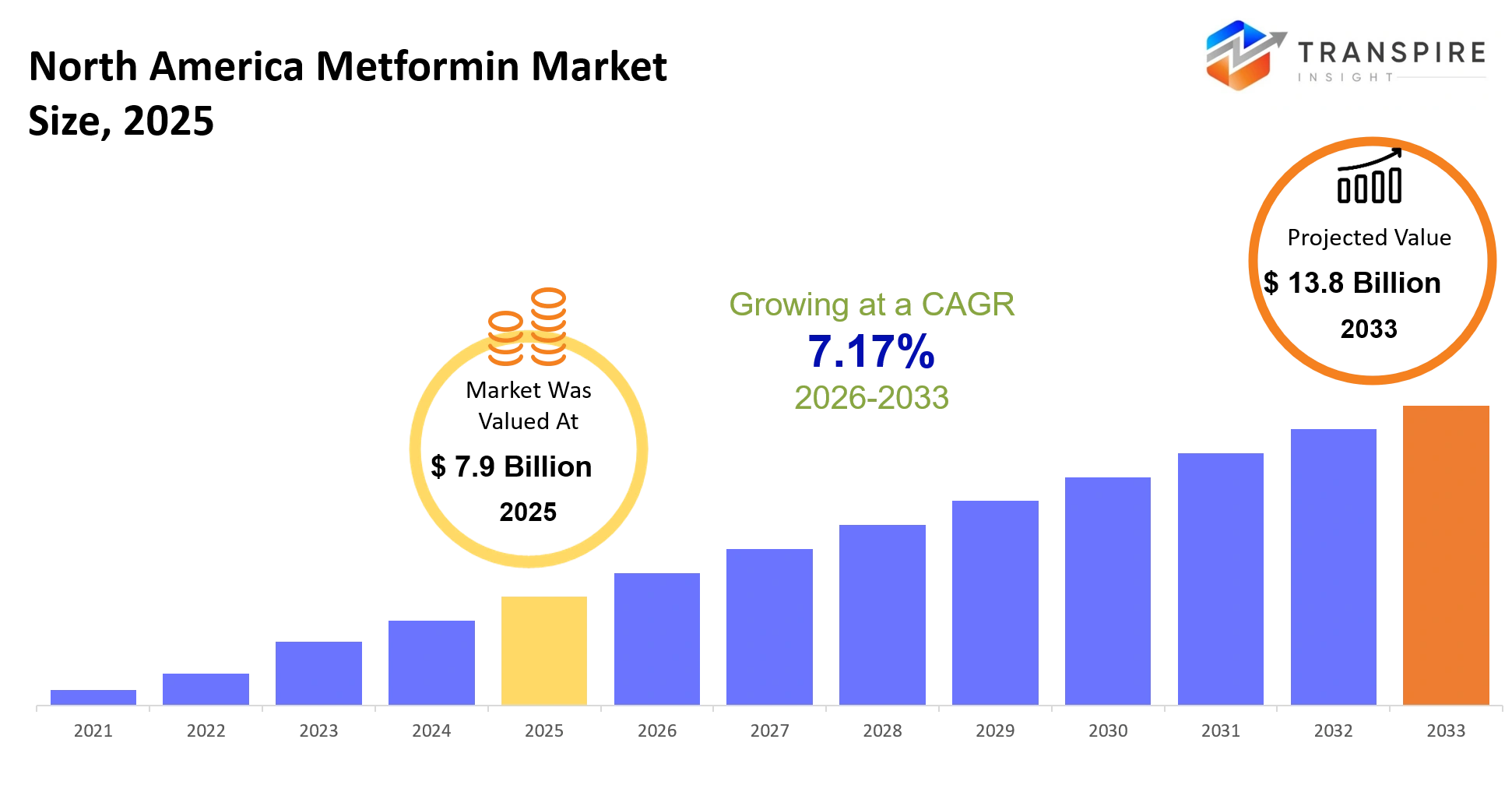
North America Metformin Market Summary
The North America Metformin Market was valued at USD 7.9 Billion in 2025. It is forecast to reach USD 13.8 Billion by 2033. That is a CAGR of 7.17% over the period.
The North America Metformin Market, kind of supports the long-term management of type 2 diabetes by offering an affordable, first-line oral remedy that lets healthcare providers keep blood glucose levels under control while also easing the overall impact from diabetes related complications across hospitals, clinics , retail pharmacies and public health systems. In the last five years, the market has shifted in a more structural way toward durable generic production and stricter pharmaceutical quality supervision. This change basically followed regulatory scrutiny tied to nitrosamine impurities in metformin products, so manufacturers ended up tightening up their testing protocols, spreading out production options, and generally improving supply dependability.
Then came another turning point during the COVID-19 pandemic, when supply chain disruptions in the pharmaceutical sector made it pretty obvious that North America leaned heavily on overseas active pharmaceutical ingredient production. The shortages that followed made buyers start placing more emphasis on supplier variety, better inventory planning and even more domestic manufacturing ability. All of that reshaped procurement routines, and in practice supply security became a kind of competitive differentiator.
Key Market Insights
- North America still kind of stays the big dominant regional market, holding around 88% market share in 2025, backed by those extensive diabetes treatment programs and the already established generic manufacturing capacity.
- Canada is the fastest-growing regional market in the 2025–2032 forecast window , mainly because chronic disease management initiatives are getting expanded and pharmaceutical capacity is being invested more.
- On the product side, immediate-release metformin tablets pretty much lead the segment with about 68% market share, and that’s supported by widespread prescribing behavior plus cost efficient generic availability.
- Extended-release metformin is coming in as the second-largest segment, it benefits from better gastrointestinal tolerability and a stronger preference from physicians when it comes to long term therapy.
- Combination metformin therapies are projected to grow the fastest through 2032, basically because multidrug diabetes treatment protocols are being used more often.
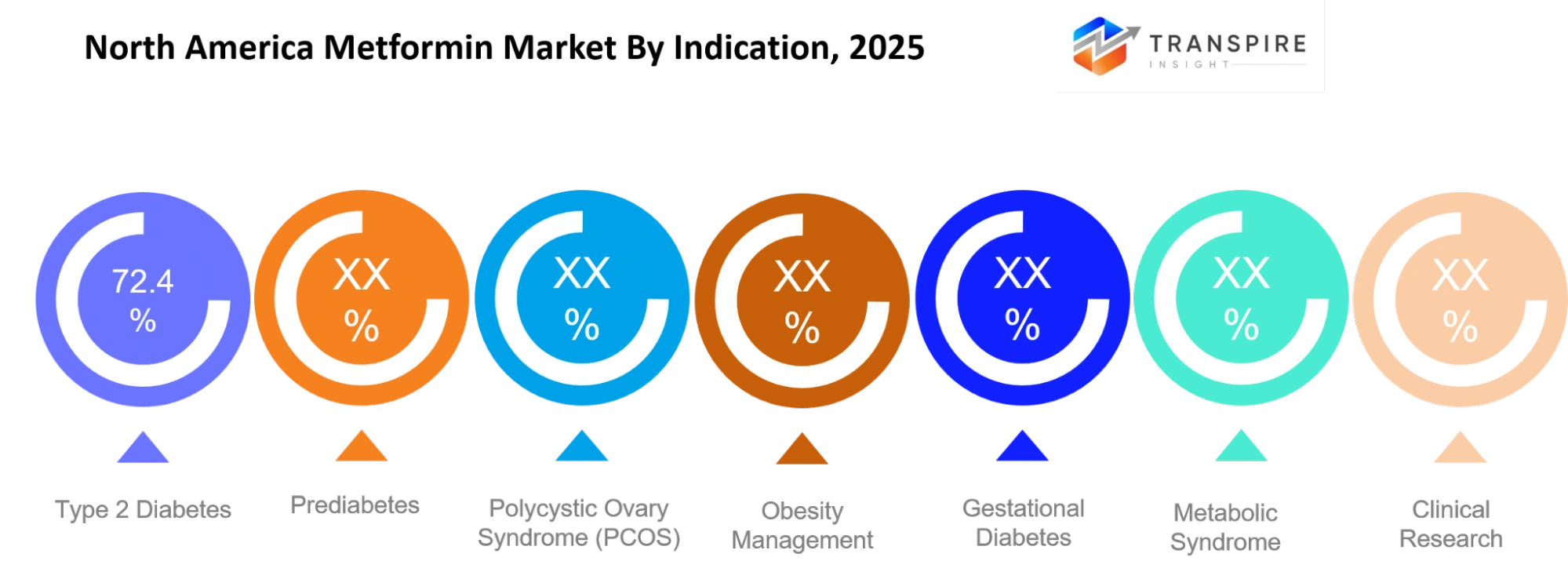
- For applications, type 2 diabetes treatment dominates with roughly 91% market share, reinforced by first line prescribing recommendations across regional clinical guidelines.
- Meanwhile, prediabetes management is emerging as the fastest-growing application during the forecast period, as earlier intervention strategies are rolling out among high-risk populations.
- When it comes to end users, retail pharmacies lead demand with nearly 57% market share, helped by recurring prescription refills and broader insurance reimbursement coverage.
- Mail-order and specialty pharmacy channels are expected to be the fastest-growing end-user category through 2032, driven by digital prescription fulfillment and those chronic care programs that keep expanding.
What are the Key Drivers, Restraints, and Opportunities in the North America Metformin Market?
The main force that’s pushing forward the North American metformin industry is basically the ongoing preference for cost-effective first-line diabetes treatment, backed by reimbursement policies and evidence based treatment guidelines. With revised frameworks for chronic disease management and payer interest in affordable generic medicines it became easier to keep prescriptions consistent across both public and private care systems. In turn this kind of thing reduced overall treatment costs for providers , and for patients too, while also lifting prescription volume. When generic competition keeps expanding it also drags down average acquisition prices, so health networks can serve more patients without needing a matching budget increase. So the outcome is stronger market penetration, plus steadier revenue generation for manufacturers even while pricing gets squeezed.
The biggest structural obstacle is dependence on a fairly concentrated global production of active pharmaceutical ingredients , alongside fairly involved pharmaceutical compliance obligations. From the Transpire Insight review of regional purchasing announcements and launch timelines, it looks like supply chain concentration is still the key execution risk. If someone tries to move manufacturing, they run into regulatory approvals , facility qualification, and a large capital investment that often runs past two years. Then supply disruptions can mess up delivery timelines, cut into manufacturer revenue, and push procurement contracts for healthcare providers out for longer than expected.
The biggest long-term chance is probably in widening combination therapies, and then mixing that with digitally integrated diabetes management programs, more or less. Backing continuous patient monitoring , electronic prescribing platforms, and also domestic pharmaceutical manufacturing is making the situation feel more favorable for wider market expansion. Companies that pair dependable regional production with differentiated extended release products, and combination formulations too, can end up with stronger competitive positioning, while also supporting smoother treatment continuity across North American healthcare systems.
What Has the Impact of Artificial Intelligence Been on the North America Metformin Market?
Artificial intelligence along with digital technologies are kinda reshaping the regional metformin industry, by pushing forward pharmaceutical manufacturing efficiency, regulatory compliance, and even supply planning. With AI enabled quality inspection systems, production parameters get watched automatically , deviations in the process are detected early and compliance paperwork is supported as well, so there is less manual tinkering while manufacturing consistency gets a better grip. Machine learning models also forecast prescription demand using epidemiological patterns, pharmacy refill signals, and procurement records, which lets manufacturers and distributors tune inventory levels and reduce the chance of stockouts.
Then digital twins, plus predictive analytics help with equipment maintenance timing, so unexpected production downtime drops, manufacturing uptime rises and maintenance costs tend to fall too. More advanced analytics additionally back procurement planning by spotting sourcing risks across active pharmaceutical ingredient suppliers and suggesting inventory adjustments before disruptions actually show up. Meanwhile healthcare providers are adopting digital prescribing platforms and clinical decision-support tools to support treatment adherence, plus medication management, in day to day practice.
Still , these improvements come with limits: AI deployment is held back by expensive integration work, fragmented healthcare datasets, and uneven interoperability rules across pharmaceutical manufacturers and healthcare organizations. As a result, predictive accuracy can be worse in messy real-world settings and enterprise-wide rollout slows down, especially for smaller generic manufacturers that have limited budgets for digital infrastructure.
Key Market Trends
- After 2020 , nitrosamine related regulatory actions sort of sped up the quality testing investments and at the same time tightened manufacturing compliance across many generic metformin plants.
- From 2021 through 2025, pharmaceutical companies also leaned into supplier diversification, kind of to blunt exposure to overseas active pharmaceutical ingredient disruptions and the like.
- Extended release formulations ended up taking a bigger slice of prescription volumes, because clinicians started emphasizing better patient tolerability and day to day medication adherence.
- By 2025, combination therapies really picked up momentum, since diabetes care has been shifting toward multi mechanism regimens instead of single mechanism therapy for patients who qualify.
- Domestic manufacturing investments grew after pandemic related shortages, which showed clear supply vulnerabilities across North American pharmaceutical procurement networks.
- Digital procurement platforms helped with inventory visibility, so healthcare systems could cut down on last minute emergency purchasing , while also tightening up long-term contracting strategies.
- AI enabled production monitoring, reduced quality deviations, and generally improved manufacturing efficiency, which in turn supported quicker regulatory compliance across pharmaceutical sites.
- Retail pharmacy networks expanded digital prescription fulfillment and home delivery services, keeping chronic disease medication continuity steadier after 2021.
- Finally, generic manufacturers pushed harder on strategic capacity expansion and regional distribution partnerships, so they could protect competitive market share and strengthen procurement reliability.
North America Metformin Market Segmentation
By Product Type :
Immediate-Release Metformin is still in a leading position, more or less because it is broadly accepted clinically, it costs less, and it stays pretty available in most healthcare systems, so it just works for a lot of workflows. Extended-Release Metformin keeps getting more attention too, mainly because the gastrointestinal tolerance is better which helps patients keep taking it over time. Meanwhile, combination Metformin products are expanding, since many clinicians choose approaches that manage blood glucose using multiple mechanisms, all within one formulation, which feels simpler for some.
Generic Metformin has a big share as well because affordability supports high prescription volumes across hospitals, clinics, and retail pharmacies, in practice. Branded Metformin also remains steady among certain patient groups where physician preference matters, and product differentiation is still a real factor. Oral Solution, Fixed-Dose Combination, and other product categories support more specialized needs too, which creates extra room for manufacturers serving pediatric, geriatric, and complicated diabetes management programs, overall, not just one setting.
By Indication :
Type 2 Diabetes is still the most notable indication, because the clinical guidelines keep suggesting metformin as a first line option, for managing blood glucose. Prediabetes keeps getting extra attention too, as early intervention programs spread through more healthcare networks, and it kind of sticks in routine planning. Polycystic Ovary Syndrome (PCOS) also supports prescription demand, since insulin resistance management is part of regular clinical care.
Obesity Management and Metabolic Syndrome apps continue to grow, as wider metabolic health strategies get more direct clinical focus overall. Gestational Diabetes stays important but it’s handled with extra care, supported by physician supervision and treatment plans that match each patient. Clinical Research and other indications add more prescription activity as they back up newer therapeutic evaluations and evidence based treatment development, which helps everything move forward.
By Dosage Strength :
The 500 mg dosage strength stays as the most widely prescribed option, mainly because treatment can start with lower doses then slowly ramp up, little by little, before full adjustment is done. The 750 mg and 850 mg strengths help patients who need a steadier dose escalation but still have to keep treatment tolerance in mind. The 1000 mg dosage is for patients who need stronger glucose control, inside the agreed treatment plans already.
Customized dosage options back individualized treatment strategies , especially for patients with particular clinical requirements. Pediatric dosage and Geriatric dosage categories cover age related therapeutic factors that demand careful monitoring and repeated dose adjustments. Other dosage strengths offer extra flexibility for healthcare providers working with varied patient populations, and long term treatment programs, too.
By Distribution Channel :
Retail Pharmacies take the largest slice, mostly because routine refill cycles and broad geographic coverage help keep medication always available, in a steady manner. Hospital Pharmacies still matter a lot for in patient treatment, discharge planning, and that kind of coordinated approach to ongoing chronic conditions. Online Pharmacies keep growing, as digital prescription services get smoother and that improves convenience, plus access for people on long term therapy.
Specialty Pharmacies back more complex patient management programs, which need extra clinical coordination and careful follow ups. Government Supply channels stay crucial too, especially for public healthcare systems, where structured procurement programs support huge patient populations. Direct Sales along with Other distribution pathways add more flexibility for manufacturers and healthcare organizations, particularly when they have specialized purchasing requirements.
By End User :
Hospitals still show up as the leading end-user segment, in part because comprehensive diabetes care programs do need dependable medicine availability, and also that coordinated patient care happens in a kind of steady, ongoing way. Diabetes Clinics keep pushing market momentum , via specialized disease management plus follow-up services , and then they do treatment optimization too. Home Healthcare is also growing, since long-term diabetes management more and more supports patient care outside the traditional clinical rooms.
Specialty Clinics offer a more focused approach for patients who need advanced metabolic care, along with individualized monitoring. Research Institutes and Academic Medical Centers add value through clinical studies, treatment evaluations, and healthcare innovation, that kind of helps move toward future therapeutic improvements. Retail Consumers and Other end-user categories support total prescription volumes too, largely by maintaining consistent medication access across several healthcare delivery channels.
What are the Key Use Cases Driving the North America Metformin Market?
The biggest use case kinda sits with type 2 diabetes management, where hospitals, diabetes clinics, and retail pharmacies drive the most prescription volumes. Public healthcare programs, private insurers, and integrated delivery networks keep buying metformin, because long standing clinical guidelines say it’s the preferred first line therapy, which supports cost effective ongoing disease control, or at least that’s the general idea.
Then there are the other things, the secondary applications are growing in prediabetes care and in treatment for polycystic ovary syndrome (PCOS). Diabetes clinics are starting to prescribe metformin for early metabolic intervention, and specialty clinics also lean on it to handle insulin resistance tied to PCOS. So these uses kinda stretch prescribing habits beyond the usual diabetes lanes.
More emerging use cases show up around metabolic syndrome management, plus enrollment in clinical research programs that test combo therapies and personalized treatment strategies. Academic medical centers, and research institutes are expected to take on a more visible role too, since evidence is still developing and updated clinical recommendations open new doors during the forecast period, as things evolve.
|
Report Metrics |
Details |
|
Market size value in 2025 |
USD 7.9 Billion |
|
Market size value in 2026 |
USD 8.5 Billion |
|
Revenue forecast in 2033 |
USD 13.8 Billion |
|
Growth rate |
CAGR of 7.17% from 2026 to 2033 |
|
Base year |
2025 |
|
Historical data |
2021 - 2024 |
|
Forecast period |
2026 - 2033 |
|
Report coverage |
Revenue forecast, competitive landscape, growth factors, and trends |
|
Regional scope |
North America (Canada, The United States, and Mexico) |
|
Key company profiled |
Merck KGaA, Teva Pharmaceuticals, Viatris, Sun Pharmaceutical, Aurobindo Pharma, Lupin, Dr. Reddy's Laboratories, Apotex, Hikma Pharmaceuticals, Sandoz, Zydus Lifesciences, Amneal Pharmaceuticals, Granules India, Torrent Pharmaceuticals, Cipla |
|
Customization scope |
Free report customization (country, regional & segment scope). Avail customized purchase options to meet your exact research needs. |
|
Report Segmentation |
By Product Type (Immediate-Release Metformin, Extended-Release Metformin, Combination Metformin, Generic Metformin, Branded Metformin, Oral Solution, Fixed-Dose Combination, Others); By Indication (Type 2 Diabetes, Prediabetes, Polycystic Ovary Syndrome (PCOS), Obesity Management, Gestational Diabetes, Metabolic Syndrome, Clinical Research, Others); By Dosage Strength (500 mg, 750 mg, 850 mg, 1000 mg, Customized Dosage, Pediatric Dosage, Geriatric Dosage, Others); By Distribution Channel (Hospital Pharmacies, Retail Pharmacies, Online Pharmacies, Specialty Pharmacies, Government Supply, Direct Sales, Others); By End User (Hospitals, Diabetes Clinics, Home Healthcare, Specialty Clinics, Research Institutes, Retail Consumers, Academic Medical Centers, Others) |
Which Regions are Driving the North America Metformin Market Growth?
The United States is really driving the North America Metformin Market, with an estimated share hovering near 88% or so . A mix of strong repayment systems, well known diabetes care directives , and tight pharmaceutical quality rules helps keep prescriptions coming in steady across different care settings. Also there’s this wide web of generic producers, distributors, contract manufacturing organizations, plus pharmacy chains that sort of reinforce production reach and medicine availability through out the whole country. If domestic pharma manufacturing keeps getting funded, and if supply chain diversification stays on the table, it should help keep this top position during the forecast window.
Canada shows up as the second biggest regional market, mainly because nationwide healthcare coverage backs consistent access to crucial diabetes medicines via organized reimbursement programs. There’s also a fairly predictable regulatory environment that nudges stable product approvals and long term purchasing planning for suppliers. Local manufacturing capability, paired with reliable import routes, tends to create balanced supply conditions , which then reduces buying uncertainty. Even with a smaller patient base than the U.S., those structural advantages still translate into dependable revenue prospects .
Canada is also expected to show the most rapid growth over the 2026–2033 window, mainly because of more investment in chronic disease care programs, and in pharmaceutical supply resilience after the pandemic related disruptions. Expanded digital health services, plus stronger provincial purchasing approaches, have helped improve longer term treatment access across several regions. On top of that, additional domestic manufacturing initiatives, along with healthcare infrastructure spending, keep building market momentum . All of this together makes favorable circumstances for manufacturers, distributors, and investors who want steady regional expansion throughout the forecast period.
Who are the Key Players in the North America Metformin Market and How Do They Compete?
The competitive structure of the North America Metformin Market is kinda moderately fragmented , because you have lots of generic pharmaceutical manufacturers competing across hospital, retail pharmacy and government procurement channels. Price is still the main thing people fight on, but manufacturing quality , regulatory compliance, and dependable product availability have actually become more and more important after those recent supply chain disruptions. The well established manufacturers keep trying to hold on to share via production scale and wide distribution networks. At the same time, smaller regional suppliers are looking for gaps by improving supply reliability and pushing their manufacturing capacity.
Teva Pharmaceutical Industries competes by leaning on large-scale generic manufacturing, which helps support a cost-efficient supply across North America. Viatris , meanwhile, leans into integrated manufacturing with extensive distribution capabilities , that in turn strengthens procurement performance for healthcare providers. Sun Pharmaceutical Industries sets itself apart through diversified production facilities, and then keeps investing in regional supply capability expansion.
Aurobindo Pharma is expanding its production capacity so delivery stays reliable and supply risks go down for generic medicines, like really more dependable day to day. Lupin Limited also tightens its competitive position via a broader portfolio and through manufacturing facilities that have the right regulatory approval, these are set up to serve North American customers, even when demand gets busy. Apotex in the meantime benefits from a solid manufacturing presence in Canada and from continued investment in domestic pharma production, which helps keep supply dependable for public and private health care purchasing.
Company List
- Merck KGaA
- Teva Pharmaceuticals
- Viatris
- Sun Pharmaceutical
- Aurobindo Pharma
- Lupin
- Dr. Reddy's Laboratories
- Apotex
- Hikma Pharmaceuticals
- Sandoz
- Zydus Lifesciences
- Amneal Pharmaceuticals
- Granules India
- Torrent Pharmaceuticals
- Cipla
Recent Development News
In June 2026, Apotex launched sitagliptin tablets and sitagliptin and metformin hydrochloride tablets in the United States with eligibility for 180-day shared exclusivity. The launch expanded Apotex's diabetes portfolio and increased generic treatment options for patients with type 2 diabetes, strengthening competition in the North American market.
Source https://www.apotex.com/
In April 2026, Lupin Limited launched Dapagliflozin and Metformin Hydrochloride Extended-Release Tablets in the United States following approval of its abbreviated new drug application from the U.S. FDA. The introduction of a bioequivalent alternative to Xigduo XR expanded affordable combination therapy choices and intensified competition in the diabetes medicines segment. Sourcehttps://www.lupin.com/
What Strategic Insights Define the Future of the North America Metformin Market?
The North America Metformin Market, over the next five to seven years, will likely drift toward a more resilient , value oriented structure. This shift is supported by investments in domestic pharmaceutical manufacturing, tighter procurement policies , and a wider roll out of digital supply chain management. What really gives a competitive edge may matter less about raw production scale by itself , and more about staying reliably stocked, meeting regulatory compliance expectations, and keeping manufacturing flexible enough to adjust quickly.
There is also a quieter risk, kind of off the radar, in the ongoing reliance on a small set of global active pharmaceutical ingredient suppliers. Even localized disruptions there could ripple outward, pushing pricing, changing production schedules , and delaying healthcare procurement. Still, an emerging opening is in AI supported pharmaceutical planning and advanced manufacturing technologies, which help with inventory optimization and overall production efficiency.
Firms that expand active ingredient sourcing, while also putting money into automated quality systems and more strategic regional manufacturing partnerships, should be better placed to hold onto long term competitiveness. And yes, they’ll tend to handle future supply disruptions with less stress.
North America Metformin Market Report Segmentation
By Product Type
- Immediate-Release Metformin
- Extended-Release Metformin
- Combination Metformin
- Generic Metformin
- Branded Metformin
- Oral Solution
- Fixed-Dose Combination
By Indication
- Type 2 Diabetes
- Prediabetes
- Polycystic Ovary Syndrome (PCOS)
- Obesity Management
- Gestational Diabetes
- Metabolic Syndrome
- Clinical Research
By Dosage Strength
- 500 mg
- 750 mg
- 850 mg
- 1000 mg
- Customized Dosage
- Pediatric Dosage
- Geriatric Dosage
By Distribution Channel
- Hospital Pharmacies
- Retail Pharmacies
- Online Pharmacies
- Specialty Pharmacies
- Government Supply
- Direct Sales
By End User
- Hospitals
- Diabetes Clinics
- Home Healthcare
- Specialty Clinics
- Research Institutes
- Retail Consumers
- Academic Medical Centers
Frequently Asked Questions
Find quick answers to common questions.
The expected North America Metformin Market size for the market will be USD 13.8 Billion in 2033.
Key segments for the North America Metformin Market are Type By Product Type (Immediate-Release Metformin, Extended-Release Metformin, Combination Metformin, Generic Metformin, Branded Metformin, Oral Solution, Fixed-Dose Combination, Others); By Indication (Type 2 Diabetes, Prediabetes, Polycystic Ovary Syndrome (PCOS), Obesity Management, Gestational Diabetes, Metabolic Syndrome, Clinical Research, Others); By Dosage Strength (500 mg, 750 mg, 850 mg, 1000 mg, Customized Dosage, Pediatric Dosage, Geriatric Dosage, Others); By Distribution Channel (Hospital Pharmacies, Retail Pharmacies, Online Pharmacies, Specialty Pharmacies, Government Supply, Direct Sales, Others); By End User (Hospitals, Diabetes Clinics, Home Healthcare, Specialty Clinics, Research Institutes, Retail Consumers, Academic Medical Centers, Others).
Major North America Metformin Market players are Merck KGaA, Teva Pharmaceuticals, Viatris, Sun Pharmaceutical, Aurobindo Pharma, Lupin, Dr. Reddy's Laboratories, Apotex, Hikma Pharmaceuticals, Sandoz, Zydus Lifesciences, Amneal Pharmaceuticals, Granules India, Torrent Pharmaceuticals, Cipla.
The North America Metformin Market size is USD 7.9 Billion in 2025.
The North America Metformin Market CAGR is 7.17% from 2026 to 2033.
- Merck KGaA
- Teva Pharmaceuticals
- Viatris
- Sun Pharmaceutical
- Aurobindo Pharma
- Lupin
- Dr. Reddy's Laboratories
- Apotex
- Hikma Pharmaceuticals
- Sandoz
- Zydus Lifesciences
- Amneal Pharmaceuticals
- Granules India
- Torrent Pharmaceuticals
- Cipla
About the Authors

Pankaj Ghogare Patil
I am Pankaj Ghogare Patil, a Senior Research Analyst at Transpire Insight, specializing in the Pharmaceutical, Chemicals & Materials, Healthcare IT, and Biotechnology industry. My expertise lies in conducting comprehensive market research, analyzing industry trends, evaluating competitive landscapes, and translating complex data into actionable insights. At Transpire Insight, I closely follow emerging technologies, regulatory developments, and market innovations to create accurate, well-researched, and informative content that helps businesses and professionals make informed decisions. I am committed to producing credible, evidence-based articles that reflect industry best practices while making technical topics accessible and valuable for a broad audience.

Chakradhar Khansole
Chakradhar serves as the Research Director at Transpire Insight, bringing over 8 years of experience in technology, innovation, and strategic market intelligence. He specializes in transforming complex market data into actionable business insights that enable organizations to make informed, growth-oriented decisions. Recognized for his strategic vision and analytical expertise, Chakradhar leads high-impact research initiatives, delivering comprehensive market assessments, competitive intelligence, and forward-looking industry analysis.
Recently Published Reports
-
Jul 2026
Alopecia Treatment Market
Alopecia Treatment Market Size, Share & Analysis Report By Disease Type (Alopecia Areata, Cicatricial Alopecia, Traction Alopecia, Alopecia Totalis, Androgenetic Alopecia, Alopecia Universalis, and Other Disease Types), By Treatment Type (Topical Treatments, Oral Medications, Injectable Therapies, and Hair Transplantation), By Gender (Male, and Female), By Distribution Channel (Hospitals and Clinics, Retail Pharmacies, and Online Retailers), and Geography (North America, Europe, Asia-Pacific, Middle East and Africa, South and Central America), 2021 - 2031
-
Jul 2026
Medical Ultrasound Probe Market
Medical Ultrasound Probe Market Size, Share & Analysis Report By Type (Linear Type, Convex Type, Endocavitary Probe, Phased Array/Cardiac Probe, Transesophageal (TEE) Probe, and Others), By Application (Ophthalmology, Cardiology, Musculoskeletal, Oncology, Obstetrics & Gynecology, General Imaging, and Others), By End User (Hospitals & Clinics, Diagnostic Centers, Ambulatory Surgical Centers, and Others), and Geography (North America, Europe, Asia-Pacific, Middle East and Africa, South and Central America), 2021 – 2031
-
May 2026
Biosimilars Market
Biosimilars Market By Product Type (Monoclonal Antibodies, Recombinant Hormones, Erythropoietin, G-CSF, Others), By Indication (Oncology, Autoimmune Diseases, Blood Disorders, Diabetes, Others), By Manufacturing Type (In-House Manufacturing, Contract Manufacturing), By Distribution Channel (Hospital Pharmacies, Retail Pharmacies, Online Pharmacies), By Industry Analysis, Size, Share, Growth, Trends, and Forecasts 2021-2033
-
Apr 2026
Gastrointestinal Endoscopy Market
Gastrointestinal Endoscopy Market By Type (Rigid Gastrointestinal Endoscope, Flexible Gastrointestinal Endoscopes, Disposable Gastrointestinal Endoscope), By Procedure Type (Colonoscopy, Gastroscopy, Duodenoscopy, Enteroscopy, Flexible Sigmoidoscopy, Others), By Application (Diagnosis, Treatment), By End-Users (Hospitals, Ambulatory Surgical Centers, Specialty Clinics, Laboratories, Others), By Industry Analysis, Size, Share, Growth, Trends, and Forecasts 2021-2033