

North America Maternal Health Therapeutics Market Size & Forecast:
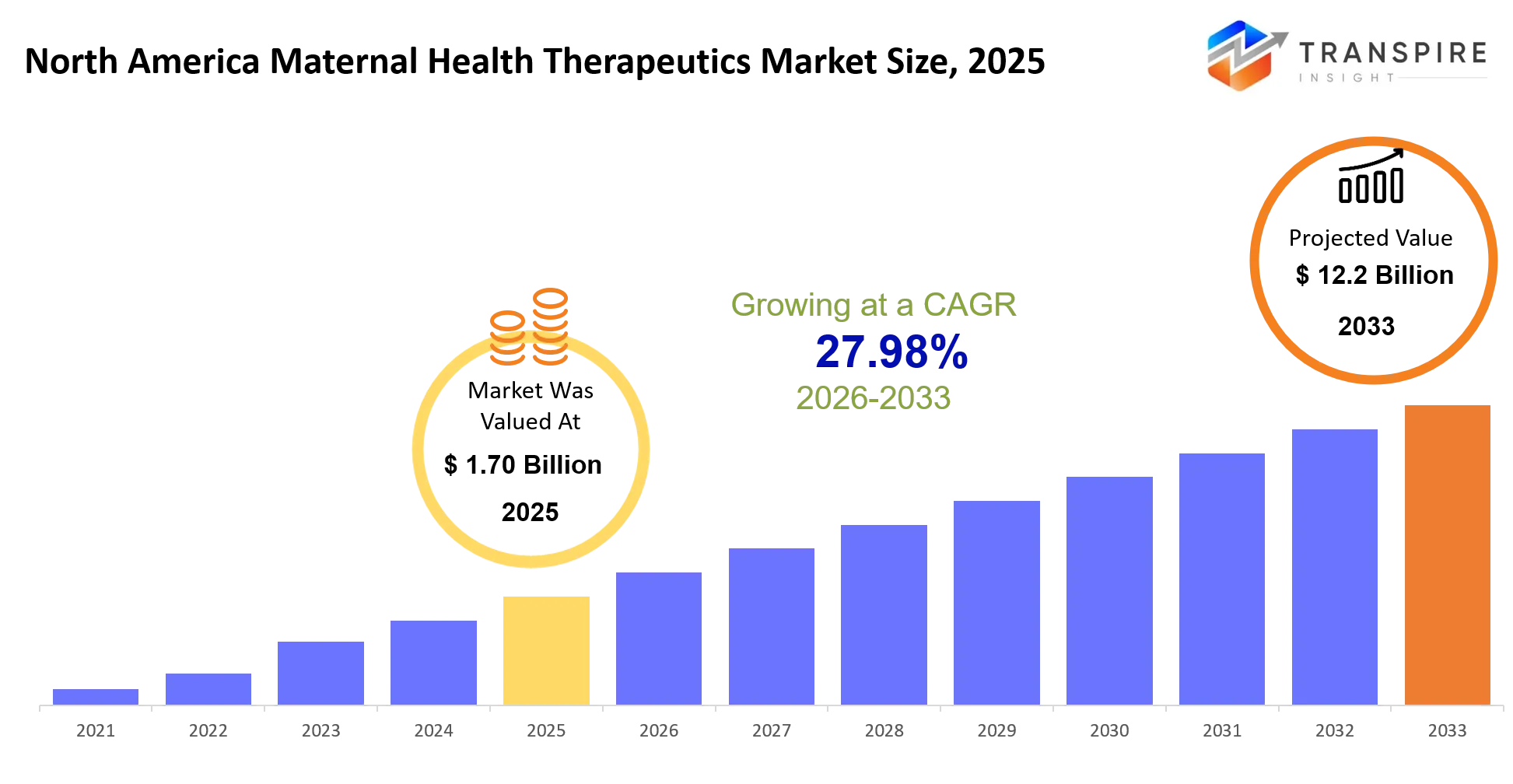
- North America Maternal Health Therapeutics Market Size 2025: USD 1.70 Billion
- North America Maternal Health Therapeutics Market Size 2033: USD 12.2 Billion
- North America Maternal Health Therapeutics Market CAGR: 27.98%
- North America Maternal Health Therapeutics Market Segments: By Therapy Type (Prenatal Vitamins, Hormonal Therapies, Antihypertensive Drugs, Diabetes Management Drugs, Others), By Application (Pregnancy Care, Postpartum Care, Gestational Diabetes, Preeclampsia Management, Others), By End User (Hospitals, Maternity Clinics, Home Care Settings, Others), By Distribution Channel (Hospital Pharmacies, Retail Pharmacies, Online Pharmacies, Others).
To learn more about this report,  Download Free Sample Report
North America Maternal Health Therapeutics Market Summary:
The North America Maternal Health Therapeutics Market size is estimated at USD 1.70 Billion in 2025 and is anticipated to reach USD 12.2 Billion by 2033, growing at a CAGR of 27.98% from 2026 to 2033. North America Maternal Health Therapeutics market is basically dealing with some of the most critical complications tied to pregnancy, giving birth, and that postpartum phase after. In actual practice these therapies let clinicians handle problems like preeclampsia, postpartum hemorrhage, preterm labor, gestational diabetes, and maternal infections, so the risk of severe outcomes for both mothers and babies is lowered and you also get better continuity of care across the whole pregnancy timeline.
Over the last 3 to 5 years, the market has really shifted in a structural way toward earlier intervention and more targeted maternal care. This change is backed by newer clinical guidance, better screening protocols, and the arrival of novel treatments for maternal conditions that used to be less well served. One big trigger, honestly, was the COVID-19 pandemic, it revealed where maternal healthcare delivery was weak, and it also pushed investment in high-risk pregnancy management plus remote monitoring pathways. Now as health systems put more weight on avoiding expensive maternal complications, therapeutic adoption is going upstream within the care continuum. In turn, eligibility for treatment is widening, prescription volumes are going up, and manufacturers that focus on specialized maternal health solutions are seeing new revenue openings.
Key Market Insights
- The United States really dominates the North America Maternal Health Therapeutics Market, it’s around over 80% of the regional market share for 2024, no question.
- A strong healthcare infrastructure, better treatment access, and mature maternal care programs keep the U.S. in the leading position basically throughout.
- Canada shows up as the fastest growing regional market during the forecast window, mainly because maternal wellness initiatives are expanding, plus healthcare investments are moving forward.
- Government-backed programs for maternal wellbeing keep helping the market deepen its penetration across North America, even when demand fluctuates a bit.
- In North America, postpartum hemorrhage therapeutics take the lead, capturing a major share since clinicians are using them broadly in routine practice.
- Preeclampsia and hypertensive disorder treatments are sort of the second-largest segment, supported by a steady climb in high-risk pregnancy cases year over year, it seems.
- Preterm labor therapeutics are expected to be the fastest-growing segment all the way through 2032, and that suggests there are still unmet clinical needs, but also a wave of therapeutic innovation that keeps showing up.
- Across the maternal health therapeutics space, novel biologics and targeted maternal therapies are showing up as meaningful growth engines.
- When it comes to applications, pregnancy related complication management holds the dominant piece, crossing 45% of total market revenue in 2024.
- Meanwhile, postpartum care applications are gaining momentum, largely because there’s more attention on recovery and long-term health results.
- Early intervention strategies keep expanding their use across a range of maternal health conditions, not just one category.
- More and more, healthcare providers are choosing preventive maternal treatment pathways, partly to lower hospitalization costs and reduce complications at the same time.
- Hospitals end up dominating the North America Maternal Health Therapeutics Market too, with more than 60% share in 2024, and that’s pretty consistent.
What are the Key Drivers, Restraints, and Opportunities in the North America Maternal Health Therapeutics Market?
The strongest force driving the North America Maternal Health Therapeutics Market is, I guess, the growing clinical focus on cutting down maternal morbidity and mortality via earlier intervention. This shift has, kind of, picked up speed after health agencies and healthcare systems started monitoring pregnancy related complications a lot more closely ,like postpartum hemorrhage, preeclampsia, and preterm birth. As hospitals roll out more standardized maternal care routes and expand screening initiatives, more patients are caught sooner and treated before complications really blow up. That, in turn, lifts prescription volumes, widens therapeutic use in practice, and opens recurring revenue chances for manufacturers building specialized maternal health products.
The biggest obstacle for this market is the complicated clinical plus regulatory setting tied to maternal treatments. Pregnant women have been, for a long time , underrepresented in clinical trials, which keeps evidence gaps kind of stuck in place for many therapies. It’s structural, because producing solid maternal safety and effectiveness information takes long studies, special protocols, and extra regulatory checking. So development cycles stay longer, approval uncertainty stays high, and commercialization is delayed, which slows down how quickly new therapies can reach the market and start contributing revenue.
A big growth opportunity is the integration of precision medicine with those digital maternal health platforms, you know. If you think about it, advanced risk profiling tools that merge biomarkers, a patients history , and remote monitoring information can flag high risk pregnancies sooner. Funding for these technologies is really widening across the United States where many health systems are basically shifting toward preventive care paradigms. Also, companies that connect tailored therapeutics to data driven maternal care solutions can help outcomes, while opening up fresh treatment routes and reimbursement opportunities at the same time.
What Has the Impact of Artificial Intelligence Been on the North America Maternal Health Therapeutics Market?
Artificial intelligence and advanced digital technologies are increasingly transforming the North America Maternal Health Therapeutics Market, kind of by reshaping how clinical decisions happen , how patients get watched over, and how treatments actually get delivered. Healthcare providers are rolling out AI-powered platforms that automate risk evaluation steps, examine electronic health records, and flag people who might be at elevated risk for complications like preeclampsia, gestational diabetes, or preterm birth. In doing so , these systems cut down the heavy manual checking and help clinicians decide where to focus interventions in a more streamlined way.
Machine learning models are also boosting predictive strength across maternal care. By looking through large datasets that contain lab results, vital signs, medical histories, and social determinants of health, predictive algorithms can spot high-risk pregnancies earlier than conventional screening. That earlier visibility supports faster therapeutic action , helps improve treatment adherence, and also backs more tailored care pathways. On top of that, digital maternal monitoring platforms add extra transparency into patient health between appointments, which can lower avoidable hospitalizations and emergency procedures
From an operational point of view these tools support faster patient stratification, better care coordination, and more uniform alignment with clinical protocols. A number of healthcare systems mention improved resource allocation, and reduced spending connected with managing severe maternal complications. Still, there is a major constraint that keeps coming up: the availability of high-quality maternal health datasets. Data fragmentation across healthcare networks can lower algorithm precision, and also slow down wider adoption of AI driven therapeutic management solutions.
Key Market Trends
- Since 2020, hospitals have been expanding standardized maternal safety protocols a bit more and more, which helped them start earlier therapeutic intervention for postpartum hemorrhage, and hypertensive pregnancy disorders as well.
- Clinical decision-making also started leaning into predictive risk assessment tools, with AI-enabled maternal monitoring platforms showing up in more places across major U.S. health systems , not just pilot settings.
- Between 2021 and 2025, manufacturers redirected their R&D spending toward targeted therapies for preeclampsia and preterm birth, after a stretch of years where innovation was kind of limited.
- Regulatory agencies increasingly encouraged inclusion of pregnant women in clinical research , slowly closing those historical evidence gaps that had long constrained therapeutic development.
- Healthcare providers moved away from episodic pregnancy care and toward continuous monitoring models, and after the pandemic this made remote maternal health technologies spread faster than before.
- Companies like Pfizer, Organon, and Ferring Pharmaceuticals also expanded strategic partnerships with healthcare networks, to strengthen clinical adoption, and improve patient access at the same time.
- Reimbursement policies started to favor preventive maternal care approaches, so providers were pushed to treat complications earlier , rather than waiting and then relying on emergency interventions.
- Investment activity shifted toward digital maternal health platforms too, where biomarkers, wearable devices, and therapeutic management get integrated into one unified care pathway.
- At the same time, rising rates of high-risk pregnancies among women aged 35 and older reshaped treatment protocols , and increased demand for specialized maternal therapeutics.
- Competitive behavior evolved from broad obstetric portfolios into more differentiated maternal health solutions, with companies emphasizing clinical outcomes, and generating real-world evidence as a kind of proof.
North America Maternal Health Therapeutics Market Segmentation
By Therapy Type
In the therapy type segment , prenatal vitamins seem to keep the first place, mostly because they’re broadly advised in clinical settings and used in a routine way during pregnancy. You see a pretty steady prescribing cadence from physicians , plus preventive care rules that tend to back up steady volume movement across North America. Meanwhile antihypertensive medicines and diabetes management drugs also bring a meaningful chunk of market value, since clinicians are increasingly handling pregnancy related issues by using more targeted pharmacological interventions.
Hormonal therapies stay pretty relevant for high-risk pregnancies and fertility linked maternal support , though uptake is still a bit more selective. The other treatment categories keep widening too, as research leans toward lowering maternal morbidity and making pregnancy outcomes better. Looking ahead, the growth story will likely swing toward specialized therapies that come with stronger clinical support and more individualized care methods. Companies that put money into new maternal health products and improved formulations should end up with steadier competitive strength as healthcare systems push earlier action and risk reduction.
By Application
In actual application, pregnancy care sort of dominates market action because preventive checkups, nutritional backing, and therapeutic handling start early, then keep going through all of gestation. That wide-ranging treatment reach tends to bring in the biggest patient numbers, and keeps steady demand in many healthcare environments. Preeclampsia management , and gestational diabetes treatment count as major application areas too, mainly since maternal complications tied to age are rising , and metabolic disorders show up more often during pregnancy.
After delivery, postpartum care is getting more spotlight now, as healthcare systems try to lower long-term maternal health risks and also cut down on unnecessary readmissions. There are also other application angles, like maternal infection management, or specialized support for high-risk pregnancies, which add extra chances for expansion. Looking ahead, future development will probably lean toward integrated care pathways that merge early detection, continuous observation, and more targeted therapeutics. With that in mind , there’s room for companies that can deliver end-to-end solutions across multiple phases of maternal care.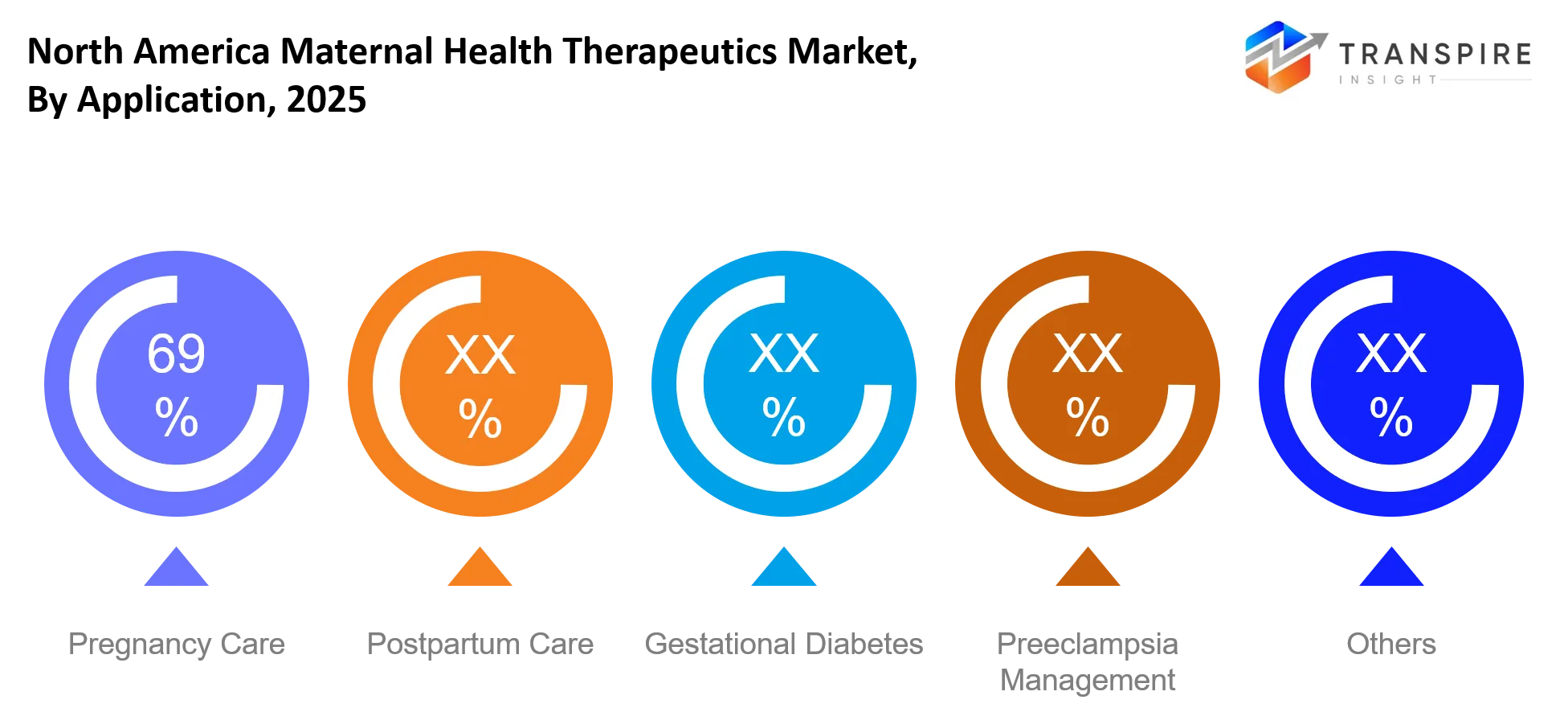
To learn more about this report, Download Free Sample Report
By End-User
Hospitals still kind of dominate as the end user segment because hard maternal conditions often pull in multidisciplinary care teams and they need advanced diagnostics plus quick access to treatments. With strong infrastructure, and also well established treatment protocols, hospital leadership can keep managing both standard and high risk pregnancy cases, pretty reliably.
Maternity clinics are the second most influential chunk, mainly because they offer specialized know how, and patients seem to be preferring more focused maternal care services lately. Meanwhile home care settings are showing up as a notable growth lane, not just because of better remote monitoring technologies, but also because there are ongoing pushes to lower healthcare costs while still keeping clinical supervision.
Other end users, like community healthcare facilities still help in a supporting way by broadening access to maternal services, especially in areas where full hospital coverage is harder. Looking ahead, market expansion will depend more and more on hybrid care models that link hospitals, clinics, and home based monitoring systems. This should open up new opportunities for service providers, and for therapeutic manufacturers as well.
By Distribution Channel
Within distribution channels, hospital pharmacies command the largest share, because most maternal therapeutics are prescribed and then administered under direct clinical supervision, so it feels kind of locked in. Their strong integration with inpatient plus outpatient treatment pathways keeps hospital-based dispensing in a very firm position. Retail pharmacies also stay in a substantial place, especially for prenatal vitamins, chronic condition management therapies, and those follow-up prescriptions after discharge. Online pharmacies have been expanding quite a bit, as digital healthcare adoption boosts prescription fulfillment convenience, and improves access to maternal health products.
Regulatory oversight, along with prescription verification requirements, still nudges the speed of online channel growth, but in the long run the momentum still looks positive. Other distribution channels bring in incremental sales mainly in niche care settings. Looking forward, digital pharmacy platforms, and integrated prescription management systems are expected to reshape purchasing habits, and push manufacturers and distributors to strengthen their omnichannel strategies, plus patient engagement capabilities too.
What are the Key Use Cases Driving the North America Maternal Health Therapeutics Market?
The main “use” thing for maternal health therapeutics is pregnancy care. More specifically it’s for preventing and handling complications like hypertension, nutritional deficiencies, and a few pregnancy-linked metabolic disorders. This segment ends up seeing the most demand, since treatment often starts early in pregnancy, and then keeps going across several stages of care, not just one short window.
There’s also an expanding angle—things like gestational diabetes and preeclampsia management. In these cases hospitals and specialized maternity clinics are using more targeted therapies, to reduce negative maternal as well as neonatal outcomes. Lately, the more clinical focus has shifted toward high-risk pregnancy management, and that has pushed adoption across multiple care environments.
Meanwhile the emerging use cases are forming around more personalized maternal medicine, along with remote-supported therapeutic monitoring. Clinicians are starting to mix biomarker-based risk checking with digital health platforms to spot complications earlier , and to fine-tune which treatment to choose. These approaches still sit in an early adoption stage, but they look promising for better outcomes and a broader therapeutic use through the forecast period.
|
Report Metrics |
Details |
|
Market size value in 2025 |
USD 1.70 Billion |
|
Market size value in 2026 |
USD 2.17 Billion |
|
Revenue forecast in 2033 |
USD 12.2 Billion |
|
Growth rate |
CAGR of 27.98% from 2026 to 2033 |
|
Base year |
2025 |
|
Historical data |
2021 - 2024 |
|
Forecast period |
2026 - 2033 |
|
Report coverage |
Revenue forecast, competitive landscape, growth factors, and trends |
|
Country scope |
North America (Canada, The United States, and Mexico) |
|
Key company profiled |
Pfizer, Bayer, Novartis, Merck & Co., Sanofi, GSK, Roche, Abbott, Johnson & Johnson, Eli Lilly, Ferring Pharmaceuticals, Novo Nordisk, Teva Pharmaceuticals, Viatris, Amgen |
|
Customization scope |
Free report customization (country, regional & segment scope). Avail customized purchase options to meet your exact research needs. |
|
Report Segmentation |
By Therapy Type (Prenatal Vitamins, Hormonal Therapies, Antihypertensive Drugs, Diabetes Management Drugs, Others), By Application (Pregnancy Care, Postpartum Care, Gestational Diabetes, Preeclampsia Management, Others), By End User (Hospitals, Maternity Clinics, Home Care Settings, Others), By Distribution Channel (Hospital Pharmacies, Retail Pharmacies, Online Pharmacies, Others) |
Which Regions are Driving the North America Maternal Health Therapeutics Market Growth?
The United States kind of is the leading region in the North America Maternal Health Therapeutics Market , mostly because it has a large patient population, a mature healthcare infrastructure, and a strong gathering of pharmaceutical innovation. At the federal and state levels, maternal health initiatives have been pushing harder to cut down pregnancy related complications, and to improve access to specialized care. You also have those extensive hospital networks, academic medical centers, and clinical research organizations all together, which builds a supportive ecosystem for both therapeutic development and real world adoption. On top of that, high healthcare spending and fairly favorable reimbursement pathways really help lock in market leadership across several maternal care categories.
Canada comes in as the second-largest regional market , but the overall growth narrative does not really line up with the United States. With a publicly funded healthcare arrangement, access to prenatal and postpartum care tends to stay steady, so the need for maternal therapeutics remains fairly consistent. National and provincial health programs also push standardized treatment protocols and long term investment in maternal health services. Because the whole environment is more predictable, Canada becomes a dependable contributor to regional revenue even if its patient base is smaller.
Mexico is kind of emerging as the fastest-growing market inside North America as healthcare modernization, slowly, expands access to maternal care services. In the last period, recent funding toward hospital capacity, women’s health programs, and diagnostic infrastructure has helped improve how high risk pregnancies are identified and then treated. With more essential maternal therapeutics available, some of the older historical gaps in care delivery are getting closed, across several different regions. If healthcare keeps getting invested in, plus access to specialized treatments keeps broadening, then between 2026 and 2033, manufacturers and investors should see pretty attractive opportunities.
Who are the Key Players in the North America Maternal Health Therapeutics Market and How Do They Compete?
The competitive landscape of the North America Maternal Health Therapeutics Market is sort of moderately concentrated, with a blend of large pharmaceutical companies and specialized women’s health organizations, all competing across high value therapeutic categories. Most of the rivalry feels a lot less about price, and more about clinical evidence regulatory approvals, real world treatment outcomes, and how well therapies fit into access to healthcare networks. Incumbent manufacturers keep trying to defend their share via portfolio expansion and physician engagement meanwhile specialized entrants tend to chase unmet needs in areas like preeclampsia, postpartum hemorrhage, and preterm birth. At this point, success is often tied to whether a firm can generate maternal specific clinical data and then integrate therapies into the evolving maternal care pathways, even when those pathways are changing faster than expected.
Pfizer kind of stands out because it has strong research capabilities and also broad relationships with hospitals, academic institutions, and healthcare systems. The company leans on large scale clinical development programs and an established commercialization setup, so adoption of maternal care therapies can happen faster. Organon takes a more focused direction, centered on women’s health, and that gives it the ability to make targeted investments across maternal and reproductive care categories. That kind of specialization helps with physician engagement, and it also keeps product development more concentrated. In recent expansion efforts, companies increasingly include partnerships with healthcare providers, and investments in women’s health innovation platforms, which sounds simple but is actually pretty involved.
Ferring Pharmaceuticals really leans into a kind of niche know-how in reproductive and maternal care, especially with treatments that connect to pregnancy and childbirth results. There is a deep clinical focus, and also really strong ties with physicians, which makes them stand out in those specialized settings for moms. Bayer takes a more spread-out healthcare strategy, but at the same time it puts effort into digital health plans and data guided care models, as if those just naturally pair with the therapeutic portfolio. Novartis keeps pushing ahead, extending via advanced research work aimed at harder pregnancy related issues, and they rely on scientific innovation plus ongoing pipeline building to hold a steadier long-term competitive edge, across the whole maternal health environment.
Company List
- Pfizer
- Bayer
- Novartis
- Merck & Co.
- Sanofi
- GSK
- Roche
- Abbott
- Johnson & Johnson
- Eli Lilly
- Ferring Pharmaceuticals
- Novo Nordisk
- Teva Pharmaceuticals
- Viatris
- Amgen
Recent Development News
In June 2026, TG Therapeutics Shares Jump After Positive Subcutaneous Briumvi Data: TG Therapeutics announced positive data for a subcutaneous formulation of Briumvi. The favorable results strengthened investor confidence and highlighted continued biotech investment in specialty therapeutics, including areas that overlap with women's health and maternal care initiatives.
Source: https://www.investors.com
In March 2026, FDA Approves Johnson & Johnson's Blood Cancer Drug Tecvayli Combination Therapy: Johnson & Johnson received U.S. FDA approval for a new oncology indication, strengthening its pharmaceutical revenue base and capacity for investment across women's and maternal health programs. While not a maternal-health-specific product, the approval is a significant corporate development affecting the broader North American therapeutics landscape.
Source: https://www.reuters.com
What Strategic Insights Define the Future of the North America Maternal Health Therapeutics Market?
North America Maternal Health Therapeutics Market is basically moving, toward precision maternal care where therapies are paired more often with predictive diagnostics, biomarker based risk assessment, and ongoing patient monitoring. The real reason behind this shift is the rising economic and clinical pressure to stop serious maternal complications before hospitalization or an emergency intervention has to happen. As hospitals and healthcare systems lean into value based care models, therapy take up will matter more through measurable outcome gains, not just through treatment volume.
There’s also a quieter kind of risk, because market power can get stuck around a small number of highly specialized maternal health therapies and clinical development programs. If regulatory expectations for maternal trials get tougher, or if recruitment remains difficult then product pipelines could end up narrowing, and innovation might slow down even when demand still looks promising overall.
A newer opportunity shows up in integrating maternal therapeutics with AI enabled risk prediction tools that flag complications like preeclampsia earlier in the pregnancy timeline. Market players should focus on cross-industry partnerships between pharmaceutical developers, digital health firms, and healthcare providers , so evidence backed care ecosystems can form. Done well, this can improve outcomes while also building durable competitive differentiation over time.
North America Maternal Health Therapeutics Market Report Segmentation
By Therapy Type
- Prenatal Vitamins
- Hormonal Therapies
- Antihypertensive Drugs
- Diabetes Management Drugs
- Others
By Application
- Pregnancy Care
- Postpartum Care
- Gestational Diabetes
- Preeclampsia Management
- Others
By End User
- Hospitals
- Maternity Clinics
- Home Care Settings
- Others
By Distribution Channel
- Hospital Pharmacies
- Retail Pharmacies
- Online Pharmacies
- Others
Frequently Asked Questions
Find quick answers to common questions.
The Approximate North America Maternal Health Therapeutics Market size for the market will be USD 12.2 Billion in 2033.
The key Segments of the North America Maternal Health Therapeutics Market are By Therapy Type (Prenatal Vitamins, Hormonal Therapies, Antihypertensive Drugs, Diabetes Management Drugs, Others), By Application (Pregnancy Care, Postpartum Care, Gestational Diabetes, Preeclampsia Management, Others), By End User (Hospitals, Maternity Clinics, Home Care Settings, Others), By Distribution Channel (Hospital Pharmacies, Retail Pharmacies, Online Pharmacies, Others).
Major players in the North America Maternal Health Therapeutics Market are Pfizer, Bayer, Novartis, Merck & Co., Sanofi, GSK, Roche, Abbott, Johnson & Johnson, Eli Lilly, Ferring Pharmaceuticals, Novo Nordisk, Teva Pharmaceuticals, Viatris, Amgen.
The Current Market size of the North America Maternal Health Therapeutics Market is USD 1.70 Billion in 2025.
The North America Maternal Health Therapeutics Market CAGR is 27.98%.
- Pfizer
- Bayer
- Novartis
- Merck & Co.
- Sanofi
- GSK
- Roche
- Abbott
- Johnson & Johnson
- Eli Lilly
- Ferring Pharmaceuticals
- Novo Nordisk
- Teva Pharmaceuticals
- Viatris
- Amgen
About the Authors

Pankaj Ghogare Patil
I am Pankaj Ghogare Patil, a Senior Research Analyst at Transpire Insight, specializing in the Pharmaceutical, Chemicals & Materials, Healthcare IT, and Biotechnology industry. My expertise lies in conducting comprehensive market research, analyzing industry trends, evaluating competitive landscapes, and translating complex data into actionable insights. At Transpire Insight, I closely follow emerging technologies, regulatory developments, and market innovations to create accurate, well-researched, and informative content that helps businesses and professionals make informed decisions. I am committed to producing credible, evidence-based articles that reflect industry best practices while making technical topics accessible and valuable for a broad audience.

Chakradhar Khansole
Chakradhar serves as the Research Director at Transpire Insight, bringing over 8 years of experience in technology, innovation, and strategic market intelligence. He specializes in transforming complex market data into actionable business insights that enable organizations to make informed, growth-oriented decisions. Recognized for his strategic vision and analytical expertise, Chakradhar leads high-impact research initiatives, delivering comprehensive market assessments, competitive intelligence, and forward-looking industry analysis.
Recently Published Reports
-
Jul 2026
Alopecia Treatment Market
Alopecia Treatment Market Size, Share & Analysis Report By Disease Type (Alopecia Areata, Cicatricial Alopecia, Traction Alopecia, Alopecia Totalis, Androgenetic Alopecia, Alopecia Universalis, and Other Disease Types), By Treatment Type (Topical Treatments, Oral Medications, Injectable Therapies, and Hair Transplantation), By Gender (Male, and Female), By Distribution Channel (Hospitals and Clinics, Retail Pharmacies, and Online Retailers), and Geography (North America, Europe, Asia-Pacific, Middle East and Africa, South and Central America), 2021 - 2031
-
Jul 2026
Medical Ultrasound Probe Market
Medical Ultrasound Probe Market Size, Share & Analysis Report By Type (Linear Type, Convex Type, Endocavitary Probe, Phased Array/Cardiac Probe, Transesophageal (TEE) Probe, and Others), By Application (Ophthalmology, Cardiology, Musculoskeletal, Oncology, Obstetrics & Gynecology, General Imaging, and Others), By End User (Hospitals & Clinics, Diagnostic Centers, Ambulatory Surgical Centers, and Others), and Geography (North America, Europe, Asia-Pacific, Middle East and Africa, South and Central America), 2021 – 2031
-
May 2026
Biosimilars Market
Biosimilars Market By Product Type (Monoclonal Antibodies, Recombinant Hormones, Erythropoietin, G-CSF, Others), By Indication (Oncology, Autoimmune Diseases, Blood Disorders, Diabetes, Others), By Manufacturing Type (In-House Manufacturing, Contract Manufacturing), By Distribution Channel (Hospital Pharmacies, Retail Pharmacies, Online Pharmacies), By Industry Analysis, Size, Share, Growth, Trends, and Forecasts 2021-2033
-
Apr 2026
Gastrointestinal Endoscopy Market
Gastrointestinal Endoscopy Market By Type (Rigid Gastrointestinal Endoscope, Flexible Gastrointestinal Endoscopes, Disposable Gastrointestinal Endoscope), By Procedure Type (Colonoscopy, Gastroscopy, Duodenoscopy, Enteroscopy, Flexible Sigmoidoscopy, Others), By Application (Diagnosis, Treatment), By End-Users (Hospitals, Ambulatory Surgical Centers, Specialty Clinics, Laboratories, Others), By Industry Analysis, Size, Share, Growth, Trends, and Forecasts 2021-2033