
North America Ischemia Reperfusion Injury Treatment Market Size & Forecast:
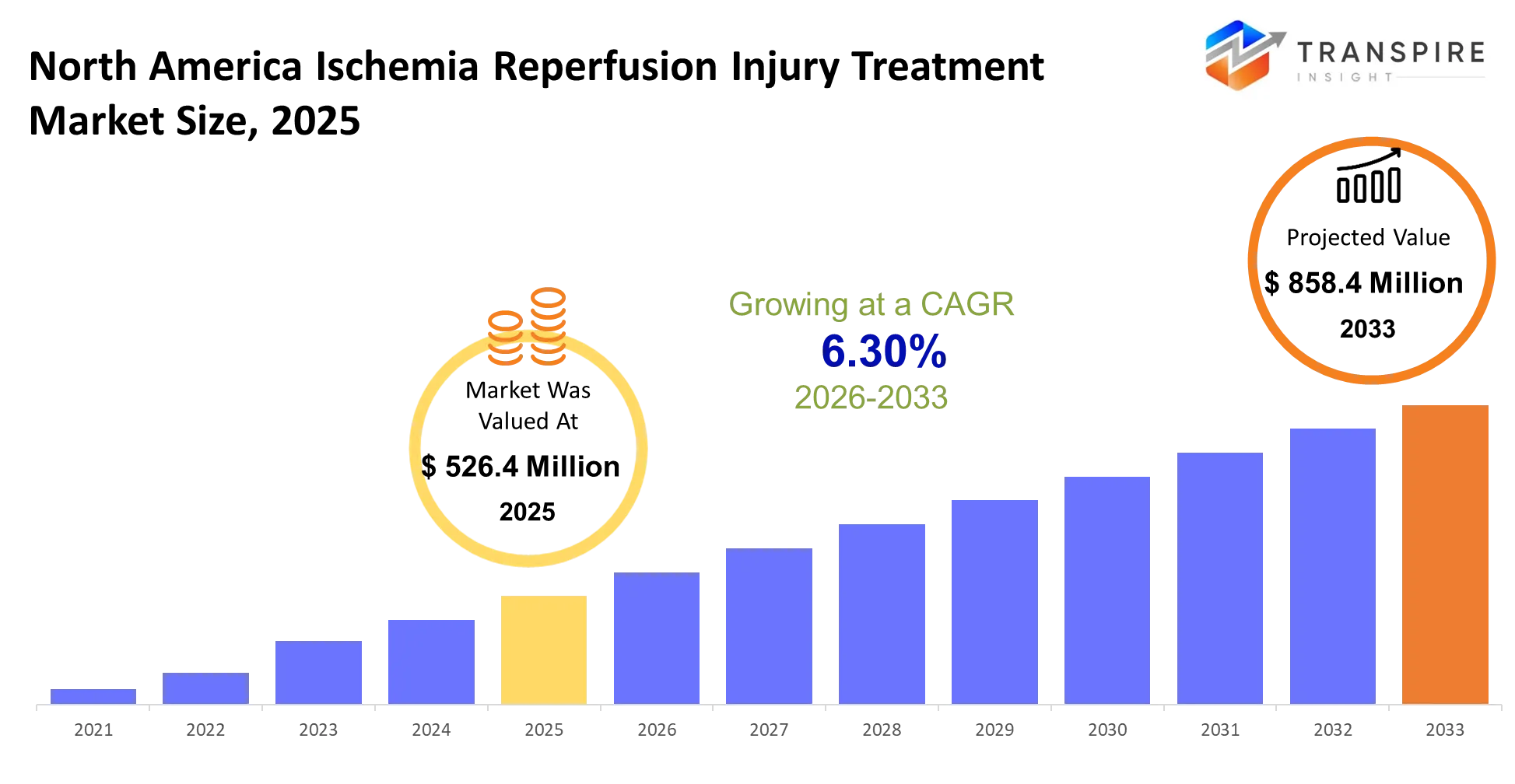
- North America Ischemia Reperfusion Injury Treatment Market Size 2025: USD 526.4 Million
- North America Ischemia Reperfusion Injury Treatment Market Size 2033: USD 858.4 Million
- North America Ischemia Reperfusion Injury Treatment Market CAGR: 6.30%
- North America Ischemia Reperfusion Injury Treatment Market Segments: By Type (Antioxidants, Anti-inflammatory Drugs, Thrombolytics, Vasodilators, Others); By Application (Cardiac Injury, Stroke, Organ Transplant, Others); By End-User (Hospitals, Clinics, Research Institutes, Others); By Route (Oral, Injectable, Others)
To learn more about this report,  Download Free Sample Report
North America Ischemia Reperfusion Injury Treatment Market Summary
The North America Ischemia Reperfusion Injury Treatment Market was valued at USD 526.4 Million in 2025. It is forecast to reach USD 858.4 Million by 2033. That is a CAGR of 6.30% over the period.
The North America ischemia reperfusion injury treatment market basically supports hospitals and transplant centers in limiting tissue damage that shows up when blood supply comes back to organs after a stroke, cardiac arrest , organ transplant or major surgery. In real life these therapies help clinicians preserve organ function, reduce post-surgical complications , and honestly improve survival outcomes for high-risk critical care settings.
Over the last five years, things kind of shifted from broad supportive care, toward more targeted biologics, antioxidant therapies, and organ preservation technologies. Those are kinda built into transplant and cardiovascular protocols already , you know. One major trigger was the COVID-19 pandemic, which exposed weak points in intensive care capacity, and it also sped up investment in critical care therapeutics, plus organ recovery systems. Later, once transplant volumes rebounded and cardiovascular procedures resumed, healthcare providers seemed to focus on treatments that can shorten ICU stays and reduce longer term complications.
So now you get a pretty direct revenue pathway for advanced ischemia reperfusion injury therapies. Hospitals are adopting higher-value treatment protocols because less organ damage means fewer readmissions, better transplant outcomes, and supports the more efficient use of scarce donor organs across North American healthcare systems.
Key Market Insights
- In 2025, the United States kind of dominated the North America Ischemia Reperfusion Injury Treatment Market, with nearly 78% share, mostly because it has more advanced transplant infrastructure, sort of already in place.
- Canada is showing the fastest growth heading toward 2032, backed by increased organ donation programs and also expanding critical care investments.
- Mexico is also seeing emerging demand for therapies for ischemia-reperfusion injury, mainly as tertiary healthcare access keeps getting better and cardiac surgery capacity gets extended, bit by bit.
- When you look at therapy types, antioxidant and anti-inflammatory options held the leading portion, around 34% in 2025, since many post-surgical teams adopted them broadly.
- Organ preservation solutions were the second-largest segment, fueled by more kidney and liver transplant procedures throughout North America.
- As for future growth, biologics and cell-based therapies are projected to be the fastest-growing segment from 2026 to 2032, largely because precision treatment advancements are improving.
- In terms of what the market is used for, organ transplantation led the North America Ischemia Reperfusion Injury Treatment Market, taking close to 42% in 2025, due to rising donor organ utilization.
- Meanwhile, cardiovascular surgery came up as a strong growth area following higher incidence of myocardial infarction and bypass procedures.
- Stroke management applications are also expanding quickly, because hospitals are folding neuroprotective reperfusion therapies into emergency care protocols.
- Finally, hospitals accounted for over 61% of industry revenue in 2025 , largely owing to concentrated transplant and intensive care treatment volumes.
What are the Key Drivers, Restraints, and Opportunities in the North America Ischemia Reperfusion Injury Treatment Market?
Driver: The most powerful driver pushing the North America Ischemia Reperfusion Injury Treatment Market forward is basically the rapid growth of organ transplantation alongside more complex cardiovascular procedures, happening steadily across the United States and Canada. In the past five years, transplant centers have started using machine perfusion systems more often and they’ve leaned into targeted biologics, after some clinical studies showed actual improvements in donor organ survival and also smoother post operative recovery. That change made ischemia reperfusion injury treatment feel less like a simple supporting measure, and more like a revenue producing piece of advanced surgical care, which is kinda important for budgets. Now hospitals are putting bigger money into organ preservation technologies, since lowering graft failure helps reduce intensive care spending, shortens hospital stays, and boosts transplant success numbers that tie into reimbursement performance.
Restraint: Even with that momentum, high treatment costs and inconsistent clinical standardization are still the biggest structural problems for the market. Advanced perfusion devices, biologic therapies, and mixed or combination treatment plans demand specialized infrastructure, plus trained surgical teams. Unfortunately, a lot of mid sized facilities just cannot manage that level of capability. On top of it all, regulatory review and approval for new reperfusion therapies stays slow, because clinical outcomes can look different from organ to organ and even between patient groups. As a result, these constraints stretch commercialization timelines, and they calm down adoption rates outside the major transplant networks, so market reach stays narrower than it could be.
Opportunity: AI integrated organ preservation platforms are turning into a pretty big future thing for the market. Firms working on real time perfusion monitoring systems can make donor organ assessment more precise before the transplantation steps, this is the core idea. Also, the investment pace for ex vivo perfusion technologies in the United States is picking up , because healthcare systems are trying to grow the usable donor organ pool and at the same time cut down on waiting list mortality. In other words, it’s like the whole process is getting more carefully tuned, and that demand seems to keep rising.
What Has the Impact of Artificial Intelligence Been on the North America Ischemia Reperfusion Injury Treatment Market?
Artificial intelligence and advanced digital technologies are kind of reshaping the North America Ischemia Reperfusion Injury Treatment Market, mainly because hospitals now monitor organ viability in a different way. They manage transplant workflows too, and even optimize critical care decisions, more or less in real time. With AI in the mix, the whole process looks more streamlined, and teams can respond faster when something changes.
AI-enabled perfusion platforms are now automating real-time monitoring of oxygen flow, temperature stability, and metabolic activity during organ preservation. In a practical sense, these platforms help transplant teams spot early signs of tissue deterioration. Then they can tweak preservation parameters without depending only on manual observation, which is obviously slower and can be inconsistent.
Machine learning models are also giving a big boost to predictive abilities in transplant and cardio vascular care. Health providers use predictive analytics to guess graft survival chance, gauge reperfusion injury risk, and set treatment timing ahead of surgery. A bunch of transplant centers across the United States have brought in data driven monitoring systems, and this kind of thing tends to reduce organ discard rates . At the same time, it can enhance the way the operating room schedule runs, so resources get used more properly overall.
There are also advanced analytics platforms that shorten intervention response times and help raise transplant utilization rates. When that happens, hospital resource efficiency tends to improve, and procedural revenue can rise as well.Digital twin technologies, plus cloud-connected monitoring systems are pushing precision further by supporting continuous performance tracking across intensive care networks. Still, AI adoption has a pretty big limitation. Many hospitals run on fragmented clinical data systems, which constrains model accuracy and makes it harder to integrate predictive algorithms into real-world transplant workflows.
Key Market Trends
- Since 2020, U.S. transplant centers started to lean more heavily into machine perfusion systems , mostly because donor organ utilization rates turned into one of those critical performance benchmarks , that everyone watches. And in a way, it kind of felt inevitable.
- Organ preservation companies have also been moving away from static cold storage, toward normothermic perfusion platforms. These newer platforms seem to stretch the viable preservation window beyond the traditional limits , at least according to what many clinical teams are reporting.
- Between 2021 and 2025, biologic therapy pipelines grew quite a lot. Pharmaceutical firms were going after inflammatory pathways tied to reperfusion related tissue damage , and the whole approach got broader, quicker than before.
- Hospitals increasingly rolled out AI-assisted monitoring platforms. This happened in the background of staffing shortages, which basically showed how inefficient manual transplant workflow management could be during the pandemic period , and yes, that pressure stayed around longer than people expected.
- In Canada, healthcare systems accelerated investment in advanced transplant infrastructure after organ waiting lists expanded. That was after delayed elective procedures in 2020, and the knock-on effects lingered, then became a real planning issue.
- Several leading players, including XVIVO Perfusion AB and OrganOx Limited, expanded North American partnerships with specialty transplant centers since 2022.
- Also, clinical research priorities changed. They shifted toward multi organ preservation technologies as heart, liver, and lung transplantation volumes came back faster than many forecasts suggested after COVID-19 disruptions.
- Regulatory agencies increased scrutiny around post transplant outcomes. So hospitals, in response, have been pushed toward data driven reperfusion monitoring systems, with real time analytics capabilities , which makes oversight feel more measurable.
- Pharmaceutical companies such as Pfizer Inc. and Novartis AG increased investment in targeted anti inflammatory compounds. These are intended to support cardiac and transplant recovery programs, with reperfusion still being the main trouble spot.
- Since 2023, cloud connected perfusion monitoring systems have gained traction too. Transplant networks wanted centralized oversight across geographically distributed surgical centers , so the cloud angle became more practical than just a feature.
North America Ischemia Reperfusion Injury Treatment Market Segmentation
By Type
Antioxidants plus anti-inflammatory drugs basically take the lead in therapeutic adoption because they help directly with reducing oxidative stress and inflammatory cascades when reperfusion starts. These two groups add up to the most procedural use across transplant and cardiac care , and it’s backed by established clinical protocols plus the usual repeat procurement routines in hospitals. Thrombolytics and vasodilators still show up in meaningful amounts, but their slice is slimmer. They’re mostly seen in acute cardiovascular interventions, where a fast vascular response is kind of a must.
More momentum in this segment comes from a noticeable change in treatment philosophy after 2020, when clinical findings underscored oxidative injury as a major push behind organ damage following reperfusion. Since then, hospitals have leaned more toward pharmacological combinations instead of just single-agent treatments. That has helped improve outcomes in higher-risk surgeries. As a result, there’s been a sort of structural edge for portfolios that cover multiple mechanisms , rather than just one.
For what comes next, growth will likely prefer next-generation biologics and targeted anti-inflammatory compounds, ideally with better specificity and less systemic toxicity. Teams that invest in precision delivery mechanisms , and also in combo-therapy strategies , should see stronger institutional pull as transplant volumes keep climbing and more complex cardiovascular procedures expand across North America.
To learn more about this report, Download Free Sample Report
By Application
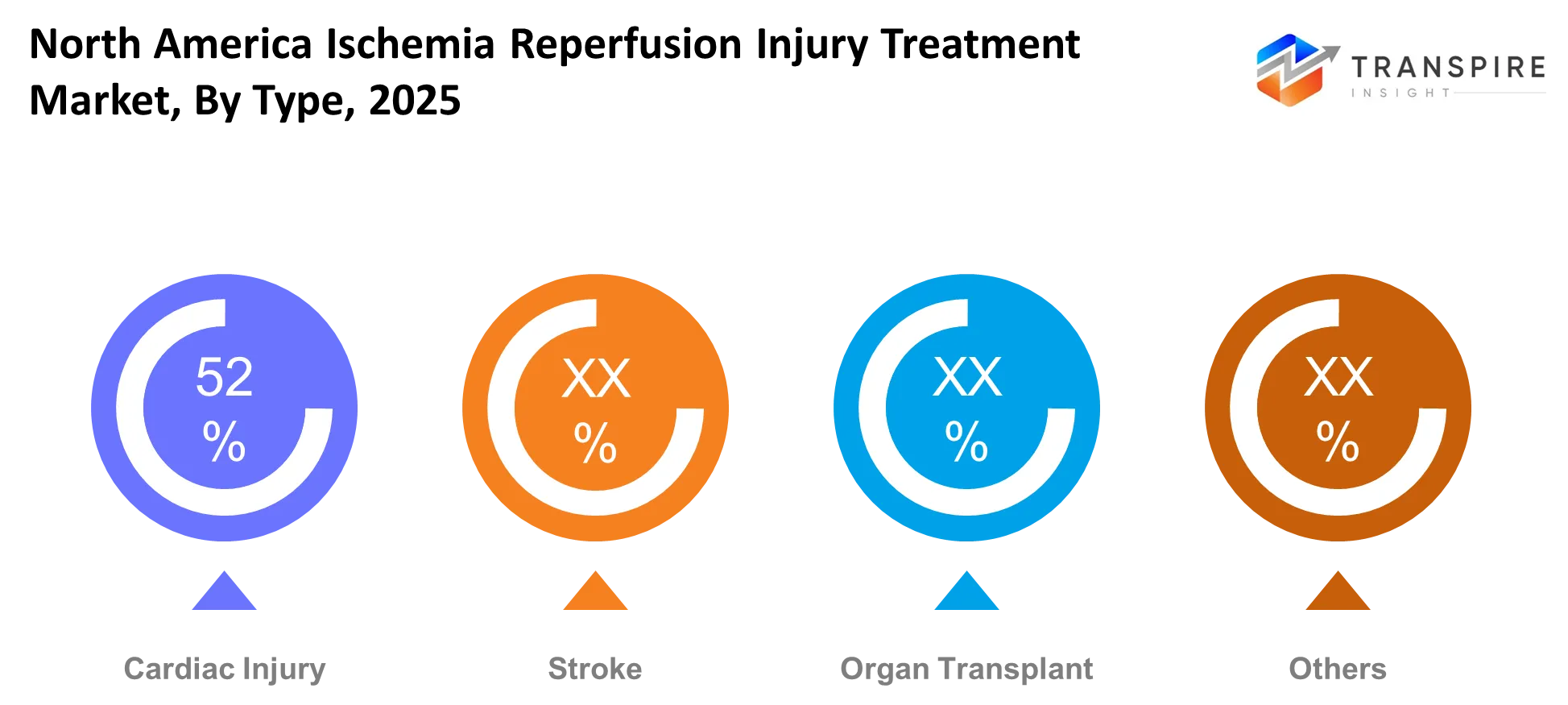
Organ transplant, kind of takes the lead as the primary application segment, mainly because preserving donor organ viability is very high value and it helps lower graft failure rates. Cardiac injury comes right behind it, mostly linked to the ongoing rise in myocardial infarction cases, plus the fact that more emergency departments are adopting advanced reperfusion management protocols. Stroke is still a smaller slice of the market, even so it seems to be getting more structured clinical attention lately.
When organ transplant applications started growing faster, it was after machine perfusion technologies improved, so preservation windows got longer and organ quality assessment became more reliable. For cardiac injury, treatment broadened as more hospitals rolled standardized reperfusion protocols into acute care pathways, sort of as a routine. Stroke-related applications also picked up momentum when neurocritical care units began pushing early intervention approaches, and those are supported by imaging based diagnostics that clinicians rely on.
Looking ahead, the future demand should start to concentrate on integrated multi organ protection strategies that kind of blend pharmacological measures with device based interventions, because it seems like the healthcare world is moving toward a more unified approach. Medical technology developers who build cross application platforms may do particularly well, and this is because healthcare systems appear to be prioritizing unified reperfusion management frameworks across cardiac, neurological, and transplant care, environments too.
By End User
Hospitals kind of dominate the end user uptake because transplant surgeries cluster there and, plus emergency cardiovascular procedures plus the whole intensive care infrastructure. In practice specialty transplant centers make up a big slice of that high value treatment roll-out, especially across urban tertiary care networks. Meanwhile clinics and the smaller facilities tend to stay on the sideline, largely because the equipment side is heavy, and the clinical protocol complexity is not trivial.
Hospital adoption actually sped up when reimbursement frameworks started to reward better post surgical outcomes, and also lower readmission counts. Research institutes then got more involved after additional funding showed up for ischemia-reperfusion injury biology and regenerative medicine work. Clinical trial activity also picked up, since pharmaceutical and device companies were looking for quicker validation routes.
For what comes next, the expansion will mostly land in integrated hospital networks, those that adopt AI supported perfusion monitoring and centralized transplant coordination systems. Research institutes will keep pushing the innovation pipeline, while hospitals that digitize their care pathways should end up with stronger procedural efficiency, and higher organ utilization rates.
By Route
Injectable therapies mostly win because immediate bioavailability is needed, specially in acute reperfusion situations, and yeah it really shows in transplant as well as cardiac surgery settings. Oral formulations get used, but only a bit, mostly during post-operative recovery , and then later for long-term supportive care. There are also other delivery routes, like localized infusion systems, and these are starting to appear more often in specialized clinical protocols, kind of slowly but consistently.
The push toward injectable dominance grew stronger once hospitals started prioritizing rapid-response interventions, these match the surgical rhythm and intensive care timelines. Oral options then broadened gradually, as adjunct therapies became more common for handling post-reperfusion inflammation outside the most critical care units. At the same time , device-assisted delivery methods picked up momentum after controlled perfusion environments were introduced , and people could manage delivery with more precision.
In the future , the trend should point to advanced injectable biologics with longer acting profiles and targeted tissue delivery systems. Developers who focus on controlled-release formulations, plus combination delivery platforms , will likely see more adoption because clinical protocols are moving toward precision-guided reperfusion management across complex surgical procedures.
What are the Key Use Cases Driving the North America Ischemia Reperfusion Injury Treatment Market?
Organ transplantation is still kind of the main use case that drives demand, because clinicians keep pushing to preserve donor organs as much as possible and also reduce ischemia related injury while the surgery is happening and even after it’s done. In other words, hospitals and transplant centers lean hard on advanced perfusion systems, plus pharmacological support, so graft survival rates go up and post operative problems come down. So yea, this is basically the highest value clinical application overall.
Cardiac surgery and stroke management are becoming secondary use cases too, especially in tertiary hospitals and emergency care wards. The rising incidence of myocardial infarction and ischemic stroke is pushing more teams to adopt fast reperfusion protocols, and these are often backed by injectable anti inflammatory and antioxidant therapies. The outcome is better short term survival, plus more procedural efficiency, mainly in fast moving critical care settings where every minute counts.
Then there are the newer, emerging applications, like machine assisted organ reconditioning and AI supported viability checks before transplantation. Research groups and specialty transplant centers are experimenting with ex vivo perfusion platforms together with predictive analytics to judge marginal donor organs. This could expand the usable supply, and maybe over the forecast period it ends up reshaping who qualifies for transplant eligibility, even if the exact standards shift more gradually.
|
Report Metrics |
Details |
|
Market size value in 2025 |
USD 526.4 Million |
|
Market size value in 2026 |
USD 559.6 Million |
|
Revenue forecast in 2033 |
USD 858.4 Million |
|
Growth rate |
CAGR of 6.30% from 2026 to 2033 |
|
Base year |
2025 |
|
Historical data |
2021 - 2024 |
|
Forecast period |
2026 - 2033 |
|
Report coverage |
Revenue forecast, competitive landscape, growth factors, and trends |
|
Regional scope |
North America (Canada, The United States, and Mexico) |
|
Key company profiled |
Pfizer, Novartis, Roche, Merck, AstraZeneca, Sanofi, AbbVie, Bristol Myers Squibb, Eli Lilly, Bayer, Johnson & Johnson, Amgen, Takeda, GSK, Teva |
|
Customization scope |
Free report customization (country, regional & segment scope). Avail customized purchase options to meet your exact research needs. |
|
Report Segmentation |
By Type (Antioxidants, Anti-inflammatory Drugs, Thrombolytics, Vasodilators, Others); By Application (Cardiac Injury, Stroke, Organ Transplant, Others); By End-User (Hospitals, Clinics, Research Institutes, Others); By Route (Oral, Injectable, Others) |
Which Regions are Driving the North America Ischemia Reperfusion Injury Treatment Market Growth?
North America leads the ischemia–reperfusion injury treatment landscape, mostly driven by the United States. There’s a solid transplant infrastructure, advanced critical care networks, and reimbursement frameworks that are well established, which helps adoption of organ preservation and reperfusion therapies feel almost routine. Big academic medical centers, along with integrated hospital systems tend to keep investing in machine perfusion platforms and biologic treatments, even when budgets get tight. Also the regulatory clarity coming out of the FDA, speeds up clinical translation for these newer options. And because there’s a dense web of transplant centers, procedural volume keeps moving and the whole innovation cycle stays active .
Canada is the second important region, contributing stable but smaller revenue than the U.S. Growth looks a little different here, mostly because the healthcare system is publicly funded and tends to lean on standardized treatment protocols, plus a more gradual pace of technology adoption. Provincial health systems often focus on long-term cost control, so investment gravitates toward proven organ preservation methods rather than rapid experimental uptake. That ends up creating fairly predictable demand across cardiac surgery and transplant programs. The consistent procurement cadence and centralized healthcare planning makes Canada a dependable part of the regional market stability.
Mexico is the fastest-growing area recently, largely due to the expansion of tertiary care hospitals and a stronger government push to improve transplant accessibility. Newer urban hospital infrastructure, combined with upgraded surgical capabilities, has improved capacity for complicated cardiovascular, and organ transplant procedures. On top of that, medical tourism plus cross-border collaboration with U.S. institutions, helps move know how and technology faster. Overall, this trajectory suggests fresh market entry opportunities for device manufacturers and pharmaceutical developers targeting emerging clinical networks through the 2026–2033 period.
Who are the Key Players in the North America Ischemia Reperfusion Injury Treatment Market and How Do They Compete?
Competition still looks somewhat consolidated in the pharmaceutical tier, but in the organ preservation and perfusion technology space it’s way more fragmented. Most firms end up duking it out on clinical outcomes, speed to get regulatory approval, and how well they integrate into the transplant workflow, not really on price. Lately, device innovators are also putting more squeeze on drug developers by slipping perfusion systems plus real-time monitoring tools right into the surgical environment, so the “edge” shifts toward outcome focused solutions and that longer term graft survival performance.
Pfizer Inc. works on targeted anti-inflammatory biologics meant to reduce the severity of reperfusion injury, and this is supported through partnerships with U.S. hospital networks. Novartis AG takes cardiovascular and immunology pipelines and folds them into perioperative protocols to increase adoption in practice. F. Hoffmann-La Roche Ltd leans on biomarker driven diagnostics to fine tune reperfusion timing, and also to improve how transplant candidates are chosen.
Sanofi S.A. continues expanding hospital contracts for perioperative inflammation control therapies across North America. OrganOx Limited stays centered on normothermic machine perfusion systems that extend organ viability through clinical collaborations. XVIVO Perfusion AB keeps growing through licensing agreements, bringing advanced organ preservation into transplant programs.
Company List
- Pfizer
- Novartis
- Roche
- Merck
- AstraZeneca
- Sanofi
- AbbVie
- Bristol Myers Squibb
- Eli Lilly
- Bayer
- Johnson & Johnson
- Amgen
- Takeda
- GSK
- Teva
Recent Development News
In March 2026, Sanofi received European Commission conditional approval for Rezurock (belumosudil) for chronic graft-versus-host disease. The approval expanded post-transplant immunology treatment options, indirectly supporting improved management of ischemia reperfusion-related complications in transplant recovery pathways.https://www.sanofi.com
“In April 2026, Pfizer announced expansion of its oncology and translational pipeline at ASCO 2026, including next-generation targeted therapies and combination regimens. While primarily oncology-focused, the expansion includes mechanisms targeting cellular stress and tissue damage pathways relevant to ischemia-reperfusion injury research, strengthening Pfizer’s translational platform in injury-repair biology and broad inflammatory response modulation.”https://www.pfizer.com
What Strategic Insights Define the Future of the North America Ischemia Reperfusion Injury Treatment Market?
In the next 5–7 years, the North America ischemia-reperfusion injury treatment market will probably drift away from big, general anti-inflammatory and supportive care, toward more mechanism-specific, precision-directed options. These new approaches are basically aiming at cellular stress plus mitochondrial dysfunction, not just comfort measures. And honestly this shift isn’t only because the incidence is climbing, it’s more due to a kind of meet-in-the-middle between vascular biology findings, real-time perfusion imaging, and translational drug platforms. A lot of that is also borrowing from cardiology, and transplantation pipelines that were already being built for other reasons.
There is also a risk that doesn’t get discussed enough, which is regulatory compression, like when therapies start to borrow indications from similar ischemic diseases. In those cases, payers and regulators could become stricter on evidence, making cross indication approvals move slower, and that can chip away at ROI for the platform-based drug ideas. Another, more practical opportunity is organ-preservation and ex vivo perfusion technologies. These are kind of shifting from transplant logistics into therapeutic modulation of reperfusion injury, before implantation happens.So market players may want to emphasize modular drug-device co-development, because trying to build assets that integrate with perfusion systems could win more than competing as standalone pharmacologic interventions.
North America Ischemia Reperfusion Injury Treatment Market Report Segmentation
By Type
- Antioxidants
- Anti-inflammatory Drugs
- Thrombolytics
- Vasodilators
- Others
By Application
- Cardiac Injury
- Stroke
- Organ Transplant
- Others
By End-User
- Hospitals
- Clinics
- Research Institutes
- Others
By Route
- Oral
- Injectable
- Others
Frequently Asked Questions
Find quick answers to common questions.
The North America Ischemia Reperfusion Injury Treatment Market size is USD 858.4 Million in 2033.
Key segments for the North America Ischemia Reperfusion Injury Treatment Market are By Type (Antioxidants, Anti-inflammatory Drugs, Thrombolytics, Vasodilators, Others); By Application (Cardiac Injury, Stroke, Organ Transplant, Others); By End-User (Hospitals, Clinics, Research Institutes, Others); By Route (Oral, Injectable, Others).
Major North America Ischemia Reperfusion Injury Treatment Market players are Pfizer, Novartis, Roche, Merck, AstraZeneca, Sanofi, AbbVie, Bristol Myers Squibb, Eli Lilly, Bayer, Johnson & Johnson, Amgen, Takeda, GSK, Teva.
The North America Ischemia Reperfusion Injury Treatment Market size is USD 526.4 Million in 2025.
The North America Ischemia Reperfusion Injury Treatment Market CAGR is 6.30% from 2026 to 2033.
- Pfizer
- Novartis
- Roche
- Merck
- AstraZeneca
- Sanofi
- AbbVie
- Bristol Myers Squibb
- Eli Lilly
- Bayer
- Johnson & Johnson
- Amgen
- Takeda
- GSK
- Teva
Recently Published Reports
-
May 2026
Biosimilars Market
Biosimilars Market By Product Type (Monoclonal Antibodies, Recombinant Hormones, Erythropoietin, G-CSF, Others), By Indication (Oncology, Autoimmune Diseases, Blood Disorders, Diabetes, Others), By Manufacturing Type (In-House Manufacturing, Contract Manufacturing), By Distribution Channel (Hospital Pharmacies, Retail Pharmacies, Online Pharmacies), By Industry Analysis, Size, Share, Growth, Trends, and Forecasts 2021-2033
-
Apr 2026
Gastrointestinal Endoscopy Market
Gastrointestinal Endoscopy Market By Type (Rigid Gastrointestinal Endoscope, Flexible Gastrointestinal Endoscopes, Disposable Gastrointestinal Endoscope), By Procedure Type (Colonoscopy, Gastroscopy, Duodenoscopy, Enteroscopy, Flexible Sigmoidoscopy, Others), By Application (Diagnosis, Treatment), By End-Users (Hospitals, Ambulatory Surgical Centers, Specialty Clinics, Laboratories, Others), By Industry Analysis, Size, Share, Growth, Trends, and Forecasts 2021-2033
-
Apr 2026
Rare Inherited Metabolic Disorder Drug Market
Rare Inherited Metabolic Disorder Drug Market By Drug Class (Enzyme Replacement Drugs, Gene Therapy Drugs, Substrate Reduction Drugs, Small Module Drugs, Protein Drugs), By Route of Administration(Parenteral, Oral, Intrathecal), By Clinical Development (Marketed Drugs, Late Stage Clinical Phase III, Early Stage Clinical Phase I-II, Preclinical Candidates), By Indication (Lysosomal Storage Disorders, Urea Cycle Disorders, Amino Acid Metabolic Disorders, organic Acidemias, Peroximal Disorders), By Industry Analysis, Size, Share, Growth, Trends, and Forecasts 2021-2033
-
Jan 2026
Pharmaceutical Cleanroom Technology Market
Pharmaceutical Cleanroom Technology Market By Product (Equipment, Consumables, Services); By Cleanroom Type (Standard Cleanrooms, Modular Cleanrooms); By End Use (Pharmaceutical Companies, Biotechnology Companies), By Industry Analysis, Size, Share, Growth, Trends, and Forecasts 2021-2033