

Middle East and Africa Sports Betting Market Size & Forecast:
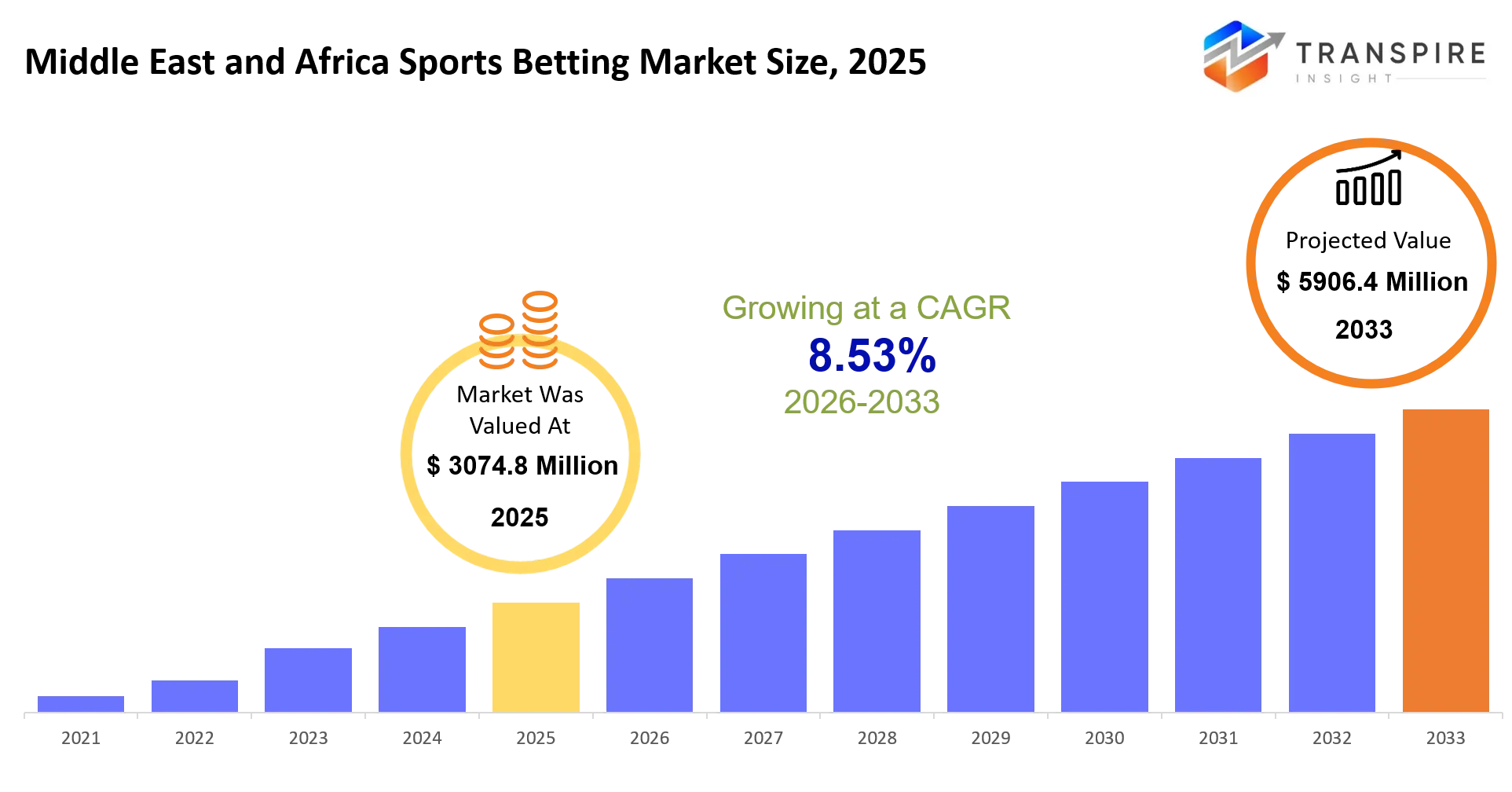
- Middle East and Africa Sports Betting Market Size 2025: USD 3074.8 Million
- Middle East and Africa Sports Betting Market Size 2033: USD 5906.4 Million
- Middle East and Africa Sports Betting Market CAGR: 8.53%
- Middle East and Africa Sports Betting Market Segments: By Betting Type (Fixed Odds, Live Betting, Exchange Betting, eSports Betting, Others); By Platform (Online, Offline, Mobile, Others); By Sport (Football, Cricket, Basketball, Tennis, Others); By End User (Casual Bettors, Professional Bettors, Others)
To learn more about this report,  Download Free Sample Report
Middle East and Africa Sports Betting Market Summary
The Middle East and Africa Sports Betting Market was valued at USD 3074.8 Million in 2025. It is forecast to reach USD 5906.4 Million by 2033. That is a CAGR of8.53% over the period.
In practice , sports betting platforms across the Middle East and Africa Sports Betting Market let users place wagers right away on live match outcomes, handle payment settlement, and also pull together odds from different sources over both digital and walk-in channels . In a way they solve a big ecosystem job by linking sports audiences, operators, and payment networks into one continuous transactional route, so the whole thing can monetize match moments and fan engagement .
Over the last 3–5 years, things moved from retail-centered betting shops toward mobile-first setups, mostly supported by digital wallets and instant payment rails. One big structural change was the quick uptake of AI-driven odds engines along with automated risk controls , which helped tune pricing precision and cut down operator exposure. This push was noticeably helped by post-pandemic habits around digital consumption, together with stronger regulatory supervision across several African and Gulf jurisdictions . That combination basically guided operators toward more compliant, traceable online operations. So, revenue now leans much more on high-frequency in-play wagering and frictionless mobile experiences instead of older fixed-odds storefront patterns .
Key Market Insights
- The Middle East and Africa Sports Betting Market is showing a pretty strong shift toward mobile wagering, and by 2025 it’s picking up more than 60% of digital transaction share , roughly.
- In-play betting kind of dominates the engagement models, because it brings better margins, mostly from real-time pricing plus those quick betting cycles across sports fixtures, and it feels constant.
- Africa is leading the adoption growth too, mainly thanks to wider smartphone penetration and fintech - enabled payment ecosystems that make wager flows easier.
- In the Middle East, regulators are tightening the rules, so operators are pushed toward licensed online platforms , and that ends up improving compliance driven revenue visibility.
- Football still stays the biggest sport segment, taking up close to 55–65% of betting volume in regional markets, year after year.
- eSports betting meanwhile is growing fastest, supported by younger audiences, and also by digital-native engagement habits.
- Online platforms lead distribution, while retail outlets continue losing ground , largely because operational costs feel inefficient and drag margins down.
- The professional bettors segment is rising steadily, with algorithm-assisted betting strategies and more adoption of data analytics , quietly helping decisions.
- Big names like Flutter Entertainment, Entain, and Bet365 are expanding AI based personalization engines , to improve retention and keep players coming back.
- Lastly, strategic partnerships between operators and fintech providers are speeding up cross border payment integration, especially in emerging African markets.
What are the Key Drivers, Restraints, and Opportunities in the Middle East and Africa Sports Betting Market?
The main driver behind the Middle East and Africa Sports Betting Market is that mobile payment infrastructure is getting folded in faster with real-time betting platforms, kinda like, they now move together. This change really kicked off as digital wallet adoption spread through a lot of Africa and also across Gulf countries, so deposits and withdrawals can happen basically instantly. Operators are now leaning into high-frequency in-play betting sessions, and that tends to lift the transaction volume per single user quite a bit, it also boosts lifetime value. On top of that, the whole ecosystem gains from AI-driven odds optimization, which helps pricing stay efficient and, in turn, supports healthier operator margins
One big restraint is still the patchy regulatory alignment across the region, where licensing rules are not consistent. Because of this, cross-border betting platforms face a lot of operational uncertainty, and not just a little. That structural issue makes compliance costs higher than they should be, and it also reduces scalability for international operators especially where online gambling laws are strict. It even ends up slowing down the shift of users from informal betting channels over to regulated platforms, and that suppression then limits the tax-related revenue expansion that could otherwise happen
A major opportunity is in fintech-integrated betting ecosystems, mainly in African markets that are still underserved. Their mobile money adoption is rising pretty quickly, so the timing feels favorable. Places like Nigeria and Kenya are starting to look like strategic hotspots, where payment interoperability supports smooth betting transactions. Operators that invest in localized payment infrastructure, along with data-driven personalization, are more likely to take a first-mover advantage as the formalization of digital betting keeps accelerating.
What Has the Impact of Artificial Intelligence Been on the Middle East and Africa Sports Betting Market?
Artificial intelligence has,sort of, transformed operational efficiency across the Middle East and Africa Sports Betting Market, mostly by automating odds creation, fraud detection, and ongoing risk balancing in real time. These days operators tend to lean on machine learning models that keep recalibrating pricing from live match inputs , plus betting volume swings and even user behavior signatures. The whole thing cuts down on what people call manual interference, and it helps keep margin steadier especially when volatility spikes during major football tournaments.
At the same time, predictive analytics systems are getting rolled out more often to estimate wagering patterns and spot unusual betting behavior. That strengthens compliance, and it also reduces fraud exposure in practice. Some platforms, including those run by companies like DraftKings and Flutter Entertainment, have woven AI engines into their workflows for stronger personalization. The result is higher engagement and better conversion performance across mobile apps, in other words people stay longer and bet more consistently.
On the operations side, AI-driven automation also improves system uptime and lowers latency in live betting, which in turn lifts revenue per active user. Still, adoption isnt always smooth. There are limitations, mainly from uneven data quality between different African sporting leagues, and from connectivity troubles in low-bandwidth areas. Those issues can drag down model accuracy during live scenarios, especially for in-play betting where tiny timing gaps really matter, like when milliseconds count.
Because of that, many operators end up using hybrid systems, combining automated analytics with manual supervision, so reliability doesn’t collapse when conditions get messy.
Key Market Trends
- After 2022, mobile first betting adoption kind of shot up, and apps based wagering started to pass the old retail channels in several big African economies.
- At the same time, live betting systems got more “smarter” with AI odds recalibration, which helped operators keep margins steadier when the sports calendar went really high volume and hectic.
- Meanwhile 2023 to 2025 saw regulatory reforms across Gulf countries, and those changes raised licensing expectations, so the informal betting activity dropped off.
- Football, sort of led the charge in MEA demand, especially around international tournaments and regional leagues where people are already wired to follow games.
- Also eSports betting adoption accelerated fast among users under 30, and that’s basically reshaping the long term engagement strategies operators use.
- On the fintech side, partnerships improved deposit efficiency, especially through mobile money systems in East Africa where the flow is smoother.
- Operators like Entain and Betsson rolled out more AI based personalization tools to support retention growth.
- Even with regulatory fragmentation in place, cross border betting platforms kept expanding, leaning on cloud infrastructure to move faster than local constraints.
- And in more professional betting segments, data analytics is getting wider use to tune staking tactics, while trying to reduce risk exposure at the same time.
- Retail betting shops, in urban areas in particular, declined because operational costs remained high, and people shifted toward digital ecosystems.
Middle East and Africa Sports Betting Market Segmentation
By Betting Type
Fixed odds betting is still widely used, mostly because its simple and the payout structure feels, very predictable. Meanwhile live betting is growing quicker as people stay more engaged during the match, especially with real time action streaming across most digital platforms. Exchange betting tends to pull in more advanced users, they like the peer to peer type pricing efficiency. eSports betting is expanding fast too, mostly with younger audiences, helped by digital native consumption routines. There are also other categories, like novelty wagers and micro betting, which kind of fit the smaller niche audiences.
Even so, fixed odds keeps leading overall participation, largely because it remains easy to access. Live betting brings in more revenue contribution because there are these repeated in match transactions. Exchange betting stays smaller, but it’s pretty stable among professional style bettors. eSports betting has the clearest expansion curve, as tournament viewership keeps climbing. Beyond that, the remaining formats help with platform diversification, and they support longer term user retention tactics.
By Platform
Online platforms mostly win, because the infrastructure is scalable and access is basically instant, you know. Mobile platforms, however they are growing fastest, mainly due to smartphone penetration plus app based engagement models that feel more immediate. Offline platforms seem to keep sliding , especially in city or urban markets, since the operating costs are higher and harder to swallow. Other options also exist, like hybrid kiosks or agent driven systems, which some operators use in between stages.
Online systems are still the backbone for regulated operators, they stay foundational even when everything else changes. Mobile betting then pushes the highest transaction frequency, along with stronger user engagement, almost like a loop. Offline channels keep going in rural regions, where digital access is limited, so people just go the simpler route. Hybrid platforms, on the other hand, help transitional markets— they bridge the gap, while they shift toward full digital adoption.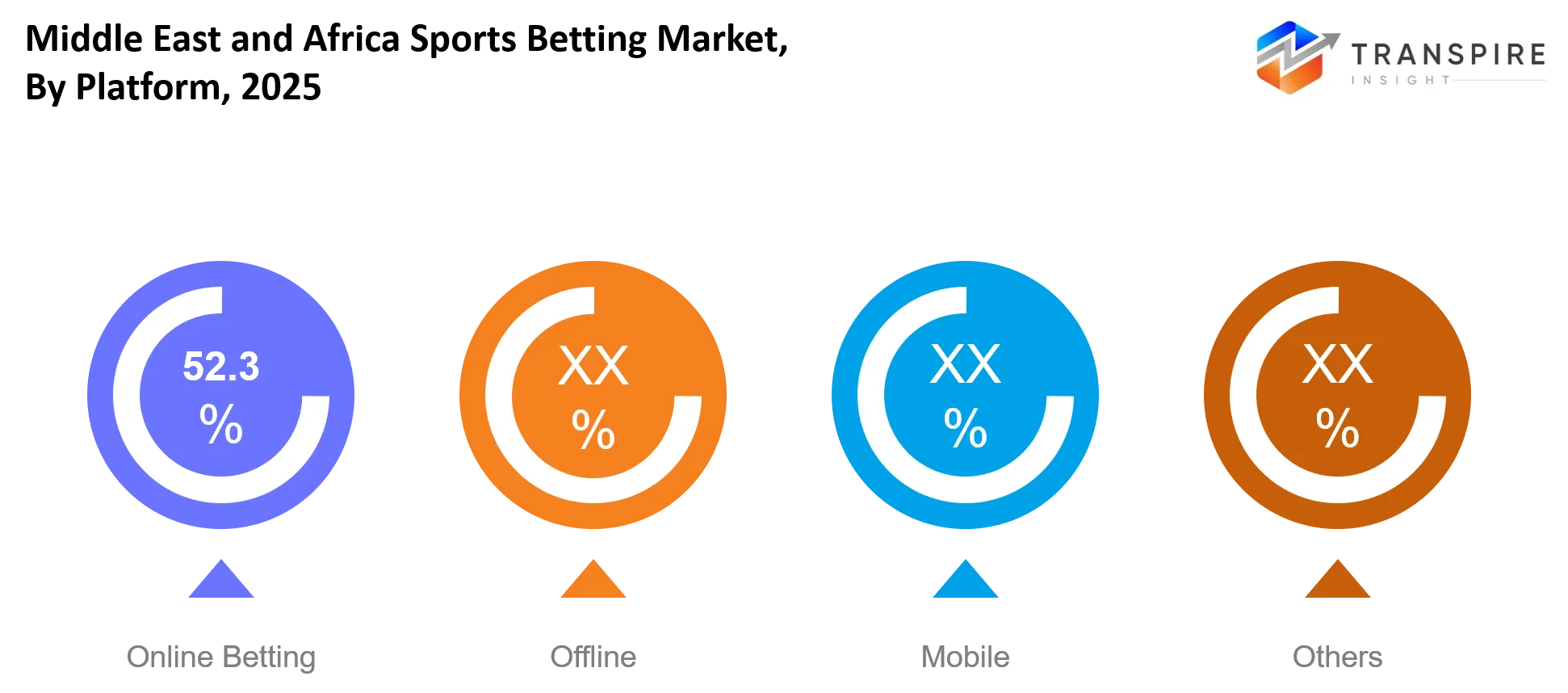
To learn more about this report, Download Free Sample Report
By Sport
Football kind of dominates the betting volume, mainly because of how many people it pulls in regionally, and also because the big global tournaments keep showing up pretty often. Cricket still holds pretty solid engagement especially in South Africa and in diaspora markets that are connected to South Asia. Basketball and tennis keep trending upward too, helped by international leagues plus those seasonal events that happen on schedule. Other sports show up in the mix as smaller, more local competitions, kinda niche by comparison.
When you look at it overall, Football brings the top betting liquidity across all platforms , and that feels consistent. Cricket stays structurally relevant in a few African markets, even if it’s not equally loud everywhere. Basketball and tennis bring in more diversified revenue streams, not just one kind of demand. And the other sports, even if smaller, help the platforms widen their engagement portfolio , so the offering doesn’t feel so narrow.
By End User
Casual bettors make up the biggest group, mostly because they’re here for entertainment and just keep showing up. The pro side, meanwhile, leans on analytics, plus algorithmic playbooks for deciding what to do, not just vibes. Then there are the other users, the occasional crowd, and the social bettors who treat it like a light pastime.
Casual users usually create tons of actions, even if each one is smaller in stake. Professional bettors bring bigger value per transaction, but they don’t place bets as often. The remaining segments tend to fuel seasonal surges and event based spikes, so platform activity kind of ramps up around certain moments.
What are the Key Use Cases Driving the Middle East and Africa Sports Betting Market?
Main use cases revolve around real-time wagering while live sports are happening, where the platform has to handle high-frequency stakes and constant odds shifts. This seems to drive the biggest pull, since bettors stay active the whole game, and that bumps up both transaction density and revenue for the operator, basically nonstop engagement.
Then you have the secondary stuff, like pre-match betting that leans on analytics, mostly used by professional bettors who are pretty data-forward. There’s also fantasy sports engagement, but tied more directly to league performance tracking so fans keep checking in. In practice these are mainly for users who want insight, and they help platforms stay sticky inside broader digital ecosystems.
On the newer side, there are micro-bets during tiny in-game moments, plus AI-assisted predictive betting tools that sort of suggest odds-centered tactics. They’re starting to catch on, because operators are folding in automation and personalization, especially in mobile-first betting apps aimed at younger audiences.
|
Report Metrics |
Details |
|
Market size value in 2025 |
USD 3074.8 Million |
|
Market size value in 2026 |
USD 3330.1 Million |
|
Revenue forecast in 2033 |
USD 5906.4 Million |
|
Growth rate |
CAGR of8.53% from 2026 to 2033 |
|
Base year |
2025 |
|
Historical data |
2021 - 2024 |
|
Forecast period |
2026 - 2033 |
|
Report coverage |
Revenue forecast, competitive landscape, growth factors, and trends |
|
Regional scope |
Middle East and Africa (Saudi Arabia, United Arab Emirates, South Africa, Rest of Middle East and Africa) |
|
Key company profiled |
Bet365, Flutter Entertainment, Entain, DraftKings, FanDuel, 888 Holdings, Betway, Kindred Group, Super Group, William Hill, Betsson, LeoVegas, Pinnacle, Bwin, Stake |
|
Customization scope |
Free report customization (country, regional & segment scope). Avail customized purchase options to meet your exact research needs. |
|
Report Segmentation |
By Betting Type (Fixed Odds, Live Betting, Exchange Betting, eSports Betting, Others); By Platform (Online, Offline, Mobile, Others); By Sport (Football, Cricket, Basketball, Tennis, Others); By End User (Casual Bettors, Professional Bettors, Others) |
Which Regions are Driving the Middle East and Africa Sports Betting Market Growth?
The Middle East kinda leads, mostly because of really organized regulatory frameworks, solid telecom infrastructure, and honestly, high disposable income across Gulf countries. In some select jurisdictions, licensed betting setups allow a controlled expansion of the platforms , plus more premium user acquisition. On top of that, strong digital payments ecosystems and very strict compliance systems help keep operators stable, so revenue looks more predictable, less chaotic.
Africa is… active, but it stays fragmented. The whole thing is pulled forward by mobile money penetration and the way informal betting quietly turns into regulated platforms. Compared with the Middle East, growth there feels less “regulation-led” and more “infrastructure-led” (yeah) and fintech ecosystems become kind of the glue, enabling participation rather directly. Result is steady revenue growth, but it’s uneven from one country to the next.
The fastest-growing area is Sub-Saharan Africa, and it’s driven by quick smartphone adoption plus digital wallet networks that keep expanding. Investments lately in telecom buildouts and fintech interoperability have lowered transaction barriers quite a bit. This overall momentum hints at a strong long-term opening for new platform entrants, especially those aiming at localized payment integration and mobile-first betting experiences through 2026–2033.
Who are the Key Players in the Middle East and Africa Sports Betting Market and How Do They Compete?
The Middle East and Africa Sports Betting Market is kind of moderately fragmented, with global operators competing right next to regional platforms, kinda side by side. In the real race, competition mostly comes down to tech capability, mobile user experience , and how smooth the payment integration feels, not just pricing alone. Older incumbents usually hold their ground by leaning on regulatory licensing power, and the digital-native guys disrupt faster using mobile-first interfaces, plus AI powered personalization, that kind of thing.
Bet365 tends to win through scalable sportsbook infrastructure and live betting performance engines that can handle big throughput, so it looks strong when matches get really high volume. Flutter Entertainment expands via acquisition led growth, and it uses a multi brand portfolio approach too, which helps it reach different user groups and regulatory zones without having to start from scratch each time. Entain differentiates by pushing responsible gaming technology, and by localizing the platform setup across several emerging African markets , more than most others do.
DraftKings leans on advanced analytics and predictive modeling to lift user engagement, especially in mobile-first environments where attention spans are short. Betsson keeps momentum through regional partnerships and a flexible way of deploying its platform inside regulated jurisdictions, so it can adapt as rules shift. Overall, these operators seem to expand together by folding in AI, partnering with fintech allies, and scaling cross-border digital infrastructure, step by step .
Company List
- Bet365
- Flutter Entertainment
- Entain
- DraftKings
- FanDuel
- 888 Holdings
- Betway
- Kindred Group
- Super Group
- William Hill
- Betsson
- LeoVegas
- Pinnacle
- Bwin
- Stake
Recent Development News
In March 2026, Formula One and Betway entered a multi-year strategic partnership. The collaboration made Betway the first official betting operator of Formula One across Europe, the Middle East, and Africa, enabling real-time in-play wagering tied to race analytics and enhancing data-driven fan engagement across global motorsport audiences.https://www.reuters.com/
In June 2026, Evoke agreed to a £243 million takeover by Bally’s Intralot. The acquisition of the William Hill owner reflects accelerating consolidation in regulated betting markets, strengthening cross-regional operational scale and expanding access to licensed sports wagering platforms across Europe, the Middle East, and Africa.https://www.theguardian.com
In 2025, Plus500 expanded regulated betting operations through new licensing in the UAE. The company secured multiple jurisdictional licenses, supporting its global sports and financial betting expansion strategy and improving access to regulated Middle East digital wagering markets with higher compliance-driven revenue visibility.https://www.thetimes.com
What Strategic Insights Define the Future of the Middle East and Africa Sports Betting Market?
The Middle East and Africa Sports Betting Market is kind of moving, structurally, toward a fully digital , mobile-first wagering setup, with fintech tie-ins and AI based personalization that just feels more tuned to each bettor’s habits. In the next 5–7 years, most of the momentum is likely to land in places where the rules for gambling kinda match up with digital payments growth, and where platforms can scale across borders without too many hiccups. Also, the way operators make money is shifting more toward frequent live betting and data-led user attention, not just the older style pre-match bets.
One thing people sometimes miss, though, is that regulation can get stricter in cycles, and then sudden policy changes may mess with operator licensing continuity, plus reduce access to platforms in the same high growth jurisdictions everybody wants to enter. At the same time there’s a newer chance that looks promising: sports betting blending into embedded fintech ecosystems. This seems especially relevant across Sub-Saharan Africa, where mobile money frameworks let micro transactions happen more or less smoothly, like it’s already part of everyday payments.
So market participants might want to focus on localized payment integration, alongside AI driven risk controls, to stay competitive. But they should also be building flexible compliance architectures, you know, systems that can react fast when regulatory rules change across a set of fragmented jurisdictions.
Middle East and Africa Sports Betting Market Report Segmentation
By Betting Type
- Fixed Odds
- Live Betting
- Exchange Betting
- eSports Betting
- Others
By Platform
- Online
- Offline
- Mobile
- Others
By Sport
- Football
- Cricket
- Basketball
- Tennis
- Others
By End User
- Casual Bettors
- Professional Bettors
- Others
Frequently Asked Questions
Find quick answers to common questions.
The Expected Middle East and Africa Sports Betting Market size for the Market will be USD 5906.4 Million in 2033.
Key Segments for the Middle East and Africa Sports Betting Market are By Betting Type (Fixed Odds, Live Betting, Exchange Betting, eSports Betting, Others); By Platform (Online, Offline, Mobile, Others); By Sport (Football, Cricket, Basketball, Tennis, Others); By End User (Casual Bettors, Professional Bettors, Others).
Major Middle East and Africa Sports Betting Market players are Bet365, Flutter Entertainment, Entain, DraftKings, FanDuel, 888 Holdings, Betway, Kindred Group, Super Group, William Hill, Betsson, LeoVegas, Pinnacle, Bwin, Stake.
The Current Middle East and Africa Sports Betting Market size is USD 3074.8 Million in 2025.
The Middle East and Africa Sports Betting Market CAGR is 8.53% from 2026 to 2033.
- Bet365
- Flutter Entertainment
- Entain
- DraftKings
- FanDuel
- 888 Holdings
- Betway
- Kindred Group
- Super Group
- William Hill
- Betsson
- LeoVegas
- Pinnacle
- Bwin
- Stake
About the Authors

Chetan Dhatrak
I’m Chetan Dhatrak, a Senior Research Analyst at Transpire Insight, specializing in the Consumer Goods, Foods and Beverages industry. I focus on analyzing market trends, consumer behavior, competitive landscapes, and industry developments to deliver accurate, data-driven insights. My research at Transpire Insight is built on credible sources and in-depth analysis, helping businesses and readers better understand market dynamics, emerging opportunities, and evolving consumer preferences. I’m committed to creating reliable, well-researched content that supports informed decision-making and reflects the latest developments in the consumer goods and food & beverage sectors.

Chakradhar Khansole
Chakradhar serves as the Research Director at Transpire Insight, bringing over 8 years of experience in technology, innovation, and strategic market intelligence. He specializes in transforming complex market data into actionable business insights that enable organizations to make informed, growth-oriented decisions. Recognized for his strategic vision and analytical expertise, Chakradhar leads high-impact research initiatives, delivering comprehensive market assessments, competitive intelligence, and forward-looking industry analysis.
Recently Published Reports
-
Apr 2026
Bottled Water Market
Bottled Water Market Size, Share & Analysis Report By Product Type (Still Bottled Water, Carbonated Bottled Water, Functional Bottled Water, and Others), By Packaging (PET, Cans, and Others), By Sales Channel (Supermarkets/Hypermarkets, Convenience Stores/Drug Stores, Grocery Stores/Club Stores, Foodservice, and Others) and Geography (North America, Europe, Asia-Pacific, Middle East and Africa, South and Central America), 2021 - 2032
-
Apr 2026
Color Cosmetic Packaging Market
Color Cosmetic Packaging Market Size, Share & Analysis Report By Application (Mascara Packaging, Liquid Packaging, and Liquid Face), By Type (Tubes & Bottles, Pens & Markers, Compacts & Containers, and Droppers & Pumps), and Geography (North America, Europe, Asia-Pacific, Middle East and Africa, South and Central America), 2021 - 2031
-
Apr 2026
External Microphone For Camera Market
External Microphone For Camera Market Size, Share & Analysis Report By Type (Shotgun Microphone, Lavalier Microphone, and Others), By Application (Digital Camera, Professional Video Camera, and Others), and Geography (North America, Europe, Asia-Pacific, Middle East and Africa, South and Central America), 2021 - 2031
-
Apr 2026
Foot Orthotic Insoles Market
Foot Orthotic Insoles Market Size, Share & Analysis Report By Type (Pre-fabricated, and Custom-made), By Material (Thermoplastic, Composite Carbon Fiber, and Others), By Distribution Channel (Drug Stores, Hospitals & Clinics, and Others), and Geography (North America, Europe, Asia-Pacific, Middle East and Africa, South and Central America), 2021 - 2031