
Middle East and Africa Software Testing Market Size & Forecast:
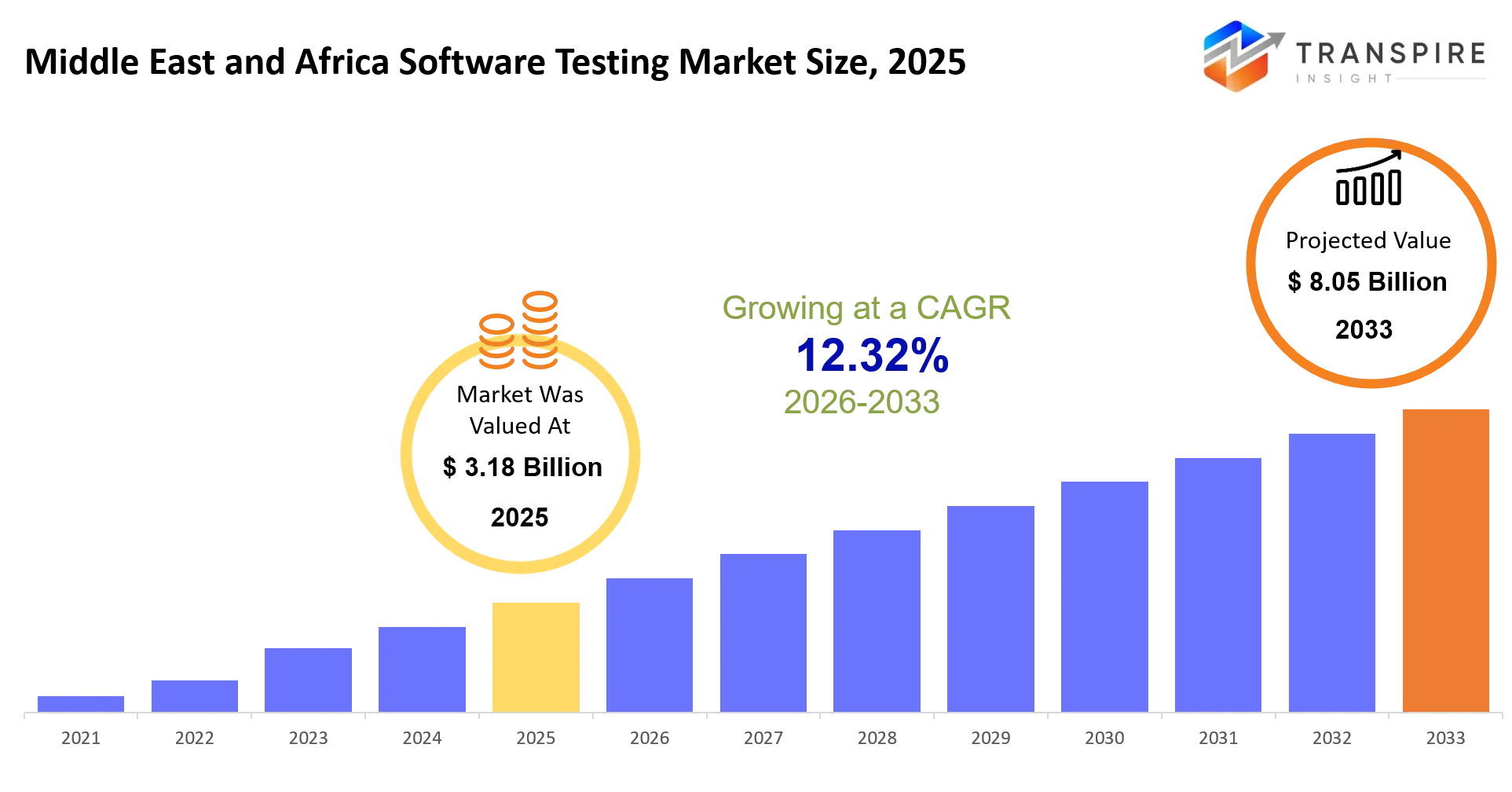
- Middle East and Africa Software Testing Market Size 2025: USD 3.18 Billion
- Middle East and Africa Software Testing Market Size 2033: USD 8.05 Billion
- Middle East and Africa Software Testing Market CAGR: 12.32%
- Middle East and Africa Software Testing Market Segments: By Testing Type (Functional Testing, Automation Testing, Security Testing, Performance Testing, Others); By Deployment (Cloud-based, On-premise, Hybrid, Others); By Enterprise Size (Large Enterprises, SMEs, Others); By End User (IT & Telecom, BFSI, Healthcare, Retail, Others)
To learn more about this report,  Download Free Sample Report
Middle East and Africa Software Testing Market Summary
The Middle East and Africa Software Testing Market was valued at USD 3.18 Billion in 2025. It is forecast to reach USD 8.05 Billionby 2033. That is a CAGR of 12.32% over the period.
The Middle East and Africa Software Testing market has a pretty critical part to play in making sure enterprise applications, banking platforms , healthcare systems, telecom networks, and those digital services actually work, before they get to end users. In a simple sense, software testing lets organizations spot defects earlier, harden cybersecurity, tune performance, and avoid those expensive interruptions that happen when things go wrong in busy digital settings. In 2025 the market was valued at USD 3.18 billion, and by 2033 it is projected to grow to about USD 8.05 billion.
In the last five years, things have been moving away from traditional hand testing toward AI-driven automation, ongoing testing, and a DevOps connected quality engineering approach. One big reason for this shift was the quick surge in digital transformation initiatives after the pandemic, where enterprises had to ship software faster, but still keep quality where it should be. With cloud migration expanding, mobile applications everywhere, and digital banking platforms rolling out across the region , teams now need scalable testing frameworks. Because of that, companies are putting more budget into automated testing tools, security validation, and performance testing services. That is also opening up fresh revenue streams for testing vendors and the quality engineering specialists who support them.
Key Market Insights
- The Middle East and Africa Software Testing Market is kind of shifting, from manual testing toward AI enabled automation platforms, and that usually cuts testing cycles around 30–50% across enterprise initiatives.
- In Gulf countries, you can see nearly 45% of the regional software testing revenue, mostly because of advanced digital government programs and financial technology initiatives.
- Automation Testing sort of stays in the lead, with an estimated 35%+ market share, and it’s backed by DevOps adoption and continuous integration workflows, running more often than before.
- Functional Testing still lands as the second-largest segment, about 25% of overall testing spend, especially in regulated industries where approvals matter.
- Security Testing is the fastest-growing slice all the way through 2033, since cybersecurity requirements are getting tighter for banking, healthcare, and public sector systems.
- Cloud based deployment is also pulling in more than 50% of new testing engagements, as organizations modernize their application infrastructure and want elastic environments.
- For end users, IT & Telecom contributes roughly 30% of market revenue, so it ends up being the leading customer group in this regional software quality ecosystem.
- Healthcare testing demand has accelerated by over 15% per year, driven by digital health platforms, electronic record systems, and telemedicine applications, which keep expanding.
- Overall market momentum is supported by strategic expansion from firms like Accenture, Capgemini, Infosys, Wipro, Cognizant, and Tricentis.
- And competitively, advantage is increasingly tied to AI powered test creation, cloud testing know-how, cybersecurity specialization, and regional delivery centers, not just basic execution.
What are the Key Drivers, Restraints, and Opportunities in the Middle East and Africa Software Testing Market?
The strongest growth driver is the rapid shift toward cloud computing , digital banking, e-commerce platform stacks and enterprise modernization programs. In fact, organizations across the Gulf Cooperation Council countries and South Africa are rolling out applications more frequently through Agile and DevOps style environments. That whole transition has shortened software release cycles, and it also ramps up the need for continuous testing. When businesses release updates weekly or even daily , automated quality assurance tools turn into a must. This situation directly nudges spending on testing services, automation platforms,and managed quality engineering solutions.
Another big structural barrier is the shortage of highly skilled testing professionals who can handle AI-driven automation, cybersecurity testing , and cloud-native setups. To build that kind of talent pool takes years of technical training and real industry experience. The skills gap tends to slow down project execution, increases the service costs, and frankly limits automation adoption among smaller enterprises. So many organizations still stick with manual testing processes because qualified automation specialists remain scarce in several regional markets .
A major opportunity sits with AI-powered testing and intelligent quality engineering platforms. The tech that can generate test cases, sort or prioritize defects ,and forecast software risk signals is getting commercially viable. Countries like the UAE and Saudi Arabia are investing heavily in AI ecosystems and digital infrastructure. These investments create favorable conditions for advanced testing platforms that bring together AI, analytics, and automated validation capabilities .
What Has the Impact of Artificial Intelligence Been on the Middle East and Africa Software Testing Market?
Artificial intelligence is sort of reshaping software testing, by automating those repetitive validation things, speeding up defect discovery, and overall raising software quality a bit more than before. In many modern testing platforms, AI algorithms are used to produce test scripts on their own, spot when an application changes, and suggest what test coverage looks best. And yeah, all of this cuts down on manual work, so organizations can keep their quality bar up even when software releases are coming out more and more often.
Also, machine learning models are turning into predictive quality management helpers. When they review past defect behaviors, code alterations, and the results from previous testing, AI systems can flag the high-risk zones of an application before anything actually goes live. Financial institutions, telecom operators, and healthcare providers are using these predictive analytics approaches more frequently to place testing effort where it matters, and to lower the odds of failures in production. A lot of enterprises mention shorter testing cycles, quicker release timing, and fewer defects slipping through after they introduce intelligent automation frameworks.
Beyond that, newer digital technologies help continuous testing inside DevOps pipelines. Automated monitoring tools perform checks on application performance, security weaknesses, and user experience measures, right across the whole development journey. The upside is that teams gain operational efficiency, they strengthen regulatory compliance, and remediation costs tend to drop over time.
Still, AI adoption has limitations. Integrating it with legacy systems can stay expensive, and AI models often need large amounts of strong training data to behave reliably. Plus, many organizations struggle finding the right skilled personnel, those who can manage AI-driven testing environments without constant friction.
Key Market Trends
- From 2021 to 2026, automated testing adoption rose a lot , like really fast, as enterprises pushed DevOps plus continuous integration deployment practices harder than before.
- Cloud-based testing set ups also moved from sort of niche to regular mainstream, with over half of new engagements now happening there.
- Meanwhile security testing budgets climbed more than 15% each year , especially among financial institutions that tightened their digital platform protection requirements.
- After 2024, AI-assisted test creation showed up more widely , cutting the time for manual test work by something like 30–40% across many enterprise efforts.
- Telecom operators then leaned into performance testing spend, mainly because 5G infrastructure rollouts expanded across Gulf nations.
- Quality engineering firms also drifted away from old project-only contracts toward managed testing services and delivery models tied to outcomes, rather than just deliverables.
- At the same time enterprises began weaving testing into the software development pipelines instead of doing validation only at the end of a project, which felt too late .
- Healthcare orgs followed suit by adopting automated compliance testing to back electronic medical records and digital healthcare applications, too.
- After 2023, more strategic partnerships popped up between testing tech vendors and cloud providers to support large-scale transformation programs.
- Finally buyers are now judging vendors less by labor size alone, and more by AI strengths , cybersecurity depth, and cloud-native testing know-how.
Middle East and Africa Software Testing Market Segmentation
By Testing Type
Functional Testing is still kind of a foundation piece in software quality programs, because in the end business apps really have to work exactly as the defined requirements say. Like banking platforms, enterprise resource planning systems, healthcare applications and retail software all lean on functional validation before they get deployed. Automation Testing has picked up a lot of steam though, since organizations want quicker release cycles, plus better testing coverage overall. With automated frameworks, the repetitive stuff gets handled more easily, and it also fits nicely into continuous integration and continuous delivery setups, where the cadence is pretty relentless.
Security Testing keeps expanding as cyber threats get more advanced , and because regulatory scrutiny has tightened across many industries. Performance Testing checks how stable an application stays when the workload changes, which makes it important for digital banking, telecom services, and online commerce platforms. And then there are other types too, usability testing, compatibility testing, accessibility testing, and regression testing that collectively back broader quality goals. Put together, these testing approaches help organizations boost software reliability, refine the user experience, and strengthen operational resilience in real life environments.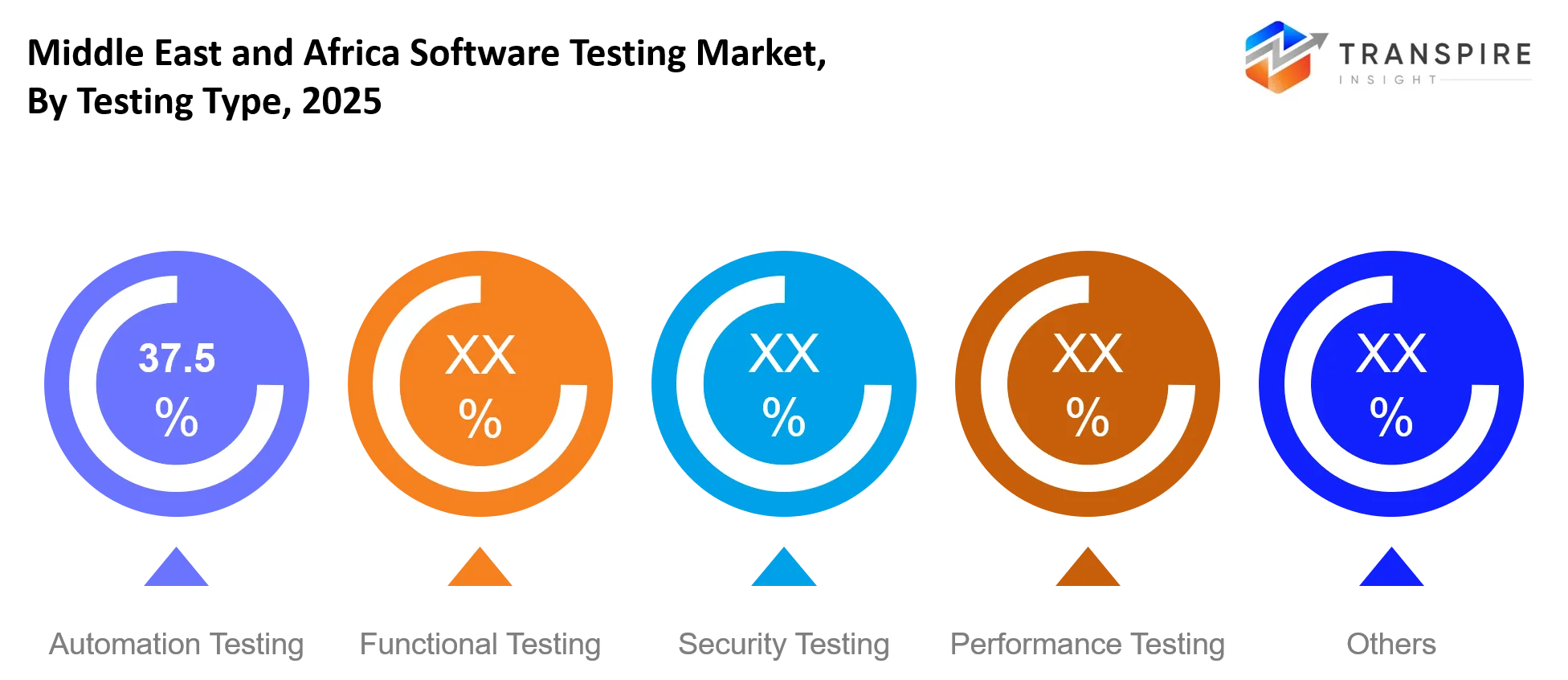
To learn more about this report, Download Free Sample Report
By Deployment
Cloud based deployment is usually the go to choice for a lot of enterprises these days, because it brings scalability , flexibility, and it cuts down on infrastructure investment. Testing teams can get into the environments fast and run very large testing workloads without keeping a big on site setup running all the time. It also fits well with distributed development teams, and with the newer “software delivery” style of work, where changes go out more often.
Still, on premise deployment stays relevant for organizations dealing with sensitive data or when they have strict compliance expectations to meet. A hybrid approach tries to balance things, by mixing cloud resources with dedicated internal infrastructure, so security doesn’t get sidelined but agility stays there. Some orgs also use specialized deployment patterns, shaped around industry specific operational needs. In the end having more than one deployment route helps teams align their testing activities with security policies, budget boundaries, and technology strategies, without feeling locked in.
By Enterprise Size
Large enterprises make up a big chunk, of testing spending, since complicated application ecosystems basically need a lot of quality checks programs ongoing. In large organizations you’ll often see automation platforms in place, performance testing frameworks, and security validation tools rolled out across several business units . With significant software portfolios running in parallel, there is a steady pull for advanced testing services, almost non stop.
SMEs are also investing more in software testing nowadays, because digital transformation is now kinda central to business growth, and how they engage with customers. Cloud testing solutions that are cost effective, have made it easier for smaller orgs to participate. There are also public institutions and specialized entities , with their own distinctive testing needs . Overall, broader adoption across different organization types keeps reinforcing the software quality ecosystem , day after day .
By End User
IT & Telecom is kinda the biggest end user category, because software performance, service reliability, and network stability directly shape what the customer sees. Meanwhile BFSI organizations keep huge testing programs running, to make sure transaction security, regulatory compliance, and platform availability are protected , all the way through. In general these industries tend to favor automation, performance testing and cybersecurity validation.
Healthcare teams are also leaning on testing services more and more, for digital records, telemedicine platforms, and connected healthcare applications. Retail companies then use testing solutions in order to tighten up e-commerce functionality, payment processing, and the systems that boost customer engagement. And then there are other groups like manufacturing , government, education, and energy which really need dependable software performance.
Overall this kind of wide end user adoption keeps expanding, so the market opportunities stay open across the whole region.
What are the Key Use Cases Driving the Middle East and Africa Software Testing Market?
The main use case kind of revolves around enterprise application validation, across banking, telecom, and digital government systems. Most organizations rely on broad testing efforts so business-critical applications can keep working reliably, process transactions cleanly, and keep those user experiences kind of steady and consistent. This application area gets the highest demand, because software failures can cause operational disturbances, financial losses, and compliance-related headaches.
Also, a few more use cases are showing up, especially in cloud migration efforts, and in cybersecurity assurance programs. Financial institutions are using advanced testing frameworks to validate their digital banking platforms. Telecom operators, on the other hand, run performance tests to help with large scale network modernization and 5G service rollouts. Healthcare providers are also adopting testing solutions to validate electronic health systems, and patient-facing tools.
There are newer directions too, like AI model validation, intelligent chatbot testing, and testing environments tailored for low code development. As companies introduce generative AI features, plus automation tools, into customer facing systems, specialized testing approaches will matter more and more across the whole forecast period.
|
Report Metrics |
Details |
|
Market size value in 2025 |
USD 3.18 Billion |
|
Market size value in 2026 |
USD 3.57 Billion |
|
Revenue forecast in 2033 |
USD 8.05 Billion |
|
Growth rate |
CAGR of 12.32% from 2026 to 2033 |
|
Base year |
2025 |
|
Historical data |
2021 - 2024 |
|
Forecast period |
2026 - 2033 |
|
Report coverage |
Revenue forecast, competitive landscape, growth factors, and trends |
|
Regional scope |
Middle East and Africa (Saudi Arabia, United Arab Emirates, South Africa, Rest of Middle East and Africa) |
|
Key company profiled |
Accenture, Capgemini, TCS, Infosys, Wipro, Cognizant, HCLTech, IBM, Qualitest, Tricentis, Micro Focus, SmartBear, Testlio, QA Mentor, Cigniti |
|
Customization scope |
Free report customization (country, regional & segment scope). Avail customized purchase options to meet your exact research needs. |
|
Report Segmentation |
By Testing Type (Functional Testing, Automation Testing, Security Testing, Performance Testing, Others); By Deployment (Cloud-based, On-premise, Hybrid, Others); By Enterprise Size (Large Enterprises, SMEs, Others); By End User (IT & Telecom, BFSI, Healthcare, Retail, Others) |
Which Regions are Driving the Middle East and Africa Software Testing Market Growth?
The Gulf region kinda leads the market, because there are extensive digital transformation programs already running, plus strong government technology spending, and some pretty advanced financial services infrastructure too. The UAE and Saudi Arabia keep putting money into smart city initiatives, cloud computing ecosystems ,and digital government platforms. Also the regulatory side is gradually getting more strict, especially around cybersecurity and software quality standards. And honestly it’s not only regulation—there’s also a mature technology services ecosystem that helps keep the leadership pretty steady.
South Africa is another important player, but the growth curve looks a bit diff rent. Market strength there comes from a well developed enterprise technology sector, established financial institutions, and the continued commitment to software modernization. Demand stays pretty stable, since many organizations lean into operational efficiency and long-term digital transformation goals. So you end up with a reliable stream of recurring revenue for testing service providers, or like it’s a dependable baseline.
The fastest growth is expected across emerging African economies, where digital adoption has been speeding up quite a lot over the last few years. Mobile banking keeps expanding, fintech platforms too, and telecommunications infrastructure is growing—so new software quality requirements keep appearing. Government led digital initiatives, plus foreign technology investments, are also reinforcing regional tech ecosystems. All of that creates pretty attractive opportunities for market entrants and investors looking for long term growth between 2026 and 2033, so yeah the timing feels strong.
Who are the Key Players in the Middle East and Africa Software Testing Market and How Do They Compete?
Competition still looks pretty scattered, with big global consulting players, specialized quality engineering providers, and testing technology vendors all going after similar buyers, mostly around service quality, automation muscles, and how they deliver in different regions. At the same time, technology innovation is starting to matter more than the whole labor based angle, because enterprises want AI powered testing, predictive analytics, and continuous quality engineering support. In general vendors try to stand out via automation know how, cybersecurity testing strength, and cloud-native delivery systems.
Accenture, for example, spends heavy on large scale digital transformation, and bundles testing services with cloud modernization + cybersecurity programs. Capgemini leans into intelligent automation, DevOps linking, and managed testing services, not just standalone test execution. Tata Consultancy Services leans on its huge delivery reach, plus AI enabled quality engineering platforms, to get enterprise scale work done with fewer frictions.
Infosys differentiates through automation frameworks and digital assurance offerings, especially those tuned for banking, telecom, and healthcare. Tricentis shows up with model based testing, AI quality engineering, and broader enterprise automation platforms. Qualitest tends to focus on AI driven quality engineering, testing expertise by industry, and managed testing services that scale without drama.
Strategic partnerships, ongoing AI investments, and regional expansion are still key parts of how they position themselves, even if the market keeps shifting week to week or quarter to quarter.
Company List
- Accenture
- Capgemini
- TCS
- Infosys
- Wipro
- Cognizant
- HCLTech
- IBM
- Qualitest
- Tricentis
- Micro Focus
- SmartBear
- Testlio
- QA Mentor
- Cigniti
Recent Development News
In April 2026, Coforge announced acquisition of Cigniti Technologies. The transaction strengthened AI-led engineering and quality assurance capabilities while expanding global software testing service coverage.http://news.coforge.com
In March 2026, Tricentis launched its Agentic Quality Engineering Platform. The platform introduced AI agents and governance capabilities designed to accelerate enterprise software testing and quality management.http://www.tricentis.com
In May 2026, Tricentis launched SAP Enterprise Continuous Testing with AI-assisted automated test generation. The release expanded AI-driven testing capabilities for SAP environments and accelerated cloud transformation programs.http://www.devopsdigest.com
What Strategic Insights Define the Future of the Middle East and Africa Software Testing Market?
The market seems to be leaning toward autonomous quality engineering, where AI- driven testing platforms keep a sort of eye on software quality, they continuously monitor, create test scenarios, and in a way predict defects before anything even hits production. The main driver behind all of this is the coming together of cloud-native development, DevOps routines, and that constant enterprise pressure for quicker releases, but not at the price of reliability. So quality assurance is slowly turning into more of a strategic business function than just that last little validation checkpoint.
There’s also a risk that’s less obvious though, you know, the whole situation where teams over depend on automated testing platforms. If organizations drop human oversight too fast, they might start getting quality gaps in those messy real world environments, where contextual judgment is still genuinely needed. And then there is another worry, more like the market clustering around a small set of automation technology providers, which could quietly reduce choice.
Still, a promising opportunity is showing up in AI testing, model validation, and governance solutions, especially for enterprise AI applications. As adoption keeps spreading across banking, healthcare, and public services, specialized validation frameworks should start mattering a lot more. Market players will likely want to invest in AI-enabled testing capabilities, regional delivery centers, and industry- specific know how, so they can lock in long-term competitive advantage.
Middle East and Africa Software Testing Market Report Segmentation
-
By Testing Type
Functional Testing
Automation Testing
Security Testing
Performance Testing
Others -
By Deployment
Cloud-based
On-premise
Hybrid
Others -
By Enterprise Size
Large Enterprises
SMEs
Others -
By End User
IT & Telecom
BFSI
Healthcare
Retail
Others
Frequently Asked Questions
Find quick answers to common questions.
The Expected Middle East and Africa Software Testing Market size for the Market will be USD 8.05 Billion in 2033.
Key Segments for the Middle East and Africa Software Testing Market are By Testing Type (Functional Testing, Automation Testing, Security Testing, Performance Testing, Others); By Deployment (Cloud-based, On-premise, Hybrid, Others); By Enterprise Size (Large Enterprises, SMEs, Others); By End User (IT & Telecom, BFSI, Healthcare, Retail, Others).
Major Middle East and Africa Software Testing Market Players are Accenture, Capgemini, TCS, Infosys, Wipro, Cognizant, HCLTech, IBM, Qualitest, Tricentis, Micro Focus, SmartBear, Testlio, QA Mentor, Cigniti.
The Current Middle East and Africa Software Testing Market size is USD 3.18 Billion in 2025.
The Middle East and Africa Software Testing Market CAGR is 12.32% from 2026 to 2033.
- Accenture
- Capgemini
- TCS
- Infosys
- Wipro
- Cognizant
- HCLTech
- IBM
- Qualitest
- Tricentis
- Micro Focus
- SmartBear
- Testlio
- QA Mentor
- Cigniti
About the Authors

Mayur Shinde
I am Mayur Shinde, a Senior Research Analyst at Transpire Insight, specializing in the Automotive & Transportation and Information & Communication Technology (ICT) Industry. My work focuses on analyzing emerging market trends, technological advancements, competitive landscapes, and industry developments to deliver accurate, data-driven insights. I am passionate about transforming complex market information into clear, actionable content that helps businesses, professionals, and decision-makers stay informed and make confident strategic decisions.

Chakradhar Khansole
Chakradhar serves as the Research Director at Transpire Insight, bringing over 8 years of experience in technology, innovation, and strategic market intelligence. He specializes in transforming complex market data into actionable business insights that enable organizations to make informed, growth-oriented decisions. Recognized for his strategic vision and analytical expertise, Chakradhar leads high-impact research initiatives, delivering comprehensive market assessments, competitive intelligence, and forward-looking industry analysis.
Recently Published Reports
-
Apr 2026
3D Optical Profiler Market
3D Optical Profiler Market Size, Share & Analysis Report By Type (Desktop 3D Optical Profiler, and Portable 3D Optical Profiler), By Technology (Confocal Technology, and White Light Interference), By End-Use Industry (Manufacturing, Research Institutions, Automotive, Aerospace and Defense, Medical Devices, and Other), and Geography (North America, Europe, Asia-Pacific, Middle East and Africa, South and Central America), 2021 - 2031
-
Apr 2026
Depth Sensor Market
Depth Sensor Market Size, Share & Analysis Report By Type (Infrared Depth Sensors, Time-of-Flight (ToF) Sensors, Stereo Vision Sensors, Structured Light Sensors, Ultrasonic Depth Sensors), By Application (Automotive, Robotics, Gaming, Consumer Electronics, Industrial Automation, Healthcare, Security & Surveillance, Others), By End Users (Automotive Manufacturers, Consumer Electronics Companies, Healthcare Providers, Industrial Companies, Security Agencies, Gaming Companies, Robotics Companies, Others), and Geography (North America, Europe, Asia-Pacific, Middle East and Africa, South and Central America), 2021 – 2031
-
Apr 2026
Digital Manufacturing Market
Digital Manufacturing Market Size, Share & Analysis Report By Component (Hardware, Software, and Services), By Technology (Robotics, 3D Printing, Internet of Things (IoT), and Others), By Application (Automotive and Transportation, Aerospace and Defense, Consumer Electronics, Industrial Machinery, and Others), By Process Type (Computer-Based Designing, Computer-Based Simulation, Computer 3D Visualization, Analytics, and Others), and Geography (North America, Europe, Asia-Pacific, Middle East and Africa, South and Central America), 2021 – 2031
-
Apr 2026
Digital Visa Services Market
Digital Visa Services Market Size, Share & Analysis Report By Type (Individual Travelers, Group Travelers), By Application (Tourism, Business Travel, Others), and Geography (North America, Europe, Asia-Pacific, Middle East and Africa, South and Central America), 2021 – 2031