

Middle East and Africa SaaS Based CRM Software Market Size & Forecast:
- Middle East and Africa SaaS Based CRM Software Market Size 2025: USD 21465.5 Million
- Middle East and Africa SaaS Based CRM Software Market Size 2033: USD 59540.1 Million
- Middle East and Africa SaaS Based CRM Software Market CAGR: 13.63%
- Middle East and Africa SaaS Based CRM Software Market Segments: By Application (Sales Management, Marketing Automation, Customer Service, Lead Management, Contact Management, Analytics, Workflow Automation, Others); By Deployment (Public Cloud, Private Cloud, Hybrid Cloud, Multi-Cloud, SaaS Platforms, Mobile CRM, Web CRM, Others); By Enterprise Size (Large Enterprises, SMEs, Startups, Government, Healthcare, Retail, Others); By End User (BFSI, Retail, Healthcare, IT & Telecom, Manufacturing, Education, Hospitality, Others)
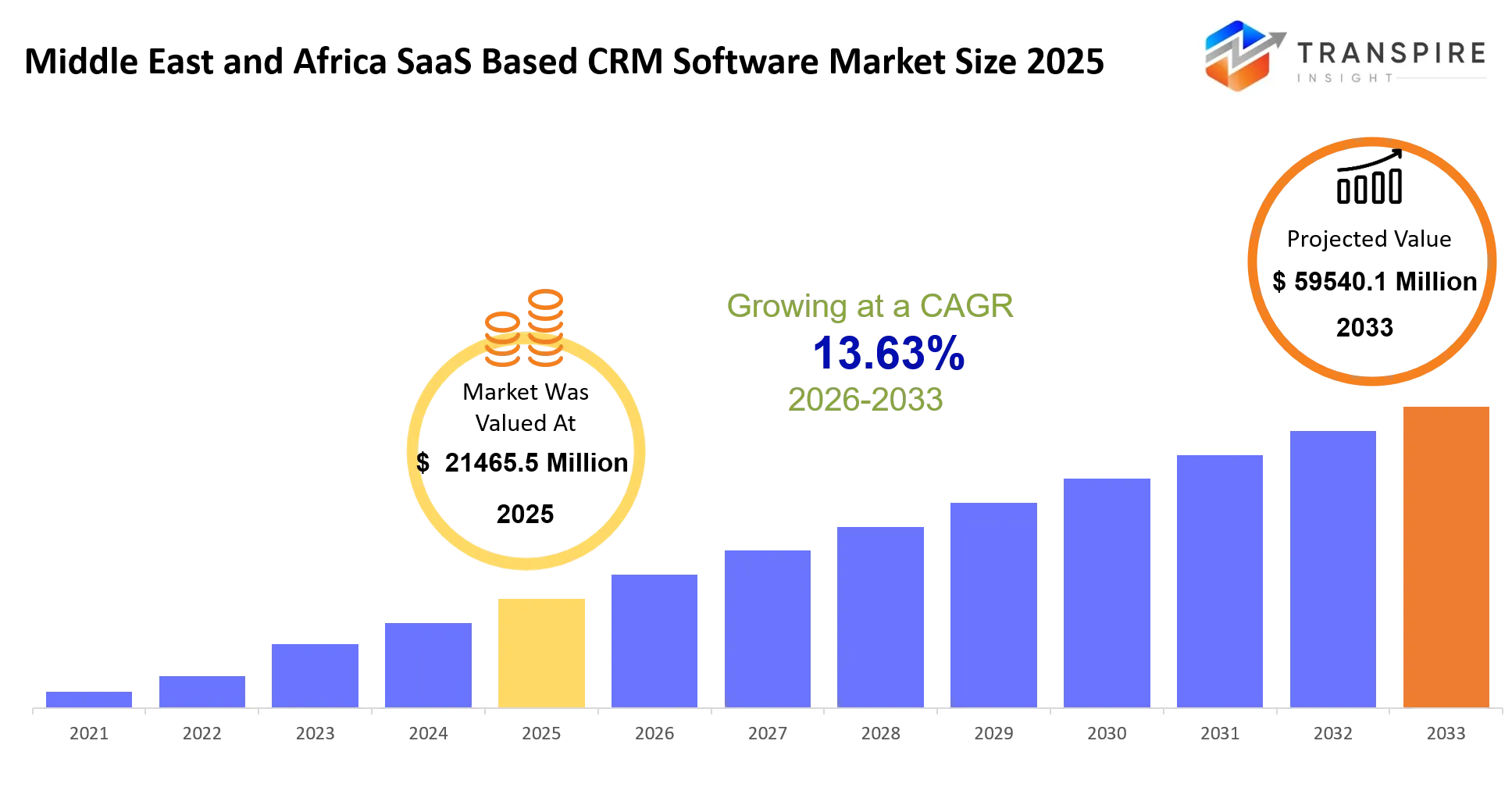
Middle East and Africa SaaS Based CRM Software Market Summary
The Middle East and Africa SaaS Based CRM Software Market was valued at USD 21465.5 Million in 2025. It is forecast to reach USD 59540.1 Million by 2033. That is a CAGR of 13.63% over the period.
The Middle East and Africa SaaS Based CRM software market plays a key role in helping organizations manage customer interactions, sales pipelines, marketing campaigns, service requests ,and general business relationships via cloud based platforms. In real life, these kinds of solutions help firms gather customer data in one place, run routine workflows automatically, and boost engagement across both digital and in-person channels. Over the last five years, the market has kind of moved away from simple contact management, and toward AI enabled customer experience platforms where sales and marketing, analytics, and service operations all connect. A big catalyst that really sped up adoption was the fast digital transformation that came after pandemic driven remote work rules, along with the steady rise of e-commerce across the region.
Once companies were talking to customers online more often, cloud CRM setups became very important for keeping visibility across distributed teams and all those customer touchpoints. This shift keeps opening new revenue spaces for vendors, since enterprises are looking for subscription models that scale, quicker deployment cycles, and data led decision making that supports better customer retention, higher sales conversion rates, and smoother day to day operations.
Key Market Insights
- The Gulf region is basically leading, with about 42% market share in 2025, and this is backed by strong cloud adoption + enterprise digitization programs.
- Africa looks like the fastest mover through 2033, because fintech keeps expanding and there are more investments in SME cloud software, sort of a compounding effect.
- In terms of product categories, Sales Management takes the lead with nearly 30% of the share, which shows people are still putting money into revenue optimization, customer acquisition tools, and related uplift.
- Marketing Automation sits in the second spot, mainly due to omnichannel customer engagement plays across retail and financial services, they just keep stacking channels together.
- Analytics solutions are projected to grow the quickest through 2033, driven by AI based forecasting , plus customer intelligence capabilities that are getting more practical.
- BFSI makes up over 25% of end-user revenue, and it leans on CRM platforms for customer retention, compliance, and personalized services.
- Healthcare and telemedicine providers are also starting to show up as high-growth adopters, because digital patient engagement is turning into a strategic priority.
- Meanwhile, the Middle East and Africa SaaS based CRM Software Market is seeing broad integration of generative AI, especially for lead scoring, sales forecasting , and service automation.
- Companies like Salesforce, Microsoft, SAP, Oracle, Zoho, and Freshworks keep expanding in a very steady way through AI innovation, ecosystem partnerships, and localized cloud deployments.
- Competitive advantage now depends more on embedded analytics, low-code customization, industry specific workflows, plus AI powered customer experience management, kinda everything working together at once.
What are the Key Drivers, Restraints, and Opportunities in the Middle East and Africa SaaS Based CRM Software Market?
The strongest growth driver is basically that shift toward cloud-first ways of running the business operations. Organizations across banking, retail, telecommunications, and public services are swapping out legacy customer management systems for subscription based CRM platforms , which means faster deployment and lower infrastructure costs. This whole transition picked up speed because enterprises wanted unified customer visibility across digital channels, contact centers, and mobile applications. AI enabled automation also helps with sales productivity and customer service efficiency, and somehow ends up creating measurable business value, so the software spending keeps going.
Data sovereignty needs, plus cybersecurity worries, still sit as the biggest kind of structural barrier. A lot of organizations deal with sensitive customer information and they must follow national data protection regulations. In some African markets regional cloud infrastructure is still limited, and there are lingering concerns about cross-border data transfers , which together slows the move away from on-premise systems. Because of that, implementation timelines get stretched , and adoption drops , especially in sectors that are highly regulated, so revenue expansion potential gets capped.
AI driven customer experience management feels like the largest long term opportunity. More organizations are looking for predictive insights, conversational AI, and real-time personalization options. Investments in smart city programs across Gulf countries, and the expanding digital banking ecosystems across Africa , are setting up solid conditions for advanced CRM deployment. AI powered customer engagement platforms that can combine sales, marketing, service, and analytics functions, will basically unlock the next phase of market expansion and help software vendors build new recurring revenue streams.
What Has the Impact of Artificial Intelligence Been on the Middle East and Africa SaaS Based CRM Software Market?
Artificial intelligence is kinda transforming cloud CRM platforms,from pure record keeping into decision-support and kinda revenue generation engines. AI powered assistants are now able to automate lead qualification , customer segmentation , email creation, ticket routing, and even sales opportunity prioritization. In practice it reduces the manual workload a lot, so sales and service teams can focus more on those higher value conversations, instead of the busywork.
Then you have machine learning models , they dig into customer behavior patterns and forecast purchase intent, predict churn risk, and suggest next-best actions. Many orgs use predictive analytics to boost sales conversion rates, tune marketing spending, and also personalize customer engagement approaches. Some advanced CRM tools even lean on natural language processing, so customer support can be automated through chatbots and virtual assistants that respond like a human-ish person, most of the time.Operationally, AI helps with faster response times, better customer satisfaction, and lower service costs. Automated workflows can cut repetitive administrative tasks by more than 30%, and predictive lead scoring helps sales teams aim their time at higher probability opportunities. On top of that, AI enhanced forecasting tends to make revenue planning more accurate, overall.
That said, adoption still runs into obstacles. Integration costs stay substantial, especially when organizations have multiple legacy systems running around. Data quality also creates issues for model accuracy, notably in those fragmented customer environments where historical records are incomplete or not consistent. So, these factors keep slowing down full scale AI rollout across parts of the regional software ecosystem, even when interest is high.
Key Market Trends
- Since 2021, AI enabled CRM deployments have climbed by more than 40 % , especially in banking telecommunications and retail.
- It feels like Gulf enterprises pushed faster on cloud migrations too, with public cloud CRM setups rising almost 35 % from 2022 to 2025.
- In 2026, Salesforce and Microsoft also expanded AI powered CRM features, really leaning into automation , and predictive decision-making type tools.
- More and more orgs moved away from standalone CRM tools, towards integrated customer experience platforms, that blend marketing, service , and analytics functions together almost like one thing.
- Customer service automation adoption went up a lot, as enterprises rolled out conversational AI and intelligent virtual assistants.
- At the same time analytics spending grew quickly, and predictive customer intelligence became a kind of normal requirement in big enterprise procurement.
- Regionally, many businesses now favor subscription based pricing models more than the old perpetual software licensing style.
- CRM vendors meanwhile strengthened their ecosystem partnerships, so integrations with ERP , collaboration , and productivity platforms feel smoother.
- On top of that, mobile CRM adoption widened across field sales operations, notably in retail, telecom, and financial services.
- And industry specific CRM solutions gained momentum, because organizations were searching for tailored workflows, plus compliance focused functionality that fits better.
Middle East and Africa SaaS Based CRM Software Market Segmentation
By Application
Sales Management still plays a major role, since sales teams need visibility across pipelines , opportunities , forecasting activities, and how each account performs. Marketing Automation is there to help with campaign planning, audience targeting, and also that whole customer engagement part across several digital channels. Customer Service applications let organizations keep on top of support tickets, handle customer inquiries, and maintain service quality standards too. Lead Management basically covers qualification, tracking, and nurturing of prospects during the entire sales cycle, no shortcut.
Then there’s Contact Management, which keeps centralized customer details stored , while also supporting relationship tracking in a cleaner way. Analytics solutions turn customer behavior, sales performance, and marketing effectiveness data into insights that are actually usable. Workflow Automation boosts operational efficiency by doing automated approvals, sending notifications, and running process execution with less friction. Other options also show up, like partner management, customer loyalty programs, and industry-specific customer engagement functions that back broader business objectives, even when the path is less straight.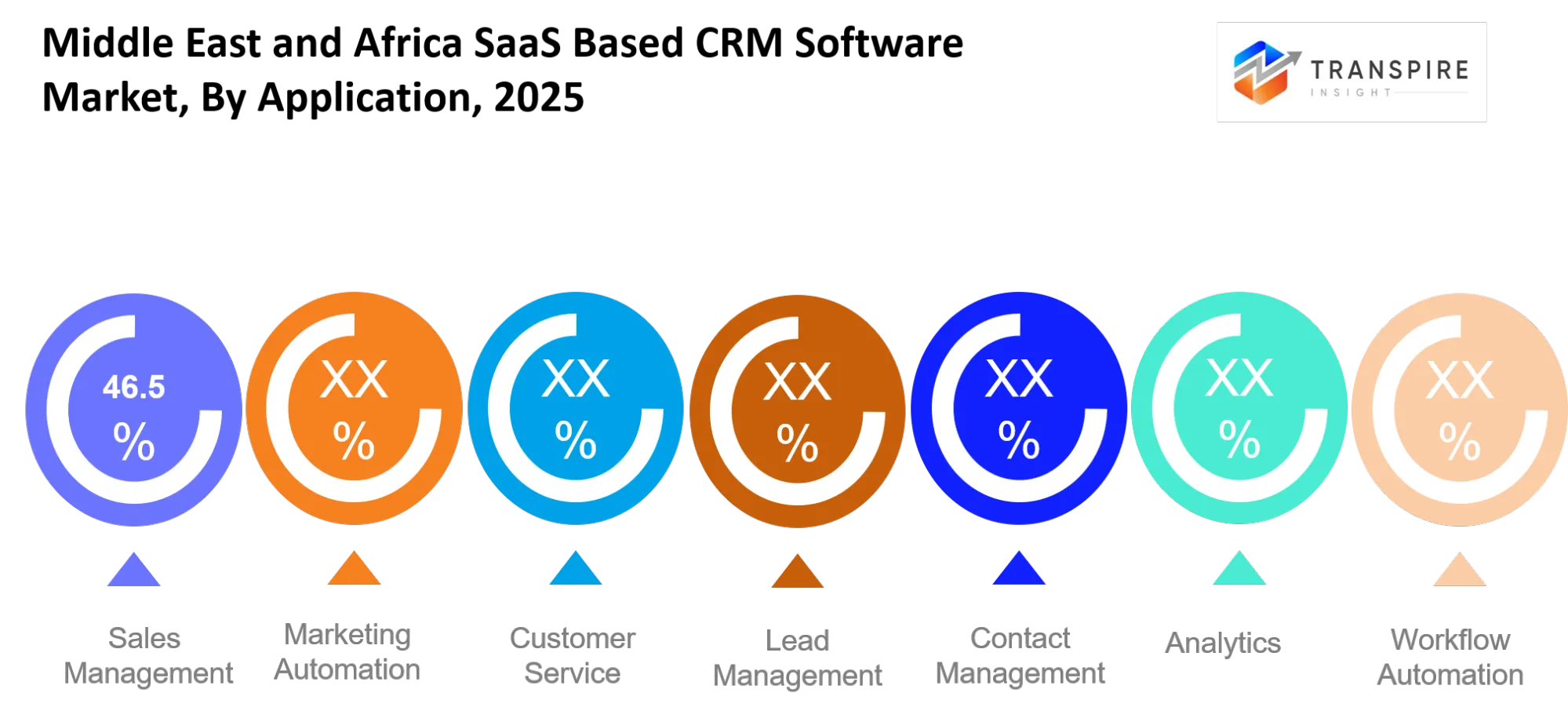
By Deployment
Public Cloud deployment pulls in organizations that want fast scalability, less money for infrastructure, and easier upkeep… like, simplified maintenance, you know. Private Cloud still matters a lot though, especially when companies have very strict compliance rules and security expectations. Then there’s Hybrid Cloud, which sort of merges cloud resources with the company’s own enterprise infrastructure so you get both flexibility and control at the same time. Multi-Cloud strategies also show up, mainly to improve resilience and to avoid being stuck with just one provider.
For delivery models, SaaS Platforms keep winning because subscription based services lower deployment complexity and help teams start sooner, with quicker timelines overall. Mobile CRM helps field employees stay connected via real time customer access and practical productivity tools. Web CRM solutions are still widely adopted across enterprises , mostly due to accessibility and strong integration features. And besides these, there are other hosting formats like customized environments, and industry specific cloud configurations that are built around specialized operational needs.
By Enterprise Size
Big enterprises end up with pretty substantial spending since they have huge, extensive customer databases, plus intricate sales journeys and advanced analytics expectations. In the meantime, SMEs are leaning more and more toward cloud based CRM platforms, because subscription pricing makes it easier to get started, and it still lines up with growth targets. Startups tend to choose scalable setups that give customer visibility, without having to make big capital commitments upfront. Government orgs, meanwhile, use CRM systems to boost citizen engagement and generally improve service delivery.
Healthcare providers use CRM tools to coordinate patient touchpoints, appointment workflows and communication tasks, it helps everything run cleaner. Retail firms often lean on customer intelligence, loyalty management and omnichannel engagement to strengthen retention, that’s basically the goal. Then there are other enterprise types too, like transportation energy , professional services, and nonprofit organizations, they still need structured customer relationship management processes so their day to day operations improve and outcomes get better.
By End User
BFSI organizations end up using CRM platforms for things like grabbing customers, keeping relationships steady, plus compliance support and then more tailored financial service delivery, you know. Retail companies lean on customer analytics and omnichannel engagement tools to make shopping feel smoother and help retention plans actually stick. In healthcare, institutions apply CRM technologies in order to boost patient outreach and tighten up service coordination, often with fewer hiccups. For IT & Telecom, they leverage customer lifecycle management along with support automation to raise service quality across the board.
Manufacturing firms, on the other hand, use CRM solutions to handle distributor networks sales channels and customer support actions in one place. Education institutions implement CRM platforms to support student engagement, enrollment management, and everyday communication workflows that keep moving. Hospitality businesses rely on tracking customer preferences and building personalized guest experiences, all so loyalty outcomes can improve. Other end users include transportation, energy, logistics, and professional services organizations that are basically seeking stronger customer engagement and better operational efficiency.
What are the Key Use Cases Driving the Middle East and Africa SaaS Based CRM Software Market?
Sales pipeline management is still the biggest use case honestly. Companies rely on CRM platforms to follow opportunities, keep an eye on customer conversations, project revenue, and nudge conversion rates upward. Financial institutions ,telecommunications providers, and big retail chains keep driving a lot of the demand, since customer acquisition plus retention really do affect profitability in a direct way.
Marketing automation and customer service management are growing fast now too. Retail businesses often roll out CRM systems for more tailored promotions and customer journeys, while healthcare organizations apply customer engagement tools for appointment reminders, patient messaging, and service coordination. Contact centers are also mixing CRM platforms with AI driven support channels , mainly to boost response speed and help desk effectiveness.
Newer applications show up as predictive customer intelligence and generative AI assisted engagement. A growing number of teams are using machine learning models for churn prediction, next-best-action suggestions, and even automated content creation. These things are still kind of early-stage , but they will matter more over time as firms chase deeper personalization along with revenue optimization tactics.
|
Report Metrics |
Details |
|
Market size value in 2025 |
USD 21465.5 Million |
|
Market size value in 2026 |
USD 24342.7 Million |
|
Revenue forecast in 2033 |
USD 59540.1 Million |
|
Growth rate |
CAGR of 13.63% from 2026 to 2033 |
|
Base year |
2025 |
|
Historical data |
2021 - 2024 |
|
Forecast period |
2026 - 2033 |
|
Report coverage |
Revenue forecast, competitive landscape, growth factors, and trends |
|
Regional scope |
United States; Canada; Mexico; United Kingdom; Germany; France; Italy; Spain; Denmark; Sweden; Norway; China; Japan; India; Australia; South Korea; Thailand; Brazil; Argentina; South Africa; Saudi Arabia; United Arab Emirates |
|
Key company profiled |
Salesforce, Microsoft, Oracle, SAP, HubSpot, Zoho, Freshworks, SugarCRM, Creatio, Pipedrive, Insightly, Zendesk, Monday.com, Copper CRM, Nimble |
|
Customization scope |
Free report customization (country, regional & segment scope). Avail customized purchase options to meet your exact research needs. |
|
Report Segmentation |
By Application (Sales Management, Marketing Automation, Customer Service, Lead Management, Contact Management, Analytics, Workflow Automation, Others); By Deployment (Public Cloud, Private Cloud, Hybrid Cloud, Multi-Cloud, SaaS Platforms, Mobile CRM, Web CRM, Others); By Enterprise Size (Large Enterprises, SMEs, Startups, Government, Healthcare, Retail, Others); By End User (BFSI, Retail, Healthcare, IT & Telecom, Manufacturing, Education, Hospitality, Others) |
Which Regions are Driving the Middle East and Africa SaaS Based CRM Software Market Growth?
The Gulf Cooperation Council region kinda leads when it comes to market revenue generation. Nations like United Arab Emirates and Saudi Arabia keep putting money into cloud infrastructure, digital government programs,and enterprise modernization in general. There’s also strong regulatory support for digital transformation plus really solid enterprise technology spending, so it feels like a good setup for advanced CRM adoption. Between regional cloud investments, technology partnerships, and a fairly strong skilled implementation ecosystem, the region ends up reinforcing its long term market leadership.
South Africa shows up as the second-largest contributor. But the growth patterns don’t really mirror the Gulf, because here adoption is pushed more by mature financial services, telecommunications, and retail sectors instead of being mainly government-led digital transformation initiatives. Economic resilience matters, and so does the fact that enterprise software usage is already established, with modernization programs still running. That combination creates a stable base for CRM investment. And because large organizations keep spending consistently, it supports recurring software revenues and helps the platform keep expanding over time.
Meanwhile, the wider African region has the highest growth momentum. Fintech expansion plus mobile-first business models, along with easier cloud accessibility ,have sped up software adoption in places such as Kenya and Nigeria. As digital payment ecosystems expand, and tech infrastructure investments continue, new opportunities keep appearing for customer engagement solutions. All of that momentum should pull in software vendors, implementation partners, and investors who want exposure to emerging enterprise software markets, through 2033.
Who are the Key Players in the Middle East and Africa SaaS Based CRM Software Market and How Do They Compete?
Competition is still somewhat concentrated around big global software providers, though regional specialists and cloud-native vendors keep pushing into more areas. In general the main battlefields are technology innovation, AI strength, ecosystem integration, and how flexible implementation feels for buyers. The bigger vendors tend to hold ground with platform breadth, while newer players often go after usability , affordability, and industry-focused tailoring
In this space Salesforce stands out with AI-led CRM innovation, Agentforce capabilities, and a pretty large application ecosystem. Lately the product updates lean into automation, conversational AI, plus unified customer intelligence, and that combination keeps making enterprise teams more comfortable adopting it.
Microsoft meanwhile leans hard on how well Dynamics 365, Microsoft 365, Power Platform, and Copilot connect together. It keeps rolling out AI-assisted workflows and enterprise automation features, which naturally creates momentum for organizations already committed to the Microsoft ecosystem.
Zoho competes by offering cost-efficient solutions, and it brings a wide set of business applications, plus strong reach into SME customers. By continuing to invest in customer experience and AI-enabled collaboration tools, Zoho supports more growth possibilities.
Freshworks, in contrast, focuses on an easy, intuitive user experience, quick deployment, and AI-enabled customer engagement. Its integrated tools for sales, support , and service automation are especially attractive to growing businesses trying to keep operations simple.
Company List
- Salesforce
- Microsoft
- Oracle
- SAP
- HubSpot
- Zoho
- Freshworks
- SugarCRM
- Creatio
- Pipedrive
- Insightly
- Zendesk
- Monday.com
- Copper CRM
- Nimble
Recent Development News
In April 2026, Microsoft entered a partnership with Publicis Groupe. The collaboration expands AI-powered marketing and customer engagement capabilities through agentic AI technologies, strengthening enterprise CRM and marketing automation ecosystems.https://news.microsoft.com
In January 2026, Salesforce launched the Spring ’26 product release featuring expanded AI, automation, and customer intelligence capabilities. The release strengthened Agentic Enterprise functionality and enhanced sales, service, and data management operations across CRM environments.https://www.salesforce.com
What Strategic Insights Define the Future of the Middle East and Africa SaaS Based CRM Software Market?
Over the next five to seven years, the market is likely to move past the usual customer relationship management, and toward more intelligent customer orchestration platforms powered by AI and automation plus unified data ecosystems. The main driver behind this shift is pretty simple in a way, organizations need to turn the rising piles of customer data into revenue that can be measured and into personalized engagement playbooks.
There’s also a quieter risk, one that doesn’t always get mentioned first. Market concentration is starting to form around a handful of hyperscale cloud providers and software companies. When an enterprise leans too heavily on a couple of technology ecosystems, switching becomes harder, and the whole flexibility thing drops a bit, especially for those trying to diversify vendors.
At the same time, there is an emerging opportunity that looks interesting. AI-native CRM tools, built specifically for fast-growing African digital commerce, fintech, and mobile first business environments. Those markets are still less penetrated compared with developed economies, yet they’re building the digital infrastructure needed for advanced customer engagement platforms, and it’s happening quickly.
Market participants should push on AI integration, develop solutions that match specific industries, and build regional partnership networks. The vendors that blend automation, predictive analytics, and localized implementation know-how will probably be the ones better positioned to win long term growth, across both established Gulf markets and the newer African economies.
Middle East and Africa SaaS Based CRM Software Market Report Segmentation
-
By Application
Sales Management
Marketing Automation
Customer Service
Lead Management
Contact Management
Analytics
Workflow Automation
Others -
By Deployment
Public Cloud
Private Cloud
Hybrid Cloud
Multi-Cloud
SaaS Platforms
Mobile CRM
Web CRM
Others -
By Enterprise Size
Large Enterprises
SMEs
Startups
Government
Healthcare
Retail
Others -
By End User
BFSI
Retail
Healthcare
IT & Telecom
Manufacturing
Education
Hospitality
Others
Frequently Asked Questions
Find quick answers to common questions.
The Expected Middle East and Africa SaaS Based CRM Software Market size for the market will be USD 59540.1 Million in 2033.
Key Segments for the Middle East and Africa SaaS Based CRM Software Market are By Application (Sales Management, Marketing Automation, Customer Service, Lead Management, Contact Management, Analytics, Workflow Automation, Others); By Deployment (Public Cloud, Private Cloud, Hybrid Cloud, Multi-Cloud, SaaS Platforms, Mobile CRM, Web CRM, Others); By Enterprise Size (Large Enterprises, SMEs, Startups, Government, Healthcare, Retail, Others); By End User (BFSI, Retail, Healthcare, IT & Telecom, Manufacturing, Education, Hospitality, Others).
Major Middle East and Africa SaaS Based CRM Software Market Players list all key Companies as Named in the Report Metrics table.
The Current Middle East and Africa SaaS Based CRM Software Market size is USD 21465.5 Million in 2025.
The Middle East and Africa SaaS Based CRM Software Market CAGR is 13.63% from 2026 to 2033.
- Salesforce
- Microsoft
- Oracle
- SAP
- HubSpot
- Zoho
- Freshworks
- SugarCRM
- Creatio
- Pipedrive
- Insightly
- Zendesk
- Monday.com
- Copper CRM
- Nimble
About the Authors

Mayur Shinde
I am Mayur Shinde, a Senior Research Analyst at Transpire Insight, specializing in the Automotive & Transportation and Information & Communication Technology (ICT) Industry. My work focuses on analyzing emerging market trends, technological advancements, competitive landscapes, and industry developments to deliver accurate, data-driven insights. I am passionate about transforming complex market information into clear, actionable content that helps businesses, professionals, and decision-makers stay informed and make confident strategic decisions.

Chakradhar Khansole
Chakradhar serves as the Research Director at Transpire Insight, bringing over 8 years of experience in technology, innovation, and strategic market intelligence. He specializes in transforming complex market data into actionable business insights that enable organizations to make informed, growth-oriented decisions. Recognized for his strategic vision and analytical expertise, Chakradhar leads high-impact research initiatives, delivering comprehensive market assessments, competitive intelligence, and forward-looking industry analysis.
Recently Published Reports
-
Apr 2026
3D Optical Profiler Market
3D Optical Profiler Market Size, Share & Analysis Report By Type (Desktop 3D Optical Profiler, and Portable 3D Optical Profiler), By Technology (Confocal Technology, and White Light Interference), By End-Use Industry (Manufacturing, Research Institutions, Automotive, Aerospace and Defense, Medical Devices, and Other), and Geography (North America, Europe, Asia-Pacific, Middle East and Africa, South and Central America), 2021 - 2031
-
Apr 2026
Depth Sensor Market
Depth Sensor Market Size, Share & Analysis Report By Type (Infrared Depth Sensors, Time-of-Flight (ToF) Sensors, Stereo Vision Sensors, Structured Light Sensors, Ultrasonic Depth Sensors), By Application (Automotive, Robotics, Gaming, Consumer Electronics, Industrial Automation, Healthcare, Security & Surveillance, Others), By End Users (Automotive Manufacturers, Consumer Electronics Companies, Healthcare Providers, Industrial Companies, Security Agencies, Gaming Companies, Robotics Companies, Others), and Geography (North America, Europe, Asia-Pacific, Middle East and Africa, South and Central America), 2021 – 2031
-
Apr 2026
Digital Manufacturing Market
Digital Manufacturing Market Size, Share & Analysis Report By Component (Hardware, Software, and Services), By Technology (Robotics, 3D Printing, Internet of Things (IoT), and Others), By Application (Automotive and Transportation, Aerospace and Defense, Consumer Electronics, Industrial Machinery, and Others), By Process Type (Computer-Based Designing, Computer-Based Simulation, Computer 3D Visualization, Analytics, and Others), and Geography (North America, Europe, Asia-Pacific, Middle East and Africa, South and Central America), 2021 – 2031
-
Apr 2026
Digital Visa Services Market
Digital Visa Services Market Size, Share & Analysis Report By Type (Individual Travelers, Group Travelers), By Application (Tourism, Business Travel, Others), and Geography (North America, Europe, Asia-Pacific, Middle East and Africa, South and Central America), 2021 – 2031