

Middle East and Africa Pet Light Therapy Devices Market Size & Forecast:
- Middle East and Africa Pet Light Therapy Devices Market Size 2025: USD 24.58 Million
- Middle East and Africa Pet Light Therapy Devices Market Size 2033: USD 48.28 Million
- Middle East and Africa Pet Light Therapy Devices Market CAGR: 8.81%
- Middle East and Africa Pet Light Therapy Devices Market Segments: By Product Type (Laser Devices, LED Therapy Devices, Wearable Devices, Handheld Devices, Treatment Pads, Therapy Beds, Rehabilitation Systems, Others); By Application (Pain Management, Wound Healing, Arthritis Treatment, Post-Surgery Recovery, Dermatology, Mobility Improvement, Others); By Pet Type (Dogs, Cats, Horses, Exotic Pets, Others); By End User (Veterinary Clinics, Hospitals, Pet Owners, Rehabilitation Centers, Others)
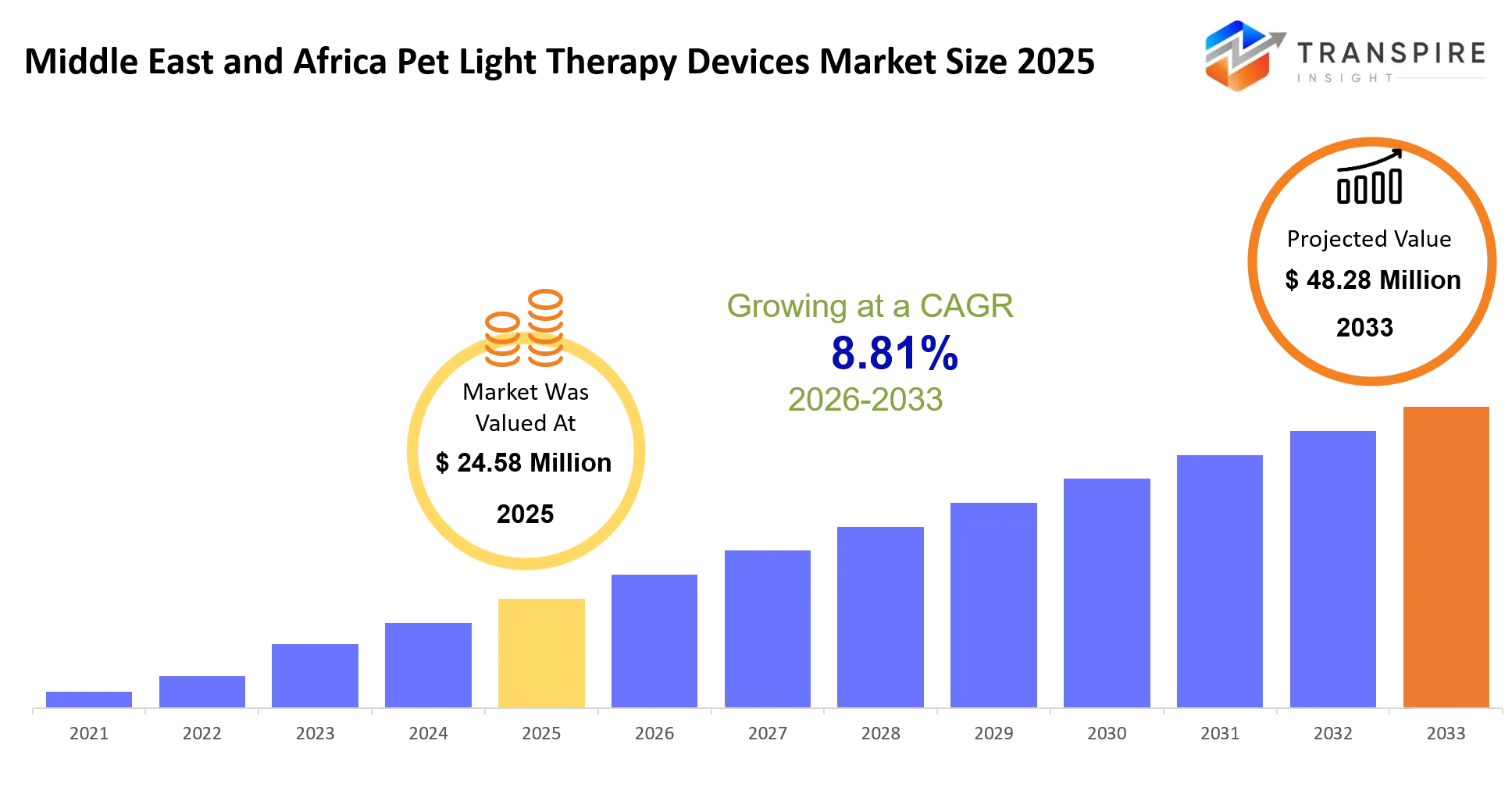
Middle East and Africa Pet Light Therapy Devices Market Summary
The Middle East and Africa Pet Light Therapy Devices Market was valued at USD 24.58 Million in 2025. It is forecast to reach USD 48.28 Million by 2033. That is a CAGR of 8.81% over the period.
Pet light therapy devices do help veterinarians, rehabilitation specialists, and pet owners—really they manage pain, help tissue repair, bring inflammation down, and boost mobility for animals, without just leaning on pharmaceuticals. You see them more and more for arthritis management in older pets, for post surgical recovery programs too, plus wound care, and even sports injury rehabilitation for performance animals. In the past five years, the whole market seems to move away from clinic only laser systems toward portable LED units, and even wearable solutions, so people can keep treatment going at home or in rehab centers with less friction. A big reason the market started growing faster was the noticeable increase in companion animal ownership and the jump in veterinary healthcare spending after pandemic-era pet adoption trends. That, in turn, made demand rise for non invasive therapeutic technology. This change basically widens treatment accessibility and also leads to more repeat device purchases across different care environments. And as veterinary providers look for faster recovery results, while also reducing reliance on long term medication routines, these light therapy tools are being folded into everyday treatment protocols, which supports stronger market revenue generation across the region.
Key Market Insights
- So the Middle East and Africa Pet Light Therapy Devices Market is expected to about nearly double in value from 2025 through 2033, and that pretty much shows real adoption momentum.
- In the Gulf Cooperation Council countries, the share is estimated around 38%–42% of regional revenue because they have more advanced veterinary infrastructure, and also higher pet healthcare spending.
- South Africa still plays a major role , with established veterinary networks, plus more and more rehabilitation-focused animal care services coming online.
- LED therapy devices are roughly holding 32%–36% market share, mainly since they tend to have lower operating costs, and they are generally easier to access than laser systems.
- Laser devices stay as the second-largest segment, especially for clinical pain management and advanced rehabilitation therapies, the kind that need a more targeted approach.
- Wearable therapy devices should see the fastest growth by 2033, as home based treatment models start gaining traction with pet owners.
- For applications, pain management makes up about 30%–35% of total demand, pushed by arthritis treatment, and chronic musculoskeletal conditions that keep coming back.
- Veterinary clinics contribute more than 45% of regional revenue, and they basically keep leading because of professional treatment delivery plus ongoing equipment investments.
- Companies like Multi Radiance, Companion Animal Health, LiteCure, K-Laser, and Thor Photomedicine are clearly putting effort into product innovation, and tuning therapies for better outcomes.
- And strategic expansion across the UAE , Saudi Arabia , and South Africa is helping distribution networks strengthen , while also improving technology accessibility overall.
What are the Key Drivers, Restraints, and Opportunities in the Middle East and Africa Pet Light Therapy Devices Market?
The most powerful growth driver looks like the shift toward non-pharmaceutical veterinary treatment protocols, and honestly it seems to be gathering speed. Veterinary professionals are increasingly under pressure to manage chronic pain, arthritis, and recovery processes while still keeping prolonged medication exposure as low as possible. Over time, advances in laser and LED therapy systems have gotten better at precision, they shorten therapy sessions, and they also produce clinical outcomes that can actually be measured. Because of this, many veterinary clinics feel more confident investing in therapeutic equipment. Then, that investment turns into extra income, through rehabilitation services and repeat treatment programs, too.
Still, the main restraint remains the big acquisition cost of advanced veterinary laser systems, plus there’s a shortage of trained operators in a lot of Middle Eastern and African markets. This issue is kind of structural, since veterinary education and specialized rehabilitation know-how are not something you build overnight. Limited access to certified training means clinical adoption doesn’t spread easily beyond the biggest urban centers. So smaller practices often postpone purchases, which then weakens market penetration and slows revenue growth.
On the opportunity side, there’s a major chance in home-based animal rehabilitation, helped by portable LED and wearable light therapy technologies. Manufacturers are rolling out compact systems meant for supervised use outside the usual clinic setting. Places like the UAE and Saudi Arabia are seeing more spending on premium pet care services, which makes the conditions pretty good for remote therapy solutions. If these systems get paired with digital monitoring platforms and tele-veterinary services, they could unlock new recurring revenue models and broaden access to advanced therapeutic care over the forecast period.
What Has the Impact of Artificial Intelligence Been on the Middle East and Africa Pet Light Therapy Devices Market?
Artificial intelligence and advanced digital techs are, sort of, starting to change the way veterinary light therapy systems are actually deployed and managed. In the newer treatment setups, software driven protocols are more common now, they help automate therapy settings depending on the species, the body weight, the injury profile, and what the treatment goal really is. This sort of automation lowers the chance of manual setup errors, and it also keeps treatment results more consistent across different veterinary practices.
At the same time, machine learning is starting to back predictive care routines. The data gathered during rehab sessions can be reviewed to spot recovery movement, estimate how long therapy might take, and tune the therapy intensity in a better way. Some of the more advanced platforms then add performance analytics that watch mobility gains and healing momentum. That, in turn helps veterinary professionals tweak the plan sooner rather than later, which improves clinical throughput, can shorten recovery windows, and also pushes higher equipment utilization rates.
There are also digital monitoring tools that help with day to day operations. They centralize patient records and therapy outcomes, so the whole workflow feels more connected. Veterinary networks can then use those insights to standardize rehabilitation programs across several facilities, and improve treatment adherence. Still, the adoption of AI has limits, mostly because regional datasets are limited, veterinary digital infrastructure is often fragmented, and the integration costs can be pretty high. A lot of clinics don’t yet have enough historical treatment data to train predictive models that are highly accurate, so the full benefits of artificial intelligence are, at the moment, not fully realized in animal rehabilitation environments.
Key Market Trends
- Since 2021 portable LED therapy systems have actually picked up more than 20% extra adoption across smaller veterinary practices, kind of steadily.
- Companion Animal Health and LiteCure also expanded their educational efforts between 2024 and 2026 so that clinical utilization can rise, and not just “interest” but real use.
- Wearable therapy technologies, which used to be like niche items, now feel much more mainstream as rehabilitation tools for chronic pain management.
- Veterinary rehabilitation programs reportedly grew about 15%–20% across key Gulf markets during 2022 to 2025, not just one place either.
- Multi Radiance and K-Laser rolled out upgraded treatment protocols, leaning into quicker recovery and smoother daily workflow.
- After 2023 digital treatment tracking platforms became more common, this improved patient monitoring and also therapy documentation.
- Home-based rehabilitation services expanded quite a bit as pet owners wanted continuous recovery support outside clinics, and yes that mattered.
- Strategic distributor partnerships helped speed market penetration across Saudi Arabia UAE and South Africa during 2024–2026, maybe faster than expected.
- Premium veterinary centers started bundling light therapy with orthopedic care and post-surgical treatment packages more often.
- Manufacturers, meanwhile, shifted investment toward user friendly systems that need shorter operator training and a simpler treatment workflow, overall.
Middle East and Africa Pet Light Therapy Devices Market Segmentation
By Product Type
Laser devices still see strong adoption in veterinary clinics,mostly because the energy delivery is pretty targeted and it shows solid results when it comes to managing pain, reducing inflammation, and addressing tissue injuries. LED therapy devices, on the other hand, often feel like a lower-cost alternative, and they can make treatment more reachable for smaller practices. Wearable devices are getting attention too, especially for continuous therapy, which tends to support better mobility improvement and recovery programs over time. Handheld devices never really went away either, mainly due to portability and general convenience during everyday treatment sessions.
Treatment pads help with localized therapy for wounds, joint issues, and muscle recovery. Therapy beds feel more like a full-body solution, so they’re useful for larger animals and for rehabilitation facilities. Rehabilitation systems usually bundle several therapeutic functions into one integrated treatment platform, which helps improve workflow efficiency without too much extra fuss. There are also other specialized products, they cover niche applications across veterinary care and different animal recovery environments.
By Application
Pain management takes up a big portion of the total utilization, mainly because chronic musculoskeletal problems need ongoing care support, not just a quick fix. Wound healing can also use light based stimulation, it kinda helps tissues, repair and recovery at the same time. Arthritis treatment keeps growing too, especially as companion animal populations age, and veterinary providers look for long lasting management solutions. After surgery, recovery programs are more and more adding light therapy, partly to back rehabilitation, and also to help patients reach better outcomes.
For dermatology, the use cases go beyond simple skin care, it supports treatment for skin issues and inflammatory disorders. At the same time, mobility improvement programs are turning into a key part of rehab settings, especially in orthopedic recovery situations. Beyond that, you can see sports injury rehabilitation, wellness programs, and more specialized veterinary treatments. The constant expansion of therapeutic indications helps overall, so adoption keeps spreading across multiple veterinary disciplines.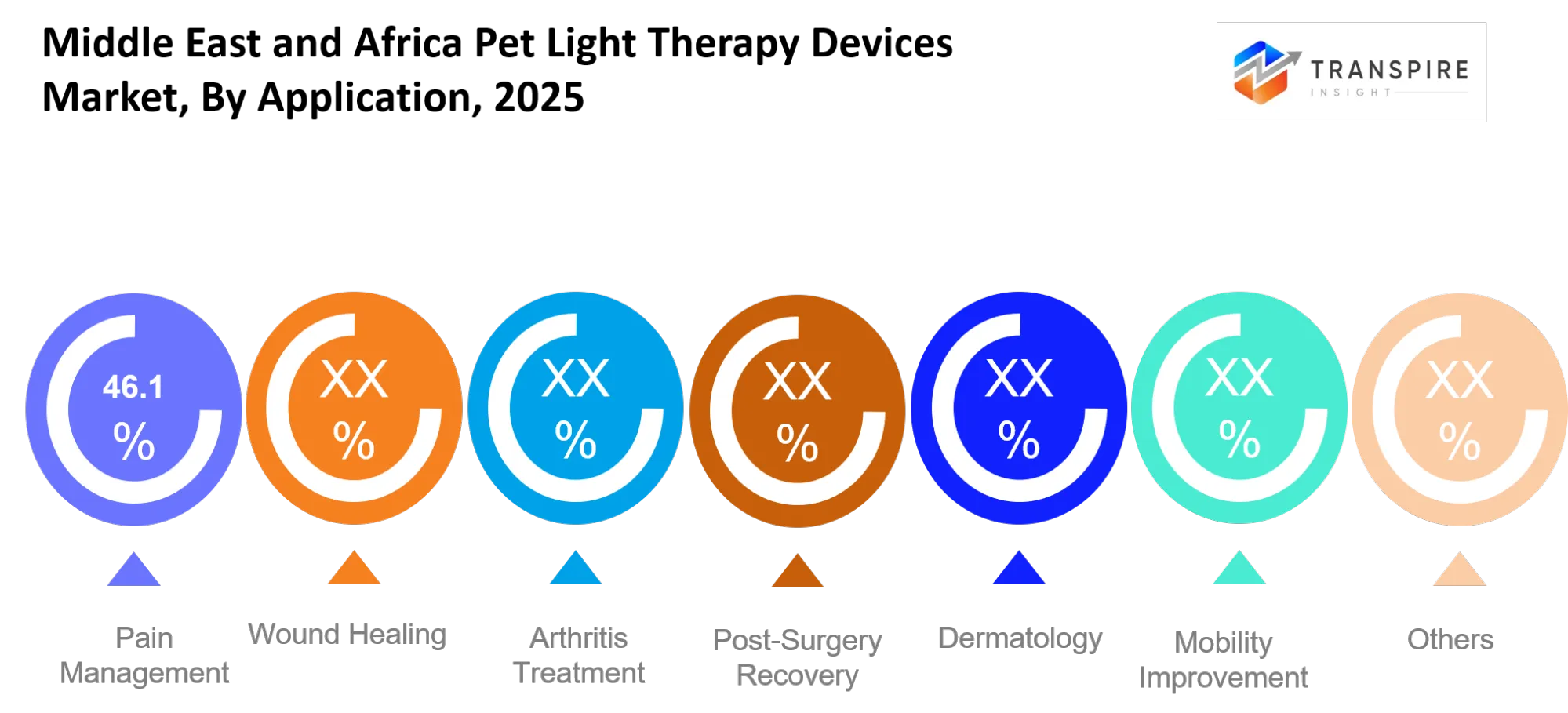
By Pet Type
Dogs kind of make up the biggest chunk, mainly because there are higher rates of veterinary treatment and, also a very widespread use of rehabilitation services, you know. Orthopedic issues , arthritis care and post surgical recovery programs really drive device utilization in canine healthcare. Cats come in with strong demand too, especially for pain management and for recovery support after surgical procedures . A lot of veterinary professionals are increasingly slotting non invasive therapies into feline treatment protocols, somewhat routinely now.
Horses end up creating a more specialized type of demand via performance recovery, musculoskeletal rehabilitation, and injury management applications. Exotic pets are slowly showing up in treatment programs as advanced veterinary services become more reachable in regional markets. Then there are other animal categories that add more chances for device makers. Overall, the ongoing expansion of specialized veterinary care keeps diversifying treatment needs across the different species groups.
By End User
Veterinary clinics generate the biggest revenue part, because professional supervision stays essential for many therapeutic procedures— even if people don’t always notice it. Equipment investments in clinics back up recurring care routines and long-term patient follow-ups. Hospitals lean on advanced systems for complicated recovery situations and multidisciplinary treatment plans, rather than just one narrow approach. Ongoing expansion in veterinary infrastructure also pushes demand from institutional customers.
Pet owners more often end up buying portable, wearable systems for supervised home-based therapy programs, so treatment can continue without constant visits. Rehabilitation centers are a fast rising segment too, largely due to the increased emphasis on restoring mobility and supporting post-operative recovery. Other buyers include specialty animal care facilities as well as research institutions, where careful observation matters. Overall, the broader access to compact technologies keeps enabling market expansion across a wide range of care settings.
What are the Key Use Cases Driving the Middle East and Africa Pet Light Therapy Devices Market?
Pain management still seems to be the main use case, like especially with arthritis, ongoing joint problems and musculoskeletal injuries. A lot of veterinary clinics bring light therapy into the mix, mostly because a non-invasive approach can sit nicely alongside medication, and it also tends to align with longer term recovery goals.
After surgery rehabilitation, and wound healing stuff, is also starting to get more attention in hospitals and rehab centers. More and more treatment programs use laser plus LED technologies to back tissue repair, calm down inflammation, and generally improve recovery timelines, after orthopedic procedures , or trauma related injuries.
Newer directions are showing up too, such as performance recuperation for horses, and mobility enhancement programs that ride on wearable therapy technologies. Tele-veterinary services, paired with at home rehabilitation systems, might open up fresh treatment pathways, particularly in the premium companion animal healthcare segments over the next few years.
|
Report Metrics |
Details |
|
Market size value in 2025 |
USD 24.58 Million |
|
Market size value in 2026 |
USD 26.74 Million |
|
Revenue forecast in 2033 |
USD 48.28 Million |
|
Growth rate |
CAGR of 8.81% from 2026 to 2033 |
|
Base year |
2025 |
|
Historical data |
2021 - 2024 |
|
Forecast period |
2026 - 2033 |
|
Report coverage |
Revenue forecast, competitive landscape, growth factors, and trends |
|
Regional scope |
United States; Canada; Mexico; United Kingdom; Germany; France; Italy; Spain; Denmark; Sweden; Norway; China; Japan; India; Australia; South Korea; Thailand; Brazil; Argentina; South Africa; Saudi Arabia; United Arab Emirates |
|
Key company profiled |
Multi Radiance, Companion Animal Health, Respond Systems, LiteCure, DJO, Erchonia, K-Laser, MedcoVet, Thor Photomedicine, B-Cure Laser, Omega Laser, ASA Laser, Vetoquinol, BioLight, VetCare |
|
Customization scope |
Free report customization (country, regional & segment scope). Avail customized purchase options to meet your exact research needs. |
|
Report Segmentation |
By Product Type (Laser Devices, LED Therapy Devices, Wearable Devices, Handheld Devices, Treatment Pads, Therapy Beds, Rehabilitation Systems, Others); By Application (Pain Management, Wound Healing, Arthritis Treatment, Post-Surgery Recovery, Dermatology, Mobility Improvement, Others); By Pet Type (Dogs, Cats, Horses, Exotic Pets, Others); By End User (Veterinary Clinics, Hospitals, Pet Owners, Rehabilitation Centers, Others) ) |
Which Regions are Driving the Middle East and Africa Pet Light Therapy Devices Market Growth?
The Gulf Cooperation Council area kind of leads in regional revenue, especially via Saudi Arabia and the UAE. There’s strong advanced veterinary infrastructure, premium spending on pet healthcare, and wider access to specialized treatment tools that all help keep the market in front. Veterinary hospitals and rehabilitation facilities keep putting money into advanced therapeutic equipment, it’s not stopping. Also, solid distribution networks plus some supportive private healthcare investment really reinforce that regional dominance.
South Africa sits as the second-largest contributor ,but it looks different because it has an already established veterinary service ecosystem and a more mature animal healthcare sector. Ongoing investments in companion animal treatment and rehabilitation services help keep revenue steady. Market activity stays supported by a wide base of veterinary professionals and specialized clinics. So this overall setup makes demand feel more predictable for therapeutic equipment and recovery technologies.
As for the remaining Middle East and Africa, it’s expected to show the strongest growth momentum all the way to 2033. More veterinary infrastructure, updates to animal healthcare facilities, and increasing availability of imported therapeutic technologies are basically generating new chances. Emerging markets are gradually improving their access to advanced veterinary services, step by step. And as growth builds across these countries, it should open up attractive expansion prospects for manufacturers, distributors and investors during the whole forecast period.
Who are the Key Players in the Middle East and Africa Pet Light Therapy Devices Market and How Do They Compete?
Competition still looks pretty moderately fragmented, like not one clear winner, with differentiation mainly coming from how well treatments work, the tech sophistication, the clinical evidence, and also distribution reach. Firms tend to go after it using specialized therapeutic know-how, more user-friendly device design, veterinary education programs, and then pushing further into emerging regional markets. It feels like innovation, not just price alone, increasingly sets the market vibe and positioning.
Multi Radiance leans into super pulsed laser technology that’s aimed at optimizing therapeutic energy delivery, while also trying to keep thermal effects minimized. Companion Animal Health sets itself apart with clinically validated treatment protocols and a lot of veterinary training initiatives, which kind of helps practitioner adoption take hold. LiteCure highlights high-power therapeutic laser systems plus educational programs, along with treatment optimization tools that make the process easier. K-Laser, meanwhile, competes through customizable treatment settings and pretty broad application coverage across rehabilitation and pain management programs.
Thor Photomedicine is centered on photobiomodulation technologies that are backed by scientific research and clinical validation. Respond Systems focuses on portable treatment solutions that work in both clinical spaces and home-use environments. And there are expansion strategies across the sector too, involving distributor partnerships, regional market entry moves, product upgrades, plus integration of digital treatment management capabilities that improve user experience and strengthen competitive positioning overall.
Company List
- Multi Radiance
- Companion Animal Health
- Respond Systems
- LiteCure
- DJO
- Erchonia
- K-Laser
- MedcoVet
- Thor Photomedicine
- B-Cure Laser
- Omega Laser
- ASA Laser
- Vetoquinol
- BioLight
- VetCare
Recent Development News
In March 2026, Companion Animal Health launched enhanced veterinary rehabilitation training programs supporting broader adoption of therapeutic laser technologies across clinical networks. The initiative strengthened practitioner competency and accelerated utilization of advanced treatment systems.https://companionanimalhealth.com (Companion Animal Health)
In January 2026, K-Laser expanded international distribution partnerships to increase accessibility of veterinary laser therapy systems across emerging markets. The expansion improved regional product availability and strengthened channel reach.https://www.k-laser.com (K-Laser)
In October 2025, Thor Photomedicine introduced updated photobiomodulation treatment resources and educational programs for veterinary professionals. The development supported evidence-based adoption and expanded clinical implementation of light therapy technologies.https://www.thorlaser.com (Thor Photomedicine)
What Strategic Insights Define the Future of the Middle East and Africa Pet Light Therapy Devices Market?
The market is kinda moving toward integrated rehab ecosystems where light therapy is getting treated like a normal part of veterinary treatment pathways rather than some niche add on service. The main push behind this shift seems to be a blend of premium spending on companion animal care, better clinical evidence, and this growing need for non-pharmaceutical options. There’s also a quieter kind of risk that’s harder to see, market concentration around imported technologies and specialized distributors. If supply chains get disrupted, if regulators take longer than expected, or if currency stuff gets wobbly, then equipment availability and pricing can get hit hard across emerging markets.
One pretty solid opportunity is the way portable therapy systems are now converging with digital monitoring platforms, plus tele-veterinary services. In practice this could broaden access beyond only the big urban veterinary centers and it might also generate recurring, service-based revenue instead of one-off sales. Market players should really focus on teaming up with veterinary education providers and rehabilitation networks. If they build clinical know-how alongside product distribution, that tends to create a sturdier competitive edge than depending only on device sales, especially as treatment outcomes start to matter more and more for buying decisions.
Middle East and Africa Pet Light Therapy Devices Market Report Segmentation
-
By Product Type
Laser Devices
LED Therapy Devices
Wearable Devices
Handheld Devices
Treatment Pads
Therapy Beds
Rehabilitation Systems
Others -
By Application
Pain Management
Wound Healing
Arthritis Treatment
Post-Surgery Recovery
Dermatology
Mobility Improvement
Others -
By Pet Type
Dogs
Cats
Horses
Exotic Pets
Others -
By End User
Veterinary Clinics
Hospitals
Pet Owners
Rehabilitation Centers
Others
Frequently Asked Questions
Find quick answers to common questions.
The Expected Middle East and Africa Pet Light Therapy Devices Market size for the Market will be USD 48.28 Million in 2033.
Key Segments for the Middle East and Africa Pet Light Therapy Devices Market are By Product Type (Laser Devices, LED Therapy Devices, Wearable Devices, Handheld Devices, Treatment Pads, Therapy Beds, Rehabilitation Systems, Others); By Application (Pain Management, Wound Healing, Arthritis Treatment, Post-Surgery Recovery, Dermatology, Mobility Improvement, Others); By Pet Type (Dogs, Cats, Horses, Exotic Pets, Others); By End User (Veterinary Clinics, Hospitals, Pet Owners, Rehabilitation Centers, Others).
Major Middle East and Africa Pet Light Therapy Devices Market Players are Multi Radiance, Companion Animal Health, Respond Systems, LiteCure, DJO, Erchonia, K-Laser, MedcoVet, Thor Photomedicine, B-Cure Laser, Omega Laser, ASA Laser, Vetoquinol, BioLight, VetCare.
The Current Middle East and Africa Pet Light Therapy Devices Market size is USD 24.58 Million in 2025.
The Middle East and Africa Pet Light Therapy Devices Market CAGR is 8.81% from 2026 to 2033.
- Multi Radiance
- Companion Animal Health
- Respond Systems
- LiteCure
- DJO
- Erchonia
- K-Laser
- MedcoVet
- Thor Photomedicine
- B-Cure Laser
- Omega Laser
- ASA Laser
- Vetoquinol
- BioLight
- VetCare
About the Authors

Pankaj Ghogare Patil
I am Pankaj Ghogare Patil, a Senior Research Analyst at Transpire Insight, specializing in the Pharmaceutical, Chemicals & Materials, Healthcare IT, and Biotechnology industry. My expertise lies in conducting comprehensive market research, analyzing industry trends, evaluating competitive landscapes, and translating complex data into actionable insights. At Transpire Insight, I closely follow emerging technologies, regulatory developments, and market innovations to create accurate, well-researched, and informative content that helps businesses and professionals make informed decisions. I am committed to producing credible, evidence-based articles that reflect industry best practices while making technical topics accessible and valuable for a broad audience.

Chakradhar Khansole
Chakradhar serves as the Research Director at Transpire Insight, bringing over 8 years of experience in technology, innovation, and strategic market intelligence. He specializes in transforming complex market data into actionable business insights that enable organizations to make informed, growth-oriented decisions. Recognized for his strategic vision and analytical expertise, Chakradhar leads high-impact research initiatives, delivering comprehensive market assessments, competitive intelligence, and forward-looking industry analysis.
Recently Published Reports
-
Jul 2026
Alopecia Treatment Market
Alopecia Treatment Market Size, Share & Analysis Report By Disease Type (Alopecia Areata, Cicatricial Alopecia, Traction Alopecia, Alopecia Totalis, Androgenetic Alopecia, Alopecia Universalis, and Other Disease Types), By Treatment Type (Topical Treatments, Oral Medications, Injectable Therapies, and Hair Transplantation), By Gender (Male, and Female), By Distribution Channel (Hospitals and Clinics, Retail Pharmacies, and Online Retailers), and Geography (North America, Europe, Asia-Pacific, Middle East and Africa, South and Central America), 2021 - 2031
-
Jul 2026
Medical Ultrasound Probe Market
Medical Ultrasound Probe Market Size, Share & Analysis Report By Type (Linear Type, Convex Type, Endocavitary Probe, Phased Array/Cardiac Probe, Transesophageal (TEE) Probe, and Others), By Application (Ophthalmology, Cardiology, Musculoskeletal, Oncology, Obstetrics & Gynecology, General Imaging, and Others), By End User (Hospitals & Clinics, Diagnostic Centers, Ambulatory Surgical Centers, and Others), and Geography (North America, Europe, Asia-Pacific, Middle East and Africa, South and Central America), 2021 – 2031
-
May 2026
Biosimilars Market
Biosimilars Market By Product Type (Monoclonal Antibodies, Recombinant Hormones, Erythropoietin, G-CSF, Others), By Indication (Oncology, Autoimmune Diseases, Blood Disorders, Diabetes, Others), By Manufacturing Type (In-House Manufacturing, Contract Manufacturing), By Distribution Channel (Hospital Pharmacies, Retail Pharmacies, Online Pharmacies), By Industry Analysis, Size, Share, Growth, Trends, and Forecasts 2021-2033
-
Apr 2026
Gastrointestinal Endoscopy Market
Gastrointestinal Endoscopy Market By Type (Rigid Gastrointestinal Endoscope, Flexible Gastrointestinal Endoscopes, Disposable Gastrointestinal Endoscope), By Procedure Type (Colonoscopy, Gastroscopy, Duodenoscopy, Enteroscopy, Flexible Sigmoidoscopy, Others), By Application (Diagnosis, Treatment), By End-Users (Hospitals, Ambulatory Surgical Centers, Specialty Clinics, Laboratories, Others), By Industry Analysis, Size, Share, Growth, Trends, and Forecasts 2021-2033