
Middle East and Africa Minoxidil Market Size & Forecast:
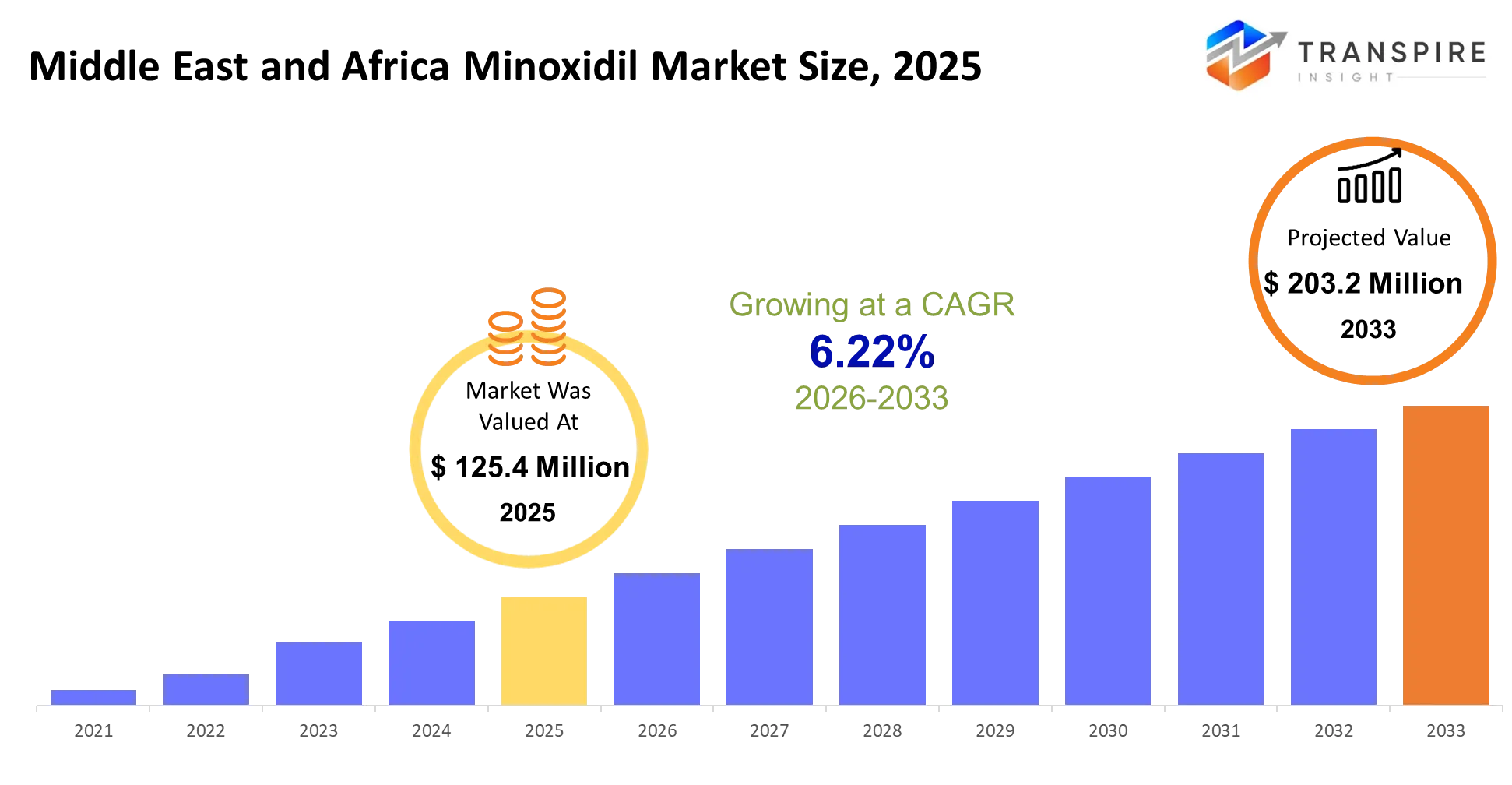
- Middle East and Africa Minoxidil Market Size 2025: USD 125.4 Million
- Middle East and Africa Minoxidil Market Size 2033: USD 203.2 Million
- Middle East and Africa Minoxidil Market CAGR: 6.22%
- Middle East and Africa Minoxidil Market Segments: By Type (Topical Solution, Foam, Oral Tablets, Gel, Spray, Others); By Application (Hair Loss Treatment, Alopecia, Beard Growth, Scalp Treatment, Dermatology Use, Others); By End-User (Hospitals, Clinics, Dermatology Centers, Homecare, Specialty Clinics, Pharmacies, Others); By Distribution (Hospital Pharmacies, Retail Pharmacies, Online Pharmacies, Drug Stores, Others)
To learn more about this report,  Download Free Sample Report
Middle East and Africa Minoxidil Market Summary
The Middle East and Africa Minoxidil Market was valued at USD 125.4 Million in 2025. It is forecast to reach USD 203.2 Million by 2033. That is a CAGR of 6.22% over the period.
The Middle East and Africa minoxidil market serves a practical role in addressing hair thinning and pattern baldness which increasingly affects working-age consumers who seek clinically supported non-surgical treatment options. Retail pharmacies and dermatology clinics and online platforms provide minoxidil products as an accessible first-line solution for long-term hair regrowth management. The market has experienced a five-year transformation because physician-guided treatment regimens now combine minoxidil with platelet-rich plasma and oral formulations while over-the-counter topical formulations have lost their market dominance. The Gulf countries and African regions have experienced fast growth of teledermatology services and digital pharmacy networks which has helped accelerate this transition.
The pandemic caused supply chain disruptions which first restricted product distribution through the supply chain while forcing regional distributors to improve their local sourcing and inventory planning abilities. The demand for evidence-based cosmetic healthcare solutions from consumers has led manufacturers to create specific formulations while expanding their product availability which results in better treatment compliance and continuous revenue growth for their premium and mass-market products.
Key Market Insights
- The Gulf Cooperation Council nations control most of the Minoxidil market in the Middle East and Africa which will reach 45% market share by 2025 through their premium dermatology products.
- South Africa stands as the second biggest market within the region because its organized pharmacy retail system exists together with its consumer base that spends money on personal care therapeutics.
- North African markets will experience their most rapid growth until 2030 because e-pharmacies expand their services and urban healthcare facilities improve their product distribution systems.
- The market for topical minoxidil solutions will reach approximately 62% market share in 2025 because doctors widely know this treatment and it costs less for patients to use.
- Foam-based formulations hold the second-largest share as consumers increasingly prefer residue-free and faster-absorbing treatment options.
- Between 2025 and 2030 the fastest-growing market for oral minoxidil occurs because dermatologists use combination treatment protocols to achieve better results.
- The Minoxidil Market in the Middle East and Africa divides into two main segments which include male consumers who constitute 68 percent of the market for Androgenetic alopecia treatment.
- The market for female-pattern hair loss applications is expanding rapidly because manufacturers develop specialized products and healthcare providers offer more clinical consultation opportunities.
- Retail pharmacies hold nearly 48% share of market demand, benefiting from trusted consumer access and broad over-the-counter product visibility.
- The online pharmacy market represents the fastest-growing distribution sector which will experience substantial growth until 2030 through the implementation of digital prescription systems.
What are the Key Drivers, Restraints, and Opportunities in the Middle East and Africa Minoxidil Market?
The Middle East and Africa minoxidil market experiences its strongest growth through digital healthcare infrastructure development which Gulf countries have implemented. The pandemic brought new telemedicine licensing regulations and online prescription services which enable people to access dermatologist consultations with greater ease. The new system provides consumers with medical hair loss treatment pathways which they can follow without facing any major obstacles. The teledermatology platforms which now deliver treatment through their own pharmacies have developed better customer conversion rates which lead to higher sales numbers and improved revenue earnings from customers who continue their treatment.
The main obstacle to effective healthcare delivery in Africa and low-income Middle Eastern countries exists because these regions have insufficient healthcare services and specialized dermatology facilities. Patients need medical supervision through their entire minoxidil treatment process to stay compliant and understand what results they can expect. The current healthcare systems in this region lack both sufficient specialists and proper pharmacy distribution systems. The current problems will persist until healthcare organizations enhance their investment programs and develop their personnel and their reimbursement mechanisms reach advanced levels. The process of product adoption through new customer acquisition and ongoing customer purchasing activities gets impeded by two factors which include diagnosis delays and treatment interruptions.
The future growth potential of low-dose oral minoxidil research which medical professionals currently use for off-label purposes will increase when clinical evidence of its effectiveness increases. Dermatology clinics in the UAE and Saudi Arabia are increasingly incorporating oral regimens into combination treatment plans. The pharmaceutical sector in this area will experience revenue growth through prescription-based sales because local manufacturers develop their products and regulations become better established.
What Has the Impact of Artificial Intelligence Been on the Middle East and Africa Minoxidil Market?
The regional minoxidil ecosystem undergoes transformation because artificial intelligence together with advanced digital technologies improve how patients are treated and how prescriptions are written and how supply chains operate. Gulf markets now use AI-powered dermatology platforms which assess hair loss from its initial stage through image recognition tools that measure scalp density and follicular health and hair loss progression. These systems enable clinics to conduct their consultations more efficiently while they decrease the time needed for diagnostic procedures which lets doctors treat more patients and maintain better treatment protocols. Physicians can create tailored minoxidil treatment plans through machine learning models which analyze patient demographics and hair loss progression and treatment adherence history to forecast patient treatment outcomes.
Digital pharmacy platforms and distributors use predictive analytics to improve their inventory management systems which include inventory control and demand estimation processes. This process helps to decrease stockouts and surplus inventory which leads to better fulfillment operations and reduced distribution expenses. AI-powered reminder systems used by certain regional telehealth providers help patients become more compliant with their follow-up appointments which results in better long-term treatment success and increased purchases of recurring products.
The Middle Eastern and African healthcare systems face a significant challenge because their clinical data environment remains disorganized. AI tools require large, standardized datasets to maintain predictive accuracy, yet inconsistent digital recordkeeping and limited interoperability restrict model performance. The high integration costs required for smaller clinics create barriers that prevent them from implementing systems which would support their operations to multiple locations beyond urban healthcare facilities.
Key Market Trends
- The GCC telehealth platforms which operate since 2022 have achieved a 30% increase in minoxidil prescription conversions through their virtual dermatology services which eliminate traditional access restrictions.
- Between 2021 and 2025, consumers showed increasing preference for foam-based formulations which emerged as better alternatives to alcohol-based topical solutions that caused scalp irritation.
- The production companies in the region established new distribution partnerships which Cipla developed after 2023 to decrease their need for imported products while increasing availability at local pharmacies.
- The distribution companies in Saudi Arabia and South Africa increased their inventory buffer strategies to 15-20% after supply chain interruptions during the pandemic.
- The UAE dermatology clinics started using combination treatments which include minoxidil and PRP therapy after 2022 because these methods showed better patient retention results.
- After 2023, the development of female hair restoration products gained momentum because clinical marketing methods began to target female customers instead of treating them as secondary to male customers.
- The online pharmacy sales channels between 2021 and 2025 gained market share because digital prescription verification systems created better trust among customers.
- The global companies Dr. Reddy's Laboratories and Perrigo expanded their private-label manufacturing alliances to enhance their ability to compete on prices in different regions.
- The Gulf healthcare markets have experienced better control over unauthorized online product distribution since 2024 because of tighter regulations which govern digital prescription authentication.
Middle East and Africa Minoxidil Market Segmentation
By Type :
The Minoxidil market in the Middle East and Africa displays strong product category differences because topical solutions maintain their market share through easy product access and user familiarity. The public prefers to use liquid treatments for daily scalp care because these products enable direct application at a lower cost than sophisticated treatment options. Dermatologists at regional medical centers recommend this product to treat early-stage hair loss because it meets their professional standards.
People prefer foam-based products because they deliver fast absorption while causing less scalp irritation, which makes them suitable for everyday use. Medical professionals approve the use of oral tablets under their supervision for particular treatment protocols. Gel and spray products appeal to younger customers who seek straightforward solutions that provide specific benefits. Other forms include combination products designed to improve application flexibility and support different treatment preferences across consumer groups.
By Application :
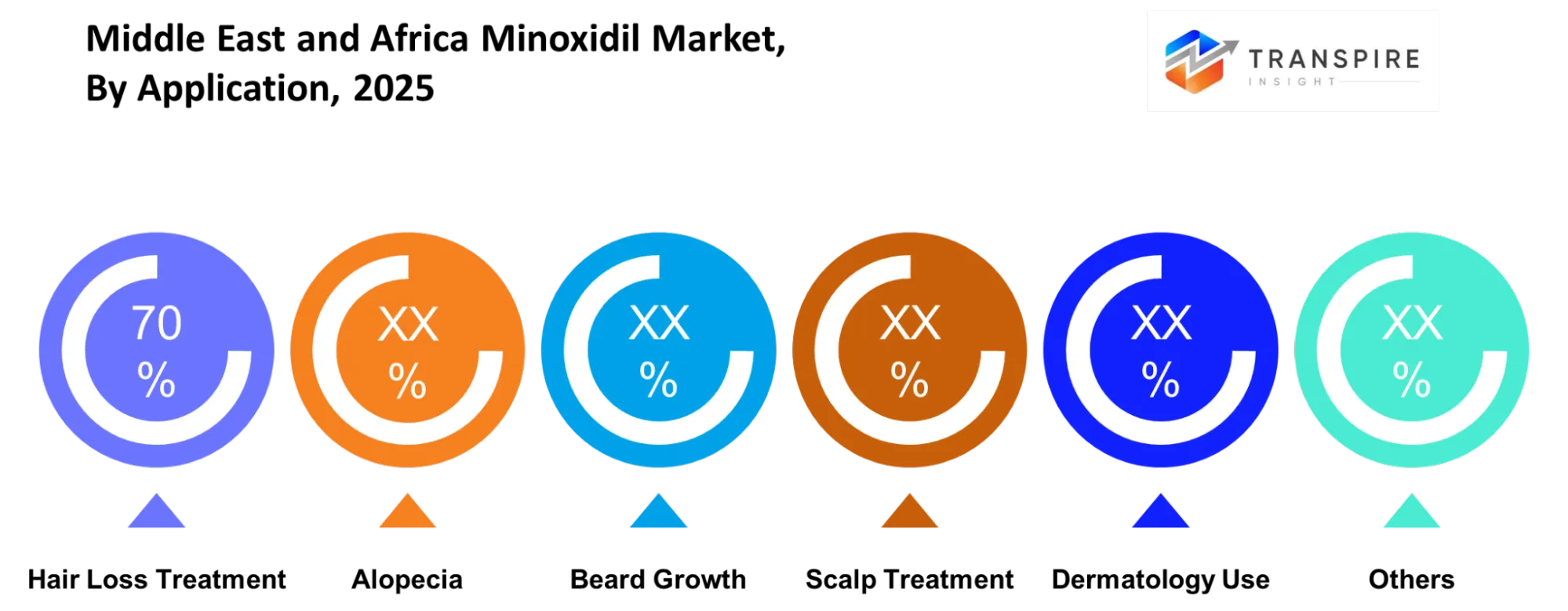
The Minoxidil Market in the Middle East and Africa operates mainly through hair loss treatment because increasing knowledge about personal grooming and appearance leads to higher treatment usage. Urban populations are increasingly seeking medical and cosmetic solutions for hair thinning which occurs due to stress and environmental exposure and lifestyle changes. The demand for products maintains its strength because customers observe visible results from using products.
Alopecia treatment represents another important application due to growing diagnosis rates through dermatology consultations. Younger male consumers now prefer beard growth products because their grooming habits follow current trends. Minoxidil-based solutions are now used in specialized treatment plans which help to develop both scalp treatment and general dermatology applications. Other applications include customized therapeutic use designed for specific patient requirements under professional guidance.
To learn more about this report, Download Free Sample Report
By End-User :
Hospitals and clinics remain important end-users in the Middle East and Africa Minoxidil Market because medical consultation often shapes treatment selection. Dermatology centers operate as vital medical facilities because they provide patients with complete diagnostic services and treatment recommendations and continuous health evaluation. Professional supervision creates trust between patients and treatment providers so patients will use minoxidil products which medical guidelines recommend for their treatment needs.
Homecare continues to grow because many people choose to treat themselves after they receive their first medical assessment. The trend continues because people can easily access products and they now understand how to use them correctly. Specialty clinics provide advanced hair restoration services which use minoxidil together with other treatment methods. The public can access pharmacies at any time which makes them important service points while wellness centers and aesthetic treatment facilities provide complete hair care services.
By Distribution :
The Middle East and Africa Minoxidil Market maintains its connection to hospital pharmacies because doctors use those hospitals to prescribe Minoxidil and patients trust the medical distribution systems which operate through licensed facilities. The outlets serve as crucial access points which provide both oral medications and special items which need expert assistance for proper use. The continuous flow of products through this market segment shows strong backing from hospital networks which operate throughout major urban centers in the region.
The retail pharmacy sector maintains its dominant position in national product distribution because it provides customers with easy access to its numerous locations which customers already know. The online pharmacy industry is experiencing rapid expansion because urban residents develop digital shopping habits which enable them to compare products and receive home delivery. The drug store industry plays a major role in the market because it meets the demand of customers who want immediate access to over-the-counter products which drive sales across both urban and rural areas.
What are the Key Use Cases Driving the Middle East and Africa Minoxidil Market?
The Middle East and Africa minoxidil market uses topical formulations which retail pharmacies and dermatology clinics provide to treat androgenetic alopecia as its primary application. The application produces maximum demand because it provides an accessible first-line treatment which has received clinical validation for managing permanent hair regrowth.
Physician-directed treatment programs for female-pattern hair loss and post-partum hair thinning create new treatment applications which doctors currently supervise. Specialty dermatology centers and digital consultation platforms have begun to create personalized treatment plans which are especially common in urban Gulf healthcare networks that are expanding their aesthetic medicine services.
Younger consumers use low-dose oral minoxidil for combination therapy and preventative early-stage hair retention protocols as upcoming use cases. The applications remain niche throughout the market because of existing regulatory restrictions and prescribing limitations yet they demonstrate strong market potential as medical professionals gain more confidence in the technologies and teledermatology platforms expand their reach to specialists.
|
Report Metrics |
Details |
|
Market size value in 2025 |
USD 125.4 Million |
|
Market size value in 2026 |
USD 133.2 Million |
|
Revenue forecast in 2033 |
USD 203.2 Million |
|
Growth rate |
CAGR of 6.22% from 2026 to 2033 |
|
Base year |
2025 |
|
Historical data |
2021 - 2024 |
|
Forecast period |
2026 - 2033 |
|
Report coverage |
Revenue forecast, competitive landscape, growth factors, and trends |
|
Regional scope |
Middle East and Africa (Saudi Arabia, United Arab Emirates, South Africa, Rest of Middle East and Africa) |
|
Key company profiled |
Pfizer, Johnson & Johnson, Cipla, Dr Reddy’s, Sun Pharma, Perrigo, Teva, Kirkland, Aurobindo Pharma, Glenmark, Mylan, Zydus, Lupin, Merck, Bayer |
|
Customization scope |
Free report customization (country, regional & segment scope). Avail customized purchase options to meet your exact research needs. |
|
Report Segmentation |
By Type (Topical Solution, Foam, Oral Tablets, Gel, Spray, Others); By Application (Hair Loss Treatment, Alopecia, Beard Growth, Scalp Treatment, Dermatology Use, Others); By End-User (Hospitals, Clinics, Dermatology Centers, Homecare, Specialty Clinics, Pharmacies, Others); By Distribution (Hospital Pharmacies, Retail Pharmacies, Online Pharmacies, Drug Stores, Others) |
Which Regions are Driving the Middle East and Africa Minoxidil Market Growth?
The Gulf Cooperation Council region leads the Middle East and Africa minoxidil market because the United Arab Emirates and Saudi Arabia hold the largest market share across the region. The strong market position of this area exists because private healthcare systems continue to develop and pharmaceutical distribution systems receive strict regulatory control and digital prescription systems achieve widespread adoption. The advanced dermatology clinic networks together with premium pharmacy chains established a complete business environment which develops treatment solutions based on prescription hair restoration therapies. The ongoing growth in consumer spending for aesthetic healthcare products enables manufacturers to develop more profitable products while delivering specialized healthcare solutions.
The South African market stands as the second largest market88. However, its market dynamics differ from the Gulf states. The premium clinical adoption model drives growth for this market because organized retail pharmacy networks together with stable pharmaceutical supply channels support economic resilience. Hospitals and pharmacies together with healthcare providers establish permanent product distribution networks which deliver consistent product availability across all urban areas. The market generates regular income for businesses because customers require retail access to treatment services which do not depend on fast technological advancements.
North Africa is growing at the fastest rate with Egypt and Morocco showing significant progress in their healthcare digitalization efforts from the past three years. Regulatory improvements that support e-pharmacy operations together with increased funding for telemedicine infrastructure have created new pathways for people to access specialist medical consultations. The new developments have made it possible for previously unserved customer groups to receive doctor-supervised hair loss treatment. The market entry situation together with investor interests provides businesses with a prime chance to build initial distribution agreements while they secure market position until 2033.
Who are the Key Players in the Middle East and Africa Minoxidil Market and How Do They Compete?
The minoxidil market in the Middle East and Africa shows medium market fragmentation because international pharmaceutical companies compete against local generic manufacturers and online pharmacy providers. Existing market players maintain their market share through extensive pharmacy distribution networks and their established connections with physicians while new market entrants use their advanced digital delivery systems and specific treatment solutions to change market dynamics. Competitors now base their competition strategies on three factors which include product formulation developments and customer adherence tools and their ability to distribute products across multiple regions. The companies that achieve success through their ability to link medical authenticity with consumer product distribution channels are expanding their market presence.
Dr. Reddy's Laboratories uses its low-cost production methods to enter major pharmacy markets through its aggressive expansion efforts across Gulf and African regions. The company provides customers with affordable products because it maintains reliable product availability which proved crucial during the disruptions caused by the pandemic. Cipla uses its regional business relationships and its extensive range of topical treatment products to establish market presence in both dermatology clinics and organized retail outlets.
Perrigo operates its business through private-label manufacturing which helps local distributors provide specialized products that meet the needs of regional pharmacy chains. Viatris develops prescription-based products which physicians can access through its extensive outreach programs. Johnson & Johnson uses its high-end brand image and customer confidence to gain access to profitable city markets through its online pharmacy partnerships and medical clinic associations throughout Gulf Cooperation Council nations.
Company List
- Pfizer
- Johnson & Johnson
- Cipla
- Dr Reddy’s
- Sun Pharma
- Perrigo
- Teva
- Kirkland
- Aurobindo Pharma
- Glenmark
- Mylan
- Zydus
- Lupin
- Merck
- Bayer
Recent Development News
In March 2026, Glenmark Pharmaceuticals Canada Inc. launched Men’s GLN-Minoxidil 5% w/w Topical Aerosol Foam. The product launch expanded Glenmark’s OTC hair-regrowth portfolio with a foam-based minoxidil formulation, increasing competitive pressure and raising expectations for similar premium-format minoxidil launches across Middle East and Africa distribution markets. Source https://www.newswire.ca/
In April 2026, Veradermics reported positive Phase 2/3 clinical progress for its extended-release oral minoxidil candidate VDPHL01. The advancement of this investigational oral minoxidil technology strengthens the global innovation pipeline and could accelerate adoption of next-generation minoxidil therapies in emerging Middle East and Africa dermatology markets once commercialized. Source https://www.businesswire.com/
What Strategic Insights Define the Future of the Middle East and Africa Minoxidil Market?
The Middle East and Africa minoxidil market will undergo structural changes during the next five to seven years because it will develop prescription-based digitally controlled hair restoration systems which operate through complete medical treatment solutions instead of selling over-the-counter products. The current trend develops because teledermatology systems gain acceptance and pharmaceutical companies create better authentication systems and patients choose to follow treatment plans which doctors supervise because these plans produce better results. The market will increasingly reward companies that develop complete healthcare solutions between diagnosis and treatment delivery through their integrated healthcare system.
The Gulf distribution channels face an invisible danger because their market share increases with only a few pharmacy networks and digital healthcare platforms maintaining control over patient distribution. This situation will result in decreased profits for manufacturers while making it harder for them to compete. The growing use of low-dose oral minoxidil creates a main developing business opportunity because clinical proof and regulatory systems progress in Saudi Arabia and the UAE.
Market participants should move now to establish strategic partnerships with telehealth providers and specialty dermatology networks. The development of defense capabilities through the establishment of physician training programs and the collection of clinical data and the creation of digital adherence systems will secure better market position for companies than they would achieve through price competition.
Middle East and Africa Minoxidil Market Report Segmentation
By Type
- Topical Solution
- Foam
- Oral Tablets
- Gel
- Spray
By Application
- Hair Loss Treatment
- Alopecia
- Beard Growth
- Scalp Treatment
- Dermatology Use
By End-User
- Hospitals
- Clinics
- Dermatology Centers
- Homecare
- Specialty Clinics
- Pharmacies
By Distribution
- Hospital Pharmacies
- Retail Pharmacies
- Online Pharmacies
- Drug Stores
Frequently Asked Questions
Find quick answers to common questions.
The Middle East and Africa Minoxidil Market size is USD 203.2 Million in 2033.
Key segments for the Middle East and Africa Minoxidil Market are By Type (Topical Solution, Foam, Oral Tablets, Gel, Spray, Others); By Application (Hair Loss Treatment, Alopecia, Beard Growth, Scalp Treatment, Dermatology Use, Others); By End-User (Hospitals, Clinics, Dermatology Centers, Homecare, Specialty Clinics, Pharmacies, Others); By Distribution (Hospital Pharmacies, Retail Pharmacies, Online Pharmacies, Drug Stores, Others).
Major Middle East and Africa Minoxidil Market players are Pfizer, Johnson & Johnson, Cipla, Dr Reddy’s, Sun Pharma, Perrigo, Teva, Kirkland, Aurobindo Pharma, Glenmark, Mylan, Zydus, Lupin, Merck, Bayer.
The Middle East and Africa Minoxidil Market size is USD 125.4 Million in 2025.
The Middle East and Africa Minoxidil Market CAGR is 6.22% from 2026 to 2033.
- Pfizer
- Johnson & Johnson
- Cipla
- Dr Reddy’s
- Sun Pharma
- Perrigo
- Teva
- Kirkland
- Aurobindo Pharma
- Glenmark
- Mylan
- Zydus
- Lupin
- Merck
- Bayer
Recently Published Reports
-
Apr 2026
Biosimilars Market
Biosimilars Market By Product Type (Monoclonal Antibodies, Recombinant Hormones, Erythropoietin, G-CSF, Others), By Indication (Oncology, Autoimmune Diseases, Blood Disorders, Diabetes, Others), By Manufacturing Type (In-House Manufacturing, Contract Manufacturing), By Distribution Channel (Hospital Pharmacies, Retail Pharmacies, Online Pharmacies), By Industry Analysis, Size, Share, Growth, Trends, and Forecasts 2021-2033
-
Apr 2026
Gastrointestinal Endoscopy Market
Gastrointestinal Endoscopy Market By Type (Rigid Gastrointestinal Endoscope, Flexible Gastrointestinal Endoscopes, Disposable Gastrointestinal Endoscope), By Procedure Type (Colonoscopy, Gastroscopy, Duodenoscopy, Enteroscopy, Flexible Sigmoidoscopy, Others), By Application (Diagnosis, Treatment), By End-Users (Hospitals, Ambulatory Surgical Centers, Specialty Clinics, Laboratories, Others), By Industry Analysis, Size, Share, Growth, Trends, and Forecasts 2021-2033
-
Apr 2026
Rare Inherited Metabolic Disorder Drug Market
Rare Inherited Metabolic Disorder Drug Market By Drug Class (Enzyme Replacement Drugs, Gene Therapy Drugs, Substrate Reduction Drugs, Small Module Drugs, Protein Drugs), By Route of Administration(Parenteral, Oral, Intrathecal), By Clinical Development (Marketed Drugs, Late Stage Clinical Phase III, Early Stage Clinical Phase I-II, Preclinical Candidates), By Indication (Lysosomal Storage Disorders, Urea Cycle Disorders, Amino Acid Metabolic Disorders, organic Acidemias, Peroximal Disorders), By Industry Analysis, Size, Share, Growth, Trends, and Forecasts 2021-2033
-
Jan 2026
Pharmaceutical Cleanroom Technology Market
Pharmaceutical Cleanroom Technology Market By Product (Equipment, Consumables, Services); By Cleanroom Type (Standard Cleanrooms, Modular Cleanrooms); By End Use (Pharmaceutical Companies, Biotechnology Companies), By Industry Analysis, Size, Share, Growth, Trends, and Forecasts 2021-2033