

Middle East and Africa Employee Transport Fleet Management Market Summary
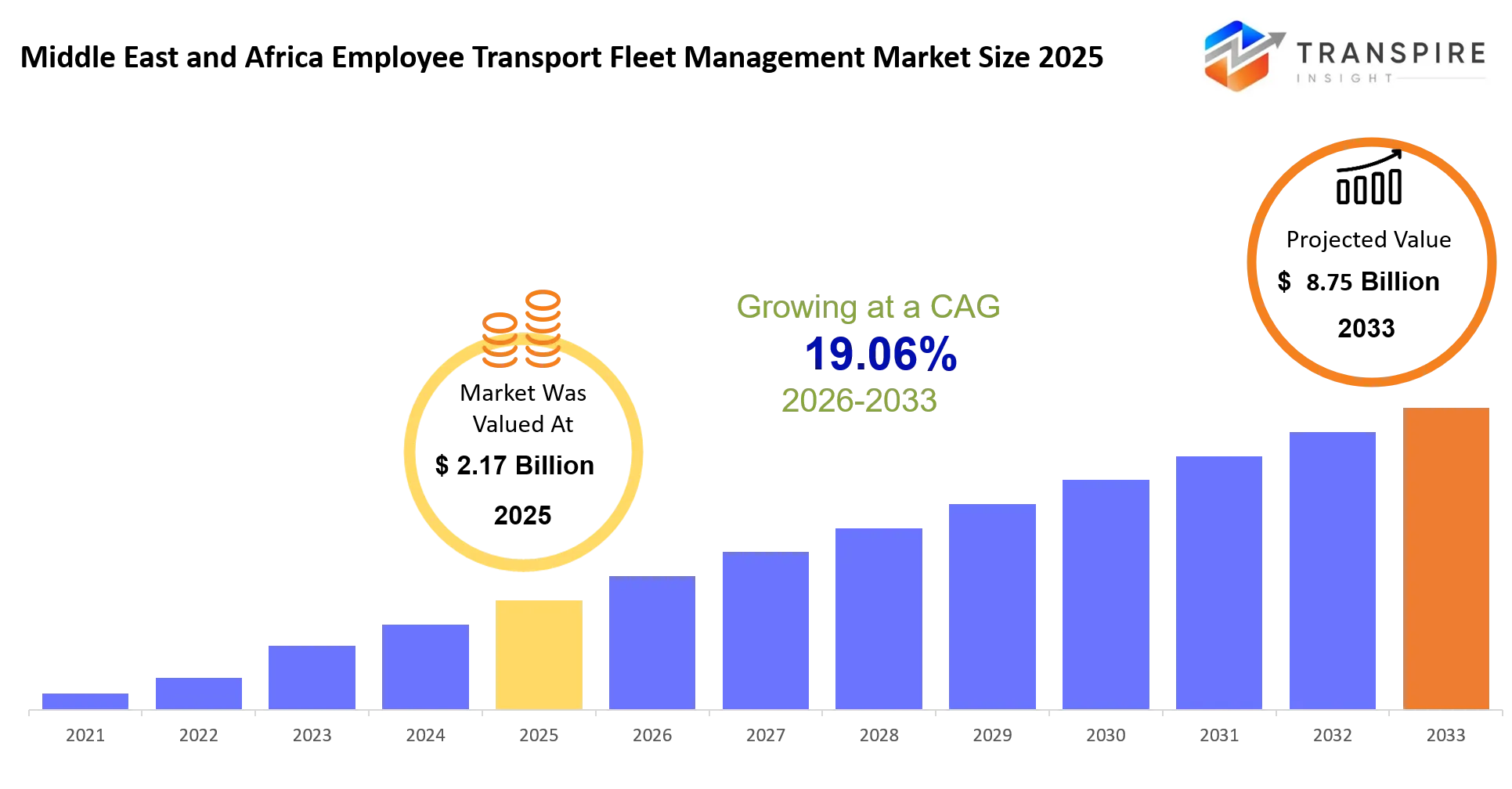
As per Transpire Insight Analysis the Middle East and Africa Employee Transport Fleet Management Market size is estimated at USD 2.17 Billion in 2025 and is anticipated to reach USD 8.75 Billion by 2033, growing at a CAGR of 19.06% from 2026 to 2033.
The Middle East and Africa Employee Transport Fleet Management Market helps orgs move employees in a safe and efficient way, from homes and residential areas, to industrial sites, office districts, near airports, and even those remote work locations that feel a bit far off. In practice companies lean on these systems to squeeze better routes out of schedules, keep an eye on vehicle health, improve driver habits, handle fuel use more carefully, and make sure the workforce shows up on time, all while lowering day to day operating costs, without losing control. In the last five years, this space kind of moved away from the earlier, simple GPS vehicle tracking setup and toward cloud based fleet intelligence, where telematics and artificial intelligence basically work with workforce scheduling.
After the COVID-19 pandemic, the push for digital transformation sped up a lot, and employers started adopting tech that gives real time fleet visibility, occupancy management, and contactless transport operations. Meanwhile , big infrastructure builds, mining projects, and broader industrial expansion across Gulf and African economies have driven a larger need for organized employee transportation. And as enterprises keep focusing on operational efficiency, compliance, and smoother execution, fleet management platforms are starting to look more like a strategic investment rather than just an expense, because they can generate recurring software revenues and also support longer, service contract commitments.
Middle East and Africa Employee Transport Fleet Management Market Size & Forecast:
- Middle East and Africa Employee Transport Fleet Management Market Size 2025: USD 2.17 Billion
- Expected Market Value 2033: USD 8.75 Billion
- Forecast CAGR: 19.06%
- Leading region in 2025:
- Fastest Growing region:
- Key Profile: Geotab, Verizon Connect, Samsara, Trimble, Fleet Complete, Motive, GPS Insight, Teletrac Navman, TomTom Telematics, Webfleet, Fleetio, Lytx, Gurtam, Mix Telematics, Zonar Systems
Key Market Insights
- The Middle East and Africa Employee Transport Fleet Management Market is expected to hit USD 8.75 billion by 2033, showing a kind of steady enterprise spending in digital fleet ecosystems, and yes it just keeps going.
- GCC countries still lead pretty hard with almost 58% of the market share in 2025 , backed by huge corporate fleets that serve oil, construction, aviation and those industrial verticals too.
- South Africa plus East Africa look like the quicker movers through 2033, largely because mining activity is rising and smart mobility investments are getting more serious.
- In terms of software mix, fleet tracking solutions make up about 34% of market revenue, while route optimization sits as the second-largest software area across enterprise operations.
- AI-based driver monitoring platforms are projected to see adoption rise by more than 22% annually from 2026 to 2033 , since safety compliance is becoming non optional for many fleets.
- More and more big employers are also pairing employee transport platforms with HR, payroll and workforce scheduling systems, so they get better operational clarity and less administrative friction.
- Corporate enterprises account for nearly 46% of total demand, and manufacturing along with mining firms keep expanding managed transportation services for remote sites, where logistics is always a challenge.
- Brands like Geotab, Samsara, Verizon Connect, Trimble, Webfleet and Mix Telematics are sharpening their presence using AI driven analytics, localized partnerships, and cloud platform upgrades.
- Fleet operators are increasingly using predictive maintenance and fuel analytics, and that tends to cut upkeep expenses by around 15% to 25%, while also lifting fleet utilization.
- Finally, subscription driven SaaS deployments are gradually replacing on premises setups, which means faster go live timelines, automatic updates, and more scalable fleet management functions.
What are the Key Drivers, Restraints, and Opportunities in the Middle East and Africa Employee Transport Fleet Management Market?
The main driver behind market expansion is this fast digitalization of enterprise fleet operations across energy, mining, construction, aviation, and manufacturing, like it’s becoming the norm. Instead of doing manual transport coordination, organizations are switching to connected fleet platforms that bring together GPS monitoring, driver behavior analytics, route optimization, and even workforce scheduling. This change really seems pushed by the desire to cut down fuel costs, boost worker safety, and also keep corporate governance requirements in check. Big infrastructure projects across Saudi Arabia, the UAE, South Africa, and other nearby regional economies have also sped up the investment in managed employee transportation, and that’s opening up recurring revenue chances for software providers and fleet service companies
One big restraint is the fragmented transportation ecosystem across a number of African markets. You know , the inconsistent telecoms infrastructure, older vehicle fleets, and weak digital integration become structural obstacles. A lot of organizations still run mixed fleets, with different tech approaches, and that makes platform integration pricey and , frankly, slow. On top of that small to medium sized fleet operators run into heavy upfront spending for telematics hardware connectivity, and software rollouts, so adoption gets delayed and market penetration drops
A noticeable opportunity is merging connected mobility with artificial intelligence and electric fleet management. Governments as well as private organizations are backing smart city initiatives and upgrading digital transport infrastructure, and that tends to set up good conditions for intelligent fleet platforms. AI enabled route planning, predictive maintenance, and electric vehicle fleet optimization can meaningfully raise overall fleet productivity and efficiency
What Has the Impact of Artificial Intelligence Been on the Middle East and Africa Employee Transport Fleet Management Market?
Artificial intelligence kinda rewrites how employee transport fleet management works, you know , not just reacting to vehicles on the road, but leaning toward predictive operational planning. A lot of modern fleet platforms now rely on AI algorithms that chew through GPS traces, traffic patterns, driver habits, vehicle diagnostics, plus workforce schedules, all sort of in real time. With that, the systems tend to nudge users toward more efficient routes, handle vehicle allocation more smoothly and cut down on those long idle stretches so organizations can boost fleet utilization while also pulling down fuel burn. At the same time machine learning keeps re-checking engine health, brake wear, tire conditions, and battery output, then it estimates maintenance needs before failures show up, so equipment downtime is less of a surprise.
There’s also advanced analytics that help with regulatory compliance, because they can monitor driver hours, detect speeding events, flag route deviations, and spot safety violations, then generate automated reporting without much fuss. AI driven video telematics, along with driver assistance features, also helps reduce accident risks, while giving fleet managers clearer operational visibility. Many enterprises even share results like measurable fuel usage reductions in the ballpark of 10% to 20%, plus better fleet availability and more sensible maintenance scheduling after they roll out intelligent fleet management solutions.
Still, widespread AI deployment doesn’t happen as fast as people expect, mostly because integration can be a bit messy, and digital infrastructure varies a lot across regional markets. Older fleet systems sometimes don’t match standardized data formats , and in remote mining or industrial sites the mobile connectivity can be unreliable, which makes steady real time analytics hard to maintain. Because of that, these issues keep delaying the full rollout of AI driven fleet optimization across the region.
Key Market Trends
- Cloud based fleet platforms have kind of replaced the old on-premise setups, and SaaS deployments are now over 60% of new enterprise installs since 2023, though people still say legacy isn’t fully gone.
- AI powered route optimization has actually nudged fleet utilization up by something like 15% to 25% , while cutting down unnecessary mileage across industrial transportation networks .
- Driver monitoring tech has grown a lot since 2022, partly because organizations are pushing harder on workplace safety, and also on insurance risk management.
- Fleet operators are also mixing telematics with predictive maintenance, which tends to cut unplanned vehicle downtime by around 20% across the fleets they manage.
- In GCC regions, companies have sped up tying employee transport platforms in with HR and workforce scheduling software , to squeeze out better operational efficiency.
- Companies like Geotab, Samsara, Verizon Connect, Webfleet, and Trimble keep building out their AI abilities through cloud analytics, automation, and regional tech partnerships.
- And mobile applications have become normal, like standard tools, for booking employee transport, real time tracking, and automated attendance verification across corporate fleets.
- On top of that electric vehicle fleet management is now showing up more, since enterprises are getting ready for a gradual move toward electrified commercial fleets in urban business districts.
- More and more organizations lean on business intelligence dashboards to watch transport performance, fuel costs, and employee mobility measures from centralized control rooms, not just spreadsheets.
- Finally, data-driven fleet compliance has moved away from once-in-a-while reporting, toward continuous monitoring, which helps enterprises stay aligned with regulations while also improving operational transparency, over all.
Middle East and Africa Employee Transport Fleet Management Market Segmentation
By Solution
Fleet Tracking is, like, basically the ground layer for digital employee transport because it gives you ongoing vehicle visibility plus those location updates that are accurate. Then Route Optimization kicks in, it cuts down on travel time via smart route planning, and Vehicle Maintenance sort of keeps surprises away by doing scheduled servicing, plus checking vehicle health on an ongoing basis. Fuel Management supports cost control by watching fuel consumption and spotting inefficient driving patterns. Driver Monitoring improves safety too, because it logs driving conduct like harsh braking, speeding, and too much idling.
Workforce Scheduling ties vehicle availability together with employee shifts so transport planning gets more efficient, especially when there are multiple locations involved. Analytics & Reporting turns operational data into performance insights, which helps leaders make better business choices, while still keeping cost management in focus. There are also other things such as attendance integration, trip history handling, emergency alerts and passenger verification systems, all of which tend to strengthen the overall fleet operations. Put together these solutions should help organizations lower operating expenses while still keeping employee transportation reliable and consistent.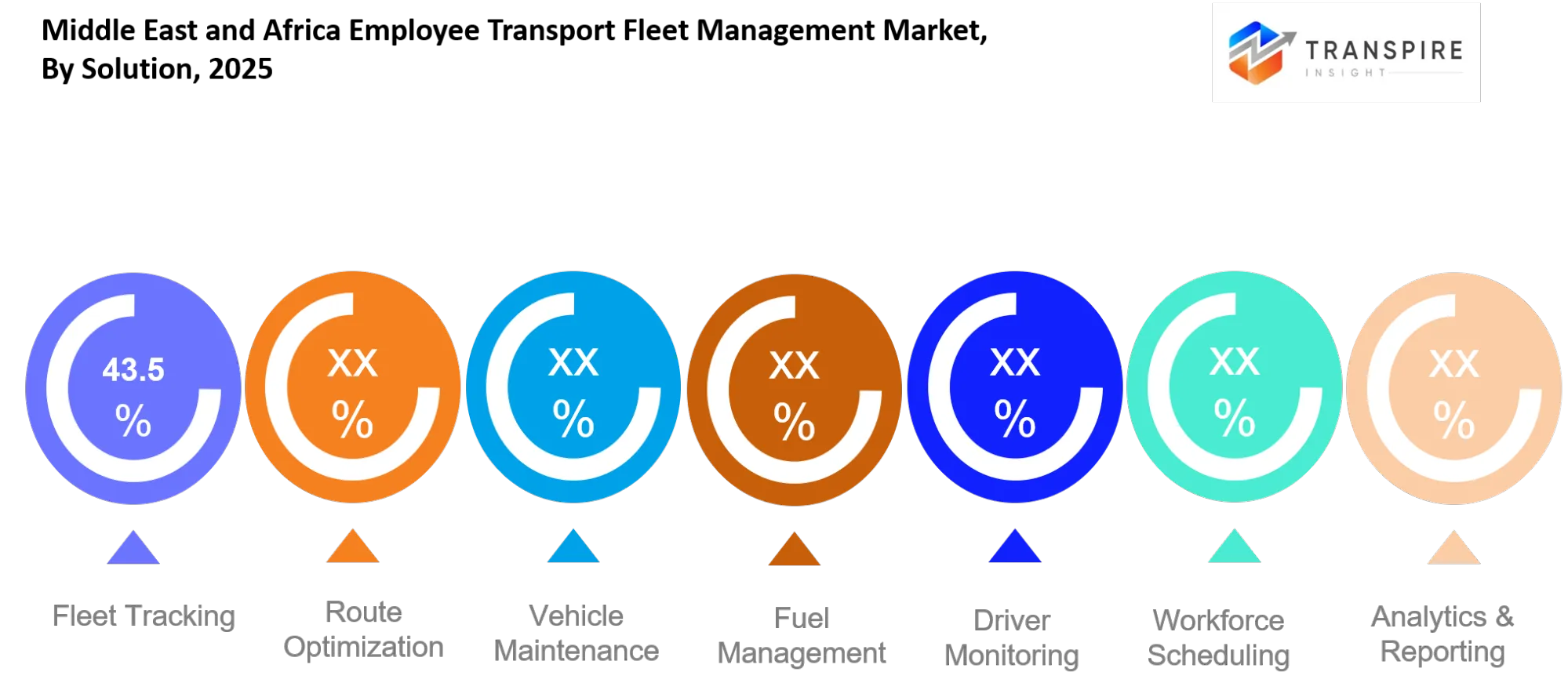
By Deployment
Cloud based deployment now feels like the go to option, since centralized data access , automatic software updates, and generally lower infrastructure costs make fleet operations easier to manage. Still, on premise deployment remains there for teams that have strict internal security rules and want full control over their operational data—no surprises, no handoffs. Then there’s hybrid deployment, kind of a middle path where both methods get used together, giving you room for flexible data management while you roll into digital transformation at a slower, safer pace. And with SaaS delivery, people get subscription based access, which typically means less capital spend and a faster rollout
Private Cloud environments are often chosen when organizations deal with confidential workforce information, or when regulated operational data is a concern. Public Cloud platforms tend to fit well when businesses need scalability, like expanding transport networks over multiple cities or even across countries. Mobile based solutions also show up a lot, letting fleet managers and drivers keep an eye on trips, get notifications, and revise schedules right from their smartphones. Beyond that, there are other deployment paths, like customized enterprise platforms, built around specific operational needs and compliance expectations that vary across industries.
By Vehicle Type
Buses kind of are the biggest vehicle category, since large organizations move big numbers of employees during set work shifts , basically on a routine. Vans offer more flexible transportation for medium-sized employee groups, and they also help with operations across urban areas plus industrial sites at the same time. Passenger Cars usually cover executive transport, small team movements, and those more specialized business trips that pop up from time to time. Electric Vehicles keep getting more acceptance, because organizations roll out cleaner transportation strategies and also aim to reduce their operating expenses.
Mini Buses sort of balance passenger capacity with operational flexibility, especially for business parks, educational campuses and healthcare facilities. Shuttle Vehicles help with constant back and forth travel between offices, airports, residential communities , and industrial sites through out the day. Mixed Fleets mix several vehicle categories, so they can handle varying passenger volumes and route conditions more efficiently, not just one narrow setup. Other vehicle types then step in for more specialized transportation needs in remote locations, or for project-based operations where the plan can change often.
By End User
Corporate offices end up taking a huge chunk of the market because regular employee transportation basically helps keep things on time, boosts workforce productivity, and makes centralized mobility management easier, kind of smoother. Manufacturing companies lean on scheduled transport services to shift employees between production facilities that run multiple shifts, so it doesn't really slow down. Oil and Gas companies still need dependable transportation, especially for crews working at remote exploration sites and processing locations where access can be tricky. Mining companies too rely on organized fleet operations to move workers safely across big mining areas, with all the constraints that come with them.
Government organizations use fleet management systems to tidy up transport coordination for administrative staff and public sector employees. Educational institutions set up daily transportation for faculty members and operational personnel across campuses, so everyone arrives when they should. Healthcare facilities require reliable transport for medical staff on rotating schedules and also for emergency coverage duties. Other end users include logistics providers, hospitality businesses, infrastructure developers, and commercial enterprises that manage organized workforce mobility, across different working patterns.
By Application
Employee Commute Management is the leading application because dependable everyday travel helps keep people showing up for work, maintain operational continuity , and support employee contentment. Shift Transportation also matters a lot in manufacturing, healthcare, mining , and other industrial places that run 24 7. Airport Transfers give scheduled rides for airline workers, hospitality staff and business travelers who follow set working patterns. Industrial Transportation helps move the workforce between production sites, storage areas, and far off project destinations.
Staff Shuttle Services upgrade in-house mobility across business parks, learning campuses, medical centers, and government complexes. Contractor Transportation supports infrastructure efforts by moving temporary workers from lodging places straight to construction areas. Emergency Transport is for quick workforce movement when operations get disrupted, during health situations, or in other business continuity incidents. Other options include event transport, seasonal movement of staff, and project tailored travel services made for specialized operational needs.
What are the Key Use Cases Driving the Middle East and Africa Employee Transport Fleet Management Market?
Daily employee commute management is still the biggest thing, because big companies need something dependable for getting people between where they live and where they work, every day. In manufacturing facilities, corporate offices and industrial parks, they lean on scheduled coordination, route planning, and live fleet monitoring , so delays drop, attendance gets better, and operating costs stay under control.
Shift transportation keeps growing , along with industrial workforce mobility. This is especially true in mining, oil and gas, and healthcare, where work really doesn’t pause and the whole operation runs throughout the day. Then there’s airport staff transportation and contractor mobility too, which keeps pulling demand. It shows up a lot near major infrastructure projects and around international aviation hubs.
Newer applications are starting to appear as well, like electric fleet management for corporate transport programs, and AI-supported dispatch systems that basically reroute on the fly, based on traffic situations and workforce timelines. Also, smart city initiatives across Gulf countries are likely to push connected mobility platforms even further, linking employee transport with the wider urban transportation network, not just the obvious commuting part.
|
Report Metrics |
Details |
|
Market size value in 2025 |
USD 2.17 Billion |
|
Market size value in 2026 |
USD 2.58 Billion |
|
Revenue forecast in 2033 |
USD 8.75 Billion |
|
Growth rate |
CAGR of 19.06% from 2026 to 2033 |
|
Base year |
2025 |
|
Historical data |
2021 - 2024 |
|
Forecast period |
2026 - 2033 |
|
Report coverage |
Revenue forecast, competitive landscape, growth factors, and trends |
|
Regional scope |
Middle East and Africa (Saudi Arabia, United Arab Emirates, South Africa, Rest of Middle East and Africa) |
|
Key company profiled |
Geotab, Verizon Connect, Samsara, Trimble, Fleet Complete, Motive, GPS Insight, Teletrac Navman, TomTom Telematics, Webfleet, Fleetio, Lytx, Gurtam, Mix Telematics, Zonar Systems |
|
Customization scope |
Free report customization (country, regional & segment scope). Avail customized purchase options to meet your exact research needs. |
|
Report Segmentation |
By Solution (Fleet Tracking, Route Optimization, Vehicle Maintenance, Fuel Management, Driver Monitoring, Workforce Scheduling, Analytics & Reporting, Others); By Deployment (Cloud-Based, On-Premise, Hybrid, SaaS, Private Cloud, Public Cloud, Mobile-Based Solutions, Others); By Vehicle Type (Buses, Vans, Passenger Cars, Electric Vehicles, Mini Buses, Shuttle Vehicles, Mixed Fleets, Others); By End User (Corporate Offices, Manufacturing Companies, Oil & Gas Companies, Mining Companies, Government Organizations, Educational Institutions, Healthcare Facilities, Others); By Application (Employee Commute Management, Shift Transportation, Airport Transfers, Industrial Transportation, Staff Shuttle Services, Contractor Transportation, Emergency Transport, Others) |
Which Regions are Driving the Middle East and Africa Employee Transport Fleet Management Market Growth?
The Gulf Cooperation Council, kind of led by Saudi Arabia, and the United Arab Emirates too, still ends up holding the biggest share of the regional market. Big corporate fleets in oil and gas, aviation, construction, logistics, and also government work, keep putting money into connected transport platforms , that help improve workforce mobility and operational control. Policies for digital transformation are strong , the road infrastructure is getting better, and telematics technologies are rolling out widely , so it all supports large-scale fleet modernization across the region. You can also see a kind of maturing set of enablers, like cloud providers, telecommunications networks, fleet service companies, and enterprise software vendors, which keeps reinforcing long-term market leadership.
South Africa comes in as the second-largest regional contributor, but its growth track looks different than what the Gulf economies do. Industrial activity stays stable, mining operations are already established, and investment in commercial fleet management stays consistent, so there is solid demand for software across manufacturing, logistics, and public sector transportation. Fleet operators generally prioritize things like better vehicle utilization, maintenance planning, and driver safety, rather than pushing for rapid fleet expansion. That operational steadiness gives technology providers more predictable recurring revenue chances, and it also supports long-term customer sticking around.
East Africa is expected to show the quickest growth during the forecast period, especially with Kenya, Tanzania, and nearby economies expanding their transport infrastructure, alongside industrial development projects. New money is going into smart mobility, digital fleet monitoring, and workforce transportation management. Because of that, technology adoption has sped up among corporate employers and logistics providers too.
Who are the Key Players in the Middle East and Africa Employee Transport Fleet Management Market and How Do They Compete?
The competition still feels sort of moderately fragmented, with global telematics providers showing up right alongside specialized fleet software companies, in a way that’s kinda familiar. Over time, technology capability has become the main thing customers look at , not just basic vehicle tracking. More and more buyers are screening for artificial intelligence, predictive analytics, cloud scalability, and system integration—like, the whole stack—before they commit to long-term fleet management partners. Also, enterprise buyers tend to compare regional service support , cybersecurity standards and whether it plays nicely with existing HR plus operational management platforms, because switching later is usually a pain.
Geotab stands out with an open telematics platform that pulls in data from multiple vehicle manufacturers, while also offering AI analytics and broad third-party software compatibility. Samsara leans hard into connected sensors, AI-driven video telematics, and operational intelligence, all blended into a single cloud platform , which makes it appealing for enterprises that want unified fleet visibility without too much stitching. Verizon Connect brings value by combining fleet tracking, route optimization, and mobile workforce management, with the added weight of global telecommunications expertise behind it.
Trimble maintains its edge by tying fleet management with transportation planning, logistics optimization, and asset management software, the sort that’s already used across bigger industrial operations. Webfleet keeps expanding cloud-based mobility services, adding advanced driver behavior analytics and features for electric vehicle fleet management. Mix Telematics focuses on safety and risk controls, plus driver performance analytics, especially for mining, transportation, and industrial fleets that operate in difficult conditions across Africa.
Company List
• Geotab
• Verizon Connect
• Samsara
• Trimble
• Fleet Complete
• Motive
• GPS Insight
• Teletrac Navman
• TomTom Telematics
• Webfleet
• Fleetio
• Lytx
• Gurtam
• Mix Telematics
• Zonar Systems
Recent Development News
In January 2025, Geotab launched enhanced mixed fleet telematics solutions with expanded OEM integration capabilities. The update enables fleet operators to manage vehicles from more than 150 manufacturers through a unified platform, improving operational efficiency and fleet visibility.https://www.geotab.com
In February 2025, REE Automotive entered a partnership with Geotab to integrate real-time vehicle data analytics into connected electric vehicle fleets. The collaboration strengthens fleet intelligence capabilities and supports predictive fleet management for commercial operators.https://ree.auto/press-release
What Strategic Insights Define the Future of the Middle East and Africa Employee Transport Fleet Management Market?
The market will keep shifting away from standalone vehicle tracking, into these more “intelligent” workforce mobility platforms that basically mash together artificial intelligence predictive analytics, plus enterprise software integration. And yeah, this change feels structural, not just a feature update, because orgs are after clear, measurable gains in employee transportation efficiency, day to day operational visibility and long- term cost control, not only watching where vehicles happen to be.
There’s also a quieter risk, like the fact that everyone is getting more dependent on a small set of cloud and telematics platform providers , which could end up raising integration costs and trimming customer flexibility as these digital ecosystems become more concentrated. At the same time, electric employee transport fleets, when paired with AI charging optimization and predictive maintenance, are turning into a real opportunity, specially across Gulf smart city programs.
So, the players who win will likely invest in interoperable cloud platforms that tie fleet operations directly to workforce scheduling, human resource systems and business analytics. In practice that should mean higher customer retention and, more importantly, steadier recurring revenue streams over time.
Middle East and Africa Employee Transport Fleet Management Market Report Segmentation
By Solution
• Fleet Tracking
• Route Optimization
• Vehicle Maintenance
• Fuel Management
• Driver Monitoring
• Workforce Scheduling
• Analytics & Reporting
• Others
By Deployment
• Cloud-Based
• On-Premise
• Hybrid
• SaaS
• Private Cloud
• Public Cloud
• Mobile-Based Solutions
• Others
By Vehicle Type
• Buses
• Vans
• Passenger Cars
• Electric Vehicles
• Mini Buses
• Shuttle Vehicles
• Mixed Fleets
• Others
By End User
• Corporate Offices
• Manufacturing Companies
• Oil & Gas Companies
• Mining Companies
• Government Organizations
• Educational Institutions
• Healthcare Facilities
• Others
By Application
• Employee Commute Management
• Shift Transportation
• Airport Transfers
• Industrial Transportation
• Staff Shuttle Services
• Contractor Transportation
• Emergency Transport
• Others
Frequently Asked Questions
Find quick answers to common questions.
The Expected Middle East and Africa Employee Transport Fleet Management Market size for the market will be USD 8.75 Billion in 2033.
Key segments for the Middle East and Africa Employee Transport Fleet Management Market are By Solution (Fleet Tracking, Route Optimization, Vehicle Maintenance, Fuel Management, Driver Monitoring, Workforce Scheduling, Analytics & Reporting, Others); By Deployment (Cloud-Based, On-Premise, Hybrid, SaaS, Private Cloud, Public Cloud, Mobile-Based Solutions, Others); By Vehicle Type (Buses, Vans, Passenger Cars, Electric Vehicles, Mini Buses, Shuttle Vehicles, Mixed Fleets, Others); By End User (Corporate Offices, Manufacturing Companies, Oil & Gas Companies, Mining Companies, Government Organizations, Educational Institutions, Healthcare Facilities, Others); By Application (Employee Commute Management, Shift Transportation, Airport Transfers, Industrial Transportation, Staff Shuttle Services, Contractor Transportation, Emergency Transport, Others)
Major Middle East and Africa Employee Transport Fleet Management Market players are Geotab, Verizon Connect, Samsara, Trimble, Fleet Complete, Motive, GPS Insight, Teletrac Navman, TomTom Telematics, Webfleet, Fleetio, Lytx, Gurtam, Mix Telematics, Zonar Systems
The Middle East and Africa Employee Transport Fleet Management Market size is USD 2.17 Billion in 2025.
The Middle East and Africa Employee Transport Fleet Management Market CAGR is 19.06% from 2026 to 2033.
• Geotab
• Verizon Connect
• Samsara
• Trimble
• Fleet Complete
• Motive
• GPS Insight
• Teletrac Navman
• TomTom Telematics
• Webfleet
• Fleetio
• Lytx
• Gurtam
• Mix Telematics
• Zonar Systems
About the Authors

Mayur Shinde
I am Mayur Shinde, a Senior Research Analyst at Transpire Insight, specializing in the Automotive & Transportation and Information & Communication Technology (ICT) Industry. My work focuses on analyzing emerging market trends, technological advancements, competitive landscapes, and industry developments to deliver accurate, data-driven insights. I am passionate about transforming complex market information into clear, actionable content that helps businesses, professionals, and decision-makers stay informed and make confident strategic decisions.

Chakradhar Khansole
Chakradhar serves as the Research Director at Transpire Insight, bringing over 8 years of experience in technology, innovation, and strategic market intelligence. He specializes in transforming complex market data into actionable business insights that enable organizations to make informed, growth-oriented decisions. Recognized for his strategic vision and analytical expertise, Chakradhar leads high-impact research initiatives, delivering comprehensive market assessments, competitive intelligence, and forward-looking industry analysis.
Recently Published Reports
-
Apr 2026
3D Optical Profiler Market
3D Optical Profiler Market Size, Share & Analysis Report By Type (Desktop 3D Optical Profiler, and Portable 3D Optical Profiler), By Technology (Confocal Technology, and White Light Interference), By End-Use Industry (Manufacturing, Research Institutions, Automotive, Aerospace and Defense, Medical Devices, and Other), and Geography (North America, Europe, Asia-Pacific, Middle East and Africa, South and Central America), 2021 - 2031
-
Apr 2026
Depth Sensor Market
Depth Sensor Market Size, Share & Analysis Report By Type (Infrared Depth Sensors, Time-of-Flight (ToF) Sensors, Stereo Vision Sensors, Structured Light Sensors, Ultrasonic Depth Sensors), By Application (Automotive, Robotics, Gaming, Consumer Electronics, Industrial Automation, Healthcare, Security & Surveillance, Others), By End Users (Automotive Manufacturers, Consumer Electronics Companies, Healthcare Providers, Industrial Companies, Security Agencies, Gaming Companies, Robotics Companies, Others), and Geography (North America, Europe, Asia-Pacific, Middle East and Africa, South and Central America), 2021 – 2031
-
Apr 2026
Digital Manufacturing Market
Digital Manufacturing Market Size, Share & Analysis Report By Component (Hardware, Software, and Services), By Technology (Robotics, 3D Printing, Internet of Things (IoT), and Others), By Application (Automotive and Transportation, Aerospace and Defense, Consumer Electronics, Industrial Machinery, and Others), By Process Type (Computer-Based Designing, Computer-Based Simulation, Computer 3D Visualization, Analytics, and Others), and Geography (North America, Europe, Asia-Pacific, Middle East and Africa, South and Central America), 2021 – 2031
-
Apr 2026
Digital Visa Services Market
Digital Visa Services Market Size, Share & Analysis Report By Type (Individual Travelers, Group Travelers), By Application (Tourism, Business Travel, Others), and Geography (North America, Europe, Asia-Pacific, Middle East and Africa, South and Central America), 2021 – 2031