

Middle East and Africa Doppler Ultrasound Market Size & Forecast:
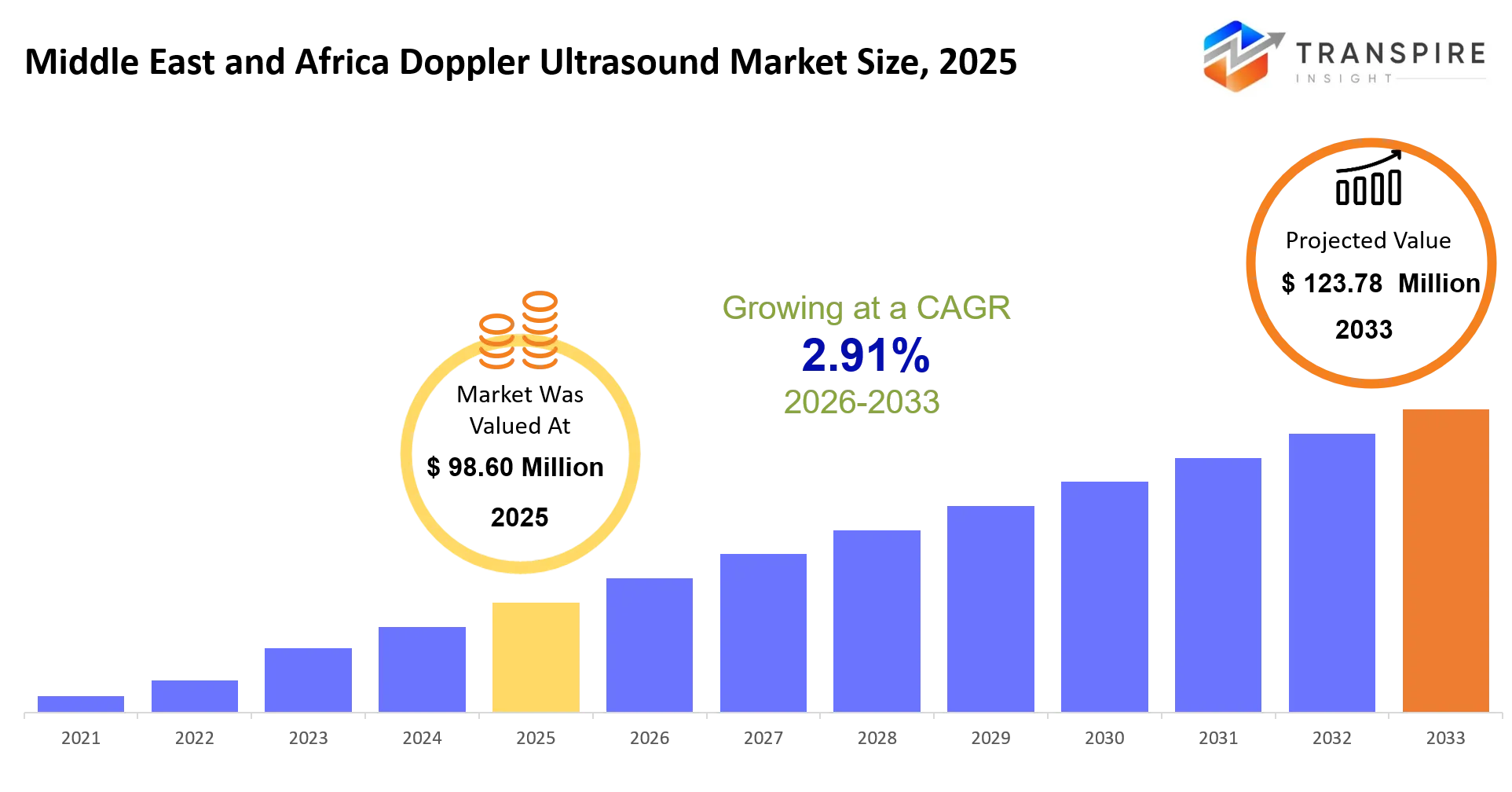
- Middle East and Africa Doppler Ultrasound Market Size 2025: USD 98.60 Million
- Middle East and Africa Doppler Ultrasound Market Size 2033: USD 123.78 Million
- Middle East and Africa Doppler Ultrasound Market CAGR: 2.91%
- Middle East and Africa Doppler Ultrasound Market Segments: By Product Type (Color Doppler, Power Doppler, Spectral Doppler, Continuous Wave Doppler, Others); By Application (Cardiology, Obstetrics & Gynecology, Radiology, Vascular Imaging, Others); By End User (Hospitals, Diagnostic Centers, Clinics, Others); By Portability (Portable, Cart-based, Others)
To learn more about this report,  Download Free Sample Report
Middle East and Africa Doppler Ultrasound Market Summary
The Middle East and Africa Doppler Ultrasound Market was valued at USD 98.60 Million in 2025. It is forecast to reach USD 123.78 Million by 2033. That is a CAGR of 2.91%over the period.
Doppler ultrasound systems help clinicians gauge blood flow, flag vascular irregularities, review cardiac function, and also track fetal health, all without doing invasive moves. In the Middle East and Africa, these systems really matter a lot in hospitals, diagnostic centers, and even outpatient clinics, where fast cardiovascular and obstetric check ups allow teams to decide sooner and reduce the need for more expensive imaging methods.
Over the last five years, the market has kind of shifted in a more structural direction, toward portable plus point of care ultrasound configurations, so imaging can happen closer by to where the patient is. That change picked up speed after healthcare capacity expansion initiatives and diagnostic modernization programs came in, mostly following the COVID 19 period. During the pandemic, it became obvious that accessible scanning tools are needed, tools that can support decentralized care and cut down on patients having to move around inside facilities.
Today, the market growth seems to mirror ongoing spending in cardiovascular disease treatment, maternal healthcare programs, and digital imaging infrastructure. Since healthcare providers are chasing faster diagnostics, and more efficient work flows, Doppler ultrasound adoption is moving past tertiary hospitals, straight into regional clinics, plus also into dedicated diagnostic centers. This broader rollout helps with equipment refresh schedules, it boosts day to day clinical activity, and it keeps producing steady revenue streams across both well established healthcare systems and newer emerging markets.
Key Market Insights
- The Middle East and Africa Doppler Ultrasound Market keeps expanding,mostly because cardiovascular disease screening programs are ramping up across Gulf states and big African healthcare hubs.
- In 2025, Saudi Arabia and the UAE together brought in an estimated 35%+ regional revenue share,as healthcare capital expenditure stayed high and steady.
- On the other hand, portable Doppler ultrasound systems made up nearly 40% of the new installations in 2025,which hints at a broader shift toward point of care diagnostics,not just hospital based workflows.
- Color Doppler still looks like the main product lane,holding about 45% market share in 2025 because clinicians can use it in so many situations. Meanwhile, Spectral Doppler is emerging as the fastest growing product category from 2026 to 2033, mainly tied to tighter, more advanced cardiac assessment needs.
- If we talk about applications, cardiology holds the largest chunk with roughly 38% share in 2025, backed by growing investments in non-invasive cardiovascular diagnostics, and fewer hurdles for early detection.
- Diagnostic centers also show one of the stronger adoption rates, as healthcare systems expand outpatient imaging capacity across city markets,even in areas that were previously under-served.
- Big players like GE HealthCare, Philips, Siemens Healthineers, Canon Medical, and Mindray are strengthening their regional presence through product upgrades, distribution partnerships,and ongoing service support.
- Plus, artificial intelligence assisted imaging tools are gradually improving workflow efficiency,helping reduce the scan interpretation time inside advanced healthcare facilities.
- Overall, the Middle East and Africa Doppler Ultrasound Market is pushing into underserved regions where portable platforms make diagnostic coverage more affordable and easier to sustain.
What are the Key Drivers, Restraints, and Opportunities in the Middle East and Africa Doppler Ultrasound Market?
The strongest growth driver is that cardiovascular and vascular disease diagnostics are expanding across the region, kind of steadily. Healthcare systems have ramped up investment in early disease detection since non-communicable diseases take up a larger and larger share of healthcare expenditure. Because of that gradual shift toward preventive care and routine vascular assessment, hospitals as well as diagnostic centers have been motivated to upgrade their imaging capabilities. Doppler ultrasound is a relatively cost-effective way to assess blood flow disorders, so adoption starts looking economically attractive versus more resource-intensive imaging alternatives. In practice, this trend feeds into equipment buys, software upgrades, and maintenance revenues.
Still, the biggest structural barrier is limited access to skilled sonographers and imaging specialists, not just in one area but broadly. Training programs take a lot of time and money, while workforce shortages tend to hit both urban hospitals and rural facilities. Even when clinics get advanced Doppler systems, they really deliver maximum value only when experienced professionals operate them, people who can interpret complex vascular findings properly. That limitation slows utilization, delays deployment, and ends up suppressing potential revenue generation, even if the technology itself is sitting there and ready.
Portable and AI-assisted Doppler imaging feels like a real opportunity for the next phase of market development. Governments and private healthcare providers are growing community based healthcare services, especially in under served regions. Compact systems with automated measurement tools can improve diagnostic access where specialist resources remain thin, or sometimes basically missing.
What Has the Impact of Artificial Intelligence Been on the Middle East and Africa Doppler Ultrasound Market?
Artificial intelligence is increasingly reshaping Doppler ultrasound workflows in a way that feels almost every where now, across healthcare facilities in the Middle East and Africa. New imaging platforms lean on AI algorithms to automate small but important steps like vessel identification blood flow measurements, and image refinement, and this ends up cutting down exam times plus results often feel more consistent from one operator to the next. In real use automated workflow tools let clinicians complete vascular and cardiac assessments more quickly, so imaging departments can handle a higher patient volume without a matching increase in staff.
Alongside that, machine learning models are getting better at predictive support, kind of like a second set of eyes. More advanced software studies blood flow patterns and vascular metrics to help surface cardiovascular irregularities early, as well as circulatory disorders. With AI supported decision aids, suspicious regions can be highlighted, urgent cases can rise in the queue faster, and clinical interpretation gets a useful assist — but it’s not a replacement. Taken together, these capabilities can translate into better diagnostic accuracy, quicker reporting turnaround, and a more efficient use of the resources that are already available.
There are also day to day operational gains that people actually notice: fewer repeat scans, steadier equipment utilization, and imaging protocols that are more standardized overall. Several manufacturers have added AI assisted automation into their higher end ultrasound platforms, aiming to lift productivity and keep workflow efficiency from feeling so fragile.
Still, adoption is not fully smooth. Integration costs can be a real obstacle, digital infrastructure in some facilities is limited, and there may be too few local datasets to train the algorithms properly. On top of that, differences in patient demographics and imaging routines can shift outcomes, so model performance may drift, which makes large-scale rollout across diverse environments more complicated than it first looks.
Key Market Trends
- Since 2021, portable Doppler ultrasound rollouts have bumped up by more than 20% in emergency departments and outpatient settings, kind of a steady climb that doesn't stop.
- From 2022 to 2026, AI enabled image optimization tools kind of drifted from top-tier premium systems into mid level platforms, more people could actually afford them.
- Cardiovascular screening initiatives then expanded across Gulf countries, raising Doppler use rates in public healthcare facilities, with less friction than before.
- At the same time, hospitals pushed faster replacement cycles for older ultrasound fleets. Digital systems now make up over 60% of new buys in several major markets which is pretty telling .
- Philips, GE HealthCare, and Siemens Healthineers also extended regional training efforts to help with ongoing sonographer shortages, and that matters because the tech alone isnt enough.
- Telemedicine integration really gathered pace after 2020, supporting remote image review and specialist consultation services, so images go out and eyes come back.
- Power Doppler adoption rose too, clinicians were looking for stronger visualization of low flow vascular structures and microvascular circulation, basically seeing what was harder to notice.
- Meanwhile, private diagnostic centers started expanding advanced vascular imaging services, to keep up with growing chronic disease monitoring demands.
- On the purchasing side, procurement is leaning more toward multi application platforms—able to cover cardiology, radiology, and obstetric examinations without needing separate setups each time.
- Finally, regional distributors tightened their partnerships with global manufacturers, improving equipment availability and after sales service coverage, so downtime stays lower.
Middle East and Africa Doppler Ultrasound Market Segmentation
By Product Type
Color Doppler kinda has a big role, because having a visual picture of blood flow really helps with routine exams in a bunch of clinical areas. When you can see it clearly, clinicians are more likely to spot circulatory issues, so the approach stays pretty common during cardiovascular and vascular checks. Then there’s Power Doppler, it’s been getting more interest for catching slow or low-velocity flow, because it tends to be more sensitive especially in smaller vessels and in complicated tissue structures . As specialized diagnostic procedures keep growing, this will keep pushing wider adoption at healthcare facilities.
Spectral Doppler still matters a lot too, mainly for figuring out blood flow velocity and also giving richer hemodynamic detail that assists clinical decision making . Continuous Wave Doppler is the one that really supports cardiac evaluations when you need high-velocity blood flow measurement, it’s kind of essential there. Beyond that, there are other product types that focus on advanced or specialized Doppler technologies, made for particular diagnostic needs. With ongoing product development, you generally expect broader capabilities, better image quality, and more efficiency across different medical imaging environments.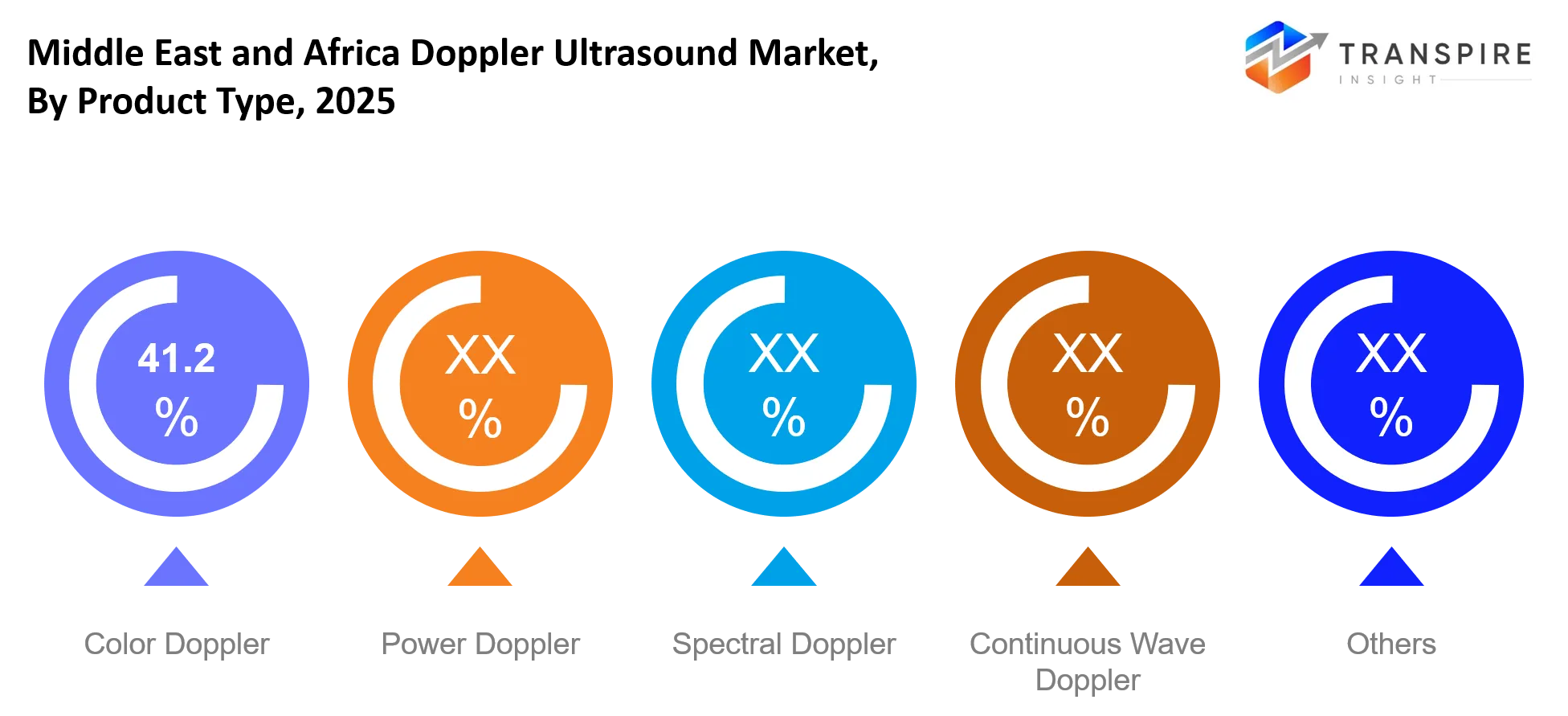
To learn more about this report, Download Free Sample Report
By Application
Cardiology counts as a big application area, since analysis of blood flow and checks of heart function are still kind of essential parts of cardiovascular care. Doppler ultrasound systems help with diagnosing valve disorders, circulatory irregularities, and also that cardiac performance evaluation, you know. In Obstetrics & Gynecology the focus is more on tracking fetal development, plus looking at maternal blood circulation through pregnancy. Using these tools in prenatal care programs in a steady way should keep supporting demand for this segment, going forward .
Radiology departments tend to lean on Doppler imaging to sort of add to traditional diagnostic exams and give extra clinical details linked to the motion of blood. Vascular Imaging stays crucial when it comes to spotting arterial disease, venous issues, and circulation related complications tied to long term health conditions. Other uses also pop up in emergency medicine, musculoskeletal evaluation, and more specialized clinical investigations. If diagnostic services expand across healthcare networks, then the use of these applications should grow in the coming years as well.
By End User
Hospitals make up a big slice of overall utilization, mainly because they have access to advanced imaging infrastructure and they can offer a wide range of clinical services, kind of all in one place. Because patient volumes are large and diagnostic needs are all over the map, demand for Doppler ultrasound systems stays quite strong. Diagnostic Centers also matter here, they usually provide specialized imaging services and help with referral based examinations from physicians and healthcare providers. If investment in diagnostic capabilities stays steady, the whole category should keep growing, or at least it will get a noticeable boost.
Clinics are also leaning into more compact imaging solutions these days, those that can support faster diagnosis and smoother patient management in outpatient environments. With better accessibility and operational flexibility, Doppler systems end up looking especially attractive for smaller healthcare facilities. Beyond that, other end users include ambulatory care facilities, research institutions, and specialty healthcare providers. As healthcare coverage keeps expanding and services become more diversified, that should open up extra opportunities across these kinds of settings as well.
By Portability
Portable systems have seen pretty notable adoption, because mobility really helps point-of-care diagnostics inside hospitals, clinics, emergency departments, and also in remote healthcare locations. With those compact designs, clinicians can carry out evaluations fast, and there’s less reliance on separate dedicated imaging rooms. Battery performance keeps getting better, and so do image quality as well as the connectivity features, so that whole mix should keep pushing acceptance upward for portable devices. And the growing emphasis on more decentralized healthcare delivery is also a pretty direct reason demand stays strong in this segment.
Cart-based systems still show up everywhere in hospitals and diagnostic centers, especially when people need advanced imaging abilities, plus longer and more extended examination workflows. Those bigger configurations often add extra functionality, which matters for complex cardiovascular radiology, and vascular assessments. Other categories that are more “in-between” include hybrid setups and specialty configurations that are designed for specific clinical environments. Overall, ongoing technological progress, along with shifting healthcare delivery models will shape how adoption moves next, across essentially all portability segments.
What are the Key Use Cases Driving the Middle East and Africa Doppler Ultrasound Market?
Cardiovascular assessment stays kinda the main use scenario that’s really pushing adoption across the region, yes. In day to day care, clinicians rely on Doppler imaging to look at blood flow, spot arterial blockages, judge valve issues, and generally keep an eye on circulatory wellbeing. The high prevalence of cardiovascular disease means these checks are a pretty routine piece of clinical work, so the equipment gets used a lot, quite consistently.
Beyond that, more uses keep showing up in maternal healthcare and vascular disease care. Obstetric specialists use Doppler systems to review fetal circulation and flag pregnancy related complications, and vascular imaging is also used for tracking diabetes associated circulatory problems. Diagnostic centers are investing more and more in these services, mainly to handle the rising referral numbers, which keeps growing.
Newer use cases are starting to form around point-of-care emergency diagnostics and tele ultrasound assisted remote healthcare programs. Portable units, with AI assisted tools built in, are helping clinicians make faster assessments in rural clinics and in underserved communities. Adoption is still somewhat early for these things, but the long term upside looks strong across the forecast period, overall.
|
Report Metrics |
Details |
|
Market size value in 2025 |
USD 98.60 Million |
|
Market size value in 2026 |
USD 101.26 Million |
|
Revenue forecast in 2033 |
USD 123.78 Million |
|
Growth rate |
CAGR of 2.91%from 2026 to 2033 |
|
Base year |
2025 |
|
Historical data |
2021 - 2024 |
|
Forecast period |
2026 - 2033 |
|
Report coverage |
Revenue forecast, competitive landscape, growth factors, and trends |
|
Regional scope |
Middle East and Africa (Saudi Arabia, United Arab Emirates, South Africa, Rest of Middle East and Africa) |
|
Key company profiled |
GE HealthCare, Siemens Healthineers, Philips, Canon Medical, Fujifilm, Samsung Medison, Mindray, Esaote, Hitachi, Konica Minolta, Butterfly Network, Hologic, Carestream, BK Medical, Chison |
|
Customization scope |
Free report customization (country, regional & segment scope). Avail customized purchase options to meet your exact research needs. |
|
Report Segmentation |
By Product Type (Color Doppler, Power Doppler, Spectral Doppler, Continuous Wave Doppler, Others); By Application (Cardiology, Obstetrics & Gynecology, Radiology, Vascular Imaging, Others); By End User (Hospitals, Diagnostic Centers, Clinics, Others); By Portability (Portable, Cart-based, Others) |
Which Regions are Driving the Middle East and Africa Doppler Ultrasound Market Growth?
The Gulf area kind of leads, mainly because huge healthcare modernization programs are rolling out, and there is a lot of money going into medical infrastructure. Saudi Arabia and the United Arab Emirates keep pushing forward with advanced diagnostic capability, both from public projects and private efforts. Strong healthcare spending then keeps helping with routine equipment change outs and also the uptake of more premium imaging technologies. Plus, the well-known hospital networks, along with specialist care centers, kind of lock in the regional leadership.
South Africa is still a key player, but it grows in a different way, a bit more measured. Here the market performance is backed by already built diagnostic networks, private healthcare investment, and imaging infrastructure that is relatively mature. Because utilization is consistent across hospitals and independent diagnostic centers, revenue stays fairly steady. Healthcare providers then tend to emphasize operational efficiency gains and technology upgrades, instead of going for major infrastructure expansion.
Meanwhile, the wider African region shows the most noticeable growth momentum. Investments aimed at better healthcare access, growth in diagnostic services, and the rising adoption of portable imaging systems have opened up new lanes. International funding programs and public health initiatives keep backing equipment deployment in places that still don’t get served enough. Overall, these shifts are expected to bring attractive expansion opportunities for manufacturers and investors between 2026 and 2033.
Who are the Key Players in the Middle East and Africa Doppler Ultrasound Market and How Do They Compete?
Competition is still kinda moderately concentrated, with global imaging makers holding a fair chunk of the regional money. In practice the big rivalry comes down to tech innovation and image quality, then workflow efficiency, service support and those regional distribution networks. The well-known manufacturers keep trying to defend share via product differentiation and digital imaging abilities, while newer suppliers tend to push harder on affordability, plus more localized support models, which is pretty normal.
GE HealthCare leans into AI-assisted imaging workflows, and also more advanced cardiovascular applications. When they integrate automation tools, it tends to raise productivity and keep diagnostic results more consistent, so clinicians can deal with the growing patient counts. Siemens Healthineers differentiates with premium imaging performance, along with advanced software tools, and they also maintain strong ties with big healthcare systems. They keep putting money into digital healthcare integration, and that helps their competitive position stay solid.
Philips puts extra weight on connected care solutions and workflow optimization across hospital settings. The whole idea is that imaging systems integrate with clinical information platforms, and that supports operational efficiency in a smoother way. Canon Medical, meanwhile, competes on image clarity, ergonomic system design, and broad clinical versatility, not just one narrow area. Mindray keeps expanding through cost-effective platforms that are tuned for emerging healthcare markets, mixing affordability with feature sets that are getting bigger over time.
Across the wider market, strategic regional partnerships, distributor expansion, and ongoing technology upgrades remain pretty central as growth strategies, even if the exact mix differs by region.
Company List
- GE HealthCare
- Siemens Healthineers
- Philips
- Canon Medical
- Fujifilm
- Samsung Medison
- Mindray
- Esaote
- Hitachi
- Konica Minolta
- Butterfly Network
- Hologic
- Carestream
- BK Medical
- Chison
Recent Development News
"In February 2026, GE HealthCare launched the Voluson Expert Series ultrasound platform with enhanced AI-assisted imaging capabilities. The launch strengthened workflow automation and diagnostic precision across women's health and vascular imaging applications.https://www.gehealthcare.com
"In November 2025, Siemens Healthineers expanded its ultrasound portfolio with new AI-powered workflow enhancements integrated into ACUSON systems. The development improved examination efficiency and supported broader adoption of advanced Doppler imaging technologies.https://www.siemens-healthineers.com
"In April 2025, Philips introduced next-generation ultrasound solutions featuring automated measurement and image optimization tools. The launch enhanced diagnostic productivity and supported healthcare providers seeking improved imaging efficiency.https://www.philips.com
What Strategic Insights Define the Future of the Middle East and Africa Doppler Ultrasound Market?
The market feels like it is moving toward decentralized, digitally connected diagnostic imaging, supported by portable systems, AI-driven workflows, and wider access to preventive health services. The main current under all this shift is basically the need to provide high quality diagnostics outside the big-city hospital belt, while also keeping healthcare spending in check and raising day to day clinical efficiency, without too much friction.
There is also a risk that is less in your face, like workforce limitations. Even when the tech keeps getting more sophisticated, shortages of trained sonographers and imaging specialists can make utilization rates crawl, and that in turn can lower the return on all that equipment money. Having the technology around does not automatically mean clinicians will adopt it in real life.
A pretty notable emerging opportunity is AI-enabled portable Doppler imaging for community healthcare networks across Africa. As automation improves and telemedicine infrastructure becomes more reliable, it creates a setup for broader deployment in underserved areas where specialist capacity is still scarce. In other words, conditions are aligning, not just the devices.
Market participants should think about building training ecosystems at the same time as they expand product lines. Money put into clinician education, remote support capabilities, and AI-assisted workflow tools will probably be more meaningful as a competitive edge than hardware differentiation by itself during the next stage of market growth.
Middle East and Africa Doppler Ultrasound Market Report Segmentation
By Product Type
- Color Doppler
- Power Doppler
- Spectral Doppler
- Continuous Wave Doppler
- Others
By Application
- Cardiology
- Obstetrics & Gynecology
- Radiology
- Vascular Imaging
- Others
By End User
- Hospitals
- Diagnostic Centers
- Clinics
- Others
By Portability
- Portable
- Cart-based
- Others
Frequently Asked Questions
Find quick answers to common questions.
The Expected Middle East and Africa Doppler Ultrasound Market size for the Market will be USD 123.78 Million in 2033.
Key Segments for the Middle East and Africa Doppler Ultrasound Market are By Product Type (Color Doppler, Power Doppler, Spectral Doppler, Continuous Wave Doppler, Others); By Application (Cardiology, Obstetrics & Gynecology, Radiology, Vascular Imaging, Others); By End User (Hospitals, Diagnostic Centers, Clinics, Others); By Portability (Portable, Cart-based, Others).
Major Middle East and Africa Doppler Ultrasound Market Players are GE HealthCare, Siemens Healthineers, Philips, Canon Medical, Fujifilm, Samsung Medison, Mindray, Esaote, Hitachi, Konica Minolta, Butterfly Network, Hologic, Carestream, BK Medical, Chison.
The Current Middle East and Africa Doppler Ultrasound Market size is USD 98.60 Million in 2025.
The Middle East and Africa Doppler Ultrasound Market CAGR is 2.91% from 2026 to 2033.
- GE HealthCare
- Siemens Healthineers
- Philips
- Canon Medical
- Fujifilm
- Samsung Medison
- Mindray
- Esaote
- Hitachi
- Konica Minolta
- Butterfly Network
- Hologic
- Carestream
- BK Medical
- Chison
About the Authors

Pankaj Ghogare Patil
I am Pankaj Ghogare Patil, a Senior Research Analyst at Transpire Insight, specializing in the Pharmaceutical, Chemicals & Materials, Healthcare IT, and Biotechnology industry. My expertise lies in conducting comprehensive market research, analyzing industry trends, evaluating competitive landscapes, and translating complex data into actionable insights. At Transpire Insight, I closely follow emerging technologies, regulatory developments, and market innovations to create accurate, well-researched, and informative content that helps businesses and professionals make informed decisions. I am committed to producing credible, evidence-based articles that reflect industry best practices while making technical topics accessible and valuable for a broad audience.

Chakradhar Khansole
Chakradhar serves as the Research Director at Transpire Insight, bringing over 8 years of experience in technology, innovation, and strategic market intelligence. He specializes in transforming complex market data into actionable business insights that enable organizations to make informed, growth-oriented decisions. Recognized for his strategic vision and analytical expertise, Chakradhar leads high-impact research initiatives, delivering comprehensive market assessments, competitive intelligence, and forward-looking industry analysis.
Recently Published Reports
-
Jul 2026
Alopecia Treatment Market
Alopecia Treatment Market Size, Share & Analysis Report By Disease Type (Alopecia Areata, Cicatricial Alopecia, Traction Alopecia, Alopecia Totalis, Androgenetic Alopecia, Alopecia Universalis, and Other Disease Types), By Treatment Type (Topical Treatments, Oral Medications, Injectable Therapies, and Hair Transplantation), By Gender (Male, and Female), By Distribution Channel (Hospitals and Clinics, Retail Pharmacies, and Online Retailers), and Geography (North America, Europe, Asia-Pacific, Middle East and Africa, South and Central America), 2021 - 2031
-
Jul 2026
Medical Ultrasound Probe Market
Medical Ultrasound Probe Market Size, Share & Analysis Report By Type (Linear Type, Convex Type, Endocavitary Probe, Phased Array/Cardiac Probe, Transesophageal (TEE) Probe, and Others), By Application (Ophthalmology, Cardiology, Musculoskeletal, Oncology, Obstetrics & Gynecology, General Imaging, and Others), By End User (Hospitals & Clinics, Diagnostic Centers, Ambulatory Surgical Centers, and Others), and Geography (North America, Europe, Asia-Pacific, Middle East and Africa, South and Central America), 2021 – 2031
-
May 2026
Biosimilars Market
Biosimilars Market By Product Type (Monoclonal Antibodies, Recombinant Hormones, Erythropoietin, G-CSF, Others), By Indication (Oncology, Autoimmune Diseases, Blood Disorders, Diabetes, Others), By Manufacturing Type (In-House Manufacturing, Contract Manufacturing), By Distribution Channel (Hospital Pharmacies, Retail Pharmacies, Online Pharmacies), By Industry Analysis, Size, Share, Growth, Trends, and Forecasts 2021-2033
-
Apr 2026
Gastrointestinal Endoscopy Market
Gastrointestinal Endoscopy Market By Type (Rigid Gastrointestinal Endoscope, Flexible Gastrointestinal Endoscopes, Disposable Gastrointestinal Endoscope), By Procedure Type (Colonoscopy, Gastroscopy, Duodenoscopy, Enteroscopy, Flexible Sigmoidoscopy, Others), By Application (Diagnosis, Treatment), By End-Users (Hospitals, Ambulatory Surgical Centers, Specialty Clinics, Laboratories, Others), By Industry Analysis, Size, Share, Growth, Trends, and Forecasts 2021-2033