
Middle East and Africa Diet and Nutrition Apps Market Size & Forecast:
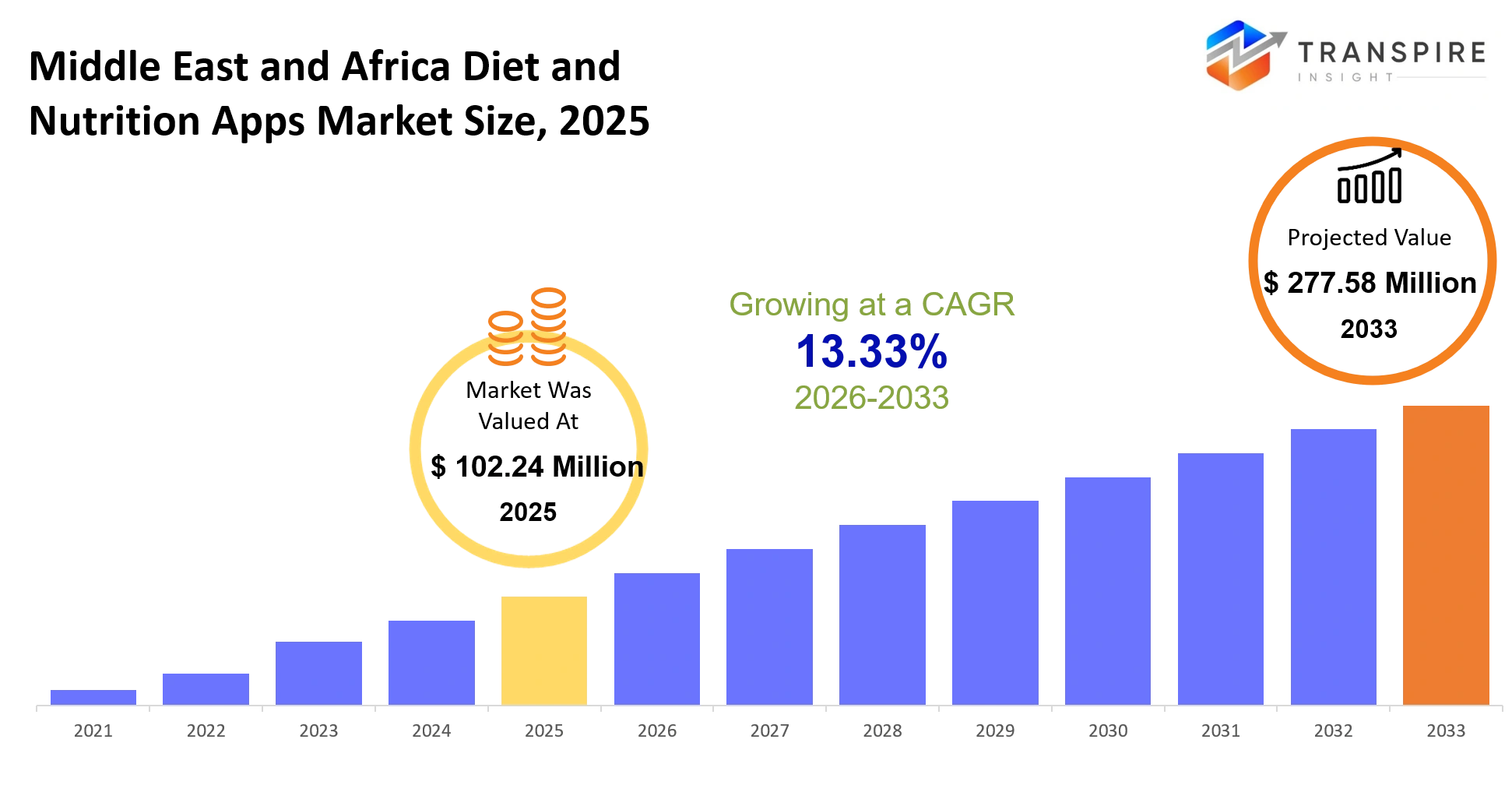
- Middle East and Africa Diet and Nutrition Apps Market Size 2025: USD 102.24 Million
- Middle East and Africa Diet and Nutrition Apps Market Size 2033: USD 277.58 Million
- Middle East and Africa Diet and Nutrition Apps Market CAGR: 13.33%
- Middle East and Africa Diet and Nutrition Apps Market Segments: By Platform (Android, iOS, Web-based, Others); By Function (Calorie Tracking, Weight Loss, Meal Planning, Fitness Integration, Others); By Revenue Model (Subscription, Freemium, Paid, Others); By End User (Adults, Athletes, Elderly, Others)
Middle East and Africa Diet and Nutrition Apps Market Summary
The Middle East and Africa Diet and Nutrition Apps Market was valued at USD 102.24 Million in 2025. It is forecast to reach USD 277.58 Million by 2033. That is a CAGR of 13.33% over the period.
The Middle East and Africa Diet and Nutrition Apps Market kinda helps people manage what they eat day to day, track their health objectives, and build more personalized nutrition plans through phone apps, plus connected devices too. Basically it handles a bunch of rising lifestyle -related health troubles by making diet monitoring feel like real-time digital behavior tracking, and it hits especially hard in cities where chronic conditions keep showing up more often.
Over the past 3–5 years, this space moved away from manual calorie logging , and went more toward AI powered personalized suggestions that are backed by behavioral analytics. One big structural change is the wearable ecosystem integration, meaning continuous health data syncing rather than only using a standalone app. The COVID-19 pandemic kinda acted like a spark here, speeding up adoption as people got more focused on immunity, weight management, and remote health monitoring.
This transition also pushed subscription based revenue harder , since users now expect predictive insights instead of static tracking. So app providers are investing a lot into personalization engines and localized diet guidance, all to help with both retention and monetization.
Key Market Insights
- Middle East and Africa diet and nutrition apps market size is growing, pretty rapidly honestly, mainly because lifestyle disease prevalence keeps increasing and more people are jumping into digital wellness.
- In the MEA market, the GCC countries seem to pull the most traction, with almost 38% of the regional share in 2025, which is kind of the big headline there.
- Africa is showing up as the fastest-growing chunk, mostly because smartphone penetration is going past 55% around key urban clusters in 2025.
- When you look at money, subscription based platforms take the lead , sitting at nearly 46% of revenue thanks to those premium AI nutrition coaching models.
- After that, freemium apps still grab the second-largest share, they help with user acquisition in price sensitive markets where people won’t commit right away.
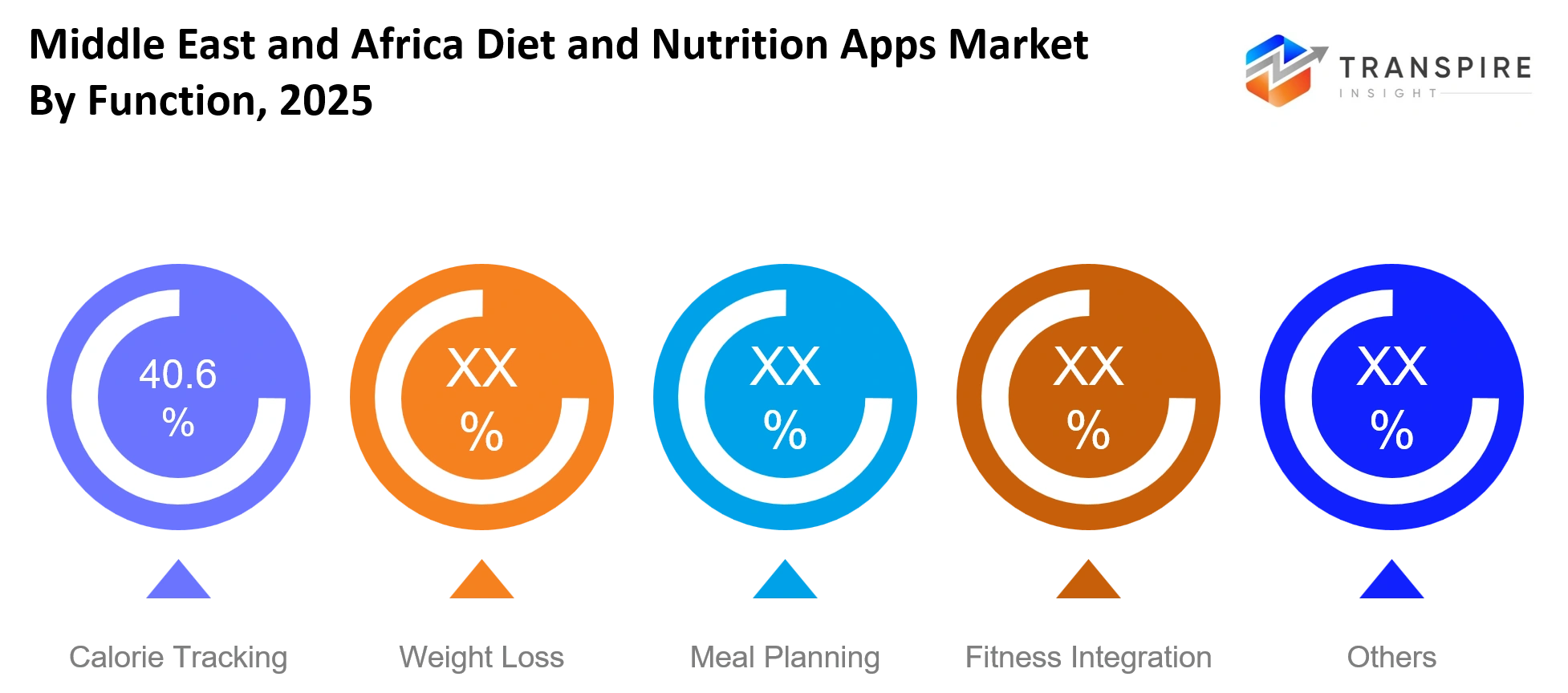
- For features, calorie tracking stays the dominant function, with more than 40% usage share among active users worldwide.
- Also, weight-loss focused applications are growing the quickest, linked to rising obesity rates across urban MEA populations.
- On the audience side, adults are the main end users, giving nearly 60% of total engagement across platforms.
- Meanwhile, athletes and fitness users are emerging quickly, especially since wearable integrated nutrition tracking demand keeps rising.
- In terms of competition, companies like MyFitnessPal , Noom , and HealthifyMe are pushing hard using AI coaching plus regional customization to stand out in the Middle East and Africa space.
What are the Key Drivers, Restraints, and Opportunities in the Middle East and Africa Diet and Nutrition Apps Market?
The primary driver in the Middle East and Africa Diet and Nutrition Apps Market is basically the quick rise of metabolic and lifestyle-related disorders, so it kind of pushes people toward ongoing digital food monitoring. At the same time hospitals and wellness providers are more and more adding app driven nutrition tracking into prevention style care, which helps keep users around longer, and it also improves subscription uptake. Plus, smartphone first healthcare adoption across urban areas has made monetization stronger, because users are leaning on real time calorie tracking and AI meal planning, instead of going through the old school consultations now and then.
One big restraint is that digital infrastructure is uneven across several African economies, and that matters a lot. When connectivity is inconsistent, and smartphones are still too expensive for many, people can not really use these apps steadily. This structural obstacle slows subscription growth, and also makes it harder to roll out advanced capabilities, like live AI coaching or wearable synchronization too. So, in many underserved regions, firms end up with more customer churn, and they see a lower lifetime value, overall.
A key opportunity is found in partnerships with telecom operators and insurers, where nutrition apps can be bundled with mobile health services. In places like UAE and Saudi Arabia, they are already piloting insurance linked wellness programs, where users get benefits for tracked dietary conduct. This bundling approach can unlock premium revenue streams in a more direct way, and it can broaden adoption among middle-income users during the forecast period.
What Has the Impact of Artificial Intelligence Been on the Middle East and Africa Diet and Nutrition Apps Market?
Artificial intelligence is kind of reshaping the Middle East and Africa diet and nutrition apps market, because it enables super personalized diet planning, based on how a person behaves, what biometrics say, and what consumption patterns look like. Stuff like Samsung Health and Google Fit, they integrate machine learning models that watch calorie intake, activity levels, and sleep records, then they push out adaptive nutrition recommendations. In a way this cuts down the boring manual logging effort and it helps user retention, since the guidance becomes more or less automated.
Then there is predictive analytics, which is being used more and more to anticipate weight movement, nutrient shortfalls, and even adherence risks. After that, apps can proactively tune the meal plans instead of waiting for users to struggle. Overall this can make engagement work better, and in subscription-based wellness platforms it can raise user adherence rates by an estimated 20–30% . Also AI helps operations run more smoothly, reducing the reliance on human nutrition coaches and scaling digital consults with less friction.
Still, AI adoption hits limits when the data is inconsistent, and when health tracking inputs are fragmented across different wearable ecosystems. In many MEA areas, connectivity is spotty, device penetration is uneven, so the real time model accuracy takes a hit. That in turn, restricts full scale predictive deployment, and makes it harder to rely on the same performance everywhere.
Key Market Trends
- Between 2022–2025 the Middle East and Africa Diet and Nutrition Apps Market kind of shifted away from manual tracking, and more toward AI based predictive nutrition planning, it felt like a smoother path.
- In 2023 wearable integration also bumped up app engagement by almost 35% across urban MEA audiences, which was bigger than many expected.
- Then subscription pricing models, not just changed a little but really expanded when people started leaning toward premium health coaching services in 2024–2025.
- In the GCC region, digital health regulations got tightened a bit, and that actually improved consumer trust, and helped app adoption rise too.
- Africa, especially in urban areas, saw about 55% growth in smartphone penetration, which accelerated nutrition app downloads pretty noticeably.
- Also, the behavioral coaching features brought in by Noom seemed to lift retention rates in 2025.
- On the workflow side, AI meal planning tools cut down the time spent on manual calorie logging by around 40% across major platforms.
- Meanwhile the fitness ecosystem convergence got stronger, because apps began integrating with Apple and Google health ecosystems, and the sync felt more seamless.
- In the UAE, corporate wellness programs boosted enterprise adoption of nutrition tracking platforms as well.
- Finally, data driven personalization turned into a real competitive differentiator among the leading nutrition app providers, and that’s where the gap showed up.
Middle East and Africa Diet and Nutrition Apps Market Segmentation
By Platform
The Middle East and Africa Diet and Nutrition Apps Market kind of looks like Android leads first, mainly because smartphone penetration is pretty high in a lot of these emerging economies. Android based applications make it easier for more people to jump in with less fuss, plus there is generally lower device dependency overall, so it spreads faster. The iOS side seems to monetize a bit stronger, especially where the GCC user base is more premium and willing to pay more, so subscriptions and similar setups tend to bring steadier returns. Meanwhile, web platforms do their own thing, they back up enterprise wellness programs and also medical integrations in corporate settings , so the workflow feels more organized.
Android-based applications keep staying the top distribution route because they are affordable and easy to scale across markets. iOS apps often generate higher revenue per user, mainly driven by subscription-heavy business models and a more concentrated payer demographic. Web based solutions are usually chosen for hospitals and corporate wellness systems that need structured health dashboards and reporting views. Other options can include wearable-native applications, which support real-time nutrition tracking , and integrate with connected devices for continuous data capture.
By Function
Middle East and Africa Diet and Nutrition Apps Market, calorie tracking still kinda stays dominant because lifestyle disease management needs are rising—so yeah, people stick with it. Weight loss applications are growing fast as obesity concerns show up more across urban populations. Meal planning tools also get more traction when users start leaning into structured dietary routines. Fitness integration expands too through wearable synchronization and general health ecosystem connectivity, it all kind of meshes together.
Calorie tracking applications, they basically give the baseline user engagement across most demographics. Weight loss solutions often keep users around longer because the goal based tracking systems feel more direct. Meal planning features improve personalization via AI driven dietary suggestions, which sounds simple but it helps. Fitness integration makes nutrition behavior connect with physical activity monitoring systems, so the whole thing feels more continuous.
By Revenue Model
The Middle East and Africa Diet and Nutrition Apps Market kinda shows a clear tilt toward subscription model dominance, mainly because there’s demand for premium AI coaching, and well people want that continuous guidance or whatever. Meanwhile freemium models help a lot with large-scale user growth in cost-sensitive areas, since you can try first, then upgrade later. Paid applications still hang on in a niche way, especially across professional health markets where more specialized diet plans matter. There are also other setups like hybrid enterprise wellness contracts, where companies bundle coaching plus tracking.
Overall, subscription-based models rule the revenue stream since they deliver steady value over time, not just a one-off experience. Freemium tends to win conversion by using advanced feature unlocking strategies, and it brings in users through free access plus gradual upsells. Paid models usually serve specialized diet programs and more professional users. And then enterprise agreements expand as corporate wellness initiatives pick up traction, even when the adoption cycle is slower.
By End User
Middle East and Africa Diet and Nutrition Apps Market—adults are kind of the main users now, mostly because metabolic health concerns are getting more attention. Some athletes use these apps too, but they go for advanced tracking so they can optimize performance and all that. For elderly users, adoption is going up as well, since chronic disease management really needs steady monitoring and support. Then there are the other users, like adolescents doing fitness tracking behaviors, sort of learning along the way.
Adults stay as the largest consumer base, linked to lifestyle related health challenges that keep showing up. Athletes usually want high precision nutrition tracking that connects to performance goals, not just general meals. Elderly users often benefit from simplified diet monitoring systems, because it has to be practical. There are also emerging user groups, driven by school based wellness awareness programs.
What are the Key Use Cases Driving the Middle East and Africa Diet and Nutrition Apps Market?
Core use cases in the Middle East and Africa Diet and Nutrition Apps Market sort of revolve around daily calorie logging and weight management, where people actually keep an eye on what they eat to rein in obesity and metabolic related conditions. That part tends to drive the most demand, mainly because lifestyle diseases are getting more common in city areas, so users are kind of looking for structure.
On the expansion side, apps are increasingly bundling fitness tied nutrition planning, especially for gym goers and athletes, plus corporate wellness initiatives that aim at improving employee well-being. These examples mostly line up with subscription led business models and wearable synced ecosystems, which makes the whole thing feel more seamless for end users.
Then there are newer, emerging uses like AI supported medical nutrition therapy guidance for diabetic patients and customized meal or diet planning that connects with telehealth consultations. This combination hints at solid future uptake across many healthcare organizations, and it seems like adoption could grow pretty fast once integrations mature.
|
Report Metrics |
Details |
|
Market size value in 2025 |
USD 102.24 Million |
|
Market size value in 2026 |
USD 115.63 Million |
|
Revenue forecast in 2033 |
USD 277.58 Million |
|
Growth rate |
CAGR of13.33% from 2026 to 2033 |
|
Base year |
2025 |
|
Historical data |
2021 - 2024 |
|
Forecast period |
2026 - 2033 |
|
Report coverage |
Revenue forecast, competitive landscape, growth factors, and trends |
|
Regional scope |
Middle East and Africa (Saudi Arabia, United Arab Emirates, South Africa, Rest of Middle East and Africa) |
|
Key company profiled |
MyFitnessPal, Noom, Lifesum, Lose It!, Cronometer, Fitbit, WW, Yazio, HealthifyMe, Samsung Health, Google Fit, Apple Health, BetterMe, Fooducate, Ate |
|
Customization scope |
Free report customization (country, regional & segment scope). Avail customized purchase options to meet your exact research needs. |
|
Report Segmentation |
By Platform (Android, iOS, Web-based, Others); By Function (Calorie Tracking, Weight Loss, Meal Planning, Fitness Integration, Others); By Revenue Model (Subscription, Freemium, Paid, Others); By End User (Adults, Athletes, Elderly, Others) |
Which Regions are Driving the Middle East and Africa Diet and Nutrition Apps Market Growth?
The Gulf Cooperation Council area seems to be leading the Middle East and Africa Diet and Nutrition Apps Market , mostly because they have a solid digital health backbone and a bunch of government-backed wellness pushes. Places like UAE and Saudi Arabia are really pushing preventive healthcare, often via those national digital transformation programs. Also, the high smartphone uptake along with higher premium healthcare spending kind of locks in broader app adoption. When apps plug into insurance linked wellness programs, that also keeps people using them longer , not just for a one time try.
North Africa looks like a stable secondary market. It grows because digital health adoption is inching forward and telecom infrastructure keeps getting better. In a way, it’s a different flavor than the GCC’s more premium driven ecosystem. Here the momentum comes more from affordability and freemium style models. Steady investments in mobile connectivity plus healthcare digitization help it deliver consistent but moderate revenue. Most users, they mainly start with calorie tracking and simple nutrition monitoring bits.
Sub Saharan Africa is the one moving the quickest. This is tied to rapid smartphone growth, and mobile internet access that has been getting better after 2023. Telecom upgrades recently , plus affordable Android devices, have really widened the reachable user pool. On top of that, the expanding youth segment and urbanization trends are boosting interest in fitness and nutrition tracking apps. All of this hints at strong entry chances for low cost solutions, especially AI light options, going through 2033.
Who are the Key Players in the Middle East and Africa Diet and Nutrition Apps Market and How Do They Compete?
The Middle East and Africa Diet and Nutrition Apps Market is still kinda moderately fragmented, and the rivalry is mainly pushed by personalization technology, how well they keep users engaged, and subscription pricing models that vary a lot. Bigger global players go head to head with regional apps by upgrading their AI coaching and wearable integrations, you know, more seamless support. In the end, who leads market share depends a lot on retention , not just on getting new users in the door.
For example, MyFitnessPal and Lose It! tend to chase large user numbers with simplified calorie logging systems, pretty straightforward. HealthifyMe differentiates by rolling out localized diet plans that are tuned for Indian and MEA audiences , which helps them go deeper in those regions. Noom leans into behavioral science models, aiming for better long-term adherence and less churn over time. On the other hand, Fitbit combines hardware with software ecosystems, so it feels like a closed loop health tracking experience. Together, these moves drive the differentiation using AI, tailored experiences, and some ecosystem expansion that makes switching less likely.
Company List
- MyFitnessPal
- Noom
- Lifesum
- Lose It!
- Cronometer
- Fitbit
- WW
- Yazio
- HealthifyMe
- Samsung Health
- Google Fit
- Apple Health
- BetterMe
- Fooducate
- Ate
Recent Development News
In January 2025, Noom, Inc. entered a strategic partnership with several Gulf-based digital health platforms to expand behavioral weight management services across the UAE and Saudi Arabia. The collaboration enabled localized AI-driven coaching programs tailored to regional dietary habits and chronic disease profiles, strengthening digital wellness adoption in the Middle East.https://www.prnewswire.com
In early 2026, HealthifyMe Wellness Private Limited expanded its AI nutrition coaching platform “Ria” into additional Middle East markets, strengthening partnerships with regional healthcare providers. This expansion improved access to personalized diet planning tools for users managing diabetes and obesity, accelerating subscription growth in urban MEA populations.https://en.wikipedia.org/wiki/HealthifyMe
What Strategic Insights Define the Future of the Middle East and Africa Diet and Nutrition Apps Market?
The Middle East and Africa Diet and Nutrition Apps Market is kind of moving toward ecosystem driven digital health platforms where nutrition, fitness, and medical tracking, sort of blend into one unified wellness system. The growth story is also getting shaped more and more by AI personalization plus connections to insurance and health care providers, not just separate standalone consumer usage, like people downloading apps for a short while and then leaving.
There’s a less visible risk, though. Data fragmentation across multiple devices can get messy, and regulatory rules around health data privacy are getting tighter. That combination may slow down the cross platform personalization features. In the end it might cap how fast global app providers scale when they enter markets with stricter compliance requirements and higher scrutiny.
At the same time, there’s an emerging opening. Insurer-backed nutrition programs and government led preventive health initiatives are showing traction, especially in GCC countries. Players that manage to integrate with telehealth systems and wearable ecosystems may get a more solid structural advantage. A key strategic recommendation would be to invest in localized AI models that adapt to regional dietary patterns. That can boost retention and improve monetization across the different and diverse MEA populations.
Middle East and Africa Diet and Nutrition Apps Market Report Segmentation
By Platform
- Android
- iOS
- Web-based
- Others
By Function
- Calorie Tracking
- Weight Loss
- Meal Planning
- Fitness Integration
- Others
By Revenue Model
- Subscription
- Freemium
- Paid
- Others
By End User
- Adults
- Athletes
- Elderly
- Others
Frequently Asked Questions
Find quick answers to common questions.
The expected Middle East and Africa Diet and Nutrition Apps Market size for the market will be USD 277.58 Million in 2033.
Key segments for the Middle East and Africa Diet and Nutrition Apps Market are By Platform (Android, iOS, Web-based, Others); By Function (Calorie Tracking, Weight Loss, Meal Planning, Fitness Integration, Others); By Revenue Model (Subscription, Freemium, Paid, Others); By End User (Adults, Athletes, Elderly, Others).
Major Middle East and Africa Diet and Nutrition Apps Market players are MyFitnessPal, Noom, Lifesum, Lose It!, Cronometer, Fitbit, WW, Yazio, HealthifyMe, Samsung Health, Google Fit, Apple Health, BetterMe, Fooducate, Ate.
The Middle East and Africa Diet and Nutrition Apps Market size is USD 102.24 Million in 2025.
The Middle East and Africa Diet and Nutrition Apps Market CAGR is 13.33% from 2026 to 2033.
- MyFitnessPal
- Noom
- Lifesum
- Lose It!
- Cronometer
- Fitbit
- WW
- Yazio
- HealthifyMe
- Samsung Health
- Google Fit
- Apple Health
- BetterMe
- Fooducate
- Ate
About the Authors

Chetan Dhatrak
I’m Chetan Dhatrak, a Senior Research Analyst at Transpire Insight, specializing in the Consumer Goods, Foods and Beverages industry. I focus on analyzing market trends, consumer behavior, competitive landscapes, and industry developments to deliver accurate, data-driven insights. My research at Transpire Insight is built on credible sources and in-depth analysis, helping businesses and readers better understand market dynamics, emerging opportunities, and evolving consumer preferences. I’m committed to creating reliable, well-researched content that supports informed decision-making and reflects the latest developments in the consumer goods and food & beverage sectors.

Chakradhar Khansole
Chakradhar serves as the Research Director at Transpire Insight, bringing over 8 years of experience in technology, innovation, and strategic market intelligence. He specializes in transforming complex market data into actionable business insights that enable organizations to make informed, growth-oriented decisions. Recognized for his strategic vision and analytical expertise, Chakradhar leads high-impact research initiatives, delivering comprehensive market assessments, competitive intelligence, and forward-looking industry analysis.
Recently Published Reports
-
Apr 2026
Baby Infant Formula Market
Baby Infant Formula Market Size, Share & Analysis Report By ype (Infant Milk, Follow On Milk, Specialty Baby Milk, Growing-Up Milk), By Ingredient (Carbohydrate, Fat, Protein, Minerals, Vitamins, and Others), By Product Form (Powder, Liquid, and Ready-to-feed), By Distribution Channels (Supermarket/Hypermarket, Specialty Store, Pharmacies, Online Retail, and Others), and Geography (North America, Europe, Asia-Pacific, Middle East and Africa, South and Central America), 2021 - 2031
-
Apr 2026
Edible Insects for Animal Feed Market
Edible Insects for Animal Feed Market Size, Share & Analysis Report By Type (Insect Powder, Insect Meal, Insect Bar, Insect Paste, Insect Oil, and Others), By Insect Type (Beetles, Cricket, Caterpillar, Hymenoptera, Orthoptera, Tree Bugs, and Others), By Application (Livestock, Pet Food, and Aquaculture), By Livestock Type (Poultry, Swine, and Others), and Geography (North America, Europe, Asia-Pacific, Middle East and Africa, South and Central America), 2021 - 2031
-
Apr 2026
Food Industry Disinfection and Bacterial Control Market
Food Industry Disinfection and Bacterial Control Market Size, Share & Analysis Report By Type (Chemical Disinfectants, Physical Disinfectants, and Biocides and Antimicrobials), By Application (Food Processing Equipment Surface Disinfection, Food Preparation Areas Surface Disinfection, Storage Areas Surface Disinfection, Anti-microbial Coatings Food Preservation, and Preservative Solutions Food Preservation), By End User (Meat and Poultry Processing, Dairy Processing, Seafood Processing, Bakery and Confectionery, Restaurants and Commercial Kitchens, and Food Service Providers), By Sales Channel (Online, Offline), and Geography (North America, Europe, Asia-Pacific, Middle East and Africa, South and Central America), 2021 - 2031
-
May 2026
Freeze Dried Food Market
Freeze Dried Food Market Size, Share & Analysis Report By Product Type (Fruits, Vegetables, Freeze-Dried Dairy Products, Freeze-Dried Meat and Seafood, Freeze-Dried Pet Food, and Prepared Meal), By Nature (Organic, and Conventional), By Form (Powdered, Granules, and Diced), By End Use (Breakfast Cereals, Dairy Products, Bakery & Confectionery, Nutritional Bars & Supplements, Powdered Beverages, Snacks, and Retail (Household)), and Geography (North America, Europe, Asia-Pacific, Middle East and Africa, South and Central America), 2021 - 2031