

South Korea Low-Carb Diet Market Size & Forecast:
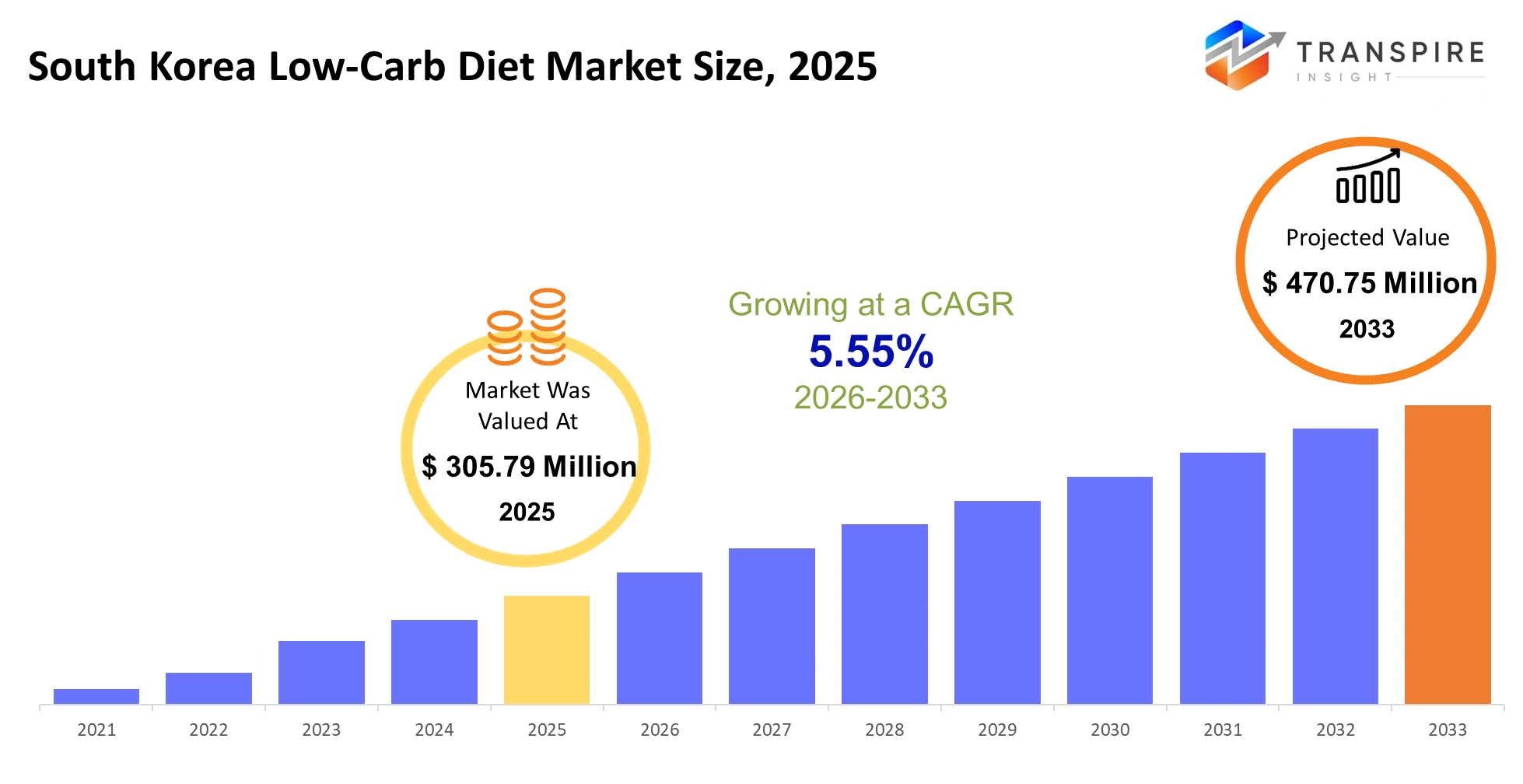
- South Korea Low-Carb Diet Market Size 2025: USD 305.79 Million
- South Korea Low-Carb Diet Market Size 2033: USD 470.75 Million
- South Korea Low-Carb Diet Market CAGR: 5.55%
- South Korea Low-Carb Diet Market Segments: By Product Type (Low-carb Snacks, Keto Foods, Sugar-free Beverages, Protein-rich Foods, Meal Replacements, Others); By Distribution Channel (Supermarkets, Convenience Stores, Online Retail, Specialty Stores, Others); By Application (Weight Management, Diabetes Management, Fitness Nutrition, Healthy Lifestyle, Others); By End User (Adults, Fitness Enthusiasts, Diabetic Consumers, Others); By Ingredient Type (Plant-based Ingredients, High-protein Ingredients, Natural Sweeteners, Others).
To learn more about this report,  Download Free Sample Report
South Korea Low-Carb Diet Market Summary
The South Korea Low-Carb Diet Market was valued at USD 305.79 Million in 2025. It is forecast to reach USD 470.75 Million by 2033. That is a CAGR of 5.55% over the period.
South Korea's low-carb diet market kinda moved past those niche weight-loss programs, and now it shows a wider role in preventive nutrition, metabolic health management, and also premium food retailing. Like in practice, the market helps people who want to manage obesity, blood sugar fluctuations, and health risks that come from a sedentary lifestyle, by using reduced carbohydrate intake alongside higher-protein meal formats. Food manufacturers, convenience store chains, and health-oriented beverage brands are then responding by reworking their products so they fit everyday eating routines, not just those temporary dieting cycles.
Over the last 3 to 5 years, the market has changed in a more structural way from imported specialty products toward locally developed low-carb ready meals, protein snacks, and functional drinks designed around Korean eating patterns. This shift accelerated after the COVID-19 period , when home-based lifestyles and digital health tracking pushed consumers to keep closer watch on calorie intake and metabolic indicators. So, retailers and food companies are now earning higher margins via premium nutritional positioning. At the same time subscription meal platforms and convenience channels keep expanding use beyond the fitness crowd, into mainstream office workers, and yes also aging populations.
Key Market Insights
- The Seoul metro area pretty much dominated the South Korea Low-Carb Diet Market, with around 48% market share in 2025, mostly because folks there spent more on pricier foods.
- Gyeonggi Province showed up as the fastest growing regional market during 2026–2031, driven by more health minded retail setups, plus subscription meal services that keep popping up, all the time.
- Busan and Incheon also logged solid momentum in low-carb packaged foods, largely as convenience store reach widened and e-commerce distribution kept expanding.
- Urban households contributed more than 65% of the industry revenue in 2025, because working professionals are leaning toward ready-to-eat nutritional items more and more, than before.
- Functional low-carb beverages are expected to be the quickest segment to grow through 2031 ,as adoption rises among older consumers who are trying to manage sugar intake.
- Weight management applications kind of dominated the market with about 42% share in 2025, and this was supported by more people joining digital fitness ecosystems.
- Meanwhile blood sugar management showed up as the fastest growing application category during the forecast window, mostly because metabolic health worries keep rising.
- Sports nutrition apps also expanded pretty quickly, as gyms, fitness apps, and influencer-led diet routines started giving more visibility to protein-focused products.
- Preventive healthcare nutrition became a big demand driver for middle-aged consumers who want longer term dietary lifestyle changes.
- Adults aged 25–45 made up the leading end-user group, holding more than 50% share in the South Korea Low-Carb Diet Market during 2025.
What are the Key Drivers, Restraints, and Opportunities in the South Korea Low-Carb Diet Market?
The strongest driver behind the South Korea low-carb diet market seems to be the quick blending of metabolic health management into mainstream food retail, plus those digital wellness platforms. After the COVID-19 stretch, this trend really picked up, because people started monitoring calorie intake , glucose swings, and body composition using fitness apps and wearable devices. Food companies then adjusted by rebuilding their items with more protein, less sugar, and added functional ingredients that fit everyday eating rather than short-term “diet phases”. As convenience stores and online grocery sites rolled out bigger premium low-carb shelf spaces, producers also found more leverage on pricing. They could then lean into recurring money streams via subscription meal plans and nutrition suggestions that feel somewhat tailored.
On the other side, the biggest restraint is the kind of expensive cost structure that comes with low carb product making and ingredient sourcing, like things can get wobbly fast. Protein concentrates , alternative sweeteners, and those specialized fibers are still priced higher than regular carbohydrate based inputs. So affordability gets shaky for the mass audience, kind of right away. This issue is kind of structural too. The local supply of functional nutrition ingredients is still growing, while producers that depend on imported raw materials get hit by currency volatility and extra logistics spend. So, low-carb adoption stays mostly with urban middle to upper-income consumers. that keeps wider revenue growth from moving evenly across regional markets .
A big chance is in AI led personalized nutrition services that tie in with low carb meal ecosystems, kinda like it all connects. In South Korea , the digital healthcare setup is already pretty advanced and mobile commerce is strong so the conditions feel right for platforms that merge biometric tracking with tailored dietary directions. Businesses that put money into integrated wellness subscriptions and smart nutrition analytics can, if they play it well, open up the market's next phase and keep people sticking around longer term.
What Has the Impact of Artificial Intelligence Been on the South Korea Low-Carb Diet Market?
Artificial intelligence and advanced digital technologies are somehow reshaping the South Korea low-carb diet market by way of product personalization, inventory control and consumer retention across food retail and digital wellness ecosystems, which yes, is pretty important. Food manufacturers and subscription meal platforms now often run AI- driven demand forecasting systems, to sort of “read” purchasing behavior, notice seasonal consumption rhythms, and keep an eye on metabolic health trends in real time. That way producers can automate inventory planning and then fine-tune low carb meal production, which in turn reduces food waste and makes delivery feel a bit more efficient, especially for ready to eat items.
On top of that, machine learning models are getting folded into nutrition applications that watch glucose responses, calorie intake, and day to day dietary routines using wearable devices plus smartphone platforms. These setups generate personalized meal suggestions based on biometric readouts, so people can stay consistent over the long run with low carbohydrate diets. Several digital nutrition platforms in South Korea also say they’ve seen better subscription sticking rates, and higher repeat buying, after rolling out AI-based recommendation engines along with predictive health analytics.
In practice, retailers tend to get clearer sales forecasting and fewer stock imbalances. Food companies then use those gains to aim premium products better and to improve customer lifetime value, at least in their reporting. Still, AI adoption has a big bottleneck because health data integration remains fragmented across platforms. Many smaller food brands don’t have access to large-scale biometric datasets, so algorithm performance drops, and the rollout of really tailored nutrition services moves more slowly.
Key Market Trends
- From 2021 and into 2025, convenience store chains sort of expanded low-carb ready meal shelves by more than 30% across major urban retail spots, and it felt pretty fast.
- CJ CheilJedang and Pulmuone also moved product development toward high-protein Korean-style meals, instead of using imported ketogenic formulations after 2022 started, or after that time.
- Subscription based nutrition platforms got more attention post COVID-19, because a lot of office workers started grabbing recurring low carb meal deliveries for day to day dietary management, kind of on repeat .
- AI powered nutrition apps kept getting more common between 2023 and 2025, and they were also folding in glucose tracking along with biometric analytics which helped boost the precision of those personalized meal suggestions.
- Meanwhile domestic manufacturers reduced how much they leaned on imported keto products after the supply chain disruptions in 2021, since it made the pricing and inventory vulnerabilities pretty obvious.
- Functional low-carb beverages really took off after 2023, as older consumers leaned more toward blood sugar management, rather than chasing quick weight reduction strategies.
- E-commerce channels captured a larger slice of premium dietary food sales since 2022, mainly due to targeted health marketing campaigns that were driven by influencers, and they pushed the products again and again.
- Smaller regional food brands entered the market through localized low-carb bakery items, tailored to Korean taste preferences and portion sizes, so it ended up feeling more specific.
South Korea Low-Carb Diet Market Segmentation
By Product Type:
Low-carb snacks keep a strong position because people tend to want fast, easy food options that match their everyday routine, without really piling on excess carbohydrates. In this group you’ll find nuts, crunchy chips, bars, plus baked items made with protein heavy, or fiber driven ingredients. Demand is likely to keep climbing as convenience food habits rise, especially across city areas.
Keto foods are getting more attention too, mainly because meal choices are shifting toward controlled carbohydrate intake. Sugar-free beverages are also moving forward , since beverage companies keep releasing drinks with reduced sugar and functional add ins. Protein-rich foods and meal replacements help busy consumers aim for steadier nutrition during office hours or while training. There are also low-carb sauces, desserts, and bakery items, that are basically shaped for people who want a lifestyle centered way of eating.
By Distribution Channel:
Supermarkets stay a key sales channel because shoppers like to compare products right there, and also enjoy wider selections in a single place. Big retail chains continue to stretch their shelf space for health oriented, premium dietary offerings. Convenience stores remain relevant as well, because quick buying behavior directly supports ready-to-eat low-carb snack sales.
Online retail channels are growing steadily as digital grocery shopping becomes more common among working people. E-commerce platforms offer subscription meal plans, personalized product suggestions , and the whole home delivery convenience. Specialty stores lean toward premium health foods and imported dietary goods, while other avenues include pharmacies and wellness focused shops that also support purchasing nutritional foods.
By Application:
Weight management apps keep gaining, mostly because a lot of people go along with controlled eating plans, to keep body balance and trim down calorie intake, even when their days are busy. Low carb food products make meal planning easier too, they usually show less sugar and more protein content, it’s kind of the “simple track” for many users. This space is still pulling in office workers and middle-aged consumers who care about long-term dietary habits, not just quick results.
Diabetes management applications are also rising, since cutting back on carbohydrate intake can support blood sugar control in everyday meals. At the same time, fitness nutrition stays relevant because more people are joining gyms and doing sports related activities. Healthy lifestyle applications are spreading beyond only fitness circles, and other options pop up as well, like preventive nutrition and age related wellness management, yes it feels broader than before.

To learn more about this report, Download Free Sample Report
By End User:
Adults are the largest consumer group, mostly because working populations prefer convenient dietary products that match modern schedules and quicker eating habits, not slow routines. A lot of consumers pick low carb foods for ongoing nutrition planning, rather than treating it as a temporary dieting routine. Urban households keep fueling demand through steady repeat purchases.
Fitness enthusiasts make up another big end user segment because protein focused foods fit exercise goals and body management needs. Diabetic consumers add a lot too, particularly as dietary tracking becomes more common among older populations. Other end users include students and health minded individuals who want balanced food alternatives for daily routines, without too much hassle.
By Ingredient Type:
Plant-based ingredients are getting more visible nowadays, food companies keep developing products that mix fewer carbohydrates with vegetable based nutrition sources kind of like a balancing act. Things like almond flour , soy protein, and oat fiber are already common in snacks, bakery items, and ready meals. People seem to keep choosing “cleaner labels” so this whole segment should keep getting more support.
High protein ingredients still have strong demand, mostly because manufacturers are trying to boost satiety and overall nutritional value even in low carb products. At the same time natural sweeteners are growing, since many consumers are worried about sugar intake and also about artificial ingredients. Other ingredient categories are showing up too, like dietary fibers and special formulations meant to help taste, texture, and product stability in processed foods.
What are the Key Use Cases Driving the South Korea Low-Carb Diet Market?
Weight management is still kind of the main reason people in South Korea pick low-carb food products. Like, working adults and urban shoppers tend to gravitate toward ready-to-eat meals, protein snack items, and sugar-controlled drinks that help keep calories in check without really throwing off their hectic daily schedule. Because of this convenience stores, plus subscription meal services, keep seeing solid repeat buys through that exact angle.
Diabetes management and also fitness nutrition are growing steadily too, especially among middle-aged consumers and people who are into training. Health-minded food brands are rolling out low-carbohydrate meal kits and protein-heavy selections that are meant for blood sugar monitoring, and also for exercise recovery. At the same time online retail marketplaces and wellness applications are making it easier for these items to reach a wider audience.
Newer use cases are starting to show up, like personalized nutrition plans that connect with wearable health devices, and preventive dietary programs for older populations. AI-assisted nutrition tracking, and tailored low-carb meal suggestions are still in the process of developing but they look like they could do very well over the long run as digital healthcare services keep expanding across South Korea.
|
Report Metrics |
Details |
|
Market size value in 2025 |
USD 305.79 Million |
|
Market size value in 2026 |
USD 322.57 Million |
|
Revenue forecast in 2033 |
USD 470.75 Million |
|
Growth rate |
CAGR of 5.55% from 2026 to 2033 |
|
Base year |
2025 |
|
Historical data |
2021 - 2024 |
|
Forecast period |
2026 - 2033 |
|
Report coverage |
Revenue forecast, competitive landscape, growth factors, and trends |
|
Country scope |
South Korea |
|
Key company profiled |
Atkins Nutritionals, Nestlé, Kellogg’s, General Mills, Danone, Unilever, Herbalife, Quest Nutrition, Perfect Keto, SlimFast, Bulletproof, Keto and Co, The Kraft Heinz Company, PepsiCo, Amway. |
|
Customization scope |
Free report customization (country, regional & segment scope). Avail customized purchase options to meet your exact research needs. |
|
Report Segmentation |
By Product Type (Low-carb Snacks, Keto Foods, Sugar-free Beverages, Protein-rich Foods, Meal Replacements, Others); By Distribution Channel (Supermarkets, Convenience Stores, Online Retail, Specialty Stores, Others); By Application (Weight Management, Diabetes Management, Fitness Nutrition, Healthy Lifestyle, Others); By End User (Adults, Fitness Enthusiasts, Diabetic Consumers, Others); By Ingredient Type (Plant-based Ingredients, High-protein Ingredients, Natural Sweeteners, Others). |
Which Regions are Driving the South Korea Low-Carb Diet Market Growth?
Seoul metropolitan region is leading the South Korea low-carb diet market a bit, because premium food retail networks, digital wellness services, and higher disposable incomes are all concentrated in the capital area. People in Seoul tend to adopt personalized nutrition plans sooner, partly due to strong exposure to fitness applications, subscription meal platforms, and preventive healthcare programs. And yes, big food companies, plus convenience store chains, often roll out new products in Seoul first, before they go wider nationally. So basically this mix of technology platforms, premium grocery retailers, and health-minded consumers is still keeping the region in that top spot.
Now Busan and the southeastern region contribute in a steady way to market revenue, mainly from consistent retail demand and a solid working-age consumer base tied to industrial and corporate employment centers. But unlike Seoul, this area leans less on “premium lifestyle” branding and more on practical ready-to-eat dietary products, pushed through convenience stores and supermarkets. Local consumers keep buying in a fairly regular pattern, especially protein-rich snacks and sugar-controlled beverages, made for day to day use. Because of that, food manufacturers treat the region like a dependable volume market, demand patterns staying stable even when economic uncertainty shows up.
Gyeonggi Province is kind of emerging as the fastest growing regional market, largely because suburban population growth is happening quickly and online grocery penetration is getting bigger and bigger. After 2023, the rise of AI based nutrition platforms and home delivery meal subscriptions, basically pushed low-carb product adoption across residential areas right around Seoul. Retail chains and wellness startups have been increasing investments in localized distribution centers and digital marketing campaigns aimed at younger families or office workers, so the overall momentum stays active. All of this should open up strong opportunities for new entrants and health focused food brands looking for long term expansion between 2026 and 2033.
Who are the Key Players in the South Korea Low-Carb Diet Market and How Do They Compete?
South Korea’s low-carb diet market still looks fairly fragmented, because the big food manufacturers are basically in the same arena as wellness startups, digital nutrition platforms and a few specialized health-food brands, kind of like different groups all trying to win at once. These days, competition isn’t only about pricing anymore, companies are leaning harder into nutritional personalization, convenience-first delivery models, and localized product development. The established food groups defend their market share by moving quickly on product reformulation and by expanding retail distribution, while the smaller entrants feel more disruptive with niche keto meals, AI-supported nutrition tracking, and direct-to-consumer subscription services. In the end, product differentiation is where the fight sits most often: higher protein content, lower sugar levels, and functional health positioning.
CJ CheilJedang plays it differently, they emphasize product innovation tied to Korean eating habits, not so much strict imported ketogenic formats. They stand out with protein-rich ready meals and low-sugar processed options that are built for convenience-store and supermarket distribution. Their strong domestic retail connections help them launch products across the country faster, plus they get better shelf presence than smaller wellness brands, which matters a lot. Pulmuone meanwhile has carved out a competitive angle through plant-based low-carb products, plus a clean-label ingredient approach that tends to attract health-focused urban consumers.
Nongshim is kinda expanding via high-protein snack creation and localized flavor tuning, aimed at younger folks who want practical dietary alternatives, not too complicated. Lotte Wellfood is leaning hard into convenience retail reach and a stream of functional snack innovations, so it can lock in those repeat buys. Nestlé meanwhile stands apart with nutrition research strength and digital wellness partnerships that help deliver more personalized eating guidance across the premium consumer space.
Company List
- Atkins Nutritionals
- Nestlé
- Kellogg’s
- General Mills
- Danone
- Unilever
- Herbalife
- Quest Nutrition
- Perfect Keto
- SlimFast
- Bulletproof
- Keto and Co
- The Kraft Heinz Company
- PepsiCo
- Amway
Recent Development News
In September 2025, Nudge Healthcare (KetoSunsaeng brand) launched “RealMize Low-Sugar Strawberry Jam.” The company introduced a low-carbohydrate jam sweetened with allulose, erythritol, and monk fruit extract, targeting health-conscious consumers seeking sugar-free spreads, strengthening its position in Korea’s expanding low-carb functional food segment.
Source: https://www.asiae.co.kr/
In July 2025, BGF Retail (CU convenience store) launched MyNormal low-sugar ready meal products including konjac-based low-carb noodles. The rollout included low-sugar bibimbap and konjac mulnaengmyeon, expanding CU’s health-focused “healthy pleasure” HMR lineup to meet rising demand for reduced-carb convenience foods in South Korea.
Source https://www.asiae.co.kr/en/
What Strategic Insights Define the Future of the South Korea Low-Carb Diet Market?
South Korea's low-carb diet market is kind of shifting toward a more integrated preventive healthcare, plus personalized nutrition style, over the next five to seven years. In the meantime, growth is going to come less from just standalone packaged diet items, and more from digital health ecosystems that blend biometric tracking, AI-supported dietary guidance, and subscription based food delivery. This whole change is likely going to nudge food manufacturers into acting more like health service providers , especially since older consumers are looking for longer term metabolic health keeping, not only quick weight reduction plans.
There is also a sneaky risk though, connected to raw material concentration and pricing swings. It can be tied to imported protein isolates, specialty fibers , and alternative sweeteners. If supply chain disruptions get worse, or currency fluctuations start hitting harder, manufacturers might get squeezed on margins, and that could reduce how much they can expand affordable options beyond premium urban customers. At the same time, personalized nutrition that connects with wearable healthcare tools is a real, emerging opportunity, particularly in suburban areas around Seoul where digital wellness adoption is climbing faster each year. Firms should probably invest early in localized ingredient sourcing and build data driven nutrition partnerships too, so pricing stays steadier and customer retention lasts longer.
South Korea Low-Carb Diet Market Report Segmentation
By Product Type
- Low-carb Snacks
- Keto Foods
- Sugar-free Beverages
- Protein-rich Foods
- Meal Replacements
By Distribution Channel
- Supermarkets
- Convenience Stores
- Online Retail
- Specialty Stores
By Application
- Weight Management
- Diabetes Management
- Fitness Nutrition
- Healthy Lifestyle
By End User
- Adults
- Fitness Enthusiasts
- Diabetic Consumers
By Ingredient Type
- Plant-based Ingredients
- High-protein Ingredients
- Natural Sweeteners
Frequently Asked Questions
Find quick answers to common questions.
The South Korea Low-Carb Diet Market size is USD 470.75 Million in 2033.
Key segments for the South Korea Low-Carb Diet Market are By Product Type (Low-carb Snacks, Keto Foods, Sugar-free Beverages, Protein-rich Foods, Meal Replacements, Others); By Distribution Channel (Supermarkets, Convenience Stores, Online Retail, Specialty Stores, Others); By Application (Weight Management, Diabetes Management, Fitness Nutrition, Healthy Lifestyle, Others); By End User (Adults, Fitness Enthusiasts, Diabetic Consumers, Others); By Ingredient Type (Plant-based Ingredients, High-protein Ingredients, Natural Sweeteners, Others).
Major South Korea Low-Carb Diet Market players are Atkins Nutritionals, Nestlé, Kellogg’s, General Mills, Danone, Unilever, Herbalife, Quest Nutrition, Perfect Keto, SlimFast, Bulletproof, Keto and Co, The Kraft Heinz Company, PepsiCo, Amway.
The South Korea Low-Carb Diet Market size is USD 305.79 Million in 2025.
The South Korea Low-Carb Diet Market CAGR is 5.55% from 2026 to 2033.
- Atkins Nutritionals
- Nestlé
- Kellogg’s
- General Mills
- Danone
- Unilever
- Herbalife
- Quest Nutrition
- Perfect Keto
- SlimFast
- Bulletproof
- Keto and Co
- The Kraft Heinz Company
- PepsiCo
- Amway
Recently Published Reports
-
Apr 2026
Baby Infant Formula Market
Baby Infant Formula Market Size, Share & Analysis Report By ype (Infant Milk, Follow On Milk, Specialty Baby Milk, Growing-Up Milk), By Ingredient (Carbohydrate, Fat, Protein, Minerals, Vitamins, and Others), By Product Form (Powder, Liquid, and Ready-to-feed), By Distribution Channels (Supermarket/Hypermarket, Specialty Store, Pharmacies, Online Retail, and Others), and Geography (North America, Europe, Asia-Pacific, Middle East and Africa, South and Central America), 2021 - 2031
-
Apr 2026
Edible Insects for Animal Feed Market
Edible Insects for Animal Feed Market Size, Share & Analysis Report By Type (Insect Powder, Insect Meal, Insect Bar, Insect Paste, Insect Oil, and Others), By Insect Type (Beetles, Cricket, Caterpillar, Hymenoptera, Orthoptera, Tree Bugs, and Others), By Application (Livestock, Pet Food, and Aquaculture), By Livestock Type (Poultry, Swine, and Others), and Geography (North America, Europe, Asia-Pacific, Middle East and Africa, South and Central America), 2021 - 2031
-
Apr 2026
Food Industry Disinfection and Bacterial Control Market
Food Industry Disinfection and Bacterial Control Market Size, Share & Analysis Report By Type (Chemical Disinfectants, Physical Disinfectants, and Biocides and Antimicrobials), By Application (Food Processing Equipment Surface Disinfection, Food Preparation Areas Surface Disinfection, Storage Areas Surface Disinfection, Anti-microbial Coatings Food Preservation, and Preservative Solutions Food Preservation), By End User (Meat and Poultry Processing, Dairy Processing, Seafood Processing, Bakery and Confectionery, Restaurants and Commercial Kitchens, and Food Service Providers), By Sales Channel (Online, Offline), and Geography (North America, Europe, Asia-Pacific, Middle East and Africa, South and Central America), 2021 - 2031
-
May 2026
Freeze Dried Food Market
Freeze Dried Food Market Size, Share & Analysis Report By Product Type (Fruits, Vegetables, Freeze-Dried Dairy Products, Freeze-Dried Meat and Seafood, Freeze-Dried Pet Food, and Prepared Meal), By Nature (Organic, and Conventional), By Form (Powdered, Granules, and Diced), By End Use (Breakfast Cereals, Dairy Products, Bakery & Confectionery, Nutritional Bars & Supplements, Powdered Beverages, Snacks, and Retail (Household)), and Geography (North America, Europe, Asia-Pacific, Middle East and Africa, South and Central America), 2021 - 2031