
Middle East and Africa Customer Information System (CIS) Market Summary
As per Transpire Insight Analysis the Middle East and Africa Customer Information System (CIS) Market size is estimated at USD 93.4 Million in 2025 and is anticipated to reach USD 257.2 Million by 2033, growing at a CAGR of 13.50% from 2026 to 2033.
The Middle East and Africa Customer Information System (CIS) Market, somehow helps utilities run day-to-day customer work by managing customer accounts, billing, meter data, service requests, and payment processing, plus regulatory reporting, all from one unified digital platform. In practice utilities depend on these systems to sharpen billing correctness, cut down revenue leakage ,and boost customer engagement even as electricity, water, and gas networks keep growing bigger and more complex.
In the last five years, the market has been moving away from legacy on premises setups toward cloud based and AI enabled CIS solutions. These newer approaches bring real time analytics, and more automated customer services, sometimes with smarter workflows behind the scenes. A big push also comes from national digital transformation programs across Gulf countries, and from utility modernization efforts in South Africa, that overall speeds up the switch.
The COVID-19 pandemic added another layer of urgency, utilities had to digitize customer operations more quickly. That meant remote service delivery, and self service portals became more common than before, and not only for “nice to have” reasons.
Now, as utilities roll out smart meters and start integrating renewable energy resources, modern CIS platforms feel almost required for handling massive data volumes. They support quicker decisions, and they help create new revenue streams, including software sales plus managed services, and related digital add ons.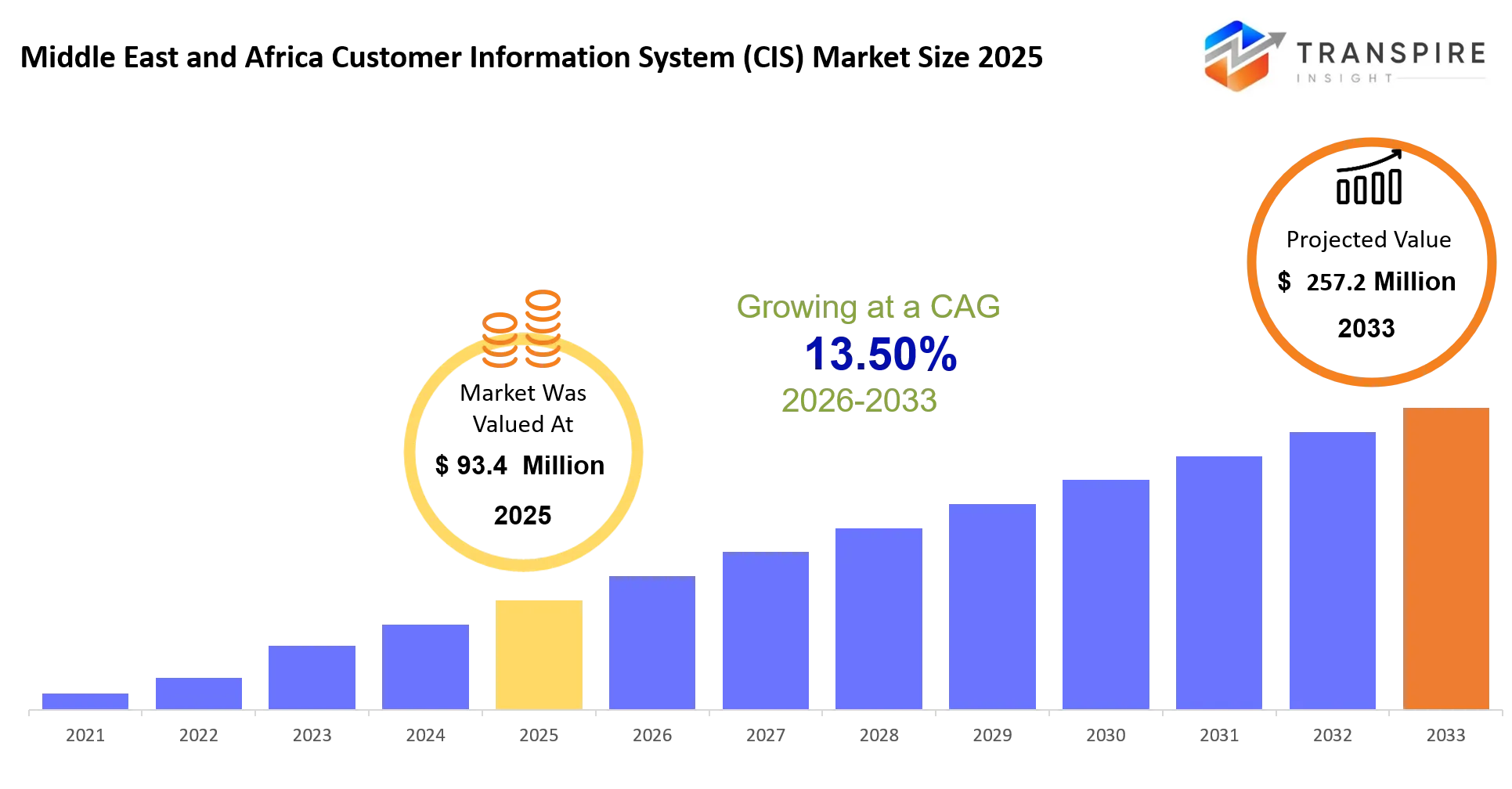
Middle East and Africa Customer Information System (CIS) Market Size & Forecast:
- Middle East and Africa Customer Information System (CIS) Market Size 2025: USD 93.4 Million
- Expected Market Value 2033: USD 257.2 Million
- Forecast CAGR: 13.50%
- Leading region in 2025:
- Fastest Growing region:
- Key Profile: Oracle, SAP, Hansen Technologies, Gentrack, IBM, Salesforce, Microsoft, Infosys, Wipro, Accenture, TCS, Open International, Itineris, Fluentgrid, Cayenta
Key Market Insights
- The Middle East and Africa Customer Information System (CIS) Market is in this sorta shift mode now, moving away from old school legacy billing systems, toward cloud native CIS platforms with AI enabled, sorta proactive customer service.
- In the regional picture , the GCC countries are still leading in a big way, taking an estimated 42% market share in 2025, mostly backed by those national digital utility modernization programs.
- South Africa is the one to watch, it’s growing the quickest through 2033 as utilities ramp up smart meter rollouts and push more customer digitalization, step by step.
- When it comes to deployment, cloud based setups are leading overall with around 58% market share. Hybrid deployment, though, shows the fastest forecast growth, mainly because utilities keep leaning into security and compliance needs, even if it means a more mixed architecture.
- On the application side, customer billing applications are close to 30% of total market revenue. After that, meter data management solutions pick up momentum across big utilities.
- Customer self service platforms are emerging as the fastest growing segment, since utilities are expanding digital payment and mobile service pathways, and trying to reduce manual touchpoints.
- Looking at end users, electric utilities drive over 55% of total demand, while renewable energy providers are the fastest moving end user category.
- Major vendors such as Oracle, SAP, IBM, Salesforce, Microsoft, and Hansen Technologies keep pushing forward via cloud innovation, AI integration and regional implementation partnerships, basically scaling their presence.
- Utilities also are increasingly coupling CIS platforms with Advanced Metering Infrastructure (AMI), Geographic Information Systems (GIS), and Customer Relationship Management (CRM) tools, for better operational efficiency, and fewer workflow bottlenecks.
- And finally, cybersecurity , regulatory compliance, plus AI driven customer analytics have become those primary competitive differentiators across the Middle East and Africa utility software industry.
What are the Key Drivers, Restraints, and Opportunities in the Middle East and Africa Customer Information System (CIS) Market?
The strongest growth driver is the modernization of the utility infrastructure, backed by national digital transformation strategies and these smart metering initiatives. In general, Governments across the Gulf Cooperation Council have invested heavily in digital utilities , to improve billing transparency, dial down non technical losses, and boost customer service performance. As millions of smart meters generate real time consumption data, utilities then need modern Customer Information Systems that can process huge volumes of information and also automate billing, outage communication, and customer engagement. With this shift, there is more spending on software licensing, implementation work, cloud subscription fees, and managed service revenues across the region too.
The main market restraint stays the integration of contemporary CIS platforms with older utility infrastructure. A lot of utilities are still running decades old billing systems, fragmented databases, plus customized applications, and those can’t be replaced quickly without creating operational risk. Migration programs usually need major capital investment, longer implementation timelines, specialized integration knowledge, and workforce training. Because of those structural issues, procurement decisions get delayed, project schedules get stretched, and short term software adoption gets dampened, especially when you look at publicly owned utilities that have tight modernization budgets.
The next growth opportunity is in mixing cloud based CIS platforms with artificial intelligence, advanced analytics, and distributed energy management. Utilities across Saudi Arabia, the UAE, and South Africa are pushing forward with renewable generation, electric vehicle infrastructure, and digital customer engagement programs.
What Has the Impact of Artificial Intelligence Been on the Middle East and Africa Customer Information System (CIS) Market?
Artificial intelligence is basically reshaping customer information platforms by automating utility operations, bolstering customer engagement, and making billing accuracy a bit more solid. AI powered virtual assistants now handle routine customer questions, payment nudges, outage alerts, and service requests in a way that usually does not need a human stepping in every time. Meanwhile machine learning models sift through historical consumption trends with smart meter data, to catch billing irregularities, flag energy theft, estimate payment risks, and raise revenue collection outcomes. In the same breath, utilities lean on predictive analytics to guess equipment failures earlier, arrange maintenance in smarter windows, and project electricity demand, so operational planning, and network reliability get a noticeable lift.
On top of that, advanced analytics back personalized tariff recommendations, automated complaint resolution, and real time customer grouping. This sort of approach helps utilities raise customer satisfaction while also trimming operating costs. When AI is integrated into CIS platforms, regulatory reporting tends to get tighter too , because operational data is watched continuously and compliance risks are spotted before they turn into critical problems. In practice, these features cut down manual workloads, raise billing precision, speed up responses, and improve service quality overall
Still, even with the benefits, broad AI adoption does not move as fast as people expect, mainly due to high integration costs and fragmented legacy utility systems. A lot of organizations keep disconnected databases with uneven data quality, which can limit how well the machine learning models perform. Then there is the shortage of AI specialists, plus cybersecurity worries tied to cloud migration, both of which slow implementation across multiple utilities in the Middle East and Africa.
Key Market Trends
- Since 2021, utilities have kind of accelerated that whole migration from old legacy billing platforms to cloud based CIS solutions, to help with scalability and disaster recovery.
- AI powered customer service has been rolling out across major utility providers, which cuts down on the manual call center workload , but also tends to make the response quality better and billing more accurate.
- Smart meter rollouts across GCC countries have really pushed the need for real time meter data management, plus automated billing platforms that can keep up.
- Oracle, SAP, IBM, Microsoft, and Salesforce have kept expanding their cloud utility portfolios since 2022, bringing embedded analytics, automation, and cybersecurity capabilities together.
- Utilities increasingly link CIS platforms with CRM, GIS, AMI and enterprise asset management systems, mainly to improve operational visibility ,in day to day work.
- Mobile self service applications have replaced the more traditional customer interaction channels, letting people pay faster , do digital onboarding sooner, and track services with less friction.
- Cybersecurity investment has become a bigger procurement priority, as utilities try to safeguard critical customer information and the cloud hosted billing infrastructure.
- Renewable energy integration has also nudged utilities toward more flexible CIS platforms that can handle dynamic pricing and distributed energy resources.
- Managed services have gained traction, because utilities want specialized expertise , while also trying to reduce long term operational complexity and infrastructure costs.
- Strategic partnerships between software vendors, cloud providers, and regional system integrators, have in turn shortened deployment timelines and improved localization capabilities.
Middle East and Africa Customer Information System (CIS) Market Segmentation
By Component
Software kind of becomes the basic stuff behind digital customer operations, it really sits in the middle of billing, account management, payment processing, and even day to day customer communication. Services, yeah, help sharpen the whole execution quality via actual project work and then the long term kind of operational support that keeps things running. Then consulting lets utilities take a look at what infrastructure already exists, decide on an appropriate platform setup, and line up digital transformation plans, maybe with a bit more structure. System Integration is where customer information platforms get tied together with smart meters , enterprise apps, payment gateways, plus geographic information systems so the data can move smoothly, without much fuss.
Support & Maintenance keeps everything safe, stable, and compliant through ongoing updates, troubleshooting odd issues, and ongoing performance monitoring. Managed Services cut down on the operational workload because the platform administration, and the technical management is handled under service agreements. Analytics Solutions turn customer and operational information into practical business insights, and those insights end up improving planning and revenue management. Other offerings usually include specialized customization , migration activities, training sessions, and value added solutions, all built around specific operational needs that don’t fit neatly into the usual boxes.
By Deployment
Cloud based deployment keeps growing, mainly because scalable infrastructure , less hardware investment, and the fact that remote accessibility helps overall utility modernization. Meanwhile, On-Premise deployment still matters a lot for organizations that want direct control of their infrastructure, and also need very strict internal security rules. Hybrid deployment is sort of a middle ground—local infrastructure stays in place, but cloud resources are used too , so teams get more flexibility for progressive modernization, without having to replace everything right away. Then there’s SaaS delivery which makes software easier to reach via subscription models, and it also cuts down on installation and ongoing maintenance responsibilities.
Private Cloud deployment helps companies with tighter regulatory requirements and heavier data protection needs, because it provides dedicated computing environments. Public Cloud, on the other hand, supports quicker rollouts, more elastic resource allocation, and typically lower operating costs for many utility providers. Multi-Cloud strategies also show up, improving business continuity by spreading workloads among several cloud providers, instead of leaning on just one vendor. Other options exist too, like customized deployment environments that are tailored for particular operational workflows and compliance demands.
By Application
Customer Billing is still the biggest application, mostly because right billing helps revenue collection so much , and also keeps customers feeling good. Meter Data Management handles what smart meters send back, then it makes consumption analysis feel dependable, so the billing work runs smoother. Customer Relationship Management is what takes care of communication, complaint resolution, and that general engagement with customers, across different service channels. Service Order Management sort of acts like the planner, it organizes installation requests, maintenance tasks, and it also helps coordinate the field workforce so service arrives faster and with less confusion.
Outage Management, meanwhile, helps utilities tell people about service interruptions, give restoration updates, and share maintenance schedules in a more efficient way. Revenue Management boosts financial results by trimming billing mistakes, cutting down payment delays, and preventing revenue leakage. Customer Self-Service expands digital interaction, using mobile applications, online portals, and automated payment platforms, which makes everything more convenient for the customer. Others include regulatory reporting, asset-related customer services, and specialized operational applications that support utility organizations in general.
By End User
Electric utilities kinda represent the largest end user segment, because large customer bases, smart grid investments and advanced billing requirements means they really need robust customer information platforms for the everyday stuff. Water Utilities tend to adopt digital systems to boost billing accuracy, keep track of consumption, and run customer service operations more efficiently, basically with fewer headaches. Gas Utilities implement modern platforms to reinforce account management, regulatory compliance, and payment processing. Renewable Energy Providers are increasingly adopting digital customer platforms too, since distributed energy resources are expanding across regional markets.
Municipal Utilities often rely on integrated systems to handle several public utility services via centralized customer operations, it helps coordination. Government Agencies support digital utility programs through modernization projects and regulatory oversight initiatives, kind of steering and watching. Private Utility Companies invest in advanced customer management technologies, with the idea to improve operational efficiency, customer retention, and overall competitive performance. Others include specialized infrastructure operators and regional service providers with unique operational requirements, each with their own constraints.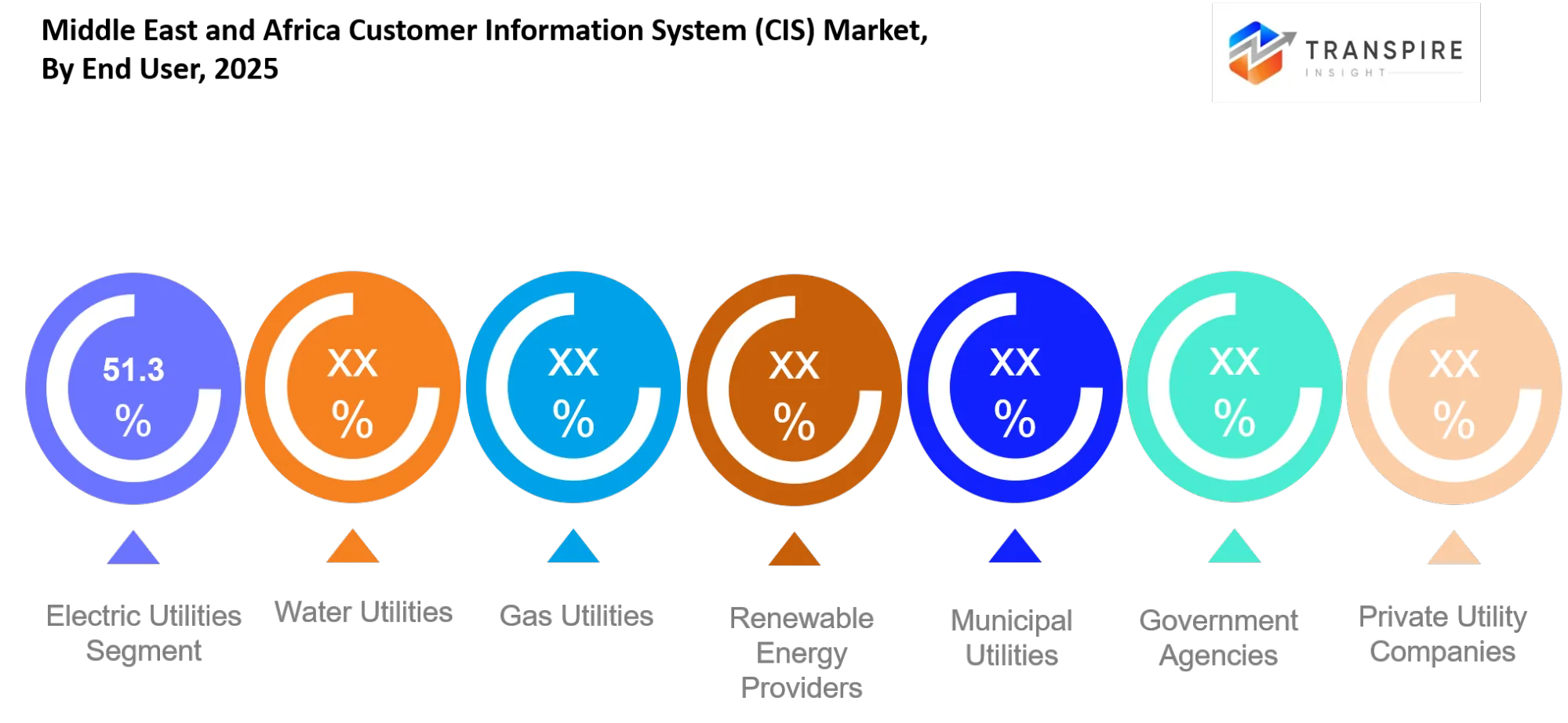
By Enterprise Size
Big Utilities typically pull in the largest investments since huge customer networks sort of need scalable platforms that can deal with complicated billing and day to day operations. Medium Utilities tend to push for better operational efficiency, but they still have to juggle modernization spending with the long term business value, sort of two things at once. Small Utilities often lean toward flexible digital platforms, so customer management gets easier, without needing a major infrastructure investment in the background. Smart City Operators, in turn, blend customer information platforms with connected infrastructure , to enhance how public utilities are managed.
Then there are Independent Service Providers that use digital platforms to run outsourced billing, customer assistance and utility administration across many organizations. Energy Cooperatives modernize customer operations as well, to boost member engagement, improve payment collection, and make service transparency more visible in local communities. Others might include regional infrastructure operators or specialized groups, adopting digital customer management systems depending on their specific operational needs, and that’s usually the deciding factor.
What are the Key Use Cases Driving the Middle East and Africa Customer Information System (CIS) Market?
Customer billing is still sort of the main use case, because accurate billing has a direct effect on financial results and regulatory compliance in electric utilities, so it stays important. Smart meter integration makes automated consumption recording happen, it cuts down on manual mistakes, shortens billing periods ,and also helps customer satisfaction by keeping account management more transparent and clear.
For water utilities and gas utilities, digital customer platforms are being adopted more and more ,especially for meter reading validation, outage messaging, service requests, and even payment handling. Municipal utilities are also rolling out integrated customer systems so they can coordinate several public services through one single digital interface, which ends up boosting operational efficiency, in a smoother way.
Newer scenarios are starting to show up too, like dynamic tariff management for renewable energy providers and digital customer platforms that back smart city infrastructure. AI driven customer analytics, predictive payment risk checks, and personalized self service portals will likely open more chances as regional digital utility programs keep expanding and getting more coverage.
|
Report Metrics |
Details |
|
Market size value in 2025 |
USD 93.4 Million |
|
Market size value in 2026 |
USD 106 Million |
|
Revenue forecast in 2033 |
USD 257.2 Million |
|
Growth rate |
CAGR of 13.50% from 2026 to 2033 |
|
Base year |
2025 |
|
Historical data |
2021 - 2024 |
|
Forecast period |
2026 - 2033 |
|
Report coverage |
Revenue forecast, competitive landscape, growth factors, and trends |
|
Regional scope |
Middle East and Africa (Saudi Arabia, United Arab Emirates, South Africa, Rest of Middle East and Africa) |
|
Key company profiled |
Oracle, SAP, Hansen Technologies, Gentrack, IBM, Salesforce, Microsoft, Infosys, Wipro, Accenture, TCS, Open International, Itineris, Fluentgrid, Cayenta |
|
Customization scope |
Free report customization (country, regional & segment scope). Avail customized purchase options to meet your exact research needs. |
|
Report Segmentation |
By Component (Software, Services, Consulting, System Integration, Support & Maintenance, Managed Services, Analytics Solutions, Others); By Deployment (Cloud-Based, On-Premise, Hybrid, SaaS, Private Cloud, Public Cloud, Multi-Cloud, Others); By Application (Customer Billing, Meter Data Management, Customer Relationship Management, Service Order Management, Outage Management, Revenue Management, Customer Self-Service, Others); By End User (Electric Utilities, Water Utilities, Gas Utilities, Renewable Energy Providers, Municipal Utilities, Government Agencies, Private Utility Companies, Others); By Enterprise Size (Large Utilities, Medium Utilities, Small Utilities, Smart City Operators, Independent Service Providers, Energy Cooperatives, Others) |
Which Regions are Driving the Middle East and Africa Customer Information System (CIS) Market Growth?
The Gulf Cooperation Council, especially Saudi Arabia and the United Arab Emirates, kind of shows up as the biggest regional playground for customer information systems. National digital transformation efforts, utility privatization steps , and smart city spending have pushed electricity and water providers to swap older billing platforms with cloud based customer management solutions, even if the process isn’t perfectly linear. With regulatory backing for smart metering, digital government services, plus renewable energy integration, it’s been easier to keep a long term technology pace across utility networks. And yes there’s also a fairly mature ecosystem—cloud providers, system integrators, telecom infrastructure, and global software vendors—that keeps reinforcing the region’s leadership.
South Africa comes in next as the second largest regional contributor, but the whole market expansion path looks a bit different compared with the Gulf countries. The momentum is helped by steady utility modernization, fairly predictable enterprise technology budgets, and ongoing upgrades to electricity and municipal service infrastructure. It’s less about huge government funded digital transformation programs, and more about consistent operational improvements over time. Utilities keep putting money into customer engagement , revenue protection, and billing modernization to lift performance and also cut non technical losses. Local implementation partners together with international software providers help projects stay on track across the broader utility sector.
The remaining parts of Africa are expected to post the quickest growth during the forecast period, since governments and development agencies are increasing spending on electricity access, digital utility management, and smart infrastructure.
Who are the Key Players in the Middle East and Africa Customer Information System (CIS) Market and How Do They Compete?
Competition looks like a moderately consolidated setup where big global enterprise software players go head to head with more specialized utility technology providers, plus a bunch of regional system integrators, kinda. What matters most now is not just software licensing anymore, instead technology capability, cloud architecture, cybersecurity, artificial intelligence, and implementation know how have become stronger signals. Vendors also push ahead by bringing out industry specific platforms that blend billing together with smart metering customer engagement and analytics in one place, all while still honoring regional regulatory needs and quirks.
Oracle basically carves out its position using Oracle Utilities Customer Cloud Service, it ties customer information management to advanced metering, analytics, and cloud infrastructure. SAP tends to lean into customer information platforms merged with enterprise resource planning and asset management, so utilities can run operational and financial activities inside one more unified environment. Hansen Technologies concentrates on utility billing and customer management, with flexible deployment approaches that tend to fit electricity, gas, and water providers who want phased modernization.
Microsoft boosts its footprint through Azure cloud services, artificial intelligence, and secure digital platforms that help simplify those large scale utility change projects. Salesforce differentiates using customer engagement features, digital service portals, and AI powered customer relationship management that, in turn, improves customer experience across several contact pathways.
Company List
• Oracle
• SAP
• Hansen Technologies
• Gentrack
• IBM
• Salesforce
• Microsoft
• Infosys
• Wipro
• Accenture
• TCS
• Open International
• Itineris
• Fluentgrid
• Cayenta
Recent Development News
In March 2026, Oracle launched new artificial intelligence capabilities across Oracle Utilities to automate customer service, improve outage communication, and strengthen operational analytics for utility providers. The release supports faster digital transformation and enhances customer engagement across utility operations.https://www.oracle.com/utilities/
In October 2025, Salesforce announced expanded Agentforce capabilities for energy and utility organizations, enabling autonomous AI agents to improve customer support, service requests, and operational efficiency. The enhancement strengthens digital customer engagement strategies for utility providers.https://www.salesforce.com/news/
In May 2025, Microsoft introduced new cloud and AI capabilities for critical infrastructure and energy organizations during Microsoft Build 2025, supporting secure data management, automation, and intelligent utility operations. The announcement reinforces cloud adoption across utility digital transformation initiatives.https://news.microsoft.com/
What Strategic Insights Define the Future of the Middle East and Africa Customer Information System (CIS) Market?
The market is kinda drifting toward these intelligent cloud platforms that bundle together customer information management, artificial intelligence, smart metering, and also advanced analytics into one kinda unified digital ecosystem. This shift, it’s really pulled forward by utility modernization, more renewable energy coming in, and the need for real time customer engagement not just some basic billing automation.
There’s also a risk that’s less obvious in the usual conversations , which is that critical utility software is becoming more and more concentrated with a small set of big global cloud providers. That can then bring vendor dependence problems, cybersecurity concerns, and even long-term migration costs later on.
But hey, there’s an opportunity showing up too: customer information systems can be integrated with distributed energy resources and dynamic tariff management , especially in the Gulf countries where a lot of investment is going into renewable projects and smart city infrastructure. Market players should really focus on open architecture platforms, with strong interoperability, because flexible integration will keep giving a durable competitive edge as regional utility tech requirements keep broadening.
Middle East and Africa Customer Information System (CIS) Market Report Segmentation
By Component
• Software
• Services
• Consulting
• System Integration
• Support & Maintenance
• Managed Services
• Analytics Solutions
• Others
By Deployment
• Cloud-Based
• On-Premise
• Hybrid
• SaaS
• Private Cloud
• Public Cloud
• Multi-Cloud
• Others
By Application
• Customer Billing
• Meter Data Management
• Customer Relationship Management
• Service Order Management
• Outage Management
• Revenue Management
• Customer Self-Service
• Others
By End User
• Electric Utilities
• Water Utilities
• Gas Utilities
• Renewable Energy Providers
• Municipal Utilities
• Government Agencies
• Private Utility Companies
• Others
By Enterprise Size
• Large Utilities
• Medium Utilities
• Small Utilities
• Smart City Operators
• Independent Service Providers
• Energy Cooperatives
• Others
Frequently Asked Questions
Find quick answers to common questions.
The Expected Middle East and Africa Customer Information System (CIS) Market size for the market will be USD 257.2 Million in 2033.
Key Segments for the Middle East and Africa Customer Information System (CIS) Market are By Component (Software, Services, Consulting, System Integration, Support & Maintenance, Managed Services, Analytics Solutions, Others); By Deployment (Cloud-Based, On-Premise, Hybrid, SaaS, Private Cloud, Public Cloud, Multi-Cloud, Others); By Application (Customer Billing, Meter Data Management, Customer Relationship Management, Service Order Management, Outage Management, Revenue Management, Customer Self-Service, Others); By End User (Electric Utilities, Water Utilities, Gas Utilities, Renewable Energy Providers, Municipal Utilities, Government Agencies, Private Utility Companies, Others); By Enterprise Size (Large Utilities, Medium Utilities, Small Utilities, Smart City Operators, Independent Service Providers, Energy Cooperatives, Others).
Major Middle East and Africa Customer Information System (CIS) Market Players are Oracle, SAP, Hansen Technologies, Gentrack, IBM, Salesforce, Microsoft, Infosys, Wipro, Accenture, TCS, Open International, Itineris, Fluentgrid, Cayenta.
The Current Middle East and Africa Customer Information System (CIS) Market size is USD 93.4 Million in 2025.
The Middle East and Africa Customer Information System (CIS) Market CAGR is 13.50% from 2026 to 2033.
• Oracle
• SAP
• Hansen Technologies
• Gentrack
• IBM
• Salesforce
• Microsoft
• Infosys
• Wipro
• Accenture
• TCS
• Open International
• Itineris
• Fluentgrid
• Cayenta
About the Authors

Mayur Shinde
I am Mayur Shinde, a Senior Research Analyst at Transpire Insight, specializing in the Automotive & Transportation and Information & Communication Technology (ICT) Industry. My work focuses on analyzing emerging market trends, technological advancements, competitive landscapes, and industry developments to deliver accurate, data-driven insights. I am passionate about transforming complex market information into clear, actionable content that helps businesses, professionals, and decision-makers stay informed and make confident strategic decisions.

Chakradhar Khansole
Chakradhar serves as the Research Director at Transpire Insight, bringing over 8 years of experience in technology, innovation, and strategic market intelligence. He specializes in transforming complex market data into actionable business insights that enable organizations to make informed, growth-oriented decisions. Recognized for his strategic vision and analytical expertise, Chakradhar leads high-impact research initiatives, delivering comprehensive market assessments, competitive intelligence, and forward-looking industry analysis.
Recently Published Reports
-
Apr 2026
3D Optical Profiler Market
3D Optical Profiler Market Size, Share & Analysis Report By Type (Desktop 3D Optical Profiler, and Portable 3D Optical Profiler), By Technology (Confocal Technology, and White Light Interference), By End-Use Industry (Manufacturing, Research Institutions, Automotive, Aerospace and Defense, Medical Devices, and Other), and Geography (North America, Europe, Asia-Pacific, Middle East and Africa, South and Central America), 2021 - 2031
-
Apr 2026
Depth Sensor Market
Depth Sensor Market Size, Share & Analysis Report By Type (Infrared Depth Sensors, Time-of-Flight (ToF) Sensors, Stereo Vision Sensors, Structured Light Sensors, Ultrasonic Depth Sensors), By Application (Automotive, Robotics, Gaming, Consumer Electronics, Industrial Automation, Healthcare, Security & Surveillance, Others), By End Users (Automotive Manufacturers, Consumer Electronics Companies, Healthcare Providers, Industrial Companies, Security Agencies, Gaming Companies, Robotics Companies, Others), and Geography (North America, Europe, Asia-Pacific, Middle East and Africa, South and Central America), 2021 – 2031
-
Apr 2026
Digital Manufacturing Market
Digital Manufacturing Market Size, Share & Analysis Report By Component (Hardware, Software, and Services), By Technology (Robotics, 3D Printing, Internet of Things (IoT), and Others), By Application (Automotive and Transportation, Aerospace and Defense, Consumer Electronics, Industrial Machinery, and Others), By Process Type (Computer-Based Designing, Computer-Based Simulation, Computer 3D Visualization, Analytics, and Others), and Geography (North America, Europe, Asia-Pacific, Middle East and Africa, South and Central America), 2021 – 2031
-
Apr 2026
Digital Visa Services Market
Digital Visa Services Market Size, Share & Analysis Report By Type (Individual Travelers, Group Travelers), By Application (Tourism, Business Travel, Others), and Geography (North America, Europe, Asia-Pacific, Middle East and Africa, South and Central America), 2021 – 2031