
Middle East and Africa Colorectal Cancer Diagnostics Market Size & Forecast:
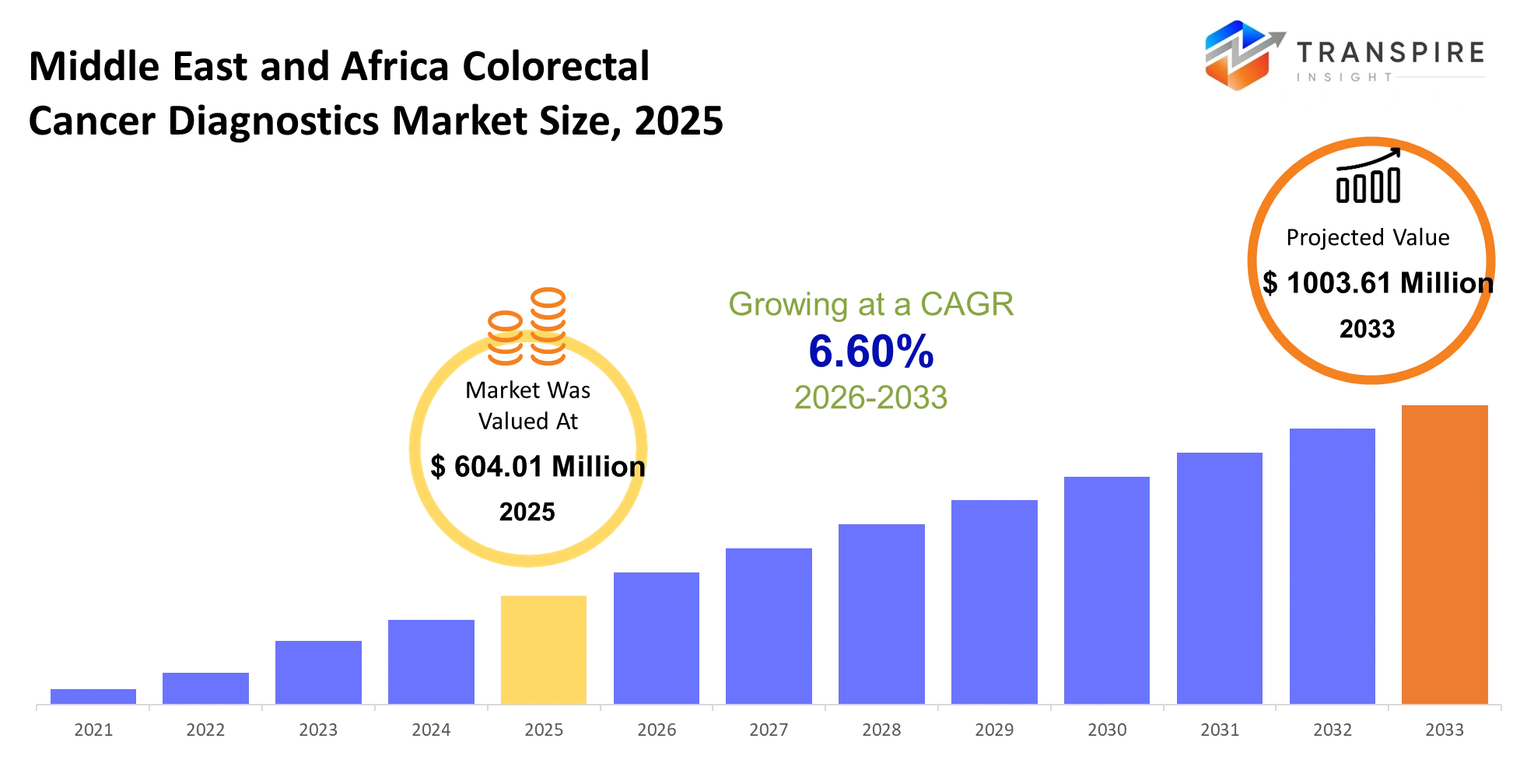
- Middle East and Africa Colorectal Cancer Diagnostics Market Size 2025: USD 604.01 Million
- Middle East and Africa Colorectal Cancer Diagnostics Market Size 2033: USD 1003.61 Million
- Middle East and Africa Colorectal Cancer Diagnostics Market CAGR: 6.60%
- Middle East and Africa Colorectal Cancer Diagnostics Market Segments: By Test Type (FOBT, FIT, Colonoscopy, Biomarker Tests, Others); By Technology (PCR, NGS, Immunoassays, Imaging, Others); By End User (Hospitals, Diagnostic Labs, Cancer Centers, Others); By Application (Screening, Diagnosis, Monitoring, Others)
To learn more about this report,  Download Free Sample Report
Middle East and Africa Colorectal Cancer Diagnostics Market Summary
The Middle East and Africa Colorectal Cancer Diagnostics Market was valued at USD 604.01 Million in 2025. It is forecast to reach USD 1003.61 Million by 2033. That is a CAGR of 6.60% over the period.
The Middle East and Africa Colorectal Cancer Diagnostics Market does play a big role in figuring out colorectal cancer earlier, so clinicians can step in on time and overall outcomes improve in hospitals , diagnostic laboratories, and cancer care centers. In practice, diagnostic tools like fecal tests , colonoscopy procedures , molecular assays and biomarker based screening methods help healthcare providers spot precancerous lesions, or malignant conditions before the disease moves further and makes treatment more complex and more expensive.
Over the last five years, the market has kinda moved away from depending too much on invasive diagnostic pathways, and more toward molecular diagnostics, non invasive screening technologies , and precision medicine approaches. Government backed cancer screening initiatives in places such as Saudi Arabia , the UAE and South Africa have sped up the volume of diagnostic testing. During the COVID 19 pandemic, routine healthcare services were disrupted at first, which delayed screenings, but later on it basically pushed healthcare systems to invest in scalable diagnostic infrastructure and some home based testing solutions. As providers broaden screening coverage and add newer molecular technologies into their workflows, testing rates keep climbing, which supports higher diagnostic revenues and better access to colorectal cancer detection services.
Key Market Insights
- Saudi Arabia dominated regional revenue in 2025, with an estimated 28–32% market share , bolstered by organized screening programs and those advanced oncology facilities that people keep mentioning.
- The Gulf Cooperation Council region also looks like the fastest-growing regional cluster, mainly because healthcare modernization investments are moving forward through 2033, no big surprise really.
- Colonoscopy stayed the leading test type, roughly 35–40% of market revenue in 2025, mostly tied to diagnostic accuracy, plus therapeutic capabilities in practice.
- FIT testing showed up as the fastest-growing screening segment, with adoption spreading across population-based cancer screening initiatives , steadily.
- PCR-based diagnostics held a major technology share, over 25% in 2025 , and this seems supported by rising demand for molecular cancer detection.
- NGS platforms recorded the strongest forecast growth, as oncology centers keep expanding precision medicine and genomic profiling capabilities, kind of in parallel.
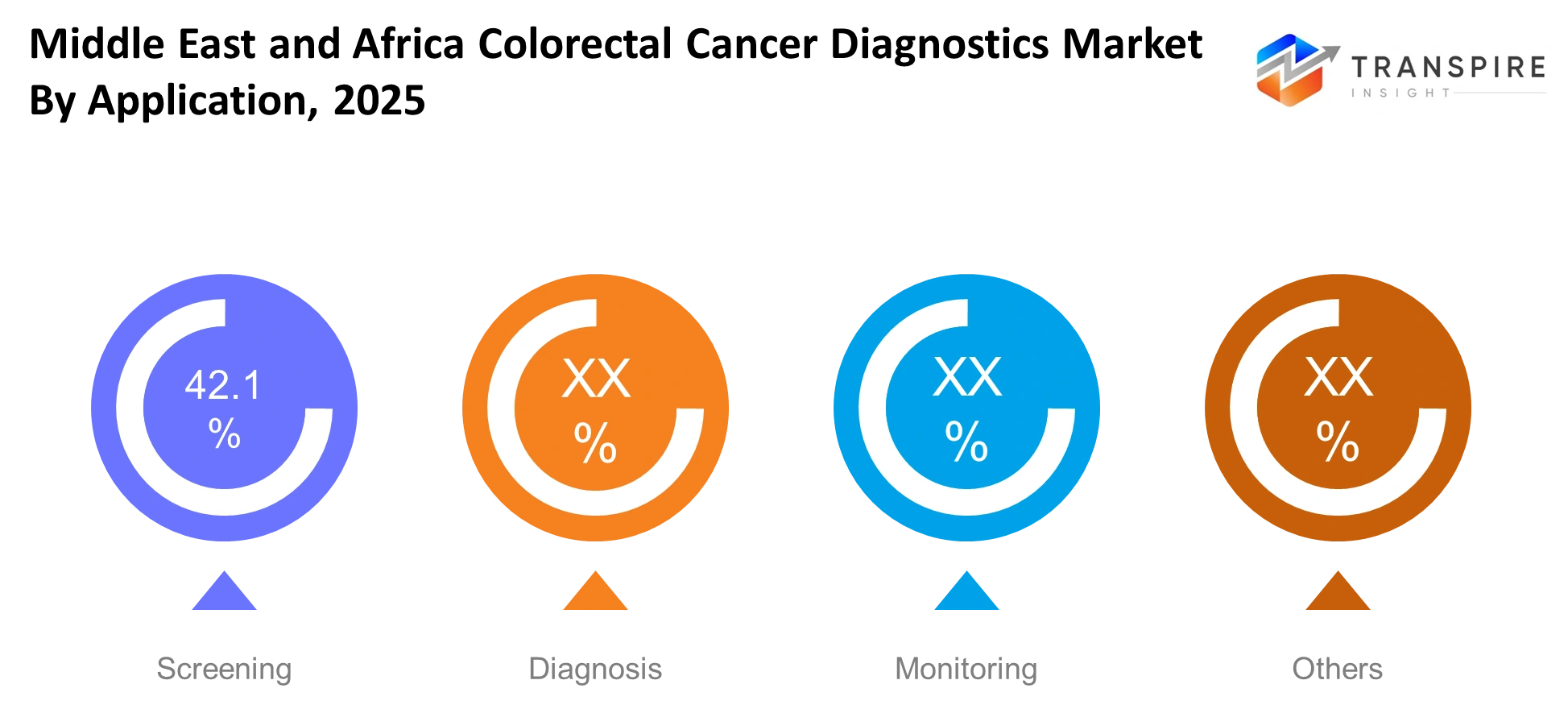
- Screening applications generated more than 40% of total diagnostic demand in 2025, since healthcare systems prioritize earlier disease detection, instead of waiting.
- Hospitals remained the largest end user segment, with more than 45% market share, helped by integrated diagnostic and treatment workflows.
- Diagnostic laboratories also expanded partnerships with technology providers to improve turnaround times and increase testing capacity , overall.
- Companies like Roche, Abbott, Thermo Fisher Scientific, Qiagen, Illumina, and Siemens Healthineers are strengthening competitive positions via molecular assay innovation , AI-enabled analytics, strategic collaborations, and regional expansion.
What are the Key Drivers, Restraints, and Opportunities in the Middle East and Africa Colorectal Cancer Diagnostics Market?
The strongest growth driver is mostly the expansion of national cancer screening programs, paired with rising rollout of molecular diagnostic technologies, which kinda stacks up demand over time. Governments across Gulf countries have been pumping more money into preventive healthcare, in order to cut long-term oncology treatment costs. Earlier screening then kinda leads to much larger testing volumes, since people without symptoms end up getting routine exams before any disease symptoms ever really show. And that shift, honestly it boosts demand for FIT tests , colonoscopy procedures , and biomarker assays too, plus all the related lab services. In other words it ends up creating recurring revenue streams for diagnostic providers.
The biggest restraint still feels like unequal access to advanced diagnostic infrastructure across several African markets. High cost molecular testing platforms, shortages of trained pathology specialists and thin laboratory networks, all together form structural barriers that cannot really be fixed fast. A lot of facilities remain dependent on centralized testing centers, and that usually means longer turnaround times , plus lower screening participation rates. Because of that, the market revenue is held back by delays in diagnosis and by reduced testing volumes outside the main urban healthcare hubs.
One major opportunity sits in liquid biopsy and next-generation sequencing technologies. Healthcare systems are increasingly trialing blood-based cancer detection tools, aiming to complement the more conventional screening approaches. Also, investments in precision oncology programs across Saudi Arabia, the UAE and South Africa are setting up favorable conditions for advanced genomic testing.
What Has the Impact of Artificial Intelligence Been on the Middle East and Africa Colorectal Cancer Diagnostics Market?
Artificial intelligence is kinda transforming colorectal cancer diagnostics, by upping the accuracy and efficiency of screening, imaging and pathology routines. You know, AI-assisted colonoscopy systems can flag odd polyps in real time, so clinicians can catch lesions that might get missed during the usual, routine exams. A number of healthcare providers are now rolling in computer aided detection software, into their endoscopy rooms, to nudge the process toward faster and more consistent examinations.
At the same time, machine learning methods are making pathology analysis feel more “hands off”, since they can sift through digital tissue slides and quickly point specialists toward the highest risk cases. And in molecular diagnostics, AI tools chew through big genomic datasets that come from PCR and NGS platforms, which helps speed up the detection of clinically relevant biomarkers and mutation patterns. Basically, these features can cut down reporting time and help teams make better, more informed treatment calls.
On the operational side, AI driven workflow automation supports laboratories in organizing samples more smoothly, cutting down manual checking workloads, and boosting diagnostic throughput. Many institutions mention directional improvements in productivity and diagnostic consistency after they bring in digital pathology platforms, which sounds good, even if the results vary.
Still, adoption is not fully smooth, because integration costs can be high, digital pathology infrastructure is limited, and there are shortages of annotated regional datasets that are needed to train reliable algorithms properly. Also, differences in how healthcare digitization is handled across the Middle East and Africa, make large scale rollout tougher for advanced AI enabled diagnostic systems.
Key Market Trends
- From 2021 to 2025, FIT screening adoption went up by over 20% in a bunch of GCC screening initiatives, you know , overall.
- Colonoscopy providers are also, increasingly using AI aided polyp detection tools, to make diagnoses more consistent and to spot lesions better.
- NGS use grew a lot after 2022, especially once precision oncology programs started getting more funding across major healthcare systems.
- Saudi Arabia and the UAE healthcare authorities basically sped up cancer screening investment via national healthcare transformation programs, at a faster pace than before.
- Molecular biomarker testing has been moving away from only specialized oncology centers and toward wider diagnostic laboratory adoption.
- Digital pathology platforms are getting rolled out across tertiary hospitals too, which cuts down on manual review workloads, and improves how efficiently reports get produced.
- Roche, Qiagen, and Thermo Fisher Scientific are putting more emphasis on companion diagnostics, supporting targeted cancer therapies in practice.
- Public-private partnerships have strengthened lab infrastructure especially in South Africa and several Gulf countries after 2023.
- Blood based cancer detection tech is pulling in more investment as healthcare providers look for less invasive screening options.
- And regional healthcare groups have expanded preventive oncology services, which then boosts participation in everyday colorectal cancer screening programs.
Middle East and Africa Colorectal Cancer Diagnostics Market Segmentation
By Test Type
FOBT plus FIT still stay pretty much the go to screening options, mainly because they’re convenient, reasonably priced, and they work well for huge population screening efforts. FIT has actually been catching on even more lately, partly because it shows better sensitivity, and it’s simpler to manage for many people. In practice, health authorities often tuck these tests into organized screening programs, so they can spot who really needs deeper follow-up.
Colonoscopy keeps a strong role too, since it offers direct visualization and also allows removal of suspicious polyps right there, during the same session. Biomarker tests are getting more attention as precision oncology is becoming more established across the region. The “Others” group is kind of mixed, it covers newer molecular, plus imaging supported screening ideas that act alongside more traditional diagnostic pathways, and they help raise detection accuracy.
By Technology
PCR tech is still kinda a core diagnostic tool because it can spot genetic alterations with high analytical performance. Immunoassays keep supporting screening and biomarker evaluation across hospitals and laboratory networks, and they tend to help a lot in daily workflows. Together these methods maintain broad clinical utility across various stages of colorectal cancer assessment, you know from early checks through later evaluation.
NGS is getting more adopted now as oncology providers expand genomic profiling and use it for personalized treatment planning. Imaging technologies remain essential for disease assessment, staging, and monitoring response during therapy. The “others” bucket covers digital pathology, AI-assisted analysis platforms, and other newer molecular technologies that are entering clinical practice across regional healthcare systems, gradually.
By End User
Hospitals make up quite a lot of diagnostic activity , because in many cases screening , diagnosis , treatment planning, and even follow-up are all rolled together in a single care pathway. Big healthcare institutions keep investing in advanced laboratory systems and also endoscopy infrastructure , mainly to improve patient outcomes.
Diagnostic laboratories sit at the center of the whole process, processing massive testing volumes and supporting regional screening initiatives. Cancer centers are now leaning more toward advanced molecular testing and precision oncology tools , so they can help decide which treatment fits best. The “others” bucket basically covers research institutions , specialty clinics, and community health facilities , all of which take part in colorectal cancer detection and ongoing monitoring services.
By Application
Screening is still the biggest application space, because early detection remains the most effective strategy for cutting down on colorectal cancer mortality. Organized screening programs keep expanding in many countries, so there is steady demand for fecal tests molecular assays, and colonoscopy services
Diagnosis is a key use case too, supported by imaging pathology, and biomarker testing technologies. Monitoring is also getting more attention, as healthcare providers follow treatment response, disease progression, and recurrence risks. The other bucket covers risk assessment, research work, and newer precision medicine applications, helping with long term patient management.
To learn more about this report, Download Free Sample Report
What are the Key Use Cases Driving the Middle East and Africa Colorectal Cancer Diagnostics Market?
The main use case is tied to population-level colorectal cancer screening programs, usually run through hospitals, laboratories and public health systems, kinda like a coordinated pipeline. When precancerous lesions or malignant growths are spotted early, it drives a lot of testing demand because timely intervention tends to improve clinical outcomes and also can lower treatment costs, at least in many settings.
More applications keep showing up in the diagnostic confirmation lane and in precision oncology workflows. Cancer centers are increasingly leaning on molecular assays, genomic profiling, and biomarker evaluation to guide treatment selection, plus it helps with personalized therapeutic planning. On the lab side, diagnostic facilities are processing more and more follow-up testing linked to oncology care pathways, so the workload keeps climbing.
Also, emerging use cases include the development of liquid biopsy approaches and AI-supported pathology analysis. These tools are still in earlier stages of adoption, yet they carry strong promise for non-invasive cancer detection, recurrence surveillance, and a smoother way to interpret complicated diagnostic information across the forecast period.
|
Report Metrics |
Details |
|
Market size value in 2025 |
USD 604.01 Million |
|
Market size value in 2026 |
USD 641.48 Million |
|
Revenue forecast in 2033 |
USD 1003.61 Million |
|
Growth rate |
CAGR of 6.60%from 2026 to 2033 |
|
Base year |
2025 |
|
Historical data |
2021 - 2024 |
|
Forecast period |
2026 - 2033 |
|
Report coverage |
Revenue forecast, competitive landscape, growth factors, and trends |
|
Regional scope |
Middle East and Africa (Saudi Arabia, United Arab Emirates, South Africa, Rest of Middle East and Africa) |
|
Key company profiled |
Roche, Abbott, Thermo Fisher Scientific, Qiagen, Exact Sciences, Guardant Health, Bio-Rad, Illumina, Siemens Healthineers, Danaher, Sysmex, Agilent, Hologic, Fujirebio, BioMerieux |
|
Customization scope |
Free report customization (country, regional & segment scope). Avail customized purchase options to meet your exact research needs. |
|
Report Segmentation |
By Test Type (FOBT, FIT, Colonoscopy, Biomarker Tests, Others); By Technology (PCR, NGS, Immunoassays, Imaging, Others); By End User (Hospitals, Diagnostic Labs, Cancer Centers, Others); By Application (Screening, Diagnosis, Monitoring, Others) |
Which Regions are Driving the Middle East and Africa Colorectal Cancer Diagnostics Market Growth?
The Gulf Cooperation Council region kind of leads in market revenue, with Saudi Arabia and the UAE taking up a big chunk of the regional diagnostic work. It’s mainly driven by strong healthcare spending, pretty advanced oncology infrastructure, plus government-supported screening programs that really help keep things moving. On top of that, the ongoing national healthcare transformation has sped up the uptake of molecular diagnostics and precision medicine tools. And there’s also a fairly well-developed ecosystem of hospitals, laboratories, and specialized cancer centers that just keeps the long-term growth steady.
South Africa comes in as the second-largest contributor. It feels different compared to the Gulf because it has a more established lab testing network and a wider spread of private healthcare participation. Ongoing investment in diagnostic infrastructure helps keep market expansion stable, not too jumpy. Meanwhile, private healthcare providers are still moving toward advanced pathology and molecular testing solutions. So overall, this mixed public-private structure generates a dependable flow of diagnostic demand.
The fastest growth momentum seems to be showing up across the developing healthcare markets in Africa and also parts of the Middle East, where healthcare modernization programs are expanding. Fresh investments in oncology infrastructure, lab capacity, and cancer screening initiatives have improved access to diagnostic services. International partnerships and technology transfer programs are also speeding up the buildout of local capability. Together, these developments are laying out pretty attractive opportunities for diagnostic companies and investors in the 2026 to 2033 timeframe.
Who are the Key Players in the Middle East and Africa Colorectal Cancer Diagnostics Market and How Do They Compete?
Competition is, kinda moderately consolidated overall, with multinational diagnostics firms competing mainly via tech innovation, assay quality, clinical evidence, and regional distribution abilities. Molecular diagnostics, genomic testing, and integrated oncology offerings are more and more what actually sets them apart. In practice, many companies try to get the edge by stitching together testing platforms, data analytics, and companion diagnostic know how, all inside broader cancer care ecosystems, that sort of thing.
Roche seems to reinforce its position through integrated oncology diagnostics, newer biomarker testing, and companion diagnostic offerings that tie directly into targeted therapies. Qiagen leans heavily on molecular testing workflows plus sample preparation technologies, supporting faster genomic analysis with less friction. Illumina differentiates by using sequencing platforms that make it possible to do large-scale genomic profiling and push precision medicine initiatives forward.
Abbott competes with a wide diagnostic portfolio, and a pretty strong laboratory footprint across different healthcare settings. Thermo Fisher Scientific expands using advanced PCR and sequencing technologies that fit both research work and clinical oncology needs. Siemens Healthineers leans into imaging capabilities and laboratory diagnostics, to deliver more connected cancer detection solutions.
Beyond that, strategic collaborations, regional partnerships, and continued investment in AI-enabled diagnostic platforms are still very important competitive levers across the industry.
Company List
- Roche
- Abbott
- Thermo Fisher Scientific
- Qiagen
- Exact Sciences
- Guardant Health
- Bio-Rad
- Illumina
- Siemens Healthineers
- Danaher
- Sysmex
- Agilent
- Hologic
- Fujirebio
- BioMerieux
Recent Development News
In February 2026, Illumina announced new advancements and commercial expansion initiatives for cancer-focused sequencing applications. The initiative supports broader adoption of genomic profiling in oncology diagnostics and personalized medicine programs.https://www.illumina.com
What Strategic Insights Define the Future of the Middle East and Africa Colorectal Cancer Diagnostics Market?
The market looks like it is, overall, structurally moving toward integrated precision oncology ecosystems where screening, molecular diagnostics, pathology, and treatment selection kind of run through connected clinical pathways. This shift is being pulled along by healthcare system investments that lean into earlier detection, better outcomes ,and more efficient cancer management. Over the next several years, non-invasive testing technologies, AI assisted diagnostics, and genomic profiling are likely to become more clinically important, in practice.
There is also a less visible risk though, market concentration is increasingly clustering around a limited set of advanced technology providers. If organizations lean heavily on specialized diagnostic platforms, sequencing technologies, and imported laboratory equipment, then supply chain disruptions and pricing vulnerabilities could crop up. Meanwhile, liquid biopsy technologies are an emerging chance, and they could reshape screening and monitoring practices across the region ,quietly but steadily.
Market participants should really focus on partnerships that blend molecular diagnostics, digital pathology, and AI driven analytics. Putting early money into scalable precision oncology infrastructure should help position organizations to capture more value as screening programs expand, and as personalized cancer care becomes more broadly adopted.
Middle East and Africa Colorectal Cancer Diagnostics Market Report Segmentation
By Test Type
- FOBT
- FIT
- Colonoscopy
- Biomarker Tests
- Others
By Technology
- PCR
- NGS
- Immunoassays
- Imaging
- Others
By End User
- Hospitals
- Diagnostic Labs
- Cancer Centers
- Others
By Application
- Screening
- Diagnosis
- Monitoring
- Others
Frequently Asked Questions
Find quick answers to common questions.
The expected Middle East and Africa Colorectal Cancer Diagnostics Market size for the market will be USD 1003.61 Million in 2033.
Key segments for the Middle East and Africa Colorectal Cancer Diagnostics Market are By Test Type (FOBT, FIT, Colonoscopy, Biomarker Tests, Others); By Technology (PCR, NGS, Immunoassays, Imaging, Others); By End User (Hospitals, Diagnostic Labs, Cancer Centers, Others); By Application (Screening, Diagnosis, Monitoring, Others).
Major Middle East and Africa Colorectal Cancer Diagnostics Market players are Roche, Abbott, Thermo Fisher Scientific, Qiagen, Exact Sciences, Guardant Health, Bio-Rad, Illumina, Siemens Healthineers, Danaher, Sysmex, Agilent, Hologic, Fujirebio, BioMerieux.
The Middle East and Africa Colorectal Cancer Diagnostics Market size is USD 604.01 Million in 2025.
The Middle East and Africa Colorectal Cancer Diagnostics Market CAGR is 6.60% from 2026 to 2033.
- Roche
- Abbott
- Thermo Fisher Scientific
- Qiagen
- Exact Sciences
- Guardant Health
- Bio-Rad
- Illumina
- Siemens Healthineers
- Danaher
- Sysmex
- Agilent
- Hologic
- Fujirebio
- BioMerieux
About the Authors

Pankaj Ghogare Patil
I am Pankaj Ghogare Patil, a Senior Research Analyst at Transpire Insight, specializing in the Pharmaceutical, Chemicals & Materials, Healthcare IT, and Biotechnology industry. My expertise lies in conducting comprehensive market research, analyzing industry trends, evaluating competitive landscapes, and translating complex data into actionable insights. At Transpire Insight, I closely follow emerging technologies, regulatory developments, and market innovations to create accurate, well-researched, and informative content that helps businesses and professionals make informed decisions. I am committed to producing credible, evidence-based articles that reflect industry best practices while making technical topics accessible and valuable for a broad audience.

Chakradhar Khansole
Chakradhar serves as the Research Director at Transpire Insight, bringing over 8 years of experience in technology, innovation, and strategic market intelligence. He specializes in transforming complex market data into actionable business insights that enable organizations to make informed, growth-oriented decisions. Recognized for his strategic vision and analytical expertise, Chakradhar leads high-impact research initiatives, delivering comprehensive market assessments, competitive intelligence, and forward-looking industry analysis.
Recently Published Reports
-
Apr 2026
AI in Diabetic Retinopathy Market
AI in Diabetic Retinopathy Market Size, Share & Analysis Report By Type (Screening AI Systems, Diagnostic AI Systems, and Predictive AI Models), By Application Segment (Hospitals, Ophthalmology Clinics, Diagnostic Centers, and Research and Development), and Geography (North America, Europe, Asia-Pacific, Middle East and Africa, South and Central America), 2021 - 2031
-
Apr 2026
Psychometric Tests Market
Psychometric Tests Market Size, Share & Analysis Report By Type (Personality Tests, Ability/Aptitude Tests, Skill/Knowledge Tests, and Others), By Application (Talent Acquisition and Talent Management), and Geography (North America, Europe, Asia-Pacific, Middle East and Africa, South and Central America), 2021 – 2031
-
Apr 2026
Rare Biological Sample Collection Market
Rare Biological Sample Collection Market Size, Share & Analysis Report By Type (Isolation Kits & Reagent, Blood Collection Tubes, and Others), By Application (Oncology, Transcriptomics, Pharmacogenomics, and Others), and Geography (North America, Europe, Asia-Pacific, Middle East and Africa, South and Central America), 2021 – 2031
-
Jul 2026
Diabetic Retinopathy Market
Diabetic Retinopathy Market Size, Share & Analysis Report By Type (Proliferative Diabetic Retinopathy, and Diabetic Macular Edema (DME)), By Treatment Type (Anti VEGF Drug, Steroid Implants, Laser Surgeries, and Vitrectomy), and Geography (North America, Europe, Asia-Pacific, Middle East and Africa, South and Central America), 2021 – 2031
Our Clients







