
Middle East and Africa Bus Seat Market Summary
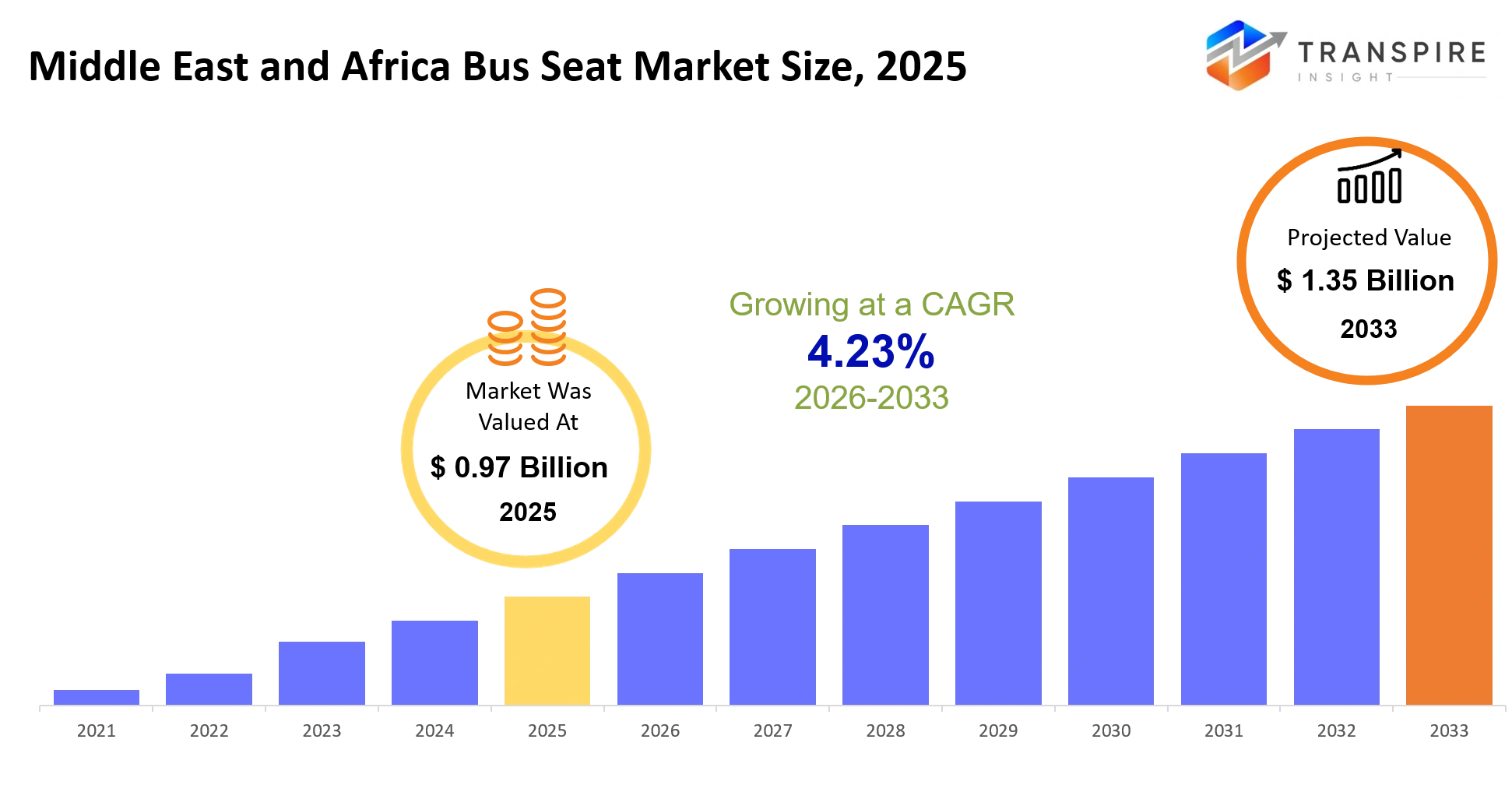
As per Transpire Insight Analysis the Middle East and Africa Bus Seat Market size is estimated at USD 0.97 Billion in 2025 and is anticipated to reach USD 1.35 Billion by 2033, growing at a CAGR of 4.23% from 2026 to 2033.
The Middle East and Africa Bus Seat Market sort of plays a key role in boosting passenger comfort, safety , and day to day operational efficiency across public transit , school transport, tourism, and those long distance coach services. Bus seats don’t feel like simple seating bits anymore , because operators now more and more ask for lightweight, ergonomic, and tough solutions that lower upkeep spend while still making the ride feel better. In the last five years , the market has moved more toward modular seating systems and lighter composite materials, mainly because fleet operators want better fuel performance and also need to stay compatible with electric buses. This shift really sped up after COVID 19 supply chain disruptions showed how risky it can be to depend on only a few component sources. So people leaned into regional sourcing and localized manufacturing, even if it means new local partners. At the same time , government money for urban mobility programs and public transport modernization across the Gulf and a number of African economies has pushed larger fleet renewal efforts. All of this is making OEMs and fleet operators more willing to spend on higher value seating systems, which in turn creates better revenue chances for seat manufacturers , plus component suppliers too.
Middle East and Africa Bus Seat Market Size & Forecast:
- Middle East and Africa Bus Seat Market Size 2025: USD 0.97 Billion
- Expected Market Value 2033: USD 1.35 Billion
- Forecast CAGR: 4.23%
- Leading region in 2025:
- Fastest Growing region:
- Key Profile: Freedman Seating, Grammer AG, Harita Seating, Fainsa, Kiel Group, USSC Group, ISRINGHAUSEN, Lazzerini, Seats Inc., Compin-Fainsa, Adient, Lear Corporation, Magna International, Toyota Boshoku, Faurecia.
Key Market Insights
- The Middle East and Africa Bus Seat Market is forecast to hit around USD 1.35 Billion by 2033 , with fleet modernization pushing demand and higher-value seating technologies, kind of in parallel.
- In the region, adoption of lightweight composite seats is getting stronger , these seats cut vehicle weight by roughly 10% to 20% versus the older steel-based layouts.
- GCC countries seem to dominate, with an estimated ~58% share in 2025, backed by public transport spending and premium coach fleet expansion.
- Meanwhile , South Africa and East Africa are showing the fastest growth through 2033, driven by Bus Rapid Transit projects and more urban mobility investments.
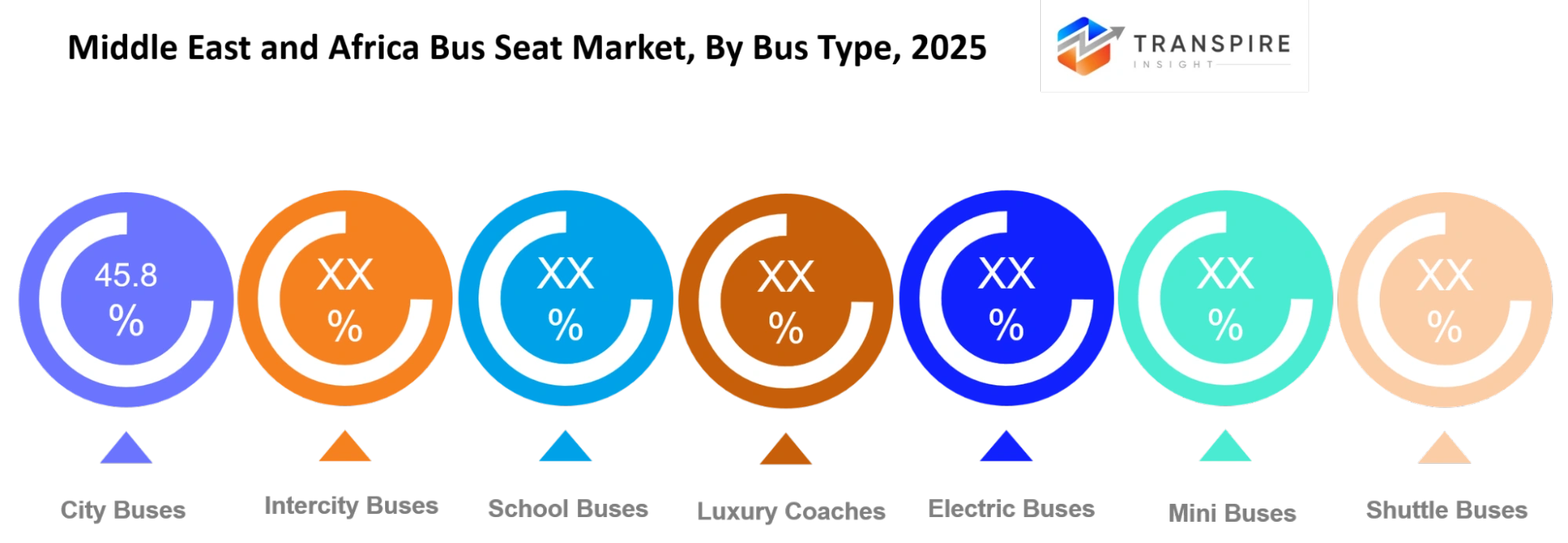
- When you look at products, standard passenger seats still lead the segment at about 46% market share, though smart seats are expanding quicker due to USB charging that’s built-in and passenger monitoring capabilities.
- On the application side, public transportation is close to 52% of demand, while tourism and luxury coach uses keep climbing thanks to regional tourism development moves.
- For end-users, OEM bus manufacturers remain the top category at approximately 64% share, and aftermarket replacement demand keeps rising as aging fleets get refurbishments.
- Key players—Freedman Seating, Grammer AG, Harita Seating, Fainsa, ISRINGHAUSEN, and Kiel Group—are improving their competitive stance using ergonomic product innovation plus lightweight material work.
- Also , strategic partnerships between seat makers and regional bus assemblers have increased since 2021, helping supply chain resilience and generally trimming delivery lead times.
What are the Key Drivers, Restraints, and Opportunities in the Middle East and Africa Bus Seat Market?
Government-backed efforts for modernizing public transit still look like the main tailwind behind the Middle East and Africa Bus Seat Market. Big infrastructure spending in Saudi Arabia, the UAE, Egypt, and South Africa has been pushing faster orders for new city buses, intercity coaches, and also electric buses, all of which in practice need updated seat systems with better durability plus more passenger comfort. Fleet operators are doing more than just adding capacity too , they keep swapping out older vehicles to meet refreshed accessibility and safety rules. And because of that manufacturers now tend to provide ergonomic, lightweight, modular seat setups rather than the usual older layouts, so the seats sold per vehicle are worth more, which then backs stronger revenue growth.
Still though, the market has plenty of structural strain: raw material prices can swing , and there’s heavy reliance on imported components. High quality foams, engineered plastics , specialized textiles, and seat adjustment mechanisms are pretty tied to international supply chains. Since these inputs sit at a big share of total production costs, shifts in steel, polymers, and shipping or logistics costs hit the manufacturing math directly. Smaller regional makers often postpone scale up plans or they cut down on product personalization, which means less reach overall and slower replacement cycles, especially where transport budgets are tight.
The most convincing long term opening feels tied to growing electric bus fleets and premium intercity services across the region. Electric buses need lightweight seating solutions that help stretch the driving range, while still holding passenger safety benchmarks.
What Has the Impact of Artificial Intelligence Been on the Middle East and Africa Bus Seat Market?
Artificial intelligence and newer digital tech are slowly getting in the way, I mean, transforming bus seating manufacturing and the way fleets are handled across the Middle East and Africa. In factories, manufacturers more and more use AI powered quality inspection setups during seat production, to spot problems like stitching defects, foam oddities and even structural assembly troubles, before the seats ever leave the plant. At the same time, fleet operators are plugging in connected seating sensors that watch occupancy trends, passenger use and seat wear, so they can lean toward predictive maintenance instead of just doing replacement on a fixed schedule. Then machine learning models look at past maintenance notes and records, to judge cushion breakdown, recliner mechanism trouble, and fastening fatigue, which helps operators cut down on surprise repairs while pushing component life longer.
And on the fleet side, digital management platforms bring together seat occupancy detail with vehicle utilization information. This makes it easier to tune route planning, passenger capacity, and maintenance timing. As a result, fleets get higher availability, less downtime for repairs, and lower running expenses, while also supporting stronger asset utilization across public transport corridors. Plus, AI assisted design tools let manufacturers simulate crash behavior and ergonomic comfort before any physical prototype, so development drags less and engineering budgets don’t get hit as hard.
Even with all that, AI roll out still feels held back by expensive integration work, and by weaker digital infrastructure at smaller fleet operators. There is also the issue that data collection can be inconsistent, especially on older bus fleets. Without dependable connected sensors and consistent maintenance records, predictive methods can end up being less accurate, and that slows the wider adoption of intelligent seating management systems across the region’s transportation sector.
Key Market Trends
- Since 2021, light composite seat structures have ,mostly, taken over from the heavier steel layouts, which cuts the whole vehicle mass about 10% to 20% in a lot of those premium bus types.
- Smart seating too—like USB charging ports, occupancy sensors, and modular configurations— is getting seen more often in luxury coaches and electric buses.
- After 2022, GCC governments sort of pushed public transport budgets up, so OEMs were encouraged to bring in higher value ergonomic seating for the newest fleets.
- At the same time, local sourcing methods got stronger following the global supply chain disruptions, so delivery risk went down and regional suppliers became more resilient during production.
- Passengers’ expectations moved toward better everyday comfort , so operators started emphasizing reclining seats, premium upholstery, and extra cushioning across intercity routes.
- Manufacturers, such as Grammer AG, Freedman Seating, Fainsa, and ISRINGHAUSEN, increased their spend on lightweight materials plus digital engineering skills.
- Modular seat platforms have also become more mainstream, because they make maintenance easier, shorten the swap or replacement time, and allow flexible interior arrangements without too much hassle.
- Recyclable materials and lower emission manufacturing steps are showing up more now , since fleet operators are folding sustainability requirements into procurement choices.
- Bus Rapid Transit programs across African cities have grown, and that has pushed manufacturers to craft durable, vandal resistant seating systems for constant daily passenger use.
- Collaboration between worldwide seating suppliers and regional vehicle assemblers has increased since 2020, which improves customization, and also shortens the delivery timelines for the product.
Middle East and Africa Bus Seat Market Segmentation
By Seat Type
Standard Passenger Seats keep taking the biggest slice, partly because public transit operators care about durability, low running costs, and straightforward upkeep across the day to day stuff. Recliner Seats still feel like the “go to” alternative on intercity buses, mainly where passenger comfort over long distance rides really matters, and it actually adds measurable value. Luxury Coach Seats get used for premium rides, with stuff like better padding, adjustable headrests, arm supports, and that extra bit of legroom that people notice right away. Folding Seats are helpful too, since they let operators get more interior flexibility while also leaving more room for people to stand during busy movements.
Driver Seats get ongoing upgrades via ergonomic setups that aim to lower tiredness and help maintain posture over long driving stretches. Smart Seats add integrated USB charging, occupancy sensing, and digital connectivity options, all of which back modern fleet operations. Modular Seats make installation and repairs simpler, using swap able components that cut downtime. There are also “others”, meaning specialized seating solutions for tailored buses, accessible transit, and different operational needs depending on the application, even when the requirement is pretty specific.
By Material
Material choice is kinda central in juggling durability, how comfy the ride feels to passengers, what kind of upkeep is needed, and also the running costs. Fabric seats are still being used a lot, mainly because they have breathable surfaces and the pricing is affordable, so it fits large public transport fleets pretty well. Leather seats keep pulling in luxury coach operators, with that premium look, a long service life, and frankly easier cleaning too. Vinyl seats are also popular because they hold up against stains and moisture, so installation works well for routes with constant passenger traffic.
Composite seats are getting broader acceptance, since the lightweight build helps with better vehicle efficiency while still keeping the structural strength there. Plastic seats stay common in high-capacity urban buses where durability and low maintenance are some of the top priorities. Foam-based seats help comfort by giving extra cushioning, and better shock absorption during long trips. And eco-friendly materials, plus other options, keep growing as manufacturers introduce recyclable materials, bio-based components, and more sustainable production approaches , which then connects with environmental targets in practice.
By Bus Type
City Buses are sort of the biggest chunk because city public transport needs high capacity seating, that can handle all day passenger flow, nonstop. Intercity Buses feel more comfort-first, with ergonomic seats and reclining bits that make longer trips seem easier. School Buses they lean heavily into safety, durability and seat arrangements that stay practical, for the usual student runs. Luxury Coaches basically demand top tier seating systems, plus extra comfort features, meant for tourism, and those executive travel services too.
Electric Buses push for lighter seating materials, which can help battery efficiency, and yes, vehicle range also. Mini Buses back regional transportation, employee commuting, and community mobility using compact seating setups. Shuttle Buses run around airports, hotels, hospitals, and various commercial sites where passenger convenience is the main focus anyway. Others are basically specialized transport vehicles, built for customized commercial or institutional needs, depending on the use case.
By Application
Public Transport is probably the biggest application because governments keep investing in city mobility efforts, that really need durable and cost effective seating systems, so everything lasts and doesn’t get too expensive. Tourism keeps pushing demand for comfortable seating, it makes the whole ride feel better during sightseeing or when you’re doing longer trips. School Transportation still needs safe seating, plus it has to be sturdy and pretty low maintenance, since it gets used every day without much pause. Corporate Transport keeps growing too, organizations are funding employee mobility and they’re also setting up dedicated transportation services.
For Airport Shuttle services, the seating layouts have to be practical, they should handle passenger luggage while still letting people board and exit quickly. Defense Transport needs rugged seating systems that can handle tough conditions, no easy climate or smooth roads, basically. Private Charter operators go for premium seating as a way to stand out, improved comfort, and sometimes customized interiors that feel more tailored. Others, like healthcare transport, event transportation, and specialized mobility applications, often ask for tailored seating solutions in the first place.
By End User
Bus OEMs still end up being the biggest end user chunk, mostly because brand new vehicle production kind of directly pulls demand for integrated seating systems meant to satisfy safety requirements and real-world performance goals. Fleet Operators, meanwhile, put money into replacement seating and refurbishment projects. This helps stretch the vehicle life, also while making the passenger experience feel a bit better. Public Transport Authorities typically buy seating solutions via big fleet modernization programs, which in turn helps the city transportation networks keep expanding. Schools in particular lean toward durable seating setups that put student safety first while keeping reliability and a long operational life in mind, too.
Tourism Operators put their focus on premium seating that boosts overall travel quality and helps them keep competitive service offerings. Defense Organizations need specialized seating that can hold up in demanding operational environments, and at the same time still meet tough durability standards. Others cover private transportation providers, institutional organizations, healthcare operators, and commercial mobility services, all of which usually need seating configurations that fit the exact application, not just the standard design.
What are the Key Use Cases Driving the Middle East and Africa Bus Seat Market?
Public transportation still seems to be the leading use case, mostly because growing urban transit networks need seating that is durable safe and comfortable, for every day passenger movement. Big fleet buying efforts in major metro areas, still back the installation of standard passenger seats and driver seating systems on freshly manufactured buses, you know the usual.
Tourism transit and corporate worker mobility are also picking up speed. This happens as luxury coaches, intercity buses, and dedicated shuttle fleets keep spreading across Gulf countries and a handful of African markets. Airport shuttle offerings help too, since they push for seating arrangements that smooth passenger flow while still making room for luggage in that limited cabin space, somehow.
Electric bus rollouts look like a newer direction with real long-term value. Lightweight seating supports battery efficiency and can stretch vehicle range. Smart seating, with occupancy sensing, USB charging ports, and digital monitoring bits, will probably show up more and more as connected public transit infrastructure expands across key regional cities.
|
Report Metrics |
Details |
|
Market size value in 2025 |
USD 0.97Billion |
|
Market size value in 2026 |
USD 1.01 Billion |
|
Revenue forecast in 2033 |
USD 1.35 Billion |
|
Growth rate |
CAGR of 4.32% from 2026 to 2033 |
|
Base year |
2025 |
|
Historical data |
2021 - 2024 |
|
Forecast period |
2026 - 2033 |
|
Report coverage |
Revenue forecast, competitive landscape, growth factors, and trends |
|
Regional scope |
Middle East and Africa (Saudi Arabia, United Arab Emirates, South Africa, Rest of Middle East and Africa) |
|
Key company profiled |
Freedman Seating, Grammer AG, Harita Seating, Fainsa, Kiel Group, USSC Group, ISRINGHAUSEN, Lazzerini, Seats Inc., Compin-Fainsa, Adient, Lear Corporation, Magna International, Toyota Boshoku, Faurecia. |
|
Customization scope |
Free report customization (country, regional & segment scope). Avail customized purchase options to meet your exact research needs. |
|
Report Segmentation |
By Seat Type (Standard Passenger Seats, Recliner Seats, Luxury Coach Seats, Folding Seats, Driver Seats, Smart Seats, Modular Seats, Others); By Material (Fabric Seats, Leather Seats, Vinyl Seats, Composite Seats, Plastic Seats, Foam-Based Seats, Eco-Friendly Materials, Others); By Bus Type (City Buses, Intercity Buses, School Buses, Luxury Coaches, Electric Buses, Mini Buses, Shuttle Buses, Others); By Application (Public Transport, Tourism, School Transportation, Corporate Transport, Airport Shuttle, Defense Transport, Private Charter, Others); By End User (Bus OEMs, Fleet Operators, Public Transport Authorities, Schools, Tourism Operators, Defense Organizations, Others). |
Which Regions are Driving the Middle East and Africa Bus Seat Market Growth?
The Gulf Cooperation Council, kinda led by Saudi Arabia and the United Arab Emirates, basically counts as the biggest regional market for bus seats. With heavy public transport spending, plus integrated urban mobility programs, and an ongoing fleet expansion push, city bus orders stay pretty steady. Operators keep procuring city buses, “luxury coaches” too, and even airport shuttle vehicles without much pause. National development plans are clearly nudging investments toward more modern public transportation, and at the same time operators specify lighter, more ergonomic, and even more premium seating systems for upcoming fleets. The whole thing benefits from tight working ties among international bus makers, seating suppliers, and regional vehicle assemblers, so you get this stable ecosystem that makes the Gulf keep its market leadership role.
South Africa comes next as the second-largest contributor but the growth feels different , more like fleet replacement rather than big new fleet rollouts. Bus operators are still putting money into refurbishment efforts that stretch vehicle lifetimes, while also bringing passenger comfort up and improving safety standards. There’s also a mature public transport network, plus solid manufacturing capabilities, and then commercial fleet operators keep purchasing in a fairly consistent way, which gives seating manufacturers pretty predictable demand. Because it’s a replacement cycle that stays balanced, revenues can still look dependable even if infrastructure spending levels off compared with Gulf markets.
East Africa is expected to grow the quickest through 2033, mainly because governments are accelerating urban mobility initiatives and expanding Bus Rapid Transit across major cities. Newer public transport infrastructure investments, along with stronger backing from development finance institutions, have helped drive orders for new buses, including more modern seating configurations.
Who are the Key Players in the Middle East and Africa Bus Seat Market and How Do They Compete?
Competition still feels a bit fragmented since, global seating manufacturers they re competing next to regional specialists who put their focus on customized bus seating solutions. In the end technology, product durability, ergonomic design, plus longer term supply arrangements with bus OEMs are usually the main competitive drivers, not price by itself, somehow. Companies also push on shorter delivery times, localized engineering assistance, and the capability to tweak seating layouts across different vehicle categories, depending on what the operator needs.
Grammer AG differentiates its portfolio by leaning into advanced ergonomic engineering, and also driver seating technologies that boost comfort during long stretches of operation. The company keeps expanding through ongoing product innovation and partnerships with commercial vehicle manufacturers, while at the same time it strengthens its position in premium transportation uses. ISRINGHAUSEN is more centered on suspension-based driver seats and seating systems that are meant to reduce vibration and lessen operator fatigue, which becomes pretty important in tough commercial transport settings. Continuous investment in seating comfort technologies, along with global OEM relationships, supports wider market reach.
Freedman Seating competes via customized seating solutions for buses, shuttle vehicles, and specialty transportation, with a strong emphasis on flexible product configurations and safety minded designs. The company acquisition by Lippert in 2025, is said to strengthen manufacturing resources, and expands the chance to reach broader transportation markets. Fainsa specializes in passenger seating for city buses, coaches, and mass transit projects, and it has a solid reputation for lightweight modular seating platforms that make maintenance easier.
Company List
- Freedman Seating
- Grammer AG
- Harita Seating
- Fainsa
- Kiel Group
- USSC Group
- ISRINGHAUSEN
- Lazzerini
- Seats Inc.
- Compin-Fainsa
- Adient
- Lear Corporation
- Magna International
- Toyota Boshoku
- Faurecia
Recent Development News
In April 2025, Lippert Components announced the acquisition of Freedman Seating Company. The acquisition expanded Lippert's transportation seating portfolio across bus, rail, marine, and commercial vehicle markets while strengthening manufacturing capabilities in North America.
Source: https://www.lippert.com
In February 2025, Illinois Governor JB Pritzker announced a state-supported investment in Freedman Seating's Chicago manufacturing facility. The project will create 50 new jobs, retain nearly 700 existing positions, and expand production capacity for commercial transportation seating products.
Source: https://gov.illinois.gov
In March 2025, Freedman Seating introduced the FDS Driver Seat to replace the discontinued G2ELP model. The new product offers improved ergonomics, durability, and driver comfort for commercial bus and specialty vehicle applications.
Source: https://www.freedmanseating.com
What Strategic Insights Define the Future of the Middle East and Africa Bus Seat Market?
The market will slowly, kind of, keep moving toward light-weight modular and digitally integrated seating systems as public transit agencies and commercial fleet operators focus on lifecycle cost reduction, not just that upfront purchase number. Electric bus deployments, urban mobility spending, and passenger expectations that are getting more premium will keep pushing demand for higher value seating solutions across both Gulf countries and also the up-and-coming African markets.
One not-so-obvious risk is the ongoing reliance on imported engineered materials foams and specialized seat parts. That can leave manufacturers exposed to supply chain hiccups, plus raw material price ups and downs.
At the same time, there’s a strong opening here with the gradual rollout of smart seating: occupancy monitoring, predictive maintenance sensors, and connected fleet management platforms. This seems especially relevant for electric bus fleets. For manufacturers and investors, it will help to tighten up regional manufacturing partnerships and build localized supply chains, while also expanding engineering know-how for modular plus intelligent seating platforms so they can keep an edge for the next five to seven years.
Middle East and Africa Bus Seat Market Report Segmentation
By Seat Type
- Standard Passenger Seats
- Recliner Seats
- Luxury Coach Seats
- Folding Seats
- Driver Seats
- Smart Seats
- Modular Seats
- Others
By Material
- Fabric Seats
- Leather Seats
- Vinyl Seats
- Composite Seats
- Plastic Seats
- Foam-Based Seats
- Eco-Friendly Materials
- Others
By Bus Type
- City Buses
- Intercity Buses
- School Buses
- Luxury Coaches
- Electric Buses
- Mini Buses
- Shuttle Buses
- Others
By Application
- Public Transport
- Tourism
- School Transportation
- Corporate Transport
- Airport Shuttle
- Defense Transport
- Private Charter
- Others
By End User
- Bus OEMs
- Fleet Operators
- Public Transport Authorities
- Schools
- Tourism Operators
- Defense Organizations
- Others
Frequently Asked Questions
Find quick answers to common questions.
The expected Middle East and Africa Bus Seat Market size for the market will be USD 1.35 Billion in 2033.
Key segments for the Middle East and Africa Bus Seat Market are By Seat Type (Standard Passenger Seats, Recliner Seats, Luxury Coach Seats, Folding Seats, Driver Seats, Smart Seats, Modular Seats, Others); By Material (Fabric Seats, Leather Seats, Vinyl Seats, Composite Seats, Plastic Seats, Foam-Based Seats, Eco-Friendly Materials, Others); By Bus Type (City Buses, Intercity Buses, School Buses, Luxury Coaches, Electric Buses, Mini Buses, Shuttle Buses, Others); By Application (Public Transport, Tourism, School Transportation, Corporate Transport, Airport Shuttle, Defense Transport, Private Charter, Others); By End User (Bus OEMs, Fleet Operators, Public Transport Authorities, Schools, Tourism Operators, Defense Organizations, Others).
Major Middle East and Africa Bus Seat Market players are Freedman Seating, Grammer AG, Harita Seating, Fainsa, Kiel Group, USSC Group, ISRINGHAUSEN, Lazzerini, Seats Inc., Compin-Fainsa, Adient, Lear Corporation, Magna International, Toyota Boshoku, Faurecia.
The Middle East and Africa Bus Seat Market size is USD 0.97 Billion in 2025.
The Middle East and Africa Bus Seat Market CAGR is 4.23% from 2026 to 2033.
- Freedman Seating
- Grammer AG
- Harita Seating
- Fainsa
- Kiel Group
- USSC Group
- ISRINGHAUSEN
- Lazzerini
- Seats Inc.
- Compin-Fainsa
- Adient
- Lear Corporation
- Magna International
- Toyota Boshoku
- Faurecia
About the Authors

Mayur Shinde
I am Mayur Shinde, a Senior Research Analyst at Transpire Insight, specializing in the Automotive & Transportation and Information & Communication Technology (ICT) Industry. My work focuses on analyzing emerging market trends, technological advancements, competitive landscapes, and industry developments to deliver accurate, data-driven insights. I am passionate about transforming complex market information into clear, actionable content that helps businesses, professionals, and decision-makers stay informed and make confident strategic decisions.

Chakradhar Khansole
Chakradhar serves as the Research Director at Transpire Insight, bringing over 8 years of experience in technology, innovation, and strategic market intelligence. He specializes in transforming complex market data into actionable business insights that enable organizations to make informed, growth-oriented decisions. Recognized for his strategic vision and analytical expertise, Chakradhar leads high-impact research initiatives, delivering comprehensive market assessments, competitive intelligence, and forward-looking industry analysis.
Recently Published Reports
-
Apr 2026
ATV & UTV Market
ATV & UTV Market Size, Share & Analysis Report By Type (ATV, and UTV), By Variants (Less Than 400 CC, 400 CC To 800 CC, and More Than 800 CC), and Geography (North America, Europe, Asia-Pacific, Middle East and Africa, South and Central America), 2021 - 2031
-
Apr 2026
Automotive Central Gateway Module Market
Automotive Central Gateway Module Market Size, Share & Analysis Report By Type (Ethernet Central Gateway Module, CAN Central Gateway Module, LIN Central Gateway Module, and FlexRay), By Application (Powertrain Control, Body Control, Infotainment System, Advanced Driver Assistance Systems (ADAS), and Others), By End User (Passenger Vehicles, and Commercial Vehicles), and Geography (North America, Europe, Asia-Pacific, Middle East and Africa, South and Central America), 2021 - 2031
-
Apr 2026
Automotive Engine Oil Filter Market
Automotive Engine Oil Filter Market Size, Share & Analysis Report By Filter Type (Fuel Filter, Engine Oil Filter, Hydraulic Oil Filter, and Others), By Filter Media (Cellulose, Synthetic, and Micro), By Sales Channel (OEMs, and Aftermarket), By Vehicle Type (Passenger Cars, Light Commercial Vehicles, Heavy Duty Trucks, Buses and Coaches, and Off-road Vehicles), and Geography (North America, Europe, Asia-Pacific, Middle East and Africa, South and Central America), 2021 - 2031
-
Apr 2026
Automotive Parts Aluminium Die Casting Market
Automotive Parts Aluminium Die Casting Market Size, Share & Analysis Report By Production Process (Pressure Die Casting, Vacuum Die Casting, Squeeze Die Casting, Gravity Die Casting), By Application (Body Parts, Engine Parts, Transmission Parts, Battery And Related Components, Other Application Types), and Geography (North America, Europe, Asia-Pacific, Middle East and Africa, South and Central America), 2021 - 2031
Our Clients



