Europe Automotive Seat Market Size & Forecast:
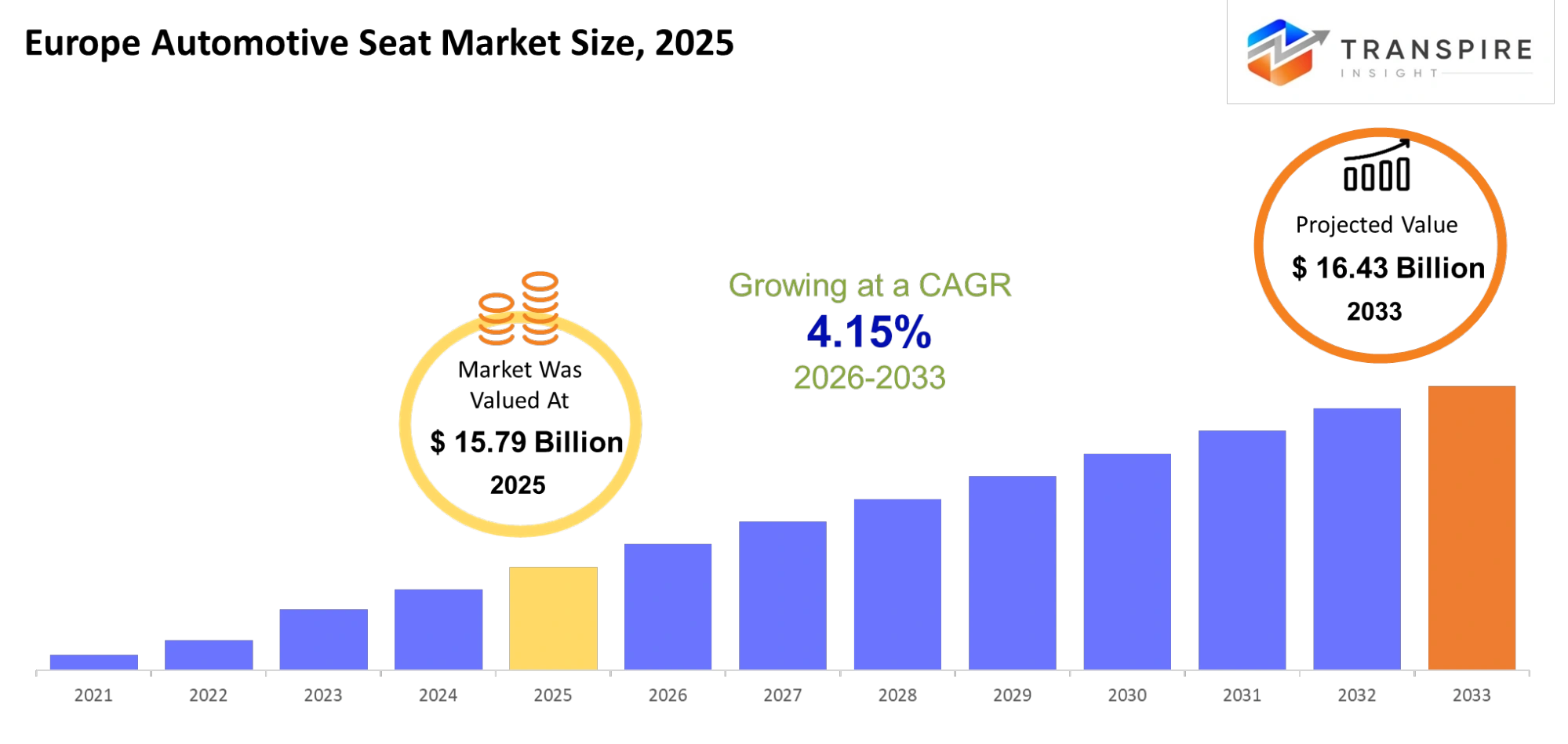
- Europe Automotive Seat Market Size 2025: USD 15.79 Billion
- Europe Automotive Seat Market Size 2033: USD 16.43 Billion
- Europe Automotive Seat Market CAGR: 4.15%
- Europe Automotive Seat Market Segments: By Type (Standard Seats, Powered Seats, Heated Seats, Ventilated Seats, Others); By Application (Passenger Vehicles, Commercial Vehicles, Electric Vehicles, Luxury Vehicles, Autonomous Vehicles, Others); By End-User (OEMs, Aftermarket, Automotive Manufacturers, Fleet Operators, EV Companies, Others); By Material (Fabric, Leather, Synthetic Leather, Foam, Others)
To learn more about this report,  Download Free Sample Report
Europe Automotive Seat Market Summary:
The Europe Automotive Seat Market size is estimated at USD 15.79 Billion in 2025 and is anticipated to reach USD 16.43 Billion by 2033, growing at a CAGR of 4.15% from 2026 to 2033.
The automotive seat market in Europe experiences changes because consumer preferences and technological progress and regulatory changes all affect its current development. manufacturers will focus on lightweight materials and safety technology improvements and comfort design elements as customers demand personalized and environmentally sustainable products. European design regulations will determine manufacturing methods because they require designers to create products that use less energy and develop safer seat designs. upcoming years will focus on developing digital systems that enable flexible seating solutions to support changing transportation needs throughout different vehicle types. this direction will align with comfort, safety, and efficiency expectations in european automotive design standards.
What Has the Impact of Artificial Intelligence Been on the Europe Automotive Seat Market?
The European automotive seat market undergoes transformation through artificial intelligence because automotive manufacturers implement data-driven decision-making methods. AI tools enable better market research and data analysis for seating systems companies to understand market trends with greater accuracy. Predictive analytics combined with machine learning technology enables more accurate demand forecasting which helps suppliers match their production to actual market demands. Smart automation technology enhances design validation and material selection processes while improving performance testing throughout all manufacturing operations. The ongoing shift will keep shaping how companies develop competitive approaches to seating technology. The future market trends of seating technologies will be improved through AI-powered insights which will analyze upcoming market trends. The automotive supply ecosystem will achieve better operational efficiency through the implementation of digital tools.
The European automotive seat market benefits from artificial intelligence because smart automation solutions increase production efficiency in manufacturing operations. The implementation of machine learning models enables companies to optimize their supply chains, which results in decreased operational delays and more efficient inventory control. Predictive analytics supports personalized seating solutions by analyzing consumer comfort preferences. Manufacturers can achieve superior competitive advantages through digital transformation investments which enable their technological progress.The Europeans automotive seat market will experience faster innovation cycles during the upcoming years.
Key Market Trends & Insights:
- Western Europe holds nearly 48% share in the europe automotive seat market which exists because Germany and France operate their strong automotive manufacturing hubs.
- The fastest-growing area between 2024 and 2030 can be found in Eastern Europe because OEM production facilities continue to expand while manufacturing expenses decrease.
- The European automotive seat market experiences growth throughout EU countries because EV adoption increases and demand for premium vehicles builds.
- Bucket seats dominate with over 52% share in the europe automotive seat market because passengers vehicle owners prefer this type of seating.
- Bench seats remain the second-largest segment which commercial and fleet vehicles use for their seating needs.
- Smart and adaptive seating systems represent the fastest-growing segment through 2030.
- Passenger cars account for nearly 70% share in the europe automotive seat market because people want better comfort and safety features.
- OEM manufacturers lead with approximately 65% share in the europe automotive seat market because they secure major vehicle production agreements.
- Aftermarket seating customization has become the fastest-growing end-user category because people want personalized designs.
- The European automotive seat market develops through intelligent seating systems research and development investments which create competitive advantages for companies.
Europe Automotive Seat Market Segmentation
By Type:
The European automotive seat market contains three main seat categories which include standard seats and powered seats and heated seats and ventilated seats and other seating options. Standard seats will continue to hold a stable position because they serve as the most common seat type used in entry and mid-level vehicles. Powered seats will gain more attention as comfort expectations rise across vehicles in the Europe Automotive Seat Market. The demand for heated and ventilated seats will increase with premium driving comfort needs and changing climate requirements. Other seating types will remain niche but will support customization trends across different vehicle models. The Europe Automotive Seat Market will see gradual design improvements which will enhance both comfort and efficiency.
By Application:
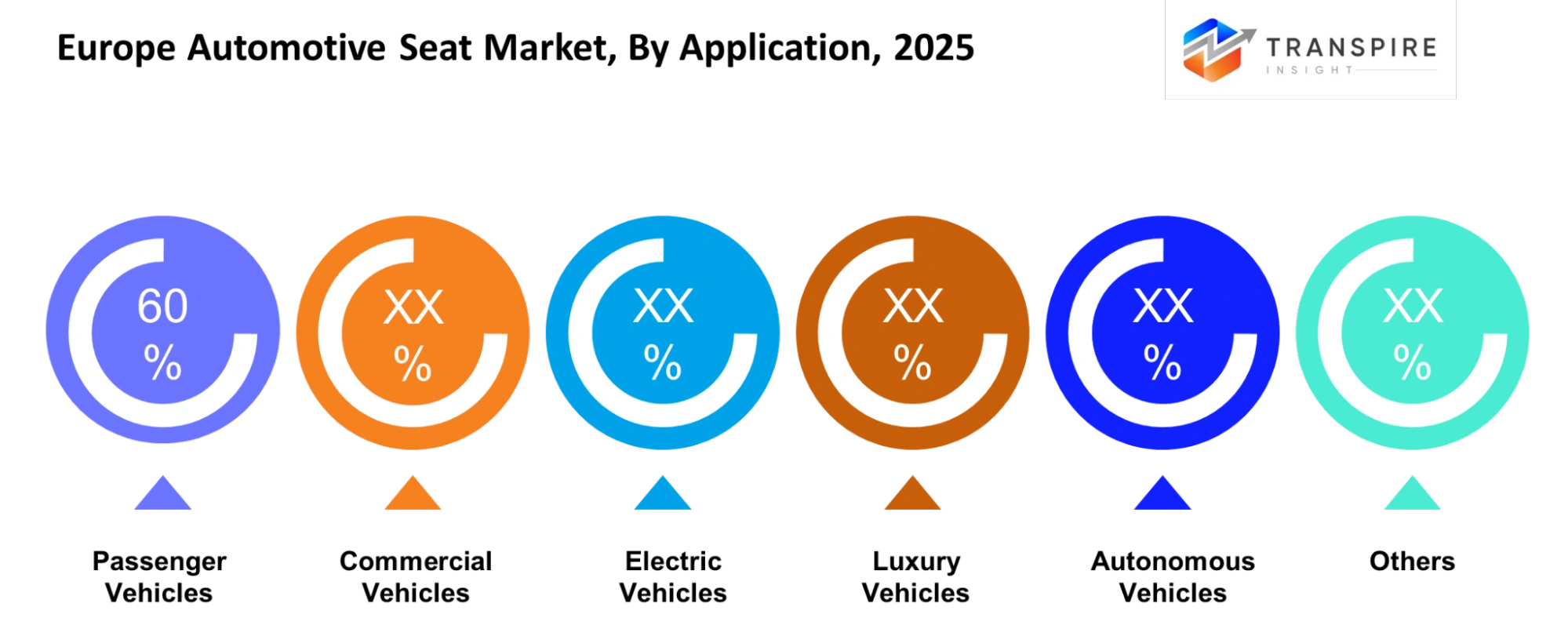
The Europe Automotive Seat Market includes six main vehicle categories which are passenger vehicles and commercial vehicles and electric vehicles and luxury vehicles and autonomous vehicles and other vehicle types. The production of passenger vehicles will remain the main market driver because their production volumes are high and consumers demand more vehicle comfort. The Europe Automotive Seat Market will experience consistent demand from commercial vehicles that require robust seating solutions. Electric vehicles will experience rapid adoption of lightweight energy-efficient seating solutions. The demand for smart seating features will increase in luxury and autonomous vehicles because these vehicles need special seating solutions for particular mobility situations. The Europe Automotive Seat Market will continue shifting toward advanced mobility requirements.
To learn more about this report, Download Free Sample Report
By End-User:
The Europe Automotive Seat Market includes six types of companies which are OEMs Aftermarket Automotive Manufacturers Fleet Operators EV Companies and other businesses. OEMs will dominate the market because they install seating systems directly into their vehicle production process. The Europe Automotive Seat Market will receive ongoing funding from automotive manufacturers who plan to upgrade their design capabilities. The aftermarket market will grow because customers need to customize their products and replace existing items. Fleet operators will select seating solutions which offer both durability and cost effectiveness while EV companies will develop lightweight intelligent seating technologies. Other end-users will support niche requirements and regional demand variations. The Europe Automotive Seat Market will expand with strong industry partnerships.
By Material:
The Europe Automotive Seat Market involves seven material types which are Fabric Leather Synthetic Leather Foam and other materials. Fabric materials will maintain demand in cost-sensitive vehicle segments due to affordability and comfort balance. The Europe Automotive Seat Market will see leather as the main choice for premium vehicle seating solutions. Synthetic leather will grow due to sustainability concerns and cost efficiency. Foam materials will continue to play a key role in comfort and safety design improvements. Other materials will support innovation in lightweight and recyclable seat structures. The Europe Automotive Seat Market will increasingly focus on durable and eco-friendly material adoption.
What are the Main Challenges for the Europe Automotive Seat Market Growth?
The Europe automotive seat market faces ongoing technical and operational difficulties which impede its development because manufacturers need to balance safety requirements with comfort needs and weight reduction goals. Advanced materials and electronic components limit system performance because systems must prove their ability to operate effectively throughout extended time periods. The Europe automotive seat market experiences production difficulties because supply chain disruptions and changing raw material availability make it hard for manufacturers to keep their production levels steady.
The Europe automotive seat market faces significant manufacturing and commercial challenges because its production processes require advanced technical skills and multiple European regulatory requirements demand compliance from businesses. Automakers face increased costs linked to safety certifications, environmental standards, and testing protocols.The need to comply with regulations causes product development delays and innovation processes to take more time. Rising labor and energy costs create additional challenges for smaller suppliers in the europe automotive seat market because they must find ways to grow their businesses while offering products at competitive prices.
The europe automotive seat market faces adoption challenges because skilled workers are not available and different regions have different technological development levels. The advanced seating technologies need professionals who understand both electronics and smart systems, which still require development in multiple regions. Mid-sized manufacturers face funding gaps which limit their ability to grow and develop new products especially in new manufacturing locations. The barriers continue to hinder the complete progress of the european automotive seat industry.
The europe automotive seat market experiences market competition together with future risks because lightweight seating technologies and cost-effective imports create price pressure. The smart mobility industry requires companies to execute continuous technological updates which creates operational risks for organizations that do not possess rapid adaptation abilities. The evolving regulatory frameworks across Europe will create new compliance requirements which will hinder business growth and restrict market development in the europe automotive seat market.
Regional Insights
The Western European market sector will maintain its status as the primary market because Germany France and Italy operate strong automotive manufacturing facilities. The Europe Automotive Seat Market will experience continuous growth because customers prefer high-end vehicles which come equipped with modern seating technologies. Major production centers will use safety regulation requirements and comfort standard needs to guide their product development work which will lead to new technological breakthroughs.
The Northern European market will maintain a consistent demand because consumers prefer seating solutions which prioritize safety and durability. The Southern European market will grow at a moderate pace because vehicle production and tourism-related transport needs will increase. The Eastern European market will expand at an accelerated pace because manufacturers are drawn to lower production costs which lead to increased manufacturing activities in Poland and Hungary.
The demand patterns across all European regions will shift because of urbanization trends and the growing adoption of electric vehicles. The Western European market will experience gradual distribution of technological upgrades in seating systems which will enhance comfort and efficiency standards. The Europe Automotive Seat Market will achieve ongoing growth because of regional manufacturing networks and international supply chains which provide long-term stability and gradual market development.
Recent Development News
In April 2026, Lear Corporation announced the acquisition of a minority stake in a European smart seating technology startup to strengthen its software-defined seating capabilities. The move aims to expand Lear’s presence in intelligent seating systems across European EV platforms.https://www.lear.com
In March 2026, Faurecia (FORVIA) completed the acquisition of a German automotive seat component manufacturer to enhance its localized production footprint in Europe. This acquisition is expected to improve supply chain resilience and accelerate modular seat innovation. https://www.forvia.com
|
Report Metrics |
Details |
|
Market size value in 2025 |
USD 15.79 Billion |
|
Market size value in 2026 |
USD 16.43 Billion |
|
Revenue forecast in 2033 |
USD 21.84 Billion |
|
Growth rate |
CAGR of 4.15% from 2026 to 2033 |
|
Base year |
2025 |
|
Historical data |
2021 - 2024 |
|
Forecast period |
2026 - 2033 |
|
Report coverage |
Revenue forecast, competitive landscape, growth factors, and trends |
|
Regional scope |
Europe (Germany, United Kingdom, France, Italy, Spain, Rest of Europe) |
|
Key company profiled |
Adient, Lear, Faurecia, Toyota Boshoku, Magna, Grammer, TS Tech, NHK Spring, Gentherm, Recaro, Brose, Hyundai Transys, Tachi-S, Camaco, Johnson Controls |
|
Customization scope |
Free report customization (country, regional & segment scope). Avail customized purchase options to meet your exact research needs. |
|
Report Segmentation |
By Type (Standard Seats, Powered Seats, Heated Seats, Ventilated Seats, Others); By Application (Passenger Vehicles, Commercial Vehicles, Electric Vehicles, Luxury Vehicles, Autonomous Vehicles, Others); By End-User (OEMs, Aftermarket, Automotive Manufacturers, Fleet Operators, EV Companies, Others); By Material (Fabric, Leather, Synthetic Leather, Foam, Others) |
How Can New Companies Establish a Strong Foothold in the Europe Automotive Seat Market?
New companies can establish a strong foothold in the europe automotive seat market by focusing on niche positioning and solving specific comfort, safety, and weight-reduction challenges faced by modern vehicle manufacturers. The electric and autonomous vehicle markets provide attractive market entry points because these segments require seating solutions that include lightweight materials and embedded sensors. The European automotive seat market gives Caria Technologies and Recaro Mobility Solutions( emerging innovation-focused firms) a competitive advantage because their early focus on ergonomic and digital seat design. The European automotive seat market will expand through strategic partnerships between OEMs and Tier-1 suppliers which will drive operational growth for business partners.
The established supply chains which exist through collaboration will decrease the costs which manufacturers need to pay for production and the expenses required for certification. The production efficiency of new companies will increase through their investment in smart automation and AI-driven design tools and predictive material testing which enables them to follow European safety and environmental requirements. The organization will reach its long-term competitive advantage through these innovation strategies.
New market entrants will gain visibility through their use of smart sensors and climate-adaptive seating and machine learning-based comfort systems. The industry will adopt solutions which address their need for customized products and sustainable operations and cost-effective methods. The European automotive seat market will see emerging players who use digital engineering and sustainable materials to develop market acceptance and establish their business presence.
Key Europe Automotive Seat Market Company Insights
The Europe Automotive Seat Market will experience ongoing competition because global suppliers develop seat systems which prioritize user comfort and safety and require less weight. Established players will maintain advantage through large-scale production and long-term contracts with OEMs. The region's competition will develop through ongoing financial backing for smart seating technology and material research which will affect product prices.
Leading companies, including Adient and Lear Corporation and Faurecia and Toyota Boshoku and Magna International will enhance their market standing through strategic alliances and product development initiatives. These firms will focus on electric vehicle seating solutions and AI-based comfort systems to meet changing demand. The Europe Automotive Seat Market will show increasing focus on sustainability and modern production techniques.
New market entrants will experience difficulties from established suppliers but they will still discover opportunities through developing specialized products and unique market offerings. The companies will use smart automation and design flexibility and cost efficiency to establish their market positions. The Europe Automotive Seat Market will move towards technology-based competition which will favor companies that develop their products at a faster pace while maintaining a stronger network of suppliers.
Company List
- Adient
- Lear
- Faurecia
- Toyota Boshoku
- Magna
- Grammer
- TS Tech
- NHK Spring
- Gentherm
- Recaro
- Brose
- Hyundai Transys
- Tachi-S
- Camaco
- Johnson Controls
What are the Key Use-Cases Driving the Growth of the Europe Automotive Seat Market?
The Europe automotive seat market is expanding because electric and connected vehicles now require their drivers and passengers to experience comfort and safety and energy-efficient designs. Automakers are developing intelligent seating systems which help drivers maintain their posture during long trips while creating better experiences for passengers. The European automotive seat market is experiencing stable growth because premium and mid-range vehicle segments show strong demand for new applications.
The Europe automotive seat market is expanding because electric vehicles and autonomous mobility platforms now include advanced seating systems as their main use case. These vehicles need lightweight materials together with built-in sensors and flexible seating designs which enable better use of inside space. Fleet operators and shared mobility services need durable seats which provide comfort to users while decreasing maintenance expenses to achieve better efficiency in the European automotive seat market.
Posture-support systems together with vibration-reduction technologies from medical seating solutions have created ergonomic designs for healthcare facilities which now affect seat development. Drivers in manufacturing and logistics vehicles require enhanced seating systems which protect them from accidents while preventing fatigue during extended work hours. The European automotive seat market keeps expanding because businesses use these practical applications to build their innovation pipelines which they use to develop new technologies.
The upcoming use cases will utilize artificial intelligence to create personalized experiences through seating systems which adapt to climate conditions while optimizing user comfort according to their current activities. The technological integration process will move forward while the Europe automotive seat market creates new commercial possibilities through its expanding business activities.
Europe Automotive Seat Market Report Segmentation
By Type
- Standard Seats
- Powered Seats
- Heated Seats
- Ventilated Seats
- Others
By Application
- Passenger Vehicles
- Commercial Vehicles
- Electric Vehicles
- Luxury Vehicles
- Autonomous Vehicles
- Others
By End-User
- OEMs
- Aftermarket
- Automotive Manufacturers
- Fleet Operators
- EV Companies
- Others
By Material
- Fabric
- Leather
- Synthetic Leather
- Foam
- Others
Frequently Asked Questions
Find quick answers to common questions.
The approximate Europe Automotive Seat Market size for the market will be USD 21.84 Billion in 2033.
Key segments for the Europe Automotive Seat Market are By Type (Standard Seats, Powered Seats, Heated Seats, Ventilated Seats, Others); By Application (Passenger Vehicles, Commercial Vehicles, Electric Vehicles, Luxury Vehicles, Autonomous Vehicles, Others); By End-User (OEMs, Aftermarket, Automotive Manufacturers, Fleet Operators, EV Companies, Others); By Material (Fabric, Leather, Synthetic Leather, Foam, Others).
Major Europe Automotive Seat Market players are Adient, Lear, Faurecia, Toyota Boshoku, Magna, Grammer, TS Tech, NHK Spring, Gentherm, Recaro, Brose, Hyundai Transys, Tachi-S, Camaco, Johnson Controls.
The Europe Automotive Seat Market size is USD 15.79 Billion in 2025.
The Europe Automotive Seat Market CAGR is 4.15%.
- Adient
- Lear
- Faurecia
- Toyota Boshoku
- Magna
- Grammer
- TS Tech
- NHK Spring
- Gentherm
- Recaro
- Brose
- Hyundai Transys
- Tachi-S
- Camaco
- Johnson Controls
Recently Published Reports
-
Apr 2026
ATV & UTV Market
ATV & UTV Market Size, Share & Analysis Report By Type (ATV, and UTV), By Variants (Less Than 400 CC, 400 CC To 800 CC, and More Than 800 CC), and Geography (North America, Europe, Asia-Pacific, Middle East and Africa, South and Central America), 2021 - 2031
-
Apr 2026
Automotive Central Gateway Module Market
Automotive Central Gateway Module Market Size, Share & Analysis Report By Type (Ethernet Central Gateway Module, CAN Central Gateway Module, LIN Central Gateway Module, and FlexRay), By Application (Powertrain Control, Body Control, Infotainment System, Advanced Driver Assistance Systems (ADAS), and Others), By End User (Passenger Vehicles, and Commercial Vehicles), and Geography (North America, Europe, Asia-Pacific, Middle East and Africa, South and Central America), 2021 - 2031
-
Apr 2026
Automotive Engine Oil Filter Market
Automotive Engine Oil Filter Market Size, Share & Analysis Report By Filter Type (Fuel Filter, Engine Oil Filter, Hydraulic Oil Filter, and Others), By Filter Media (Cellulose, Synthetic, and Micro), By Sales Channel (OEMs, and Aftermarket), By Vehicle Type (Passenger Cars, Light Commercial Vehicles, Heavy Duty Trucks, Buses and Coaches, and Off-road Vehicles), and Geography (North America, Europe, Asia-Pacific, Middle East and Africa, South and Central America), 2021 - 2031
-
Apr 2026
Automotive Parts Aluminium Die Casting Market
Automotive Parts Aluminium Die Casting Market Size, Share & Analysis Report By Production Process (Pressure Die Casting, Vacuum Die Casting, Squeeze Die Casting, Gravity Die Casting), By Application (Body Parts, Engine Parts, Transmission Parts, Battery And Related Components, Other Application Types), and Geography (North America, Europe, Asia-Pacific, Middle East and Africa, South and Central America), 2021 - 2031
Our Clients