

Middle East and Africa Automotive Natural Gas Vehicle Market Size & Forecast:
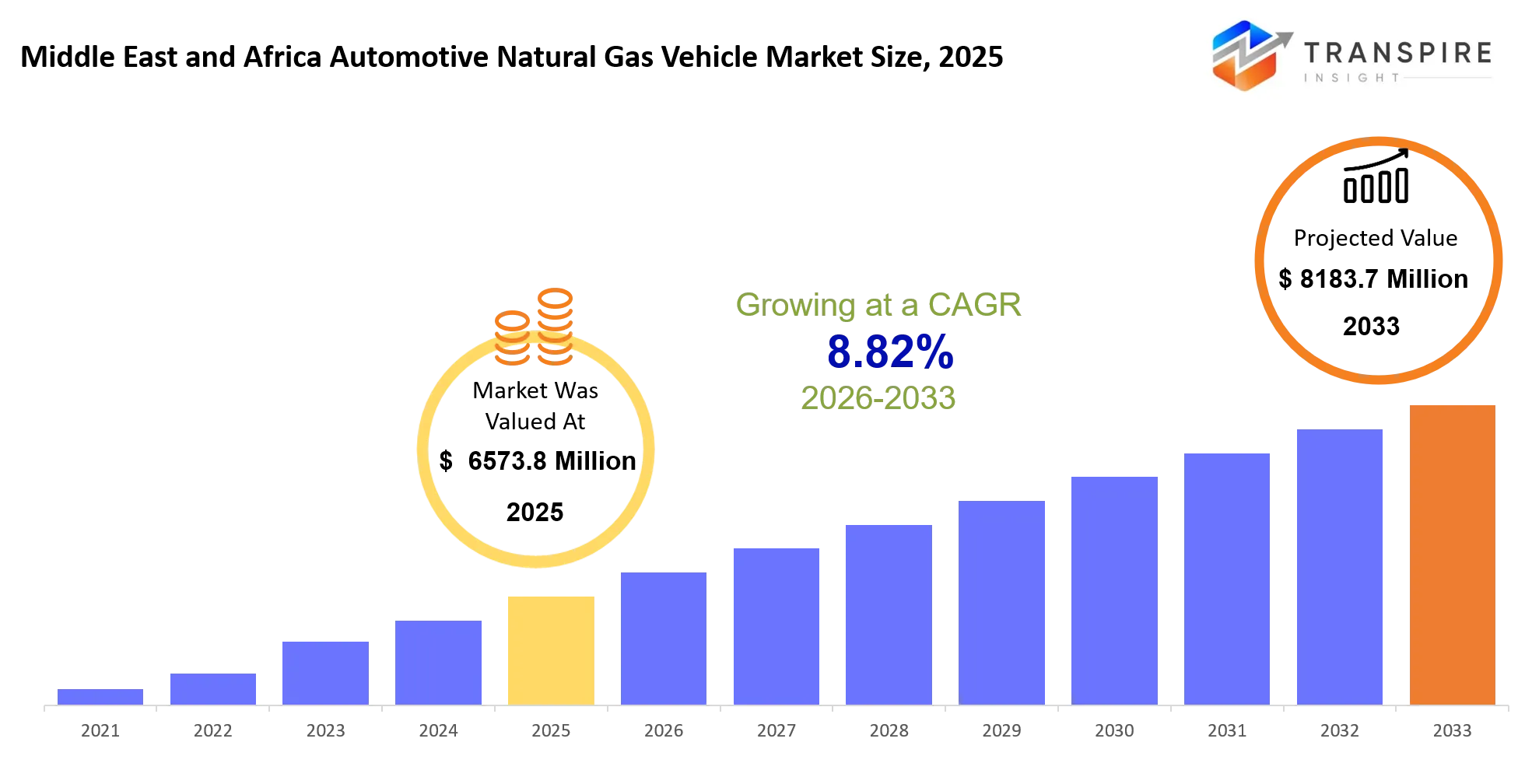
- Middle East and Africa Automotive Natural Gas Vehicle Market Size 2025: USD 6573.8 Million
- Middle East and Africa Automotive Natural Gas Vehicle Market Size 2033: USD 8183.7 Million
- Middle East and Africa Automotive Natural Gas Vehicle Market CAGR: 8.82%
- Middle East and Africa Automotive Natural Gas Vehicle Market Segments: By Vehicle Type (Passenger Vehicles, Light Commercial Vehicles, Heavy Commercial Vehicles, Buses, Others); By Fuel Type (CNG, LNG, RNG, Others); By Application (Public Transport, Logistics, Personal Transportation, Others); By End User (Fleet Operators, Government, Individual Buyers, Others)
To learn more about this report,  Download Free Sample Report
Middle East and Africa Automotive Natural Gas Vehicle Market Summary
The Middle East and Africa Automotive Natural Gas Vehicle Market was valued at USD 6573.8 Million in 2025. It is forecast to reach USD 8183.7 Million by 2033. That is a CAGR of 8.82% over the period.
The Middle East and Africa Automotive Natural Gas Vehicle Market, kind of plays a practical role in cutting transportation fuel costs while also helping fleet operators meet the tightening emissions rules. Natural gas vehicles are being used more often in public transit, logistics fleets, city servicesand other commercial hauling where the fuel spend is usually a big chunk of the day to day operating budget. In the past five years the market has shown a real structural change, moving away from small passenger CNG uptake and toward bigger commercial vehicles running on compressed natural gas and liquefied natural gas.
That shift got a boost from government-backed plans for fuel diversification, especially across Gulf countries and in some parts of Africa that have strong natural gas reserves. One big trigger was the wobble in global oil markets plus energy supply disruptions, it pushed fleet owners to look for alternatives that feel more steady. And as natural gas infrastructure keeps expanding, while operators stay focused on lowering the full cost of ownership vehicle adoption keeps speeding up. This means more revenue potential, not just in vehicle manufacturing but also in fueling infrastructure, and even in engine technology segments too.
Key Market Insights
- The Middle East and Africa Automotive Natural Gas Vehicle Market is riding on fleet modernization initiatives in several Gulf countries as well as a number of chosen African economies.
- In 2025, Middle East countries showed around 68% of regional market revenue, backed by pretty abundant natural gas reserves, so yeah it’s been a helpful tailwind.
- Saudi Arabia and the UAE seem to dominate regional demand, together they contribute more than 45% of market value in 2025, which is honestly a big chunk.
- Meanwhile Africa is the fastest-growing regional market, adoption is expected to climb by over 9% every year until 2033, mainly because transport sector investments keep rolling in.
- Commercial vehicles were close to 57% market share in 2025, so they’re clearly the leading vehicle category across the market.
- Passenger vehicles came in second, supported by government incentives and also by the ongoing expansion of CNG refueling networks, it’s becoming easier to operate.
- LNG-powered heavy-duty trucks are projected to grow the quickest through 2033, as freight operators are looking for longer driving ranges, and that matters a lot.
- On the application side, public transportation uses represented about 34% of total vehicle deployments in 2025, so they’re still the main application segment.
- Logistics and freight transportation is the fastest-growing application category, mostly because fuel savings keep improving the fleet economics.
- Key players like Toyota, Hyundai, Tata Motors, Ashok Leyland, Volvo, and Cummins are pushing ahead via engine innovation, strategic collaborations, and regional manufacturing investments, all at once sort of.
What are the Key Drivers, Restraints, and Opportunities in the Middle East and Africa Automotive Natural Gas Vehicle Market?
The main push behind market expansion is kinda that widening cost advantage natural gas has, compared with the more conventional transport fuels. Governments across the Gulf region have put a lot of money into domestic natural gas production and distribution networks, and that sort of thing ends up making the economics work out better for fleet operators. Public transit authorities, logistics providers, and municipal vehicle operators are using natural gas vehicles more and more because fuel savings can really cut operating costs over a vehicle’s lifetime. That cost advantage then feeds straight into better fleet profitability and it also speeds up replacement cycles, which supports vehicle sales plus infrastructure investment.
Still, the biggest brake is the lack of refueling infrastructure outside the main urban and industrial corridors. Setting up CNG and LNG fueling stations takes a lot of upfront capital, regulatory approvals, and also long-term supply commitments. Unfortunately these infrastructure issues do not get solved fast, so they keep limiting adoption in secondary cities, and on rural transport routes too. Because of that, fleet conversions often get pushed back, so the market penetration slows and the revenue upside gets capped.
A big chance is in heavy-duty LNG transportation corridors that link ports, logistics hubs, and industrial zones. Several Middle Eastern countries are running freight modernization programs, while parts of Africa are upgrading their transport infrastructure at the same time. With high-performance natural gas engines showing up more often, and with LNG distribution networks getting broader, conditions look favorable for long-haul trucking fleets. Firms that build fueling infrastructure partnerships plus integrated fleet solutions might end up capturing a noteworthy portion of future market growth.
What Has the Impact of Artificial Intelligence Been on the Middle East and Africa Automotive Natural Gas Vehicle Market?
Artificial intelligence is getting more and more important for how natural gas vehicle fleets are run and managed across the Middle East and Africa. Fleet operators are using AI based telematics platforms to keep an eye on fuel consumption, vehicle utilization, engine performance and emissions compliance—like all in real time. The automated monitoring piece seems to let operators spot inefficient driving patterns faster, tweak routing choices with less guesswork, and also cut down on that extra kind of unnecessary fuel burn.
Then there are machine learning models, which also end up feeding predictive maintenance programs. When the systems look at engine temperature, pressure, vibration, and fuel system data, they can catch early indicators of component wear, before something actually fails. In practice this helps reduce vehicle downtime, it supports longer engine life and improves overall fleet availability. A few fleet operators even mention lower maintenance expenses and some measurable gains in operational uptime after putting predictive analytics platforms to work.
On top of that, advanced digital technologies are improving fueling network management in a pretty direct way. AI tools forecast fuel demand patterns, help plan station inventory with greater accuracy, and strengthen supply chain coordination for CNG and LNG distribution. The result is better asset utilization, plus more dependable service delivery.
Still, adoption is not fully smooth. Integration costs can be heavy, and data availability can be a bit uneven. A lot of fleet operators are still stuck with legacy vehicle systems that produce limited operational information, and that slows things down. Also, connectivity gaps along remote transport corridors can cut the impact of real time analytics, and it can make predictive algorithms less effective, in general.
Key Market Trends
- Commercial fleet conversions jumped by more than 20% from 2022 to 2025, kinda, because operators leaned harder on lower operating costs.
- LNG truck adoption grew a lot after 2023, and logistics companies basically wanted longer driving ranges than what traditional CNG vehicles could do.
- Gulf governments sped up investments in natural gas fueling networks so station availability improved across the main freight corridors, pretty fast.
- By 2025 natural gas commercial vehicles brought in about 57% of total market revenue, which in turn keeps them in strong market leadership.
- Fleet operators are using telematics and predictive maintenance platforms more and more, trying to boost fuel efficiency and also cut down unexpected downtime.
- Cummins rolled out new natural gas engine platforms during 2025, which helped heavy duty transportation performance.
- Public transportation agencies expanded natural gas bus procurement programs, aiming to trim long term operating expenditures.
- Regional manufacturers increasingly partner with energy companies to build more integrated vehicles and fueling infrastructure ecosystems, sort of one connected thing.
- In Africa transport operators moved faster on adoption after investments in industrial corridors and logistics modernization projects.
- And competition seems to have moved away from vehicle pricing only, now it’s more total cost of ownership, fuel savings, plus service network capabilities.
Middle East and Africa Automotive Natural Gas Vehicle Market Segmentation
By Vehicle Type
The vehicle type segment kind of mirrors the broad set of natural gas-powered transportation options that get used across both passenger mobility and commercial operations. Passenger vehicles take up a notable share, mostly because fuel cost savings and somewhat reduced operating expenses, nudge adoption among private vehicle owners and also urban commuters. Then light commercial vehicles really back delivery services retail distribution, and urban logistics duties where the daily cadence is high enough that alternative fuel utilization becomes very attractive.
Heavy commercial vehicles tend to create substantial market value, since freight operators look for lower fuel expenses across long-distance runs. Buses stay relevant too, because there are public transportation investments and municipal fleet modernization programs, aimed at cleaner transportation systems and this overall shift. Other categories include specialized utility vehicles, municipal service vehicles, and niche transportation applications that are designed to satisfy particular operational needs across different industries.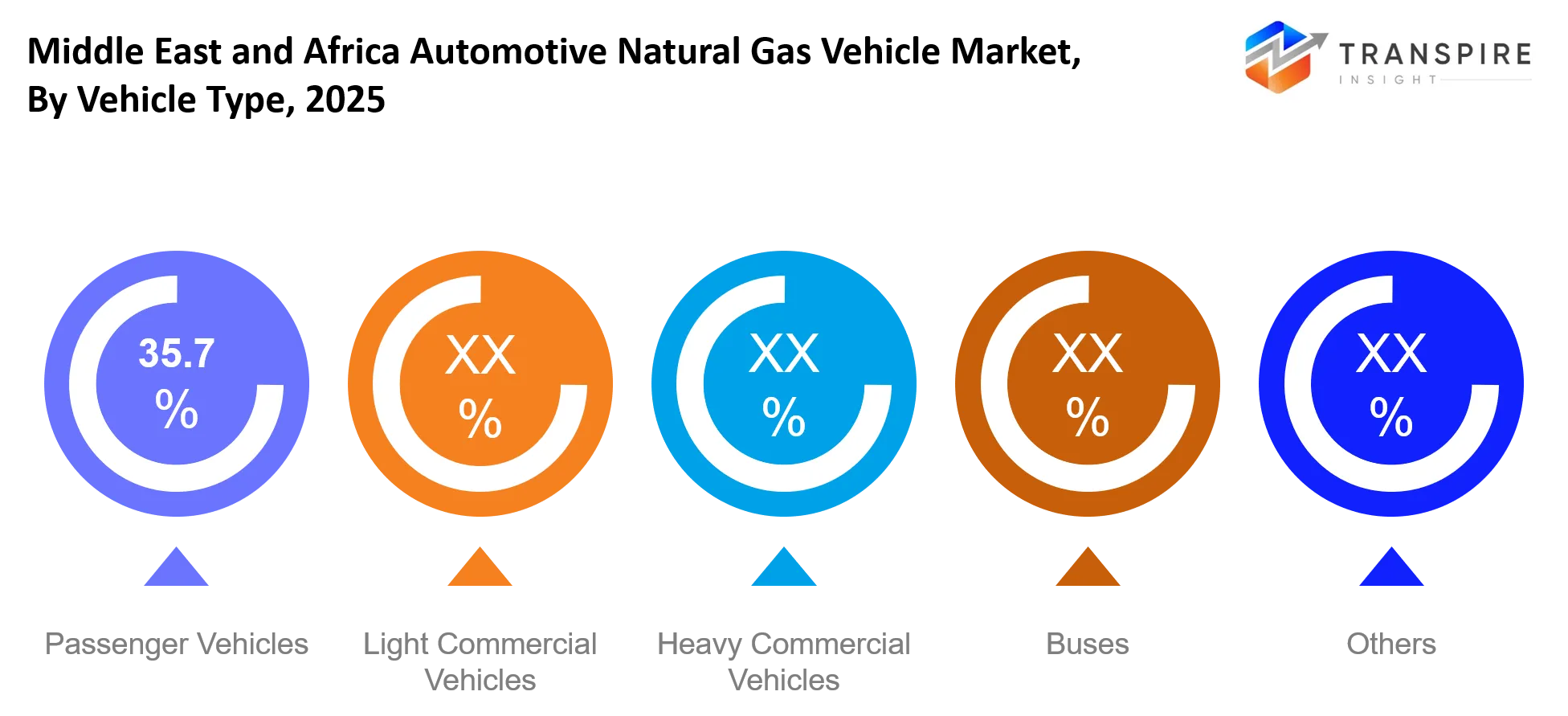
To learn more about this report, Download Free Sample Report
By Fuel Type
The fuel type segment kinda points to the various natural gas choices for transportation, you know, based on vehicle range, how available the infrastructure is, and the actual operating requirements in day to day use. CNG still holds a big chunk of the market because widespread adoption in city transport and public transit networks helps keep a steady market demand. There’s also the established refueling infrastructure and in general the vehicle conversion costs are a bit lower which all together supports CNG’s strong standing across several countries.
LNG keeps getting more traction, specially for heavy duty transportation where longer driving ranges and better fuel efficiency really help for commercial operations. RNG is drawing growing interest too, since transportation operators are chasing lower carbon emissions while still leaning on the existing natural gas infrastructure. Other options show up as well, like alternative gaseous fuel blends and emerging technologies that will fit certain transportation needs and regional energy strategies.
By Application
The application segment shows how natural gas vehicles kinda end up serving different transportation functions in both public and private spaces. Public Transport still makes up a big share, because city transit systems, and municipal authorities keep investing in lower cost solutions, sort of like a practical replacement cycle. With consistent route patterns plus centralized fueling facilities, the operating setup stays favorable, especially for large scale fleet rollouts.
Logistics also creates a strong demand line, driven by freight movement, distribution services, and supply chain operations that basically need cost efficient transit. Personal Transportation supports adoption with individual vehicle owners, who are usually after long term fuel savings and day to day operational efficiency. Then there are Others, like industrial hauling, municipal services, airport operations, and specialized transport tasks, each one needing dependable vehicle performance that is also economically sensible.
By End User
The end user segment kind of mirrors how many kinds of customers use natural gas vehicle tech across commercial public and personal transport activities. Fleet Operators take up a big portion since large vehicle fleets end up gaining directly from lower fuel spending plus better cost management, which is a pretty clear win. Commercial transportation firms logistics providers, and transit operators still put money into fleet conversion programs, mainly so they can push operational efficiency further.
Government organizations also stay quite active via public transportation projects, municipal vehicle initiatives, and broader national energy diversification efforts. Individual buyers help move the market ahead too, because as regional markets improve vehicle availability and fuel affordability feels more stable, more people consider the shift. Others include schools and universities, industrial businesses, utility providers and niche organizations that need practical transportation solutions for everyday operations.
What are the Key Use Cases Driving the Middle East and Africa Automotive Natural Gas Vehicle Market?
Public transportation still seems to be the biggest use case for natural gas vehicles across the whole region. Municipal bus operators and transit authorities use natural gas fleets because they can lower the fuel spending a bit, while keeping high daily vehicle utilization. And honestly these applications create a lot of demand because buses run on set routes, so fueling infrastructure can be deployed in a fairly efficient way, without too much hassle.
Commercial logistics, along with urban freight distribution, is picking up as a kind of secondary direction. Delivery fleets, municipal service vehicles, and industrial transportation operators are increasingly adopting natural gas vehicles in order to improve their operating economics. They like these systems because they get predictable fuel costs and also tend to face reduced emissions compliance expenses.
Newer directions include long-haul LNG trucking and specialized industrial transportation, too. Mining operations, port logistics providers, and even cross-border freight carriers are now looking at natural gas solutions for heavy-duty transport requirements. As the fueling infrastructure keeps expanding, these applications are expected to matter more and more over the forecast period.
|
Report Metrics |
Details |
|
Market size value in 2025 |
USD 6573.8 Million |
|
Market size value in 2026 |
USD 6735.4 Million |
|
Revenue forecast in 2033 |
USD 8183.7 Million |
|
Growth rate |
CAGR of 8.82% from 2026 to 2033 |
|
Base year |
2025 |
|
Historical data |
2021 - 2024 |
|
Forecast period |
2026 - 2033 |
|
Report coverage |
Revenue forecast, competitive landscape, growth factors, and trends |
|
Regional scope |
Middle East and Africa (Saudi Arabia, United Arab Emirates, South Africa, Rest of Middle East and Africa) |
|
Key company profiled |
Toyota, Hyundai, Tata Motors, Ashok Leyland, Volvo, Scania, Iveco, Cummins, Volkswagen, Suzuki, Honda, Ford, General Motors, Fiat, Nissan |
|
Customization scope |
Free report customization (country, regional & segment scope). Avail customized purchase options to meet your exact research needs. |
|
Report Segmentation |
By Vehicle Type (Passenger Vehicles, Light Commercial Vehicles, Heavy Commercial Vehicles, Buses, Others); By Fuel Type (CNG, LNG, RNG, Others); By Application (Public Transport, Logistics, Personal Transportation, Others); By End User (Fleet Operators, Government, Individual Buyers, Others) |
Which Regions are Driving the Middle East and Africa Automotive Natural Gas Vehicle Market Growth?
The Middle East shows up as the biggest regional market and keeps leading mainly because it has huge natural gas reserves also supportive energy policies, plus strong ability to keep spending on new projects. In places like Saudi Arabia, the UAE, and Qatar, they can rely on energy infrastructure that is already in place . And on top of that, government-linked transportation diversification initiatives help a lot. Fleet operators there can get fairly stable natural gas supplies, so converting vehicles tends to feel economically reasonable. You also end up with a fairly mature set of fuel suppliers vehicle distributors, and infrastructure developers, so the whole system kinda locks in that leadership position .
South Africa, meanwhile, is the second-largest contributor and it feels different from the Middle East because the momentum comes more from private transportation investment rather than from fuel resources being available in abundance. The country still has a relatively advanced automotive manufacturing base and a working logistics sector that’s already established. Commercial fleet operators keep putting money into alternative-fuel solutions largely to control operating costs and stay more competitive. That kind of steady investment climate helps the market keep developing in a consistent way .
For the rest of Africa, the outlook is faster growth through 2033. Infrastructure upgrades, industrial expansion, and urban mobility investments have pushed demand for alternative-fuel vehicles upward. Several countries are also working on expanding natural gas production capacity and on building fresh transport corridors . For investors and newcomers, that’s where the openings sit : you can set up fueling networks build vehicle distribution channels, and establish fleet service operations before the market gets more mature and competition tightens .
Who are the Key Players in the Middle East and Africa Automotive Natural Gas Vehicle Market and How Do They Compete?
Competition in the market is kinda moderately fragmented, with global vehicle manufacturers, commercial vehicle specialists, and engine suppliers all sort of going head to head across different segments. Cost efficiency still matters a lot, but technology performance, fueling compatibility, service coverage, and fleet economics increasingly decide who wins. The established manufacturers keep trying to defend their market share, while engine innovators bring in fresh approaches for heavy-duty transportation.
Toyota, for example, seems to lean into fuel efficient alternative powertrain solutions and it also benefits from a solid distribution network across the Middle East and Africa. Hyundai taps into its commercial vehicle lineup, plus regional partnerships, to widen access to natural gas transportation solutions. Tata Motors and Ashok Leyland instead compete using cost effective commercial vehicle platforms, built for those emerging-market operating conditions.
Cummins stands out through advanced natural gas engine technology, including new high performance platform ideas aimed at heavy-duty transportation applications. The more recent product launches tend to focus on improving fuel efficiency, emissions performance, and operational flexibility for fleet operators. Volvo and Scania go with premium fleet solutions, advanced telematics, and integrated service capabilities that are meant to support lower life-cycle costs. And overall, these firms keep pushing partnerships, technology development programs, and regional expansion strategies, to reinforce their competitive position in a way that actually sticks.
Company List
- Toyota
- Hyundai
- Tata Motors
- Ashok Leyland
- Volvo
- Scania
- Iveco
- Cummins
- Volkswagen
- Suzuki
- Honda
- Ford
- General Motors
- Fiat
- Nissan
Recent Development News
In April 2025, Cummins launched availability of its X15N 15-liter natural gas engine for Freightliner Cascadia heavy-duty trucks. The development expanded high-performance natural gas transportation options and strengthened commercial fleet adoption potential.https://www.cummins.com
In January 2025, Cummins Group India launched its HELM engine platform and introduced the B6.7N natural gas engine. The launch enhanced natural gas vehicle technology options for heavy-duty transportation and supported broader fleet decarbonization strategies.https://www.cummins.com
In January 2025, Cummins and Liberty Energy expanded their strategic partnership to deploy advanced natural gas engine technology. The collaboration demonstrated continued investment in high-efficiency natural gas power systems and reinforced confidence in natural gas transportation technologies.https://www.cummins.com
What Strategic Insights Define the Future of the Middle East and Africa Automotive Natural Gas Vehicle Market?
The market seems to be moving toward broader commercial fleet adoption, especially in heavy-duty transportation, logistics, and public transit. Underneath it all, there’s this push toward lowering fleet operating costs, while still staying compliant with the ever changing emissions standards. In the next five to seven years, the players that blend vehicle solutions with fueling infrastructure and digital fleet management services will probably end up in the strongest competitive spots.
There is also a less visible kind of risk, sort of technology substitution. Like, as battery electric and hydrogen vehicle options become more commercially practical, some money that might’ve gone into natural gas infrastructure could quietly shift toward alternative propulsion systems. This matters a lot in higher-income markets, where decarbonization targets are tighter, and the timeline pressure feels more real.
At the same time, there’s a solid opportunity too. LNG powered freight corridors that link industrial clusters, ports, and cross-border logistics routes across Africa and the Gulf look promising. Market participants should focus on partnerships with fuel suppliers, infrastructure builders, and fleet operators. Rather than only chasing vehicle sales, building an integrated transportation ecosystem can lead to better long term revenue and make the whole operation less fragile when newer technology waves show up.
Middle East and Africa Automotive Natural Gas Vehicle Market Report Segmentation
By Vehicle Type
- Passenger Vehicles
- Light Commercial Vehicles
- Heavy Commercial Vehicles
- Buses
- Others
By Fuel Type
- CNG
- LNG
- RNG
- Others
By Application
- Public Transport
- Logistics
- Personal Transportation
- Others
By End User
- Fleet Operators
- Government
- Individual Buyers
- Others
Frequently Asked Questions
Find quick answers to common questions.
The Expected Middle East and Africa Automotive Natural Gas Vehicle Market size for the Market will be USD 8183.7 Million in 2033.
Key Segments for the Middle East and Africa Automotive Natural Gas Vehicle Market are By Vehicle Type (Passenger Vehicles, Light Commercial Vehicles, Heavy Commercial Vehicles, Buses, Others); By Fuel Type (CNG, LNG, RNG, Others); By Application (Public Transport, Logistics, Personal Transportation, Others); By End User (Fleet Operators, Government, Individual Buyers, Others).
Major Middle East and Africa Automotive Natural Gas Vehicle Market Players are Toyota, Hyundai, Tata Motors, Ashok Leyland, Volvo, Scania, Iveco, Cummins, Volkswagen, Suzuki, Honda, Ford, General Motors, Fiat, Nissan.
The Current Middle East and Africa Automotive Natural Gas Vehicle Market size is USD 6573.8 Million in 2025.
The Middle East and Africa Automotive Natural Gas Vehicle Market CAGR is 8.82% from 2026 to 2033.
- Toyota
- Hyundai
- Tata Motors
- Ashok Leyland
- Volvo
- Scania
- Iveco
- Cummins
- Volkswagen
- Suzuki
- Honda
- Ford
- General Motors
- Fiat
- Nissan
About the Authors

Mayur Shinde
I am Mayur Shinde, a Senior Research Analyst at Transpire Insight, specializing in the Automotive & Transportation and Information & Communication Technology (ICT) Industry. My work focuses on analyzing emerging market trends, technological advancements, competitive landscapes, and industry developments to deliver accurate, data-driven insights. I am passionate about transforming complex market information into clear, actionable content that helps businesses, professionals, and decision-makers stay informed and make confident strategic decisions.

Chakradhar Khansole
Chakradhar serves as the Research Director at Transpire Insight, bringing over 8 years of experience in technology, innovation, and strategic market intelligence. He specializes in transforming complex market data into actionable business insights that enable organizations to make informed, growth-oriented decisions. Recognized for his strategic vision and analytical expertise, Chakradhar leads high-impact research initiatives, delivering comprehensive market assessments, competitive intelligence, and forward-looking industry analysis.
Recently Published Reports
-
Apr 2026
ATV & UTV Market
ATV & UTV Market Size, Share & Analysis Report By Type (ATV, and UTV), By Variants (Less Than 400 CC, 400 CC To 800 CC, and More Than 800 CC), and Geography (North America, Europe, Asia-Pacific, Middle East and Africa, South and Central America), 2021 - 2031
-
Apr 2026
Automotive Central Gateway Module Market
Automotive Central Gateway Module Market Size, Share & Analysis Report By Type (Ethernet Central Gateway Module, CAN Central Gateway Module, LIN Central Gateway Module, and FlexRay), By Application (Powertrain Control, Body Control, Infotainment System, Advanced Driver Assistance Systems (ADAS), and Others), By End User (Passenger Vehicles, and Commercial Vehicles), and Geography (North America, Europe, Asia-Pacific, Middle East and Africa, South and Central America), 2021 - 2031
-
Apr 2026
Automotive Engine Oil Filter Market
Automotive Engine Oil Filter Market Size, Share & Analysis Report By Filter Type (Fuel Filter, Engine Oil Filter, Hydraulic Oil Filter, and Others), By Filter Media (Cellulose, Synthetic, and Micro), By Sales Channel (OEMs, and Aftermarket), By Vehicle Type (Passenger Cars, Light Commercial Vehicles, Heavy Duty Trucks, Buses and Coaches, and Off-road Vehicles), and Geography (North America, Europe, Asia-Pacific, Middle East and Africa, South and Central America), 2021 - 2031
-
Apr 2026
Automotive Parts Aluminium Die Casting Market
Automotive Parts Aluminium Die Casting Market Size, Share & Analysis Report By Production Process (Pressure Die Casting, Vacuum Die Casting, Squeeze Die Casting, Gravity Die Casting), By Application (Body Parts, Engine Parts, Transmission Parts, Battery And Related Components, Other Application Types), and Geography (North America, Europe, Asia-Pacific, Middle East and Africa, South and Central America), 2021 - 2031
Our Clients



