
Middle East and Africa Firefighter PPE Market Size & Forecast:
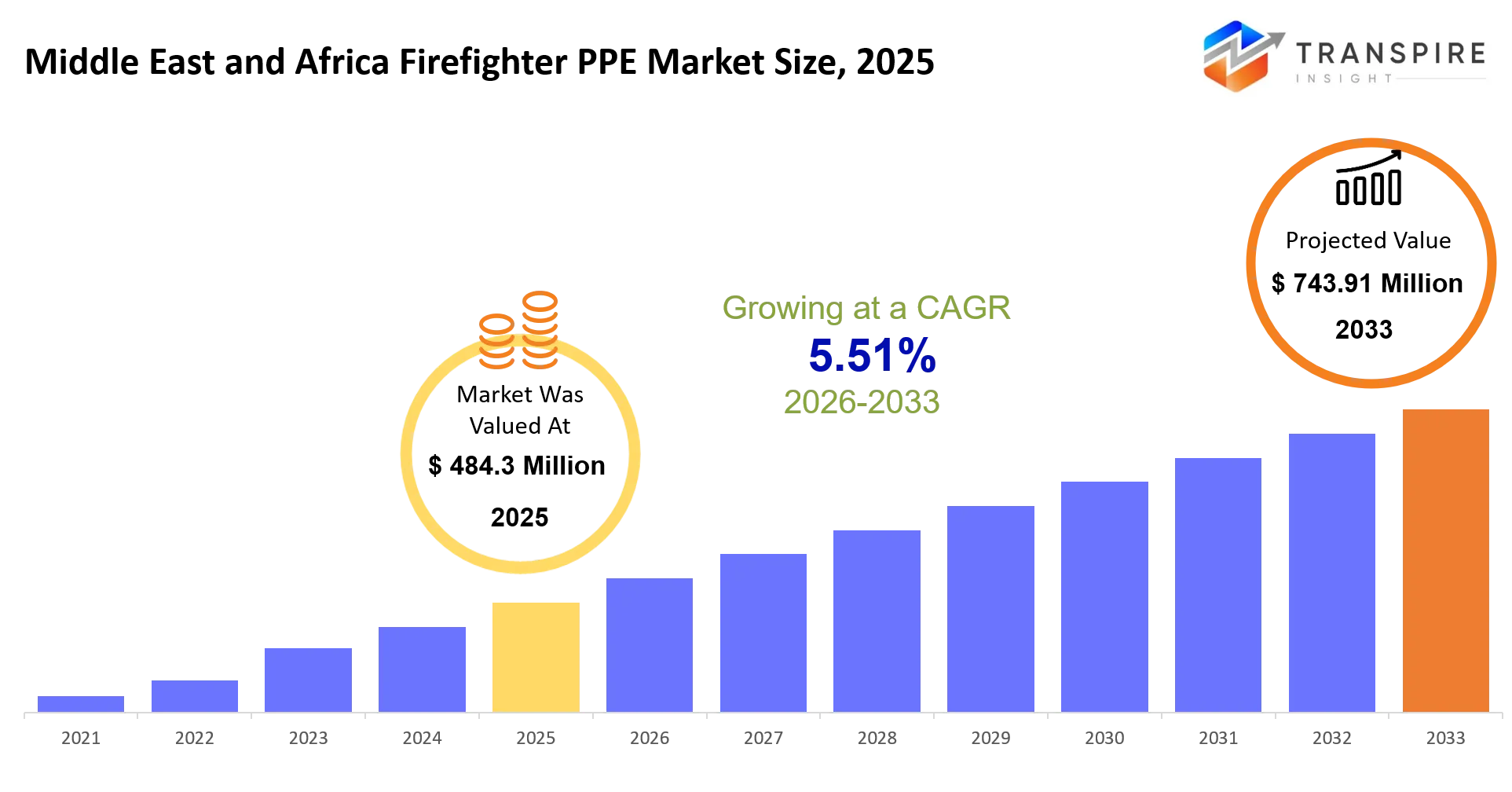
- Middle East and Africa Firefighter PPE Market Size 2025: USD 484.3 Million
- Middle East and Africa Firefighter PPE Market Size 2033: USD 743.91 Million
- Middle East and Africa Firefighter PPE Market CAGR: 5.51%
- Middle East and Africa Firefighter PPE Market Segments: By Product Type (Protective Suits, Helmets, Gloves, Boots, Respiratory Protection, Others); By Application (Structural Firefighting, Wildland Firefighting, Rescue Operations, Others); By End User (Fire Departments, Industrial Fire Services, Defense, Others); By Material (Aramid, PBI, Nomex, Others)
To learn more about this report,  Download Free Sample Report
Middle East and Africa Firefighter PPE Market Summary
The Middle East and Africa Firefighter PPE Market was valued at USD 484.3 Million in 2025. It is forecast to reach USD 743.91 Million by 2033. That is a CAGR of 5.51% over the period.
Firefighter personal protective equipment, yes it does matter a lot, plays a big critical role in shielding emergency responders from extreme heat smoke inhalation, toxic chemicals falling debris and those sudden flash fire incidents. In industrial facilities, oil and gas installations, airports, ports, and even municipal fire departments, the gear helps keep operations running while also lowering injury rates and reducing long term occupational health risks. Over the last five years the market seems to veer away from conventional protective clothing, and moves toward more integrated protection systems, like advanced textiles plus communication devices, thermal monitoring, and improved respiratory protection.
One structural change that stands out is the push toward stricter firefighter safety standards and performance certifications, especially in high risk industries such as energy and petrochemicals. At the same time, big industrial expansion projects across Gulf countries and parts of Africa have boosted fire safety investments. This momentum really picked up after supply chain disruptions and prominent industrial fire incidents exposed weaknesses in emergency preparedness, sort of showing gaps that were not obvious before. And as organizations modernize their safety programs, spending is increasingly tilting toward higher performance PPE, which ends up creating tighter replacement cycles and supporting ongoing market revenue growth.
Key Market Insights
- The Middle East and Africa Firefighter PPE Market, sees benefits from an overall push in industrial safety spending across energy, petrochemical, aviation, and infrastructure areas, kind of all at once it seems.
- In 2025, Gulf Cooperation Council countries made up almost 45% of the regional market revenue, mainly because they have so many industrial assets spread around.
- Protective clothing is the biggest choice, holding about 35% share, and it stays that way since thermal protection is often required during firefighting duties.
- Respiratory protection sits as the second-largest segment, and that’s largely because more SCBA systems are being deployed in unsafe, high-risk environments.
- Smart PPE, meaning gear with sensors and location-tracking capabilities, is expected to grow at a rate above 7% each year through 2033.
- For municipal firefighting use, demand reaches more than 40% of the market, because replacement cycles and equipment refresh programs keep moving forward.
- Airport and aviation firefighting is one of the fastest-growing application areas, as regional air traffic infrastructure keeps expanding, steadily.
- Oil and gas operators continue lifting procurement budgets too, especially in Saudi Arabia, UAE, and South Africa.
- Key companies such as MSA Safety, Honeywell, Dräger, DuPont, and Lakeland Industries are putting attention on advanced fabric solutions, better ergonomic designs , and safety technologies that feel more integrated.
- Across the whole Middle East and Africa Firefighter PPE Market, the competitive moves still center on strategic partnerships, certification upgrades, and widening regional distribution.
What are the Key Drivers, Restraints, and Opportunities in the Middle East and Africa Firefighter PPE Market?
The main thing driving market expansion is the tightening of workplace safety rules for oil and gas sites, airports, industrial areas, and local municipal emergency services. Governments and the people running the industry are pushing more and more for adherence to internationally recognized firefighter protection standards. Because of that, procurement of certified turnout clothing is speeding up, along with helmets, gloves, boots and respiratory protection gear. So suppliers can tap into bigger replacement programs and end up selling higher ticket items especially in Gulf countries where industrial activity still moves pretty strongly.
The biggest pullback, though, is the high cost to buy and also to keep up advanced firefighter PPE systems. Newer protective ensembles rely on heat resistant fabrics, built in communication features, and more advanced breathing apparatus technology. Many African municipalities, plus smaller emergency units, deal with budget limitations that slow down replacement schedules and in turn reduce adoption rates. And it’s kind of structural, since funding limits, procurement steps, and even workforce training needs cannot really be fixed overnight.
There’s a big opportunity in rolling out connected firefighter protective technologies. Smart helmets, biometric monitoring, wearable sensors, and digitally linked SCBA platforms are getting easier to justify commercially. Bigger industrial operators, and even airport fire services in Saudi Arabia, the UAE, and South Africa are investing in digital safety infrastructure, and that momentum should keep building.
What Has the Impact of Artificial Intelligence Been on the Middle East and Africa Firefighter PPE Market?
Artificial intelligence is slowly, and kind of quietly, changing firefighter safety equipment via predictive monitoring, operational analytics, and these connected safety platforms that sort of glue everything together. Newer respiratory protection systems , plus wearable devices, collect data in real time about air consumption, local environmental conditions, where the firefighter is located, and even physiological status. After that, AI enabled analytics platforms to chew through the incoming streams to spot fatigue risks, figure out equipment performance problems, and flag possible safety threats before the whole situation turns into a bigger incident.
Machine learning is also being used for predictive maintenance, especially for self contained breathing apparatus systems and other critical protective gear. Instead of waiting for issues to appear they look at inspection history, usage patterns, and component performance signals, then help the maintenance teams schedule servicing early, before failures ever happen. This style of work keeps equipment more reliably available and cuts down on downtime. In bigger industrial settings, digital safety platforms can also boost compliance tracking, make inspections less chaotic, and improve how ready teams are for emergency response.
There is more. Advanced analytics help protect the workforce too, because incident commanders can evaluate exposure risks better and dispatch resources more effectively. In practice this can support higher equipment utilization and better overall safety results for firefighters.
Still, adoption doesn’t move as fast as people want, mainly because of integration costs and the need for supporting infrastructure. A lot of emergency services across Africa work with weak digital connectivity, and they often have fragmented equipment fleets, so getting everything to “talk” is harder than it sounds. Also, AI tools need large amounts of high quality operational data, and gathering it consistently across very different firefighting environments is not always easy.
Key Market Trends
- Since 2021 procurement programs have started to lean more and more toward certified multi-layer thermal protection solutions, compared with regular protective clothing and yeah it’s a noticeable shift.
- Smart firefighter PPE deployments went up by roughly 20% across major industrial operators from 2022, and then again through 2025.
- In the Gulf countries industrial fire protection spending expanded as energy infrastructure projects kept accelerating through out the region.
- Advanced SCBA take up strengthened after safety standards were updated , these new rules added more demanding performance requirements in 2025.
- Lightweight aramid-based fabrics got more mainstream approval, helping reduce wearer fatigue while still keeping the thermal protection performance steady.
- Airport firefighting units rolled out replacement programs more broadly after investments in regional aviation infrastructure kicked in from 2023 onward.
- Manufacturers are increasingly folding communication systems, biometric monitoring and location tracking into protective equipment platforms, kind of as a bundle.
- Strategic distribution partnerships became more common during 2025–2026 to widen service coverage and improve after-sales support too.
- Digital inspection tools and asset management platforms started showing up as standard procurement requirements for big industrial buyers.
- Overall, competition seems to revolve around certification compliance, product ergonomics, and integrated technology features, not just price alone.
Middle East and Africa Firefighter PPE Market Segmentation
By Product Type
Protective suits basically hold a major role, since protection against extreme heat, flames, smoke , and hazardous exposure stays essential during firefighting work. The whole multi-layer structure, does better thermal insulation and also helps lower the odds of injuries in these demanding situations. Helmets give the head a real shield from falling objects, impact issues and heat exposure , and they also make it easier to pair with face shields and communication accessories. Gloves then protect hands while maintaining a solid grip performance during rescue efforts and fire suppression tasks.
Boots are still important too, because they protect feet from heat, sharp debris, water and those slippery surfaces that show up a lot during emergency operations. Respiratory protection equipment supports safe breathing when smoke gets heavy or toxins are present, so using it stays critical for structural and industrial incidents. Other gear includes protective hoods, eye protection items, hearing protection equipment, plus communication accessories that strengthen overall firefighter safety, even when conditions get rough.
In general, constant product improvements will help with comfort, mobility, durability, and operational efficiency across different firefighting conditions.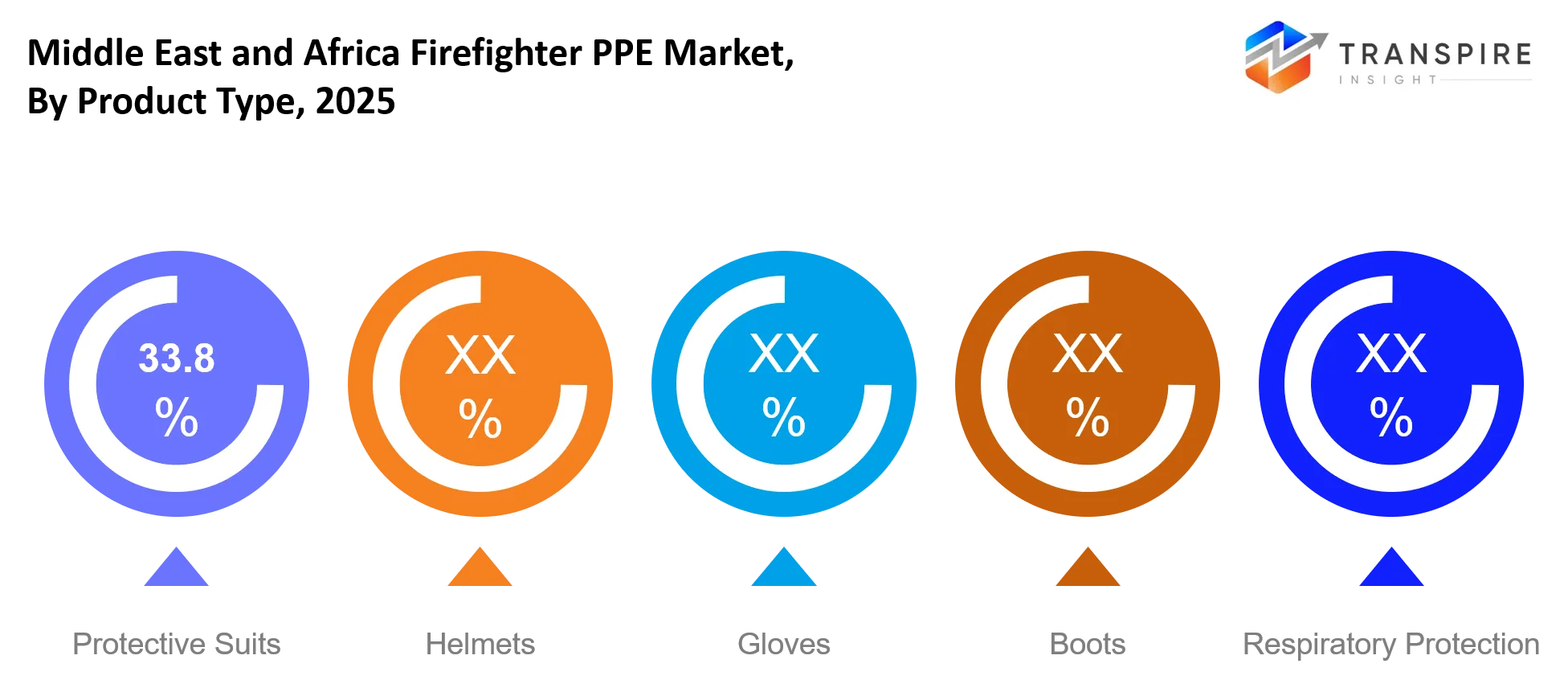
To learn more about this report, Download Free Sample Report
By Application
Structural Firefighting makes up a notable portion, because building fires put personnel right in contact with high temperatures, heavy smoke, toxic gases, and possible collapsing materials. Those strong safeguarding expectations keep demand growing for advanced safety equipment across municipal responders as well as industrial emergency services. Wildland Firefighting is more about vegetation and forest fire containment, where lightweight gear, heat resistance, and movement still matter on the ground. Lately, shifting weather patterns plus longer dry spells have pushed more preparedness work in a number of regions.
Rescue Operations also depend on protective equipment during incident reaction, disaster management, vehicle extraction, and emergency recovery tasks. There are multiple hazards during rescue missions, so demand grows for solid helmets, protective gloves, footwear, and respiratory systems. Additionally, there are specialized firefighting roles within airports, energy sites, ports, mining locations, and public works projects. With so many different operational landscapes, adoption of purpose built protection solutions meant for specific risk conditions should keep moving forward.
By End User
Fire Departments kinda count as the biggest end-user group, because municipal emergency response organizations need a complete catalog of protective gear for day to day work, also for emergency readiness, you know. They run routine replacement cycles, and on top of that compliance rules keep pushing procurement forward, pretty steadily. Industrial Fire Services, meanwhile, keep their own emergency response teams inside oil and gas facilities, petrochemical sites, manufacturing areas, mining locations, and those large industrial complexes too. In high-risk operational environments, companies tend to fund newer protective tech and respiratory systems, rather quickly.
Defense organizations also buy firefighting protective equipment for military bases, airfields, training locations, plus response operations during actual incidents. Specialized operational settings create strong need for resilient, high performance safety solutions. Other buyers count airport authorities, private emergency service providers, educational institutions, utility operators, and transportation facilities. As infrastructure keeps expanding and industrial investment keeps rising, equipment purchases should continue across all these different user categories.
By Material
Aramid materials keep getting used a lot because they have really good heat resistance, strong strength ,and durability that kinda support long term protection in firefighting conditions that are tough to say the least. Their thermal behavior is strong enough that safety can stay steadier when someone is around flames, and when temperatures are higher than usual. PBI materials also bring superior thermal stability, and they help protective performance stay effective even when the heat is intense. In many premium protective garments, PBI fibers show up a lot since top heat protection is often the main requirement.
Nomex still shows up as a go-to material, mostly for flame resistance plus it stays relatively lightweight, and it feels better on the wearer during long operations. The way it performs consistently, and the fact that it wears well over time, helps explain why it is adopted across multiple protective gear categories. Other options include blended fabrics and more advanced engineered materials, made to juggle protection with comfort, flexibility, and an acceptable service life. Future material development efforts will probably keep aiming to cut down garment weight, while still holding on to high thermal and mechanical protection.
What are the Key Use Cases Driving the Middle East and Africa Firefighter PPE Market?
Municipal firefighting is still the biggest application field for firefighter protective equipment across the whole region. Fire departments need turnout gear, helmets , gloves, boots and a respiratory protection system that can defend personnel during structural fire suppression, rescue tasks, and general emergency response events. Because gear keeps getting replaced fairly often, and because safety standards are tight , the procurement volumes stay pretty high.
Industrial firefighting is also getting more attention, especially around oil and gas facilities, petrochemical sites, mining operations, and manufacturing plants. In these places response teams can face high temperatures, hazardous substances, and explosion threats, so the demand shifts toward specialized protective clothing and more advanced breathing systems.
Newer applications pop up too, like airport rescue and firefighting, renewable energy installations, and big infrastructure projects. More spending on smart industrial complexes, plus transportation hubs, is opening up chances for “connected” PPE setups , meaning solutions that support real time monitoring, incident management, and workforce protection without so much guesswork.
|
Report Metrics |
Details |
|
Market size value in 2025 |
USD 484.3 Million |
|
Market size value in 2026 |
USD 510.98 Million |
|
Revenue forecast in 2033 |
USD 743.91 Million |
|
Growth rate |
CAGR of 5.51% from 2026 to 2033 |
|
Base year |
2025 |
|
Historical data |
2021 - 2024 |
|
Forecast period |
2026 - 2033 |
|
Report coverage |
Revenue forecast, competitive landscape, growth factors, and trends |
|
Regional scope |
Middle East and Africa (Saudi Arabia, United Arab Emirates, South Africa, Rest of Middle East and Africa) |
|
Key company profiled |
MSA Safety, Honeywell, Drager, Lakeland, DuPont, 3M, Bristol Uniforms, Rosenbauer, Lion Group, Bullard, Teijin Aramid, Sioen, Innotex, Vanguard, Kimberly-Clark |
|
Customization scope |
Free report customization (country, regional & segment scope). Avail customized purchase options to meet your exact research needs. |
|
Report Segmentation |
By Product Type (Protective Suits, Helmets, Gloves, Boots, Respiratory Protection, Others); By Application (Structural Firefighting, Wildland Firefighting, Rescue Operations, Others); By End User (Fire Departments, Industrial Fire Services, Defense, Others); By Material (Aramid, PBI, Nomex, Others) |
Which Regions are Driving the Middle East and Africa Firefighter PPE Market Growth?
The Gulf region shows the market out front, mainly because they keep pushing substantial investments into industrial backbone, petrochemical sites, airports and all the urban development projects. In places like Saudi Arabia and the UAE, the safety expectations for energy and industrial work stay very strict, almost always enforced. With strong procurement budgets, quicker emergency response capabilities, and lots of existing industrial assets already in place, the ecosystem for advanced firefighter protection equipment kinda works naturally. And as the infrastructure keeps expanding without pause, it also helps replacement and upgrade cycles keep going, over and over.
South Africa ends up as the second-largest regional contributor, but the pattern is a bit different. Demand there is more tied to mining, manufacturing, municipal services, and long-established industrial safety frameworks, not so much big-scale energy investments. When regulation keeps being applied consistently and industrial facilities keep getting modernized, suppliers can count on more stable revenue chances. Plus, the long-running occupational safety routines make PPE purchasing happen again and again.
For the rest of Africa, the expectation is the strongest growth momentum through 2033. Industrialization programs, ongoing infrastructure spending, and expanding urban populations are driving fresh fire safety needs. A number of countries are upgrading emergency response abilities while also tightening workplace safety regulations. This shift is basically opening doors for manufacturers, distributors, and investors that want early positioning in the developing firefighter protection markets.
Who are the Key Players in the Middle East and Africa Firefighter PPE Market and How Do They Compete?
Competition is still moderately concentrated, with multinational safety equipment manufacturers holding a meaningfully large slice of the premium product categories. Most market players go at it mainly via product performance , certification compliance, materials innovation, and distribution strength , not so much by price only. Industrial buyers are also looking more and more at equipment longevity, firefighter comfort, digital integration, and the level of after-sales service support
MSA Safety kind of stands out with advanced respiratory protection systems, connected safety technologies ,and an integrated monitoring approach. Its latest certification wins for next-generation breathing apparatus systems help it stay strong with industrial and municipal customers. Dräger keeps its focus on respiratory protection innovation and ergonomic SCBA designs, and it also increases reach through strategic distribution partnerships. The whole angle on firefighter oriented product engineering is what keeps its premium status
Honeywell leans on a wide industrial safety portfolio plus an extensive regional distribution network. DuPont maintains an edge using proprietary aramid fiber technologies that are widely used in thermal protective garments. Lakeland Industries competes with specialized protective clothing solutions for high-risk industrial environments and emergency response work. Overall these firms keep funding lightweight materials, better ergonomics, and digital safety integration , which helps them keep differentiating and also broaden their market presence
Company List
- MSA Safety
- Honeywell
- Dräger
- Lakeland
- DuPont
- 3M
- Bristol Uniforms
- Rosenbauer
- Lion Group
- Bullard
- Teijin Aramid
- Sioen
- Innotex
- Vanguard
- Kimberly-Clark
Recent Development News
In February 2026, Dräger entered a partnership with MES Life Safety. The agreement expanded distribution and service support for the AirBoss SCBA platform, strengthening market access and customer support capabilities for firefighting agencies.https://www.prnewswire.com
In February 2026, Dräger launched the PSS AirBoss SCBA for commercial availability in North America. The product achieved NFPA 1970:2025 certification and introduced enhanced ergonomics, streamlined controls, and improved visibility features for firefighter safety.https://www.prnewswire.com/
In November 2025, MSA Safety announced certification of the G1 XR 2025 Edition SCBA to the NFPA 1970:2025 standard. The certification strengthened compliance capabilities and supported adoption of advanced respiratory protection systems across fire services.https://investors.msasafety.com
What Strategic Insights Define the Future of the Middle East and Africa Firefighter PPE Market?
The market is moving kinda fast toward integrated firefighter protection ecosystems, where advanced materials get paired with respiratory protection , wearable sensors, and digital safety platforms all together. What really pushes this shift is the higher, more explicit requirement for measurable safety performance across industrial sites, airports, energy developments, and municipal emergency services. So in procurement, decisions will lean more and more on operational data, compliance assurance, and lifecycle value, not just buying stand alone equipment.
There is also one more subtle risk, dependence on specialized high-performance fibers and electronic components that show up in these advanced protective setups. If supply disruptions happen, or raw material shortages show up, costs can rise and equipment replacement cycles can get delayed, especially in markets that are very price sensitive.
At the same time, there’s a growing opportunity in connected PPE platforms that blend biometric monitoring, location tracking, and predictive maintenance. Right now adoption still feels limited but it’s set up for wider deployment once industrial digitalization programs mature across Gulf economies and a few selected African markets.
Market participants should probably focus investments on certified smart protection systems and regional service networks. The combination of strong local support capabilities with tight technology integration should help build a more durable competitive edge over the next decade.
Middle East and Africa Firefighter PPE Market Report Segmentation
-
By Product Type
Protective Suits
Helmets
Gloves
Boots
Respiratory Protection
Others -
By Application
Structural Firefighting
Wildland Firefighting
Rescue Operations
Others -
By End User
Fire Departments
Industrial Fire Services
Defense
Others -
By Material
Aramid
PBI
Nomex
Others
Frequently Asked Questions
Find quick answers to common questions.
The Expected Middle East and Africa Firefighter PPE Market size for the Market will be USD 743.91 Million in 2033.
Key Segments for the Middle East and Africa Firefighter PPE Market are By Product Type (Protective Suits, Helmets, Gloves, Boots, Respiratory Protection, Others); By Application (Structural Firefighting, Wildland Firefighting, Rescue Operations, Others); By End User (Fire Departments, Industrial Fire Services, Defense, Others); By Material (Aramid, PBI, Nomex, Others).
Major Middle East and Africa Firefighter PPE Market Players are MSA Safety, Honeywell, Drager, Lakeland, DuPont, 3M, Bristol Uniforms, Rosenbauer, Lion Group, Bullard, Teijin Aramid, Sioen, Innotex, Vanguard, Kimberly-Clark.
The Current Middle East and Africa Firefighter PPE Market size is USD 484.3 Million in 2025.
The Middle East and Africa Firefighter PPE Market CAGR is 5.51% from 2026 to 2033.
- MSA Safety
- Honeywell
- Dräger
- Lakeland
- DuPont
- 3M
- Bristol Uniforms
- Rosenbauer
- Lion Group
- Bullard
- Teijin Aramid
- Sioen
- Innotex
- Vanguard
- Kimberly-Clark
About the Authors

Chetan Dhatrak
I’m Chetan Dhatrak, a Senior Research Analyst at Transpire Insight, specializing in the Consumer Goods, Foods and Beverages industry. I focus on analyzing market trends, consumer behavior, competitive landscapes, and industry developments to deliver accurate, data-driven insights. My research at Transpire Insight is built on credible sources and in-depth analysis, helping businesses and readers better understand market dynamics, emerging opportunities, and evolving consumer preferences. I’m committed to creating reliable, well-researched content that supports informed decision-making and reflects the latest developments in the consumer goods and food & beverage sectors.

Chakradhar Khansole
Chakradhar serves as the Research Director at Transpire Insight, bringing over 8 years of experience in technology, innovation, and strategic market intelligence. He specializes in transforming complex market data into actionable business insights that enable organizations to make informed, growth-oriented decisions. Recognized for his strategic vision and analytical expertise, Chakradhar leads high-impact research initiatives, delivering comprehensive market assessments, competitive intelligence, and forward-looking industry analysis.
Recently Published Reports
-
Apr 2026
Bottled Water Market
Bottled Water Market Size, Share & Analysis Report By Product Type (Still Bottled Water, Carbonated Bottled Water, Functional Bottled Water, and Others), By Packaging (PET, Cans, and Others), By Sales Channel (Supermarkets/Hypermarkets, Convenience Stores/Drug Stores, Grocery Stores/Club Stores, Foodservice, and Others) and Geography (North America, Europe, Asia-Pacific, Middle East and Africa, South and Central America), 2021 - 2032
-
Apr 2026
Color Cosmetic Packaging Market
Color Cosmetic Packaging Market Size, Share & Analysis Report By Application (Mascara Packaging, Liquid Packaging, and Liquid Face), By Type (Tubes & Bottles, Pens & Markers, Compacts & Containers, and Droppers & Pumps), and Geography (North America, Europe, Asia-Pacific, Middle East and Africa, South and Central America), 2021 - 2031
-
Apr 2026
External Microphone For Camera Market
External Microphone For Camera Market Size, Share & Analysis Report By Type (Shotgun Microphone, Lavalier Microphone, and Others), By Application (Digital Camera, Professional Video Camera, and Others), and Geography (North America, Europe, Asia-Pacific, Middle East and Africa, South and Central America), 2021 - 2031
-
Apr 2026
Foot Orthotic Insoles Market
Foot Orthotic Insoles Market Size, Share & Analysis Report By Type (Pre-fabricated, and Custom-made), By Material (Thermoplastic, Composite Carbon Fiber, and Others), By Distribution Channel (Drug Stores, Hospitals & Clinics, and Others), and Geography (North America, Europe, Asia-Pacific, Middle East and Africa, South and Central America), 2021 - 2031