

Laser Therapy Devices Market Summary:
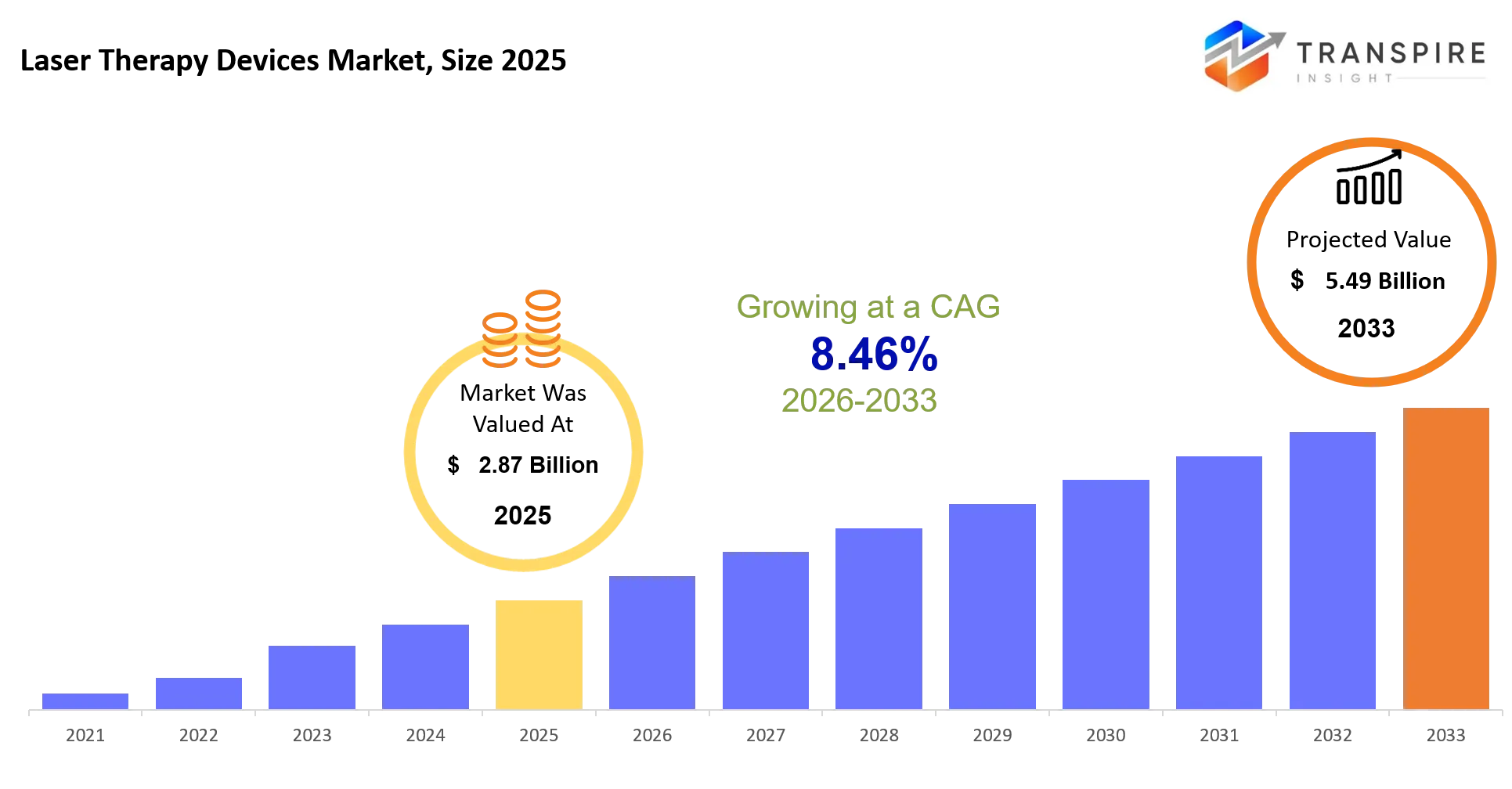
As per the Transpire Insight Analysis, the Laser Therapy Devices Market size is estimated at USD 2.87 billion in 2025 and is anticipated to reach USD 5.49 billion by 2033, growing at a CAGR of 8.46% from 2026 to 2033.
The Laser Therapy Devices Market drives non-invasive to minimally invasive procedures utilized for pain management, dermatology, dentistry, ophthalmology & surgery. Over the past 3-5 years, it transitioned from hospital-based capital equipment to more portable & specialty procedure-specific platforms launched in specialty clinics and certain home-care environments. A significant structural change is witnessed in the emergence of low-level laser therapy and diminutive diode platforms driven by their empiric validation, ease of use & workflow efficiencies.
Today, the dominant catalyst remains the emergence of outpatient and ambulatory care models that look for shorter chair time, less tissue trauma, and easier patient throughput, which also endorses recent advances in portable & embedded computer-assisted laser systems to improve ergonomics and accelerate elective procedures. Consequently, demand is rising as clinics aspire for increased utilization, ease of operation & more treatment accessibility.
Laser Therapy Devices Market Size & Forecast:
- Global Market Size 2025: USD 2.87 Billion
- Expected Market Value (2033): USD 5.49 Billion
- Forecast CAGR (2026–2033): 8.46%
- Leading Region in 2025: North America
- Fastest Growing Region: Asia Pacific
- Key Company Profiles: Lumenis, Candela Medical, BIOLASE, Fotona, Bausch + Lomb, Iridex, El.En., Alma Lasers, Cutera, Cynosure, Boston Scientific, Abbott, Medtronic, Zimmer MedizinSysteme, Thor Photomedicine
Key Laser Therapy Devices Market Insights:
There is a definite shift from large, clinic-based systems to smaller, protocol-based systems that facilitate quicker outpatient flow and the selection of home use. The advantages of the laser are no longer just about the raw power, but also about workflow integration, safety engineering, and evidence-based indications.
- North America accounts for 40% of the market, with a high level of reimbursement and specialty-clinic infrastructure, and vendors are growing with premium upgrades and multi-application platforms.
- The 28% is due to the culture of preventive care and the adoption of digital dentistry; companies are competing with regulated and clinically validated systems.
- Asia Pacific accounts for 25% of urban dermatology demand and investment, and suppliers are increasingly tailoring portfolios and clinic financing to local markets.
- The 3% share figure is smaller, but being adopted in Latin America as cosmetic procedures; distributors benefit from lower-ticket, service-oriented devices.
- Luxury aesthetic hubs and infrastructure in the Middle East & Africa account for the 4% market share, and brands are making their way through high-quality clinic partnerships.
- Repeat cosmetic use puts high utilization laser systems at the centre, as do dermatology laser systems at 34%.
- Precision-driven workflow enhancements and hospital procurement refresh cycles are the biggest advantages for surgical laser systems at 22%.
- Low-level laser therapy is growing at 17.4% CAGR, with the shift of pain and rehabilitation protocols from specialist care.
- The efficiency of dental laser systems is 15%, that of ophthalmic systems is 11%, and that of physiotherapy systems is 5%.
What are the Key Drivers, Restraints, and Opportunities in the Laser Therapy Devices Market?
Driver:
The common factor is the transition to minimally invasive modalities for pain, dermatology, and cosmetic medicine, where laser procedures provide shorter recovery and lower complication rates than traditional options. That transition has led to greater outpatient acceptance, increased repeat procedure volumes and higher utilization of devices at clinics that maximize faster patient turnover. This benefits vendors by increasing procedure capacity, driven by higher replacement needs, plus more upgrades to higher-end platforms.
Restraint:
Growth is constrained by the relatively high cost of capital, the need for operator training, and relatively slow regulatory approval of new indications. This continues to be the case because laser platforms need to comply with high levels of safety standards, and the need for relatively sophisticated handling means adoption remains focused on large hospitals and specialist chains and not smaller clinics.
Opportunity:
Wider adoption for home use is forming as low-level laser therapy converts into handheld and wearable devices for integrating into check, treat, and recovery routines. Adapting programs and protocols via apps can minimize differences in North American and European markets, while AI assistance can promote safety and credibility. Distributor-driven growth is introducing mid-tier clinics in Asia-Pacific to more affordable, portable devices without needing the full hospital purchase process. Both routes are significant because they help expand the market base to future global mass adoption.
What Has the Impact of Artificial Intelligence Been on the Laser Therapy Devices Market?
AI allows laser therapy devices to become more accurate, consistent, and more easily standardized for different clinics. In a dermatological context, increasingly AI-powered aesthetic systems use information about patient, image, and lesion parameters to recommend the wavelength, pulse width, energy density, and exposure time, thus diminishing human estimations and ensuring safety.
The same types of reasoning are making their way into pain management, rehab, and vascular, where AI enables session-level fine-tuning, prediction of outcomes, and real-time feedback of tissue response. This increases reliability, helps people hone in on appropriate parameters more rapidly, and can compress the learning curve for inexperienced operators. AI is even playing a role in maintenance prediction, schedule optimization, and workflow regulation, increasing providers' uptime and throughput. The essential limiting factor is that these advantages are only realized with high-quality data, integrated imaging, and compatible device ecospheres; otherwise, models are less accurate and costly to deploy. Currently in practice, the proliferation of mixed fleets and unintegrated records still hampers adoption; thus, AI remains valuable but not universal.
Key Laser Therapy Devices Market Trends:
The market is shifting to lighter, more flexible systems that support outpatient and specialty-clinic workflows. There is also a change in buying habits, from capital purchases to procurement based on the workflow, safety, and versatility.
- Low-level laser therapy is transitioning from niche rehabilitation to general chronic pain and recovery treatment.
- Cosmetic and corrective surgeries generate repeat utilization, and dermatology systems remain in the lead.
- More efficient and adaptable across indications, solid-state and diode platforms are on the rise for a share of the market.
- Clinics that require a wider range of cases are replacing single-wavelength devices with multi-wavelength devices.
- Patients are seeking supervised, out-of-hospital, lower-cost recovery options through home-use adoption, leading to increased utilisation.
- There's increasing significance of medical device distributors and online B2B channels to the mid-market buyers.
- Safety features, vendor validation and training support are more investments made by vendors in the face of regulatory scrutiny.
- Software with AI capabilities is increasingly distinguishing itself in calibration, patient tracking and preventive servicing.
Laser Therapy Devices Market Segmentation
By Product Type:
Dermatology Laser Systems account for 34% of the global market, reflecting strong utilization in skin resurfacing, pigmentation treatment, scar revision, and cosmetic procedures. Surgical Laser Systems hold 22%, supporting precision tissue removal with reduced bleeding, while Dental Laser Systems represent 15% through minimally invasive oral treatments. Ophthalmic Laser Systems contribute 11%, driven by vision correction and retinal procedures. Low-Level Laser Therapy Devices account for 10% but register the fastest CAGR of 17.4%, supported by expanding rehabilitation and pain management applications. Physiotherapy Laser Devices represent 5%, while other specialized products contribute 3%, indicating future diversification into emerging therapeutic areas.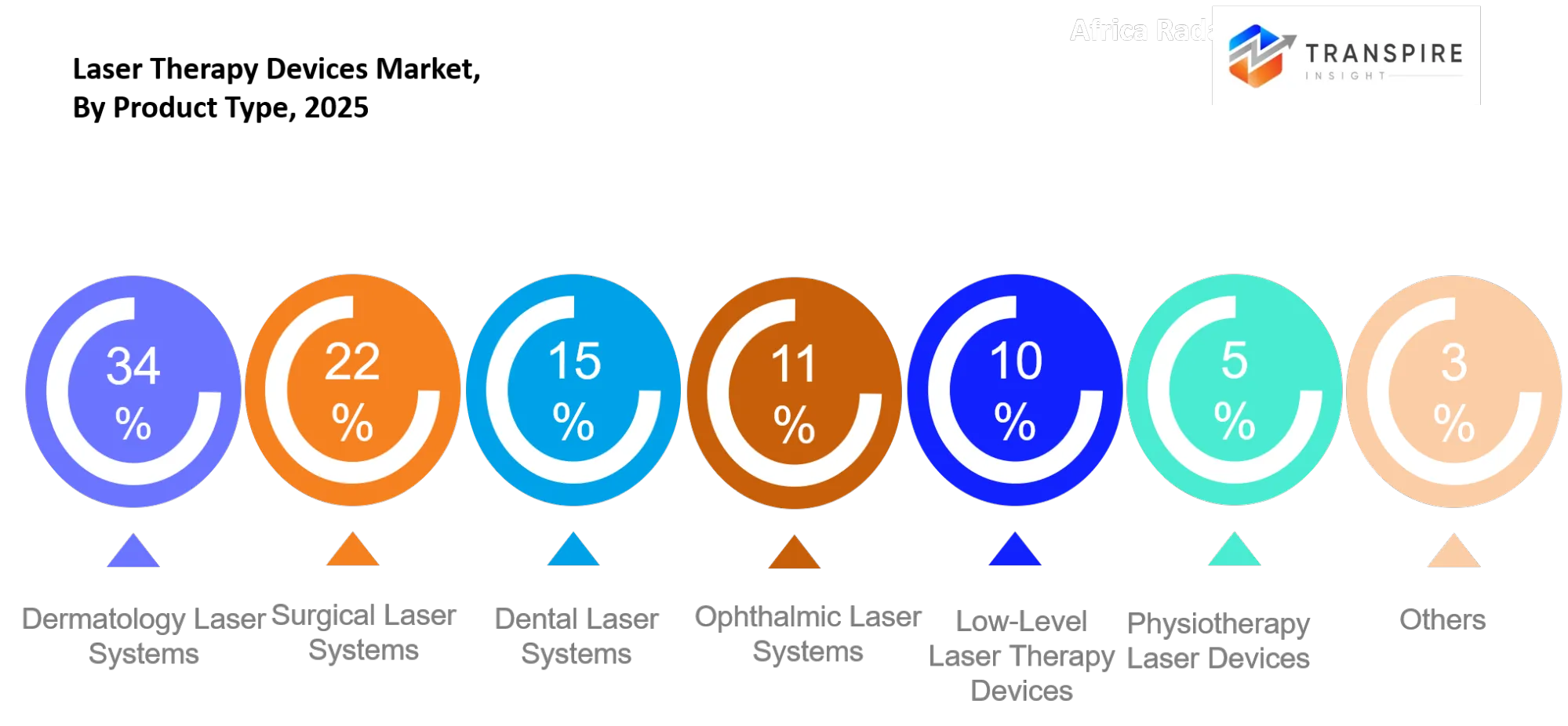
By Application:
Dermatology is still the single largest application, with pain management, dentistry, ophthalmology, oncology, physiotherapy, cosmetic procedures and other specialized treatments following. The increasing demand for less invasive care is further promoting an ever greater application of the technology in various medical fields while also providing a focus for the development of more closely integrated treatment protocols.
By End User:
Hospitals are still the leading buyers because of the large number of procedures and multi-disciplinary approach. Speciality clinics are still growing at a rapid rate, mostly through outpatient services. Ambulatory surgical centres are increasing the need for a small-sized laser platform. Rehabilitation centres, home care systems, research institutes and other health-care units are increasing the trend of various therapeutic laser applications.
By Technology:
The diode laser led the laser therapy devices market on the grounds of its characteristics of wide clinical usage, convenient form and efficiency in use. On the other hand, CO, Nd: YAG, erbium, fibre, pulsed dye and other laser technologies meet individual needs in treatment. Continual progress in wavelength control, energy deposition and tissue selectivity increases the field of therapeutic use and patient safety.
By Distribution Channel:
Despite the growth of e-commerce, direct sales continue to hold dominance due to hospitals' high demand for tailor-made installation, technical training and maintenance packages. Medical device distributors enhance their reach in the region, while hospital procurement channels foster institution-wide purchasing. Online B-to-B channels, OEM providers and other outlets keep boosting procurement diversity for developing healthcare markets.
What are the Key Use Cases Driving the Laser Therapy Devices Market?
The primary use case continues to be dermatology and cosmetic treatment, based on the 34% of laser systems sold to dermatology, and the repeat-procedure economics of aesthetic clinics, which prefer the convenience of fast appointment scheduling, reliable results, and the high patient willingness to pay for low-downtime treatments.
Additional use cases are pain management, dental and ophthalmology, which laser therapy makes more precise, quickens recovery, and better accommodates outpatient practice than standard therapy.
Future use cases include rehabilitation, home-care recovery, and protocol-based digital therapy, particularly for low-power laser devices, as supervised self-treatment proves more commercially practical. This is democratizing access to therapy beyond hospitals and specialists into dispersed care.
|
Report Metrics |
Details |
|
Market size value in 2025 |
USD 2.87 Billion |
|
Market size value in 2026 |
USD 3.11 Billion |
|
Revenue forecast in 2033 |
USD 5.49 Billion |
|
Growth rate |
CAGR of 8.46% from 2026 to 2033 |
|
Base year |
2025 |
|
Historical data |
2021 - 2024 |
|
Forecast period |
2026 - 2033 |
|
Report coverage |
Revenue forecast, competitive landscape, growth factors, and trends |
|
Regional scope |
United States; Canada; Mexico; United Kingdom; Germany; France; Italy; Spain; Denmark; Sweden; Norway; China; Japan; India; Australia; South Korea; Thailand; Brazil; Argentina; South Africa; Saudi Arabia; United Arab Emirates |
|
Key companies profiled |
Lumenis, Candela Medical, BIOLASE, Fotona, Bausch + Lomb, Iridex, El.En., Alma Lasers, Cutera, Cynosure, Boston Scientific, Abbott, Medtronic, Zimmer MedizinSysteme, Thor Photomedicine |
|
Customization scope |
Free report customisation (country, regional & segment scope). Avail customised purchase options to meet your exact research needs. |
|
Report Segmentation |
By Product Type (Low-Level Laser Therapy Devices, Surgical Laser Systems, Dental Laser Systems, Dermatology Laser Systems, Ophthalmic Laser Systems, Physiotherapy Laser Devices, Aesthetic Laser Devices, Others); By Application (Pain Management, Dermatology, Dentistry, Ophthalmology, Oncology, Physiotherapy, Cosmetic Procedures, Others); By End User (Hospitals, Specialty Clinics, Ambulatory Surgical Centers, Rehabilitation Centers, Home Care, Research Institutes, Others); By Technology (Diode Lasers, CO₂ Lasers, Nd:YAG Lasers, Erbium Lasers, Fiber Lasers, Pulsed Dye Lasers, Others); By Distribution Channel (Direct Sales, Medical Device Distributors, Hospital Procurement, Online B2B Platforms, OEM Suppliers, Others) |
Which Regions are Driving the Laser Therapy Devices Market Growth?
North America has the strongest share at 40% by bringing together high procedure counts and best-in-class specialty infrastructure, with a swift acquisition of higher-end laser platforms, reimbursement support, and robust hospital networks enabling providers to justify capital-intensive enhancements. It also has a highly dense and well-established core base of users in dermatology, ophthalmology, and surgery, forming a fertile environment for the early adoption of AI-enabled and multifunction systems. In January 2026, Boston Scientific acquired Relievant Medsystems to expand its specialized therapeutic device portfolio. This integration accelerates advanced procedural adoption across U.S. hospital networks.
Europe accounts for 28% with a different growth logic that is regulated clinical adoption, preventive dentistry, and ageing-driven treatment. The growth is steadier and protocol-driven; buyers are more care-and-safety oriented, interested in certification and long device life. Strong public health systems and mature speciality care generate a more predictable replacement demand. Reimbursement discipline also contributes to a more selective adoption, thus premium but slower.
Asia Pacific is 25% and the fastest-growing, with low-cost access, an expanding number of speciality hospitals, and growing consumer awareness increasing demand. The most recent growth has been associated with wider clinic expansion, medical tourism, and more rapid penetration of portable devices throughout urban areas. The region is also playing a part in a more favourable pathway to regulatory acceptance for some energy-based devices. With an 18.2% CAGR, it has the best volume growth prospects. In May 2026, Malaysia's Medical Device Authority and the Thai Food and Drug Administration launched the full implementation of their Medical Device Regulatory Reliance Program. This initiative streamlines approval pathways for Class B, C, and D medical devices across borders.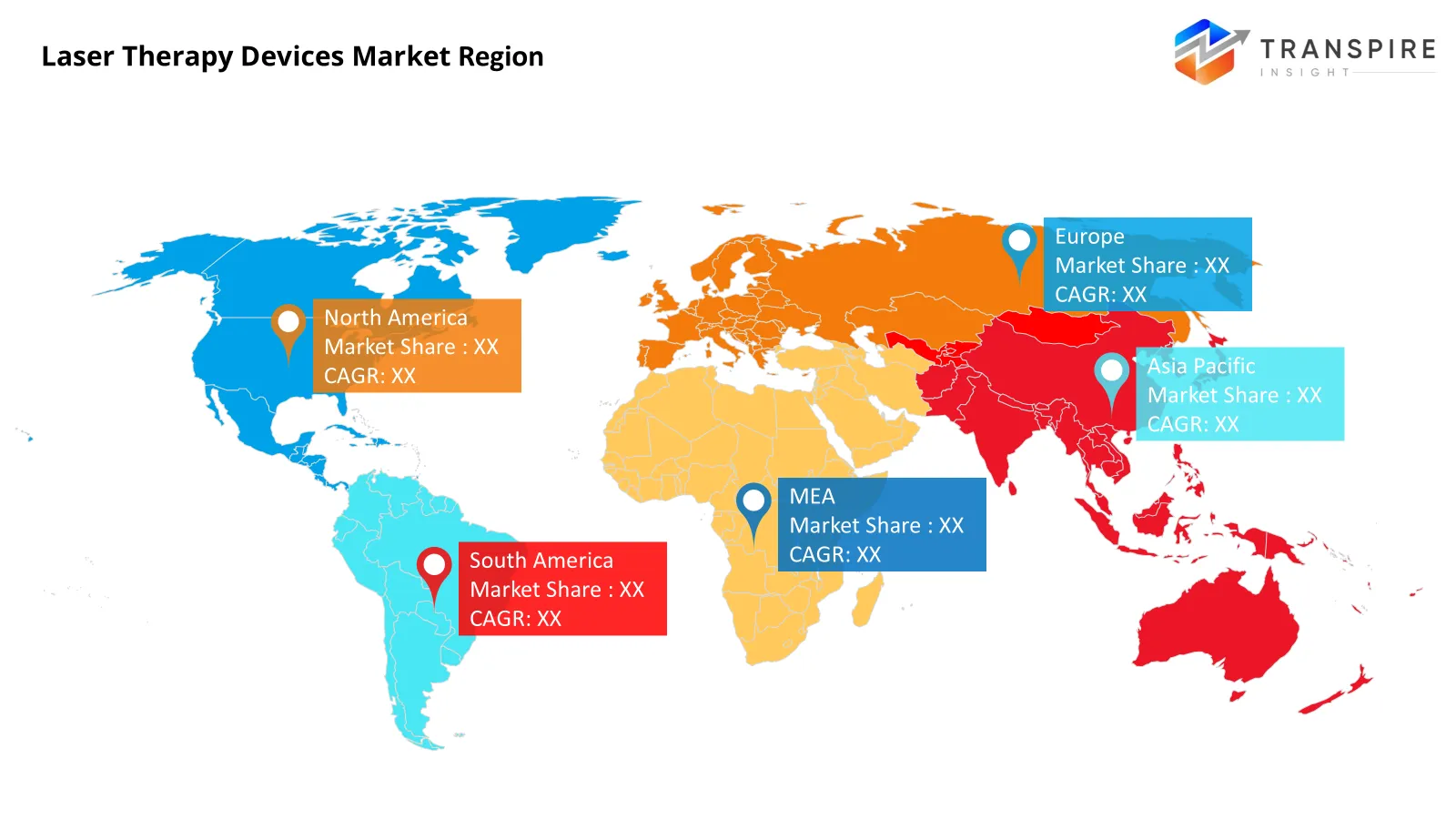
Who are the Key Players in the Laser Therapy Devices Market, and how do they Compete?
The market forces are less about product breadth as technological differentiation takes hold. Producers differentiate through the integration of precision laser manufacture with digital imaging, artificial intelligence treatment planning, software integration, and end-to-end services that deliver clinical operational efficiencies and lower total cost of ownership.
Lumenis, Candela Medical, Fotona, Alma Lasers, Cutera, Cynosure, and El. En. Focus on innovation via multi-application laser platforms, adaptable treatment regimens, and outpatient specialty clinics. BIOLASE will utilize novel, minimally invasive dental applications to set itself apart; Bausch + Lomb and Iridex will grow their ophthalmology weaponry with state-of-the-art vision-care systems. Their growth strategy centres on clinician training, local distribution collaborations, and platform upgrades. Boston Scientific, Abbott and Medtronic build on larger medical technology ecosystems to reinforce hospital-sourced opportunities for laser solutions and more sophisticated procedural workflows. Zimmer Medizin Systeme and Thor Photomedicine concentrate on rehabilitation and photo biomodulation market niches via proven therapeutic use cases. Throughout the industry, providers are increasing investment in regional manufacturing, strategic M&A, AI-enabled treatment software, and subscription service contracts to further competitive positioning and penetration into emerging healthcare markets.
Key Players are:
- Lumenis
- Candela Medical
- BIOLASE
- Fotona
- Bausch + Lomb
- Iridex
- El.En.
- Alma Lasers
- Cutera
- Cynosure
- Boston Scientific
- Abbott
- Medtronic
- Zimmer MedizinSysteme
- Thor Photomedicine
Recent Development News
- In January 2026, Laser Photonics Corporation secured a $0.5 million custom procurement order from a prominent U.S.-based medical device manufacturer. This specialized platform integrates two independent fibre lasers configured to perform dual metal marking and selective ablation tasks on multi-material components.
What Strategic Insights Define the Future of the Laser Therapy Devices Market?
The market is headed toward modular, software-enabled laser platforms that can support both clinical and supervised home applications without compromising safety or treatment outcomes. Vendors that can enable easy setup, offload dose management, and a range of indications on a single platform architecture are most likely to thrive. A potential wildcard is reimbursement inconsistency; even with robust clinical data, fragmented payer coverage can hinder commercialization, lengthen sales cycles, and drive down prices. The most promising niche is AI-optimized low-level laser therapy for pain, rehabilitation and dermatology, particularly in dense urban areas where high-speed throughput clinics and patients seeking lower downtime options are emerging. Vendors should look to high-ease-of-use design, pre-prepared regulatory-ready data sets, and tailored channel strategies. Success in this market will depend on easing operator training and expanding access through outpatient, speciality, and home channels.
Key Segmentations are:
By Product Type
- Low-Level Laser Therapy Devices
- Surgical Laser Systems
- Dental Laser Systems
- Dermatology Laser Systems
- Ophthalmic Laser Systems
- Physiotherapy Laser Devices
- Aesthetic Laser Devices
- Others
By Application
- Pain Management
- Dermatology
- Dentistry
- Ophthalmology
- Oncology
- Physiotherapy
- Cosmetic Procedures
- Others
By End User
- Hospitals
- Speciality Clinics
- Ambulatory Surgical Centers
- Rehabilitation Centers
- Home Care
- Research Institutes
- Others
By Technology
- Nd:YAG Lasers
- Erbium Lasers
- Fiber Lasers
- Pulsed Dye Lasers
- Others
By Distribution Channel
- Direct Sales
- Medical Device Distributors
- Hospital Procurement
- Online B2B Platforms
- OEM Suppliers
- Others
Regional Outlook
North America
- US
- Canada
- Mexico
- US
- Canada
Europe
- Germany
- UK
- France
- Italy
- Spain
- Rest of Europe
Asia Pacific
- China
- Japan
- India
- South Korea
- Australia
- Rest of Asia Pacific
South America
- Brazil
- Argentina
- Rest of South America
Middle East & Africa
- UAE
- Saudi Arabia
- Qatar
- South Africa
- Rest of the Middle East & Africa
Frequently Asked Questions
Find quick answers to common questions.
The Laser Therapy Devices Market size was valued at USD 2.87 billion in 2025 and is poised to reach USD 5.49 billion by 2033, expanding at an 8.46% CAGR.
Key segments for the Laser Therapy Devices Market are By Product Type (Low-Level Laser Therapy Devices, Surgical Laser Systems, Dental Laser Systems, Dermatology Laser Systems, Ophthalmic Laser Systems, Physiotherapy Laser Devices, Aesthetic Laser Devices, Others); By Application (Pain Management, Dermatology, Dentistry, Ophthalmology, Oncology, Physiotherapy, Cosmetic Procedures, Others); By End User (Hospitals, Specialty Clinics, Ambulatory Surgical Centers, Rehabilitation Centers, Home Care, Research Institutes, Others); By Technology (Diode Lasers, CO₂ Lasers, Nd: YAG Lasers, Erbium Lasers, Fiber Lasers, Pulsed Dye Lasers, Others); By Distribution Channel (Direct Sales, Medical Device Distributors, Hospital Procurement, Online B2B Platforms, OEM Suppliers, Others).
Growth is primarily driven by rising demand for non-invasive and minimally invasive procedures, stronger adoption in aesthetics, pain management, dentistry, ophthalmology, and surgery, plus technology upgrades such as portable, AI-enabled, and low-level laser systems.
The global market is led by major manufacturers including Lumenis, Candela Medical, BIOLASE, Fotona, Bausch + Lomb, Iridex, El.En., Alma Lasers, Cutera, Cynosure, Boston Scientific, Abbott, Medtronic, Zimmer MedizinSysteme, Thor Photomedicine.
North America dominates with about a 40% share, supported by high procedure volumes, strong specialty-clinic infrastructure, reimbursement depth, and early adoption of premium laser platforms.
Commercial opportunities include AI-guided portable/home-use systems, low-level laser therapy for pain and rehabilitation, distributor-led expansion in Asia-Pacific, and premium multi-application systems for specialty clinics.
- Lumenis
- Candela Medical
- BIOLASE
- Fotona
- Bausch + Lomb
- Iridex
- El.En.
- Alma Lasers
- Cutera
- Cynosure
- Boston Scientific
- Abbott
- Medtronic
- Zimmer MedizinSysteme
- Thor Photomedicine
About the Authors

Pankaj Ghogare Patil
I am Pankaj Ghogare Patil, a Senior Research Analyst at Transpire Insight, specializing in the Pharmaceutical, Chemicals & Materials, Healthcare IT, and Biotechnology industry. My expertise lies in conducting comprehensive market research, analyzing industry trends, evaluating competitive landscapes, and translating complex data into actionable insights. At Transpire Insight, I closely follow emerging technologies, regulatory developments, and market innovations to create accurate, well-researched, and informative content that helps businesses and professionals make informed decisions. I am committed to producing credible, evidence-based articles that reflect industry best practices while making technical topics accessible and valuable for a broad audience.

Chakradhar Khansole
Chakradhar serves as the Research Director at Transpire Insight, bringing over 8 years of experience in technology, innovation, and strategic market intelligence. He specializes in transforming complex market data into actionable business insights that enable organizations to make informed, growth-oriented decisions. Recognized for his strategic vision and analytical expertise, Chakradhar leads high-impact research initiatives, delivering comprehensive market assessments, competitive intelligence, and forward-looking industry analysis.
Recently Published Reports
-
Jul 2026
Alopecia Treatment Market
Alopecia Treatment Market Size, Share & Analysis Report By Disease Type (Alopecia Areata, Cicatricial Alopecia, Traction Alopecia, Alopecia Totalis, Androgenetic Alopecia, Alopecia Universalis, and Other Disease Types), By Treatment Type (Topical Treatments, Oral Medications, Injectable Therapies, and Hair Transplantation), By Gender (Male, and Female), By Distribution Channel (Hospitals and Clinics, Retail Pharmacies, and Online Retailers), and Geography (North America, Europe, Asia-Pacific, Middle East and Africa, South and Central America), 2021 - 2031
-
Jul 2026
Medical Ultrasound Probe Market
Medical Ultrasound Probe Market Size, Share & Analysis Report By Type (Linear Type, Convex Type, Endocavitary Probe, Phased Array/Cardiac Probe, Transesophageal (TEE) Probe, and Others), By Application (Ophthalmology, Cardiology, Musculoskeletal, Oncology, Obstetrics & Gynecology, General Imaging, and Others), By End User (Hospitals & Clinics, Diagnostic Centers, Ambulatory Surgical Centers, and Others), and Geography (North America, Europe, Asia-Pacific, Middle East and Africa, South and Central America), 2021 – 2031
-
May 2026
Biosimilars Market
Biosimilars Market By Product Type (Monoclonal Antibodies, Recombinant Hormones, Erythropoietin, G-CSF, Others), By Indication (Oncology, Autoimmune Diseases, Blood Disorders, Diabetes, Others), By Manufacturing Type (In-House Manufacturing, Contract Manufacturing), By Distribution Channel (Hospital Pharmacies, Retail Pharmacies, Online Pharmacies), By Industry Analysis, Size, Share, Growth, Trends, and Forecasts 2021-2033
-
Apr 2026
Gastrointestinal Endoscopy Market
Gastrointestinal Endoscopy Market By Type (Rigid Gastrointestinal Endoscope, Flexible Gastrointestinal Endoscopes, Disposable Gastrointestinal Endoscope), By Procedure Type (Colonoscopy, Gastroscopy, Duodenoscopy, Enteroscopy, Flexible Sigmoidoscopy, Others), By Application (Diagnosis, Treatment), By End-Users (Hospitals, Ambulatory Surgical Centers, Specialty Clinics, Laboratories, Others), By Industry Analysis, Size, Share, Growth, Trends, and Forecasts 2021-2033