

Global Cold Laser Therapy Market Size & Forecast:
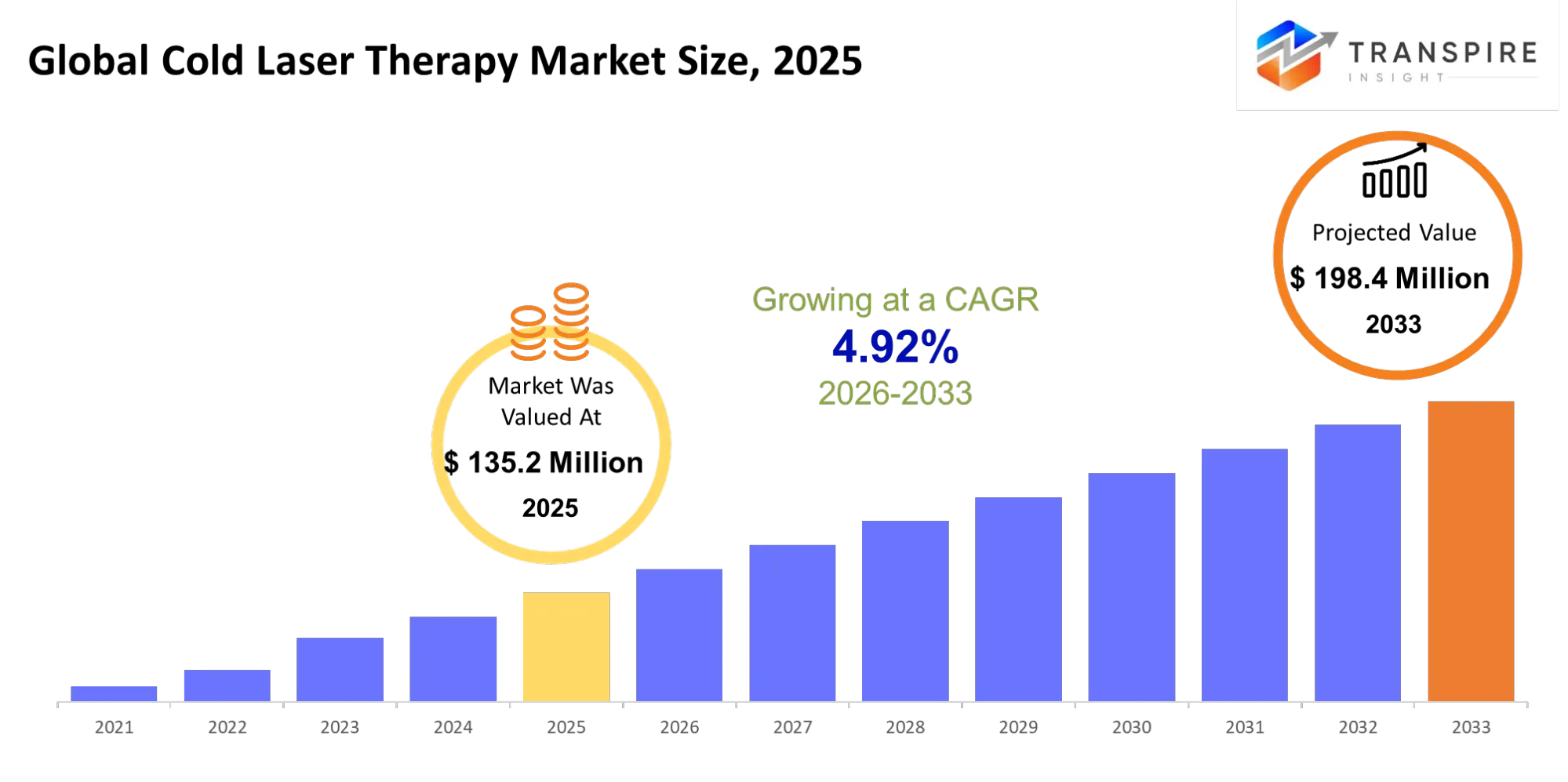
- Global Cold Laser Therapy Market Size 2025: USD 135.2 Million
- Global Cold Laser Therapy Market Size 2033: USD 198.4 Million
- Global Cold Laser Therapy Market CAGR: 4.92%
- Global Cold Laser Therapy Market Segments: By Product Type (Handheld Cold Laser Devices, Tabletop Cold Laser Systems, Portable Laser Therapy Devices, Multi-diode Laser Systems, Wearable Laser Therapy Devices, Veterinary Cold Laser Systems, Home-use Cold Laser Devices, Others); By Wavelength (635 nm, 650 nm, 808 nm, 810 nm, 904 nm, 980 nm, Multi-wavelength Systems, Others); By Application (Pain Management, Musculoskeletal Disorders, Sports Medicine, Wound Healing, Dermatology, Neurology, Veterinary Therapy, Others); By End User (Hospitals, Physiotherapy Clinics, Rehabilitation Centers, Sports Clinics, Home Care, Veterinary Clinics, Wellness Centers, Others); By Technology (Low-Level Laser Therapy, Class III Laser Therapy, Class IV Laser Therapy, Pulsed Laser Therapy, Continuous Wave Therapy, LED Photobiomodulation, Hybrid Systems, Others)
Global Cold Laser Therapy Market Summary:
As per Transpire Insight Analysis, the Global Cold Laser Therapy Market size is estimated at USD 135.2 million in 2025 and is anticipated to reach USD 198.4 million by 2033, growing at a CAGR of 4.92% from 2026 to 2033.
The global cold laser therapy utilises photon energy to enhance cellular activity and quickly reduce inflammation in injured tissue. Unlike traditional physical therapy, cold lasers provide a non-thermal, non-invasive form of pain relief. The market has shifted over the last 3 years from the utilisation of strictly clinical equipment to sophisticated consumer-grade devices. A critical structural change has occurred through regulatory approval of OTC home-use units, taking technology from healthcare to outside the clinical setting. Changes driven by the worldwide increase in chronic pain associated with an increasingly sedentary lifestyle forced providers to search for a sustainable, at-home maintenance care tool. As a result, the marketplace is broadening, as portable technology enables the practitioner to extend revenues into the patient’s home. Mediating the demands of clinical effectiveness and patient convenience, the industry has successfully migrated from a niche form of medication back to an integral patient-focused care mechanism.
Key Global Cold Laser Therapy Market Insights:
Clinical utilisation is moving toward well-integrated pain management rehabilitation ecosystems on mobile intelligent laser platforms. In addition to hardware, manufacturers are also relying on digital functions, wearable developments, and unique use applications for treatment.
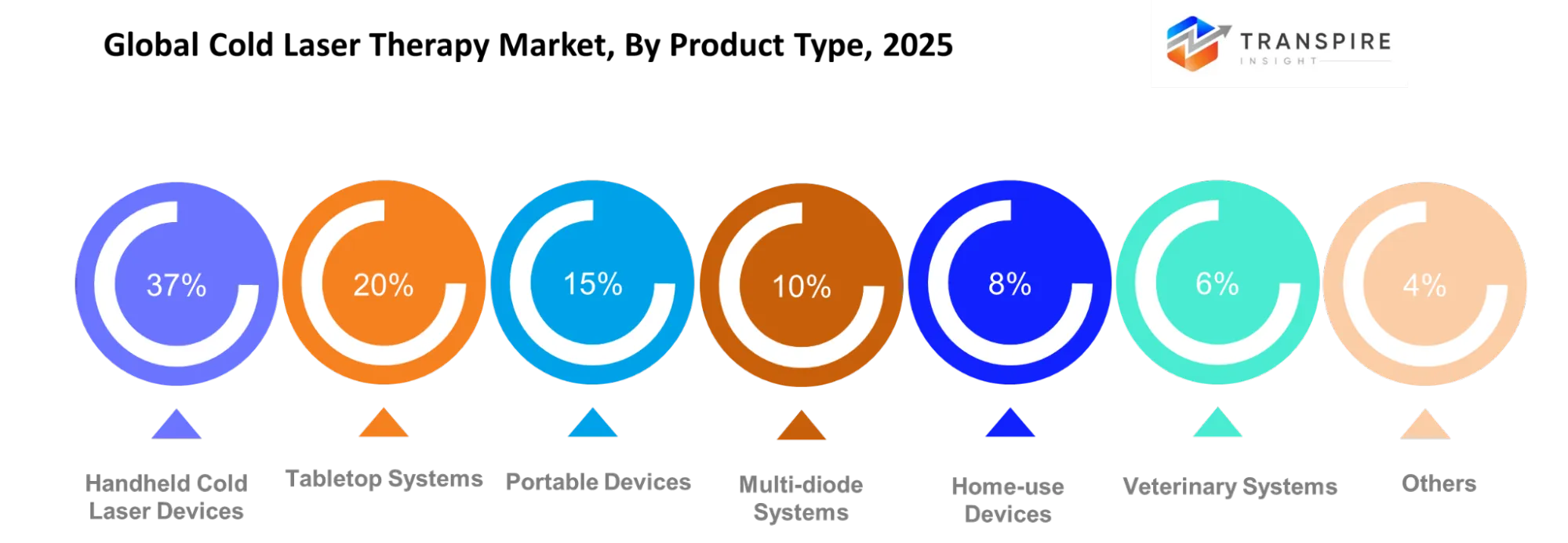
- Handheld Cold Laser Devices account for 37%, as the popularity of point-of-care treatments rises amongst clinicians.
- North America's 41% share is supported by DJO Global's growing rehabilitation portfolio via connected therapy platforms and integrated clinical workflows.
- The region's share is 29%, and BTL Industries is developing multi-functional physiotherapy systems to integrate laser and electrotherapy treatments.
- Wearable Laser Therapy Devices would see a 15.7% CAGR; THOR Photomedicine is investing in continuous home-rehabilitation technologies.
- Asia Pacific is 22% due to LiteCure's expansion of regional distribution to meet growing demand for outpatient rehabilitation and sports medicine.
- Portable Laser Therapy Devices make up 15%, and Zimmer MedizinSysteme makes mobility-enabled devices easier to use and more wireless.
- Multi-diode Laser Systems represent 10%, and Multi Radiance Medical is adding more wavelengths for precision treatment based on tissue.
- Home-use Cold Laser Devices account for 8%, while BioFlex Laser Therapy's digitally supported recovery programs are based on preventive healthcare behaviour.
What are the Key Drivers, Restraints, and Opportunities in the Global Cold Laser Therapy Market?
Driver:
Healthcare providers are looking for alternatives to long-term pharmaceutical treatments for pain, driving the market's momentum. The market is on the rise as healthcare providers increasingly favour drug-free pain management options. Opioid dependence, musculoskeletal disorders, and the greater awareness of insurance providers for rehabilitation services have all driven the growth of low-level laser therapy equipment. This shift will drive more hospitals, physiotherapy clinics, and sports rehabilitation centers to offer more treatments, which will lead to more equipment purchases and more patients coming back.
In May 2026, Kaiyan Medical Group expanded its OEM manufacturing initiative for transcranial photobiomodulation devices in the Asia-Pacific region, accelerating the availability of non-invasive, drug-free pain relief solutions.
Restraint:
The reimbursement systems are not consistent, and there are no universally accepted treatment protocols in countries. There is variability in clinical outcomes depending on the wavelength, dosage, and practitioner skill, which slows physician confidence and purchasing decisions. Smaller healthcare providers are also reluctant due to the high cost of equipment and the time it takes to get approval for advanced therapeutic devices.
Opportunity:
The best future opportunity is the integration of connected laser therapy systems and digital rehabilitation ecosystems. Devices that can transmit treatment information to clinicians can facilitate personalised treatment programs and enhance long-term adherence. North America and Asia-Pacific are seeing new commercial avenues for investments in AI-powered rehabilitation platforms, telehealth, and home healthcare. Companies working on smart wearable laser devices, cloud-based treatment analytics and remote monitoring are well poised to benefit from growing demand from the aging population, sports recovery and post-operative rehabilitation markets.
In January 2026,Appotronics launched a new series of laser-care smart devices. This product launch makes therapeutic laser care more portable and enables easier tracking in daily routines.
What Has the Impact of Artificial Intelligence Been on the Global Cold Laser Therapy Market?
Artificial intelligence-based treatment protocols revolutionise the way cold laser therapy is administered. Ultimately, AI removes the element of static protocol-based treatments in favour of dynamic data-based customised solutions. Automating dose optimization with the artificial intelligence algorithm enables the calculation of the exact energy density needed by leveraging information on tissue type, skin colour, and inflammatory inhibitors in the target site before administering treatment. This is done to improve the cell's photon absorption rate and avoid user errors. In addition, predictive modelling can forecast patient recovery trajectories and schedule treatments accordingly using live patient data, resulting in a more dynamic rehabilitation management process. These procedural efficiencies also decrease the learning curve for potential entrants, allowing consistent quality control standards at scale for hundreds of clinics. A critical industry hurdle is the absence of interoperability between legacy hospital EMR and state-of-the-art AI-enabled laser hardware, which produces data stored within isolated, HIPAA-secure environments.
In June 2026, Briya and HLTH Europe launched a no-cost, AI-powered decentralized research platform. This enables clinical data and medical insights to safely break through data silos in the European Union, directly tackling the interoperability and HIPAA hurdles.
Key Global Cold Laser Therapy Market Trends:
The industry is moving from symptom-based treatment to bio-photonic regeneration, and the shift is from reactive to proactive, personalised treatment of chronic pain and tissue health.
- Move beyond simple reactive pain masking to proactive, evidence-based tissue regeneration protocols.
- Emergence of hybrid systems of photobiomodulation (laser + LED + ultrasound) for multi-modal therapy.
- Move from clinical sessions to hybrid (home-plus-clinical) care with portable technology.
- Cloud-based monitoring for real-time assessment of treatment effectiveness and patient compliance.
- Progress in the development of devices that target specific pain fibres in deeper parts of the nervous system for complex spinal pain.
- More attention to the use of PBM in professional sports organisations for preventative injury management.
- Advances in veterinary medicine to specialised low-frequency, large surface laser arrays for quicker animal recovery.
- Standardisation of high-power class IV laser safety features in portable units to increase operator confidence.
Global Cold Laser Therapy Market Segmentation
By Product Type:
The handheld Cold Laser Devices are the most popular with 37% of the market, as clinicians value portability, speed and cost-effectiveness in physiotherapy and pain management practices. Tabletop Cold Laser Systems make up 20% and are used in high-volume clinical settings where performance is critical, and Portable Laser Therapy Devices make up 15% and are used in growing outpatient care settings. Multi-diode Laser Systems account for 10% and offer greater flexibility in treatment with multiple wavelengths. The adoption of home-based therapy is expected to drive the growth of Wearable Laser Therapy Devices at the fastest 15.7% CAGR. Home-use Cold Laser Devices account for 8%, Veterinary Cold Laser Systems 6%, and Others 4%.
By Wavelength:
808 nm and 810 nm systems maintain strong commercial adoption because of deeper tissue penetration for musculoskeletal treatment, while 635 nm and 650 nm remain preferred for superficial wound healing and dermatology. 904 nm, 980 nm, and Multi-wavelength Systems are gaining traction as providers seek greater therapeutic flexibility across multiple indications.
By Application:
Pain Management is the largest revenue generator with Musculoskeletal Disorders, Sports Medicine, Wound Healing, Dermatology, Neurology, Veterinary Therapy and other clinical New initiatives continuing to evolve in the direction of non-invasive recovery.
By End User:
Hospitals and physiotherapy clinics account for the highest equipment demands, with rehabilitation centres and sports clinics, home care facilities, vet clinics, wellness centres, and other speciality clinics showing more varied purchasing trends as more and more treatments become decentralised.
By Technology:
Though Low-Level Laser Therapy is also the primary commercial platform, Class III and Class IV Laser Therapy are used for higher-performance applications. Pulsed Laser Therapy, Continuous Wave Therapy, LED Photobiomodulation, Hybrid Systems and other advanced technologies are still improving the precision of treatment, patient comfort and the long-range efficiency of treatment.
What are the Key Use Cases Driving the Global Cold Laser Therapy Market?
The primary application for non-invasive pain management with handheld cold laser devices currently holds a 37% share of usage and has been widely adopted by hospitals, physiotherapy practices and rehabilitation clinics for chronic back pain, arthritis, tendinitis, and post-operative recovery to decrease the use of pharmacological therapies.
Additional areas of use are sports medicine and various other disciplines such as wound healing, dermatology, neurology and musculoskeletal rehabilitation, in which portable and tabletop systems aid rapid tissue repair, reduce inflammation and enhance functional recovery of athletes and geriatrics.
New opportunities include portable laser therapy systems, rehab at home, pet care, and digitally monitored "remote therapy" or ongoing recovery outside of traditional clinical settings.
|
Report Metrics |
Details |
|
Market size value in 2025 |
USD 135.2 Million |
|
Market size value in 2026 |
USD 141.8 Million |
|
Revenue forecast in 2033 |
USD 198.4 Million |
|
Growth rate |
CAGR of 4.92% from 2026 to 2033 |
|
Base year |
2025 |
|
Historical data |
2021 - 2024 |
|
Forecast period |
2026 - 2033 |
|
Report coverage |
Revenue forecast, competitive landscape, growth factors, and trends |
|
Regional scope |
United States; Canada; Mexico; United Kingdom; Germany; France; Italy; Spain; Denmark; Sweden; Norway; China; Japan; India; Australia; South Korea; Thailand; Brazil; Argentina; South Africa; Saudi Arabia; United Arab Emirates |
|
Key company profiled |
Erchonia Corporation, DJO Global, BTL Industries, THOR Photomedicine, Multi Radiance Medical, LiteCure, ASA Laser, Zimmer MedizinSysteme, Chattanooga, K-Laser, BioFlex Laser Therapy, Omega Laser Systems, Apollo Lasers, Irradia, MedX Health |
|
Customization scope |
Free report customization (country, regional & segment scope). Avail customized purchase options to meet your exact research needs. |
|
Report Segmentation |
By Product Type (Handheld Cold Laser Devices, Tabletop Cold Laser Systems, Portable Laser Therapy Devices, Multi-diode Laser Systems, Wearable Laser Therapy Devices, Veterinary Cold Laser Systems, Home-use Cold Laser Devices, Others); By Wavelength (635 nm, 650 nm, 808 nm, 810 nm, 904 nm, 980 nm, Multi-wavelength Systems, Others); By Application (Pain Management, Musculoskeletal Disorders, Sports Medicine, Wound Healing, Dermatology, Neurology, Veterinary Therapy, Others); By End User (Hospitals, Physiotherapy Clinics, Rehabilitation Centers, Sports Clinics, Home Care, Veterinary Clinics, Wellness Centers, Others); By Technology (Low-Level Laser Therapy, Class III Laser Therapy, Class IV Laser Therapy, Pulsed Laser Therapy, Continuous Wave Therapy, LED Photobiomodulation, Hybrid Systems, Others) |
Which Regions are Driving the Global Cold Laser Therapy Market?
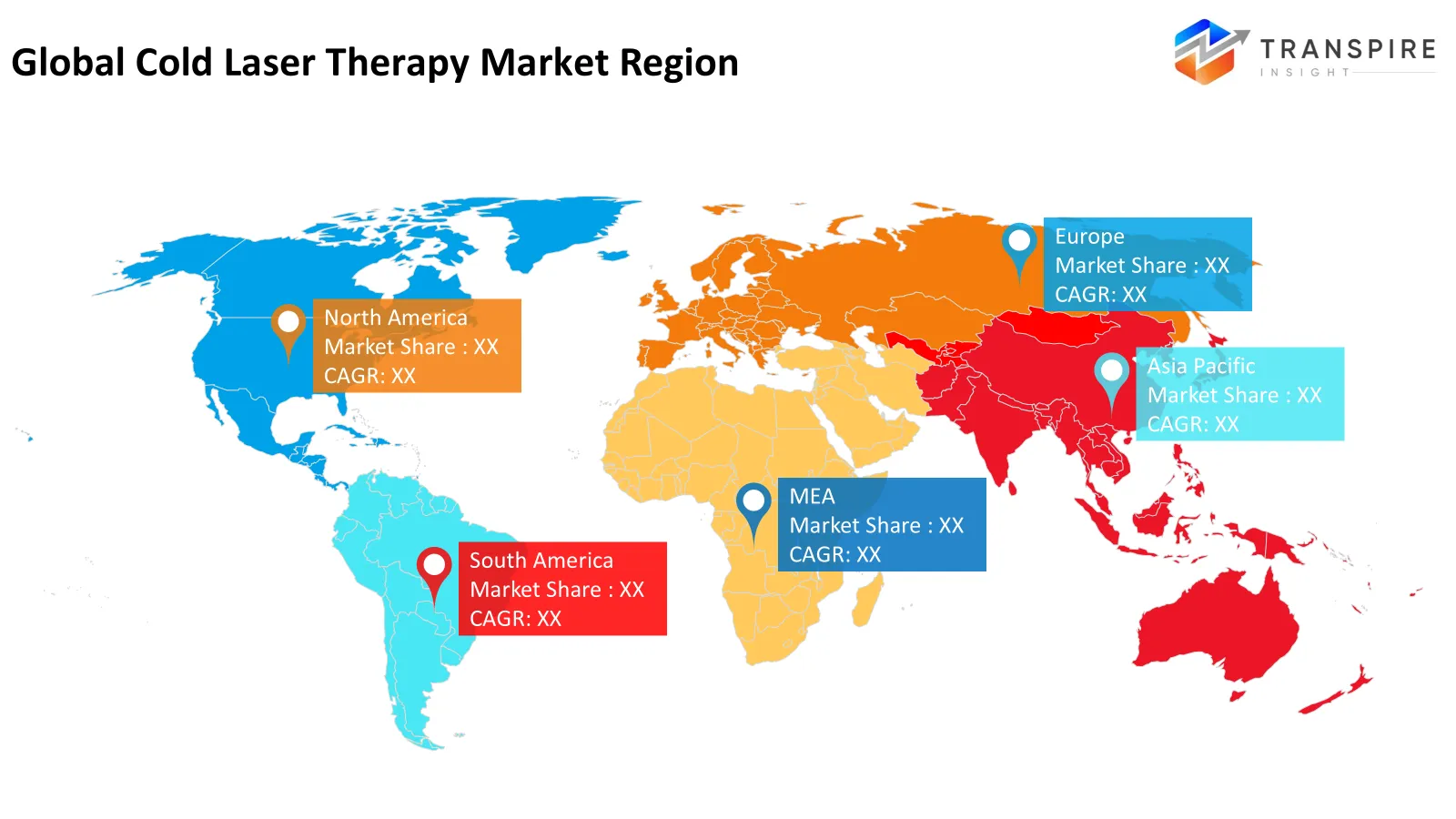
Advanced rehabilitation infrastructure, clinical acceptance, and positive trends in healthcare spending make North America the largest market for cold laser therapy with a share of 41% of global revenue. Sports medicine clinics, physiotherapy networks and hospitals still invest in novel and non-invasive treatment technologies that increase the efficiency of patient recovery. Advanced laser systems are being introduced into the marketplace quickly with regulatory clarity for medical devices and constant product innovation. The outpatient rehabilitation and digital healthcare platforms are also well adopted, adding to the region's sustainable leadership.
In March 2026, Royalty Pharma announced a $500 million partnership with Johnson & Johnson to co-fund investigational medicines for immune and inflammatory diseases, reinforcing the rapid introduction of non-invasive therapies.
Europe has 29% of the market and continues to grow slowly, with well-developed public healthcare systems and high uptake of physiotherapy. Growth is more about the clinical standards and reimbursement stability than more expensive healthcare spending in North America. Regional manufacturers are constantly innovating the quality and accuracy of their devices. Good medical research collaboration also facilitates long-term technology validation efforts throughout rehabilitation specialties. In March 2026, Sword Health finalized the acquisition of Germany's Kaia Health, expanding its clinical reach. This move unites two major regional innovators, accelerating the integration of AI-driven virtual physical therapy into established European public care and reimbursement models.
Asia Pacific accounts for 22% of the market and is expected to grow at the highest rate of 16.8% CAGR due to the rapid pace of healthcare modernisation in emerging economies. The regional demand has changed in the past few years, with an increase in investment in rehabilitation centres, sports medicine, and home healthcare. An increase in domestic manufacturing makes equipment more affordable and accessible. With greater awareness of non-invasive therapies, there are significant long-term market opportunities across the region.
Who are the Key Players in the Global Cold Laser Therapy Market and how do they compete?
The world market is intensely fragmented, while market leaders are building up defensible moats with proprietary wavelength technology. Competition is no longer on power alone but on 'dose accuracy'- getting to the depth of tissue change without thermal injury. Market players are migrating from selling commodity hardware to holistic clinical ecosystems with proprietary software and training.
Erchonia Corporation & THOR Photomedicine, both high-value clinical validation, premium, evidence-based providers to high-end research hospitals. They compete on achieving international clinical efficacy status (a differentiator from generic low-cost emitters). However, competitors that are volume-oriented, such as DJO Global, BTL Industries, Scottsdale, AZ & Chattanooga, take advantage of large-depth distribution channels, integrating systems into large franchised physiotherapy chains via bundled service contracts and leasing models. Multi Radiance Medical (differentiator) & ASA Laser (differentiator)-demonstrate how technological innovation can be utilised on 1.2 to 3 multi-diode and robotic systems to automate treatment, which reduces clinics' labour costs. Small-to-mid-tier niche players--MedX Health, Irradia, Omega Laser Systems-specialise through depth in niche verticals such as elderly care, wound management, veterinary medicine (not competing directly with broad-spectrum fast-F&Golden competitors).
Key Players are:
- Erchonia Corporation
- DJO Globa
- BTL Industries
- THOR Photomedicine
- Multi Radiance Medical
- LiteCure
- ASA Laser
- Zimmer Medizin Systeme
- Chattanooga
- K-Laser
- BioFlex Laser Therapy
- Omega Laser Systems
- Apollo Lasers
- Irradia
- MedX Health
Recent Development News
- In June 2026, Multi Radiance Medical expanded its therapeutic footprint by securing a new USFDA clearance for Lateral Epicondylitis (tennis elbow). This approval follows a successful triple-blind clinical trial verifying that the company's super pulsed cold laser devices provide an effective, non-invasive, and drug-free option to accelerate recovery and manage pain for musculoskeletal upper extremity conditions.
- In February 2026, Erchonia Corporation received USFDA marketing clearance for its Erchonia DPN Laser (Model #EVRL). This regulatory milestone approves the handheld cold laser device for prescription home-use application to provide temporary adjunctive relief of debilitating foot pain associated with diabetic peripheral neuropathy. This product launch and regulatory approval.
https://www.accessdata.fda.gov
What Strategic Insights Define the Future of the Global Cold Laser Therapy Market?
The market is skewing towards "Precision Photobiomodulation", where therapies will be highly personalized for individual genetics and run on sensors monitoring cellular response in real time. The Latent Risk of a lack of a global standard for "energy dose" labelling to differentiate itself from other "mass" beauty devices is undervalued, as inconsistent protocols among manufacturers could lead to clinical disapproval should patient results fail to be achieved at home. The emerging trend of "Subscription-as-a-service" for home-use devices might also have a hidden upside as "hardware" subsidy swings in toward a recurring revenue model based on usage data and tailored protocols. High priority focus should be on recouping by-investment into AI-driven feedback-loops, not just to "drive" laser applications but also to archive long-term clinical data to attain universal insurance reimbursement and prove clinical-outcome-forward sales more lucrative than hardware.
Key Segmentations are:
By Product Type
- Handheld Cold Laser Devices
- Tabletop Cold Laser Systems
- Portable Laser Therapy Devices
- Multi-diode Laser Systems
- Wearable Laser Therapy Devices
- Veterinary Cold Laser Systems
- Home-use Cold Laser Devices
- Others
By Wavelength
- 635 nm
- 650 nm
- 808 nm
- 810 nm
- 904 nm
- 980 nm
- Multi-wavelength Systems
- Others
By Application
- Pain Management
- Musculoskeletal Disorders
- Sports Medicine
- Wound Healing
- Dermatology
- Neurology
- Veterinary Therapy
- Others
By End User
- Hospitals
- Physiotherapy Clinics
- Rehabilitation Centers
- Sports Clinics
- Home Care
- Veterinary Clinics
- Wellness Centers
- Others
By Technology
- Low-Level Laser Therapy
- Class III Laser Therapy
- Class IV Laser Therapy
- Pulsed Laser Therapy
- Continuous Wave Therapy
- LED Photobiomodulation
- Hybrid Systems
- Others
Regional Analysis
North America
- United States
- Canada
- Mexico
Europe
- Germany
- United Kingdom
- France
- Italy
- Spain
- Russia
- Rest of Europe
Asia Pacific
- China
- Japan
- India
- South Korea
- Australia
- Rest of Asia Pacific
South America
- Brazil
- Argentina
- Rest of South America
Middle East & Africa
- Saudi Arabia
- United Arab Emirates
- Qatar
- South Africa
- Rest of the Middle East & Africa
Frequently Asked Questions
Find quick answers to common questions.
The global cold laser therapy market size was valued at USD 135.2 million in 2025 and is poised to reach USD 198.4 million by 2033, expanding at a 4.92% CAGR.
Key segments for the global cold laser therapy market are By Product Type (Handheld Cold Laser Devices, Tabletop Cold Laser Systems, Portable Laser Therapy Devices, Multi-diode Laser Systems, Wearable Laser Therapy Devices, Veterinary Cold Laser Systems, Home-use Cold Laser Devices, Others); By Wavelength (635 nm, 650 nm, 808 nm, 810 nm, 904 nm, 980 nm, Multi-wavelength Systems, Others); By Application (Pain Management, Musculoskeletal Disorders, Sports Medicine, Wound Healing, Dermatology, Neurology, Veterinary Therapy, Others); By End User (Hospitals, Physiotherapy Clinics, Rehabilitation Centers, Sports Clinics, Home Care, Veterinary Clinics, Wellness Centers, Others); By Technology (Low-Level Laser Therapy, Class III Laser Therapy, Class IV Laser Therapy, Pulsed Laser Therapy, Continuous Wave Therapy, LED Photobiomodulation, Hybrid Systems, Others).
Growth is primarily driven by the surging global demand for non-invasive, opioid-free pain management solutions combined with technological advancements that have enabled the miniaturisation of clinical-grade laser diodes for wider outpatient adoption.
The global telecom power system market is led by major manufacturers, including Erchonia Corporation, DJO Global, BTL Industries, THOR Photomedicine, Multi Radiance Medical, LiteCure, ASA Laser, Zimmer MedizinSysteme, Chattanooga, K-Laser, BioFlex Laser Therapy, Omega Laser Systems, Apollo Lasers, Irradia, MedX Health.
Commanding a 41% market share, North America dictates global standards through its rigorous FDA regulatory framework and high-capital investment in advanced clinical infrastructure, which sets the industry benchmark for safety and efficacy protocols.
Key commercial opportunities include implementing "Therapy-as-a-Service" subscription models for home-use devices and integrating AI-driven biometric feedback loops to generate the clinical data necessary for securing universal insurance reimbursement.
- Erchonia Corporation
- DJO Globa
- BTL Industries
- THOR Photomedicine
- Multi Radiance Medical
- LiteCure
- ASA Laser
- Zimmer MedizinSysteme
- Chattanooga
- K-Laser
- BioFlex Laser Therapy
- Omega Laser Systems
- Apollo Lasers
- Irradia
- MedX Health
About the Authors

Pankaj Ghogare Patil
I am Pankaj Ghogare Patil, a Senior Research Analyst at Transpire Insight, specializing in the Pharmaceutical, Chemicals & Materials, Healthcare IT, and Biotechnology industry. My expertise lies in conducting comprehensive market research, analyzing industry trends, evaluating competitive landscapes, and translating complex data into actionable insights. At Transpire Insight, I closely follow emerging technologies, regulatory developments, and market innovations to create accurate, well-researched, and informative content that helps businesses and professionals make informed decisions. I am committed to producing credible, evidence-based articles that reflect industry best practices while making technical topics accessible and valuable for a broad audience.

Chakradhar Khansole
Chakradhar serves as the Research Director at Transpire Insight, bringing over 8 years of experience in technology, innovation, and strategic market intelligence. He specializes in transforming complex market data into actionable business insights that enable organizations to make informed, growth-oriented decisions. Recognized for his strategic vision and analytical expertise, Chakradhar leads high-impact research initiatives, delivering comprehensive market assessments, competitive intelligence, and forward-looking industry analysis.
Recently Published Reports
-
Jul 2026
Alopecia Treatment Market
Alopecia Treatment Market Size, Share & Analysis Report By Disease Type (Alopecia Areata, Cicatricial Alopecia, Traction Alopecia, Alopecia Totalis, Androgenetic Alopecia, Alopecia Universalis, and Other Disease Types), By Treatment Type (Topical Treatments, Oral Medications, Injectable Therapies, and Hair Transplantation), By Gender (Male, and Female), By Distribution Channel (Hospitals and Clinics, Retail Pharmacies, and Online Retailers), and Geography (North America, Europe, Asia-Pacific, Middle East and Africa, South and Central America), 2021 - 2031
-
Jul 2026
Medical Ultrasound Probe Market
Medical Ultrasound Probe Market Size, Share & Analysis Report By Type (Linear Type, Convex Type, Endocavitary Probe, Phased Array/Cardiac Probe, Transesophageal (TEE) Probe, and Others), By Application (Ophthalmology, Cardiology, Musculoskeletal, Oncology, Obstetrics & Gynecology, General Imaging, and Others), By End User (Hospitals & Clinics, Diagnostic Centers, Ambulatory Surgical Centers, and Others), and Geography (North America, Europe, Asia-Pacific, Middle East and Africa, South and Central America), 2021 – 2031
-
May 2026
Biosimilars Market
Biosimilars Market By Product Type (Monoclonal Antibodies, Recombinant Hormones, Erythropoietin, G-CSF, Others), By Indication (Oncology, Autoimmune Diseases, Blood Disorders, Diabetes, Others), By Manufacturing Type (In-House Manufacturing, Contract Manufacturing), By Distribution Channel (Hospital Pharmacies, Retail Pharmacies, Online Pharmacies), By Industry Analysis, Size, Share, Growth, Trends, and Forecasts 2021-2033
-
Apr 2026
Gastrointestinal Endoscopy Market
Gastrointestinal Endoscopy Market By Type (Rigid Gastrointestinal Endoscope, Flexible Gastrointestinal Endoscopes, Disposable Gastrointestinal Endoscope), By Procedure Type (Colonoscopy, Gastroscopy, Duodenoscopy, Enteroscopy, Flexible Sigmoidoscopy, Others), By Application (Diagnosis, Treatment), By End-Users (Hospitals, Ambulatory Surgical Centers, Specialty Clinics, Laboratories, Others), By Industry Analysis, Size, Share, Growth, Trends, and Forecasts 2021-2033