
Global Bio-Based PSA for Packaging Market Summary:
As per Transpire Insight Analysis, the Global Bio-Based PSA for Packaging Market size is estimated at USD 96.08 Million in 2025 and is anticipated to reach USD 208.86 Million by 2033, growing at a CAGR of 10.19% from 2026 to 2033. Growth will be driven by the growing demand for sustainable packaging materials, stringent environment-related regulations, and the widespread use of biobased pressure sensitive adhesives in the packaging industry.
The global bio-based pressure-sensitive adhesive market for packaging is growing because packaging companies are using bio-based materials instead of traditional ones. They want to make sure the things they make stick well. These adhesives are used on labels and packaging that's flexible. They are also used on cartons and paper. People care about the earth. They want to follow the rules.
The bio-based pressure-sensitive adhesive market has changed a lot. Now we have adhesives that're good for the earth, and they work well. This is because scientists have made materials that are better. Companies have to follow rules that help the earth. Big companies want to make packaging that's good for the earth. They want to make packaging that can be recycled or thrown away without hurting the earth. This means that companies that make bio-based pressure-sensitive adhesives have a lot of chances to grow and make new things. The bio-based pressure-sensitive adhesive market is important because it helps companies make good packaging for the earth.
Global Bio-Based PSA for Packaging Market Size & Forecast:
- Global Market Size 2025: USD 96.08 Million
- Expected Market Value (2033): USD 208.86 Million
- Forecast CAGR (2026–2033): 10.19%
- Leading Region in 2025: Europe
- Fastest Growing Region: Asia Pacific
- Key Company Profiles: Henkel, H.B. Fuller, Arkema, Avery Dennison, Dow, BASF, Sika, Ashland, Paramelt, Bostik, Beardow Adams, Jowat, Toyochem, Franklin International, EcoSynthetix.

Key Market Insights:
There is a shift from traditional adhesives to renewable ones because sustainability is now an essential aspect of the packaging industry. Innovation in products, regulations, and investment in sustainable materials will enhance future market competitiveness.
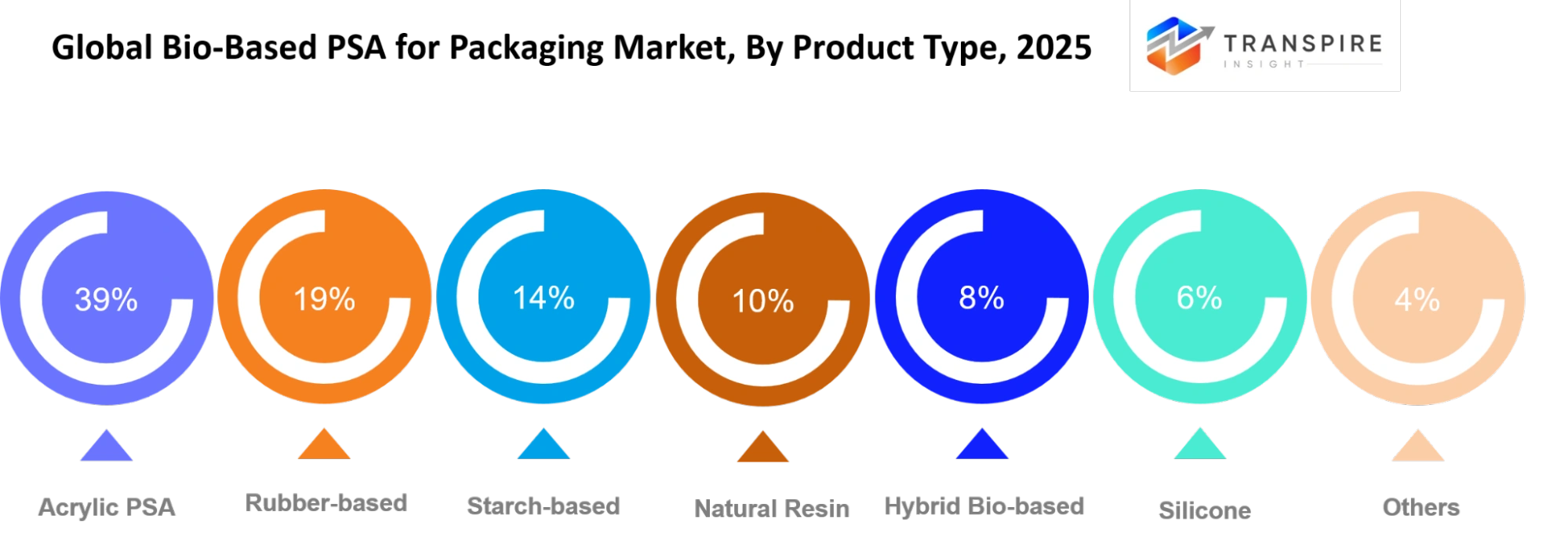
- Acrylic PSA makes up 39% of the market based on its outstanding adhesion, durability, and wide-ranging application capability on paper, plastic, and flexible packaging.
- Lignin PSA is expected to register a CAGR of 16.8% due to increased research activities in renewable sources and development of bio-based adhesive formulations offering superior performance.
- Rubber-based PSA is 19% of the market owing to good initial tack performance and a cost-effective solution for carton sealing, labelling, and industrial packaging applications.
- Starch-based PSA comprises 14% of the market since packaging industries are increasingly adopting biodegradable raw materials to reach their sustainability goals.
- Natural Resin PSA makes up 10% of the market since there is an increase in the number of packaging applications that use bio-based raw materials.
- Hybrid bio-based PSA makes up 8% of the market since there is growing demand for bio-based adhesive systems that offer improved mechanical and process performance.
- Silicone PSA makes up 6% of the market because of its application in premium labels and packaging requiring high temperature resistance and good adhesion properties.
- Other bio-based PSA makes up 4% of the market due to constant innovations in materials and speciality packaging applications.
What are the Key Drivers, Restraints, and Opportunities in the Global Bio-Based PSA for Packaging Market?
Drivers
The market is being driven by the trend in the packaging industry towards environmentally sustainable materials. Adhesive companies have been substituting oil-based materials for bio-based ones in order to fulfil their environmental obligations and adhere to the tougher environmental norms. This trend has been fueled by the widespread use of recyclable, biodegradable, and paper packaging materials in food, beverage, personal care, and e-commerce industries. As the adhesive producers continue to enhance their products in terms of performance and compatibility with modern packaging machines, the demand will grow in both developed and developing countries.
Restraints
Despite all the positive trends in the market, there are certain obstacles associated with the availability and pricing of raw materials used in bio-based adhesives. The supply of agricultural feedstock may be affected by seasonal changes and land usage priorities, making the prices of the raw materials somewhat unpredictable. Some formulations need to be improved in order to compete with conventional adhesives in terms of performance.
Opportunities
A major area of opportunity includes the creation of innovative bio-based polymers and adhesives that exhibit enhanced bonding, greater resistance to moisture, and higher renewable content. With increasing emphasis on developing sustainable materials along with the expansion of packaging manufacturing in the Asia-Pacific and Latin American regions, business opportunities can be created by manufacturers introducing environmentally friendly adhesives.
What Has the Impact of Artificial Intelligence Been on the Global Bio-Based PSA for Packaging Market?
The development of bio-based pressure-sensitive adhesives for packaging is being optimised by the use of artificial intelligence. Manufacturers are using the power of AI to model the performance of the sustainable raw materials before conducting any physical tests on them, hence saving product development time and research expenses. Through AI, quality control mechanisms can accurately detect coating imperfections, bonding discrepancies, and formulation differences in adhesive products, thereby reducing material wastage and increasing product quality.
Predictive analytics through production process, equipment, and environmental data analysis can predict the need for maintenance and optimise the production process through the use of artificial intelligence. Therefore, adhesive manufacturers can avoid unexpected downtime and optimise production process efficiency, hence ensuring stable production. Additionally, AI helps in optimising demand forecasts and supply chain management through raw material availability and changing customer requirements. However, despite these benefits, implementing AI technologies continues to pose difficulties for many manufacturers, as the process demands a lot of investments, specific skills, and compatibility with current production systems. With the rising accessibility of digital manufacturing solutions, AI will likely become even more prevalent and useful in terms of innovations, efficiency, and competitiveness of bio-based packaging adhesives.
Key Market Trends:
Sustainability has become central to product development as adhesive producers are increasingly concentrating on renewable materials to provide recyclable and compostable packaging formats. Furthermore, advancements in material science and digital manufacturing have enabled bio-based PSAs to offer superior performance in packaging.
- Packaging producers are increasingly switching from conventional adhesive formulas to bio-based adhesives as a means of meeting sustainability objectives and complying with environmental regulations.
- Recent research has been directed towards renewable materials like lignin, plant-based resins, and starches to improve adhesive properties and reduce dependency on petrochemicals.
- Recyclable and compostable packaging demand has driven innovations in adhesives to offer strong bonding capability without compromising the recycling process.
- Digital quality control has started to be used in adhesive manufacturing alongside automation to ensure consistency and minimise material wastage.
- Companies dealing with food, beverages, and personal care products are adopting bio-based packaging materials to make their sustainability commitments credible and increase their brands' value.
- Adhesive manufacturers are working together with packaging converters and raw material suppliers to introduce innovative sustainable adhesives to the market.
Global Bio-Based PSA for Packaging Market Segmentation
By product types
Acrylic PSA is dominant at 39% on account of its superior bond strength, durability and ability to work well on a variety of packaging substrates. Rubber PSA has 19%, thanks to its excellent initial tack and efficient performance in labelling and carton sealing. Starch PSA makes up 14% in light of rising demand for eco-friendly adhesives. Natural Resin PSA makes up 10%, whereas Hybrid Bio-based PSA is at 8%, by mixing renewable raw materials with enhanced mechanical properties. Silicone PSA makes up 6%, while Others take 4%. On the other hand, Lignin-based PSA is poised for the fastest growth, on account of advancements in renewable technology as well as commercialisation efforts.
By Substrate
On the basis of substrate, paper packaging is an important segment, where there has been an increased use of renewable adhesives as companies seek to use recyclable packaging systems. Plastic and flexible packaging segments see consistent demand, thanks to the use of bio-based PSAs, which not only provide better bonding but also help companies to decrease their carbon footprint. Corrugated packaging, Labels, cartons, and Compostable packaging are also seeing increased adoption, on account of sustainability regulations encouraging companies to use eco-friendly materials.
By Application
Food packaging is seen as having the greatest demand due to stringent packaging safety regulations and the rising inclination of consumers towards environmentally friendly products. The beverage, pharmaceutical, and personal care industry have been making huge investments in bio-based PSAs as an effort to fulfil their environmental obligations. Industrial packaging, e-commerce packaging, and consumer goods packaging are other segments creating ample opportunities due to the rising need for adhesives fulfilling efficient logistics needs and sustainability criteria.
By End User
From an end-user's perspective, the packaging manufacturing sector continues to be the biggest consumer of bio-based PSAs since they provide packaging material to different industrial sectors using adhesives. There has been steady adoption of bio-based PSAs by the food and beverages industry, pharmaceutical industry, and cosmetics industry as an effort to achieve sustainable packaging practices. Retailers, e-commerce, logistics companies, and other industrial users are contributing towards the expansion of the market through eco-friendly packaging.
By Distribution Channel
According to the distribution channel, direct sales remain prominent because major packaging firms have a preference for entering into long-term supplier agreements with the manufacturer of the adhesive products to ensure quality. Packaging distributors and adhesives manufacturers remain essential in ensuring the expansion of the market reach in different regions, while OEM supplier relationships ensure robust manufacturing chains. Online business-to-business channels, exporters, wholesalers, and other distribution channels are increasingly becoming significant because of increasing procurement, international business, and cross-border packaging needs.
What are the Key Use Cases Driving the Global Bio-Based PSA for Packaging Market
Bio-based pressure-sensitive adhesives have major applications in the packaging of food items, where the largest share of these products, namely Acrylic PSA, ensures good adhesion on labels, pouches, cartons, and flexible packaging to provide an opportunity for recycling and sustainable packaging.
Their applications are becoming increasingly widespread in the packaging of beverages, pharmaceuticals, cosmetics, and consumer goods, where reliability, compliance, and minimal environmental footprint are needed. The rise in e-commerce activities is also driving their increased usage in shipping labels and corrugated packaging. Some new application areas include compostable packaging, specialised labels, and bio-based flexible packaging targeted at eco-friendly brands. In view of the increasing adoption of renewable packaging materials, bio-based PSAs can be expected to find wider usage in advanced packaging systems that will involve protection, sustainability, and high-performance manufacturing.
|
Report Metrics |
Details |
|
Market size value in 2025 |
USD 96.08 million |
|
Market size value in 2026 |
USD 105.87 million |
|
Revenue forecast in 2033 |
USD 208.86 million |
|
Growth rate |
CAGR of 10.19% from 2026 to 2033 |
|
Base year |
2025 |
|
Historical data |
2021 - 2024 |
|
Forecast period |
2026 - 2033 |
|
Report coverage |
Revenue forecast, competitive landscape, growth factors, and trends |
|
Regional scope |
United States; Canada; Mexico; United Kingdom; Germany; France; Italy; Spain; Denmark; Sweden; Norway; China; Japan; India; Australia; South Korea; Thailand; Brazil; Argentina; South Africa; Saudi Arabia; United Arab Emirates |
|
Key company profiled |
Henkel, H.B. Fuller, Arkema, Avery Dennison, Dow, BASF, Sika, Ashland, Paramelt, Bostik, Beardow Adams, Jowat, Toyochem, Franklin International, EcoSynthetix. |
|
Customization scope |
Free report customization (country, regional & segment scope). Avail customized purchase options to meet your exact research needs. |
|
Report Segmentation |
By Product Type (Acrylic PSA, Rubber-based PSA,Silicone PSA, Starch-based PSA, Lignin-based PSA, Natural Resin PSA, Hybrid Bio-based PSA, Others); By Substrate (Paper Packaging, Plastic Packaging, Flexible Packaging, Corrugated Packaging, Labels, Cartons, Compostable Packaging, Others); By Application (Food Packaging, Beverage Packaging, Pharmaceutical Packaging, Personal Care Packaging, Industrial Packaging, E-commerce Packaging, Consumer Goods Packaging, Others); By End User (Packaging Manufacturers, Food & Beverage Companies, Pharmaceutical Companies, Cosmetics Manufacturers, Retail Brands, E-commerce Companies, Logistics Providers, Others); By Distribution Channel (Direct Sales, Packaging Distributors, Online B2B Platforms, Adhesive Suppliers, OEM Supply, Exporters, Wholesalers, Others). |
Which Regions are Driving the Global Bio-Based PSA for Packaging Market Growth?
North America
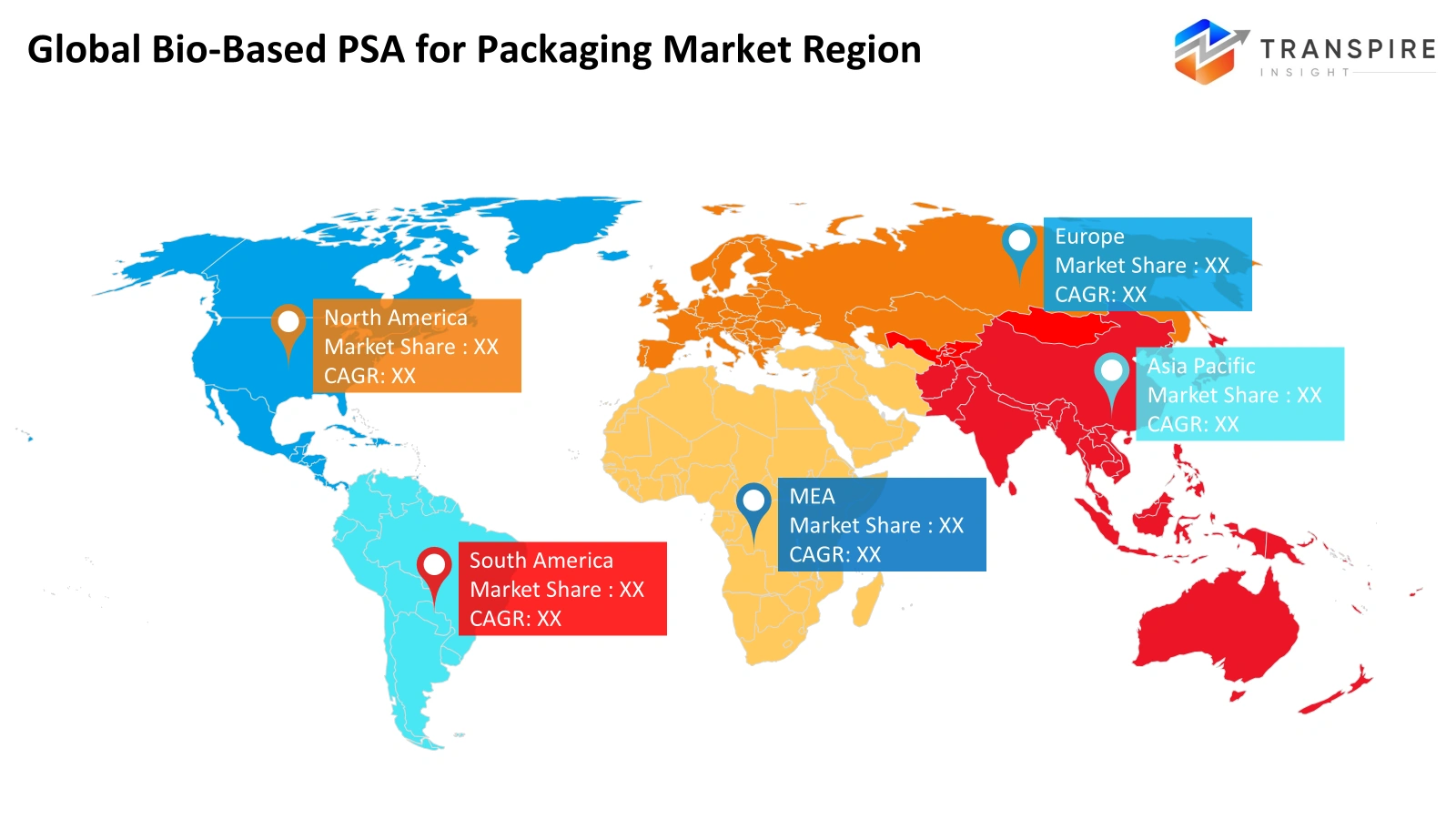
North America holds a significant share of 25% in the global market due to increasing investment in sustainable packaging solutions and increasing demand for sustainable packaging from food & beverages, health care, e-commerce, and other industries. North America focuses more on innovations and adoption of commercially viable products compared to Europe. The leading players continue to invest in research efforts to improve performance and reduce the environmental impacts of products.
Europe
The European region dominates the global bio-based PSA for packaging industry with its 36% market share because of the presence of environmental regulations and adoption of sustainable packaging materials. This region enjoys good manufacturing facilities for adhesives, recycling systems, and investments in renewable material innovation. Adhesive manufacturers are increasingly launching bio-based PSA to achieve the goals of the circular economy. Packaging manufacturers are actively collaborating with research institutes and governments to retain their market dominance.In March 2026, BASF announced that its acResin® UV 3532 pressure-sensitive adhesive had gained RecyClass approval, making sure that the adhesive is compatible with the European PET bottle recycling process. This innovation facilitates circular packaging and sustainable PSA usage in Europe.
Asia Pacific
The Asia Pacific region accounts for 30% of the total market share and is estimated to witness the fastest growth with a CAGR of 17.9%. Industrialisation, growth in the packaging industry, and favourable policies of governments to promote green manufacturing have helped fuel the growth of the market in this region. Increasing investments in renewable materials and eco-friendly packaging solutions have opened up new avenues for the manufacturers of adhesives. With growing demand for packaging, the Asia Pacific region is poised to emerge as a major hub of growth in bio-based PSAs.In January 2026,Bioworks (Japan) has been chosen by L'Oréal for its Sustainability Accelerator Program to scale its PlaX packaging material range based on natural sources.
Who are the Key Players in the Global Bio-Based PSA for Packaging Market and how do they Compete?
Competitive dynamics within the global bio-based PSA for packaging industry revolve around innovation in products, sustainable raw material sourcing, efficiencies in production, and forging long-lasting partnerships with packaging companies. Stakeholders in the market are adopting renewable adhesive technology while increasing their manufacturing capacities in response to increasing demand for environmentally conscious packaging.
Henkel AG & Co. KGaA aims at innovating in the area of bio-based adhesives with superior bonding abilities and sustainable features. The firm creates an edge for itself with regard to advanced research, strategic partnerships with packaging companies, and a wide range of products applicable in different packaging segments. The worldwide production facilities and sustainable investments made by Henkel will help it expand in both developed and developing markets.
Key companies such as Arkema S.A., Avery Dennison Corporation, H.B. Fuller Company, Dow Inc., and 3M Company compete by adopting adhesive technology with high industrial performance using renewable materials. Companies are able to enhance their market position through strategic partnerships, capacity expansion, and innovation in products. Most companies have invested in circular economy models, recyclable packaging systems, and regional facilities to make the supply chains more resilient to changes in customer needs.
Global Bio-Based PSA for Packaging Market companies
- Henkel
- H.B. Fuller
- Arkema
- Avery Dennison
- Dow
- BASF
- Sika
- Ashland
- Paramelt
- Bostik
- Beardow Adams
- Jowat
- Toyoche
- Franklin International
- EcoSynthetix
Recent Development News
In May 2025, Bio4Life brought to market BioTAK HC700, which is the first-ever home-compostable and food-safe bio-based pressure-sensitive adhesive intended for label and food packaging applications. The product added another dimension to sustainable packaging as it provided recyclable packaging material that completely biodegrades under home composting conditions.
Source: https://forsale.godaddy.com
In November 2025, BioBond introduced a new line of plant-based hot-melt pressure-sensitive adhesives intended for labelling and packaging tapes. The introduction increased the availability of bio-based PSA products and contributed to the shift of the packaging industry towards renewable adhesives.
Source: https://www.ascouncil.org
In February 2026, Henkel entered into an agreement with Sekab for utilising a bio-based ethyl acetate in the production of adhesive instead of the conventional fossil-based one.
Source: https://www.henkel.com
What Strategic Insights Define the Future of the Global Bio-Based PSA for Packaging Market?
The global market for the bio-based PSA for packaging is expected to move towards larger commercialisation because of the growing tendency among packaging firms to use renewable sources of raw materials, recyclable packaging solutions, and eco-friendly manufacturing processes. The future competition will revolve around the development of highly efficient adhesive compositions that are both sustainable and economically viable. The investments in new bio-based feedstock, innovative polymer technologies, and digital manufacturing can provide additional support to innovation and application fields.
Another important aspect that is not so obvious at first sight is related to the use of agricultural feedstock, which means that any changes in its availability, prices, and supply chains might influence the manufacturing costs and overall profits of companies in the long run. On the other hand, there is a considerable number of factors that can contribute to market growth, such as the increased regulatory encouragement of circular packaging and closer cooperation between adhesive, packaging, and material manufacturers.
Key Segmentations are:
By Product Type
- Acrylic PSA
- Rubber-based PSA
- Silicone PSA
- Starch-based PSA
- Lignin-based PSA
- Natural Resin PSA
- Hybrid Bio-based PSA,
By Substrate
- Paper Packaging
- Plastic Packaging
- Flexible Packaging
- Corrugated Packaging
- Labels
- Cartons
- Compostable Packaging
By Application
- Food Packaging
- Beverage Packaging
- Pharmaceutical Packaging
- Personal Care Packaging
- Industrial Packaging
- E-commerce Packaging
- Consumer Goods Packaging
By End User
- Packaging Manufacturers
- Food & Beverage Companies
- Pharmaceutical Companies
- Cosmetics Manufacturers
- Retail Brands
- E-commerce Companies
- Logistics Providers
By Distribution Channel
- Direct Sales
- Packaging Distributors
- Online B2B Platforms
- Adhesive Suppliers
- OEM Supply
- Exporters
- Wholesalers
Regional Outlook
North America
- United States
- Canada
- Mexico
Europe
- Germany
- United Kingdom
- France
- Spain
- Italy
- Rest of Europe
Asia Pacific
- Japan
- China
- Australia & New Zealand
- South Korea
- India
- Rest of Asia Pacific
South America
- Brazil
- Argentina
- Rest of South America
Middle East & Africa
- Saudi Arabia
- United Arab Emirates
- South Africa
- Rest of the Middle East & Africa
Frequently Asked Questions
Find quick answers to common questions.
The global bio-based psa for packaging market size was valued at USD 96.08 Million in 2025 and is poised to reach USD 208.86 Million by 2033, expanding at a 10.19% CAGR.
Key segments for the global bio-based psa for packaging market are By Product Type (Acrylic PSA, Rubber-based PSA, Silicone PSA, Starch-based PSA, Lignin-based PSA, Natural Resin PSA, Hybrid Bio-based PSA, Others); By Substrate (Paper Packaging, Plastic Packaging, Flexible Packaging, Corrugated Packaging, Labels, Cartons, Compostable Packaging, Others); By Application (Food Packaging, Beverage Packaging, Pharmaceutical Packaging, Personal Care Packaging, Industrial Packaging, E-commerce Packaging, Consumer Goods Packaging, Others); By End User (Packaging Manufacturers, Food & Beverage Companies, Pharmaceutical Companies, Cosmetics Manufacturers, Retail Brands, E-commerce Companies, Logistics Providers, Others); By Distribution Channel (Direct Sales, Packaging Distributors, Online B2B Platforms, Adhesive Suppliers, OEM Supply, Exporters, Wholesalers, Others).
Growth is primarily driven by high demand for sustainable packaging, environmental regulations, increased use of bio-materials, and growing consumer inclination towards green adhesives.
The global market is led by major manufacturers including Henkel, H.B. Fuller, Arkema, Avery Dennison, Dow, BASF, Sika, Ashland, Paramelt, Bostik, Beardow Adams, Jowat, Toyochem, Franklin International, EcoSynthetix.
The share of Europe in the global market of bio-based PSA for packaging is around 36%, as this region has stringent environmental laws, growing demand for sustainable packaging, bio-based material usage, and major players from the packaging industry.
Business prospects comprise the growing popularity of sustainable packaging, growth in e-commerce, increased usage of recyclable and biodegradable material, and advances in high-performance bio-based adhesives.
- Henkel
- H.B. Fuller
- Arkema
- Avery Dennison
- Dow
- BASF
- Sika
- Ashland
- Paramelt
- Bostik
- Beardow Adams
- Jowat
- Toyoche
- Franklin International
- EcoSynthetix
About the Authors

Kartik bhong
I am Kartik Bhong, a Senior Research Analyst at Transpire Insight, specializing in the Packaging, Manufacturing, and Construction industry. My work focuses on analyzing market trends, emerging technologies, industry regulations, and competitive landscapes to deliver accurate, data-driven insights. I am passionate about transforming complex industry information into clear, practical content that helps businesses, professionals, and decision-makers stay informed and make confident strategic decisions. Through continuous research and a strong commitment to accuracy, I strive to create reliable, well-researched content that reflects the latest developments across these dynamic industries and supports the vision of Transpire Insight in delivering valuable market intelligence.

Chakradhar Khansole
Chakradhar serves as the Research Director at Transpire Insight, bringing over 8 years of experience in technology, innovation, and strategic market intelligence. He specializes in transforming complex market data into actionable business insights that enable organizations to make informed, growth-oriented decisions. Recognized for his strategic vision and analytical expertise, Chakradhar leads high-impact research initiatives, delivering comprehensive market assessments, competitive intelligence, and forward-looking industry analysis.
Recently Published Reports
-
Apr 2026
Pharmaceutical Cold Chain Packaging Market
Pharmaceutical Cold Chain Packaging Market By Material (Plastic,(Polyethylene (PE), Polypropylene (PP), Polyethylene Terephthalate (PET), Expanded Polystyrene (EPS), Polyurethane (PU),Others), Paper, Metal, Others), By Product (Small Boxes, Pallets, Large Sized Pallet Containers, Others), By End Use (Biopharmaceutical Companies, Clinical Research Organizations, Hospitals, Research Institutes, Logistics and Distribution Companies, Others)”, By Industry Analysis, Size, Share, Growth, Trends, and Forecasts 2026-2033
-
Apr 2026
Active & Intelligent Packaging Market
Active & Intelligent Packaging Market By Type (Active Packaging, Smart Packaging), By Material (Polymer-Based, Paper & Board-Based, Metal-Based, Glass-Based), By Technology (Time-Temperature Indicators, Freshness Indicators, RFID, Antimicrobial Packaging, Modified Atmosphere Packaging), By Application (Food & Beverages, Pharmaceutical, Cosmetics & Personal Care, Electronics & Consumer Goods, Others), By Industry Analysis, Size, Share, Growth, Trends, and Forecasts 2026-2033
-
Apr 2026
Biodegradable Cut Flower Packaging Market
Biodegradable Cut Flower Packaging Market By Material Type (Paper & Paperboard, Biodegradable Plastics, Natural Fibers, Molded Pulp, Others), By Product Type (Sleeves, Wraps, Boxes & Cartons, Bags & Pouches, Inserts & Holders), By Application (Roses, Carnations, Tulips, Chrysanthemums, Mixed Flowers, Others) and By Distribution Channel (Direct Sales, Distributors & Wholesalers, Online Channels), By Industry Analysis, Size, Share, Growth, Trends, and Forecasts 2026-2033
-
May 2026
Pharmaceutical Packaging Market
Pharmaceutical Packaging Market By Material Type (Plastic, Glass, Metal, Paper & Paperboard, Others), By Packaging Type (Bottles, Blister Packs, Vials, Ampoules, Pouches & Sachets, Others) and By End User (Hospitals & Clinics, Retail Pharmacies, Online Pharmacies, Pharmaceutical Manufacturers), By Industry Analysis, Size, Share, Growth, Trends, and Forecasts 2026-2033