
Global Automotive Brake Pad Market Size & Forecast:
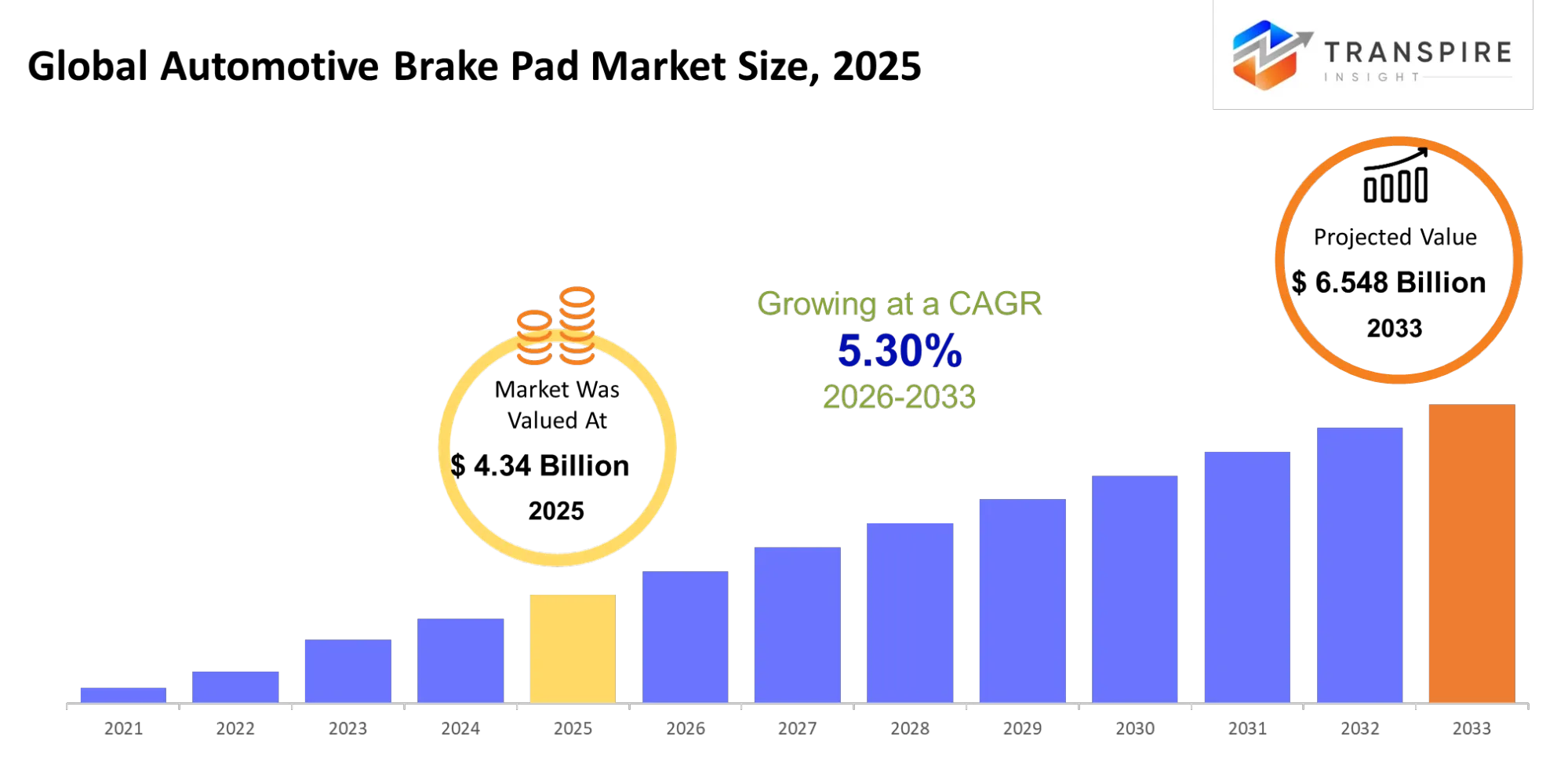
- Global Automotive Brake Pad Market Size 2025: USD 4.34 Billion
- Global Automotive Brake Pad Market Size 2033: USD 6.548 Billion
- Global Automotive Brake Pad Market CAGR: 5.30%
- Global Automotive Brake Pad Market Segments: By Type (Disc Brake Pads, Drum Brake Pads, Semi-metallic Brake Pads, Ceramic Brake Pads, Organic Brake Pads, Low-metallic Brake Pads, Others); By Application (Passenger Vehicles, Commercial Vehicles, Electric Vehicles, Performance Vehicles, Heavy-duty Vehicles, Others); By End-User (Automotive OEMs, Aftermarket Suppliers, Fleet Operators, Others); By Material (Ceramic Materials, Metallic Materials, Organic Materials, Composite Materials, Others).
To learn more about this report,  Download Free Sample Report
Global Automotive Brake Pad Market Summary:
The Global Automotive Brake Pad Market size is estimated at USD 4.34 billion in 2025 and is anticipated to reach USD 6.548 billion by 2033, growing at a CAGR of 5.30% from 2026 to 2033.
The automobile brake pad market ensures safety in automobiles through the provision of components used in generating friction to slow down the cars using their kinetic energy. There have been noticeable changes in the market over the last three to five years because car makers now focus on factors such as efficiency and longevity of the brakes rather than just their ability to stop cars. There has been one important change in the structure of the brake pad market, where there has been a need for stringent control over non-exhaust emissions from vehicles. The major catalyst that has fueled this demand is the fast-growing industry of transport for people within urban centres, as well as delivery transport. This has resulted in an increase in demand for efficient brake pads because there is a lot of need for frequent braking, and hence, maintenance issues are many. This is driving demand for quality and regulation-compliant brake pads that can provide efficiency and reliability.
Global Automotive Brake Pad Market Insights:
In addition to being driven by the need for replacement, the increasing penetration of performance optimization, sustainability, and digital vehicle integration is a key factor driving the Global Automotive Brake Pad market. The increasing complexity of materials, intelligent diagnostics compatibility, and niche braking systems for changing vehicle architectures are set as the differentiating factors for manufacturers.
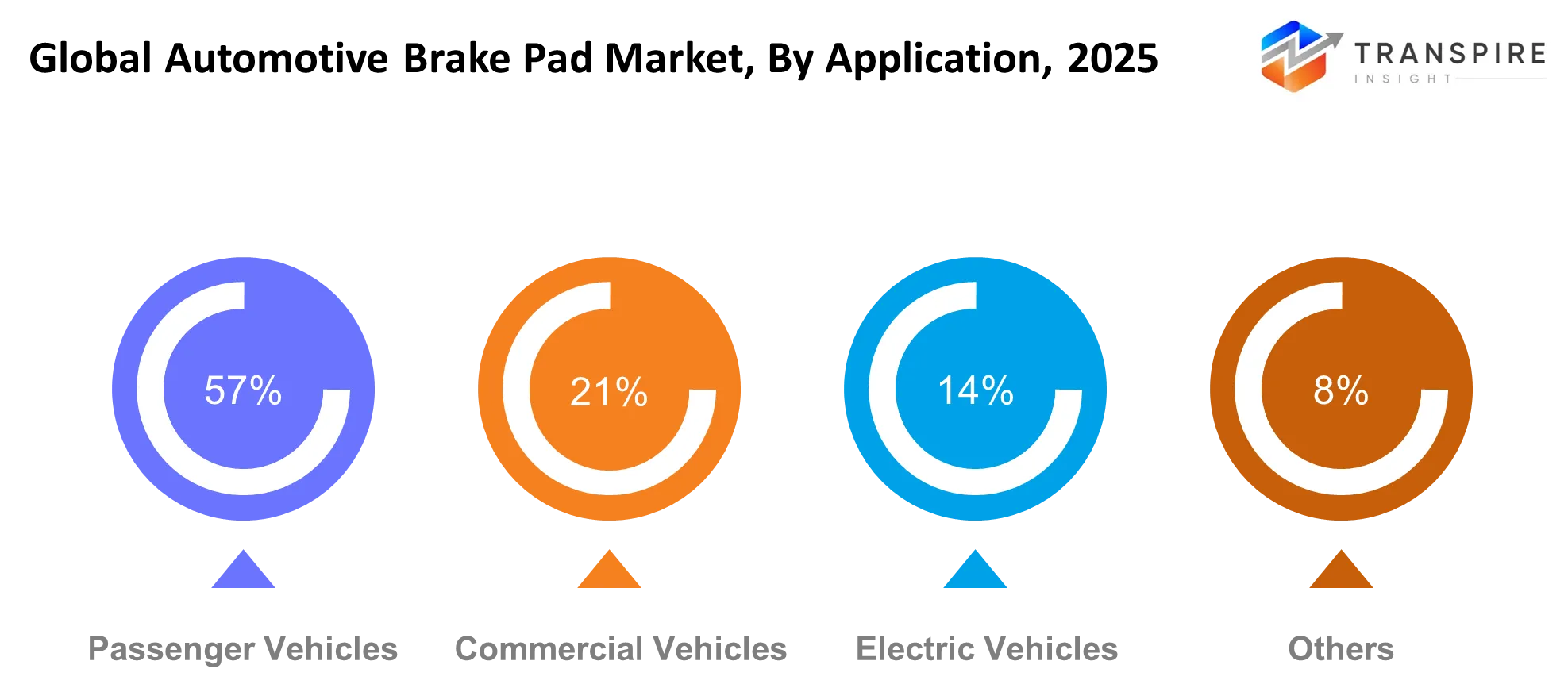
- Passenger cars have a market share of 57%, while Bosch continues its growth in premium friction, trying to improve braking performance and comfort.
- Asia-Pacific regions have a share of 42% in the total global demand, while Nisshinbo Holdings is still constructing manufacturing plants to improve logistical processes.
- Heavy trucks are responsible for 21% of the global market, while ZF Friedrichshafen is developing heavy-duty brakes, which focus on uptime and reliability.
- Electric vehicles account for 14% of the market demand, and ADVICS is developing brake systems that are optimized for the use of regenerative braking.
- The low-dust and low noise friction formulation is an improvement by Akebono, driving the growth of the fastest-growing segment of ceramic brake pads, with 8.9% CAGR.
- Europe represents 27% of the market, in which Brembo is actively innovating in electronically controlled braking technologies.
- DRiV's advanced aftermarket brake pad offerings are expanding to cater to ageing vehicle fleets, while North America accounts for 23% of the market.
- Fleet operators are becoming strategic end users, which has led Continental AG to develop predictive maintenance and brake monitoring functions as part of its mobility solutions.
What are the Key Drivers, Restraints, and Opportunities in the Global Automotive Brake Pad Market?
Driver:
The use of advanced driver assistance systems (ADAS) and vehicle safety technologies is one of the primary growth factors in the Global Automotive Brake Pad market. This trend has been triggered by stricter crash-safety regulations, higher consumer safety expectations, and automakers’ efforts to achieve top safety ratings. New braking technology demands that brake pads possess more consistent friction and thermal stability, and be compatible with electronic braking controls. Consequently, manufacturers are rolling out new high-quality brake components and high-quality product lines, driving up average selling prices and generating greater value through the OEM and aftermarket sectors. In May 2026, Brembo launched series production of its Sensify intelligent brake-by-wire platform. The system enhances ADAS integration, braking precision, and vehicle safety, increasing demand for advanced, high-performance brake pad technologies. Source: Brembo Sensify production announcement.
Restraint:
The increased durability of modern brake systems is a major constraint that reduces the need for replacement sales. Brake pad technology, such as improved friction materials, rotor designs and braking technology, has greatly extended the lifespan of brake pads. However, this structural problem remains as vehicle manufacturers continue to desire lower maintenance costs and extended service intervals, reducing the frequency of opportunities for brake pad suppliers to resell them.
Opportunities:
One of the most promising prospects is the growth of connected car ecosystems and smart mobility platforms. With the growing softwareization of vehicles, brake pad manufacturers can now create products with a sensor that offer real-time wear monitoring and maintenance alerts. Some of the investment opportunities in connected fleet management solutions, especially in commercial fleet markets in Asia-Pacific and the Middle East, may open a new avenue for recurring revenue and value-added services. In addition, the rising investment in autonomous and next-generation mobility cars is driving demand for intelligent braking components, with manufacturers being able to work closer together with OEMs to develop integrated safety systems and establish long-term technology supply deals. In March 2026, SAF-HOLLAND launched BrakeSight™, a real-time brake pad and rotor wear monitoring system for Haldex air disc brakes. Impact: The technology supports predictive maintenance, reduces fleet downtime, and strengthens opportunities in connected vehicle and smart mobility ecosystems.
What Has the Impact of Artificial Intelligence Been on the Global Automotive Brake Pad Market?
AI is revolutionizing the Global Automotive Brake Pad industry through advancements in materials science, manufacturing techniques, and lifecycle analysis. By simulating the friction behaviour, thermal properties, and wear rate of new materials, simulation platforms utilizing AI technologies allow companies to design new brake pads without going through multiple rounds of testing, saving on development time. Additionally, automated manufacturing equipment with embedded machine vision ensures that even minor flaws in the product can be detected during quality assurance checks.
AI technologies are not just being used to streamline production but can also aid predictive analytics in other areas of the brake pad supply chain. The data gathered by the sensors of connected cars through the frequency and nature of braking events can help service providers anticipate when to replace brake pads. On top of that, AI-driven predictive analytics enables suppliers to keep optimal stock levels and optimize production planning with their clients. One major problem with integrating AI in brake pads is that the capital requirement of the hardware and software is very high. For this reason, small companies might have a hard time acquiring enough quality data needed for the successful integration of AI into their processes.
Key Global Automotive Brake Pad Market Trends:
- To comply with stricter environmental regulations, brake pad formulations are evolving from metallic materials to copper-free and reduced-emission formulations.
- AI-powered material testing is an emerging trend that speeds up product development and enhances the reliability and consistency of friction performance in manufacturing.
- While low-cost replacements were once prized on the market, today consumer preference is shifting toward better quality, higher performing, more durable brake pads that decrease maintenance.
- Brake system suppliers are incorporating predictive maintenance features that help create data-driven replacement schedules and fleet optimization.
- Comfort is a major consideration when buying a vehicle, and this has led to a growing demand for ultra-low noise brakes.
- Recycled raw material usage and more sustainable manufacturing processes are being promoted through circular economy initiatives.
- Regional production systems are supplanting centralized supply chains to enhance supply chain resiliency and mitigate logistics risks.
- Instead of braking power, the basis for performance benchmarking is growing to particulate emission reduction and thermal efficiency.
Global Automotive Brake Pad Market Segmentation
By Type:
The Global Automotive Brake Pads constitute the largest market share because they offer an increased level of braking power, cooling and integration with modern vehicle platforms. Ceramic brake pads are the fastest-growing segment with a CAGR of 8.9%; however, semi-metallic and low-metallic brake pads continue to be used widely. The rising demand for low noise operation, cleaner wheel performance and low maintenance demands are fueling their growth. With time, further environmental regulations will drive the shift to premium ceramic-based products.
By Application:
The passenger vehicles dominate the market, accounting for 57 % of the market because of the high number of vehicles in use and the regular cycles of replacement. Commercial vehicles account for 21%, electric vehicles for 14%, and the rest (other applications) for 8%. The increasing demand for specialized braking systems, especially in the electric vehicle market, to keep performance stable under different conditions of regenerative braking, is being addressed. This is likely to drive increased product variation by category.
To learn more about this report, Download Free Sample Report
By End-User:
The Automotive OEMs have a strong position in the market, as braking performance is becoming more of a driver of vehicle safety ratings, as well as brand reputation. But the market for aftermarket parts and independent service facilities is still enjoying the benefits of older cars on the road. Maintenance efficiency will become more important, making fleet operators a more strategic customer base in the future.
By Material:
Metallic materials continue to be the industry benchmark for high load and durability, and ceramic and composite materials are being picked up by the market thanks todevelopments in lightweight engineering, thermal stability and emission-reduction capabilities.
What are the Key Use Cases Driving the Global Automotive Brake Pad Market?
The main application area for brake pad demand is passenger cars, with reliable stopping power, regulatory conformity, and comfortable braking being key factors for the use case. The widespread usage of passenger cars, combined with their servicing cycle, results in high demand for replacement brake pads from OEMs and the aftermarket.
Other applications include light trucks and logistics fleets, where brake pads designed to operate in demanding conditions associated with frequent stops, heavy loads, and long service intervals gain more popularity. The growth of online retail networks and the increased use of city logistics add to the demand in this niche.
A growing application area is the design of brake pads specially made for electric/hybrid vehicles. In this application, brake pads with specific friction properties that can work in harmony with the electric braking system are necessary for low emission rates and silent operation of the vehicle.
|
Report Metrics |
Details |
|
Market size value in 2025 |
USD 4.34 Billion |
|
Market size value in 2026 |
USD 4.562 Billion |
|
Revenue forecast in 2033 |
USD 6.548 Billion |
|
Growth rate |
CAGR of 5.30% from 2026 to 2033 |
|
Base year |
2025 |
|
Historical data |
2021 - 2024 |
|
Forecast period |
2026 - 2033 |
|
Report coverage |
Revenue forecast, competitive landscape, growth factors, and trends |
|
Regional scope |
United States; Canada; Mexico; United Kingdom; Germany; France; Italy; Spain; Denmark; Sweden; Norway; China; Japan; India; Australia; South Korea; Thailand; Brazil; Argentina; South Africa; Saudi Arabia; United Arab Emirates |
|
Key company profiled |
Brembo, Bosch, Akebono Brake Industry, Nisshinbo Holdings, Federal-Mogul, ADVICS, TMD Friction, Aisin Corporation, Continental AG, ZF Friedrichshafen, Delphi Technologies, EBC Brakes, TRW Automotive, Hitachi Astemo, MAT Holdings. |
|
Customization scope |
Free report customization (country, regional & segment scope). Avail customized purchase options to meet your exact research needs. |
|
Report Segmentation |
By Type (Disc Brake Pads, Drum Brake Pads, Semi-metallic Brake Pads, Ceramic Brake Pads, Organic Brake Pads, Low-metallic Brake Pads, Others); By Application (Passenger Vehicles, Commercial Vehicles, Electric Vehicles, Performance Vehicles, Heavy-duty Vehicles, Others); By End-User (Automotive OEMs, Aftermarket Suppliers, Fleet Operators, Others); By Material (Ceramic Materials, Metallic Materials, Organic Materials, Composite Materials, Others). |
Which Regions are Driving the Global Automotive Brake Pad Market Growth?
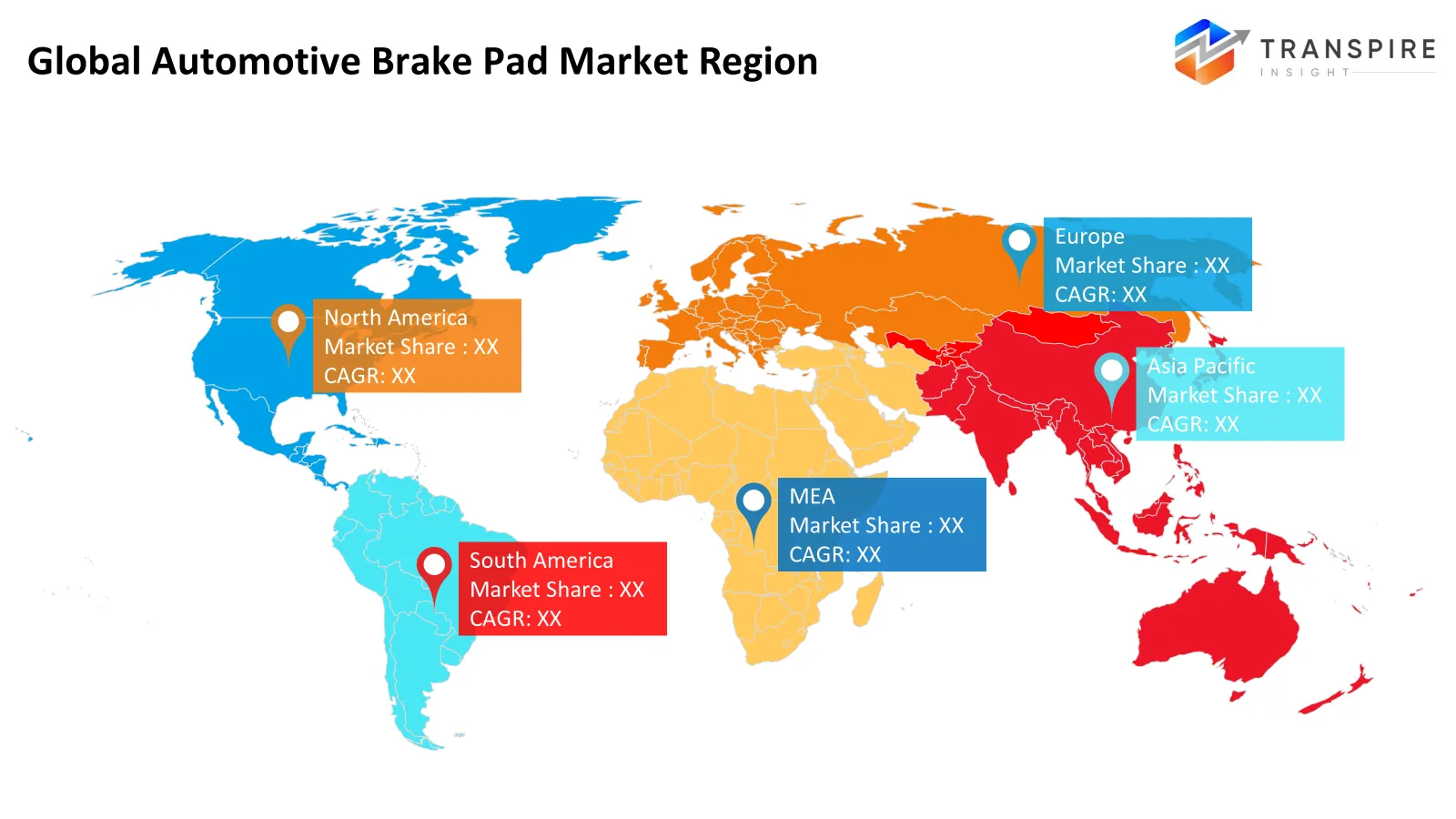
Asia-Pacific holds the largest market share of 42% in the Global Automotive Brake Pad market, as it is the world's largest vehicle production region. The area has access to extensive manufacturing clusters, a high percentage of domestic components, and extensive transportation infrastructure investments. The Chinese, Indian, Japanese and South Korean markets are among the countries that make up a significant percentage of global car production, resulting in a steady demand for OEM brake pads. Moreover, with the growth of the vehicle parc and the expansion of the intercity logistics network, long-term replacement needs are growing, further solidifying the region's leadership.In January 2026, Cummins launched the Meritor MFLEX4 air disc brake pad for the aftermarket. The product expanded heavy-duty vehicle brake pad coverage to approximately 70% of the Class 8 truck and trailer market, strengthening the regional commercial vehicle braking ecosystem.
Europe accounts for 27% of the market, and it differs from Asia-Pacific in terms of its technological sophistication, not its production volume. This is due to the presence of high-end vehicle manufacturing companies, where braking performance, noise levels and product certification are major factors in vehicle purchase. The robust compliance with the UNECE vehicle regulations, combined with a well-developed automotive aftermarket sector and a high rate of inspection, guarantees stability. The European average age of vehicles is also quite high, resulting in moderate turnover even when vehicle sales growth diminishes.
North America holds the largest share at 23% and is the fastest-growing region with a CAGR of 7.8%. The recent growth has been fueled by the rise in the adoption of connected fleet management solutions as well as the modernization of commercial transportation infrastructure. The area has a significant percentage of pickup trucks and SUVs, resulting in greater wear and replacement of brakes than in many world markets. The development of autonomous driving, software-defined vehicles and smart braking with predictive maintenance and real-time performance monitoring is expected to generate future opportunities. In May 2026, NRS Brakes became an approved supplier partner of The Group, one of North America's largest automotive aftermarket buying organizations. The partnership expanded distribution access for NRS galvanized brake pads across the region, strengthening aftermarket availability and supporting growing replacement demand.
To learn more about this report, Download Free Sample Report
Who are the Key Players in the Global Automotive Brake Pad Market and how do they Compete?
The competition among Global Automotive Brake Pad manufacturers is evolving based on material technology advancements, OEM integration capabilities, compliance with regulations, and aftermarket presence. The need for noiseless products, light materials, digital diagnostics compatibility, and region-specific offerings has become a new source of differentiation among competing firms in response to changes in the braking systems requirements due to electrification and sustainability factors.
Strategies adopted by Brembo, Bosch, Continental AG, ZF Friedrichshafen, and Hitachi Astemo involve innovation-driven processes that exploit advances in friction technology, electronic braking systems, and smart mobility environments. Akebono Brake Industry, ADVICS, Nisshinbo Holdings, and Aisin Corporation rely on engineering expertise with regard to OEMs as their competitive advantage. They grow through relationship building for their products used in EV and hybrid cars.
Federal Mogul, Delphi Technologies, TMD Friction, TRW Automotive, EBC Brakes, and MAT Holdings have been competing based on wide distribution networks for their aftermarkets, portfolio diversification, and regional manufacturing. While EBC Brakes has focused on serving performance-focused market niches, MAT Holdings has concentrated on offering its products at value prices. These firms are growing by focusing on localized manufacturing and expanding aftermarkets.
Key Players are:
- Brembo
- Bosch
- Akebono Brake Industry
- Nisshinbo Holdings
- Federal-Mogul
- ADVICS
- TMD Friction
- Aisin Corporation
- Continental AG
- ZF Friedrichshafen
- Delphi Technologies
- EBC Brakes
- TRW Automotive
- Hitachi Astemo
- MAT Holdings
Recent Development News
- In February 2026, Delphi (PHINIA) launched its Professional+ brake pad range for light commercial vehicles, featuring heavy-duty friction materials and up to 40% longer service life. Impact: Strengthened Delphi’s position in the commercial vehicle aftermarket while addressing fleet demand for durable braking solutions.
Source: http://delphiautoparts.com
- In April 2026, Tribol Braking announced the launch of the industry’s first full-composite brake pad using ColdForge-Carbon technology. Impact: The innovation reduces brake pad weight by 70% and improves thermal insulation, supporting the industry's shift toward lightweight and high-performance braking systems.
Source: https://thebrakereport.com
What Strategic Insights Define the Future of the Global Automotive Brake Pad Market?
The Global Automotive Brake Pads market is headed toward adopting more sophisticated braking mechanisms due to the adoption of electric vehicles (EVs), environmental regulations, and new safety concerns. Although companies are pouring in huge amounts of money towards the development of green friction material and intelligent brakes, an underlying threat would be the fluctuating costs of raw materials and stringent emission control rules on brake dust, which may drive up costs and decrease profit margins. The new opportunity presented by the rising trend in the use of EVs involves the increased need for more specific brake pads that incorporate regenerative braking features. Such an opportunity would arise for those organizations that can offer products manufactured using lightweight material and also have features such as digitized wear monitoring, which conform to environmental norms. Such opportunities may be harnessed by market players through cooperation in innovations in braking technologies.
Key Segmentations are:
By Type
- Disc Brake Pads
- Drum Brake Pads
- Semi-metallic Brake Pads
- Ceramic Brake Pads
- Organic Brake Pads
- Low-metallic Brake Pads
- Others
By Application
- Passenger Vehicles
- Commercial Vehicles
- Electric Vehicles
- Performance Vehicles
- Heavy-duty Vehicles
- Others
By End-User
- Automotive OEMs
- Aftermarket Suppliers
- Fleet Operators
- Others
By Material
- Ceramic Materials
- Metallic Materials
- Organic Materials
- Composite Materials
- Others
Regional Outlook
North America
- United States
- Canada
- Mexico
Europe
- Germany
- United Kingdom
- France
- Spain
- Italy
- Rest of Europe
Asia Pacific
- Japan
- China
- Australia & New Zealand
- South Korea
- India
- Rest of Asia Pacific
South America
- Brazil
- Argentina
- Rest of South America
Middle East & Africa
- Saudi Arabia
- United Arab Emirates
- South Africa
- Rest of the Middle East & Africa
Frequently Asked Questions
Find quick answers to common questions.
The Global Automotive Brake Pad market size was valued at USD 4.34 billion in 2025 and is poised to reach USD 6.548 billion by 2033, expanding at a 5.30% CAGR.
Key segments for the Global Automotive Brake Pad market are By Type (Disc Brake Pads, Drum Brake Pads, Semi-metallic Brake Pads, Ceramic Brake Pads, Organic Brake Pads, Low-metallic Brake Pads, Others); By Application (Passenger Vehicles, Commercial Vehicles, Electric Vehicles, Performance Vehicles, Heavy-duty Vehicles, Others); By End-User (Automotive OEMs, Aftermarket Suppliers, Fleet Operators, Others); By Material (Ceramic Materials, Metallic Materials, Organic Materials, Composite Materials, Others).
Growth is primarily driven by the rising integration of automatic emergency braking systems and increasing vehicle complexity, which require advanced brake pads capable of delivering higher durability, precision, and performance under diverse driving conditions.
The Global Automotive Brake Pad market is led by major manufacturers, including Brembo, Bosch, Akebono Brake Industry, Nisshinbo Holdings, Federal-Mogul, ADVICS, TMD Friction, Aisin Corporation, Continental AG, ZF Friedrichshafen, Delphi Technologies, EBC Brakes, TRW Automotive, Hitachi Astemo, and MAT Holdings.
The Asia-Pacific region dominates the Global Automotive Brake Pad market, holding approximately 42% of the market share, driven by its large vehicle production base, rapidly growing automotive sales, expanding urbanization, and strong demand for replacement parts across emerging economies such as China and India.
Commercial opportunities are emerging from the development of low-emission brake pad materials and customized braking solutions for premium and high-performance vehicles, enabling manufacturers to capture higher-margin market segments and strengthen OEM partnerships.
- Brembo
- Bosch
- Akebono Brake Industry
- Nisshinbo Holdings
- Federal-Mogul
- ADVICS
- TMD Friction
- Aisin Corporation
- Continental AG
- ZF Friedrichshafen
- Delphi Technologies
- EBC Brakes
- TRW Automotive
- Hitachi Astemo
- MAT Holdings
About the Authors

Mayur Shinde
I am Mayur Shinde, a Senior Research Analyst at Transpire Insight, specializing in the Automotive & Transportation and Information & Communication Technology (ICT) Industry. My work focuses on analyzing emerging market trends, technological advancements, competitive landscapes, and industry developments to deliver accurate, data-driven insights. I am passionate about transforming complex market information into clear, actionable content that helps businesses, professionals, and decision-makers stay informed and make confident strategic decisions.

Chakradhar Khansole
Chakradhar serves as the Research Director at Transpire Insight, bringing over 8 years of experience in technology, innovation, and strategic market intelligence. He specializes in transforming complex market data into actionable business insights that enable organizations to make informed, growth-oriented decisions. Recognized for his strategic vision and analytical expertise, Chakradhar leads high-impact research initiatives, delivering comprehensive market assessments, competitive intelligence, and forward-looking industry analysis.
Recently Published Reports
-
Apr 2026
ATV & UTV Market
ATV & UTV Market Size, Share & Analysis Report By Type (ATV, and UTV), By Variants (Less Than 400 CC, 400 CC To 800 CC, and More Than 800 CC), and Geography (North America, Europe, Asia-Pacific, Middle East and Africa, South and Central America), 2021 - 2031
-
Apr 2026
Automotive Central Gateway Module Market
Automotive Central Gateway Module Market Size, Share & Analysis Report By Type (Ethernet Central Gateway Module, CAN Central Gateway Module, LIN Central Gateway Module, and FlexRay), By Application (Powertrain Control, Body Control, Infotainment System, Advanced Driver Assistance Systems (ADAS), and Others), By End User (Passenger Vehicles, and Commercial Vehicles), and Geography (North America, Europe, Asia-Pacific, Middle East and Africa, South and Central America), 2021 - 2031
-
Apr 2026
Automotive Engine Oil Filter Market
Automotive Engine Oil Filter Market Size, Share & Analysis Report By Filter Type (Fuel Filter, Engine Oil Filter, Hydraulic Oil Filter, and Others), By Filter Media (Cellulose, Synthetic, and Micro), By Sales Channel (OEMs, and Aftermarket), By Vehicle Type (Passenger Cars, Light Commercial Vehicles, Heavy Duty Trucks, Buses and Coaches, and Off-road Vehicles), and Geography (North America, Europe, Asia-Pacific, Middle East and Africa, South and Central America), 2021 - 2031
-
Apr 2026
Automotive Parts Aluminium Die Casting Market
Automotive Parts Aluminium Die Casting Market Size, Share & Analysis Report By Production Process (Pressure Die Casting, Vacuum Die Casting, Squeeze Die Casting, Gravity Die Casting), By Application (Body Parts, Engine Parts, Transmission Parts, Battery And Related Components, Other Application Types), and Geography (North America, Europe, Asia-Pacific, Middle East and Africa, South and Central America), 2021 - 2031
Our Clients



