Market Summary
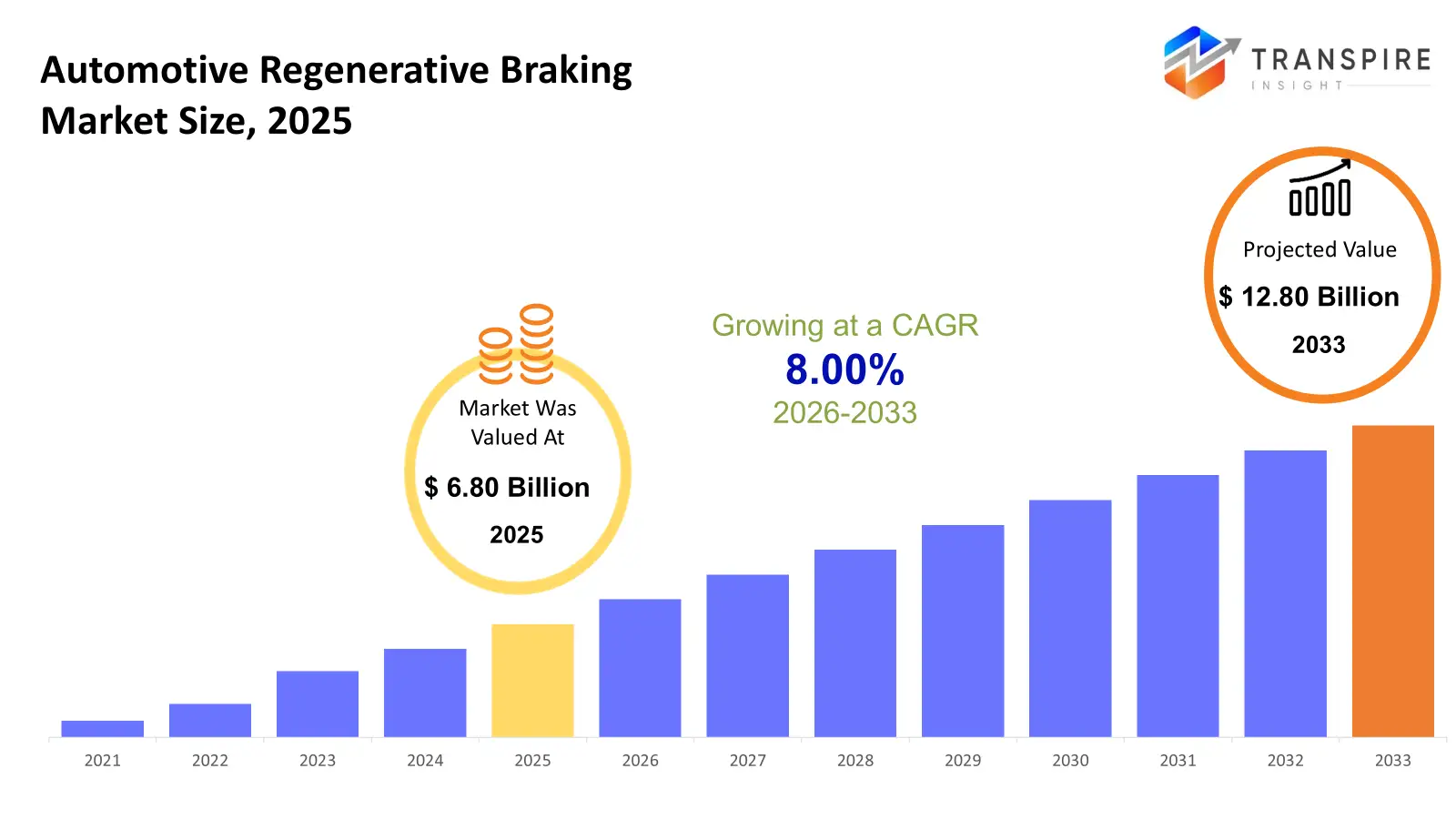
The global Automotive Regenerative Braking market size was valued at USD 6.80 billion in 2025 and is projected to reach USD 12.80 billion by 2033, growing at a CAGR of 8.00% from 2026 to 2033. Energy recovery systems gain traction as more drivers choose electric and hybrid cars. Efficiency matters more now, so these vehicles make use of braking energy to go farther. Rules around emissions tighten across countries, pushing automakers to adapt. Instead of ignoring new standards, companies install smart braking solutions. Performance improves when saved energy feeds back into the battery. Governments push for cleaner transport, indirectly boosting demand for such tech.
Market Size & Forecast
- 2025 Market Size: USD 6.80 Billion
- 2033 Projected Market Size: USD 12.80 Billion
- CAGR (2026-2033): 8.00%
- North America: Largest Market in 2026
- Asia Pacific: Fastest Growing Market
To learn more about this report,  Download Free Sample Report
Key Market Trends Analysis
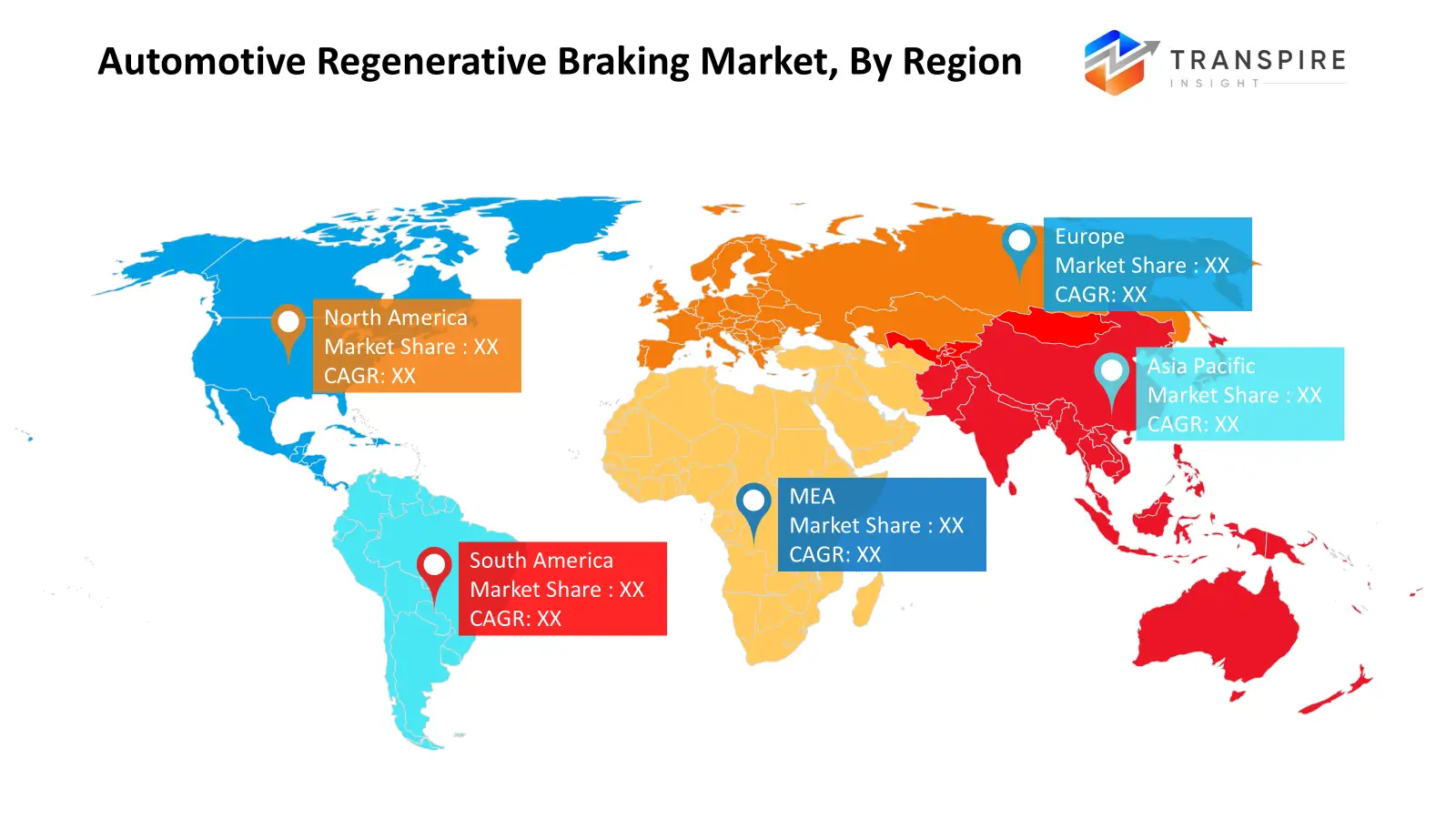
- The North American market share is estimated to be approximately 30% in 2026. Electric cars are common across North America, helping push widespread use. Regulations here back cleaner transport options, creating favorable conditions. The region already has systems built for advanced vehicle tech, which plays a role too.
- Fueled by spending on electric vehicle tech, support for eco-friendly transportation, while also weaving energy-recycling brakes into more cars and trucks across the region, the United States demand stays ahead. Despite shifts elsewhere, this mix keeps momentum rolling through garages and fleets alike.
- Fueled by surging electric vehicle output, the Asia Pacific races ahead of other regions. The government pushes for greener transit options add momentum here. Cleaner city air becomes a priority, shaping decisions across the area.
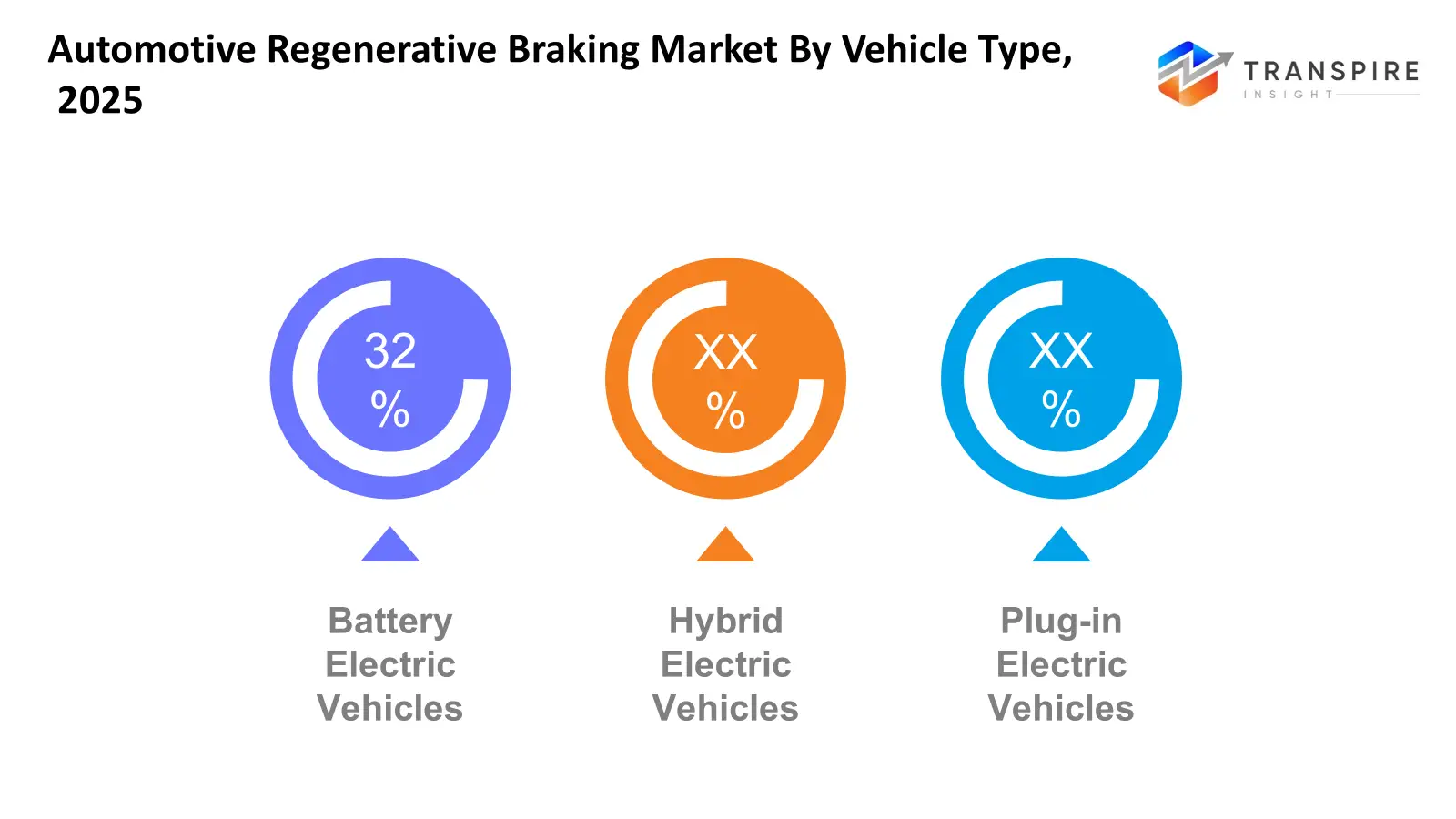
- Battery Electric Vehicles share approximately 32% in 2026. Now charging ahead, BEVs push market momentum while makers aim to capture more energy to stretch each mile. Efficiency climbs when systems recover what once slipped away during stops or slowdowns. Every bit saved adds up across longer trips without extra power draws.
- Fueled by better energy capture, electric regen braking leads the pack. Its natural fit with e-motors, too. That plays a role as well.
- Batteries that hold more power are changing how systems manage electricity, making storage gadgets grow quicker than any other part of the field. Better tech in cells plus devices called supercapacitors now grab, keep, then give back energy much easier.
- Fuel-sipping cars are pushing ahead, driven by a growing push for cleaner, smarter ways to get around. Personal rides now favor less waste, lighter emissions, and tighter energy control, shaping how people choose what to drive.
When a car slows down, some of its motion turns into electricity instead of disappearing as heat. This captured energy flows back into the battery, helping electric and hybrid vehicles travel farther on a single charge. Advanced systems connect braking components with electronic controls and energy storage units to manage this process efficiently. Energy that was once wasted is now reused through precise coordination of these technologies, driving steady growth in the automotive regenerative braking market as demand for efficient and sustainable mobility solutions increases.
Slowing down a car can now help save energy, since regenerative brakes cut stress on regular brake parts while boosting gas mileage and making stops feel more even. These setups often link up smoothly with digital helpers like balance controls, speed adjusters, and automatically guided driving aids.
Faster computers help brakes save more energy when slowing down. Because motors now waste less power, cars can go farther on stored electricity. Some systems work better thanks to smarter software behind the scenes. When these brakes team up with electric engines, extra juice flows back into the battery. Ride quality stays smooth even as efficiency climbs higher. Safety keeps its place at the front while tech moves forward. New storage units hold onto recovered power longer than before.
Working together, car makers, parts suppliers, and tech firms push the market forward by creating regenerative brakes that save weight without raising costs. Efforts in labs never stop; teams tweak designs to capture more energy while making systems simpler. These upgrades now reach trucks and heavy machinery, not just everyday cars.
Automotive Regenerative Braking Market Segmentation
By Vehicle Type
- Battery Electric Vehicles
Slowing down charges up the battery, giving electric cars a bit more distance on each charge. Energy once lost now feeds back into motion instead.
- Hybrid Electric Vehicles
Starting, Hybrid Electric Vehicles pair regular engines with systems that recharge while slowing down. This mix helps them produce less gas while putting fewer fumes into the air. Braking energy gets reused instead of vanishing as heat. Because of this setup, each drop of fuel goes further than in older models. Cleaner operation comes without needing outside charging sources.
- Plug-in Hybrid Electric Vehicle
Starting with a mix of power sources, plug-in hybrids run on electricity plus gasoline. These cars capture energy while slowing down, storing it for later use. Instead of relying only on fuel, they balance both systems to stretch each charge further.
To learn more about this report, Download Free Sample Report
By Technology
- Mechanical Regenerative Braking
Spinning wheels feed motion into a rotating disk that stores it. Motion captured this way sticks around for later use. Instead of vanishing, energy gets redirected through rods or spinning parts. A flywheel holds onto the push from movement until needed again.
- Hydraulic Regenerative Braking
A sudden stop powers a hidden pump. That motion fills a pressure tank instead of vanishing. Energy waits there until needed again. Movement gets recycled like breath in lungs.
- Electric Regenerative Braking
Fuel stops fading when wheels slow down. Motion feeds power banks under the floor instead of vanishing as heat. Stored pulses later push the car forward again.
By Component
- Regenerative Braking Motors
That’s when these motors kick in, turning motion into electricity. Not magic, just clever engineering at work. Energy usually lost becomes useful power instead. Movement feeds the system back as charge. Deceleration powers up the battery a bit. What slows the vehicle also helps run it.
- Energy Storage Units
Stashed power sits ready inside batteries or supercapacitors, pulled from recovery systems earlier. It drives the wheels when needed. Not all energy vanishes; some gets caught, held back for motion down the road.
- Brake Control Systems
Built into modern vehicles, brake control systems handle how energy is captured during slowing down. These electronic setups adjust the stopping power between wheels when needed. Software keeps everything running without danger. Safety checks happen constantly through programmed rules inside the unit.
By End-Users
- Passenger Vehicles
Most everyday cars now tap into regen braking, helping them go farther while sipping less fuel. This tech slows the vehicle by turning motion back into stored energy instead of just wasting it as heat. Drivers get smoother stops at stoplights, yet the system quietly boosts mileage over time. Cleaner air follows naturally since less gasoline burns during regular commutes. Even city traffic becomes slightly more bearable when each brake pulse recharges the battery a little.
- Commercial Vehicles
Out on roads, city buses now roll with new tech that cuts down diesel use. Trucks haul freight while saving energy thanks to smarter stops. Delivery vans keep moving without burning through brake pads fast. These changes help lower expenses over time. Drivers notice smoother slowdowns. Wear and tear drops when systems share the load. Fuel bills shrink a bit each month. Big rigs handle hills better using built-in momentum control.
Regional Insights
Heavy use of hybrids and EVs pushes North America into a key role for car energy recovery tech. Automakers based there work closely with innovators to refine how vehicles capture brake energy. Tough rules on mileage and pollution help speed up the shift toward these smarter braking setups. Drivers paying more attention to eco-friendly transport choices adds further push. Equipment now appears more often in both personal cars and delivery trucks across the region.
Growth continues across Europe, thanks to firm rules on pollution control, goals that cut emissions, followed by rewards for choosing electric or hybrid cars instead of older models. In nations like Germany, France, and the United Kingdom, carmakers now weave regenerative braking into designs - not just to save power but also boost how vehicles respond while meeting legal demands without extra strain.
Nowhere else is growth accelerating like in the Asia Pacific, where surging demand for electric and hybrid vehicles lights the path forward. Urban centers spread wider each year, pulling new tech into daily life at a relentless pace. Governments here pour resources into smarter transport, making progress hard to ignore. In places such as China, Japan, or South Korea, policy pushes meet real-world results through higher output of electric cars. Efficiency is not just talked about; it shows up in every new model rolling off assembly lines. Regenerative braking finds its place quietly, shaped by necessity rather than noise.
To learn more about this report, Download Free Sample Report
Recent Development News
- November 11, 2025 – GM advanced regenerative braking technology across EV lineup
(Source:https://theevreport.com/gm-advances-regenerative-braking-technology-across-ev-lineup)
- September 17, 2024– Accelera launched new endurance braking systems for safer, more efficient commercial electric vehicles.
|
Report Metrics |
Details |
|
Market size value in 2025 |
USD 6.80 Billion |
|
Market size value in 2026 |
USD 7.50 Billion |
|
Revenue forecast in 2033 |
USD 12.80 Billion |
|
Growth rate |
CAGR of 8.00% from 2026 to 2033 |
|
Base year |
2025 |
|
Historical data |
2021 – 2024 |
|
Forecast period |
2026 – 2033 |
|
Report coverage |
Revenue forecast, competitive landscape, growth factors, and trends |
|
Regional scope |
North America; Europe; Asia Pacific; Latin America; Middle East & Africa |
|
Country scope |
United States; Canada; Mexico; United Kingdom; Germany; France; Italy; Spain; Denmark; Sweden; Norway; China; Japan; India; Australia; South Korea; Thailand; Brazil; Argentina; South Africa; Saudi Arabia; United Arab Emirates |
|
Key company profiled |
Bosch, Continental AG, Denso Corporation, ZF Friedrichshafen AG, Aisin Seiki Co., Ltd., Hyundai Mobis, Hitachi Astemo, Valeo, Nissin Kogyo Co., Ltd., Johnson Matthey, Mitsubishi Electric Corporation, Robert Bosch Engineering and Business Solutions, BorgWarner Inc., Infineon Technologies AG, Panasonic Corporation, Cummins Inc., and Lear Corporation |
|
Customization scope |
Free report customization (country, regional & segment scope). Avail customized purchase options to meet your exact research needs. |
|
Report Segmentation |
By Vehicle Type (Battery Electric Vehicles, Hybrid Electric Vehicles, Plug-in Hybrid Electric Vehicles), By Technology (Mechanical Regenerative Braking, Hydraulic Regenerative Braking, Electric Regenerative Braking), By Component (Regenerative Braking Motors, Energy Storage Units, Brake Control Systems), By End-Users (Passenger Vehicles, Commercial) |
Key Automotive Regenerative Braking Company Insights
A major force in car braking tech, Robert Bosch GmbH builds smart systems that recover energy during slowing down. Instead of just stopping vehicles, it's gear feeds power back into batteries using clever electronics. Working alongside big automakers and top parts makers helps shape next-gen setups that blend performance with smarter resource use. By linking brake functions directly to digital controls, the firm lifts both mileage and security on roads. Innovation runs deep here due to wide-ranging products and serious investment in research. Sustainability is not an afterthought; it guides how solutions take form across markets. With reach spanning continents, Bosch holds steady as a go-to name where efficient motion matters.
Key Automotive Regenerative Braking Companies:
- Bosch
- Continental AG
- Denso Corporation
- ZF Friedrichshafen AG
- Aisin Seiki Co., Ltd.
- Hyundai Mobis
- Hitachi Astemo
- Valeo
- Nissin Kogyo Co., Ltd.
- Johnson Matthey
- Mitsubishi Electric Corporation
- Robert Bosch Engineering and Business Solutions
- BorgWarner Inc.
- Infineon Technologies AG
- Panasonic Corporation
- Cummins Inc.
- Lear Corporation
Global Automotive Regenerative Braking Market Report Segmentation
By Vehicle Type
- Battery Electric Vehicles
- Hybrid Electric Vehicles
- Plug-in Hybrid Electric Vehicles
By Technology
- Mechanical Regenerative Braking
- Hydraulic Regenerative Braking
- Electric Regenerative Braking
By Component
- Regenerative Braking Motors
- Energy Storage Units
- Brake Control Systems
By End-Users
- Passenger Vehicles
- Commercial
Regional Outlook
- North America
- United States
- Canada
- Mexico
- Europe
- Germany
- United Kingdom
- France
- Spain
- Italy
- Rest of Europe
- Asia Pacific
- Japan
- China
- Australia & New Zealand
- South Korea
- India
- Rest of Asia Pacific
- South America
- Brazil
- Argentina
- Rest of South America
- Middle East & Africa
- Saudi Arabia
- United Arab Emirates
- South Africa
- Rest of the Middle East & Africa
Frequently Asked Questions
Find quick answers to common questions.
The approximate Automotive Regenerative Braking Market size for the market will be USD 12.80 billion in 2033.
Key segments for the Automotive Regenerative Braking Market are By Vehicle Type (Battery Electric Vehicles, Hybrid Electric Vehicles, Plug-in Hybrid Electric Vehicles), By Technology (Mechanical Regenerative Braking, Hydraulic Regenerative Braking, Electric Regenerative Braking), By Component (Regenerative Braking Motors, Energy Storage Units, Brake Control Systems), By End-Users (Passenger Vehicles, Commercial).
Major Automotive Regenerative Braking Market players are Bosch, Continental AG, Denso Corporation, ZF Friedrichshafen AG, Aisin Seiki Co., Ltd., and Hyundai Mobis.
The North America region is leading the Automotive Regenerative Braking Market.
The Automotive Regenerative Braking Market CAGR is 8.00%.
- Bosch
- Continental AG
- Denso Corporation
- ZF Friedrichshafen AG
- Aisin Seiki Co., Ltd.
- Hyundai Mobis
- Hitachi Astemo
- Valeo
- Nissin Kogyo Co., Ltd.
- Johnson Matthey
- Mitsubishi Electric Corporation
- Robert Bosch Engineering and Business Solutions
- BorgWarner Inc.
- Infineon Technologies AG
- Panasonic Corporation
- Cummins Inc.
- Lear Corporation
Recently Published Reports
-
Apr 2026
ATV & UTV Market
ATV & UTV Market Size, Share & Analysis Report By Type (ATV, and UTV), By Variants (Less Than 400 CC, 400 CC To 800 CC, and More Than 800 CC), and Geography (North America, Europe, Asia-Pacific, Middle East and Africa, South and Central America), 2021 - 2031
-
Apr 2026
Automotive Central Gateway Module Market
Automotive Central Gateway Module Market Size, Share & Analysis Report By Type (Ethernet Central Gateway Module, CAN Central Gateway Module, LIN Central Gateway Module, and FlexRay), By Application (Powertrain Control, Body Control, Infotainment System, Advanced Driver Assistance Systems (ADAS), and Others), By End User (Passenger Vehicles, and Commercial Vehicles), and Geography (North America, Europe, Asia-Pacific, Middle East and Africa, South and Central America), 2021 - 2031
-
Apr 2026
Automotive Engine Oil Filter Market
Automotive Engine Oil Filter Market Size, Share & Analysis Report By Filter Type (Fuel Filter, Engine Oil Filter, Hydraulic Oil Filter, and Others), By Filter Media (Cellulose, Synthetic, and Micro), By Sales Channel (OEMs, and Aftermarket), By Vehicle Type (Passenger Cars, Light Commercial Vehicles, Heavy Duty Trucks, Buses and Coaches, and Off-road Vehicles), and Geography (North America, Europe, Asia-Pacific, Middle East and Africa, South and Central America), 2021 - 2031
-
Apr 2026
Automotive Parts Aluminium Die Casting Market
Automotive Parts Aluminium Die Casting Market Size, Share & Analysis Report By Production Process (Pressure Die Casting, Vacuum Die Casting, Squeeze Die Casting, Gravity Die Casting), By Application (Body Parts, Engine Parts, Transmission Parts, Battery And Related Components, Other Application Types), and Geography (North America, Europe, Asia-Pacific, Middle East and Africa, South and Central America), 2021 - 2031
Our Clients