
Global Alkaline Water Electrolysis Hydrogen Production Equipment Market Size & Forecast:
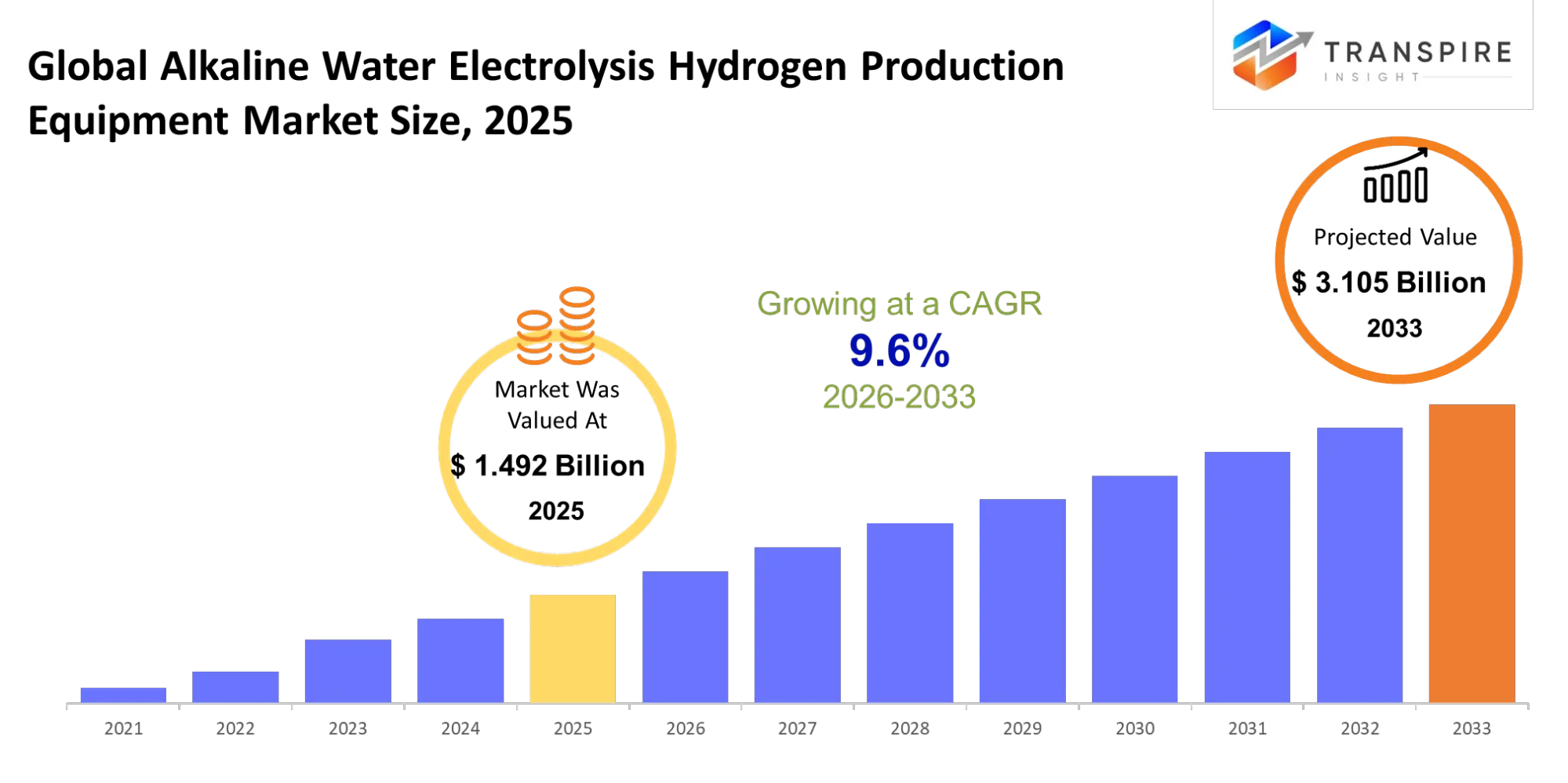
- Global Alkaline Water Electrolysis Hydrogen Production Equipment Market Size 2025: USD 1.492 Billion
- Global Alkaline Water Electrolysis Hydrogen Production Equipment Market Size 2033: USD 3.105 Billion
- Global Alkaline Water Electrolysis Hydrogen Production Equipment Market CAGR: 9.6%
- Global Alkaline Water Electrolysis Hydrogen Production Equipment Market Segments: By Type (Pressurized Alkaline Electrolyzers, Atmospheric Alkaline Electrolyzers, Modular Electrolysis Systems, Large-scale Electrolysis Plants, Containerized Hydrogen Systems, Renewable-integrated Electrolyzers, Others); By Application (Industrial Hydrogen Production, Renewable Energy Storage, Fuel Cell Applications, Chemical Processing, Mobility & Transportation, Others); By End-User (Energy Companies, Chemical Manufacturers, Industrial Plants, Government Projects, Others); By Capacity (Small-scale Systems, Medium-scale Systems, Large-scale Systems, Gigawatt-scale Plants, Others)
To learn more about this report,  Download Free Sample Report
Global Alkaline Water Electrolysis Hydrogen Production Equipment Market Summary:
The Global Alkaline Water Electrolysis Hydrogen Production Equipment Market size is estimated at USD 1.492 Billion in 2025 and is anticipated to reach USD 3.105 Billion by 2033, growing at a CAGR of 9.6% from 2026 to 2033.
This sector handles the physical machinery that zaps water to pull out clean hydrogen using a liquid chemistry mix, giving massive plants a direct path to swap out dirty fossil fuels. Over the last few years, suppliers have walked away from building slow, custom setups from scratch, switching instead to standardized, factory-built blocks that slap together right on site.
A major structural shift is driven by strict government mandates penalizing industrial carbon emissions. This is paired with a real-world trigger: the recent collapse in solar and wind power costs, which makes continuous water splitting affordable. Because cheap renewable power is now widely available, chemical and industrial plants are rapidly installing these high-capacity electrolyzers to secure clean feedstock, driving steady manufacturing demand.
Key Market Insights
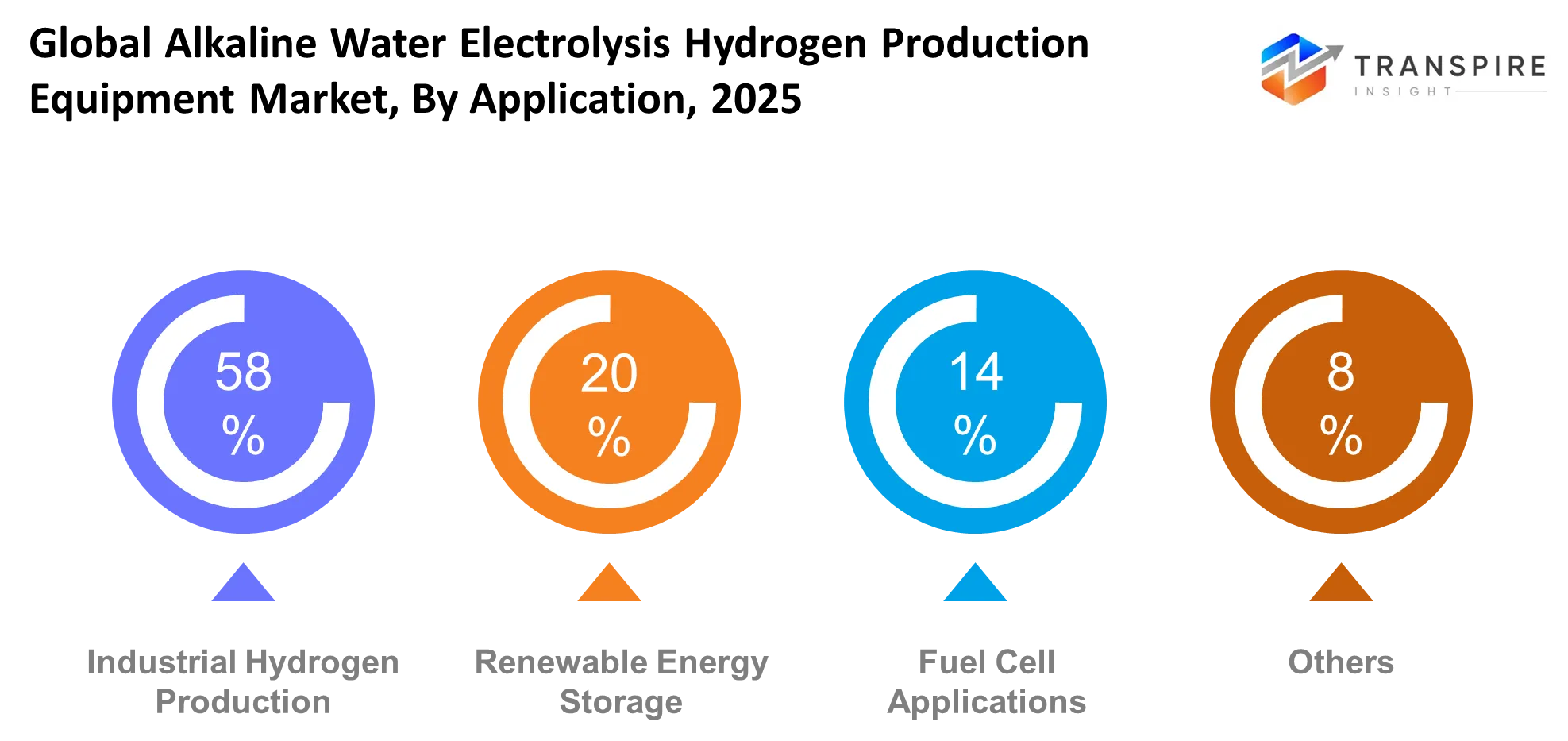
- Industrial Hydrogen Production claims a 58% share as chemical factories switch to pre-made setups, seen when Thyssenkrupp Nucera landed a massive 300 MW electrolyzer deal in Spain.
- Renewable-integrated Electrolyzers lead growth at a 13.2% CAGR to buffer erratic grid power, with Nel Hydrogen launching new pressurized platforms to easily absorb volatile solar electricity.
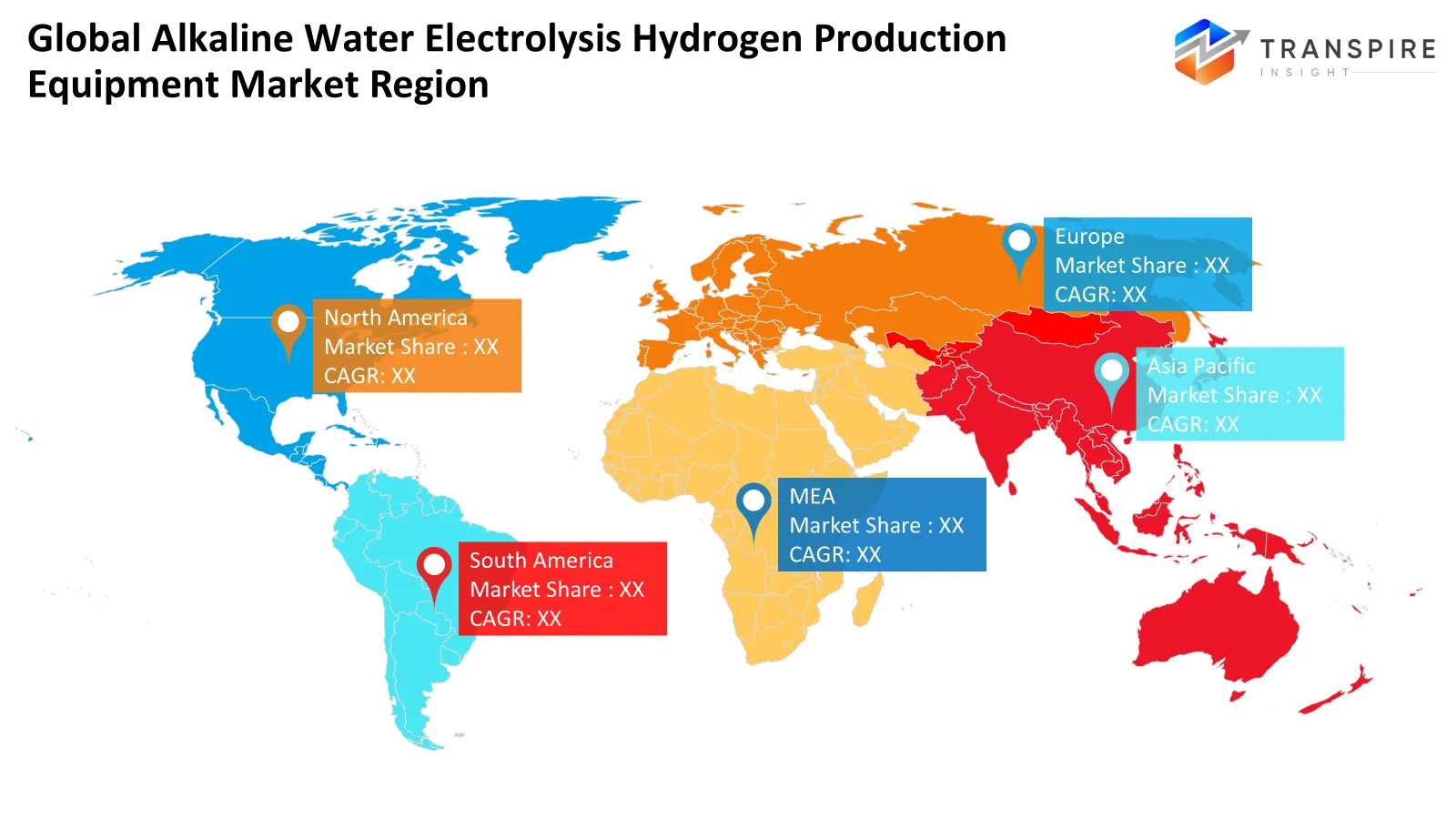
- Europe commands a 38% market share due to harsh carbon taxes, pushing local manufacturers like Siemens Energy and McPhy Energy to pivot entirely toward high-volume, plug-and-play production.
- Asia Pacific is accelerating at a 14.6% CAGR as state-backed projects in China and India prompt suppliers like John Cockerill to drop heavy-duty containerized units directly onto industrial sites.
- Renewable Energy Storage holds 20% of demand as utilities treat hydrogen like a giant battery, driving builders like ITM Power to launch high-pressure systems that catch sudden voltage drops.
- Fuel Cell Applications make up 14% of the volume, where firms like Cummins and Plug Power are supplying compact on-site fueling hardware so heavy trucking fleets can bypass traditional fuel lines.
- The "Others" segment captures an 8% share as isolated mines demand off-grid power, allowing gas giants like Air Liquide to deploy fully self-contained blocks straight into remote areas.
What are the Key Drivers, Restraints, and Opportunities in the Global Alkaline Water Electrolysis Hydrogen Production Equipment Market?
Driver
Governments are actively hitting heavy industries with steep carbon fines, making it practically impossible for chemical plants and steel mills to keep burning fossil fuels. This financial pressure has triggered a fast jump from small pilot projects straight into huge, factory-built alkaline systems that tie directly into local wind and solar farms. Because these factories must keep clean gas flowing 24/7 just to avoid ruinous taxes, equipment builders are locking in incredibly solid, multi-year order backlogs. In March 2026, Moeve signed a major deal with thyssenkrupp nucera to supply 300 MW of alkaline electrolyzers for Spain's Andalusian Green Hydrogen Valley. This regional rollout forces local industrial plants to switch to clean hydrogen, guaranteeing a steady stream of hardware orders for the manufacturer.
Restraint
The biggest headache for the market is the sheer volume of ultra-pure water required to run these operations. This gets especially tricky because the best spots for solar power are usually in bone-dry desert regions. Every single kilogram of hydrogen takes about nine liters of highly purified water to produce, meaning developers cannot just tap into a local municipal line. Instead, they are forced to build expensive, power-hungry desalination and filtration plants right next door, which permanently drives up the initial setup costs and hurts overall project efficiency.
Opportunity
The real game-changer down the road is bringing in smart AI to handle unpredictable renewable power feeds. By running digital twin software over alkaline stacks, operators can smoothly turn their hydrogen production up or down depending on how much wind or solar is actually hitting the grid. This stops the delicate cell membranes from getting damaged by sudden power spikes. Using AI-controlled setups allows modular gear to absorb grid swings on the fly, extending the lifespan of the machinery and actively dropping the cost of every kilo of hydrogen produced.
What Has the Impact of Artificial Intelligence Been on the Global Alkaline Water Electrolysis Hydrogen Production Equipment Market?
AI is shaking everything up in alkaline electrolyzer systems, steering the market away from clunky manual controls toward more automated, "aware" setups. Instead of engineers constantly re-checking knobs and numbers, machine learning models handle a lot of that heavy lifting in real time. They adjust variables like cell voltage, internal pressure, and operating temperatures as conditions shift, squeezing more hydrogen out of the feed while keeping electricity costs from ballooning.
A major shift in current project design involves deploying digital twins. Acting as software replicas of the physical plant, these models continuously evaluate live sensor data to flag minor anomalies—like gradual membrane wear, valve friction, or slight drops in output—long before a breakdown happens.
Catching these deviations early redefines the operational approach, swapping out expensive, urgent field repairs for structured, predictive maintenance windows. This level of automated oversight is essential for protecting the hardware, especially since these systems regularly absorb erratic, shifting power loads coming from wind and solar grids.
But there is a frustrating catch: getting good data out of these setups isn't always smooth sailing. Plenty of older, legacy machines don't even speak the same digital language, so trying to hook up modern sensors across a massive, existing facility winds up costing an absolute fortune. On top of that, if the data you feed into the AI is patchy, full of gaps, or just flat-out messy, the algorithms get confused. You quickly end up with shaky predictions that operators simply can't trust.
Key Market Trends
- Project developers are shifting away from slow, custom-built facilities, increasingly demanding modular, factory-assembled stacks to skip long on-site construction timelines.
- Plant managers are heavily transitioning from old atmospheric setups to pressurized alkaline systems, allowing them to entirely eliminate high-maintenance mechanical compressors before storing hydrogen.
- Equipment builders have actively phased out older, brittle diaphragms, preferring advanced ultra-thin composite membranes to squeeze significantly more electrical current into a smaller footprint.
- Operators no longer pull steady baseload power from the main grid, instead plugging directly into erratic wind and solar farms, which forces cell stacks to dynamically absorb sudden voltage spikes.
- Buyers are completely abandoning transactional "one-time purchase" orders, choosing instead to sign multi-year strategic supply partnerships to guarantee they won't get sidelined by global component shortages.
- Instead of trying to build single, gargantuan electrolyzer units, engineering crews are now chaining together dozens of identical modular blocks so the whole plant doesn't go dark during a single unit's maintenance.
- Hydrogen companies are moving past just selling clean gas, increasingly utilizing their smart systems to instantly soak up excess regional renewable power and sell stabilization services back to the electric grid.
- Developers are no longer keeping the machinery strictly on dry land, actively moving hardware out to sea by testing "marinized" systems designed to couple directly with offshore wind turbines.
- Because operators rely heavily on precise automated flow controls rather than manual oversight, buyers now prioritize getting stacks with a highly predictable degradation rate rather than just chasing the lowest upfront price.
Global Alkaline Water Electrolysis Hydrogen Production Equipment Market Segmentation
By Type
Renewable-integrated systems are currently leading growth within the market, expanding at a CAGR of 13.2% as operators increasingly connect electrolyzers directly to renewable energy sources. Modular and containerized systems are also gaining strong momentum due to their scalability and ease of deployment across renewable projects. The market continues to balance the needs of large industrial facilities requiring high-capacity installations with projects that must adapt to the variable nature of wind and solar power generation. Looking ahead, the distinction between traditional large-scale plants and containerized systems is expected to become less pronounced as manufacturers shift toward standardized, factory-built modules that can be deployed efficiently across projects of different sizes.
By Application
Industrial Hydrogen Production completely anchors this segment, commanding the lion's share of hardware volume right alongside traditional Chemical Processing. The core growth logic here stems from strict regulatory self-defense. Chemical facilities and steel mills are facing aggressive carbon penalties, leaving them with no choice but to swap out fossil fuels for clean feedstock—a shift that creates an incredibly steady, high-volume ordering pipeline. Meanwhile, Renewable Energy Storage and Mobility & Transportation are emerging as rapid-growth, high-margin sectors where agility beats out sheer size. As local grids grapple with erratic surges of wind and solar power, operators are increasingly using these electrolyzers as massive energy sponges to soak up the excess electricity. This is splitting the application landscape in two: heavy industrial buyers will keep demanding massive, steady-state gigawatt installations, while the energy storage sector will force manufacturers to build highly responsive stacks that can ramp production up or down instantly.
To learn more about this report, Download Free Sample Report
By End-User
Energy Companies and Chemical Manufacturers are the absolute heavyweight buyers here, essentially dictating supply chain terms and locking up factory order books for years. Industrial plants and government projects pull steady numbers, but massive energy utilities truly drive the market structure. Their purchasing surge comes straight from the global transition to net-zero; as these entities phase out fossil fuels, they require massive, predictable hardware arrays to anchor new green hydrogen hubs. This massive investment will completely change how these high-value assets are managed. Instead of relying on manual oversight, heavy end-users will increasingly mandate the integration of digital twin software and smart AI platforms, forcing equipment suppliers to shift from simply selling hardware to providing long-term, predictive maintenance and optimization services.
By Capacity
Large-scale systems currently dominate active commercial installations, but gigawatt-scale plants represent the fastest-accelerating segment in terms of pipeline capacity. While small and medium-scale systems satisfy localized, decentralized operations like fueling stations, the push for gigawatt-capacity setups is driven entirely by the hunt for aggressive economies of scale. Developers must drive down the levelized cost of hydrogen to compete with cheap natural gas. Moving forward, this shift toward massive scale will permanently reshape the manufacturing landscape. The market is bound to rapidly consolidate around a handful of deeply capitalized equipment builders capable of mass-producing standardized, high-volume stacks, leaving smaller hardware providers to survive only in specialized, low-capacity market niches.
What are the Key Use Cases Driving the Global Alkaline Water Electrolysis Hydrogen Production Equipment Market?
The biggest demand for this technology comes from heavy industry trying to clean up its carbon footprint, particularly in chemical processing and steel manufacturing. Large production facilities rely on these electrolyzers to lock down a dependable stream of clean hydrogen feedstock. Doing so lets them easily swap out carbon-heavy gray hydrogen when manufacturing green ammonia or refining metals.
Aside from steady-state manufacturing, operators frequently rely on this equipment to handle renewable energy storage and grid balancing. Utilities use highly responsive setups as massive energy cushions, quickly throttling up production to absorb sudden power surges from wind and solar farms before the grid overloads.
More recently, use cases are expanding into decentralized logistics and heavy transit networks. Fleet operators are setting up modular, containerized systems directly at commercial fueling stations to generate on-demand, localized hydrogen fuel for long-haul fuel cell trucks and regional transit buses.
|
Report Metrics |
Details |
|
Market size value in 2025 |
USD 1.492 Billion |
|
Market size value in 2026 |
USD 1.634 Billion |
|
Revenue forecast in 2033 |
USD 3.105 Billion |
|
Growth rate |
CAGR of 9.6% from 2026 to 2033 |
|
Base year |
2025 |
|
Historical data |
2021 - 2024 |
|
Forecast period |
2026 - 2033 |
|
Report coverage |
Revenue forecast, competitive landscape, growth factors, and trends |
|
Regional scope |
United States; Canada; Mexico; United Kingdom; Germany; France; Italy; Spain; Denmark; Sweden; Norway; China; Japan; India; Australia; South Korea; Thailand; Brazil; Argentina; South Africa; Saudi Arabia; United Arab Emirates |
|
Key company profiled |
Nel Hydrogen, Thyssenkrupp Nucera, Siemens Energy, Cummins, ITM Power, McPhy Energy, John Cockerill, Plug Power, Toshiba Energy Systems, Green Hydrogen Systems, Sunfire, Bloom Energy, Chart Industries, Air Liquide, Linde |
|
Customization scope |
Free report customization (country, regional & segment scope). Avail customized purchase options to meet your exact research needs. |
|
Report Segmentation |
By Type (Pressurized Alkaline Electrolyzers, Atmospheric Alkaline Electrolyzers, Modular Electrolysis Systems, Large-scale Electrolysis Plants, Containerized Hydrogen Systems, Renewable-integrated Electrolyzers, Others); By Application (Industrial Hydrogen Production, Renewable Energy Storage, Fuel Cell Applications, Chemical Processing, Mobility & Transportation, Others); By End-User (Energy Companies, Chemical Manufacturers, Industrial Plants, Government Projects, Others); By Capacity (Small-scale Systems, Medium-scale Systems, Large-scale Systems, Gigawatt-scale Plants, Others) |
Which Regions are Driving the Global Alkaline Water Electrolysis Hydrogen Production Equipment Market Growth?
Europe sits comfortably at the forefront of the alkaline water electrolysis space, commanding a major 38% slice of the global market. This strong lead is largely kept alive by strict regional climate mandates and steep emission penalties that practically force local industrial plants to phase out fossil fuels. A massive domestic ecosystem supports this shift, bringing together solid public funding, planned pipeline grids, and deeply rooted manufacturing hubs. To protect their operations from these tightening environmental laws, European chemical and steel producers are actively locking in multi-year equipment contracts well ahead of schedule.
North America maintains a rock-solid secondary position, capturing a 23% slice of the global market. Unlike Europe’s heavy-handed penalty system, the North American market responds mostly to massive federal tax breaks and direct capital subsidies. This steady demand is anchored by a massive legacy footprint of chemical plants and petroleum refineries stretching across the Gulf Coast. Since local policies reward pure volume, developers overwhelmingly favor massive, pre-engineered alkaline stacks that can be deployed fast to lock in those tax credits.
In May 2026, Nel ASA launched its newest pressurized alkaline platform, hitting the clean energy market with standardized, factory-assembled setups. The updated hardware layout is built to chip away at heavy upfront construction costs for developers running large, decentralized installations.
The Asia Pacific region is clocking a projected 14.6% CAGR while commanding a massive 31% market share. The momentum shifted recently as heavyweights like China and India stopped treating hydrogen as a trial technology and pivoted toward massive, state-directed gigawatt targets. The real prize here lies in coupling enormous solar and wind networks directly with large-scale stacks to clean up massive domestic steel mills and heavy manufacturing hubs. As deployment scales up, this region will effectively serve as the world's primary production engine, using high-volume assembly lines to crash global hardware costs.
To learn more about this report, Download Free Sample Report
Who are the Key Players in the Global Alkaline Water Electrolysis Hydrogen Production Equipment Market and how do they Compete?
The market feels like a tight, high-stakes race splitting down the middle between legacy engineering giants and specialized clean-tech firms. Right now, winning comes down to cutting stack production costs, squeezing more current density out of cells, and locking down supply chains before massive multi-gigawatt orders flood the market.
Thyssenkrupp Nucera attacks the market with a heavy focus on pure scale and standardization. Instead of building custom systems, they stand out by churning out modular 20 MW "Scalum" building blocks that clients can multiply easily for mega-scale industrial plants. Their growth strategy depends on partnering early with large engineering firms to lock their hardware into massive global chemical projects right during the design phase.
On the other side, Nel Hydrogen leans heavily into a flexible innovation plan by keeping both atmospheric and advanced pressurized systems on the table. They stand out by delivering modular, factory-assembled setups that swallow erratic power swings from wind and solar farms without breaking a sweat. To scale up, Nel keeps pouring capital into automated gigafactory upgrades to steadily drive down equipment costs, making them a top choice for utility companies chasing massive bulk orders.
Company List
- Nel Hydrogen
- Thyssenkrupp Nucera
- Siemens Energy
- Cummins
- ITM Power
- McPhy Energy
- John Cockerill
- Plug Power
- Toshiba Energy Systems
- Green Hydrogen Systems
- Sunfire
- Bloom Energy
- Chart Industries
- Air Liquide
- Linde
Recent Development News
In March 2026, Asahi Kasei paired up with Nippon Steel and Nippon Steel Trading to run a closed-loop recycling setup for the pure titanium scrap left behind during electrolysis cell manufacturing. Rethinking the workflow like this cuts down on the overall waste footprint of making the machinery, plus it locks in a steady, cheaper line of key components without much extra hassle.https://www.asahi-kasei.com
In January 2026, Plug Power finished putting together 100 MW of electrolyzer equipment at Galp’s Sines Refinery down in Portugal. Once they actually turn everything on, a build that large is going to crank out roughly 15,000 tons of clean hydrogen annually, which immediately knocks out about 20% of the refinery's carbon-heavy gray hydrogen feedstock.https://hydrogeneurope.eu
In November 2025, Plug Power started work on a 5 MW electrolyzer installation for the H2 Hollandia project over in the Netherlands. Wiring the hardware right into a 115-MWp solar park lets them prove out a localized model that pumps out green hydrogen right where it is needed without overloading the regional power grid.https://www.ir.plugpower.com
What Strategic Insights Define the Future of the Global Alkaline Water Electrolysis Hydrogen Production Equipment Market?
The whole industry is moving fast toward giant, gigawatt-scale hubs built right beside major renewable energy installations, a shift that pretty much forces suppliers to drop custom engineering in favor of modular setups. But a massive, overlooked risk is quietly forming around the supply chain for rare materials like pure titanium and high-grade catalysts; since every major player is trying to scale at the exact same time, tight resource crunches are going to mess up manufacturing timelines with sudden factory delays.
This supply bottleneck creates a massive opening for companies that jump early into automated, closed-loop recycling to reclaim high-purity metals from production floor scrap. To survive this shift, long-term strategy can't just be about tweaking custom cell setups for individual buyers. Instead, manufacturers have to focus heavily on rolling out highly standardized, cookie-cutter blocks to push unit costs down while protecting themselves from global material shortages.
Global Alkaline Water Electrolysis Hydrogen Production Equipment Market Segmentation:
By Type
- Pressurized Alkaline Electrolyzers
- Atmospheric Alkaline Electrolyzers
- Modular Electrolysis Systems
- Large-scale Electrolysis Plants
- Containerized Hydrogen Systems
- Renewable-integrated Electrolyzers
- Others
By Application
- Industrial Hydrogen Production
- Renewable Energy Storage
- Fuel Cell Applications
- Chemical Processing
- Mobility & Transportation
- Others
By End-User
- Energy Companies
- Chemical Manufacturers
- Industrial Plants
- Government Projects
- Others
By Capacity
- Small-scale Systems
- Medium-scale Systems
- Large-scale Systems
- Gigawatt-scale Plants
- Others
Regional Outlook
North America
- United States
- Canada
- Mexico
Europe
- Germany
- United Kingdom
- France
- Spain
- Italy
- Rest of Europe
Asia Pacific
- Japan
- China
- Australia & New Zealand
- South Korea
- India
- Rest of Asia Pacific
South America
- Brazil
- Argentina
- Rest of South America
Middle East & Africa
- Saudi Arabia
- United Arab Emirates
- South Africa
- Rest of the Middle East & Africa
Frequently Asked Questions
Find quick answers to common questions.
The global alkaline water electrolysis hydrogen production equipment market size was valued at USD 1.492 Billion in 2025 and is poised to reach USD 3.105 Billion by 2033, expanding at a 9.6% CAGR.
Key segments for the global alkaline water electrolysis hydrogen production equipment market are Type (Pressurized Alkaline Electrolyzers, Atmospheric Alkaline Electrolyzers, Modular Electrolysis Systems, Large-scale Electrolysis Plants, Containerized Hydrogen Systems, Renewable-integrated Electrolyzers, Others), Application (Industrial Hydrogen Production, Renewable Energy Storage, Fuel Cell Applications, Chemical Processing, Mobility & Transportation, Others), End-User (Energy Companies, Chemical Manufacturers, Industrial Plants, Government Projects, Others), and Capacity (Small-scale Systems, Medium-scale Systems, Large-scale Systems, Gigawatt-scale Plants, Others).
Growth is primarily driven by industrial sectors rushing to cut out fossil fuels to avoid high carbon penalties, major federal tax breaks that reward high-volume output, and a massive shift toward state-directed gigawatt targets that connect massive clean energy grids straight to large-scale stacks.
The global market is led by major manufacturers including Nel Hydrogen, Thyssenkrupp Nucera, Siemens Energy, Cummins, ITM Power, McPhy Energy, John Cockerill, Plug Power, Toshiba Energy Systems, Green Hydrogen Systems, Sunfire, Bloom Energy, Chart Industries, Air Liquide, and Linde.
Asia Pacific holds a massive 31% share of the global market and is expanding at a dominant 14.6% CAGR. The region heavily shapes global dynamics as industrial heavyweights move past small trial setups and commit entirely to massive gigawatt targets, scaling up automated assembly lines to lower hardware costs for heavy manufacturing hubs worldwide.
Massive commercial opportunities exist in rolling out automated, closed-loop recycling loops to salvage high-purity production metals like titanium from factory scrap to protect against resource scarcity, alongside a highly lucrative path in mass-producing standardized, modular building blocks tailored for giant renewable energy hubs.
- Nel Hydrogen
- Thyssenkrupp Nucera
- Siemens Energy
- Cummins
- ITM Power
- McPhy Energy
- John Cockerill
- Plug Power
- Toshiba Energy Systems
- Green Hydrogen Systems
- Sunfire
- Bloom Energy
- Chart Industries
- Air Liquide
- Linde
About the Authors

Avinash Kumar
I’m Avinash Kumar, a Senior Research Analyst at Transpire Insight, with expertise in the Electronics and Semiconductor and Energy & Power industry. My work focuses on analyzing emerging technologies, market trends, industry developments, and innovation across these sectors. I specialize in transforming complex technical and market insights into clear, research-backed content that helps professionals, businesses, and decision-makers stay informed. Through continuous industry research and data-driven analysis, I strive to deliver accurate, reliable, and practical perspectives on the latest advancements shaping the semiconductor and energy landscape.

Chakradhar Khansole
Chakradhar serves as the Research Director at Transpire Insight, bringing over 8 years of experience in technology, innovation, and strategic market intelligence. He specializes in transforming complex market data into actionable business insights that enable organizations to make informed, growth-oriented decisions. Recognized for his strategic vision and analytical expertise, Chakradhar leads high-impact research initiatives, delivering comprehensive market assessments, competitive intelligence, and forward-looking industry analysis.
Recently Published Reports
-
Apr 2026
Active Power Filter Market
Active Power Filter Market Size, Share & Analysis Report By Type (Shunt Active Power Filters, Series Active Power Filter, Hybrid Active Power Filter), By Application (Harmonics Mitigation, Reactive Power Compensation, Voltage Regulation, Power Factor Correction), By Phase (Single Phase, Three Phase), By End-User Industry (Manufacturing, Healthcare, Commercial, Automotive, Oil and Gas, Others), and Geography (North America, Europe, Asia-Pacific, Middle East and Africa, South and Central America), 2021 - 2031
-
Apr 2026
Electrical Transformer Market
Electrical Transformer Market Size, Share & Analysis Report By Core (Closed, Shell, and Berry), By Insulation (Gas, Oil, Solid, Air, and Other), By Phase (Single, and Three), By Rating (100 MVA to 500 MVA, 501 MVA to 800 MVA, and 801 MVA to 1200 MVA), and Geography (North America, Europe, Asia-Pacific, Middle East and Africa, South and Central America), 2021 – 2031
-
Apr 2026
Hydraulic Piston Pumps Market
Hydraulic Piston Pumps Market Size, Share & Analysis Report By Type (Axial Piston Pumps, Radial Piston Pumps), By Operating Pressure (Low Pressure, Medium Pressure, High Pressure), By Application (Construction, Mining, Agriculture, Automotive, Oil & Gas, Industrial Machinery, Others), By End-User (OEMs, Aftermarket), and Geography (North America, Europe, Asia-Pacific, Middle East and Africa, South and Central America), 2021 – 2031
-
Apr 2026
Laboratory Gas Generators Market
Laboratory Gas Generators Market Size, Share & Analysis Report By Product (Nitrogen Gas Generator, Hydrogen Gas Generator, Zero Air Gas Generator, Purge Gas Generator, TOC Gas Generators, Others), By Application (Gas Chromatography, Liquid Chromatography-mass Spectrometry (LC-MS), Gas Analyzers, Others), By End-user (Life Science, Chemical & Petrochemical, Food & Beverage, Others), and Geography (North America, Europe, Asia-Pacific, Middle East and Africa, South and Central America), 2021 – 2031