

United Kingdom Renewable Energy Market Size & Forecast:
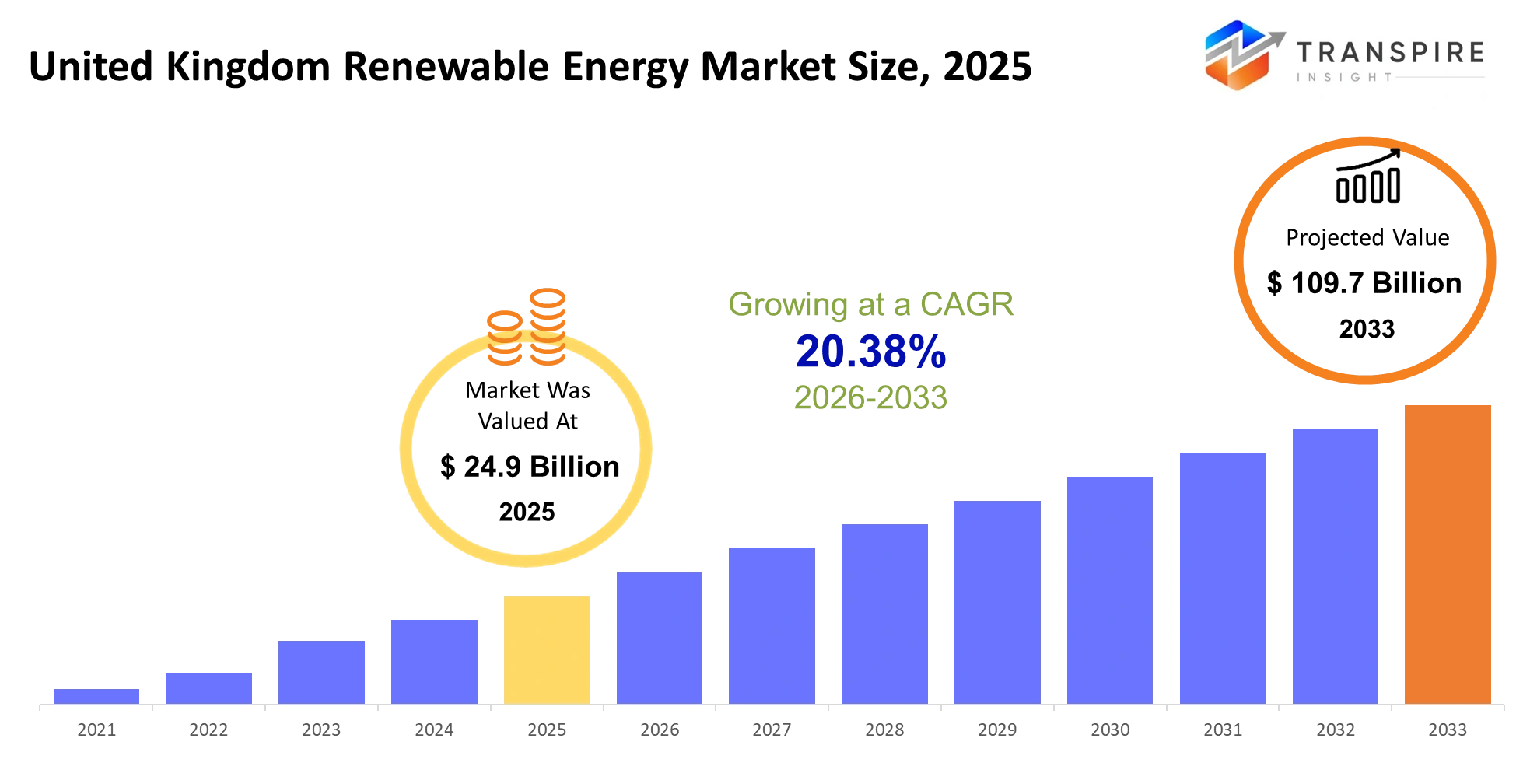
- United Kingdom Renewable Energy Market Size 2025: USD 24.9 Billion
- United Kingdom Renewable Energy Market Size 2033: USD 109.7 Billion
- United Kingdom Renewable Energy Market CAGR: 20.38%
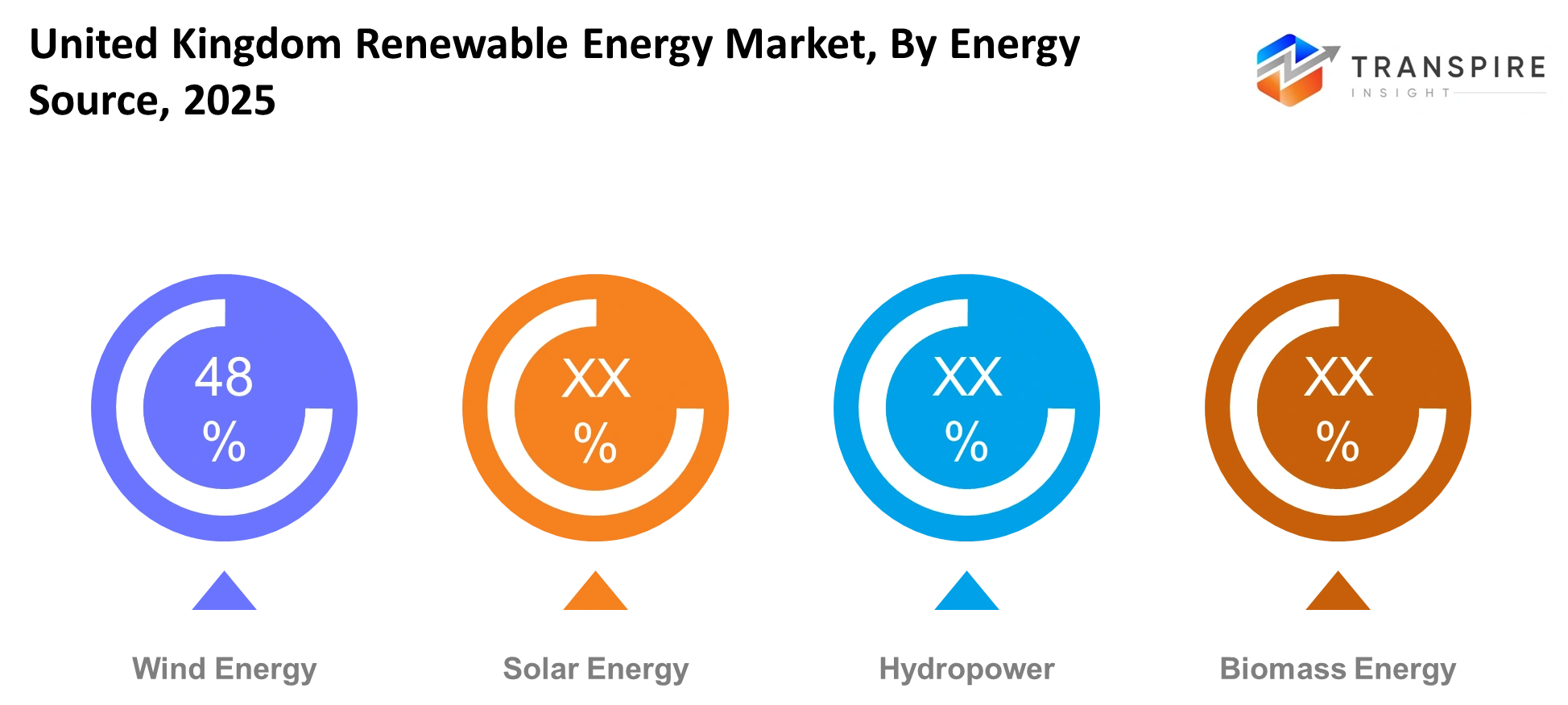
- United Kingdom Renewable Energy Market Segments: By Energy Source (Wind Energy, Solar Energy, Hydropower, Biomass Energy), By Application (Power Generation, Heating), By End-User (Residential, Commercial, Industrial).
To learn more about this report,  Download Free Sample Report
United Kingdom Renewable Energy Market Summary:
The United Kingdom Renewable Energy Market size is estimated at USD 24.9 Billion in 2025 and is anticipated to reach USD 109.7 Billion by 2033, growing at a CAGR of 20.38% from 2026 to 2033. The United Kingdom renewable energy market is expanding rapidly because the government established bold targets and designed effective policies and technological advancements emerged as new solutions. Wind energy—especially offshore—is the dominant contributor, supported by favorable geographic conditions and large-scale projects such as Hornsea and Dogger Bank. The development of energy storage solutions and grid modernization systems has become essential for effectively integrating intermittent renewable energy sources which include onshore wind and solar and biomass energy production. The leading market players which include Ørsted A/S and Vestas Wind Systems A/S and Siemens Gamesa Renewable Energy SA and General Electric Company control all aspects of project development and turbine manufacturing and technological innovation to maintain Britain's status as a top performer in worldwide renewable energy systems.
Key Market Trends & Insights:
- The UK renewable energy sector operates primarily through offshore wind power because this technology produces two-thirds of total electricity generation and its upcoming projects will expand both capacity and produce new technological advancements while creating domestic manufacturing jobs.
- The adoption of onshore wind and solar energy technologies continues to grow because government programs and decreased costs together with supportive regulations create a favorable environment for clean energy development.
- The power grid system now requires energy storage facilities together with smart grid technology and hybrid renewable energy systems because these elements provide essential support to handle fluctuating renewable energy production throughout the increasing deployment of renewable energy resources.
- The combination of private funding with international collaboration and extended agreements leads to faster project execution which enables the development of large-scale renewable energy projects that enhance energy security and boost market competitiveness.
- The renewable energy sector in the UK receives funding through Contracts for Difference (CfD) policies and subsidies which together with net-zero targets create stable income prospects that draw investors to support sustainable industry expansion.
United Kingdom Renewable Energy Market Segmentation
By Energy Source
- Wind Energy: The UK offshore wind energy sector operates as the dominant renewable energy market through its extensive wind energy projects which include the Hornsea and Dogger Bank electricity generation facilities. The combination of advanced turbine development and local manufacturing operations together with technological advancements enables the company to achieve higher capacity outputs while helping to meet net-zero emissions targets.
- Solar Energy: The residential and commercial sectors are adopting solar energy because installation costs have decreased while government programs and environmental awareness have increased. The country uses rooftop photovoltaic systems and large-scale solar farms and hybrid systems with storage solutions to generate renewable electricity through these three technologies.
- Hydropower: Hydropower provides a minor yet dependable source of electricity which helps maintain grid stability throughout the system. The combination of run-of-river systems and small-scale reservoir systems produces local electricity which supports renewable energy sources with intermittent output to deliver continuous power for regions that have appropriate geographic features.
- Biomass Energy: Biomass energy supports both electricity and heat generation, particularly in industrial and commercial applications. This segment generates dispatchable power through agricultural waste and wood pellets and other organic feedstocks which reduce carbon emissions while providing wind and solar energy support.
To learn more about this report, Download Free Sample Report
By Application
- Power Generation: The United Kingdom uses renewable energy sources mainly for power generation activities. Wind solar biomass and hydropower projects generate electricity which serves residential and commercial and industrial needs. The expansion of large offshore wind farms serves as a key method to supply electricity needs while protecting the environment.
- Heating: Renewable heating systems are increasing their reach through biomass solar thermal systems and new heat pump technologies. The solutions have gained popularity among residential and commercial and industrial users because they help decrease fossil fuel usage while lowering carbon emissions and meeting government energy efficiency requirements and decarbonization goals.
By End-User
- Residential: The residential sector shows increasing interest in adopting renewable energy sources which include rooftop solar panels and small-scale biomass systems. The combination of financial incentives and decreasing technology expenses together with rising sustainability awareness enables households to achieve energy self-sufficiency while decreasing their utility expenses and helping the country reach its carbon reduction goals.
- Commercial: The commercial sector invests in solar energy and biomass systems and hybrid renewable energy solutions to decrease their operating expenses while achieving their sustainability targets. Companies can use tax breaks and save money over time while building a better environmental image to drive more sustainable energy practices throughout their operations.
- Industrial: Industrial facilities use renewable energy sources which include biomass and offshore wind power to satisfy their substantial energy needs. The implementation of this approach helps organizations achieve their sustainability objectives and follow emission standards while their energy-demanding activities function more effectively and reliably.
Country Insights
The United Kingdom leads worldwide renewable energy development because its government policies and natural resource abundance and net-zero goals drive the renewable energy sector. Wind energy especially through offshore wind power generation creates a dominant market position because geographic conditions provide long coastlines and strong wind events. The UK reached a renewable electricity generation rate of almost 47% in 2025 because wind and solar and biomass technologies received ongoing investment which resulted in continuous power generation growth. The government plans to build offshore wind facilities with a capacity of 60 GW by 2030 which will establish the country as a renewable energy center.
The market expansion process benefits from frameworks that provide support through Contracts for Difference (CfD) and infrastructure upgrades and private-sector participation. The UK energy sector has experienced project approval growth which leads to more renewable capacity projects and drives innovation for energy storage and grid modernization. The energy sector faces three main problems which need solution through both policy changes and technology progress to achieve energy security and maintain system sustainability.
Recent Development News
In April 2026, InfraVia announced acquisition and merger. The firm acquired majority stakes in Mercia Power Response and Balance Power Projects and merged them to form Supernova Power, a new UK-based flexible power and battery storage platform supporting the energy transition.
In Feb 2026, ENGIE announced acquisition. The company signed a £10.5 billion deal to acquire UK Power Networks, significantly expanding its UK electricity distribution footprint and strengthening its energy transition strategy.
|
Report Metrics |
Details |
|
Market size value in 2025 |
USD 24.9 Billion |
|
Market size value in 2026 |
USD 29.95 Billion |
|
Revenue forecast in 2033 |
USD 109.7 Billion |
|
Growth rate |
CAGR of 20.38% from 2026 to 2033 |
|
Base year |
2025 |
|
Historical data |
2021 – 2024 |
|
Forecast period |
2026 – 2033 |
|
Report coverage |
Revenue forecast, competitive landscape, growth factors, and trends |
|
Country scope |
United Kingdom |
|
Key company profiled |
Ørsted A/S, Vestas Wind Systems A/S, Siemens Gamesa Renewable Energy SA, General Electric Company, EDF Renewables, Iberdrola S.A., RWE AG, Enel Green Power S.p.A., ScottishPower Renewables Ltd., SSE Renewables Ltd., Brookfield Renewable Partners LP, NextEra Energy Inc., Acciona Energia S.A. |
|
Customization scope |
Free report customization (country, regional & segment scope). Avail customized purchase options to meet your exact research needs. |
|
Report Segmentation |
By Energy Source (Wind Energy, Solar Energy, Hydropower, Biomass Energy), By Application (Power Generation, Heating), By End-User (Residential, Commercial, Industrial). |
Key United Kingdom Renewable Energy Market Company Insights
The United Kingdom renewable energy market operates as a highly competitive sector which major international companies such as Ørsted A/S and Vestas Wind Systems A/S and Siemens Gamesa Renewable Energy SA and General Electric Company compete. These companies play a crucial role in advancing the UK’s renewable infrastructure, particularly in offshore and onshore wind energy. Ørsted leads in offshore wind farm development and operations, while Vestas focuses on supplying advanced onshore wind turbines and servicing solutions. Siemens Gamesa dominates the offshore turbine supply market, supported by its strong manufacturing presence in the UK, and General Electric contributes cutting-edge offshore wind technologies, strengthening overall market competitiveness.
The combined efforts of these companies enable the United Kingdom to achieve its net-zero emissions goal through two methods which include renewable capacity expansion and energy efficiency enhancements. The country has experienced significant increases in renewable energy production because of their investments in large-scale wind projects and technological innovation and localized manufacturing. The companies establish a strong market position through their strategic partnerships, government contracts, and ongoing research and development activities which help them meet the changing demands of the energy market. The United Kingdom will achieve both sustainable development and energy independence through these initiatives.
Company List
- Ørsted A/S
- Vestas Wind Systems A/S
- Siemens Gamesa Renewable Energy SA
- General Electric Company
- EDF Renewables, Iberdrola S.A.
- RWE AG
- Enel Green Power S.p.A.
- ScottishPower Renewables Ltd.
- SSE Renewables Ltd.
- Brookfield Renewable Partners LP
- NextEra Energy Inc.
- Acciona Energia S.A.
- TotalEnergies SE
- Engie SA.
United Kingdom Renewable Energy Market Report Segmentation
By Energy Source
- Wind Energy
- Solar Energy
- Hydropower
- Biomass Energy
By Application
- Power Generation
- Heating
By End-User
- Residential
- Commercial
- Industrial
Frequently Asked Questions
Find quick answers to common questions.
The approximate United Kingdom Renewable Energy Market size for the market will be USD 109.7 Billion in 2033.
Key segments for the United Kingdom Renewable Energy Market are By Energy Source (Wind Energy, Solar Energy, Hydropower, Biomass Energy), By Application (Power Generation, Heating), By End-User (Residential, Commercial, Industrial).
Major United Kingdom Renewable Energy Market players are Ørsted A/S, Vestas Wind Systems A/S, Siemens Gamesa Renewable Energy SA, General Electric Company, EDF Renewables, Iberdrola S.A., RWE AG, Enel Green Power S.p.A., ScottishPower Renewables Ltd., SSE Renewables Ltd., Brookfield Renewable Partners LP, NextEra Energy Inc., Acciona Energia S.A., TotalEnergies SE, Engie SA.
The United Kingdom Renewable Energy Market size is USD 24.9 Billion in 2025.
The United Kingdom Renewable Energy Market CAGR is 20.38%.
- Ørsted A/S
- Vestas Wind Systems A/S
- Siemens Gamesa Renewable Energy SA
- General Electric Company
- EDF Renewables, Iberdrola S.A.
- RWE AG
- Enel Green Power S.p.A.
- ScottishPower Renewables Ltd.
- SSE Renewables Ltd.
- Brookfield Renewable Partners LP
- NextEra Energy Inc.
- Acciona Energia S.A.
- TotalEnergies SE
- Engie SA.
Recently Published Reports
-
Dec 2024
Active Power Filter Market
Active Power Filter Market Size, Share & Analysis Report By Type (Shunt Active Power Filters, Series Active Power Filter, Hybrid Active Power Filter), By Application (Harmonics Mitigation, Reactive Power Compensation, Voltage Regulation, Power Factor Correction), By Phase (Single Phase, Three Phase), By End-User Industry (Manufacturing, Healthcare, Commercial, Automotive, Oil and Gas, Others), and Geography (North America, Europe, Asia-Pacific, Middle East and Africa, South and Central America), 2021 - 2031
-
Jan 2025
Electrical Transformer Market
Electrical Transformer Market Size, Share & Analysis Report By Core (Closed, Shell, and Berry), By Insulation (Gas, Oil, Solid, Air, and Other), By Phase (Single, and Three), By Rating (100 MVA to 500 MVA, 501 MVA to 800 MVA, and 801 MVA to 1200 MVA), and Geography (North America, Europe, Asia-Pacific, Middle East and Africa, South and Central America), 2021 – 2031
-
Jan 2025
Hydraulic Piston Pumps Market
Hydraulic Piston Pumps Market Size, Share & Analysis Report By Type (Axial Piston Pumps, Radial Piston Pumps), By Operating Pressure (Low Pressure, Medium Pressure, High Pressure), By Application (Construction, Mining, Agriculture, Automotive, Oil & Gas, Industrial Machinery, Others), By End-User (OEMs, Aftermarket), and Geography (North America, Europe, Asia-Pacific, Middle East and Africa, South and Central America), 2021 – 2031
-
Jan 2025
Laboratory Gas Generators Market
Laboratory Gas Generators Market Size, Share & Analysis Report By Product (Nitrogen Gas Generator, Hydrogen Gas Generator, Zero Air Gas Generator, Purge Gas Generator, TOC Gas Generators, Others), By Application (Gas Chromatography, Liquid Chromatography-mass Spectrometry (LC-MS), Gas Analyzers, Others), By End-user (Life Science, Chemical & Petrochemical, Food & Beverage, Others), and Geography (North America, Europe, Asia-Pacific, Middle East and Africa, South and Central America), 2021 – 2031