

France Dead Sea Mud Cosmetics Market Size & Forecast:
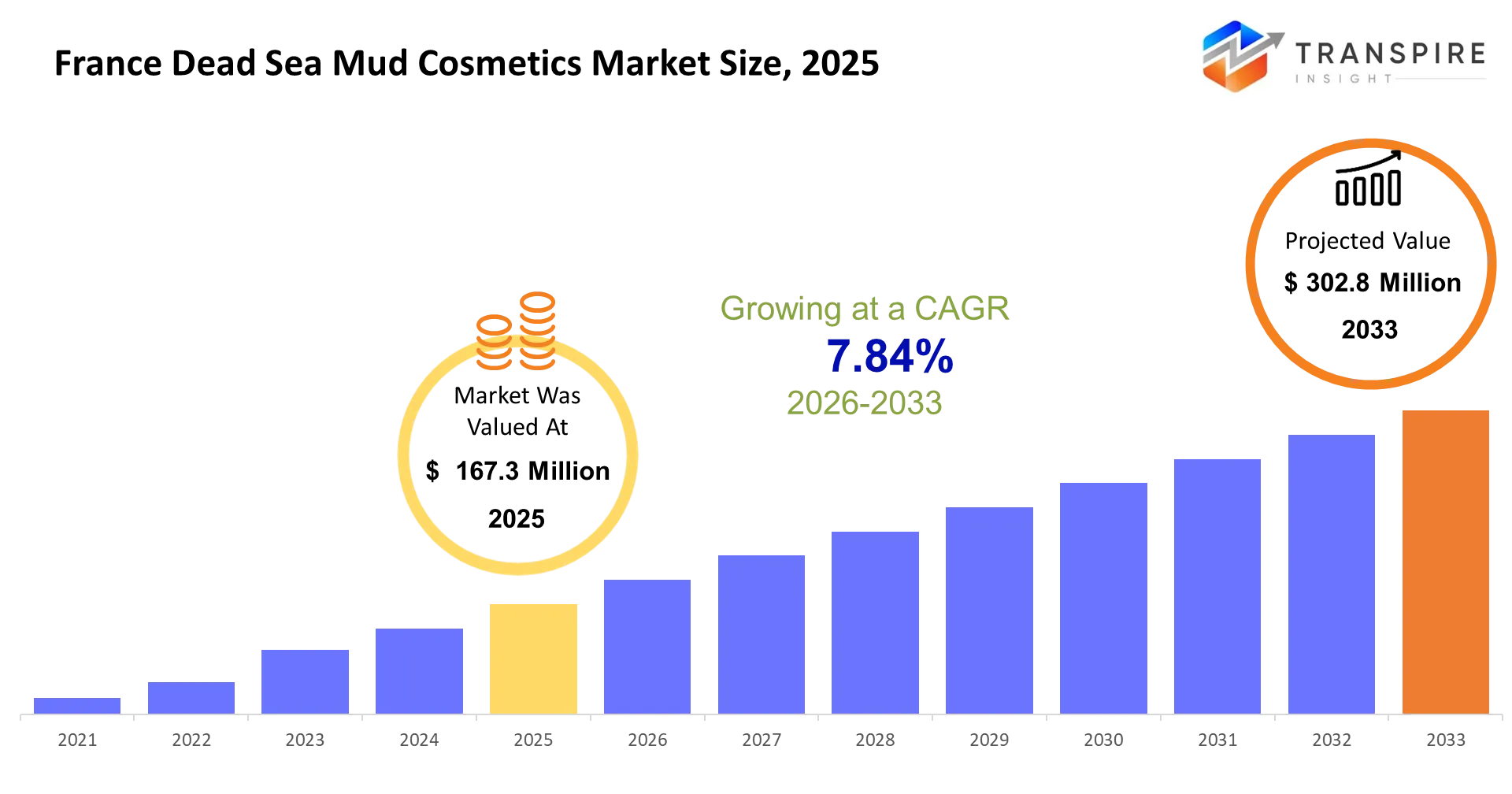
- France Dead Sea Mud Cosmetics Market Size 2025: USD 167.3 Million
- France Dead Sea Mud Cosmetics Market Size 2033: USD 302.8 Million
- France Dead Sea Mud Cosmetics Market CAGR: 7.84%
- France Dead Sea Mud Cosmetics Market Segments:By Type (Face Care, Body Care, Hair Care, Others); By Application (Skincare, Anti-aging, Acne Treatment, Spa Therapy, Others); By End-User (Consumers, Spas, Dermatology Clinics, Others); By Distribution (Online, Retail, Specialty Stores, Others)
To learn more about this report,  Download Free Sample Report
France Dead Sea Mud Cosmetics Market Summary
The France Dead Sea Mud Cosmetics Market was valued at USD 167.3 Million in 2025. It is forecast to reach USD 302.8 Million by 2033. That is a CAGR of 7.84% over the period.
The France Dead Sea mud cosmetics market kind of serves people looking for mineral heavy skincare solutions that help with acne, skin dehydration, irritations, and premature aging via spa level topical blends. In real life this stuff is used a lot in facial masks, exfoliators, body wraps, and therapeutic skincare routines, and it can be found through pharmacies, beauty retailers, dermatology clinics , plus those e-commerce platforms too. Over the last five years the market moved away from this very niche “wellness” vibe toward more clinically backed dermocosmetic story telling, where manufacturers highlight trace mineral concentration, support for the microbiome and clean label formulations.
That shift really sped up after the COVID-19 pandemic , since many consumers re-directed discretionary spending into at-home skincare rituals and self-care products. At the same time, supply chain problems in global mineral sourcing pressured French brands to diversify procurement and even invest in localized packaging operations. Right now the market growth seems linked to premiumization in skincare portfolios, meaning consumers more often upgrade to functional cosmetics with a therapeutic positioning, so brands can push higher margins , improve repeat buying, and lock in stronger shelf presence in pharmacy-led retail channels.
Key Market Insights
- So, the France Dead Sea Mud Cosmetics market clocked in at USD 167.3 million in 2025, and it’s expected to climb toward USD 302.8 million by 2033. In other words, it’s not slow, not really.
- Northern France kind of runs the show, bringing in almost 38% of regional revenue, mostly because there are so many city based beauty stores, plus pharmacy concentration that stays steady.
- Southern France though, is the quicker mover toward 2033, as wellness tourism and spa tied skincare spend keeps speeding up.
- When it comes to products, facial masks are still the main category, holding more than 42% share.
- People tend to want detoxification and anti-acne solutions, so the category makes sense.
- Body scrubs became the second biggest segment after 2022, since premium bathing routines, and exfoliation habits are getting more attention among younger buyers.
- Anti-aging formulations are the fastest-growing category too, largely because mineral enriched collagen support products are being pushed through dermocosmetic channels.
- On the sales side, online retail was above 34% of total market sales in 2025, helped by influencer led skincare education campaigns , you know, the usual.
- As for channels, pharmacy distribution stays in front, because more consumers connect mineral cosmetics with therapeutic skin recovery and what they call dermatological credibility.
- End users wise, women remain the dominant group, around 68% market share , while men’s grooming products are projected to expand the quickest.
What are the Key Drivers, Restraints, and Opportunities in the France Dead Sea Mud Cosmetics Market?
The strongest growth driver in the France Dead Sea mud cosmetics market is the overlap between dermocosmetic retail expansion and a more clinical, skincare type of positioning. In France , consumers tend to buy skincare through pharmacies and beauty channels that feel medically affiliated, so mineral-based products are sold as functional treatments rather than “just” conventional cosmetics. After 2021 this direction really sped up, because dermatologists and skincare influencers started pushing mineral-rich formulations for acne control, skin barrier repair , and also post-treatment recuperation. In response, brands rolled out things like sulfate-free masks, microbiome supportive formulas, plus higher-mineral exfoliators with claims that are clinically tested, more or less.
Still, the market has a big structural restraint, and it’s mostly tied to raw material dependency, linked to Dead Sea mineral extraction plus international sourcing logistics. The mud supply is not evenly spread , it’s geographically focused, so manufacturers get exposed to transport disruptions, geopolitical stress in the Middle East, and import costs that keep moving. And this isn’t something you can fix quickly, because trying to use synthetic replacements often ends up dulling authenticity and the whole premium vibe. On top of that, there’s regulatory attention on ingredient traceability and cosmetic labeling rules inside the European Union, which then stretches compliance timelines. So, overall, these factors push formulation expenses higher, slow down launch schedules, and squeeze margins for mid-sized cosmetic players trying to enter this segment.
Looking ahead , one prominent opportunity is personalized mineral skincare, backed by AI-driven skin diagnostics, paired with direct-to-consumer digital platforms. More French beauty technology startups are now blending smartphone-based skin analysis tools that suggest specific mud formulations based on hydration readings , sensitivity markers, and similar indicators
What Has the Impact of Artificial Intelligence Been on the France Dead Sea Mud Cosmetics Market?
Artificial intelligence plus advanced digital technologies are kinda reshaping the France Dead Sea mud cosmetics market via formulation analytics, demand forecasting, and personalized skincare optimization, a bit like a feedback loop that keeps learning. Cosmetic manufacturers now often lean on AI driven consumer data platforms , to sift through purchasing behavior, skin worries, and even those seasonal product quirks across both e-commerce sites and pharmacy shelves. Machine learning models allow brands to estimate which mineral concentrations, fragrances, or texture profiles lead to stronger repeat buying among distinct demographic groups. On top of that, several skincare companies use AI assisted formulation software— not just for speed, but also for smoother ingredient compatibility testing, which can reduce overall product development duration .
From an operational angle, predictive analytics helps with inventory planning, and it can also prevent those annoying stock imbalances during promo periods or seasonal demand surges . Digital skin analysis applications are now steering consumers toward customized mud masks or exfoliation items, based on hydration, pigmentation, and acne patterns that are captured through smartphone imaging. In practice, this approach boosts conversion rates and supports direct-to-consumer interaction more effectively. Meanwhile, AI supported manufacturing systems further optimize filling, packaging, and quality inspection routines, which lowers operational waste and makes production output more consistent.
Still, AI adoption hits limits, especially when it comes to high implementation costs and fragmented skincare data quality. A lot of predictive models have trouble keeping accuracy stable across different skin tones, changing environmental conditions, and real-life consumer routines, so scalability remains hard for smaller cosmetic manufacturers.
Key Market Trends
- Since 2012, a lot of French skincare brands have drifted away from “spa “ vibes and more toward a clinically verified dermocosmetic stance, like dermatologist-backed mineral recipes, not just vibes.
- After COVID-19, e-commerce reach grew a fair amount, and online skincare consultations started to change how people find those therapeutic mud based items, suddenly it was like consult first then buy.
- In pharmacies, premium facial masks also ended up with better shelf placement, because many shoppers started to favor recovery oriented routines over decorative cosmetics.
- Between 2022 and 2025, anti aging mud formulations that include collagen support ingredients moved faster in stores than older style cleansing products.
- Also, French beauty retailers began using refillable packaging formats more often, partly to lower logistics expenses and partly to fit European circular packaging rules, which feels increasingly important.
- When global shipping disruptions happened, mineral sourcing diversification sped up, because it showed how dependent companies were on just a few concentrated Dead Sea extraction regions.
- After 2023, male grooming brands expanded into mud based skincare portfolios, pushing oil control and beard care uses through digital first campaigns.
- Meanwhile, companies like L'Oréal and Ahava Dead Sea Laboratories put more money into AI driven skin analysis and into systems that suggest personalized skincare, based on what the customer seems to need.
- Direct to consumer subscription models gained momentum too, since brands wanted recurring revenue via customized skincare replenishment programs, it’s like subscription not just one time purchase.
- And across premium French cosmetic retail channels, clean label formulas without parabens, sulfates, or synthetic fragrances have been replacing mainstream products more and more.
France Dead Sea Mud Cosmetics Market Segmentation
By Type
Face Care stays in the leading spot in the market because facial masks, cleansers and mineral-rich exfoliators are still the most bought Dead Sea mud cosmetic items across pharmacies, on online platforms, and in premium beauty stores, like it’s a standard routine for many people. People tend to care a lot about acne control, skin detoxification, and hydration recovery, so purchases repeat again and again inside everyday skincare routines. Also, strong product visibility—boosted by influencer marketing, dermatologist suggestions and premium shelf placement—helps keep that category at the front. Cosmetic manufacturers keep putting money into microbiome support formulas, fragrance-free versions, plus solutions for sensitive skin, all tuned for face use specifically.
Looking ahead, Face Care growth will likely depend a lot on personalized skincare technologies and product development that feels clinically grounded. AI skin diagnostics, and even subscription beauty models, are expected to lift customer stickiness, and also increase spending per user on average. Body Care still has a solid market role too, since spa therapies, exfoliation scrubs, and wellness-led hydration products keep pulling in premium shoppers who want a kind of at-home therapeutic experience. Hair Care is growing steadily as well, with scalp detoxification treatments, and mineral-based hair masks. Meanwhile, other niche categories should open only selective chances for specialized wellness and dermatology brands throughout the forecast period.
By Application
Skincare kind of represents the leading application space, because those mineral-rich mud formulations are commonly used for hydration support, detoxification, pore cleansing , and they help with skin texture improvement. There’s also a noticeable shopper tendency toward therapeutic cosmetic products with a natural mineral “angle”, so people keep repurchasing across different retail channels. Pharmacy-led distribution and beauty marketing that feels medically aligned add to the trust factor, and that usually means stronger premium pricing too in skincare. Plus, more people worry about urban pollution ,and many also use cosmetics quite intensively ,so the need for recovery-minded skincare routines keeps getting pushed forward.
Meanwhile anti-aging is still gathering momentum, mostly because mineral enriched formulas are getting layered with collagen-support add ons , retinol pairings, and hydration repair technologies that seem to court mature consumers. At the same time acne treatment stays pretty crucial, since oil absorbing plus anti-inflammatory properties are often described alongside Dead Sea minerals, especially for younger demographics or folks with sensitive skin. Spa therapy uses are also ticking upward, particularly in luxury wellness centers, resorts and higher end hospitality operators, where mineral body wraps and therapeutic mud treatments get woven right into the wellness programs. Then there are other emerging angles, like post procedure recovery products, and skincare aimed at microbiome support, which are expected to create longer term opportunities for clinical cosmetic developers and for wellness brands that chase higher margins.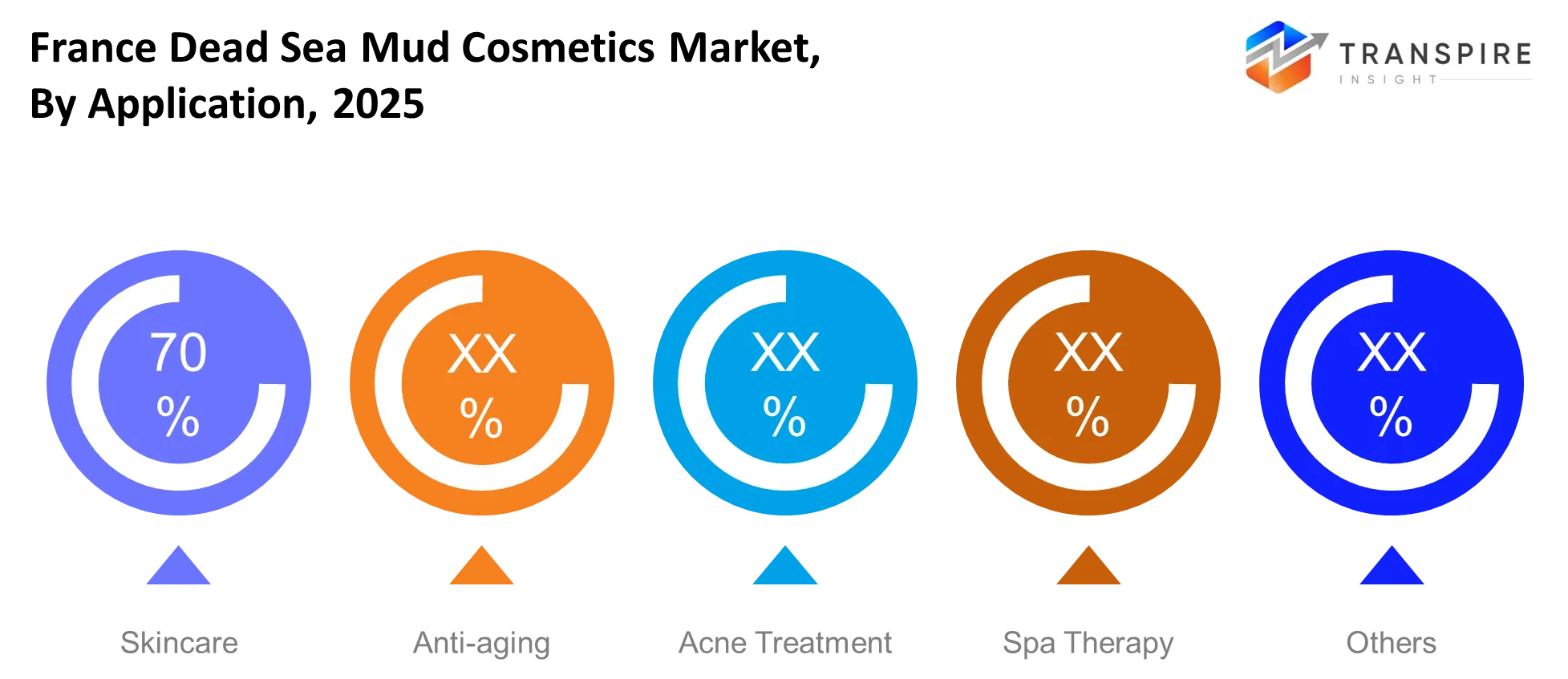
To learn more about this report, Download Free Sample Report
By End-User
Consumers end up dominating the end-user segment, mostly because individual skincare users—those real people buying for themselves—form the biggest slice of recurring purchases across facial masks, body scrubs, exfoliators, and anti-aging offerings. Daily skincare becomes more embedded in routines, plus strong digital beauty engagement, keeps nudging repeat buying especially for urban consumers. On top of that, premiumization in personal care routines has really pushed higher spending on clinically positioned mineral cosmetics, which are usually moved through pharmacies and e-commerce routes. Meanwhile, younger demographics are leaning more toward multifunctional products, mixing that wellness tone with what they can actually see , as skincare performance not just promises.
Spas still keep a solid market presence, because luxury wellness centers and hospitality operators tend to bank on mineral rich mud products for therapeutic body treatments and also for more premium skincare services. Dermatology clinics are growing steadily too, since medically supervised cosmetic procedures increasingly feature recovery oriented mineral formulations, aimed at hydration support and skin barrier repair. The professional skincare recommendations inside clinics make consumers feel more confident, and that feeling helps premium product adoption stay strong. Other end users, like boutique wellness centers and beauty subscription providers, are likely to spark niche growth, by offering customized skincare programs and high-performance therapeutic cosmetic solutions throughout the forecast period.
By Distribution
Online channels are expanding fast, and they seem to be, one of the most influential distribution segments because digital commerce platforms help people reach premium skincare products in both city centers and smaller regional markets. Influencer-led product education, subscription style skincare programs, and AI powered recommendation systems keep pushing online conversion up, plus they help with customer retention too. At the same time, direct-to-consumer approaches let cosmetic brands protect their margins while they also capture useful consumer behavior information for more personalized marketing campaigns. With better delivery infrastructure and the steady rise of mobile beauty commerce, digital sales growth is getting even quicker.
Still, retail stores keep a big share because many consumers actually like the physical testing aspect, the pharmacy consultations, and the fact that product availability is immediate right before purchase decisions. Specialty Stores are also picking up speed, mainly due to carefully chosen therapeutic skincare portfolios, stronger premium customer service, and exclusive access to high-mineral formulations that are not really common in mass retail spaces. Beauty advisors and partnerships with dermatology-linked retailers add extra confidence within these specialized distribution channels. Beyond that, other formats like spa connected retail systems and wellness subscription networks are expected to open more focused growth opportunities for premium skincare brands and smaller mineral cosmetic developers across the forecast period.
What are the Key Use Cases Driving the France Dead Sea Mud Cosmetics Market?
In the France Dead Sea mud cosmetics market, the prevailing use case sort of stays locked on facial skincare care, especially detoxifying masks and mineral-rich anti-acne formulas that are typically moving through pharmacies and high-end beauty retailers. People keep reaching for these products not just for “clean skin” vibes, but to help with oil imbalance, clogged pores and surface irritation that comes from urban grime and the more aggressive kind of cosmetic routines. The demand stays highest here, since the whole idea feels therapeutic while still being the kind of personal care you repeat pretty regularly.
Then there are the secondary paths, which are spreading into spa wellness centers and body care areas. In that world, Dead Sea mud gets used in exfoliation scrubs, calming relaxation therapies, and hydration treatments that feel more like a ritual. Luxury hospitality operators, and also wellness resorts, are starting to weave mineral-based body wraps into premium service menus, and at the same time male grooming brands are picking up mud-based options for oil-control and post-shaving comfort skincare.
Looking ahead, emerging applications are turning toward microbiome-supporting skincare and AI-personalized mineral cosmetics, shaped via digital skin diagnostics. Brands are also testing recovery creams for after-procedure use, for consumers who are going through dermatological treatments, so this is creating fresh angles for medically aligned distribution channels, and honestly, it also makes the category feel a bit more future-proof.
|
Report Metrics |
Details |
|
Market size value in 2025 |
USD 167.3 Million |
|
Market size value in 2026 |
USD 178.5 Million |
|
Revenue forecast in 2033 |
USD 302.8 Million |
|
Growth rate |
CAGR of 7.84% from 2026 to 2033 |
|
Base year |
2025 |
|
Historical data |
2021 - 2024 |
|
Forecast period |
2026 - 2033 |
|
Report coverage |
Revenue forecast, competitive landscape, growth factors, and trends |
|
Regional scope |
United States; Canada; Mexico; United Kingdom; Germany; France; Italy; Spain; Denmark; Sweden; Norway; China; Japan; India; Australia; South Korea; Thailand; Brazil; Argentina; South Africa; Saudi Arabia; United Arab Emirates |
|
Key company profiled |
Ahava, Premier Dead Sea, Dead Sea Spa Magik, Seacret, Jericho, Minus 417, Sabon, Dr Sea, Aqua Mineral, Health & Beauty Dead Sea, HB Dead Sea, Aroma Dead Sea, Lavido, Yes To, Botanifique |
|
Customization scope |
Free report customization (country, regional & segment scope). Avail customized purchase options to meet your exact research needs. |
|
Report Segmentation |
By Type (Face Care, Body Care, Hair Care, Others); By Application (Skincare, Anti-aging, Acne Treatment, Spa Therapy, Others); By End-User (Consumers, Spas, Dermatology Clinics, Others); By Distribution (Online, Retail, Specialty Stores, Others) |
Which Regions are Driving the France Dead Sea Mud Cosmetics Market Growth?
Northern France keeps looking like the main regional stronghold, mostly because it still has that heavy concentration of premium beauty retailers, dermatology clinics, and pharmacy-oriented skincare supply channels. In and around Paris , you get this very high level of consumer spending, especially for clinically framed skincare and luxury wellness services. On top of that, the area has solid e-commerce fulfillment capability, so cosmetic brands can grow direct-to-consumer subscription formats without too much friction. A lot of the momentum also comes from the retail alliances that are already in place, plus the fact that dermocosmetic products are reaching more customers every year, which keeps Northern France’s lead position feeling pretty durable.
Western France brings in steadier market revenue, but it does it through another kind of engine. The growth pattern leans on wellness tourism, and on long-term buyer commitment to natural skincare lines. You can see it in the coastal spa towns, and also in thermal wellness venues where people keep showing up for mineral-based body care and more restorative beauty services. It’s a bit different from Northern France’s quicker, city-driven retail rhythm, because here the purchasing cycle feels calmer, with repeat consumption that doesn’t jump around as much, and mid-premium buying stays more resilient. Regional distributors also hold tight relationships with pharmacies and smaller beauty chains, so suppliers can count on more predictable revenue flow.
Southern France is, however, the one moving the fastest. Luxury hospitality investment and premium wellness tourism have been pulling more demand toward spa-level skincare products. Starting from 2023, upscale resorts and smaller wellness operators have been building more partnerships with mineral cosmetic brands, partly to attract high-spending international guests. Meanwhile the local beauty retail ecosystem has also been shifting quickly, with influencer-led skincare promotion, plus higher levels of digital commerce reach. All of that together is why Southern France reads as the acceleration region right now.
Who are the Key Players in the France Dead Sea Mud Cosmetics Market and How Do They Compete?
The France Dead Sea mud cosmetics market stays, for the most part, moderately fragmented. Competition gets shaped less by price alone and more by that formulation credibility vibe, authentic mineral sourcing, and premium brand presence too. Bigger established international names hang on to their share using patented mineral blends, dermatological credibility, plus heavy pharmacy distribution. Meanwhile smaller newcomers try to shake things up with vegan formulations, refillable packaging, and direct-to-consumer setups. Lately the fight is also about scientific validation, digital interaction, and a kind of privileged access to genuinely sourced Dead Sea mineral resources.
Ahava sets itself apart via proprietary Osmoter™ mineral tech and direct access to licensed extraction operations from the Dead Sea. It leans into its edge by pushing premium anti-aging formulas, subscription-driven e-commerce programs, and that science-forward skincare messaging. Premier Dead Sea leans toward luxury spa-oriented skincare, then rides on distribution relationships across European wellness retail. Its product lineup spotlights high-mineral concentration items aimed at hydration support and skin recovery use-cases.
Seacret competes with in-store experiences and personalized skincare consults, wrapped into direct selling approaches. Minus 417 differentiates using mineral-infused wellness formulations along with aromatherapy framing, plus premium spa partnerships. Sabon reaches farther by weaving Dead Sea minerals into lifestyle bath and body collections, the sort that appeal to younger luxury buyers who want sensory skincare experiences.
Company List
- Ahava
- Premier Dead Sea
- Dead Sea Spa Magik
- Seacret
- Jericho
- Minus 417
- Sabon
- Dr Sea
- Aqua Mineral
- Health & Beauty Dead Sea
- HB Dead Sea
- Aroma Dead Sea
- Lavido
- Yes To
- Botanifique
Recent Development News
In March 2026, AHAVA launched new anti-aging educational campaigns centered on Dead Sea mineral science and retinol-based skincare combinations. The initiative strengthened the company’s premium positioning in therapeutic skincare and supported expansion across European dermocosmetic retail channels.http://global.ahava.com/
In January 2026, AHAVA expanded its premium skincare bundle portfolio through new Dead Sea mineral gift sets and hydration-focused routines. The launch improved direct-to-consumer sales potential and increased recurring subscription opportunities in international beauty markets.http://www.ahava.com
What Strategic Insights Define the Future of the France Dead Sea Mud Cosmetics Market?
The France Dead Sea mud cosmetics market is kinda moving , in a clear direction, toward clinically minded premium skincare backed by digital personalization, pharmacy-led store growth and a more wellness-tilted way of consumer spending. In the next five to seven years , it feels like growth will hinge more and more on how well brands braid mineral authenticity with biotech inputs, AI skin diagnostics, and a medically aligned skincare narrative. Still, there is also a quieter danger that people don’t always notice, the market’s strong reliance on mineral sourcing in a few geographic regions, and that means manufacturers can get hit by geopolitical instability, raw material cost spikes, and tougher European traceability rules which might squeeze margins.
An emerging opening , pretty important actually, sits in customized therapeutic skincare routines connected to tele-dermatology platforms and subscription-based beauty ecosystems. Brands that pair personal skin assessment with repeat purchase delivery models should see better lifetime value from customers. For existing players and investors, the best approach will likely be locking in durable mineral sourcing partnerships , while also putting money into clinical proof, digital commerce foundations, and refillable premium packaging systems that fit with the changing European cosmetic regulations.
France Dead Sea Mud Cosmetics Market Report Segmentation
By Type
- Face Care
- Body Care
- Hair Care
- Others
By Application
- Skincare
- Anti-aging
- Acne Treatment
- Spa Therapy
- Others
By End-User
- Consumers
- Spas
- Dermatology Clinics
- Others
By Distribution
- Online
- Retail
- Specialty Stores
- Others
Frequently Asked Questions
Find quick answers to common questions.
The Approximate France Dead Sea Mud Cosmetics Market size for the Market will be USD 302.8 Million in 2033.
Key Segments for the France Dead Sea Mud Cosmetics Market are By Type (Face Care, Body Care, Hair Care, Others); By Application (Skincare, Anti-aging, Acne Treatment, Spa Therapy, Others); By End-User (Consumers, Spas, Dermatology Clinics, Others); By Distribution (Online, Retail, Specialty Stores, Others).
Major France Dead Sea Mud Cosmetics Market players are Ahava, Premier Dead Sea, Dead Sea Spa Magik, Seacret, Jericho, Minus 417, Sabon, Dr Sea, Aqua Mineral, Health & Beauty Dead Sea, HB Dead Sea, Aroma Dead Sea, Lavido, Yes To, Botanifique.
The Current France Dead Sea Mud Cosmetics Market size is USD 167.3 Million in 2025.
The France Dead Sea Mud Cosmetics Market CAGR is 7.84% from 2026 to 2033.
- Ahava
- Premier Dead Sea
- Dead Sea Spa Magik
- Seacret
- Jericho
- Minus 417
- Sabon
- Dr Sea
- Aqua Mineral
- Health & Beauty Dead Sea
- HB Dead Sea
- Aroma Dead Sea
- Lavido
- Yes To
- Botanifique
Recently Published Reports
-
May 2026
Biosimilars Market
Biosimilars Market By Product Type (Monoclonal Antibodies, Recombinant Hormones, Erythropoietin, G-CSF, Others), By Indication (Oncology, Autoimmune Diseases, Blood Disorders, Diabetes, Others), By Manufacturing Type (In-House Manufacturing, Contract Manufacturing), By Distribution Channel (Hospital Pharmacies, Retail Pharmacies, Online Pharmacies), By Industry Analysis, Size, Share, Growth, Trends, and Forecasts 2021-2033
-
Apr 2026
Gastrointestinal Endoscopy Market
Gastrointestinal Endoscopy Market By Type (Rigid Gastrointestinal Endoscope, Flexible Gastrointestinal Endoscopes, Disposable Gastrointestinal Endoscope), By Procedure Type (Colonoscopy, Gastroscopy, Duodenoscopy, Enteroscopy, Flexible Sigmoidoscopy, Others), By Application (Diagnosis, Treatment), By End-Users (Hospitals, Ambulatory Surgical Centers, Specialty Clinics, Laboratories, Others), By Industry Analysis, Size, Share, Growth, Trends, and Forecasts 2021-2033
-
Apr 2026
Rare Inherited Metabolic Disorder Drug Market
Rare Inherited Metabolic Disorder Drug Market By Drug Class (Enzyme Replacement Drugs, Gene Therapy Drugs, Substrate Reduction Drugs, Small Module Drugs, Protein Drugs), By Route of Administration(Parenteral, Oral, Intrathecal), By Clinical Development (Marketed Drugs, Late Stage Clinical Phase III, Early Stage Clinical Phase I-II, Preclinical Candidates), By Indication (Lysosomal Storage Disorders, Urea Cycle Disorders, Amino Acid Metabolic Disorders, organic Acidemias, Peroximal Disorders), By Industry Analysis, Size, Share, Growth, Trends, and Forecasts 2021-2033
-
Jan 2026
Pharmaceutical Cleanroom Technology Market
Pharmaceutical Cleanroom Technology Market By Product (Equipment, Consumables, Services); By Cleanroom Type (Standard Cleanrooms, Modular Cleanrooms); By End Use (Pharmaceutical Companies, Biotechnology Companies), By Industry Analysis, Size, Share, Growth, Trends, and Forecasts 2021-2033