

Europe Carboxymethyl Cellulose (CMC) Market Size & Forecast:
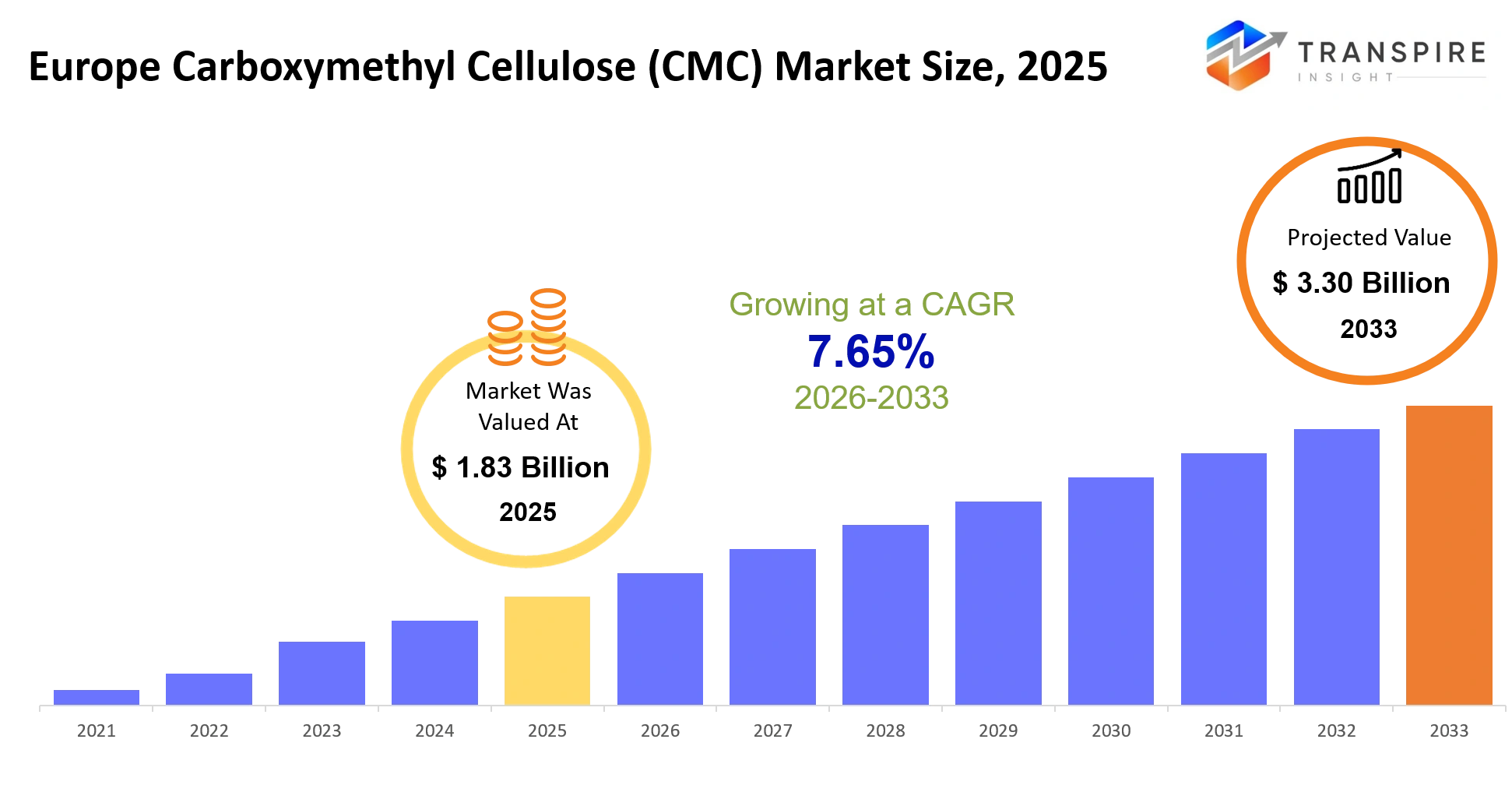
- Europe Carboxymethyl Cellulose (CMC) Market Size 2025: USD 1.83 Billion
- Europe Carboxymethyl Cellulose (CMC) Market Size 2033: USD 3.30 Billion
- Europe Carboxymethyl Cellulose (CMC) Market CAGR: 7.65%
- Europe Carboxymethyl Cellulose (CMC) Market Segments: By Purity (High, Medium, Low, Others); By Grade (Industrial, Food, Pharmaceutical, Others); By Application (Food & Beverages, Pharmaceuticals, Detergents, Oil & Gas, Personal Care, Others); By Function (Thickening, Stabilizing, Binding, Others); By End User (Chemical, Food, Healthcare, Others); By Distribution Channel (Direct Sales, Distributors, Others).
Europe Carboxymethyl Cellulose (CMC) Market Summary
The Europe Carboxymethyl Cellulose (CMC) Market was valued at USD 1.83 Billion in 2025. It is forecast to reach USD 3.30 Billion by 2033. That is a CAGR 7.65%over the period.
The Europe Air Conditioner Market is going to change a lot over the 5 to 7 years. It will start using efficiency and low-emission systems that are controlled digitally. This is because the European Union is making rules to make buildings use energy. People will start using inverter-based and smart HVAC systems of the old ones. These new systems use energy and help keep the air clean.There are programs to renovate buildings and people need cooling systems when it is very hot. This will make people want to use these systems even more especially in cities where people live and work.
There is a problem that people do not see. The rules about the gases used in these systems might cause problems with getting the parts needed to make them. This could make it more expensive to replace systems and people might not be ready to pay more. This could slow down the use of systems in places where people are careful about money. It could also make it take longer to replace systems, which would affect the companies that make these systems.
There is a chance for companies that make these systems to work with other smart systems that control energy use. This is especially true in Western Europe where people are using more smart systems, in buildings. People will want systems that can predict how energy they will use. Companies should make systems that're easy to add to and do not hurt the environment. They should also invest in systems that can control the temperature and make it easy for people to use them. This way companies can make money from helping people use these systems over time not from selling them once.
Key Market Insights
- Germany is the leader in the Europe Carboxymethyl Cellulose Market with around 24 to 28 percent share. This is because Germany has a pharmaceutical industry and food manufacturing sector. The Europe Carboxymethyl Cellulose Market is really dependent on these industries.
- Central and Eastern Europe are growing fast. This is happening because there is a lot of activity and investment in these regions. As a result the Europe Carboxymethyl Cellulose Market in these areas is expected to grow a lot during the forecast period.
- Food-grade Carboxymethyl Cellulose is very popular. It has than 35 percent of the market. This is because Carboxymethyl Cellulose helps make food products better by stabilizing, thickening and improving their texture.
- The Europe Carboxymethyl Cellulose Market really needs Food-grade Carboxymethyl Cellulose.Pharmaceutical-grade Carboxymethyl Cellulose is in demand.This is because Pharmaceutical-grade Carboxymethyl Cellulose is used to make tablets and other medicines.
- The Europe Carboxymethyl Cellulose Market needs Pharmaceutical-grade Carboxymethyl Cellulose to support the pharmaceutical industry.High-purity specialty Carboxymethyl Cellulose is growing fast.
- This type of Carboxymethyl Cellulose is used in biopharmaceutical and personal care products.The Europe Carboxymethyl Cellulose Market will really benefit from the growth of High-purity specialty Carboxymethyl Cellulose.
- Food and beverage companies use a lot of Carboxymethyl Cellulose. Over 30 percent.This is because people eat a lot of processed foods and dairy products.
- The Europe Carboxymethyl Cellulose Market is affected by what the food and beverage industry does.Battery-related applications are becoming very popular.
- Lithium-ion battery manufacturers are using Carboxymethyl Cellulose-based binders.The Europe Carboxymethyl Cellulose Market will benefit from the growth of the battery industry.
- Pharmaceutical companies use Carboxymethyl Cellulose.They are investing in technologies to make better medicines.
- The Europe Carboxymethyl Cellulose Market is supported by the pharmaceutical industry.
What are the Key Drivers, Restraints, and Opportunities in the Europe Carboxymethyl Cellulose (CMC) Market?
Driver:
The thing that is making the market for carboxymethyl cellulose grow fast is that more and more companies are using high-performance additives in food, medicine and personal care products. Because the government is paying attention to making sure these products are consistent, safe and last a long time companies are starting to use carboxymethyl cellulose. This is because carboxymethyl cellulose helps make products feel better longer and stay fresh. It is also a value for companies because it can be used in many different products. This means that companies are buying carboxymethyl cellulose, which is creating new chances for companies that sell it to make money.
Restraint:
The main issue for companies that make carboxymethyl cellulose is that the cost of the things they need to make carboxymethyl cellulose can go up and down a lot.Carboxymethyl cellulose companies need cellulose and some other chemicals to make carboxymethyl cellulose and the cost of these things can change.This is a problem for carboxymethyl cellulose companies because they have to spend a lot of money to make carboxymethyl cellulose.So carboxymethyl cellulose companies have to try to keep the price of carboxymethyl cellulose low.Some people who buy carboxymethyl cellulose might wait to buy carboxymethyl cellulose if it's too expensive.They might look for something than carboxymethyl cellulose.This is affecting the carboxymethyl cellulose market because it is not getting bigger fast as it could be.The carboxymethyl cellulose market is not growing quickly because of the problems, with carboxymethyl cellulose.
Opportunity:
There is a chance for companies that make carboxymethyl cellulose to grow in the future. This is because carboxymethyl cellulose is being used more and more in the production of lithium-ion batteries. Battery companies like to use carboxymethyl cellulose because it helps the batteries work better and makes the production process more efficient. Many countries, like Germany and France are investing a lot of money in making electric vehicle batteries. This means that companies that make carboxymethyl cellulose for batteries and work with battery companies will be, in a position to grow and make more money.
What Has the Impact of Artificial Intelligence Been on the Europe Carboxymethyl Cellulose (CMC) Market?
Carboxymethyl cellulose production is getting better with the help of intelligence and advanced digital technologies. These new technologies are making things more efficient in carboxymethyl cellulose production, quality control and supply chain operations. Manufacturers are using intelligence to control the production process. This means they can monitor things like temperature, viscosity levels and chemical dosing in time for carboxymethyl cellulose production.Automated production platforms are also helping to make carboxymethyl cellulose production more consistent. This is good for food, pharmaceutical and industrial applications that use cellulose. Digital monitoring systems are helping to save resources by using energy and raw materials during carboxymethyl cellulose production.
Machine learning models are helping to predict when equipment might break down. This is done by looking at data from reactors, dryers and mixing systems used in carboxymethyl cellulose production. The models can see patterns that might mean equipment is wearing out. This helps manufacturers fix problems before they happen. Machine learning models also help carboxymethyl cellulose manufacturers make product forecast what people will want and plan their inventory better.As a result facilities can run smoothly save money on maintenance and make carboxymethyl cellulose production more efficient. Advanced laboratory analytics powered by intelligence is also helping to develop new formulations for carboxymethyl cellulose. This is done by looking at amounts of data related to how carboxymethyl cellulose products perform and what customers want. Digital quality inspection systems are also helping facilities follow the rules by catching problems quickly.
However one big problem is that it can be very expensive to add intelligence to old equipment used in carboxymethyl cellulose production. Many facilities still use equipment so it is hard and expensive to make big changes, to carboxymethyl cellulose production.
Key Market Trends
- Since 2021 companies that make batteries have started using CMC-based binders often as they make more lithium-ion batteries in big factories in Europe.
- Food companies changed the way they make food between 2020 and 2025 they wanted to use clean-label stabilizers so they started using cellulose to help with the texture and viscosity of food.
- Pharmaceutical companies have started using pure materials because they need to make sure their drugs are mixed correctly and work well.
- After 2022 companies that make specialty chemicals started using machines to help them make their products this way they can make the thing every time and it is more efficient.
- Because of problems with getting the materials they need companies have started buying from places that're closer to them instead of from all around the world.
- Companies, like Ashland, Nouryon and CP Kelco made more specialty products to sell to pharmaceutical and personal care companies because they can make money from these products.
- People who buy these products do not want the products anymore they want products that are made just for them and work exactly how they want them to.
- Companies need to be sustainable so they are trying to make their factories use less energy and work better by using computers to monitor and optimize their processes.
- After 2022 companies that make cellulose started working with companies that make battery materials this is creating opportunities for them to make money.
- Companies are spending money on research to make new products from plants that work better and meet the new rules and requirements.
Europe Carboxymethyl Cellulose (CMC) Market Segmentation
By Purity
I think high-purity material is really important for applications that need to be perfect and work consistently. This is the case for pharmaceutical manufacturing and specialty products. These people need the materials so their products are good and safe. Because of this companies are investing in technologies to make these materials even better.Medium-purity materials are used in a lot of industries like food processing and chemical manufacturing. These industries need materials that work well and are not too expensive. Low-purity products are used in industries where the materials do not need to be perfect. There are also types of purity levels that are used for special cases.
By Grade
Industrial grade materials are used a lot in industries like construction and paper processing. These materials have properties that make them useful for these industries. Because of this industrial grade materials are in demand. As industries get better at making things they will need more of these materials.Food grade materials are used in food products to make them taste better and last longer. Pharmaceutical grade materials are used to make medicines. These materials have to be very good so they can be used in medicines. Other grades of materials are used for applications.
By Application
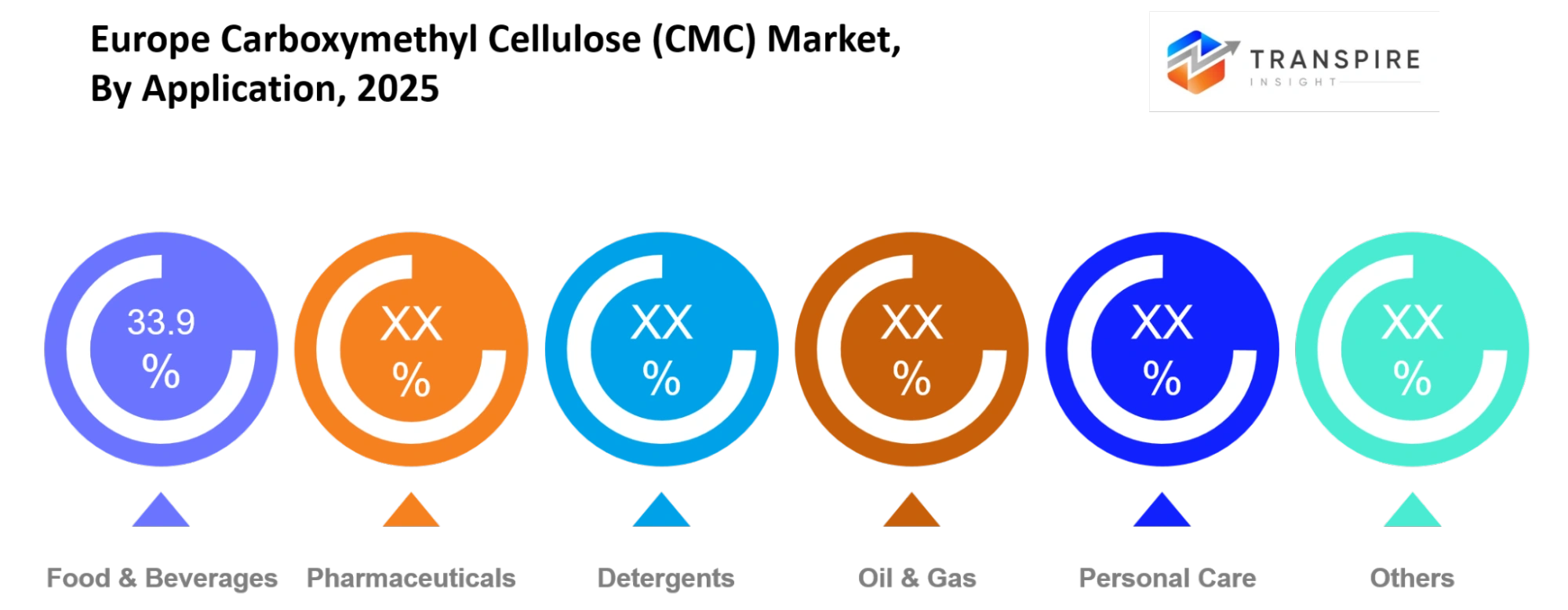
Food and beverage companies use a lot of these materials to make their products consistent and good. They use them in bakery products, dairy products and other foods. Pharmaceutical companies use these materials to make medicines. Detergent companies use them to make their products clean better. Oil and gas companies use them to help with drilling.
By Function
Some materials are used to make things thicker. This is important for food and personal care products. These materials help products have a texture. Companies like to use these materials because they make their products better.Other materials are used to keep products from separating. This is important for pharmaceuticals and specialty chemicals. These materials help products work consistently. There are also functions that these materials can have.
By End User
Chemical manufacturers use a lot of these materials. They use them to make their products better and to make their processes more efficient. Food companies use these materials to make their products taste better and last longer. Healthcare companies use them to make medicines. Other industries also use these materials.
By Distribution Channel
Some companies sell these materials directly to their customers. This is the case for companies that need a lot of materials. These companies like to have a relationship with their suppliers so they can get the materials they need.Other companies use distributors to sell their materials. Distributors help get the materials to companies and to companies, in different regions. They also provide support to their customers. There are also ways that these materials can be sold.
What are the Key Use Cases Driving the Europe Carboxymethyl Cellulose (CMC) Market?
Carboxymethyl cellulose is really useful in food and beverage manufacturing. It helps to make things thicker and more stable. It also makes the texture better. Things like dairy products and bakery fillings and sauces and beverages and frozen desserts need to be the thickness and they need to stay that way when they are being made and when they are being stored. People who make these things want them to last a time and they want them to always be the same and they want them to be good quality without having to change the recipe a lot.
Carboxymethyl cellulose is also used in ways. It is used in pharmaceuticals and personal care products. Drug companies use carboxymethyl cellulose to help hold tablets and to make sure the drugs are released at the right time and to keep the drugs mixed together properly. Personal care companies use carboxymethyl cellulose in toothpaste and lotions and makeup. More people are spending money on healthcare and on personal care products so carboxymethyl cellulose is being used more and more in these industries.
There are some uses for carboxymethyl cellulose that are just starting to happen. It is being used in oilfields to help with drilling. Carboxymethyl cellulose helps to make the drilling fluids work better. It helps to make the whole process more efficient. People are also looking into using carboxymethyl cellulose to make kinds of chemicals that are better for the environment. This could lead to some exciting uses, for carboxymethyl cellulose in the future.
|
Report Metrics |
Details |
|
Market size value in 2025 |
USD 1.83 Billion |
|
Market size value in 2026 |
USD 1.97 Billion |
|
Revenue forecast in 2033 |
USD 3.30 Billion |
|
Growth rate |
CAGR of 7.65% from 2026 to 2033 |
|
Base year |
2025 |
|
Historical data |
2021 - 2024 |
|
Forecast period |
2026 - 2033 |
|
Report coverage |
Revenue forecast, competitive landscape, growth factors, and trends |
|
Regional scope |
United States; Canada; Mexico; United Kingdom; Germany; France; Italy; Spain; Denmark; Sweden; Norway; China; Japan; India; Australia; South Korea; Thailand; Brazil; Argentina; South Africa; Saudi Arabia; United Arab Emirates |
|
Key company profiled |
Ashland, Nouryon, CP Kelco, Dow, Akzo Nobel, Daicel, Lamberti, Nippon Paper, DKS, J.M. Huber, Wealthy Chemical, Ugur Seluloz, Anqiu Eagle, Sinocmc, Quimica Amtex. |
|
Customization scope |
Free report customization (country, regional & segment scope). Avail customized purchase options to meet your exact research needs. |
|
Report Segmentation |
By Purity (High, Medium, Low, Others); By Grade (Industrial, Food, Pharmaceutical, Others); By Application (Food & Beverages, Pharmaceuticals, Detergents, Oil & Gas, Personal Care, Others); By Function (Thickening, Stabilizing, Binding, Others); By End User (Chemical, Food, Healthcare, Others); By Distribution Channel (Direct Sales, Distributors, Others). |
Which Regions are Driving the Europe Carboxymethyl Cellulose (CMC) Market Growth?
Western Europe holds the largest share of revenue due to its strong food processing, pharmaceutical manufacturing, and specialty chemical industries. Germany, France, and the Netherlands maintain extensive production capacity supported by advanced research infrastructure and established supply chains. Strict food safety and pharmaceutical quality regulations encourage the use of high-performance functional ingredients across multiple applications. A mature network of manufacturers, distributors, contract formulators, and research institutions sustains long-term market leadership across the region.
Northern Europe represents the second-largest regional contributor, supported by economic stability and a strong focus on sustainable industrial development. Unlike Western Europe, growth relies less on manufacturing scale and more on innovation-driven demand from healthcare, biotechnology, and environmentally responsible consumer products. Consistent regulatory implementation and long-term investments in specialty chemicals create a dependable business environment for suppliers. Strong collaboration between industry participants and research organizations supports steady consumption across high-value applications.
Eastern Europe is emerging as the fastest-growing region due to expanding industrial production and increasing investment in food processing and pharmaceutical manufacturing facilities. Several countries have strengthened manufacturing capabilities to attract regional and international production projects during recent years. Lower production costs and ongoing modernization of industrial infrastructure have improved competitiveness across chemical value chains. This momentum will create attractive opportunities for market entrants and investors seeking capacity expansion, local partnerships, and access to developing end-use industries between 2026 and 2033.
Who are the Key Players in the Europe Carboxymethyl Cellulose (CMC) Market and How Do They Compete?
Competition remains moderately consolidated, with a limited number of global and regional manufacturers controlling a significant share of high-value applications. Market participants compete primarily through product purity, application expertise, technical support, and supply reliability rather than price alone. Established producers continue to defend market positions through investments in specialty grades and customized formulations. New entrants face barriers related to quality certifications, regulatory compliance requirements, and long-term customer qualification processes, particularly in pharmaceutical and food applications.
Ashland focuses on technology-driven differentiation through high-performance cellulose derivatives designed for pharmaceutical, personal care, and food applications. Strong formulation expertise and application support services help customers improve product performance and development timelines. CP Kelco emphasizes specialty ingredient innovation and collaborates closely with food manufacturers to create customized texture and stabilization solutions. This customer-centric approach strengthens long-term commercial relationships and supports premium product positioning.
Nouryon leverages broad chemical manufacturing capabilities and a diversified product portfolio to serve multiple industrial sectors. Extensive distribution networks and technical resources allow efficient service across European markets. Daicel differentiates through high-purity specialty grades targeted at demanding pharmaceutical and industrial applications where product consistency remains critical. J.M. Huber continues expanding through investments in advanced material technologies and application-focused product development, enabling access to emerging opportunities such as specialty healthcare formulations and next-generation industrial applications.
Company List
- Akzo Nobel
- Daicel
- Lamberti
- Nippon Paper
- DKS Co. Ltd.
- J.M. Huber
- Wealthy Chemical Industry
- Ugur Seluloz
- Anqiu Eagle Cellulose
- Sinocmc
- Quimica Amtex
Recent Development News
In January 2025, CP Kelco announced expansion of its European production and supply capabilities for specialty hydrocolloids, including carboxymethyl cellulose, to strengthen availability for food, beverage, and pharmaceutical manufacturers. The move improves supply reliability and supports rising demand for high-purity stabilizers across regulated industries.
Source: https://www.cpkelco.com
In February 2026, Nouryon launched FinnFix PB MAX, a next-generation cellulose ether solution designed with a 100% renewable carbon index for detergent and cleaning applications, including CMC-based formulations. The launch strengthens its position in sustainable ingredient innovation and supports cleaner formulation targets for European manufacturers.
Source: https://www.nouryon.com
What Strategic Insights Define the Future of the Europe Carboxymethyl Cellulose (CMC) Market?
Europe Carboxymethyl Cellulose (CMC) market is likely to shift toward higher-value, specification-driven demand, especially pharma-grade and battery-grade applications, driven by Europe’s tightening sustainability requirements, growth in clean-label food systems, and expansion of energy storage manufacturing. Structural direction will favor premiumization over volume growth as traditional paper and textile uses stagnate while functional applications accelerate. A less visible risk is overdependence on imported cellulose derivatives from Asia, exposing European buyers to supply chain concentration and sudden raw material price spikes linked to pulp volatility and energy costs. An emerging opportunity lies in lithium-ion battery anode binders, where CMC is gaining traction alongside graphite systems for next-generation EV supply chains. Market participants should prioritize backward integration into certified sustainable cellulose sourcing while simultaneously investing in high-purity, battery-grade and pharma-compliant CMC capacity to capture future-margin segments.
Europe Carboxymethyl Cellulose (CMC) Market Report Segmentation
By Purity
- High
- Medium
- Low
- Others
By Grade
- Industrial
- Food
- Pharmaceutical
- Others
By Application
- Food & Beverages
- Pharmaceuticals
- Detergents
- Oil & Gas
- Personal Care
- Others
By Function
- Thickening
- Stabilizing
- Binding
- Others
By End User
- Chemical
- Food
- Healthcare
- Others
By Distribution Channel
- Direct Sales
- Distributors
- Others
Frequently Asked Questions
Find quick answers to common questions.
The expected Europe Carboxymethyl Cellulose (CMC) Market size for the market will be USD 3.30 Billion in 2033.
Key segments for the Europe Carboxymethyl Cellulose (CMC) Market are By Purity (High, Medium, Low, Others); By Grade (Industrial, Food, Pharmaceutical, Others); By Application (Food & Beverages, Pharmaceuticals, Detergents, Oil & Gas, Personal Care, Others); By Function (Thickening, Stabilizing, Binding, Others); By End User (Chemical, Food, Healthcare, Others); By Distribution Channel (Direct Sales, Distributors, Others).
Major Europe Carboxymethyl Cellulose (CMC) Market players are Ashland, Nouryon, CP Kelco, Dow, Akzo Nobel, Daicel, Lamberti, Nippon Paper, DKS, J.M. Huber, Wealthy Chemical, Ugur Seluloz, Anqiu Eagle, Sinocmc, Quimica Amtex.
The Europe Carboxymethyl Cellulose (CMC) Market size is USD 1.83 Billion in 2025.
The Europe Carboxymethyl Cellulose (CMC) Market CAGR is 7.65% from 2026 to 2033.
- Ashland
- Nouryon
- CP Kelco
- Dow
- Akzo Nobel
- Daicel
- Lamberti
- Nippon Paper
- DKS Co. Ltd.
- J.M. Huber
- Wealthy Chemical Industry
- Ugur Seluloz
- Anqiu Eagle Cellulose
- Sinocmc
- Quimica Amtex
About the Authors

Pankaj Ghogare Patil
I am Pankaj Ghogare Patil, a Senior Research Analyst at Transpire Insight, specializing in the Pharmaceutical, Chemicals & Materials, Healthcare IT, and Biotechnology industry. My expertise lies in conducting comprehensive market research, analyzing industry trends, evaluating competitive landscapes, and translating complex data into actionable insights. At Transpire Insight, I closely follow emerging technologies, regulatory developments, and market innovations to create accurate, well-researched, and informative content that helps businesses and professionals make informed decisions. I am committed to producing credible, evidence-based articles that reflect industry best practices while making technical topics accessible and valuable for a broad audience.

Chakradhar Khansole
Chakradhar serves as the Research Director at Transpire Insight, bringing over 8 years of experience in technology, innovation, and strategic market intelligence. He specializes in transforming complex market data into actionable business insights that enable organizations to make informed, growth-oriented decisions. Recognized for his strategic vision and analytical expertise, Chakradhar leads high-impact research initiatives, delivering comprehensive market assessments, competitive intelligence, and forward-looking industry analysis.
Recently Published Reports
-
May 2026
Healthcare Polymer Packaging Market
Healthcare Polymer Packaging Market Size, Share & Analysis Report By Packaging Type (Syringes, IV Bottles and Pouches, Clamshells, Blisters, Bottles & Jars, Containers, Tubes, IV Parental Packaging, Others), By Type (Regulated, Non-regulated), By Polymer Type (LDPE (Low-Density Polyethylene), HDPE (High-Density Polyethylene), Homo-polymer (Homo), Random Copolymer (Random), Block Copolymer (Block), PET, Polystyrene, Polyvinyl Chloride, Polyamide/EVOH, Others), and Geography (North America, Europe, Asia-Pacific, Middle East and Africa, South and Central America), 2021 - 2031
-
Apr 2026
Hydrophilic Tape (Waterstop) Market
Hydrophilic Tape (Waterstop) Market Size, Share & Analysis Report By Type (Bentonite-Based Hydrophilic Tape, Rubber-Based Hydrophilic Tape), By Application (Residential Buildings, Commercial Buildings, Infrastructure Projects), and Geography (North America, Europe, Asia-Pacific, Middle East and Africa, South and Central America), 2021 - 2031
-
Apr 2026
Metalens Market
Metalens Market Size, Share & Analysis Report By Type (Visible Light Metalens, and Infrared Metalens), By Application (Consumer Electronics, Automotive Electronics, Industrial, Medical, and Others), and Geography (North America, Europe, Asia-Pacific, Middle East and Africa, South and Central America), 2021 - 2031
-
Apr 2026
PBT Resin Market
PBT Resin Market Size, Share & Analysis Report By Type (Reinforced PBT Resin, Unreinforced PBT Resin), By Processing Method (Injection Molding, Extrusion, Blow Molding, Others), By End-User (Automotive, Electrical & Electronics, Consumer Appliances, Industrial Machinery, Medical Devices, Packaging, Others), and Geography (North America, Europe, Asia-Pacific, Middle East and Africa, South and Central America), 2021 - 2031