

Asia Pacific Shrimp Market Size & Forecast:
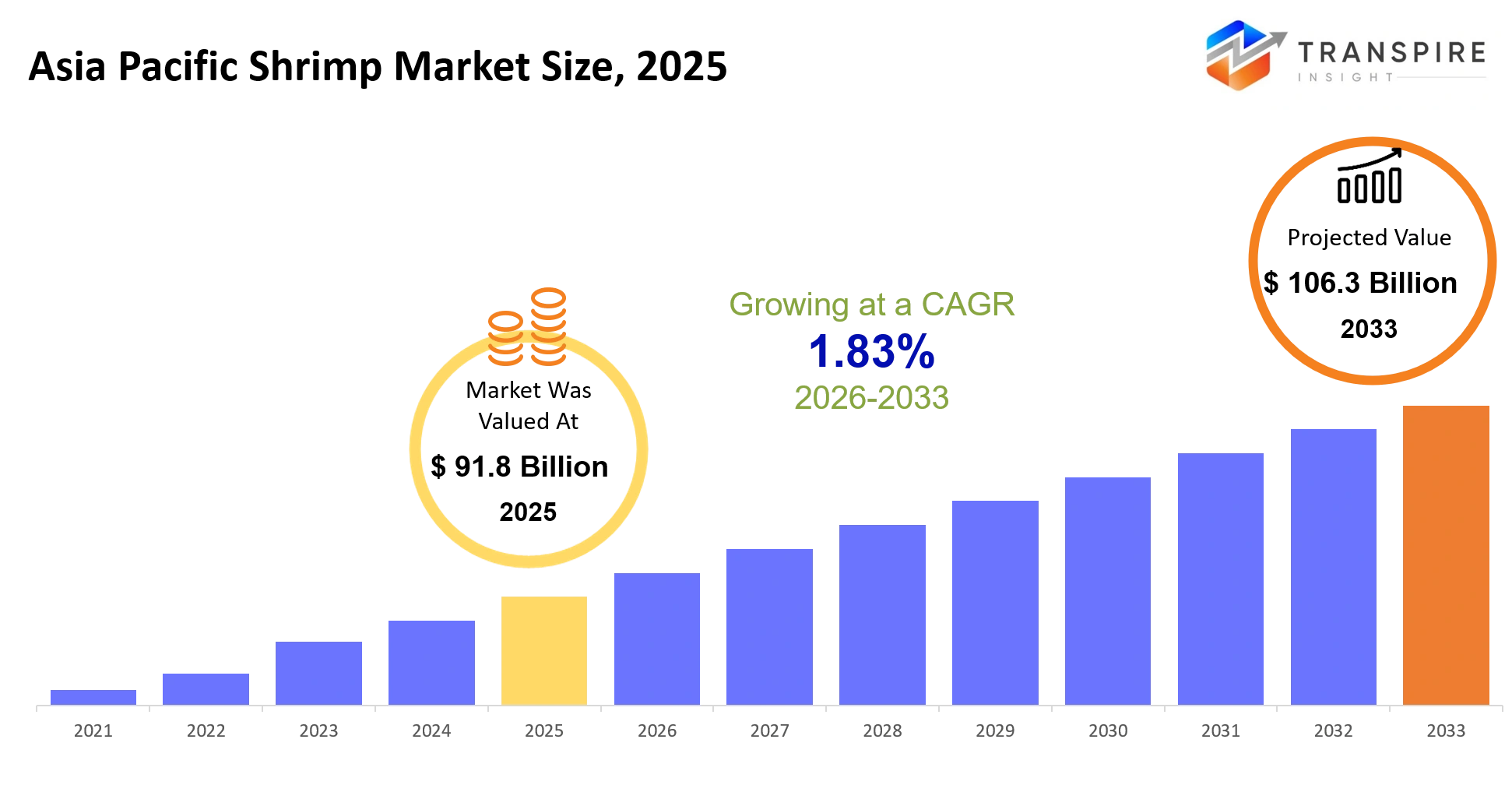
- Asia Pacific Shrimp Market Size 2025: USD 91.8 Billion
- Asia Pacific Shrimp Market Size 2033: USD 106.3 Billion
- Asia Pacific Shrimp Market CAGR: 1.83%
- Asia Pacific Shrimp Market Segments: By Product Type (Fresh Shrimp, Frozen Shrimp, Cooked Shrimp, Breaded Shrimp, Value-Added Shrimp, Organic Shrimp, Black Tiger Shrimp, Others); By Species (Whiteleg Shrimp, Black Tiger Shrimp, Brown Shrimp, Pink Shrimp, Royal Red Shrimp, Banana Shrimp, Freshwater Shrimp, Others); By Distribution Channel (Supermarkets, Seafood Markets, Online Retail, Foodservice, Export Channels, Hypermarkets, Specialty Stores, Others); By End User (Households, Restaurants, Hotels, Food Processors, Catering Services, Exporters, Retail Chains, Others)
Asia Pacific Shrimp Market Summary
The Asia Pacific Shrimp Market was valued at USD 91.8 billion in 2025. It is forecast to reach USD 106.3 billion by 2033. That is a CAGR of 1.83% over the period.
The Asia Pacific shrimp market is like a connection between coastal aquaculture farms and seafood processors and it helps them get their products to people all around the world. It makes sure that people can buy shrimp at a price they can afford. The Asia Pacific shrimp market has to deal with a lot of problems like shrimp getting sick and the cost of food for the shrimp going up and down. It also has to think about how the weather can affect the farms where the shrimp are raised.
In the few years the Asia Pacific shrimp market has changed a lot. Now a lot of companies are in charge of everything from making food for the shrimp to raising them and processing them for sale. This happened because of problems with getting things from one place to another during the pandemic. The Asia Pacific shrimp market had to find a way to make sure that shrimp could still get to stores. So companies started to control more of the process to make sure that everything ran smoothly.Because of this more farms are using ways to keep the shrimp healthy and using computers to keep track of things. This means that more shrimp are surviving and farmers can predict how many they will have to sell. This is good for companies that sell shrimp because they can sell more and make more money.. It is harder for small farms because they have to follow a lot of rules and make sure their shrimp are very high quality. The Asia Pacific shrimp market is still. It will be interesting to see what happens next, to the Asia Pacific shrimp market.
Key Market Insights
- The Asia Pacific Shrimp Market is changing the way people farm shrimp in the Asia Pacific Shrimp Market. People who farm shrimp are moving from farms to big systems that work together in the Asia Pacific Shrimp Market. This will help shrimp farmers who farm shrimp have yields and be able to export shrimp more regularly by 2024 to 2026.
- Southeast Asia is really good at producing shrimp. By 2025 Southeast Asia will make about 55 to 60 percent of all the shrimp because Southeast Asia has networks for baby shrimp and ports that're ready for export, in Southeast Asia.
- India is growing fast when it comes to producing shrimp. From 2024 to 2030 they will be the growing place for shrimp production. This is because they are making food for the shrimp controlling diseases that affect shrimp and exporting shrimp to many different places.
- Vannamei shrimp is the popular type of shrimp. In 2025 it will make up over 70 percent of all the shrimp produced. This is because Vannamei shrimp grow faster and are more likely to survive in controlled farming systems.
- Black tiger shrimp is still in demand in Japan and the European Union. People are willing to pay more for it even though it is not produced much as other types of shrimp.
- Restaurants and frozen food companies need a lot of shrimp so they make up the demand for shrimp. They need shrimp to be imported regularly so they can keep their businesses running.
- The demand for shrimp in stores is growing really fast. This is because more people are buying things online and the systems for keeping food cold while it is being transported are getting better in the Asia Pacific region.
- Big companies like Thai Union, Charoen Pokphand Foods and Minh Phu Seafood have control, over the price of shrimp because they do everything from producing the shrimp to exporting it.
- These companies are using technology like artificial intelligence to monitor the shrimp ponds, automatic systems to feed the shrimp and tools to predict when diseases will affect the shrimp. This helps reduce the number of shrimp that die and makes the companies more profitable.
- The Asia Pacific Shrimp Market is getting smaller. This is happening because big companies are buying out the ones. Now these big companies control the Asia Pacific Shrimp Market. They are in charge of everything. They raise the baby shrimp. They make the food for the shrimp. The big companies have control, over the Asia Pacific Shrimp Market from raising the baby shrimp to making the food that the shrimp eat.
What are the Key Drivers, Restraints, and Opportunities in the Asia Pacific Shrimp Market?
Driver
The Asia Pacific Shrimp Market is driven by the growth of export-oriented aquaculture. This is because big buyers of seafood want quality and they want to know where their seafood comes from. So producers have to farm in a controlled way and use food for the shrimp. They also have to process the shrimp in a way. The people who do all these things from farming to selling have become more reliable. They lose less shrimp to disease. This means they can make money from the people they sell to, like retailers and restaurants.
Restraint
Shrimp farming has a problem. It is still very vulnerable to disease and changes in the weather. The thing is, shrimp farming is a challenge. It is hard to control the cycles and the environment of shrimp farming even when you have good monitoring systems for shrimp farming.Sometimes diseases like spot syndrome happen to shrimp farming. This causes problems for shrimp farming. For example there are not shrimp so the prices of shrimp go up and down. Farms that do shrimp farming are not able to grow because of this.This is especially hard for sized shrimp farms. They do not have the money to invest in keeping their shrimp farms safe, from disease.
Opportunity
There is a chance for growth in the Asia Pacific Shrimp Market with new digital technologies for aquaculture and precision farming. These include using intelligence to monitor the ponds and automated systems to feed the shrimp. Countries, like Vietnam and India are starting to use these technologies like tools that check the water quality and predict when diseases will happen. These technologies should help the shrimp survive better and grow faster which means more shrimp can be produced per area of land. This will make it possible for the Asia Pacific Shrimp Market to produce shrimp that can be exported to other countries. The Asia Pacific Shrimp Market will be able to produce shrimp on a scale and of better quality.
What Has the Impact of Artificial Intelligence Been on the Asia Pacific Shrimp Market?
Shrimp farming in Asia Pacific is changing because of intelligence. Artificial intelligence is helping shrimp farms to control things predict how much they will produce and work with other people in the supply chain. Now there are machines that watch the ponds all the time to check the water is good for the shrimp. These machines check things like how much oxygen's in the water the temperature, how salty the water is and how acidic it is.
This means people do not have to check the ponds often and they can fix problems faster. The machines help the farms keep the water good for the shrimp to grow fewer shrimp die when it is busy.. The farms can produce shrimp that are all the same size and quality.Artificial intelligence is also used to guess when the shrimp might get sick and to decide when to feed them. This helps the shrimp grow better and reduces waste. The farms can also decide when to take the shrimp out of the water at the time which means they can sell them for more money. Some big shrimp farms say they are working better and making money because they are using artificial intelligence.They are saving money on food for the shrimp. More shrimp are surviving. But there is a problem. It is expensive to set up the machines that watch the ponds and the artificial intelligence systems. This is especially hard for shrimp farms. And in some places the internet connection is not good so the machines cannot send the information they collect in time.
This means the artificial intelligence systems are not as good, at predicting what will happen. With these problems more and more shrimp farms are starting to use artificial intelligence because they want to produce more shrimp and make sure they are good enough to export. Big companies that export shrimp are investing in technology to help them grow more shrimp and make sure they are good quality.
Key Market Trends
- The way we produce shrimp has changed a lot between 2022 and 2025. We used to have farms but now we have big systems that work together. This helps us send shrimp to countries on a regular basis and makes sure we follow the rules.
- In 2023 there were some problems with diseases in shrimp farms. So we had to make our farms safer and come up with ways to prevent diseases. Now we use hatcheries and farms that are controlled environments. This is happening in all the countries that produce shrimp.
- We have found ways to make food for the shrimp. The new food has a lot of protein. Does not make as much waste. This has helped big farms save around 10 to 15 percent of their costs.
- After 2024 we started using computers to monitor the water in the shrimp ponds. This helps us keep the water clean and healthy for the shrimp. It also reduces the risk of the shrimp getting sick when it is time to harvest the shrimp.
- Vietnam and India have become better at sending shrimp to countries. They have made their farms and transportation systems work together.
- The people who buy shrimp from around the world want to make sure they are buying shrimp that were raised in a way. So they are looking for shrimp that have certificates like the ASC. This is making it harder for shrimp producers to sell their shrimp if they do not have these certificates.
- Some big companies like Thai Union and Charoen Pokphand Foods have started to control more of the steps involved in producing shrimp. They are now making the food for the shrimp. They are also hatching the baby shrimp. This helps them make sure they have a supply of shrimp.
- Since 2023 more and more people have been buying shrimp online. This has changed the way shrimp are sold in stores in Asia. Now people can buy shrimp from their homes.
- Small shrimp farms are having a time competing with the big shrimp farms. They have to spend a lot of money to follow the rules. Small shrimp farms do not have access to the technology like the shrimp farms.
- Using technology in shrimp farming is no longer something that's nice to have. It is something that shrimp farms need to do. Especially, for the shrimp farms that are sending shrimp to countries. Shrimp production and shrimp farming and shrimp farms all need to use technology to produce shrimp. Shrimp farming needs technology to be successful. The shrimp farms need to use technology to take care of the shrimp. The shrimp farmers need to use technology to make sure the shrimp are healthy. Shrimp farming and shrimp production need technology to make sure the shrimp are safe to eat.
Asia Pacific Shrimp Market Segmentation
Product Type
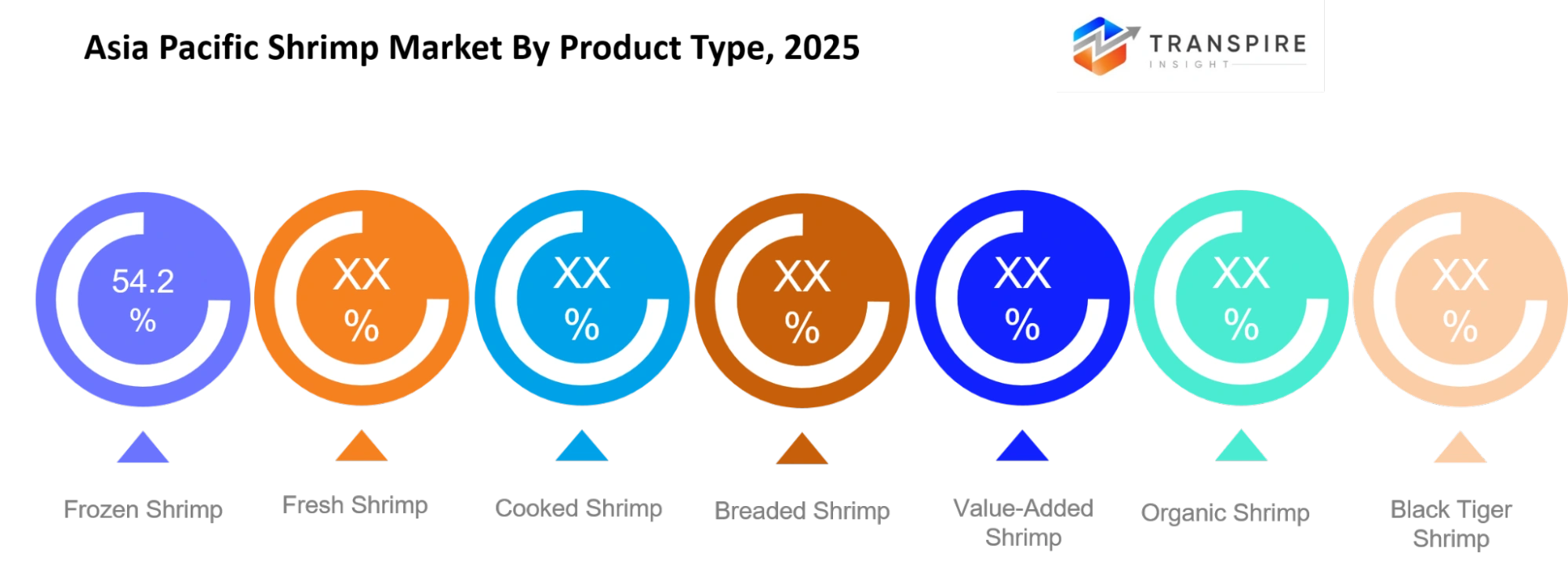
The Asia Pacific Shrimp Market will have all sorts of shrimp products. We will see shrimp and frozen shrimp and cooked shrimp and breaded shrimp and value-added shrimp and organic shrimp. Frozen shrimp will be very popular because it stays fresh for a time and it is great for sending to other countries.People will really like value-added shrimp products because they are easy to cook and very easy to use. Foodservice chains and retail buyers will want these Asia Pacific Shrimp Market products.
Species
There are kinds of shrimp in the Asia Pacific Shrimp Market. We have whiteleg shrimp and tiger shrimp and brown shrimp and pink shrimp and royal red shrimp and banana shrimp and freshwater shrimp. Asia Pacific Shrimp Market will have a lot of whiteleg shrimp because they grow quickly and are easy to raise on farms. Black tiger shrimp will be sold in restaurants, for a price. Sent to other countries.
Distribution Channel
Shrimp is going to be sold in different places. We will see them in supermarkets, seafood markets, online retail stores, foodservice outlets, export channels, hypermarkets and specialty stores. Export channels are going to sell a lot of shrimp because many countries want to buy them. Online retail is also going to grow because it is becoming easier to keep shrimp cold during delivery.
End User
A lot of people are going to buy shrimp in the Asia Pacific Shrimp Market. We have households, restaurants, hotels, food processors, catering services, exporters and retail chains. Restaurants and food processors are going to buy a lot of shrimp because they need a supply. Retail chains are also going to sell shrimp as people start to prefer packaged shrimp products. The Asia Pacific Shrimp Market is going to have a demand for shrimp products, from these end users.
What are the Key Use Cases Driving the Asia Pacific Shrimp Market?
The Asia Pacific Shrimp Market is mostly used for foodservice procurement. This means that restaurants and hotels and catering services need a lot of shrimp. They want shrimp that's always the same and they want it to be supplied to them all the time.
This is because shrimp is used in a lot of menus in food and in food that is exported to other countries. These people need shrimp that's frozen and fresh and they need it to be the same price and quality all the time.Now people are also buying shrimp in supermarkets and hypermarkets. These stores are putting frozen shrimp on their shelves. People like to buy seafood that's easy to cook at home.Some companies are making deals with companies, in other countries to sell them shrimp. This helps to make sure that shrimp is always being traded between countries.There are some ways that shrimp is being used. For example some restaurants are using shrimp that has already been prepared. Some people are also buying shrimp that has already been marinated.Hospitals and companies are also starting to use shrimp in their food.
|
Report Metrics |
Details |
|
Market size value in 2025 |
USD 91.8 Billion |
|
Market size value in 2026 |
USD 93.6 Billion |
|
Revenue forecast in 2033 |
USD 106.3 Billion |
|
Growth rate |
CAGR of 1.83% from 2026 to 2033 |
|
Base year |
2025 |
|
Historical data |
2021 - 2024 |
|
Forecast period |
2026 - 2033 |
|
Report coverage |
Revenue forecast, competitive landscape, growth factors, and trends |
|
Regional scope |
Asia Pacific |
|
Key company profiled |
Thai Union, Charoen Pokphand Foods, Minh Phu Seafood, Devi Sea Foods, Avanti Feeds, Apex Frozen Foods, Seajoy, Omarsa, Pescanova, Maruha Nichiro, Nippon Suisan, Clearwater Seafoods, High Liner Foods, Pacific Seafood, Surapon Foods |
|
Customization scope |
Free report customization (country, regional & segment scope). Avail customized purchase options to meet your exact research needs. |
|
Report Segmentation |
By Product Type (Fresh Shrimp, Frozen Shrimp, Cooked Shrimp, Breaded Shrimp, Value-Added Shrimp, Organic Shrimp, Black Tiger Shrimp, Others); By Species (Whiteleg Shrimp, Black Tiger Shrimp, Brown Shrimp, Pink Shrimp, Royal Red Shrimp, Banana Shrimp, Freshwater Shrimp, Others); By Distribution Channel (Supermarkets, Seafood Markets, Online Retail, Foodservice, Export Channels, Hypermarkets, Specialty Stores, Others); By End User (Households, Restaurants, Hotels, Food Processors, Catering Services, Exporters, Retail Chains, Others) |
Which Regions are Driving the Asia Pacific Shrimp Market Growth?
Southeast Asia is leading in the Asia Pacific Shrimp Market. This is because they have coastal farms many hatcheries and good infrastructure for exporting shrimp. Countries in this area have weather and a reliable supply of food for the shrimp, which means they can produce shrimp all year round. They also have companies that can process and store shrimp properly which helps them sell to buyers around the world.
South Asia is the biggest player. They are getting better at farming shrimp. Making their farms more productive. Unlike Southeast Asia they don't have one company that does everything. Instead they have small and medium-sized farms that work with feed companies and exporters. They have also invested in managing diseases and getting certified which makes them a reliable supplier for restaurants and stores around the world.
Latin America is growing fast. They are building shrimp farms and improving their processing plants. They have also invested in hatcheries and safe farming systems, which makes them ready to export more shrimp. This is attracting buyers who want to buy shrimp from places besides Asia. Latin America is becoming a competitor in the premium shrimp market from 2026, to 2033.
Who are the Key Players in the Asia Pacific Shrimp Market and How Do They Compete?
The Asia Pacific shrimp market shows a moderately consolidated structure where large integrated seafood companies control a significant share of export-grade supply, while smaller farms continue to operate in fragmented local production networks. Competition is primarily driven by cost efficiency, disease resilience, and export compliance capability rather than pure volume growth. Established processors are defending market share by strengthening backward integration and investing in biosecure farming systems, while new entrants focus on niche export contracts and specialty shrimp varieties for premium buyers.
Thai Union Group builds advantage through branded seafood products and strong global retail partnerships, allowing it to stabilize revenue beyond commodity price cycles. Its expansion strategy focuses on value-added frozen shrimp and sustainable sourcing certifications that strengthen access to premium markets. Charoen Pokphand Foods relies on deep vertical integration from feed production to farming and processing, which reduces input cost volatility and improves supply chain control. It continues expanding through aquaculture technology upgrades and regional feed mill capacity.
Minh Phu Seafood strengthens competitiveness through large-scale integrated farming clusters in Vietnam, enabling consistent export volumes to the US and EU markets. Avanti Feeds focuses on shrimp feed dominance in India, supporting indirect market control through farmer dependency on high-performance feed formulations. Apex Frozen Foods targets export specialization by building processing capacity aligned with strict international quality standards, enabling stable long-term retail contracts.
Company List
- Thai Union
- Charoen Pokphand Foods
- Minh Phu Seafood
- Devi Sea Foods
- Avanti Feeds
- Apex Frozen Foods
- Seajoy
- Omarsa
- Pescanova
- Maruha Nichiro
- Nippon Suisan
- Clearwater Seafoods
- High Liner Foods
- Pacific Seafood
- Surapon Foods
Recent Development News
In May 2026, Thai Union Group announced a strategic expansion of its value-added seafood processing capacity in Southeast Asia to strengthen export-linked frozen shrimp supply chains. The move is expected to improve product traceability and enhance access to premium retail markets across the US and Europe.https://www.thaiunion.com
In March 2026, Charoen Pokphand Foods entered a joint initiative with regional aquaculture technology providers to deploy AI-based pond monitoring and disease detection systems across integrated shrimp farms in Vietnam and Thailand. The partnership aims to reduce mortality rates and improve feed conversion efficiency through real-time water quality control.https://www.cpfworldwide.com
In January 2026, Minh Phu Seafood expanded its export processing infrastructure through upgraded cold-chain logistics integration in Vietnam, enabling higher compliance with international food safety standards and improving shipment reliability for major global buyers.https://minhphu.com
What Strategic Insights Define the Future of the Asia Pacific Shrimp Market?
Over the next 5–7 years, the Asia Pacific shrimp market will move toward highly consolidated, technology-enabled aquaculture ecosystems where production efficiency and traceability define competitiveness. Growth will be shaped by tighter export compliance requirements and rising buyer preference for fully integrated supply chains that reduce contamination and volatility risks. This will accelerate the shift away from fragmented farming models toward corporate-controlled farming clusters supported by digital monitoring and automated feed systems.
A less visible risk lies in increasing dependence on a narrow set of export destinations, where sudden regulatory tightening or tariff adjustments in key importing markets can quickly disrupt revenue stability. This concentration risk remains structurally embedded despite production expansion across multiple countries.A strong emerging opportunity is the development of climate-resilient shrimp farming systems using recirculating aquaculture technology in controlled inland environments. These systems reduce exposure to coastal disease outbreaks and climate shocks, particularly in India and Vietnam where investment momentum is increasing.
Market participants should prioritize vertical integration combined with digital farming adoption to secure both supply stability and export compliance advantages. This approach will determine long-term positioning as competition shifts from scale-based growth to efficiency-led differentiation.
Asia Pacific Shrimp Market Report Segmentation
-
By Product Type
- Fresh Shrimp
- Frozen Shrimp
- Cooked Shrimp
- Breaded Shrimp
- Value-Added Shrimp
- Organic Shrimp
- Black Tiger Shrimp
- Others
-
By Species
- Whiteleg Shrimp
- Black Tiger Shrimp
- Brown Shrimp
- Pink Shrimp
- Royal Red Shrimp
- Banana Shrimp
- Freshwater Shrimp
- Others
-
By Distribution Channel
- Supermarkets
- Hypermarkets
- Seafood Markets
- Online Retail
- Foodservice
- Export Channels
- Specialty Stores
- Others
-
By End User
- Households
- Restaurants
- Hotels
- Food Processors
- Catering Services
- Exporters
- Retail Chains
- Others
Frequently Asked Questions
Find quick answers to common questions.
The expected Asia Pacific Shrimp Market size for the market will be USD 106.3 Billion in 2033.
Key segments for the Asia Pacific Shrimp Market are By Product Type (Fresh Shrimp, Frozen Shrimp, Cooked Shrimp, Breaded Shrimp, Value-Added Shrimp, Organic Shrimp, Black Tiger Shrimp, Others); By Species (Whiteleg Shrimp, Black Tiger Shrimp, Brown Shrimp, Pink Shrimp, Royal Red Shrimp, Banana Shrimp, Freshwater Shrimp, Others); By Distribution Channel (Supermarkets, Seafood Markets, Online Retail, Foodservice, Export Channels, Hypermarkets, Specialty Stores, Others); By End User (Households, Restaurants, Hotels, Food Processors, Catering Services, Exporters, Retail Chains, Others).
Major Asia Pacific Shrimp Market players are Thai Union, Charoen Pokphand Foods, Minh Phu Seafood, Devi Sea Foods, Avanti Feeds, Apex Frozen Foods, Seajoy, Omarsa, Pescanova, Maruha Nichiro, Nippon Suisan, Clearwater Seafoods, High Liner Foods, Pacific Seafood, Surapon Foods.
The Asia Pacific Shrimp Market size is USD 91.8 Billion in 2025.
The Asia Pacific Shrimp Market CAGR is 1.83% from 2026 to 2033.
- Thai Union
- Charoen Pokphand Foods
- Minh Phu Seafood
- Devi Sea Foods
- Avanti Feeds
- Apex Frozen Foods
- Seajoy
- Omarsa
- Pescanova
- Maruha Nichiro
- Nippon Suisan
- Clearwater Seafoods
- High Liner Foods
- Pacific Seafood
- Surapon Foods
About the Authors

Chetan Dhatrak
I’m Chetan Dhatrak, a Senior Research Analyst at Transpire Insight, specializing in the Consumer Goods, Foods and Beverages industry. I focus on analyzing market trends, consumer behavior, competitive landscapes, and industry developments to deliver accurate, data-driven insights. My research at Transpire Insight is built on credible sources and in-depth analysis, helping businesses and readers better understand market dynamics, emerging opportunities, and evolving consumer preferences. I’m committed to creating reliable, well-researched content that supports informed decision-making and reflects the latest developments in the consumer goods and food & beverage sectors.

Chakradhar Khansole
Chakradhar serves as the Research Director at Transpire Insight, bringing over 8 years of experience in technology, innovation, and strategic market intelligence. He specializes in transforming complex market data into actionable business insights that enable organizations to make informed, growth-oriented decisions. Recognized for his strategic vision and analytical expertise, Chakradhar leads high-impact research initiatives, delivering comprehensive market assessments, competitive intelligence, and forward-looking industry analysis.
Recently Published Reports
-
Apr 2026
Baby Infant Formula Market
Baby Infant Formula Market Size, Share & Analysis Report By ype (Infant Milk, Follow On Milk, Specialty Baby Milk, Growing-Up Milk), By Ingredient (Carbohydrate, Fat, Protein, Minerals, Vitamins, and Others), By Product Form (Powder, Liquid, and Ready-to-feed), By Distribution Channels (Supermarket/Hypermarket, Specialty Store, Pharmacies, Online Retail, and Others), and Geography (North America, Europe, Asia-Pacific, Middle East and Africa, South and Central America), 2021 - 2031
-
Apr 2026
Edible Insects for Animal Feed Market
Edible Insects for Animal Feed Market Size, Share & Analysis Report By Type (Insect Powder, Insect Meal, Insect Bar, Insect Paste, Insect Oil, and Others), By Insect Type (Beetles, Cricket, Caterpillar, Hymenoptera, Orthoptera, Tree Bugs, and Others), By Application (Livestock, Pet Food, and Aquaculture), By Livestock Type (Poultry, Swine, and Others), and Geography (North America, Europe, Asia-Pacific, Middle East and Africa, South and Central America), 2021 - 2031
-
Apr 2026
Food Industry Disinfection and Bacterial Control Market
Food Industry Disinfection and Bacterial Control Market Size, Share & Analysis Report By Type (Chemical Disinfectants, Physical Disinfectants, and Biocides and Antimicrobials), By Application (Food Processing Equipment Surface Disinfection, Food Preparation Areas Surface Disinfection, Storage Areas Surface Disinfection, Anti-microbial Coatings Food Preservation, and Preservative Solutions Food Preservation), By End User (Meat and Poultry Processing, Dairy Processing, Seafood Processing, Bakery and Confectionery, Restaurants and Commercial Kitchens, and Food Service Providers), By Sales Channel (Online, Offline), and Geography (North America, Europe, Asia-Pacific, Middle East and Africa, South and Central America), 2021 - 2031
-
May 2026
Freeze Dried Food Market
Freeze Dried Food Market Size, Share & Analysis Report By Product Type (Fruits, Vegetables, Freeze-Dried Dairy Products, Freeze-Dried Meat and Seafood, Freeze-Dried Pet Food, and Prepared Meal), By Nature (Organic, and Conventional), By Form (Powdered, Granules, and Diced), By End Use (Breakfast Cereals, Dairy Products, Bakery & Confectionery, Nutritional Bars & Supplements, Powdered Beverages, Snacks, and Retail (Household)), and Geography (North America, Europe, Asia-Pacific, Middle East and Africa, South and Central America), 2021 - 2031