

Asia Pacific Human Reproductive Technology Market Size & Forecast:
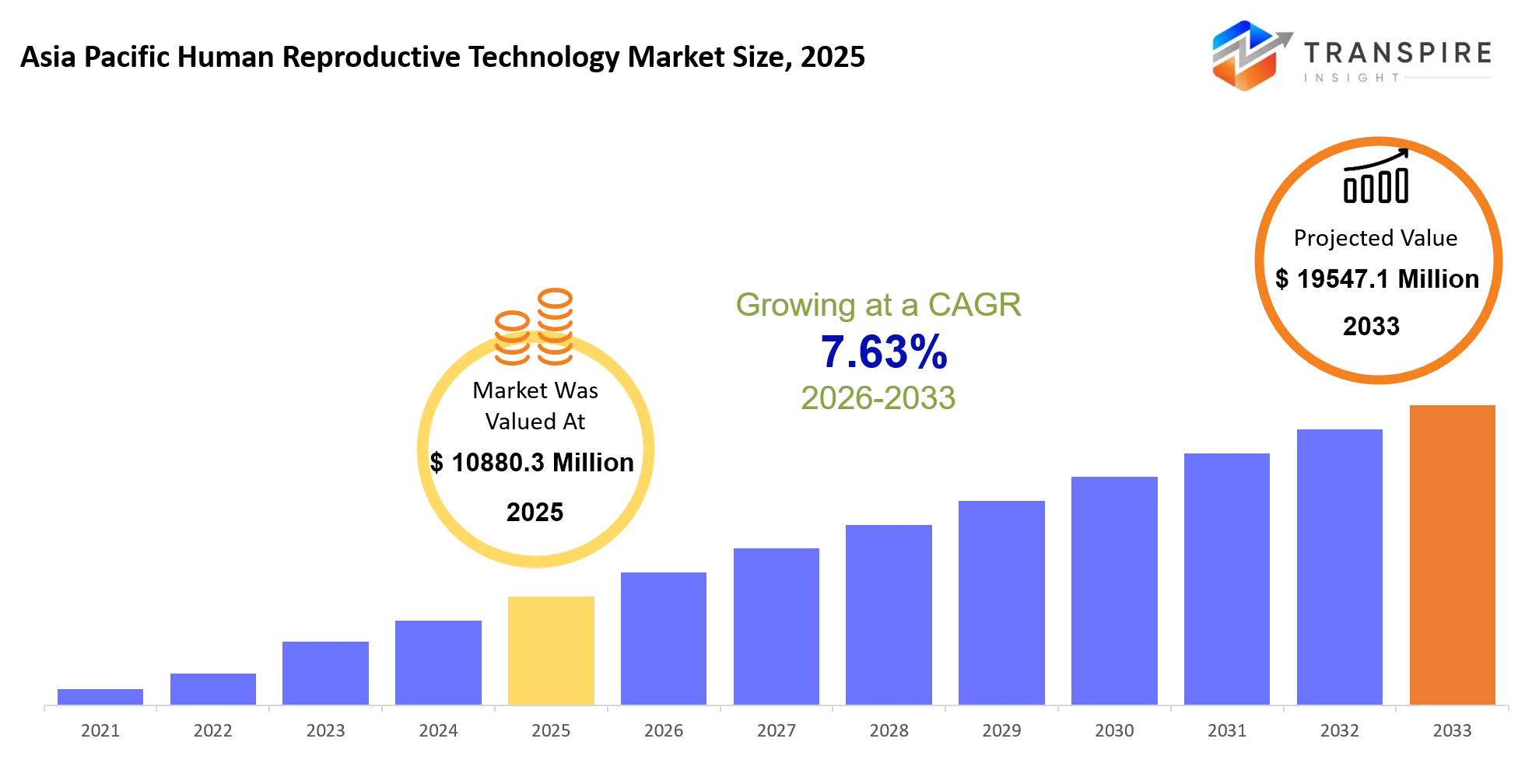
- Asia Pacific Human Reproductive Technology Market Size 2025: USD 10880.3 Million
- Asia Pacific Human Reproductive Technology Market Size 2033: USD 19547.1 Million
- Asia Pacific Human Reproductive Technology Market CAGR: 7.63%
- Asia Pacific Human Reproductive Technology Market Segments: By Technology (IVF Treatment, ICSI Treatment, Egg Freezing, Embryo Transfer, Others); By End User (Fertility Clinics, Hospitals, Research Centers, Others); By Application (Male Infertility, Female Infertility, Genetic Screening, Others)
To learn more about this report,  Download Free Sample Report
Asia Pacific Human Reproductive Technology Market Summary
The Asia Pacific Human Reproductive Technology Market was valued at USD 10880.3 Million in 2025. It is forecast to reach USD 19547.1 Millionby 2033. That is a CAGR of 7.63% over the period.
The Asia Pacific Human Reproductive Technology Market plays a big part in helping individuals and couples work through fertility obstacles, mostly using methods like IVF, artificial insemination, embryo preservation, genetic screening, and fertility monitoring, it’s kind of all connected. These tools back family planning objectives while also trying to deal with declining birth rates and the growing trend of delayed parenthood across multiple Asia Pacific countries. Back in 2025, the market was valued at USD 10,880.3 million , and by 2033 it is expected to climb up to USD 19,547.1 million.
Over the last five years, the industry has been drifting away from the more routine fertility treatments, into something more technology-led reproductive care. In that shift, time-lapse embryo imaging, genetic screening, and newer cryopreservation methods are now more or less stitched together in regular workflows. One big driver behind the shift is the continuing drop in fertility numbers in places like China , Japan , South Korea , and Singapore .So because of that , officials have started rolling out support for fertility and reimbursement initiatives. These kinds of programs ease the monetary pressure on patients, widen who can qualify, and they also nudge fertility clinics to put more resources toward better laboratory equipment.. As results keep improving, and reimbursement coverage keeps expanding , more patients are entering fertility programs earlier than before. That pattern then boosts procedure volumes, and it helps keep long-term revenue growth steady across the entire region.
Key Market Insights
- The Asia Pacific Human Reproductive Technology Market seems to be getting a lot of strong investment lately, especially in AI assisted embryo selection systems which are, in turn, helping implantation results and also getting more efficiency out of labs.
- China is still leading the region, with about 35% market share in 2025, backed by a huge patient pool and fertility supportive policies, that actually do matter quite a bit.
- India meanwhile is expected to grow the fastest country market through 2033, and this is mostly tied to expanding fertility clinic networks plus medical tourism, so yeah.
- In terms of what people use most, IVF remains the leading treatment segment, bringing the biggest revenue contribution across the whole Asia Pacific Human Reproductive Technology Market.
- Artificial insemination is emerging as the fastest growing treatment category as well, mainly because the procedural costs are lower and access is broader, easier for more patients.
- Fertility clinics and specialized reproductive centers also made up more than 55% of end user revenue in 2025, showing patient preference for focused care rather than generic services.
- On the consumables side, embryo culture media held roughly 35% share of reproductive laboratory supplies in 2025, which really underlines how embryo development technologies are considered important.
- For equipment demand, advanced incubators were close to 31%, driven by the need for very controlled embryo culture conditions.
- Major players such as CooperSurgical, Vitrolife Group, Thermo Fisher Scientific, Merck KGaA, and FUJIFILM Irvine Scientific are expanding their offerings via laboratory automation and more advanced culture solutions, not just one thing but a mix.
- And finally, strategic collaborations between fertility clinics and reproductive technology suppliers are speeding up adoption of genetic testing, cryopreservation, and digital fertility management platforms, kind of in parallel.
What are the Key Drivers, Restraints, and Opportunities in the Asia Pacific Human Reproductive Technology Market?
The main engine behind market expansion seems to be the mix of lower fertility rates and a trend toward delayed parenthood across many Asia Pacific economies. In places like China, Japan, South Korea, Singapore ,and several other nearby markets, Governments have already put fertility supportive policies into motion. They also use reimbursement programs, plus funding initiatives that are meant to coax more births. In practice, these actions have brought down treatment costs for patients and at the same time increased how many fertility cycles clinics carry out each year. Meanwhile, progress on embryo culture systems , plus genetic screening tools and cryopreservation techniques has been steady too , and all these upgrades seem to turn into better clinical outcomes. Because of that , more people feel comfortable taking up assisted reproductive procedures, and the adoption rate is widening, kind of rapidly these days.
Still, the most meaningful restraint is really the steep cost of fertility treatment, along with the uneven reimbursement environment across the region. Setting up, and running advanced embryology laboratories takes a major amount of capital, not just for equipment but also for quality control processes and specialized teams. On top of that, the regulatory rules are kinda different, from country to country, so technology suppliers and clinic operators end up wrestling with a lot of compliance friction, you know. Because of these structural issues, getting access to care remains limited in many emerging economies, and market penetration often slows down, particularly once you go beyond the main metropolitan hubs and all that.
A noticeable opening is the growing tie-up between reproductive genetics and digital fertility technologies. Preimplantation genetic testing, AI based embryo evaluation, and remote fertility tracking platforms are getting easier to access across Asia Pacific, slowly but surely. India, plus certain parts of Southeast Asia, are drawing investment as well, mostly because healthcare infrastructure is expanding, and also because fertility tourism keeps on rising.
What Has the Impact of Artificial Intelligence Been on the Asia Pacific Human Reproductive Technology Market?
Artificial intelligence is quietly changing reproductive medicine,mostly by making clinical decisions making feel a bit more structured, improving the lab workflow management, and supporting more customized treatment choices. Fertility clinics are using AI driven embryo assessment systems that can scan thousands of embryo images at once, to catch developmental trends that seem to match successful implantation. In practice these tools take away part of the guess work in picking embryos and help embryologists select embryos that have a higher chance to end up with pregnancy.
On top of that, machine learning models assist predictive treatment planning. They look at patient age, hormonal patterns, ovarian reserve indicators, and prior treatment results. With that kind of input, AI can help clinicians tune stimulation protocols and make cycle management smoother. A lot of labs have also introduced automated monitoring technologies that keep checking embryo development while they stay in incubators. This approach reduces the need for frequent handling, and it helps maintain stable culture conditions, even when things are busy.
From an operational point of view, these digital tools seem to support better lab productivity, less manual effort, and more consistent outcomes across cycles. Clinics that start using advanced imaging together with AI assisted embryo grading often say that embryo utilization efficiency gets better, and the day to day workflow feels more streamlined, with fewer little disruptions. But AI adoption is still not fully everywhere, because the integration expenses can be pretty heavy. On top of that, there are the usual data standardization headaches, and most AI systems really need large, varied clinical datasets in order to perform reliably. Differences in patient demographics and treatment protocols across Asia Pacific countries can shift algorithm performance, so accuracy may vary. That makes “one size fits all” deployment harder, even though the longer term potential looks strong.
Key Market Trends
- Since 2021, fertility reimbursement programs kinda rolled out wider across multiple Asian nations, which lowered the financial hurdles for getting IVF access.
- AI-assisted embryo grading really took off, between 2022 and 2026, clinics were chasing higher implantation efficiency.
- Time lapse embryo monitoring systems, moved out of the premium spaces into more normal fertility centers across China, Japan and Australia.
- Cryopreservation volumes went up more than 20% in several city-based fertility networks, partly because delayed parenthood is now a thing.
- Genetic testing integration expanded quickly after 2023, with clinics focusing on embryo selection accuracy and that sort of improvement.
- Big fertility clinic groups sped up acquisitions and regional expansion, in order to boost patient access, and also their operational scale.
- Automated laboratory systems have been slowly swapping for manual embryo monitoring, which helped with consistency, and reduced procedural variability too.
- Fertility tourism shifted toward India, Thailand and Malaysia, because cost competitiveness pulled in international patients.
- Reproductive technology suppliers expanded partnerships with clinics, to deliver integrated lab equipment plus consumables, in one flow.
- Digital fertility platforms showed up as a new engagement pathway for patients, allowing remote consultations and treatment planning, more smoothly.
Asia Pacific Human Reproductive Technology Market Segmentation
By Technology
IVF Treatment holds a major share because it’s widely used in clinics and has solid success rates across fertility centers. Behind the scenes there are advanced laboratory procedures, ongoing upgrades in embryo culture methods,and a gradual increase in access to care that keeps demand steady. Patients who deal with complicated fertility challenges generally view IVF pretty positively, so procedure volumes stay fairly consistent across multiple Asia Pacific countries.
ICSI Treatment stays an important segment too, since it provides a more targeted approach for severe male fertility conditions. Egg Freezing is also getting more attention,especially as people shift family planning toward later parenthood and fertility preservation becomes more common. Embryo Transfer helps improve results by allowing careful embryo placement and aiming for optimized clinical outcomes. As for Others,that category includes new reproductive procedures and specialized technologies,which are designed to fit particular fertility needs.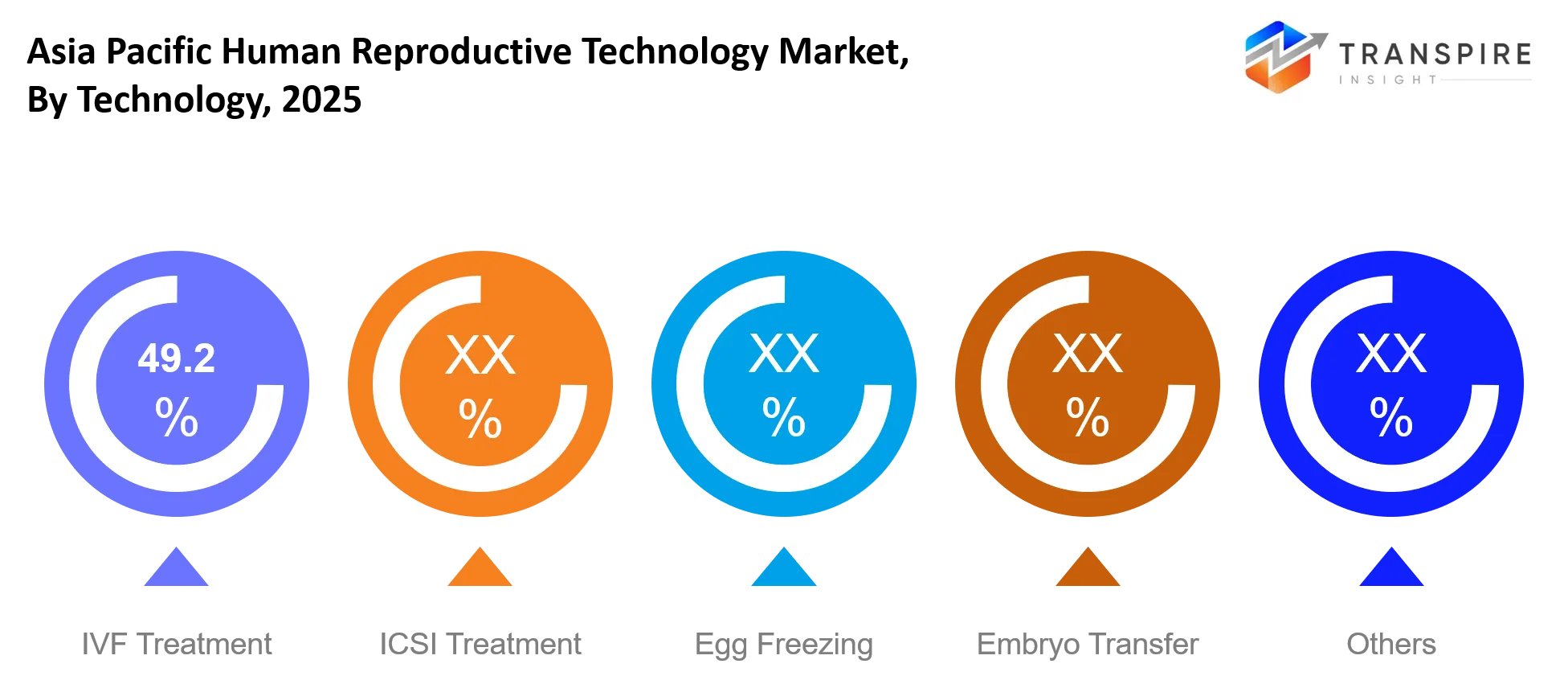
To learn more about this report, Download Free Sample Report
By End User
Fertility Clinics hold a notable part of the total, mostly because they offer specialized reproduction services, dedicated embryology laboratories, and clinical teams with real experience, which all help support rather full fertility care programs. The high procedure counts and ongoing investment into advanced reproductive technologies also reinforce this segment’s standing. Plus, more specialized fertility centers are showing up across city zones, that kind of reach helps push market growth.
Hospitals stay in the mix with integrated reproductive health services and with access to a mix of medical expertise. Research Centers also add momentum, they drive progress via fertility studies, laboratory innovation, and clinical investigations that, in turn, back treatment improvements. Other categories include specialty healthcare facilities, along with independent reproductive service providers, these together widen patient access to fertility focused procedures and related support care solutions.
By Application
Male infertility is an important application area, partly because assisted reproductive procedures are being used more and more to deal with sperm related fertility problems. In the lab, advanced methods and more targeted treatment strategies help improve clinical results across a wide range of fertility issues. At the same time, expanding diagnostic capacity also helps with earlier recognition and handling of male reproductive health concerns, so issues don't linger.
Female infertility takes up a substantial share too, since fertility therapies often have to handle ovulation disorders, fertility decline tied to age, plus other reproductive health complications. Genetic Screening is still getting more attention, because fertility specialists want better embryo choice and more careful treatment design. There are also options like fertility preservation, donor assisted procedures, and specialized reproductive applications, which are meant to support a variety of patient situations and the clinical needs that keep changing.
What are the Key Use Cases Driving the Asia Pacific Human Reproductive Technology Market?
The largest use case still feels like assisted reproductive treatment for infertility management, especially IVF procedures, and honestly this is where most of the demand keeps showing up. The reason is that it tackles those harder fertility issues that can’t just be fixed by conventional medical interventions, like, straightforward prescriptions or routine care. Fertility clinics end up relying a lot on embryo culture media, incubators, micromanipulation systems and cryopreservation technologies to keep everything running for these treatments.
After conventional IVF, fertility preservation is turning into a real secondary application too. Cancer patients, people who are delaying parenthood, and even some professionals who want future reproductive flexibility, are increasingly using egg, sperm, and embryo freezing services. You can see specialized fertility centers, plus hospital based reproductive units, expanding these services across big city markets.
There are also emerging applications such as AI-guided embryo selection and advanced genetic testing programs. These approaches allow more personalized treatment strategies, and they help identify embryos with higher implantation potential, which sounds simple but is pretty involved. As the regulatory frameworks continue to mature, these advanced reproductive technologies are expected to be adopted more widely across the forecast period.
|
Report Metrics |
Details |
|
Market size value in 2025 |
USD 10880.3 Million |
|
Market size value in 2026 |
USD 11685.6 Million |
|
Revenue forecast in 2033 |
USD 19547.1 Million |
|
Growth rate |
CAGR of 7.63% from 2026 to 2033 |
|
Base year |
2025 |
|
Historical data |
2021 - 2024 |
|
Forecast period |
2026 - 2033 |
|
Report coverage |
Revenue forecast, competitive landscape, growth factors, and trends |
|
Regional scope |
Asia Pacific (India, China, Japan, Australia, South Korea, Rest of Asia Pacific) |
|
Key company profiled |
CooperSurgical, Vitrolife, Cook Medical, Thermo Fisher Scientific, FUJIFILM Irvine Scientific, Genea Biomedx, Esco Medical, Merck KGaA, Hamilton Thorne, Nidacon, IVFtech, Kitazato, Rocket Medical, OvaScience, ZEISS |
|
Customization scope |
Free report customization (country, regional & segment scope). Avail customized purchase options to meet your exact research needs. |
|
Report Segmentation |
By Technology (IVF Treatment, ICSI Treatment, Egg Freezing, Embryo Transfer, Others); By End User (Fertility Clinics, Hospitals, Research Centers, Others); By Application (Male Infertility, Female Infertility, Genetic Screening, Others) |
Which Regions are Driving the Asia Pacific Human Reproductive Technology Market Growth?
China still shows up as the main player across Asia Pacific, like overwhelmingly dominant. It gets to stand on a big reproductive-age population, a pretty extensive fertility clinic setup, and various government measures that are meant to handle falling birth rates. There’s policy support too, especially reimbursement style fertility treatment initiatives in a few areas, and that sort of thing has nudged more people to actually seek treatment. On top of that, strong domestic investment in reproductive healthcare technology keeps the country near the leadership front. Even when things shift, China tends to keep the advantage, partly because the whole clinical and policy environment kinda supports it.
Japan comes in next as the second-largest contributor, but it’s a bit different from China, mainly because it places heavier emphasis on clinical standards that are more advanced, plus treatment quality. Japan has a fairly mature fertility ecosystem, supported by seasoned specialists, sophisticated laboratory facilities, and reimbursement mechanisms that are already established. Clinics in Japan are often viewed as dependable for high procedural volumes and solid clinical outcomes. Healthcare spending stays relatively stable, and technology adoption is ongoing, so market revenue generation stays supported through time.
India, meanwhile, is moving up fast as the fastest-growing regional market. Private fertility clinic networks are expanding a lot, medical tourism activity is increasing, and access to fertility services has become easier for more people, overall. That has reshaped the competitive landscape. Investments in healthcare infrastructure and reproductive laboratory capabilities have also accelerated in recent years, which matters a good deal for capacity building. For investors and anyone entering the market, India looks especially promising between 2026 and 2033, thanks to the very large patient base and the continued expansion of treatment capacity.
Who are the Key Players in the Asia Pacific Human Reproductive Technology Market and How Do They Compete?
In the Asia Pacific Human Reproductive Technology Market, competition feels moderately consolidated, like it’s not fully fragmented but also not dominated by just one giant. Global reproductive technology suppliers sit alongside more specialized fertility equipment makers and laboratory solution providers, and it seems like everyone is trying to push their “edge” through small but steady improvements. In general, technology innovation, lab output and consistency, success rate optimization for treatments, plus regional distribution know-how are the main levers. Lately, companies tend to line up with integrated solutions, so it’s not only equipment , it also includes consumables imaging systems and workflow management tools, all kind of bundled together.
CooperSurgical stands out thanks to a broad reproductive medicine portfolio that covers IVF consumables, genetic testing support, and various laboratory technologies. Vitrolife Group tends to concentrate on embryo culture media, genetic services, and more advanced embryology solutions that are meant to support stronger laboratory performance. FUJIFILM Irvine Scientific competes by focusing on specialized culture media and cell culture know-how , aimed at fertility laboratories that need reliable, tailored support.
Thermo Fisher Scientific leans on its global life sciences infrastructure to provide diagnostic offerings, lab technologies, and reproductive research tools. Merck KGaA, meanwhile, reinforces its presence through fertility pharmaceuticals and reproductive health solutions, which are linked with clinical treatment pathways. ZEISS, for its part, is more about high-precision imaging and microscopy technologies, and this helps embryology labs run at a higher level of clarity and accuracy. Overall, these businesses keep expanding via product innovation, lab automation, and strategic partnerships with fertility clinic networks, even when the changes look small at first.
Company List
- CooperSurgical
- Vitrolife
- Cook Medical
- Thermo Fisher Scientific
- FUJIFILM Irvine Scientific
- Genea Biomedx
- Esco Medical
- Merck KGaA
- Hamilton Thorne
- Nidacon
- IVFtech
- Kitazato
- Rocket Medical
- OvaScience
- ZEISS
Recent Development News
In September 2025, Vitrolife Group launched expanded reproductive genetics and embryo assessment solutions through its integrated fertility technology portfolio. The development strengthened precision embryo selection capabilities and supported advanced IVF workflows across global fertility clinics.https://www.vitrolife.com (Vitrolife Group).
In May 2025, CooperSurgical continued expanding its fertility solutions portfolio through investments in reproductive health technologies and fertility laboratory support services. The move enhanced the company's position across IVF consumables, genetic testing, and clinical workflow solutions.https://www.coopersurgical.com (CooperSurgical).
In 2025, Merck KGaA expanded investments in fertility and reproductive health innovation programs aimed at improving treatment outcomes and patient access. The initiative strengthened the company's long-term presence in assisted reproductive technologies across Asia Pacific.https://www.merckgroup.com (Merck KGaA).
What Strategic Insights Define the Future of the Asia Pacific Human Reproductive Technology Market?
The Asia Pacific Human Reproductive Technology Market is moving, kind of toward a data-driven and precision-focused reproductive care model. The main thing pushing this shift is really the coming together of demographic strain, government intervention, and technological progress. In places where fertility rates keep dropping, reproductive health is being treated more and more as a strategic healthcare priority, and that ends up making a good atmosphere for long-term investment, not just short-term wins.
There’s also a less obvious kind of risk, the market can get too concentrated in the big, already established fertility hubs. If most treatment capacity stays in major cities, then the gaps in access could cap growth, especially for newer regions that are still emerging. Still, at the same time, AI enabled embryo assessment and reproductive genetics are a real chance— but they’re still not widely adopted in a lot of Southeast Asia and India, at least compared to where the demand feels like it should be.
For companies looking ahead, the best approach seems to be building integrated ecosystems that blend fertility services, laboratory automation, digital patient engagement, and genetic testing know-how. The organizations that manage to create scalable, technology-enabled reproductive care platforms will, likely, be the ones who capture the next wave of market expansion and also support better clinical outcomes across the region.
Asia Pacific Human Reproductive Technology Market Report Segmentation
By Technology
- IVF Treatment
- ICSI Treatment
- Egg Freezing
- Embryo Transfer
- Others
By End User
- Fertility Clinics
- Hospitals
- Research Centers
- Others
By Application
- Male Infertility
- Female Infertility
- Genetic Screening
- Others
Frequently Asked Questions
Find quick answers to common questions.
The Expected Asia Pacific Human Reproductive Technology Market size for the Market will be USD 19547.1 Million in 2033.
Key Segments for the Asia Pacific Human Reproductive Technology Market are By Technology (IVF Treatment, ICSI Treatment, Egg Freezing, Embryo Transfer, Others); By End User (Fertility Clinics, Hospitals, Research Centers, Others); By Application (Male Infertility, Female Infertility, Genetic Screening, Others).
Major Asia Pacific Human Reproductive Technology Market Players are CooperSurgical, Vitrolife, Cook Medical, Thermo Fisher Scientific, FUJIFILM Irvine Scientific, Genea Biomedx, Esco Medical, Merck KGaA, Hamilton Thorne, Nidacon, IVFtech, Kitazato, Rocket Medical, OvaScience, ZEISS.
The Current Asia Pacific Human Reproductive Technology Market size is USD 10880.3 Million in 2025.
The Asia Pacific Human Reproductive Technology Market CAGR is 7.63% from 2026 to 2033.
- CooperSurgical
- Vitrolife
- Cook Medical
- Thermo Fisher Scientific
- FUJIFILM Irvine Scientific
- Genea Biomedx
- Esco Medical
- Merck KGaA
- Hamilton Thorne
- Nidacon
- IVFtech
- Kitazato
- Rocket Medical
- OvaScience
- ZEISS
About the Authors

Pankaj Ghogare Patil
I am Pankaj Ghogare Patil, a Senior Research Analyst at Transpire Insight, specializing in the Pharmaceutical, Chemicals & Materials, Healthcare IT, and Biotechnology industry. My expertise lies in conducting comprehensive market research, analyzing industry trends, evaluating competitive landscapes, and translating complex data into actionable insights. At Transpire Insight, I closely follow emerging technologies, regulatory developments, and market innovations to create accurate, well-researched, and informative content that helps businesses and professionals make informed decisions. I am committed to producing credible, evidence-based articles that reflect industry best practices while making technical topics accessible and valuable for a broad audience.

Chakradhar Khansole
Chakradhar serves as the Research Director at Transpire Insight, bringing over 8 years of experience in technology, innovation, and strategic market intelligence. He specializes in transforming complex market data into actionable business insights that enable organizations to make informed, growth-oriented decisions. Recognized for his strategic vision and analytical expertise, Chakradhar leads high-impact research initiatives, delivering comprehensive market assessments, competitive intelligence, and forward-looking industry analysis.
Recently Published Reports
-
Jul 2026
Alopecia Treatment Market
Alopecia Treatment Market Size, Share & Analysis Report By Disease Type (Alopecia Areata, Cicatricial Alopecia, Traction Alopecia, Alopecia Totalis, Androgenetic Alopecia, Alopecia Universalis, and Other Disease Types), By Treatment Type (Topical Treatments, Oral Medications, Injectable Therapies, and Hair Transplantation), By Gender (Male, and Female), By Distribution Channel (Hospitals and Clinics, Retail Pharmacies, and Online Retailers), and Geography (North America, Europe, Asia-Pacific, Middle East and Africa, South and Central America), 2021 - 2031
-
Jul 2026
Medical Ultrasound Probe Market
Medical Ultrasound Probe Market Size, Share & Analysis Report By Type (Linear Type, Convex Type, Endocavitary Probe, Phased Array/Cardiac Probe, Transesophageal (TEE) Probe, and Others), By Application (Ophthalmology, Cardiology, Musculoskeletal, Oncology, Obstetrics & Gynecology, General Imaging, and Others), By End User (Hospitals & Clinics, Diagnostic Centers, Ambulatory Surgical Centers, and Others), and Geography (North America, Europe, Asia-Pacific, Middle East and Africa, South and Central America), 2021 – 2031
-
May 2026
Biosimilars Market
Biosimilars Market By Product Type (Monoclonal Antibodies, Recombinant Hormones, Erythropoietin, G-CSF, Others), By Indication (Oncology, Autoimmune Diseases, Blood Disorders, Diabetes, Others), By Manufacturing Type (In-House Manufacturing, Contract Manufacturing), By Distribution Channel (Hospital Pharmacies, Retail Pharmacies, Online Pharmacies), By Industry Analysis, Size, Share, Growth, Trends, and Forecasts 2021-2033
-
Apr 2026
Gastrointestinal Endoscopy Market
Gastrointestinal Endoscopy Market By Type (Rigid Gastrointestinal Endoscope, Flexible Gastrointestinal Endoscopes, Disposable Gastrointestinal Endoscope), By Procedure Type (Colonoscopy, Gastroscopy, Duodenoscopy, Enteroscopy, Flexible Sigmoidoscopy, Others), By Application (Diagnosis, Treatment), By End-Users (Hospitals, Ambulatory Surgical Centers, Specialty Clinics, Laboratories, Others), By Industry Analysis, Size, Share, Growth, Trends, and Forecasts 2021-2033