
Asia Pacific CPAP Device Market Size & Forecast:
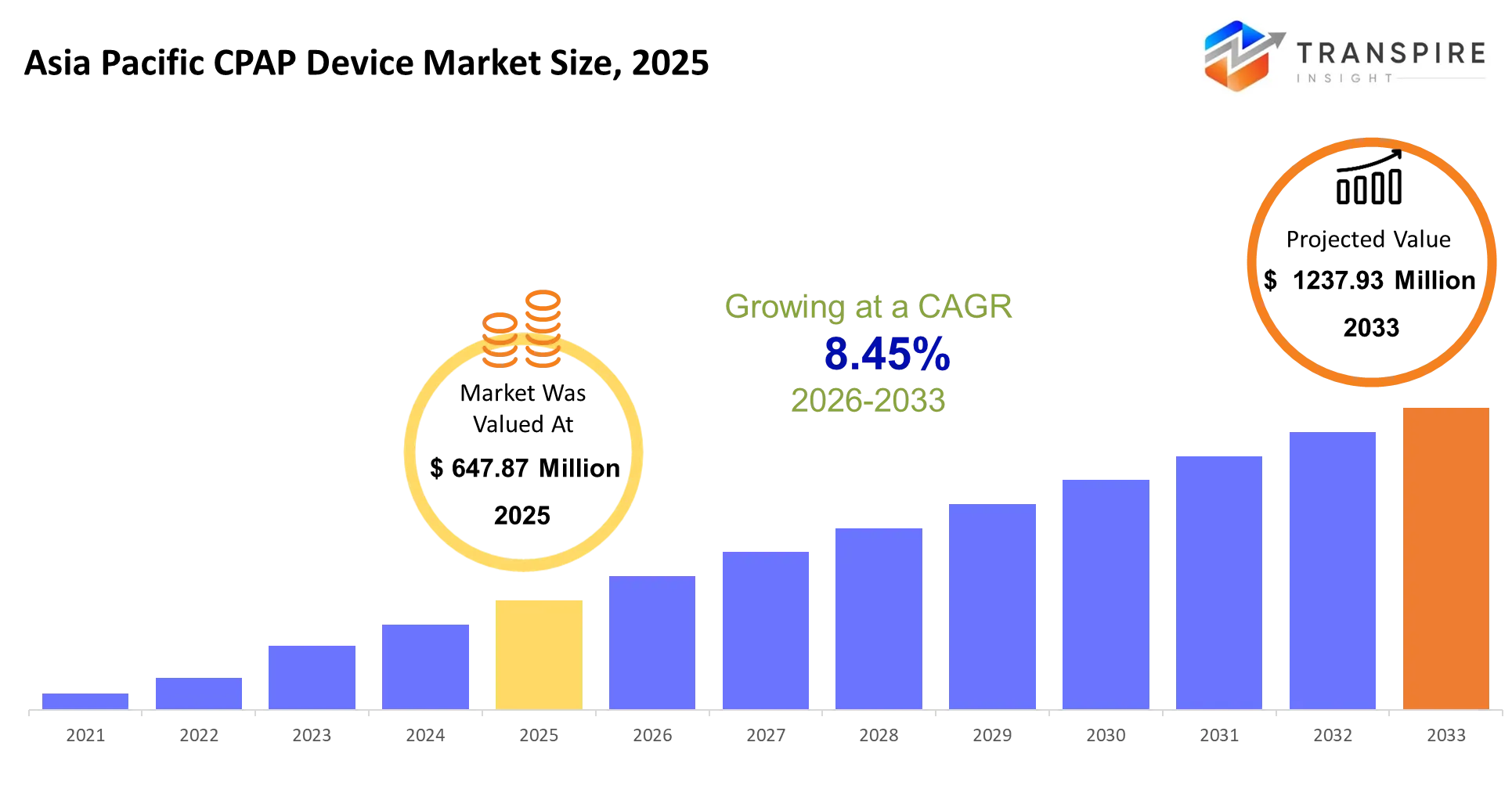
- Asia Pacific CPAP Device Market Size 2025: USD 647.87 Million
- Asia Pacific CPAP Device Market Size 2033: USD 1237.93 Million
- Asia Pacific CPAP Device Market CAGR: 8.45%
- Asia Pacific CPAP Device Market Segments: By Type (Fixed CPAP, Auto-adjusting CPAP, BiPAP, Travel CPAP, Smart CPAP, Others); By Application (Sleep Apnea, COPD, Respiratory Disorders, Homecare, Hospitals, Others); By End-User (Hospitals, Clinics, Homecare, Sleep Centers, Healthcare Providers, Others); By Component (Devices, Masks, Tubes, Humidifiers, Accessories, Others)
To learn more about this report,  Download Free Sample Report
Asia Pacific CPAP Device Market Summary
The Asia Pacific CPAP Device Market was valued at USD 647.87 Million in 2025. It is forecast to reach USD 1237.93 Million by 2033. That is a CAGR of 8.45% over the period.
The Asia Pacific CPAP device market addresses a practical healthcare challenge that directly affects sleep quality, cardiovascular health, workplace productivity, and long-term respiratory care. CPAP systems provide sleep apnea patients with continuous airflow during sleep which helps them to improve their breathing patterns that cause fatigue and hypertension and metabolic disorders. These devices are being used by hospitals and sleep clinics and homecare providers to reduce the risk of hospitalization while treating chronic respiratory conditions outside of emergency medical treatment.
The market has shifted from hospital-based treatment to home-based therapy which uses remote patient monitoring and digital compliance tracking software during the past five years. The COVID-19 pandemic accelerated this transition as healthcare systems prioritized home respiratory management and telemedicine integration. The combination of increasing obesity rates and the aging population and wider insurance coverage in China and Japan and Australia created a larger group of diagnosed patients. Manufacturers are now generating stronger recurring revenue through cloud-enabled devices and subscription-based monitoring platforms and replacement accessories while providers focus on improving long-term therapy adherence and reducing untreated sleep disorder complications.
Key Market Insights
- The Asia Pacific CPAP Device Market in 2025 showed Japanese dominance because the country held about 34% of the market share through its superior sleep disorder testing methods and its system of medical cost coverage.
- The Chinese market serves as the fastest developing area because private sleep clinics and urban respiratory healthcare facilities continue to increase until 2030.
- The Australian market maintained an important industry presence because sleep therapy treatment at home became more common in both public and private medical facilities after 2022.
- The Indian market experienced strong growth between 2024 and 2030 because middle-income urban residents started to undergo more obstructive sleep apnea tests.
- The market distribution of fixed CPAP devices reached 48% in 2025 because hospitals and sleep clinics selected cost-efficient therapy systems as their preferred treatment option.
- The second largest segment of the market retains its position because auto-adjusting CPAP systems provide enhanced patient comfort while their adaptive pressure management system operates effectively.
- The period between 2026 and 2030 will see cloud-connected CPAP devices become the fastest-growing market segment because healthcare providers need to track patient compliance and enhance therapy efficiency.
- Business travelers and patients who need ongoing respiratory support at home began using portable travel CPAP systems after 2023.
- The treatment of obstructive sleep apnea generated 67 percent of total revenue in 2025 because medical professionals now diagnose the condition more frequently in elderly and obese patients.
- The specialty respiratory care field adopted AI-based therapy monitoring tools which enhance patient compliance and decrease treatment interruption.
What are the Key Drivers, Restraints, and Opportunities in the Asia Pacific CPAP Device Market?
The Asia Pacific CPAP device market experiences its most significant growth because sleep disorder diagnostics experience rapid development through digital health technology. Over the last five years, healthcare systems across Japan, China, Australia, and South Korea integrated home sleep testing and teleconsultation pathways into respiratory care. Post-pandemic requirements for non-acute care to shift away from hospitals led to this transformation. The manufacturers experienced higher sales numbers because better diagnosis rates connected them to a wider group of patients who needed treatment. The connected CPAP systems help healthcare providers better monitor patient compliance. This feature enables them to obtain payment from insurance companies while it speeds up the usage of these medical devices.
The most significant restraint remains limited reimbursement coverage across several emerging Asia Pacific economies. The barrier exists because public insurance systems need extended time periods to obtain policy approvals and budget changes and full implementation of sleep medicine services in national healthcare systems. The majority of patients in India and Southeast Asian countries face treatment delays because they must pay for their medical expenses. The market for premium devices experiences restricted growth because customers choose lower-priced alternatives for connected care services.
The primary chance for development exists in remote respiratory management systems that use artificial intelligence technology. The combination of China's digital health system and Australia's advanced telehealth system enables successful operation of CPAP platforms which use cloud technology to adjust treatment parameters and detect patient non-compliance. The combination of predictive analytics with clinician dashboards enables businesses to achieve higher customer retention rates while increasing their software revenue through recurring sales.
What Has the Impact of Artificial Intelligence Been on the Asia Pacific CPAP Device Market?
AI together with advanced digital technologies is revolutionizing respiratory therapy throughout the Asia Pacific region by developing CPAP treatments that work better because of their ability to automatically adjust and provide precise treatment data. The CPAP systems which connect to other devices now operate through built-in algorithms that change airway pressure according to user's breathing patterns and mask leakage and sleep-stage changes which the system recorded during overnight monitoring. Manufacturers today create cloud-based treatment systems which enable doctors to check patient compliance while making treatment adjustments and determining equipment problems without needing to meet patients in person. The system now handles most sleep clinic operations because it requires less human involvement while enabling better patient treatment efficiency through its capabilities which work better in big city health systems.
Machine learning models now serve as tools for predicting therapy dropout rates through their work of assessing previous patient patterns together with their breathing problems and their sleep quality test results. The digital respiratory care platforms demonstrate that predictive intervention tools can enhance patient adherence by 15% to 20% while decreasing the expenses related to follow-up appointments. Remote diagnostics show better device performance because they detect filter damage and airflow problems and motor issues before actual breakdowns happen which helps to decrease service interruptions and warranty expenses.
The healthcare data infrastructure suffers from a critical problem which exists in all developing Asia Pacific countries through their fragmented data systems. Providers today continue to depend on separate medical records which create problems for algorithms because they need complete data to achieve better training results which would support wider implementation. The costs associated with implementing cloud-based monitoring systems remain excessive for both small sleep clinics and local respiratory treatment centers.
Key Market Trends
- The adoption of home-based CPAP therapy in Japan and Australia has increased by more than 20 percent since 2022 because hospitals started providing chronic respiratory treatment in non-emergency facilities.
- The private sleep clinic network in China grew throughout the period from 2023 to 2025 which improved access to diagnostic services and enabled faster issuance of first-time device prescriptions.
- The use of auto-adjusting CPAP systems increased after 2022 because clinicians needed to deliver customized treatment solutions which resulted in better results for their patients.
- The South Korean and Japanese reimbursement reforms enabled patients to access digitally integrated respiratory care systems because they increased premium device adoption.
- Manufacturers moved their production facilities nearer to their market areas because supply chain interruptions during the pandemic showed they needed better control over their parts procurement and delivery processes.
- The AI-powered adherence prediction system at digital respiratory care networks decreased therapy dropout rates by 15 percent since 2023.
- The demand for portable sleep therapy systems that enable people to maintain their sleep patterns during business travel increased after 2022 because business travel activities started to recover.
- Healthcare providers increasingly partner with telemedicine platforms to integrate CPAP monitoring directly into broader chronic disease management pathways.
Asia Pacific CPAP Device Market Segmentation
By Type:
The fixed CPAP segment maintains its consistent market share in the Asia Pacific CPAP Device Market because of its reliable pressure delivery system and its straightforward operational design. Hospitals and clinics prefer these systems because they provide patients with continuous airway support which they need during their medical treatments. The system's lower price compared to advanced systems enables healthcare facilities to use it more widely especially in price-sensitive environments where organizations base their buying choices on product costs.
Auto-adjusting CPAP devices are gaining stronger acceptance as sleep therapy becomes more patient-centered. The systems adjust airflow pressure according to breathing patterns which helps patients experience better comfort and increased treatment compliance. BiPAP devices are preferred by patients who require different breathing pressures for their inhalation and exhalation needs, especially those with severe respiratory disorders. Travel and smart CPAP devices are gaining popularity because people need to travel while digital monitoring of their health has become essential to them and specialized devices continue to provide solutions for specific patient needs.
By Application:
The Asia Pacific CPAP Device Market for sleep apnea treatment shows the highest growth because of rising diagnosis rates and increasing public understanding of sleep-related breathing disorders. The combination of rising obesity rates and changing lifestyles and better access to sleep studies leads to more patients who seek treatment at early stages. CPAP therapy has established itself as an effective method which keeps airways open while providing better sleep results.
The healthcare system now uses CPAP devices for COPD treatment and other respiratory disorder treatments because it has increased its focus on providing complete respiratory care. Patients now prefer homecare therapy because they can use it in their own space, which makes it easier for them to stick to their treatment schedule. Medical facilities use hospital applications to provide emergency respiratory treatment, while doctors now recommend non-invasive breathing support for a broader range of medical situations.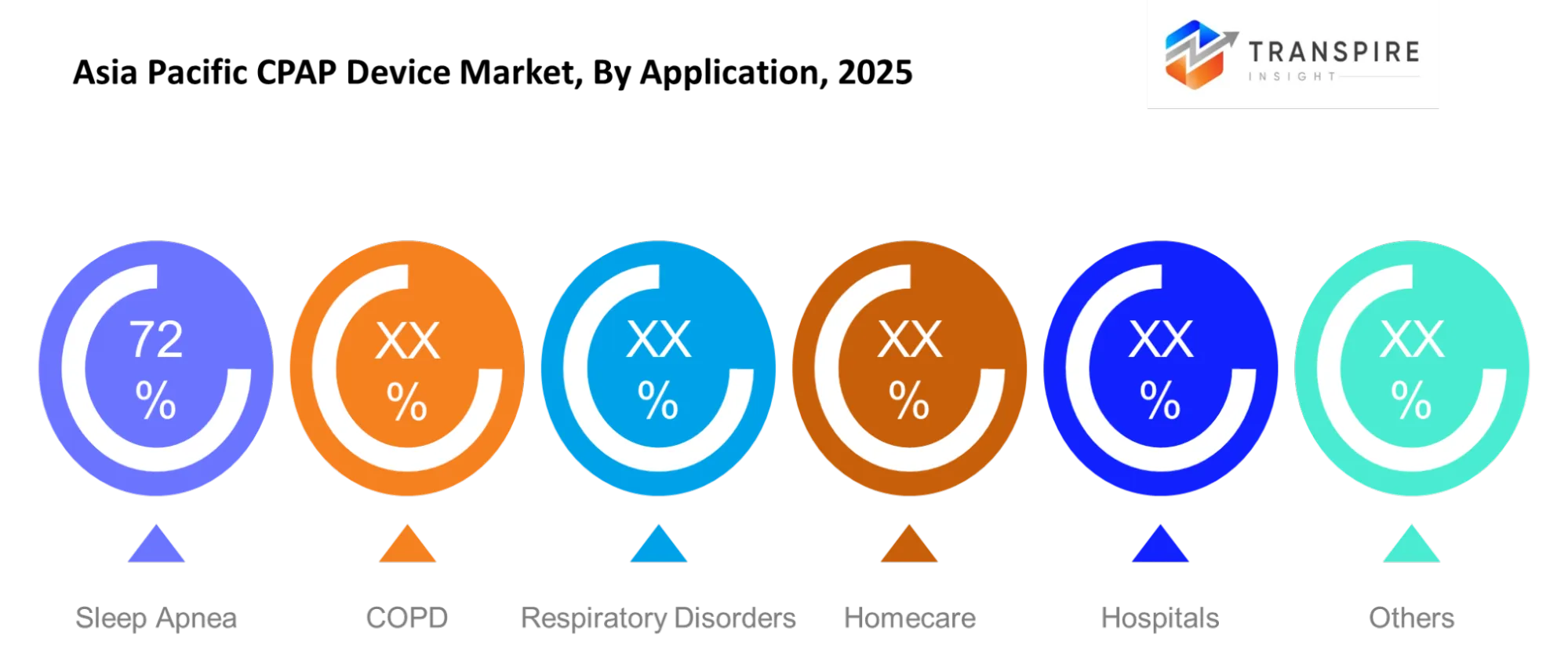
To learn more about this report, Download Free Sample Report
By End-User:
The strong infrastructure of hospitals together with their access to respiratory specialists and their ability to provide complete diagnostic and treatment support services creates a high demand for their services. The first point of CPAP prescription occurs at large medical institutions which serve patients who undergo formal sleep assessments. The organization maintains its vital function to establish treatment credibility in both developed and developing healthcare systems throughout the region.
The market continues to grow because clinics and sleep centers provide specialized services for respiratory conditions and sleep disorders. Homecare services are growing quickly because more people understand the benefits of long-term therapy through home-based treatment instead of receiving care at medical facilities. Healthcare providers now add more programs which deliver personalized assistance and help with device setup while they track patient treatment progress. The number of end-user categories which use respiratory care continues to expand because the service becomes part of standard healthcare treatment.
By Component:
The primary source of income for the business comes from devices because they establish the base for medical procedures which require hospitals to pay for new equipment and system updates that become necessary in the future. Through their product development process, manufacturers establish device improvements by developing products that operate quietly and use less space while enabling users to monitor data more effectively. The latest technological advancements have prompted healthcare facilities and personal users to acquire new systems which provide them with improved therapy results.
The treatment process requires masks, tubes, and humidifiers, together with their associated equipment which helps maintain effective treatment delivery. The material used for masks and the way they fit to the face shape of patients, directly affect their comfort and their ability to follow treatment guidelines, which makes these two factors become essential elements that people look for during their mask shopping process. Patients use humidifiers to decrease dryness and irritation, while they need replacement tubes together with smaller accessories for their ongoing equipment needs. The healthcare industry will evolve toward new product development through component innovation which will determine patient behavior across various healthcare facilities.
What are the Key Use Cases Driving the Asia Pacific CPAP Device Market?
The main purpose of CPAP devices in Asia Pacific regions is to treat obstructive sleep apnea. Sleep clinics and homecare providers need these systems because untreated apnea leads to negative effects on both cardiovascular health and workplace productivity plus it increases the chances of long-term hospitalization.
Specialty respiratory centers and home healthcare networks are starting to adopt respiratory rehabilitation and post-hospital recovery care. Hospitals now use CPAP support as a treatment option for patients who require supervised home-based therapy after finishing acute respiratory treatment.
The new applications will allow integration into existing chronic disease management programs which serve patients with both hypertension and metabolic disorders. Digital health providers are also exploring CPAP-linked remote monitoring platforms that collect sleep therapy data and link it with telemedicine consultations to develop preventive respiratory care solutions for urban healthcare systems.
|
Report Metrics |
Details |
|
Market size value in 2025 |
USD 647.87 Million |
|
Market size value in 2026 |
USD 701.65 Million |
|
Revenue forecast in 2033 |
USD 1237.93 Million |
|
Growth rate |
CAGR of 8.45% from 2026 to 2033 |
|
Base year |
2025 |
|
Historical data |
2021 - 2024 |
|
Forecast period |
2026 - 2033 |
|
Report coverage |
Revenue forecast, competitive landscape, growth factors, and trends |
|
Regional scope |
Asia Pacific ( China, India, Japan, South Korea, Australia, Rest of Asia Pacific) |
|
Key company profiled |
ResMed, Philips, Fisher & Paykel, BMC Medical, Drive DeVilbiss, Somnetics, Apex Medical, Weinmann, Löwenstein Medical, React Health, Invacare, Hamilton Medical, Medtronic, GE Healthcare, Smiths Medical |
|
Customization scope |
Free report customization (country, regional & segment scope). Avail customized purchase options to meet your exact research needs. |
|
Report Segmentation |
By Type (Fixed CPAP, Auto-adjusting CPAP, BiPAP, Travel CPAP, Smart CPAP, Others); By Application (Sleep Apnea, COPD, Respiratory Disorders, Homecare, Hospitals, Others); By End-User (Hospitals, Clinics, Homecare, Sleep Centers, Healthcare Providers, Others); By Component (Devices, Masks, Tubes, Humidifiers, Accessories, Others) |
Which Regions are Driving the Asia Pacific CPAP Device Market Growth?
Japan leads the Asia Pacific CPAP device market because of its mature reimbursement framework, advanced sleep medicine infrastructure, and high clinical diagnosis rates for obstructive sleep apnea. National insurance support has made long-term respiratory therapy more accessible, allowing patients to adopt connected treatment systems with lower out-of-pocket burden. The country benefits from a developed system of sleep laboratories which work together with respiratory specialists and digital health providers to deliver ongoing therapy assessments. The integrated clinical network generates continuous demand for mask replacements and accessory sales and advanced device upgrades.
Australia stands as the second most important regional market but its value comes from its ability to deliver healthcare services efficiently instead of its reimbursement system. The country has built a stable homecare-focused respiratory therapy model supported by telehealth adoption and private insurer participation. Sleep disorder screening has become a routine component of broader preventive care, creating steady prescription volumes for CPAP systems. Australia proves to be a dependable source of income through its constant product replacement patterns and high demand for advanced digital solutions.
China has emerged as the fastest-growing market because private sleep clinics and digital healthcare investments have expanded since 2022. Healthcare facilities in urban areas have expanded their sleep apnea testing programs as public health officials now consider respiratory and metabolic disease management to be an important health issue. The local production capabilities of domestic manufacturers together with their expanded e-commerce distribution networks have made medical devices more affordable to customers. The momentum of the market between 2026 and 2033 will provide major opportunities for investors and new companies to access cloud-connected therapy systems and home respiratory care services that use digital technology.
Who are the Key Players in the Asia Pacific CPAP Device Market and How Do They Compete?
The Asia Pacific CPAP device market shows a semi-consolidated structure where a few global manufacturers control premium segments while regional players compete on price and accessibility. Competition has shifted from hardware sales toward integrated care ecosystems which combine devices and software with long-term patient management. Incumbents maintain their market share through proprietary digital platforms and clinician networks while new companies develop low-cost products designed specifically for developing markets. Technology differentiation through cloud connectivity and therapy optimization has become the primary factor that determines competitive advantage according to current market trends.
ResMed Inc.develops respiratory care solutions which rely on software technology and use their cloud system to monitor patient compliance while providing doctors with useful clinical information. The system enables providers to take preventive action which results in better patient compliance and higher revenue from connected services. Fisher & Paykel Healthcare Limited stands out in the market through its development of mask products and humidification systems which create a better experience for patients that leads to improved usage durations. The company expands through clinical partnerships and targeted investments in sleep therapy education across Asia Pacific markets.
Koninklijke Philips N.V. establishes its healthcare ecosystem through its CPAP device integration which connects hospital monitoring systems with telehealth platforms to create an ongoing diagnostic and treatment connection. BMC Medical Co., Ltd. competes on cost leadership with locally manufactured devices that meet essential clinical standards while remaining accessible to price-sensitive markets such as China and Southeast Asia. Drive DeVilbiss Healthcare targets homecare providers by providing them with device interfaces that simplify their operations and distribution partnerships which help them expand their operations across decentralized healthcare systems.
Company List
- ResMed
- Philips
- Fisher & Paykel
- BMC Medical
- Drive DeVilbiss
- Somnetics
- Apex Medical
- Weinmann
- Löwenstein Medical
- React Health
- Invacare
- Hamilton Medical
- Medtronic
- GE Healthcare
- Smiths Medical
Recent Development News
In February 2026, ResMed launched the AirTouch F30i Comfort full-face CPAP mask. The product’s rollout across Australia and New Zealand expanded ResMed’s premium sleep-apnea therapy portfolio in Asia Pacific, strengthening access to next-generation comfort-focused CPAP interfaces for regional patients. Source https://newsroom.resmed.com/
In January 2025, ResMed launched AirSense 11 in India. The launch introduced advanced digital CPAP therapy features including remote patient engagement tools, accelerating modernization of India’s home-based sleep-apnea treatment market and supporting broader CPAP penetration across Asia Pacific. Source https://www.bwhealthcareworld.com/
What Strategic Insights Define the Future of the Asia Pacific CPAP Device Market?
The Asia Pacific CPAP device market is moving toward a digitally integrated respiratory care model where long-term value will come less from hardware sales and more from connected therapy ecosystems. The upcoming five to seven years will experience this transition because of improved telehealth systems and increased use of remote patient monitoring and healthcare facilities that want affordable solutions for chronic illness treatment outside of hospitals. Device manufacturers that combine cloud connectivity and predictive analytics with personalized therapy optimization will capture greater recurring revenue through software-enabled care services.
The market concentration risk of proprietary digital platforms has become more dangerous because of increased platform domination. The small group of companies that control patient data ecosystems and clinician interfaces will create interoperability problems which restrict provider options and make it difficult for smaller companies to enter the market.
The development of mobile-first respiratory care platforms which connect to sleep diagnostics and home therapy management has created new business opportunities in India and Southeast Asia. The rising use of smartphone health monitoring in these markets will enable them to establish new treatment methods which do not depend on traditional clinics. Market participants should invest now in interoperable, subscription-based digital platforms with localized pricing models and regional clinical partnerships to secure early positioning before reimbursement frameworks mature.
Asia Pacific CPAP Device Market Report Segmentation
By Type
- Fixed CPAP
- Auto-adjusting CPAP
- BiPAP
- Travel CPAP
- Smart CPAP
By Application
- Sleep Apnea
- COPD
- Respiratory Disorders
- Homecare
- Hospitals
By End-User
- Hospitals
- Clinics
- Homecare
- Sleep Centers
- Healthcare Providers
By Component
- Devices
- Masks
- Tubes
- Humidifiers
- Accessories
Frequently Asked Questions
Find quick answers to common questions.
The Asia Pacific CPAP Device Market size is USD 1237.93 Million in 2033.
Key Segments for the Asia Pacific CPAP Device Market are By Type (Fixed CPAP, Auto-adjusting CPAP, BiPAP, Travel CPAP, Smart CPAP, Others); By Application (Sleep Apnea, COPD, Respiratory Disorders, Homecare, Hospitals, Others); By End-User (Hospitals, Clinics, Homecare, Sleep Centers, Healthcare Providers, Others); By Component (Devices, Masks, Tubes, Humidifiers, Accessories, Others).
Major Asia Pacific CPAP Device Market Players are ResMed, Philips, Fisher & Paykel, BMC Medical, Drive DeVilbiss, Somnetics, Apex Medical, Weinmann, Löwenstein Medical, React Health, Invacare, Hamilton Medical, Medtronic, GE Healthcare, Smiths Medical.
The Current Asia Pacific CPAP Device Market size is USD 647.87 Million in 2025.
The Asia Pacific CPAP Device Market CAGR is 8.45% from 2026 to 2033.
- ResMed
- Philips
- Fisher & Paykel
- BMC Medical
- Drive DeVilbiss
- Somnetics
- Apex Medical
- Weinmann
- Löwenstein Medical
- React Health
- Invacare
- Hamilton Medical
- Medtronic
- GE Healthcare
- Smiths Medical
Recently Published Reports
-
Apr 2026
Biosimilars Market
Biosimilars Market By Product Type (Monoclonal Antibodies, Recombinant Hormones, Erythropoietin, G-CSF, Others), By Indication (Oncology, Autoimmune Diseases, Blood Disorders, Diabetes, Others), By Manufacturing Type (In-House Manufacturing, Contract Manufacturing), By Distribution Channel (Hospital Pharmacies, Retail Pharmacies, Online Pharmacies), By Industry Analysis, Size, Share, Growth, Trends, and Forecasts 2021-2033
-
Apr 2026
Gastrointestinal Endoscopy Market
Gastrointestinal Endoscopy Market By Type (Rigid Gastrointestinal Endoscope, Flexible Gastrointestinal Endoscopes, Disposable Gastrointestinal Endoscope), By Procedure Type (Colonoscopy, Gastroscopy, Duodenoscopy, Enteroscopy, Flexible Sigmoidoscopy, Others), By Application (Diagnosis, Treatment), By End-Users (Hospitals, Ambulatory Surgical Centers, Specialty Clinics, Laboratories, Others), By Industry Analysis, Size, Share, Growth, Trends, and Forecasts 2021-2033
-
Apr 2026
Rare Inherited Metabolic Disorder Drug Market
Rare Inherited Metabolic Disorder Drug Market By Drug Class (Enzyme Replacement Drugs, Gene Therapy Drugs, Substrate Reduction Drugs, Small Module Drugs, Protein Drugs), By Route of Administration(Parenteral, Oral, Intrathecal), By Clinical Development (Marketed Drugs, Late Stage Clinical Phase III, Early Stage Clinical Phase I-II, Preclinical Candidates), By Indication (Lysosomal Storage Disorders, Urea Cycle Disorders, Amino Acid Metabolic Disorders, organic Acidemias, Peroximal Disorders), By Industry Analysis, Size, Share, Growth, Trends, and Forecasts 2021-2033
-
Jan 2026
Pharmaceutical Cleanroom Technology Market
Pharmaceutical Cleanroom Technology Market By Product (Equipment, Consumables, Services); By Cleanroom Type (Standard Cleanrooms, Modular Cleanrooms); By End Use (Pharmaceutical Companies, Biotechnology Companies), By Industry Analysis, Size, Share, Growth, Trends, and Forecasts 2021-2033