
Asia Pacific Aluminum Curtain Wall Market Size & Forecast:
- Asia Pacific Aluminum Curtain Wall Market Size 2025: USD 16.8 Billion
- Asia Pacific Aluminum Curtain Wall Market Size 2033: USD 37.3 Billion
- Asia Pacific Aluminum Curtain Wall Market CAGR: 10.54%
- Asia Pacific Aluminum Curtain Wall Market Segments: By Product Type (Stick Systems, Unitized Systems, Semi-Unitized Systems, Structural Glazing, Double Skin Facades, Others); By Application (Commercial Buildings, Residential Towers, Airports, Hospitals, Retail Complexes, Others); By Glazing Type (Single, Double, Triple, Low-E, Others); By End User (Construction Companies, Developers, Government Projects, Others).
Asia Pacific Aluminum Curtain Wall Market Summary
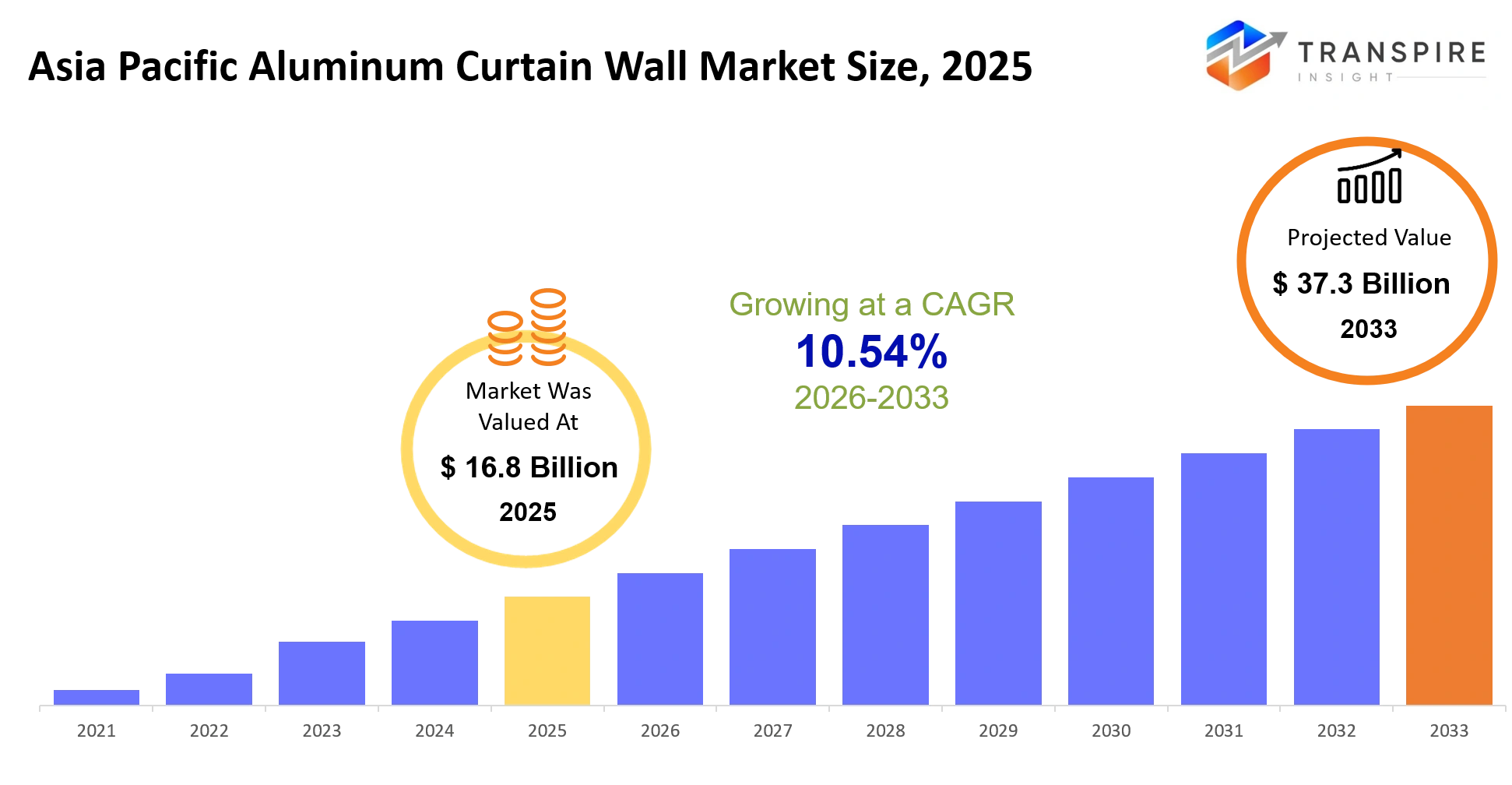
The Asia Pacific Aluminum Curtain Wall Market was valued at USD 16.8 Billion in 2025. It is forecast to reach USD 37.3 Billion by 2033. That is a CAGR of 10.54% over the period.
The Asia Pacific Aluminum Curtain Wall Market offers building envelope systems for commercial towers, airports, hotels and healthcare facilities. These systems help with energy efficiency, weather protection, natural light and architectural flexibility while reducing load compared to traditional materials. For developers and building owners aluminum curtain walls are a solution for meeting performance requirements and keeping modern building looks.In the five years the market has shifted towards high-performance façade systems that meet stricter energy efficiency and green building standards. Governments and property developers are focusing on reducing building energy consumption and carbon emissions. Post-pandemic infrastructure stimulus programs and renewed investment in public construction projects have driven this change.
The market is currently growing due to the preference for energy-efficient buildings. Developers are adopting curtain wall systems to comply with environmental regulations and reduce operating costs. This trend supports high-value projects, encourages product innovation and creates revenue opportunities for façade manufacturers, engineering firms and construction contractors. The aluminum curtain wall market benefits from this shift, towards sustainability.
Key Market Insights
- The Asia Pacific Aluminum Curtain Wall Market is doing well because people who build things want to make buildings that use energy are good for the environment and look really cool.
- The Asia Pacific Aluminum Curtain Wall Market will keep getting bigger because a lot of offices and stores are being built and people want these buildings to have special outside walls that work really well. This will keep happening until 2033.
- East Asia is the part of the Asia Pacific Aluminum Curtain Wall Market with more than 45 percent of the market in 2025 because they are building a lot of big offices and tall buildings.
- South Asia is growing the fastest because cities are getting bigger and more people are building stores and offices.
- One kind of wall system called curtain wall systems is used more than 40 percent of the time because it is faster to put up and makes building easier.
- Another kind of wall system called stick-built curtain wall systems is the second most popular because it can be changed to fit the needs of each building.
- Walls that help keep buildings cool and use less energy are becoming really popular because people want to make buildings that are good for the environment.
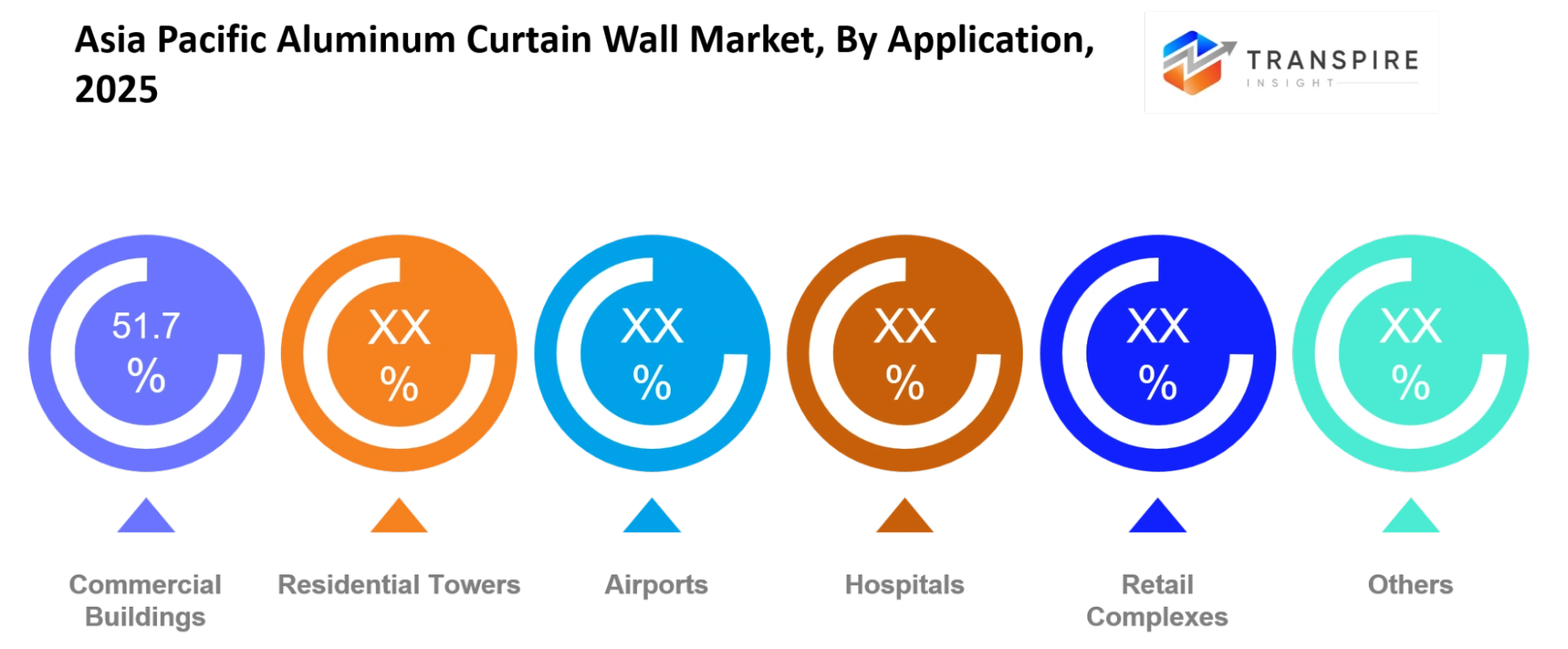
- More than half of the Asia Pacific Aluminum Curtain Wall Market is for office buildings, stores and buildings that have different uses.
- Buildings for hospitals, schools and government offices are also becoming really popular. Will keep growing between 2026 and 2033.
- Big construction companies are the buyers of the Asia Pacific Aluminum Curtain Wall Market because they are always building new things.
- People who own buildings and want to make them use energy are also becoming big buyers because they want to save money and help the environment.
- Companies like Schüco, YKK AP, Reynaers Aluminium, Permasteelisa, Technal and Kawneer are trying to make products use computers to design buildings expand their businesses and make new kinds of windows to stay ahead of their competitors, in the Asia Pacific Aluminum Curtain Wall Market.
What are the Key Drivers, Restraints, and Opportunities in the Asia Pacific Aluminum Curtain Wall Market?
Driver
The biggest factor driving the Asia Pacific Aluminum Curtain Wall Market is governments making building energy efficiency rules and green construction standards. This means builders and developers have to make buildings use energy and keep the inside warm or cool. As a result they are using curtain wall systems that have thermal breaks, good glazing and better insulation. When builders invest in energy- walls to meet certain standards and save on costs it makes projects more valuable. This increases demand for high-quality curtain wall solutions, which benefits manufacturers and installation contractors.Governments are making rules for building energy efficiency.Builders are using curtain wall systems to meet these rules.
Energy-efficient walls make projects more valuable.
Restraint
The main challenge is that aluminum prices can be unpredictable and it's complicated to install façades. Making aluminum requires a lot of energy so its cost can change with energy markets and raw materials. This is a problem because changing the supply chain and increasing production takes a lot of money and time. Unpredictable costs can delay projects, reduce profits and limit the use of curtain walls in some construction projects.Aluminum prices can be unpredictable.It's complicated to install façades.
Opportunity
There's an opportunity in smart façade technologies that work with digital building management systems. Advanced curtain walls with automated shading, energy-monitoring sensors and dynamic glazing are becoming popular in end commercial developments. With investment in smart cities and business districts especially in rapidly growing urban areas the conditions are right for these solutions. Companies that combine expertise in façade engineering with building technologies will be well-positioned to get higher-value projects and stay competitive in the market.There's an opportunity in smart façade technologies.Advanced curtain walls are becoming popular in high-end developments.
What Has the Impact of Artificial Intelligence Been on the Asia Pacific Aluminum Curtain Wall Market?
Artificial intelligence and digital technologies are changing the aluminum curtain wall industry. They improve design accuracy, manufacturing efficiency and building performance over time.Building Information Modeling (BIM) digital twins and AI-assisted design platforms help architects and engineers automate complex design calculations.They also help with material selection and structural analysis for aluminum curtain walls.These technologies reduce design conflicts. Improve project coordination. This shortens development timelines for aluminum curtain wall projects.Manufacturers use automated fabrication systems with design models. This helps reduce material waste and improve production consistency.It also lowers project costs.Machine learning models predict façade performance under conditions. These include wind loads, temperature changes and solar exposure.
Digital twin technology monitors building envelope performance. This helps facility managers identify maintenance needs before failures occur.
These predictive capabilities improve energy efficiency. They extend façade lifespan. Reduce maintenance expenses.Advanced simulation tools support compliance with building energy standards. They optimize performance before construction starts.One big limitation is the cost of integrating AI platforms and advanced modeling software.Many smaller contractors and façade fabricators face challenges. These include software investment, workforce training and data management.These factors slow adoption. Despite this, digital technologies offer benefits.
Key Market Trends
- Since 2021 builders have focused on making building exteriors more energy-efficient to follow building rules and save money in the long run on building energy costs.
- More builders used -made exterior wall systems for tall buildings after 2022 because it was faster to install and required fewer workers on site.
- People who own buildings started using layered glass and high-performance glass systems more often to keep buildings warmer in the winter and cooler in the summer.
- Between 2022 and 2025 more architects and builders started using computer design tools like BIM and digital models to plan and build projects efficiently.
- After 2023 builders started caring about using aluminum that can be recycled when choosing materials for buildings because it helps get green certifications.
- Companies like Schüco, YKK AP and Reynaers started investing more in exterior building technologies and solutions that help buildings use less energy.
- When there were problems with getting materials manufacturers started finding suppliers and making materials, in different regions to be prepared.
- Architects started designing custom exterior building designs often using advanced technology, which allowed for more creativity without raising costs significantly.
- Getting building certifications became more important when choosing materials, which led to more use of high-end exterior wall systems.
- Connecting building systems to energy management and building automation platforms became a popular trend.
Asia Pacific Aluminum Curtain Wall Market Segmentation
By Product Type:
Unitized Curtain Wall, Stick-built Curtain Wall, -unitized Curtain Wall, Structural Glazing Curtain Wall and Others. Unitized curtain wall systems help finish projects because big sections arrive at construction sites already put together. Making them in a factory helps ensure they are all the same. Makes it easier to install them. Many commercial projects choose this option because it needs less labor and has better quality control.Stick-built curtain wall systems are still important for projects that need a design and customization for the specific site. Semi-unitized and structural glazing systems give architects options for creating special building looks and better façade performance. New and improved ways of making things and materials will make these systems more popular across types of buildings.
By Glazing Type:
Aluminum, Glass, Steel, Composite Materials and Others. Aluminum is the choice because it is light, does not rust and is easy to design with. Its strength makes it perfect for buildings, schools and mixed-use developments. It also works well with glazing systems for energy-efficient buildings.Glass helps bring in light and meets modern architectural needs. Steel and composite materials are used in cases where strength or unique performance is needed. Improvements in materials will keep making buildings more energy-efficient, sustainable and easier to maintain.
By Application:
Commercial Buildings, Residential Buildings, Institutional Buildings, Industrial Buildings and Others. Commercial buildings use a lot of curtain wall systems because office buildings, shopping centers and hotels need façade systems. These systems make buildings look good and help with energy management and comfort.Residential projects are starting to use façade technologies for luxury homes that focus on design and energy efficiency. Schools and factories also use these systems to improve building performance and reduce costs. More infrastructure investments will support demand across construction areas.
By End User:
Construction Companies, Real Estate Developers, Government Projects, Infrastructure Developers and Others. Construction companies are key in choosing and installing curtain wall systems. They focus on installation and following project specifications. Working with manufacturers and consultants helps ensure projects are successful.Real estate developers care about the long-term value of buildings, energy performance and how they look. Government projects and infrastructure developers are using façade solutions to meet sustainability goals and performance standards. Future investments in buildings and public infrastructure will create more opportunities in these areas.
What are the Key Use Cases Driving the Asia Pacific Aluminum Curtain Wall Market?
Commercial office towers, mixed-use developments and big retail complexes are the areas where market adoption is happening. These projects need building covers that help with energy efficiency keeping the weather out and building designs. Developers also use outer wall systems to let in more natural light and cut down on long-term operating costs. Healthcare facilities educational institutions and hospitality projects are now using these systems too.Hospitals and universities are using performance outer wall solutions to meet stricter building efficiency standards and make occupants feel more comfortable.Hotel developments use exterior systems to make their buildings look better and manage energy use.There are also areas where advanced outer wall systems are being used, like smart building projects and developments that produce as much energy as they use.These systems have sensors, automated shading technologies and building management platforms. Are becoming popular in high-end city projects.More investment is going into infrastructure and green-certified construction, which is expected to create new opportunities, in the forecast period.
|
Report Metrics |
Details |
|---|---|
|
Market size value in 2025 |
USD 16.8 Billion |
|
Market size value in 2026 |
USD 18.5 Billion |
|
Revenue forecast in 2033 |
USD 37.3 Billion |
|
Growth rate |
CAGR of 10.54% from 2026 to 2033 |
|
Base year |
2025 |
|
Historical data |
2021 - 2024 |
|
Forecast period |
2026 - 2033 |
|
Report coverage |
Revenue forecast, competitive landscape, growth factors, and trends |
|
Regional scope |
Asia Pacific |
|
Key company profiled |
Schuco, YKK AP, Kawneer, Reynaers, Technal, Permasteelisa, Lindner, Alumil, Jangho, Oldcastle BuildingEnvelope, AluK, EFCO, HansenGroup, CSR Building, Nippon Sheet Glass. |
|
Customization scope |
Free report customization (country, regional & segment scope). Avail customized purchase options to meet your exact research needs. |
|
Report Segmentation |
By Product Type (Stick Systems, Unitized Systems, Semi-Unitized Systems, Structural Glazing, Double Skin Facades, Others); By Application (Commercial Buildings, Residential Towers, Airports, Hospitals, Retail Complexes, Others); By Glazing Type (Single, Double, Triple, Low-E, Others); By End User (Construction Companies, Developers, Government Projects, Others). |
Which Regions are Driving the Asia Pacific Aluminum Curtain Wall Market Growth?
East Asia is the leader when it comes to the market because it has a lot of commercial construction projects, it can make advanced things and it has very strict rules about how well buildings use energy. Big cities keep spending money on office buildings, buildings that have many uses and public things like roads that need very good systems for the outside of the buildings. The fact that East Asia has systems for getting aluminum making glass and building the outside of buildings helps big projects get done. A lot of people work together in East Asia like the people who build things, the people who design things, the people who actually construct things and the people who sell the materials and this helps East Asia stay in the lead.
Southeast Asia is the biggest market and it is different from East Asia because it grows slowly and steadily with a lot of new buildings and construction going on all the time rather than just a few big projects. The economy in Southeast Asia is strong. People keep investing in commercial real estate, which means there is always a demand for things. The governments in Southeast Asia are slowly starting to make rules that require buildings to be more energy efficient which means more people are using systems for the outside of buildings. The fact that hotels, stores and buildings with uses are being built all the time makes Southeast Asia a reliable place for the industry to make money.
South Asia is growing fast as it builds new roads, cities and other things. Recently people have invested in making cities smarter in transportation and in areas, which means there are new chances for people to use advanced systems for the outside of buildings. People in South Asia are putting emphasis on making buildings that use energy efficiently and that are good for the environment, which means more people are using these systems. This means that between 2026 and 2033 it will be a time for people who make things, people who build things and people who invest in things to grow their businesses in South Asia and also in the systems for the outside of buildings and also in the construction industry and also, in South Asia.
Who are the Key Players in the Asia Pacific Aluminum Curtain Wall Market and How Do They Compete?
Competition in the Asia Pacific aluminum curtain wall industry is moderately consolidated, with global façade specialists competing alongside regional manufacturers and project engineering firms. Technology, project execution capability, and energy-performance expertise have become more important than price alone. Established companies continue defending market share through advanced façade systems, while regional participants focus on localized manufacturing and faster project delivery. Success increasingly depends on the ability to support complex architectural designs, comply with energy-efficiency regulations, and deliver large projects on schedule.
Schüco focuses on technology innovation through thermally efficient façade systems and advanced building envelope solutions designed to meet demanding sustainability requirements. YKK AP differentiates itself through vertically integrated manufacturing and strict quality control processes, allowing consistent product performance across large commercial developments. Reynaers Aluminium emphasizes high-performance aluminum systems with strong design flexibility, helping architects balance aesthetics and energy efficiency. These companies continue expanding through product development, digital design integration, and stronger partnerships with architects and developers.
Permasteelisa specializes in complex and iconic building façades that require advanced engineering capabilities and customized project execution. Technal strengthens competitiveness through energy-efficient façade technologies and solutions tailored to modern commercial buildings. Kawneer focuses on architectural aluminum systems that support durability, thermal performance, and design versatility. Ongoing investments in smart façade technologies, sustainable materials, and regional expansion strategies allow these companies to secure premium projects and strengthen long-term market positioning.
Company List
- Technal
- Permasteelisa Group
- Lindner Group
- Alumil
- Jangho Group
- Oldcastle BuildingEnvelope
- AluK
- EFCO Corporation
- HansenGroup
- CSR Building Products
- Nippon Sheet Glass
Recent Development News
In January 2026, YKK AP launched operations of the “N-CueB” large-scale curtain wall testing facility at its Namerikawa Plant. The ¥2.2 billion investment expands curtain wall performance testing capabilities for high-rise buildings and strengthens product certification, quality assurance, and façade engineering innovation.
Source: https://www.ykkapglobal.com
In January 2025, Permasteelisa Group announced acquisition of key business assets from Benson Industries. The acquisition expanded façade engineering, fabrication, and curtain wall installation capabilities, strengthening Permasteelisa’s operational footprint and project delivery capacity.
Source: https://www.permasteelisagroup.com
In April 2025, YKK AP entered a partnership-driven building-integrated photovoltaic (BIPV) demonstration initiative at Haneda Innovation City. The project accelerates commercialization of solar-integrated windows and façade systems, supporting next-generation energy-generating building envelopes across commercial construction projects.
Source: https://prtimes.jp
What Strategic Insights Define the Future of the Asia Pacific Aluminum Curtain Wall Market?
The Asia Pacific Aluminum Curtain Wall Market is shifting towards building envelope systems. These systems combine energy efficiency, digital tech and sustainability. Over the five to seven years growth will come from stricter building rules, net-zero carbon goals and more use of smart building tech.Aluminum Curtain Wall systems will change from exterior structures to active parts that help manage energy, improve comfort and optimize building performance.
There's a risk in the market concentration of façade engineering, aluminum processing and high-performance glass supply chains. If a few suppliers control the market, projects might face prices, delayed deliveries and procurement issues during raw material volatility. This risk could grow as demand for premium façade systems rises.A new opportunity is building-integrated photovoltaic façade systems and dynamic glazing tech. As energy rules get tougher these solutions will become more important in commercial and mixed-use developments. To secure high-value projects market players should invest in design, sustainable materials and smart façade tech. This will help them strengthen their position in the market for the term and stay competitive, with Aluminum Curtain Wall systems.
Asia Pacific Aluminum Curtain Wall Market Report Segmentation
By Product Type
- Stick Systems
- Unitized Systems
- Semi-Unitized Systems
- Structural Glazing
- Double Skin Facades
- Others
By Application
- Commercial Buildings
- Residential Towers
- Airports
- Hospitals
- Retail Complexes
- Others
By Glazing Type
- Single
- Double
- Triple
- Low-E
- Others
By End User
- Construction Companies
- Developers
- Government Projects
- Others
Frequently Asked Questions
Find quick answers to common questions.
The expected Asia Pacific Aluminum Curtain Wall Market size for the market will be USD 37.3 Billion in 2033.
Key segments for the Asia Pacific Aluminum Curtain Wall Market are By Product Type (Stick Systems, Unitized Systems, Semi-Unitized Systems, Structural Glazing, Double Skin Facades, Others); By Application (Commercial Buildings, Residential Towers, Airports, Hospitals, Retail Complexes, Others); By Glazing Type (Single, Double, Triple, Low-E, Others); By End User (Construction Companies, Developers, Government Projects, Others).
Major Asia Pacific Aluminum Curtain Wall Market players are Schuco, YKK AP, Kawneer, Reynaers, Technal, Permasteelisa, Lindner, Alumil, Jangho, Oldcastle BuildingEnvelope, AluK, EFCO, HansenGroup, CSR Building, Nippon Sheet Glass.
The Asia Pacific Aluminum Curtain Wall Market size is USD 16.8 Billion in 2025.
The Asia Pacific Aluminum Curtain Wall Market CAGR is 10.54% from 2026 to 2033.
- Schüco
- YKK AP
- Kawneer
- Reynaers Aluminium
- Technal
- Permasteelisa Group
- Lindner Group
- Alumil
- Jangho Group
- Oldcastle BuildingEnvelope
- AluK
- EFCO Corporation
- HansenGroup
- CSR Building Products
- Nippon Sheet Glass
About the Authors

Pankaj Ghogare Patil
I am Pankaj Ghogare Patil, a Senior Research Analyst at Transpire Insight, specializing in the Pharmaceutical, Chemicals & Materials, Healthcare IT, and Biotechnology industry. My expertise lies in conducting comprehensive market research, analyzing industry trends, evaluating competitive landscapes, and translating complex data into actionable insights. At Transpire Insight, I closely follow emerging technologies, regulatory developments, and market innovations to create accurate, well-researched, and informative content that helps businesses and professionals make informed decisions. I am committed to producing credible, evidence-based articles that reflect industry best practices while making technical topics accessible and valuable for a broad audience.

Chakradhar Khansole
Chakradhar serves as the Research Director at Transpire Insight, bringing over 8 years of experience in technology, innovation, and strategic market intelligence. He specializes in transforming complex market data into actionable business insights that enable organizations to make informed, growth-oriented decisions. Recognized for his strategic vision and analytical expertise, Chakradhar leads high-impact research initiatives, delivering comprehensive market assessments, competitive intelligence, and forward-looking industry analysis.
Recently Published Reports
-
May 2026
Healthcare Polymer Packaging Market
Healthcare Polymer Packaging Market Size, Share & Analysis Report By Packaging Type (Syringes, IV Bottles and Pouches, Clamshells, Blisters, Bottles & Jars, Containers, Tubes, IV Parental Packaging, Others), By Type (Regulated, Non-regulated), By Polymer Type (LDPE (Low-Density Polyethylene), HDPE (High-Density Polyethylene), Homo-polymer (Homo), Random Copolymer (Random), Block Copolymer (Block), PET, Polystyrene, Polyvinyl Chloride, Polyamide/EVOH, Others), and Geography (North America, Europe, Asia-Pacific, Middle East and Africa, South and Central America), 2021 - 2031
-
Apr 2026
Hydrophilic Tape (Waterstop) Market
Hydrophilic Tape (Waterstop) Market Size, Share & Analysis Report By Type (Bentonite-Based Hydrophilic Tape, Rubber-Based Hydrophilic Tape), By Application (Residential Buildings, Commercial Buildings, Infrastructure Projects), and Geography (North America, Europe, Asia-Pacific, Middle East and Africa, South and Central America), 2021 - 2031
-
Apr 2026
Metalens Market
Metalens Market Size, Share & Analysis Report By Type (Visible Light Metalens, and Infrared Metalens), By Application (Consumer Electronics, Automotive Electronics, Industrial, Medical, and Others), and Geography (North America, Europe, Asia-Pacific, Middle East and Africa, South and Central America), 2021 - 2031
-
Apr 2026
PBT Resin Market
PBT Resin Market Size, Share & Analysis Report By Type (Reinforced PBT Resin, Unreinforced PBT Resin), By Processing Method (Injection Molding, Extrusion, Blow Molding, Others), By End-User (Automotive, Electrical & Electronics, Consumer Appliances, Industrial Machinery, Medical Devices, Packaging, Others), and Geography (North America, Europe, Asia-Pacific, Middle East and Africa, South and Central America), 2021 - 2031