

Asia Pacific Abaca Fiber Market Size & Forecast:
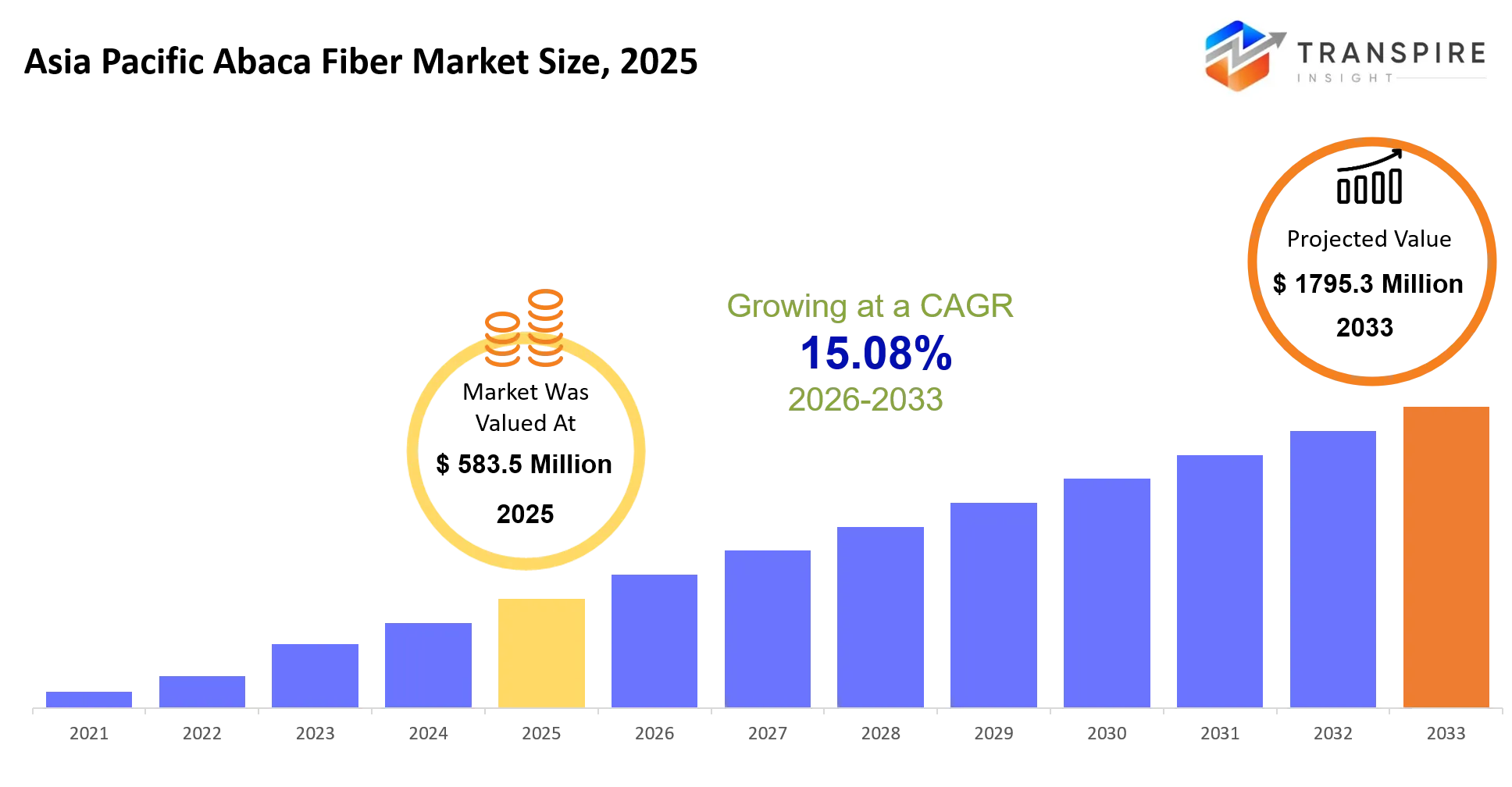
- Asia Pacific Abaca Fiber Market Size 2025: USD 583.5 Million
- Asia Pacific Abaca Fiber Market Size 2033: USD 1795.3 Million
- Asia Pacific Abaca Fiber Market CAGR: 15.08%
- Asia Pacific Abaca Fiber Market Segments: By Product Type (Raw Fiber, Pulp, Cordage Fiber, Specialty Fiber, Others); By Application (Paper & Pulp, Textiles, Cordage, Composites, Handicrafts, Others); By Grade (Fine Grade, Medium Grade, Coarse Grade, Others); By End User (Paper Industry, Textile Industry, Packaging Industry, Others)
Asia Pacific Abaca Fiber Market Summary
The Asia Pacific Abaca Fiber Market was valued at USD 583.5 Million in 2025. It is forecast to reach USD 1795.3 Million by 2033. That is a CAGR of 15.08% over the period.
The Asia Pacific Abaca Fiber Market, kind of plays a practical role in industries that want strong lightweight, and biodegradable inputs for ropes marine cordage, specialty paper filtration products , packaging and even composite reinforcement. In maritime operations, abaca fiber has high resistance to saltwater and it stays durable when the environment gets rough, so it becomes a natural alternative to some synthetic materials . And outside shipping and day-to-day industrial use, many makers are leaning on abaca more and more, partly to cut down on petroleum based inputs, and to satisfy sustainability rules that keep tightening.
Over the last five years the whole market has sort of shifted in a structural way, moving away from only traditional cordage uses toward higher-value specialty papers, eco friendly packaging, and bio composite materials. That change has opened revenue paths that are not just tied to the usual fiber markets. One clear trigger was the disruption of global supply chains during the pandemic period, it highlighted weak points in sourcing synthetic materials and pushed manufacturers to diversify with renewable fiber inputs. Also, as environmental compliance standards get stricter and brands rework products around circular economy targets, abaca is ending up with a bigger presence inside industrial material lineups, supporting broader commercial adoption across the region.
Key Market Insights
- The Philippines is the player in the Asia Pacific Abaca Fiber Market. It makes than 85 percent of the abaca in the region in 2025.
- Southeast Asia has a part of the market because it has a lot of farms and factories that send abaca to other countries.
- New farms are starting up in Indonesia and nearby countries which will help get abaca from places for a long time.
- The places that will want abaca the most are factories in East and Southeast Asia until 2032.
- The used type of abaca is Raw Fiber, which is about 45 to 50 percent of the market in 2025. This is because it can be used in different industries.
- Pulp is the most used type and this is because it is used to make special paper and filters.
- Specialty Fiber will be the type that grows the fastest until 2032 because it is used to make materials that are good for the earth.
- People are making things from abaca to sell to other countries and to use in factories.
- The biggest use of abaca is to make paper and pulp which's about 35 to 40 percent of the market in 2025. This is because it is used to make paper.
- There is always a need for things, like paper tea bags, money paper and filters.
What are the Key Drivers, Restraints, and Opportunities in the Asia Pacific Abaca Fiber Market?
The Asia Pacific Abaca Fiber Market is being pulled along by one main force, that is the gradual shift by manufacturers to renewable industrial inputs, that can help them comply with increasingly strict sustainability expectations and material requirements. This movement picked up speed, once packaging, specialty paper, and consumer goods players started getting squeezed by corporate carbon cutting targets and by rules meant to lower reliance on petroleum based materials. Abaca fiber gives a mix of tensile strength, biodegradability, and process compatibility, so manufacturers can swap out some synthetic materials without doing major changes to production. Because of that, procurement teams are leaning more and more toward natural fiber options, and that basically opens fresh revenue channels for fiber producers, processors, and specialty pulp manufacturers throughout the region.
Yet the biggest obstacle is still the limited supply base, plus it is pretty concentrated in certain locations. Commercial abaca cultivation stays tied to specific growing areas, especially the Philippines, where the weather patterns and agricultural know how strongly back production. Growing that base takes years of crop development, farmer onboarding, and infrastructure buildouts, so the supply can’t just scale up quickly. This kind of structural limit often shows up as periodic shortages, price swings, and procurement exposure for industrial buyers. So, some companies end up delaying bigger adoption cycles or keeping synthetic alternatives as a kind of safety net, which in turn trims the market’s ability to fully capture revenue.
A big, next future opening is in bio composite materials for automotive, construction, and industrial stuff. Newer natural fiber reinforcement technologies are getting better and better, so lightweight composite products are doing more work, with a smaller overall material footprint too. Places like Japan and South Korea are pushing more funding into advanced materials research, which makes it easier for abaca based composite solutions to be taken up. Meanwhile as manufacturers are hunting for durable, light replacements for non structural parts, the higher value use cases could end up growing market revenues quite a bit, not just staying stuck in the usual cordage and paper segments.
What Has the Impact of Artificial Intelligence Been on the Asia Pacific Abaca Fiber Market?
Artificial intelligence and advanced digital technologies are starting to shift the Asia Pacific abaca fiber industry, sort of in a quiet but steady way, by boosting agronomic output, fiber quality oversight, and supply chain throughput. In practice, producers are rolling out AI enabled monitoring setups that mix satellite imagery, drone checkups, and on site field sensors to keep eyes on crop vigor, moisture condition, pest activity, and weather driven exposure across abaca stands. The approach partially replaces what used to be manual, time consuming inspections. So growers can react faster to emerging production threats, which I mean matters more than people think.
On top of that, machine learning models are being used for yield anticipation at harvest time, better timeline decisions for sowing, and early warnings for disease outbreaks before they can spread through the cultivation areas. Then, in the fiber processing rooms, AI assisted quality grading tools look at fiber attributes like length, color, and tensile strength, so processors can push for steadier output and also cut down on sorting mistakes. Altogether these tools support higher value use cases, including specialty paper, smart packaging, and composite material needs.
Operationally, digital monitoring platforms can cut crop losses, make raw material use more efficient, and strengthen supply chain visibility from the plantation all the way to export markets. Also, improved forecasting helps manufacturers line up procurement decisions with the expected production volumes, so inventory gets less disrupted and procurement costs can drop.
But, AI adoption still feels held back by something a lot more basic: limited digital infrastructure in rural growing regions , plus a shortage of big, high quality agricultural datasets. Many smallholder farms do not have the connectivity, sensor networks, and the technical know how needed to actually benefit from advanced analytics. As a result, rollouts stay slower across the whole sector, even when the tools sound promising.
Key Market Trends
- Since 2020 companies that make specialty paper have been getting abaca fiber. This is because brands are using abaca fiber of synthetic and wood-based materials in their expensive products.
- The people who process abaca fiber in the Philippines have been making pulp that can be used for many things. This has helped them make money from more than rope and cordage.
- From 2020 to 2022 there were problems with getting things from one place to another. This made companies that buy abaca fiber want to get it from places and make agreements to buy it for a long time.
- The people who process abaca fiber are using computers to check the quality of the fiber. This helps them be more consistent and not have to check everything by hand. This is good for the people who buy the fiber from countries.
- Companies that make packaging have been using abaca fiber and other natural materials since 2021. This is because companies that make things that people buy want to be more environmentally friendly.
- Some companies like Davao Abaca and Specialty Pulp Manufacturing have spent money to upgrade their equipment. This helps them make quality abaca fiber for specialty paper.
- Now the people who buy abaca fiber from countries care more about where it comes from and if it is sustainable. This helps them decide who to buy from.
- Scientists, in Japan and South Korea are working together to find ways to use abaca fiber to make strong and light materials.
- Bad weather has made it hard for people to grow abaca plants. So they are using technology to watch the plants and take care of them.
- The companies that sell abaca fiber are now trying to make the quality fiber instead of just a lot of it. They want to sell to companies that make industrial and specialty materials.
Asia Pacific Abaca Fiber Market Segmentation
By Product Type:
Raw fiber keeps , kind of holding its place pretty solid, mainly because it is used a lot in rope making, certain specialty paper formats, and industrial materials. The demand stays steady, you know across big producing countries, supported by marine, farming agricultural related uses and packaging needs. Processing companies tend to like raw fiber too , because it stays flexible for downstream uses and it’s relatively easy to convert it into more value-added things in the end.
Meanwhile pulp has been getting broader acceptance in specialty paper production, especially when the product has to last and stay strong. Filtration papers, tea bag materials, and security paper streams have helped push investment into pulp processing plants. Specialty fiber is also getting more attention among manufacturers working on composite materials and sustainable packaging solutions. And higher-value fiber grades are opening extra revenue chances for processors, particularly those trying to stand out in the market a bit more.
By Application:
Paper and pulp applications stay a major source of consumption, natural fibers offer strength, flexibility, and durability in those specialty kinds of paper products, sort of as a given. Currency paper, filtration media, and industrial paper items keep showing steady purchasing activity. Manufacturers are leaning more toward natural fiber inputs, even when product performance requirements have to line up with sustainability aims, because it just fits better.
Textile and cordage applications keep supporting market activity, especially in sectors that need strong but light materials. Industrial users tend to value high tensile strength and resistance to tough operating conditions. Interest in composite materials has also been rising, so the application potential is opening beyond the usual uses. At the same time, packaging manufacturers are folding natural fibers into their product development plans, to reduce dependence on synthetic materials.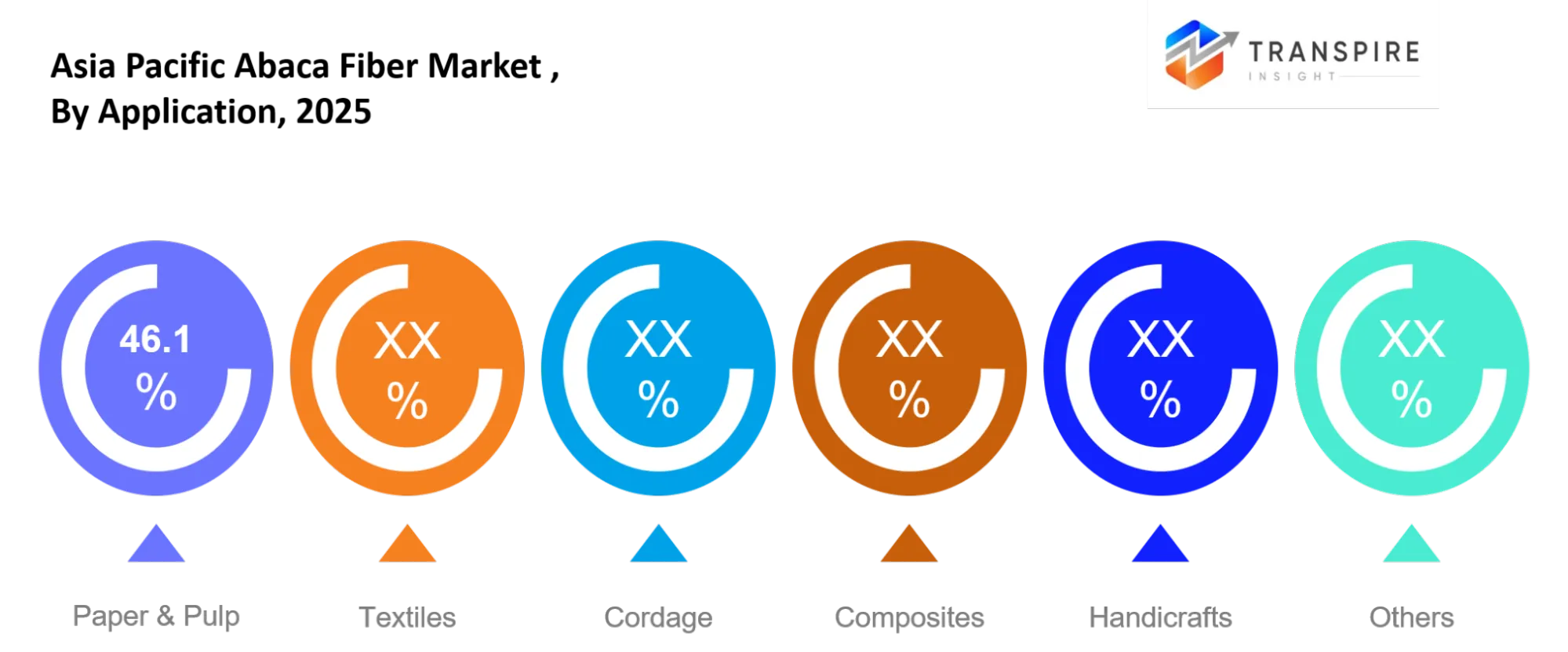
By Grade:
Commercial-grade fiber makes up a big portion of industry use, mostly because it works well across everyday industrial and cordage tasks. It’s sort of, cost-effective to process, and it tends to be broadly available so manufacturers keep picking it up. Also the demand looks pretty steady from long-running end use sectors, so the market performance stays fairly consistent.
Premium-grade fiber is, meanwhile, becoming more and more important for specialty paper, filtration, and other advanced material jobs, especially where the quality bar is higher. Producers are still putting money into grading technologies, just to push better consistency and more solid product value. Higher-grade materials often bring stronger pricing because the fiber traits are better, not just “different”. And export focused processors are leaning into premium grades more often too, trying to sharpen competitiveness in overseas markets.
By End User:
Industrial manufacturing still counts as one of the biggest end-user categories, mainly because natural fibers get used pretty widely in paper production, cordage, packaging and engineered materials. There are these long-running industrial uses that keep delivering a pretty dependable demand base. In practice, processing companies work right alongside the manufacturers, so they can make sure quality stays solid and supply remains consistent, which is kind of the whole point.
Packaging producers are turning into a more important customer group as their material selection strategy moves toward renewable resources, step by step. Specialty paper manufacturers also stay in the picture with sizable purchasing volumes, partly because natural fibers offer real performance advantages. At the same time, composite material developers keep looking at new uses, in automotive, construction and industrial products. Product innovation investment is helping adoption spread across many end-user industries, even beyond the usual ones.
What are the Key Use Cases Driving the Asia Pacific Abaca Fiber Market?
Mostly, the biggest piece of abaca fiber usage comes from specialty paper manufacturing, where the makers need fiber that feels strong ,but also lightweight, and still stays durable. People make currency paper, filtration media , tea bags and various industrial sheets, and those uses keep demand pretty steady, because abaca offers high strength plus resistance to wear, while it still helps the process move efficiently.
After the paper side, the take up is also growing in more eco oriented packaging and in industrial cordage. Packaging producers are leaning toward abaca based materials to lessen their dependence on petroleum inputs, and to hit their sustainability goals. In the same way marine and industrial teams keep choosing abaca ropes and cordage, since the tensile strength stays dependable, especially in wet ,humid and saltwater conditions.
At the same time, fresh opportunities are showing up in bio composite products for automotive, construction, and other industrial manufacturers. In places like Japan and South Korea, and in several nearby markets too, research teams are checking whether abaca fiber can serve as a reinforcement material for lighter composite goods. On top of that, advanced filtration systems and engineered industrial materials look like they could matter a lot, and maybe bring new revenue during the forecast window.
|
Report Metrics |
Details |
|
Market size value in 2025 |
USD 583.5 Million |
|
Market size value in 2026 |
USD 671.8 Million |
|
Revenue forecast in 2033 |
USD 1795.3 Million |
|
Growth rate |
CAGR of 15.08% from 2026 to 2033 |
|
Base year |
2025 |
|
Historical data |
2021 - 2024 |
|
Forecast period |
2026 - 2033 |
|
Report coverage |
Revenue forecast, competitive landscape, growth factors, and trends |
|
Regional scope |
Asia Pacific (India, China, Japan, Australia, South Korea, Rest of Asia Pacific) |
|
Key company profiled |
Tag Fibers, Ching Bee Trading, Selinrail International, Peral Enterprises, Yzen Handicraft, Newtech Pulp, Specialty Pulp Manufacturing, Terranova Papers, Abaca Corp, MAP Enterprises, Davao Abaca, Philippine Fiber Industry, Teh Lin, Century Pulp, Green Earth Fibers |
|
Customization scope |
Free report customization (country, regional & segment scope). Avail customized purchase options to meet your exact research needs. |
|
Report Segmentation |
By Product Type (Raw Fiber, Pulp, Cordage Fiber, Specialty Fiber, Others); By Application (Paper & Pulp, Textiles, Cordage, Composites, Handicrafts, Others); By Grade (Fine Grade, Medium Grade, Coarse Grade, Others); By End User (Paper Industry, Textile Industry, Packaging Industry, Others) |
Which Regions are Driving the Asia Pacific Abaca Fiber Market Growth?
Southeast Asia is still the region in the market. This is because it is the place where abaca is grown and processed. The Philippines is key to this with farms, skilled workers and years of experience in getting the fiber out of the plant and sorting it. The government helps by supporting exports of farm products and programs that help people in areas, which keeps the regions production strong and competitive globally. There are also growers, processors, exporters and manufacturers of special papers in the region which keeps it leading.
East Asia comes in second. Here growth is more about using abaca in factories than growing it. In Japan, South Korea and China manufacturers use abaca to make papers, filters, new materials and packaging. These countries have factories, stable investment climates and keep developing new products, which supports long-term demand for abaca. Unlike Southeast Asia East Asias strength is, in making high-value products not just growing the fiber.
South Asia is becoming an important place because people are getting more interested in renewable materials and alternative fibers. There have been a lot of investments in things like sustainable packaging and paper manufacturing. Companies are also looking into bio-based materials. Because of all this the market is getting more active.
Industrial companies are looking at fibers in a big way now. They want to make sure they have a lot of suppliers so they are not relying on just one.
Over the few years from 2026 to 2033 South Asia is going to have a lot of good opportunities for companies that process natural fibers for technology providers and, for investors who want to be a part of new industrial applications that use fibers.
Who are the Key Players in the Asia Pacific Abaca Fiber Market and How Do They Compete?
The Asia Pacific abaca fiber industry has a lot of companies competing with each other. These companies are involved in producing, processing, exporting and making specialty pulp. They compete in ways, such as the quality of the fiber how well they can process it how reliable they are and whether they can export it to other countries. They do not just compete on price.
Big companies try to keep their customers by building relationships with them. These customers make paper, packaging and industrial products. Smaller companies try to find opportunities by making special products. It is very important for these companies to deliver quality and maintain a reliable supply chain. This is because buyers want to make sure they are getting quality products and they want to know where the products are coming from.
Tag Fibers is a company that supplies processed fiber products to export markets. They focus on making sure their products are of quality and meet certain standards. Ching Bee Trading is another company that's good at finding and buying the right products. They have relationships with their suppliers, which helps them to maintain a stable supply. Davao Abaca has improved its processing capabilities, which allows it to make specialty fiber products. This helps the company to move away from selling basic products.
Specialty Pulp Manufacturing makes pulp products that are used to make paper. They are good at processing these products in a way that meets the needs of their customers. Century Pulp is competitive because it provides natural fibers to its customers. The company is also trying to expand its capabilities to make value-added products. Selinrail International is a company that helps connect producers with international buyers. They have relationships with their trading partners, which helps them to expand their reach to more customers in different industries.
These companies are all trying to find ways to be successful in the Asia Pacific abaca fiber industry. They are focusing on things like quality, reliability and building relationships, with their customers and suppliers.
Company List
- Tag Fibers
- Ching Bee Trading
- Selinrail International
- Peral Enterprises
- Yzen Handicraft
- Newtech Pulp
- Specialty Pulp Manufacturing
- Terranova Papers
- Abaca Corp
- MAP Enterprises
- Davao Abaca
- Philippine Fiber Industry
- Teh Lin
- Century Pulp
- Green Earth Fibers
Recent Development News
"In June 2026, the Philippine Fiber Industry Development Authority (PhilFIDA) entered a partnership with Asian Pyrochem Technologies Inc. (APTI). The Memorandum of Understanding established a framework for cooperation on abaca-related development initiatives, supporting innovation and potential value-added applications across the fiber industry.https://www.instagram.com
What Strategic Insights Define the Future of the Asia Pacific Abaca Fiber Market?
Over the five to seven years the Asia Pacific abaca fiber industry will likely change. It will move from supplying abaca fiber to making special materials for big industrial uses.
The main reason for this change is that manufacturers want materials that're good and also good for the environment. This means that making abaca fiber more valuable will come from processing the fiber making materials and developing new uses. It will not just come from growing and selling raw abaca fiber.
There is a risk that not many places will be growing abaca fiber. If there are problems like bad weather diseases that affect the crops or not enough workers it could cause problems for companies that use abaca fiber. This could become an issue as more industries start using natural fibers like abaca fiber.
One exciting possibility is using abaca fiber to make eco-friendly materials for cars, buildings and other industrial products. This is especially true, in East Asia, where many companies are making these kinds of products. Companies that invest in technologies, reliable suppliers and working with material developers will have a better chance to make more money as the industry makes more valuable products.
Asia Pacific Abaca Fiber Market Report Segmentation
By Product Type
- Raw Fiber
- Pulp
- Cordage Fiber
- Specialty Fiber
- Others
By Application
- Paper & Pulp
- Textiles
- Cordage
- Composites
- Handicrafts
- Others
By Grade
- Fine Grade
- Medium Grade
- Coarse Grade
- Others
By End User
- Paper Industry
- Textile Industry
- Packaging Industry
- Others
Frequently Asked Questions
Find quick answers to common questions.
The Expected Asia Pacific Abaca Fiber Market size for the Market will be USD 1795.3 Million in 2033.
Key Segments for the Asia Pacific Abaca Fiber Market are By Product Type (Raw Fiber, Pulp, Cordage Fiber, Specialty Fiber, Others); By Application (Paper & Pulp, Textiles, Cordage, Composites, Handicrafts, Others); By Grade (Fine Grade, Medium Grade, Coarse Grade, Others); By End User (Paper Industry, Textile Industry, Packaging Industry, Others).
Major Asia Pacific Abaca Fiber Market Players are Tag Fibers, Ching Bee Trading, Selinrail International, Peral Enterprises, Yzen Handicraft, Newtech Pulp, Specialty Pulp Manufacturing, Terranova Papers, Abaca Corp, MAP Enterprises, Davao Abaca, Philippine Fiber Industry, Teh Lin, Century Pulp, Green Earth Fibers.
The Current Asia Pacific Abaca Fiber Market size is USD 583.5 Million in 2025.
The Asia Pacific Abaca Fiber Market CAGR is 15.08% from 2026 to 2033.
- Tag Fibers
- Ching Bee Trading
- Selinrail International
- Peral Enterprises
- Yzen Handicraft
- Newtech Pulp
- Specialty Pulp Manufacturing
- Terranova Papers
- Abaca Corp
- MAP Enterprises
- Davao Abaca
- Philippine Fiber Industry
- Teh Lin
- Century Pulp
- Green Earth Fibers
About the Authors

Pankaj Ghogare Patil
I am Pankaj Ghogare Patil, a Senior Research Analyst at Transpire Insight, specializing in the Pharmaceutical, Chemicals & Materials, Healthcare IT, and Biotechnology industry. My expertise lies in conducting comprehensive market research, analyzing industry trends, evaluating competitive landscapes, and translating complex data into actionable insights. At Transpire Insight, I closely follow emerging technologies, regulatory developments, and market innovations to create accurate, well-researched, and informative content that helps businesses and professionals make informed decisions. I am committed to producing credible, evidence-based articles that reflect industry best practices while making technical topics accessible and valuable for a broad audience.

Chakradhar Khansole
Chakradhar serves as the Research Director at Transpire Insight, bringing over 8 years of experience in technology, innovation, and strategic market intelligence. He specializes in transforming complex market data into actionable business insights that enable organizations to make informed, growth-oriented decisions. Recognized for his strategic vision and analytical expertise, Chakradhar leads high-impact research initiatives, delivering comprehensive market assessments, competitive intelligence, and forward-looking industry analysis.
Recently Published Reports
-
May 2026
Healthcare Polymer Packaging Market
Healthcare Polymer Packaging Market Size, Share & Analysis Report By Packaging Type (Syringes, IV Bottles and Pouches, Clamshells, Blisters, Bottles & Jars, Containers, Tubes, IV Parental Packaging, Others), By Type (Regulated, Non-regulated), By Polymer Type (LDPE (Low-Density Polyethylene), HDPE (High-Density Polyethylene), Homo-polymer (Homo), Random Copolymer (Random), Block Copolymer (Block), PET, Polystyrene, Polyvinyl Chloride, Polyamide/EVOH, Others), and Geography (North America, Europe, Asia-Pacific, Middle East and Africa, South and Central America), 2021 - 2031
-
Apr 2026
Hydrophilic Tape (Waterstop) Market
Hydrophilic Tape (Waterstop) Market Size, Share & Analysis Report By Type (Bentonite-Based Hydrophilic Tape, Rubber-Based Hydrophilic Tape), By Application (Residential Buildings, Commercial Buildings, Infrastructure Projects), and Geography (North America, Europe, Asia-Pacific, Middle East and Africa, South and Central America), 2021 - 2031
-
Apr 2026
Metalens Market
Metalens Market Size, Share & Analysis Report By Type (Visible Light Metalens, and Infrared Metalens), By Application (Consumer Electronics, Automotive Electronics, Industrial, Medical, and Others), and Geography (North America, Europe, Asia-Pacific, Middle East and Africa, South and Central America), 2021 - 2031
-
Apr 2026
PBT Resin Market
PBT Resin Market Size, Share & Analysis Report By Type (Reinforced PBT Resin, Unreinforced PBT Resin), By Processing Method (Injection Molding, Extrusion, Blow Molding, Others), By End-User (Automotive, Electrical & Electronics, Consumer Appliances, Industrial Machinery, Medical Devices, Packaging, Others), and Geography (North America, Europe, Asia-Pacific, Middle East and Africa, South and Central America), 2021 - 2031