

Animal Health Care Market Summary:
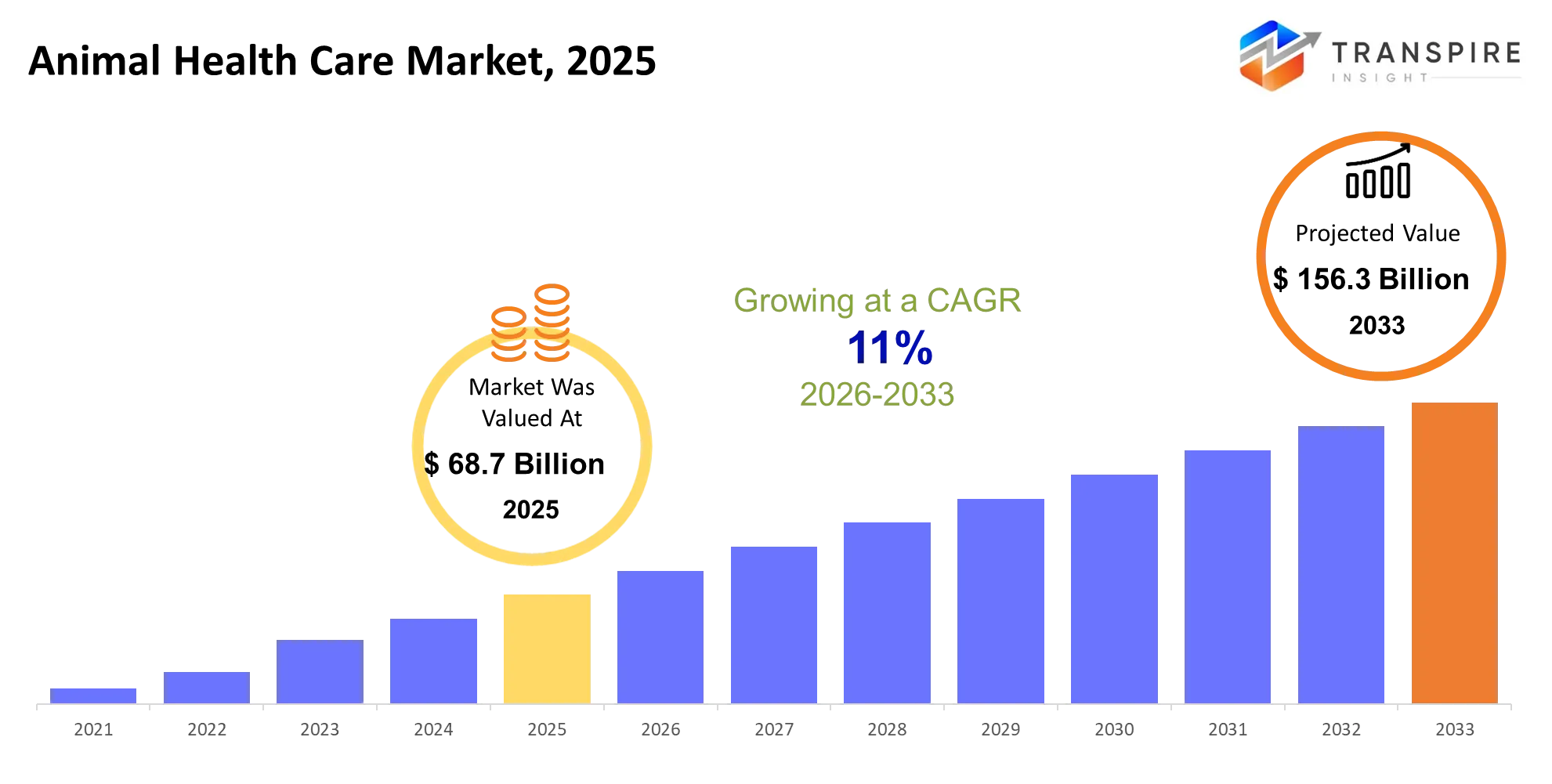
As per Transpire Insight, the Animal Health Care Market size is estimated at USD 68.7 billion in 2025 and is anticipated to reach USD 156.3 billion by 2033, growing at a CAGR of 11% from 2026 to 2033.
The animal health care market around the world helps keep pets, farm animals, chickens and fish healthy by stopping, finding and treating sickness. It gives vets tools to make animals recover faster and gives farmers ways to keep herds productive and safe for food. In the three to five years the animal health care market has moved from simple medicines to care that stops problems before they start better vaccines, fast tests and treatments that use data. A big change is that more animals are treated with biology medicines and digital watches of only old drugs. Outbreaks of bird flu and new problems in dairy cows show that we need better watching systems and targeted disease control. At the time pet owners want more advanced help for long‑term illnesses and issues that come with age. These shifts push money into studying new ideas making new products and building better veterinary places. So the animal health care market is now more about stopping problems treating early and getting better results, for animals than just treating after they get sick.
Animal Health Care Market Size & Forecast:
- Market Size 2025: USD 68.7 Billion
- Expected Market Value (2033): USD 156.3 Billion
- Forecast CAGR (2026–2033): 11%
- Leading Region in 2025: North America
- Fastest Growing Region: Asia Pacific
- Key Company Profiles: Zoetis, Boehringer Ingelheim, Merck Animal Health, Elanco, IDEXX Laboratories, Virbac, Ceva Santé Animale, Dechra Pharmaceuticals, Vetoquinol, Heska, Neogen, Phibro Animal Health, Bimeda, Norbrook Laboratories, HIPRA
Key Market Insights:
This market is moving towards a combination of pharmaceutical sales, preventive health services and veterinary diagnostics innovations. Competition is now dependent on product efficacy, diseases covered, product availability, and capability to assist vets as well as livestock producers.
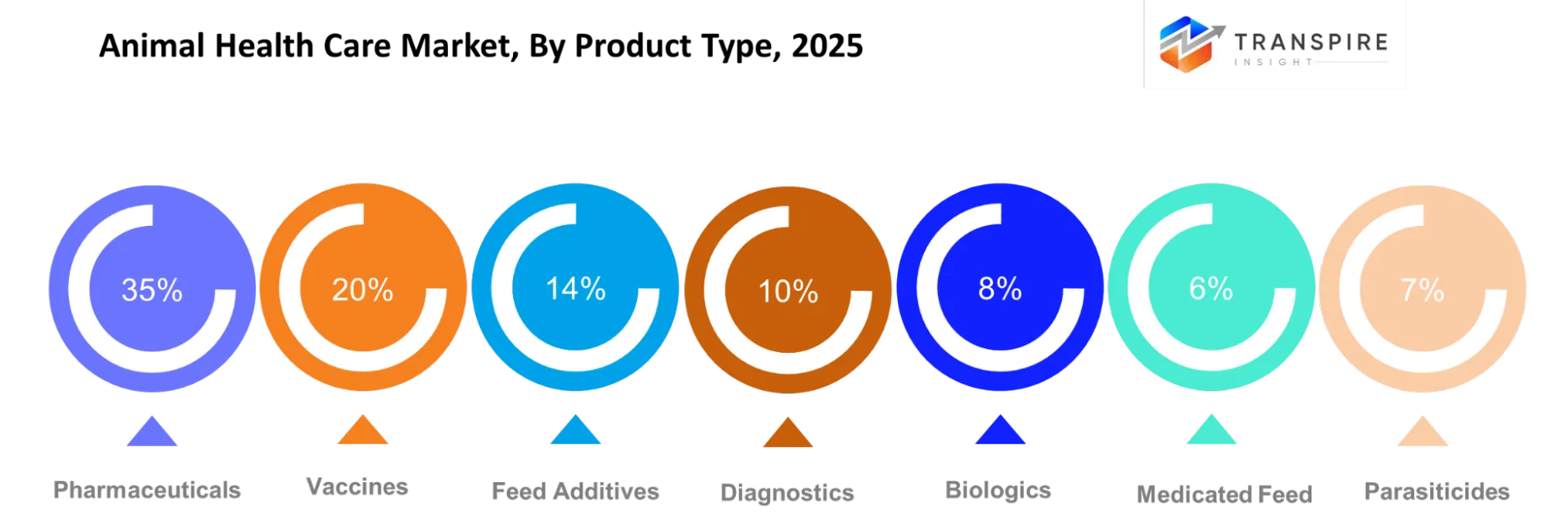
- Pharmaceuticals constitute 34.5% of total market segmentation, showing the significance of therapeutic drugs for veterinary care.
- Vaccines constitute 20.0% of the segment breakdown, signifying the significance of preventive treatments in livestock and companion animals.
- Feed additives consist of 14.5%, due to the nutrition-based approach for boosting the animal performance and keeping herd health.
- Diagnostics account for 10.5%, since modern veterinary providers are using disease detection for prescribing treatment.
- Biologics make up 8.0% of market segmentation, at the same time creating an opportunity for innovation in treatment technologies beyond medicine.
- Medicated feed consists of 6.0%, used as one of the ways of distributing prescribed treatments.
- Parasiticides hold 4.0% due to the need to solve the problem of parasite-induced diseases in companion and production animals.
What are the Key Drivers, Restraints, and Opportunities in the Animal Health Care Market?
Drivers:
Increased attention on the prevention of illness and the increase in production capacity is fueling the demand for veterinary medicines and vaccinations. The outbreak of diseases among poultry and cattle farms has shown the quickness of such diseases in disrupting the whole farm activities and logistics. Farmers need to vaccinate their animals against diseases. Pet animals' owners need quality services and modern methods for age and long-lasting illnesses.
Restraints:
Research and development expenses, regulatory approvals, and costs associated with manufacturing quality are making the products unavailable to some people. Small veterinarians or farmers may not be able to afford diagnostics and treatments due to their prices. Differences in infrastructure and professionals in different parts of the world result in uneven adoption. Another restraint is the development of antimicrobial resistance.
Opportunities:
Biological treatments, new-generation vaccines, precision diagnostics, and digital animal monitoring provide scope for growth in the market. AI-based image analysis and sensor technology for livestock can be used to detect potential health threats before they become prevalent. The establishment of a good veterinary base in Asia Pacific presents another opportunity for companies to increase their distribution and local partnerships, as well as to provide on-farm solutions. Firms with a good price model coupled with prevention products and good veterinary support can succeed.
|
Driver |
Relative Impact on Growth (%) |
Geographic Relevance |
Impact Timeline |
Demand Strength |
Growth Mechanism (5–10 words) |
Key Beneficiaries (5–10 words) |
Major Constraint (5–10 words) |
|
Rising Prevalence of Animal Diseases and Zoonotic Infections |
28% |
North America, Asia Pacific, Europe |
Short-term (≤2 years) |
High |
Increases demand for vaccines, diagnostics, and veterinary medicines |
Veterinary pharmaceutical companies, diagnostic providers, livestock farmers |
Disease outbreaks, treatment costs, and limited veterinary access |
|
Growing Pet Ownership and Premiumization of Companion Animal Care |
23% |
North America, Europe, Asia Pacific |
Medium-term (2–4 years) |
High |
Expands spending on preventive care, treatments, and diagnostics |
Pet healthcare brands, veterinary clinics, diagnostic laboratories |
High treatment costs and unequal access to veterinary services |
|
Expansion of Livestock Production and Food Safety Requirements |
20% |
Asia Pacific, North America, Latin America |
Medium-term (2–4 years) |
High |
Improves herd productivity through disease prevention and monitoring |
Livestock producers, vaccine manufacturers, animal nutrition companies |
Price-sensitive farmers and livestock disease management costs |
|
Advances in Veterinary Diagnostics, Biologics, and Digital Technologies |
17% |
North America, Europe, Asia Pacific |
Long-term (≥4 years) |
High |
Enables faster diagnosis, targeted treatments, and continuous monitoring |
Biotechnology firms, diagnostic companies, veterinary technology providers |
High development costs and limited technology adoption |
|
Stricter Animal Health Regulations and Sustainable Livestock Management |
12% |
Europe, North America, Asia Pacific |
Long-term (≥4 years) |
Medium |
Encourages preventive healthcare and responsible medicine use |
Animal health manufacturers, veterinary service providers, livestock integrators |
Regulatory complexity and compliance costs across markets |
|
Total |
100% |
— |
— |
— |
— |
— |
— |
What Has the Impact of artificial intelligence on the Animal Health Care Market?
AI is revolutionising animal health care by providing veterinarians and livestock farmers with insights into risks and assisting in the interpretation of clinical information and animal population management. In veterinary diagnostics, AI-assisted image analysis will be helpful in radiographic evaluation and other diagnostic imaging, while automated processes will be useful in clinical record organisation and highlighting information that needs professional intervention.
Predictive algorithms can detect emerging patterns from the information provided above to help identify animals that require further investigation, allowing farmers to make interventions and thus minimise productivity losses. AI will also be useful in the management of the herd through prioritisation of veterinary services, analysis of treatment results, and disease patterns on farms. Implementing the solution has challenges since the equipment, software integration, data quality, and training of the staff might increase costs, especially for small-scale farmers and clinics. The algorithms will also differ in performance according to the species, breed, facility, and working conditions. Thus, successful application will depend on the availability of reliable data, validation of the systems, privacy guidelines, and evidence of improvement of the decision-making process and operation outcomes.
Instance:
In June 2025, AI Masses was introduced by Zoetis, which is an artificial intelligence-based diagnostic tool for the Vetscan Imagyst solution from Zoetis. This tool assists veterinarians in analysing lymph nodes and skin masses in just a few minutes. This shows that AI is contributing towards better diagnostics in the field of veterinary medicine.
Key Market Trends:
There is an increasing focus on preventive care and digital monitoring along with traditional veterinary medicine products. This sector will be evolving towards an integrated approach combining medicines, diagnostic tests, nutritional supplements, and animal management with the help of data analytics.
- There will be a trend towards a shift in veterinary care from reactive to proactive and preventive, with the use of vaccinations and regular monitoring of animal health.
- Treatment of companion animals will move from treating acute illness to chronic diseases and age-related disorders.
- The livestock industry will see more structured herd-health programs to minimise financial losses due to animal diseases and preserve their productivity.
- Workflow for diagnosing diseases will rely increasingly on data analytics to help veterinary professionals interpret results and choose proper procedures.
- Biological research will influence the development of targeted therapies and other alternatives in treating certain diseases among animals.
- Digital monitoring will become a valuable addition to large farms, where animals' behaviour can be analysed using sensors and unusual activities highlighted.
- Online sales of veterinary products via e-commerce platforms will change the purchasing experience of some consumers.
Animal Health Care Market Segmentation
By Product Type:
Pharmaceuticals take the lead in supplied segmentation with 34.5% market share due to their well-established position in the treatment of bacterial infections, inflammation, pain management, and other animal diseases. Vaccines constitute 20.0% of the market as prevention of diseases is crucial, while feed additives make up 14.5% due to their nutritional and performance-related purposes. Diagnostics comprise 10.5%, biologics 8.0%, medicated feed 6.0%, parasiticides 4.0%, and other 2.5%. Biologics and vaccines are both defined as the fastest-growing category, with an 8.6% CAGR in the supplied data.
By Animal Type:
Service focuses on the market for companion animals, cattle, swine, poultry, aquaculture species, sheep and goats, horses and other animals. Customer demand drives approaches to routine veterinary care, preventive medicines and specialised treatment in companion animal services. Production medicine programmes that optimise herd or flock productivity, minimise transmission of infectious diseases and ensure food safety underpin cattle, aquaculture and sheep and goats services; specialised approaches to disease control in intensively-reared poultry and swine productions. Innovations are likely to be driven by changing disease threats, access to veterinary services, and improvements in products for each species.
By Route of Administration:
Products include those delivered by oral, injectable, topical, feed based, water-based, inhalation, transdermal and other methods. Oral products may facilitate easy dosing in some circumstances while injections are often still relevant for many vaccines and treatments that require strict dosing. Topical products target specific skin conditions as well as parasite control; feed based or water based drugs can be administered to a group of animals in managed circumstances. Product choice will vary according to species, dose and ease of administration and veterinary recommendation.
By Distribution Channel:
Veterinary hospitals and clinics, pharmacies, retail outlets, e-commerce, feed stores, distributors and other points of sale will also link farmers to manufacturers. Hospitals and clinics will be the dominant channel in cases where diagnosis, prescription and expert application is needed, but retail and online channels can expand access to conforming products, with distributors and feed stores still active in livestock supply channels. The development of future channels will be contingent on product regulation, cold-chain needs, product availability and secured supply.
By Indication:
The market involves infections, parasites, metabolic diseases, reproduction diseases, respiratory diseases, gastrointestinal tract diseases, dermatological, and all others. The management of infectious diseases brings the need for proper drug products, vaccines, and diagnosis tests; the control of parasitic diseases brings the need for treatment with particular preventive steps. There are particular methods used in diagnosing and treating metabolic, reproductive, digestive, and dermatological diseases. New advances in timely diagnoses and particular treatments will bring better health care management and health loss prevention in the future.
By End Users:
The end users include veterinary hospitals, clinics, farms, diagnostic laboratories, research institutes, animal shelters, owners, and others. Hospitals and clinics require veterinary medicines and diagnostics to manage their cases. Farms focus on herd and disease management, but also capacity. Diagnosis laboratories can benefit from testing and disease management. Research Institutes can use their services for developing and testing new products. Different animal owners and animal shelters will be looking for accessible preventive and treatment options. The future adoption will be based on price and demand among different animal categories.
What are the Key Use Cases Driving the Animal Health Care Market?
The use of veterinary drugs for the cure and prevention of animal diseases. These drugs can help in managing infections, inflammation, pain, and other disorders in companion and livestock animals. One other important area of application is preventive health care programs. The vaccines are used in this program in order to protect the animals from selected infectious diseases, while diagnostics help in the identification of problems for effective treatment plans. There are feed additives that are included as part of this program. Other emerging areas are related to the use of artificial intelligence for health monitoring of animals, precision livestock farming, biological treatments, and digital services.
|
Report Metrics |
Details |
|
Market size value in 2025 |
USD 68.7 Billion |
|
Market size value in 2026 |
USD 75.3 Billion |
|
Revenue forecast in 2033 |
USD 156.3 Billion |
|
Growth rate |
CAGR of 11% from 2026 to 2033 |
|
Base year |
2025 |
|
Historical data |
2021 - 2024 |
|
Forecast period |
2026 - 2033 |
|
Report coverage |
Revenue forecast, competitive landscape, growth factors, and trends |
|
Regional scope |
United States; Canada; Mexico; United Kingdom; Germany; France; Italy; Spain; Denmark; Sweden; Norway; China; Japan; India; Australia; South Korea; Thailand; Brazil; Argentina; South Africa; Saudi Arabia; United Arab Emirates |
|
Key company profiled |
Zoetis, Boehringer Ingelheim, Merck Animal Health, Elanco, IDEXX Laboratories, Virbac, Ceva Santé Animale, Dechra Pharmaceuticals, Vetoquinol, Heska, Neogen, Phibro Animal Health, Bimeda, Norbrook Laboratories, HIPRA |
|
Customization scope |
Free report customization (country, regional & segment scope). Avail customized purchase options to meet your exact research needs. |
|
Report Segmentation |
Product Type (Pharmaceuticals, Vaccines, Feed Additives, Diagnostics, Biologics, Medicated Feed, Parasiticides, Others)Animal Type (Companion Animals, Cattle, Swine, Poultry, Aquaculture, Sheep & Goats, Horses, Others)Route of Administration (Oral, Injectable, Topical, Feed-Based, Water-Based, Inhalation, Transdermal, Others)Distribution Channel (Veterinary Hospitals, Veterinary Clinics, Pharmacies, Retail Stores, E-commerce, Feed Stores, Distributors, Others)Indication (Infectious Diseases, Parasitic Diseases, Metabolic Disorders, Reproductive Disorders, Respiratory Diseases, Digestive Diseases, Dermatological Diseases, Others)End User (Veterinary Hospitals, Veterinary Clinics, Farms, Diagnostic Laboratories, Research Institutes, Animal Shelters, Pet Owners, Others) |
Which Regions are Driving the Animal Health Care Market Growth?
North America:
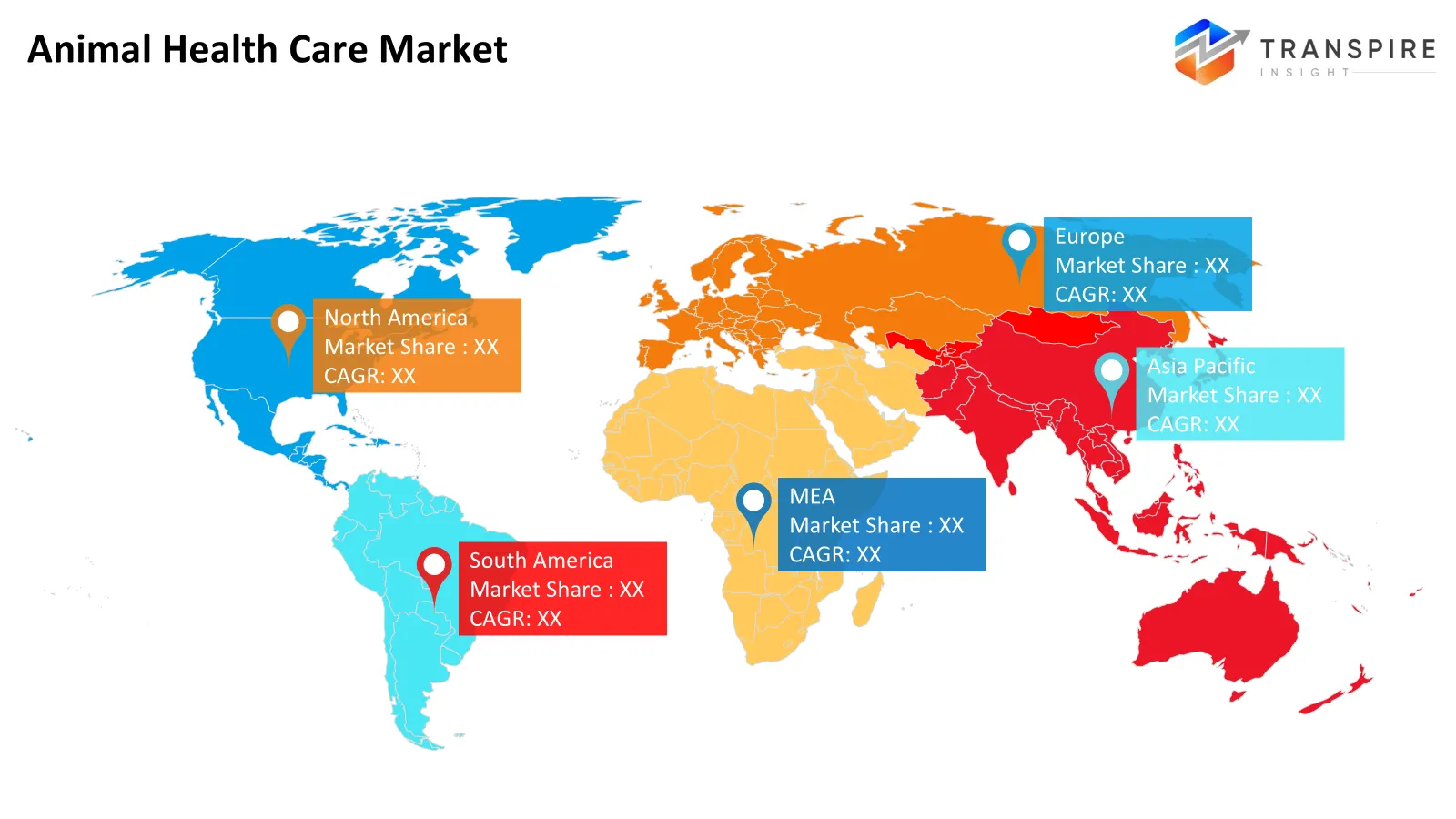
North America dominates supplied regional segmentation owing to an already developed infrastructure for veterinary purposes, research conducted on animal health, and easy availability of specialised therapies at 36.7%. The region has an already developed infrastructure for veterinary hospitals, clinics, diagnostic facilities, and pharmaceutical providers. Both pet animal health needs and commercial farming require treatment in the form of medicines and vaccines along with diagnostic services.
In February 2025, the U.S. Department of Agriculture granted a conditional license to Zoetis for its H5N2 killed-virus avian influenza vaccine for chickens. The development shows the need for innovation and disease prevention in the North American poultry and animal health care industries.
Europe:
Europe represents 28.5% of the supplied regional market segmentation. Its market segmentation is driven by the existing level of veterinary care, the livestock industry in the region, and attention to the welfare of animals. In addition to North America, there are also some regulatory factors that influence the dynamics of the market segmentation, including regulation of medicines used by veterinarians, livestock, and antibiotics administration. Advanced research capabilities and distribution channels contribute to access to animal health products.
In March 2025,MSD Animal Health got European Commission marketing authorization for its NOBILIS MULTRIVA REOm vaccine for chickens. The vaccine can help in reducing the occurrence of viraemia and clinical symptoms caused by avian reovirus infection. This vaccine is important for poultry disease management and the well-established veterinary healthcare industry in the region.
Asia Pacific:
Asia Pacific constitutes 22.8% of the regional segmentation provided and is considered to be the most rapidly growing region, growing at a CAGR of 9.4%. With the increasing production of livestock, changes in protein consumption trends, as well as the need for effective disease control in animals, there would also be increased demand for the veterinary market. Improvement of the veterinary facilities, increased vaccination, and diagnostics could help in fostering adoption across various geographies.
In April 2026, The Indian Council of Agricultural Research (ICAR) licensed its indigenous lumpy skin disease vaccine technology to Brilliant Bio Pharma for commercial production. The vaccine was developed at the ICAR's National Research Centre on Equines in collaboration with the Indian Veterinary Research Institute. The vaccine aims to help in the control of lumpy skin disease in cattle.
Who are the Key Players in the Animal Health Care Market and how do they compete?
The competition within the market of animal healthcare is defined by the pharmaceutical portfolio, vaccines, diagnostics, approvals, and distribution. The incumbents compete in the industry by investing in R&D, increasing the range of application of their products, and offering solutions for companion animals and livestock. The ability to blend innovations in science with distribution and veterinary services affects their competitive standing. The differentiation of Zoetis lies in the wide range of medicines, vaccines, diagnostics, and precision animal health solutions. Its acquisitions strategy allows the company to enter specialized technologies. The differentiators of Merck Animal Health include pharmaceuticals, vaccines, and technologies for companion animals, livestock, and aquaculture. Recently, the company announced its agreement to acquire TARGAN, which will allow it to enter technology that can enhance performance of poultry in commercial hatcheries. Elanco specializes in companion animal and farm animal health. Its agreement with Medgene in February 2025 to commercialize a highly pathogenic avian influenza vaccine for dairy cattle shows its concern about emerging livestock health issues.
Animal Health Care Market Companies
- Zoetis
- Boehringer Ingelheim
- Merck Animal Health
- Elanco
- IDEXX Laboratories
- Virbac
- Ceva Santé Animale
- Dechra Pharmaceuticals
- Vetoquinol
- Heska
- Neogen
- Phibro Animal Health
- Bimeda
- Norbrook Laboratories
- HIPRA
|
Company |
Est. Revenue Share Range |
Key Offerings |
Strategic Positioning |
Geographic Strength |
Technology Focus |
|
Zoetis |
Estimated 12–16% |
Veterinary medicines, vaccines, parasiticides, diagnostic products |
Market leadership through diversified veterinary healthcare portfolio |
North America, Europe, Asia Pacific |
Biologics, precision diagnostics, long-acting therapies |
|
Merck Animal Health |
Estimated 7–10% |
Livestock vaccines, companion animal medicines, parasiticides, aquaculture health products |
Broad portfolio backed by pharmaceutical research capabilities |
North America, Europe, Asia Pacific |
Vaccine innovation, animal identification, disease prevention |
|
Boehringer Ingelheim Animal Health |
Estimated 7–10% |
Livestock vaccines, pet parasiticides, swine health products, veterinary pharmaceuticals |
Science-led differentiation in vaccines and disease prevention |
Europe, North America, Asia Pacific |
Advanced vaccines, immunology, infectious disease control |
|
Elanco Animal Health |
Estimated 6–9% |
Companion animal therapeutics, parasiticides, livestock medicines, vaccines |
Portfolio diversification across pets and production animals |
North America, Europe, Latin America |
Parasitology, therapeutic innovation, livestock health solutions |
|
IDEXX Laboratories |
Estimated 5–7% |
Veterinary diagnostics, laboratory testing, in-clinic analyzers, diagnostic software |
Diagnostics leadership supported by recurring testing revenue |
North America, Europe, Asia Pacific |
Automated diagnostics, digital laboratory platforms, data analytics |
|
Ceva Santé Animale |
Estimated 2–4% |
Poultry vaccines, swine health products, companion animal medicines, reproductive solutions |
Specialty-led competition in vaccines and livestock health |
Europe, Asia Pacific, Latin America |
Vaccine delivery, reproductive biotechnology, disease surveillance |
|
Virbac |
Estimated 2–3% |
Dermatology products, vaccines, parasiticides, veterinary medicines |
Veterinary-focused specialization and differentiated product portfolio |
Europe, Asia Pacific, Latin America |
Dermatological therapies, parasitology, veterinary formulations |
|
Phibro Animal Health |
Estimated 1–2% |
Medicated feed additives, vaccines, nutritional specialties, animal health products |
Livestock productivity focus with feed-health integration |
North America, Asia Pacific, Latin America |
Feed additive technology, vaccine development, nutritional health |
|
Dechra Pharmaceuticals |
Estimated 1–2% |
Veterinary endocrinology products, dermatology treatments, anaesthetics, specialty medicines |
Premium positioning in companion animal and specialist therapies |
Europe, North America, Asia Pacific |
Specialty formulations, veterinary therapeutics, treatment innovation |
|
Vetoquinol |
Estimated 0.5–1.5% |
Companion animal medicines, livestock pharmaceuticals, anti-infectives, pain management products |
Focused veterinary portfolio competing through specialist expertise |
Europe, North America, Asia Pacific |
Veterinary formulations, therapeutic development, product lifecycle management |
Recent Development News
- In June 2026, Merck Animal Health entered into a definitive agreement to acquire TARGAN, a company specialising in automation of biological equipment for poultry production. This deal aims to increase the capacity of Merck's poultry technology portfolio and enhance the efficiency of hatcheries under certain conditions. https://www.merck.com/news/merck-animal-health-to-acquire-targan/
- In February 2025, Elanco Animal Health signed a contract with Medgene to market a highly pathogenic avian influenza vaccine for dairy cows. It was noted that the firm is working to expand disease control products for dairy producers, and the product will be subjected to the USDA licensing process. https://elanco.com/us/newsroom/press-releases/elanco-enters-agreement-with-medgene-to-commercialize-hpai-vaccine-in-dairy-cattle
What Strategic Insights Define the Future of the Animal Health Care Market?
The future of the animal health care market will be contingent on the degree to which companies integrate preventive medicine, advanced diagnostics, and veterinary services into their strategies. The projected growth of biologics and vaccines calls for the consideration of preventive and targeted health solutions. Companies need to strike a balance between current revenue from products and future-oriented development in therapies, disease surveillance, and digital monitoring. One potential risk is the inconsistent adoption of advanced products across the globe. Due to high costs of treatment, insufficient veterinary services, regulatory factors, and poor access to diagnostic services, innovative solutions might not reach smaller clinics and livestock farmers. The development of products does not necessarily guarantee commercial success without proper distribution and professional help. The integration of advanced diagnostics with the use of vaccination programs and farm monitoring is a possible future opportunity for companies. Companies should focus on clinically validated technology, regional partnerships, and affordable treatment options.
Key Segmentations are:
Product Type
- Pharmaceuticals
- Vaccines
- Feed Additives
- Diagnostics
- Biologics
- Medicated Feed
- Parasiticides
- Others
Animal Type
- Companion Animals
- Cattle
- Swine
- Poultry
- Aquaculture
- Sheep & Goats
- Horses
- Others
Route of Administration
- Oral
- Injectable
- Topical
- Feed-Based
- Water-Based
- Inhalation
- Transdermal
- Others
Distribution Channel
- Veterinary Hospitals
- Veterinary Clinics
- Pharmacies
- Retail Stores
- E-commerce
- Feed Stores
- Distributors
- Others
Indication
- Infectious Diseases
- Parasitic Diseases
- Metabolic Disorders
- Reproductive Disorders
- Respiratory Diseases
- Digestive Diseases
- Dermatological Diseases
- Others
End User
- Veterinary Hospitals
- Veterinary Clinics
- Farms
- Diagnostic Laboratories
- Research Institutes
- Animal Shelters
- Pet Owners
- Others
By Regional Analysis
North America
- US
- Canada
- Mexico
Europe
- Germany
- UK
- France
- Italy
- Spain
- Russia
- Rest of Europe
Asia Pacific
- China
- Japan
- India
- South Korea
- Australia
- Rest of Asia Pacific
South America
- Brazil
- Argentina
- Rest of South America
Middle East & Africa
- UAE
- Saudi Arabia
- Qatar
- South Africa
- Rest of the Middle East & Africa
Frequently Asked Questions
Find quick answers to common questions.
The animal health care market size was valued at USD 68.7 Billion in 2025 and is poised to reach USD 156.3 Billion by 2033, expanding at a 11% CAGR.
Key segments for the animal health care market are Product Type (Pharmaceuticals, Vaccines, Feed Additives, Diagnostics, Biologics, Medicated Feed, Parasiticides, Others)Animal Type (Companion Animals, Cattle, Swine, Poultry, Aquaculture, Sheep & Goats, Horses, Others)Route of Administration (Oral, Injectable, Topical, Feed-Based, Water-Based, Inhalation, Transdermal, Others)Distribution Channel (Veterinary Hospitals, Veterinary Clinics, Pharmacies, Retail Stores, E-commerce, Feed Stores, Distributors, Others)Indication (Infectious Diseases, Parasitic Diseases, Metabolic Disorders, Reproductive Disorders, Respiratory Diseases, Digestive Diseases, Dermatological Diseases, Others)End User (Veterinary Hospitals, Veterinary Clinics, Farms, Diagnostic Laboratories, Research Institutes, Animal Shelters, Pet Owners, Others).
Growth is primarily driven by increasing demand for animal vaccines and medicines, growing awareness of animal health, the spread of livestock diseases, and advancements in veterinary diagnostics and treatment technologies.
The market is led by major manufacturers including Zoetis, Boehringer Ingelheim, Merck Animal Health, Elanco, IDEXX Laboratories, Virbac, Ceva Santé Animale, Dechra Pharmaceuticals, Vetoquinol, Heska, Neogen, Phibro Animal Health, Bimeda, Norbrook Laboratories, HIPRA.
North America accounts for 36.7% of the total animal healthcare market on account of its well-developed veterinary system, high number of pets, increasing awareness regarding the health of livestock, substantial investment in R&D, and the presence of leading animal healthcare companies.
Opportunities in the animal health care market worldwide are increasing demand for animal drugs and vaccines, growth of pet insurance and preventive care products and services, increasing use of technology-based products in veterinary medicine, and investment in animal diagnostics and disease control among livestock animals.
- Zoetis
- Boehringer Ingelheim
- Merck Animal Health
- Elanco
- IDEXX Laboratories
- Virbac
- Ceva Santé Animale
- Dechra Pharmaceuticals
- Vetoquinol
- Heska
- Neogen
- Phibro Animal Health
- Bimeda
- Norbrook Laboratories
- HIPRA
About the Authors

Pankaj Ghogare Patil
I am Pankaj Ghogare Patil, a Senior Research Analyst at Transpire Insight, specializing in the Pharmaceutical, Chemicals & Materials, Healthcare IT, and Biotechnology industry. My expertise lies in conducting comprehensive market research, analyzing industry trends, evaluating competitive landscapes, and translating complex data into actionable insights. At Transpire Insight, I closely follow emerging technologies, regulatory developments, and market innovations to create accurate, well-researched, and informative content that helps businesses and professionals make informed decisions. I am committed to producing credible, evidence-based articles that reflect industry best practices while making technical topics accessible and valuable for a broad audience.

Chakradhar Khansole
Chakradhar serves as the Research Director at Transpire Insight, bringing over 8 years of experience in technology, innovation, and strategic market intelligence. He specializes in transforming complex market data into actionable business insights that enable organizations to make informed, growth-oriented decisions. Recognized for his strategic vision and analytical expertise, Chakradhar leads high-impact research initiatives, delivering comprehensive market assessments, competitive intelligence, and forward-looking industry analysis.
Recently Published Reports
-
Jul 2026
Alopecia Treatment Market
Alopecia Treatment Market Size, Share & Analysis Report By Disease Type (Alopecia Areata, Cicatricial Alopecia, Traction Alopecia, Alopecia Totalis, Androgenetic Alopecia, Alopecia Universalis, and Other Disease Types), By Treatment Type (Topical Treatments, Oral Medications, Injectable Therapies, and Hair Transplantation), By Gender (Male, and Female), By Distribution Channel (Hospitals and Clinics, Retail Pharmacies, and Online Retailers), and Geography (North America, Europe, Asia-Pacific, Middle East and Africa, South and Central America), 2021 - 2031
-
Jul 2026
Medical Ultrasound Probe Market
Medical Ultrasound Probe Market Size, Share & Analysis Report By Type (Linear Type, Convex Type, Endocavitary Probe, Phased Array/Cardiac Probe, Transesophageal (TEE) Probe, and Others), By Application (Ophthalmology, Cardiology, Musculoskeletal, Oncology, Obstetrics & Gynecology, General Imaging, and Others), By End User (Hospitals & Clinics, Diagnostic Centers, Ambulatory Surgical Centers, and Others), and Geography (North America, Europe, Asia-Pacific, Middle East and Africa, South and Central America), 2021 – 2031
-
May 2026
Biosimilars Market
Biosimilars Market By Product Type (Monoclonal Antibodies, Recombinant Hormones, Erythropoietin, G-CSF, Others), By Indication (Oncology, Autoimmune Diseases, Blood Disorders, Diabetes, Others), By Manufacturing Type (In-House Manufacturing, Contract Manufacturing), By Distribution Channel (Hospital Pharmacies, Retail Pharmacies, Online Pharmacies), By Industry Analysis, Size, Share, Growth, Trends, and Forecasts 2021-2033
-
Apr 2026
Gastrointestinal Endoscopy Market
Gastrointestinal Endoscopy Market By Type (Rigid Gastrointestinal Endoscope, Flexible Gastrointestinal Endoscopes, Disposable Gastrointestinal Endoscope), By Procedure Type (Colonoscopy, Gastroscopy, Duodenoscopy, Enteroscopy, Flexible Sigmoidoscopy, Others), By Application (Diagnosis, Treatment), By End-Users (Hospitals, Ambulatory Surgical Centers, Specialty Clinics, Laboratories, Others), By Industry Analysis, Size, Share, Growth, Trends, and Forecasts 2021-2033