
Jan 19, 2026
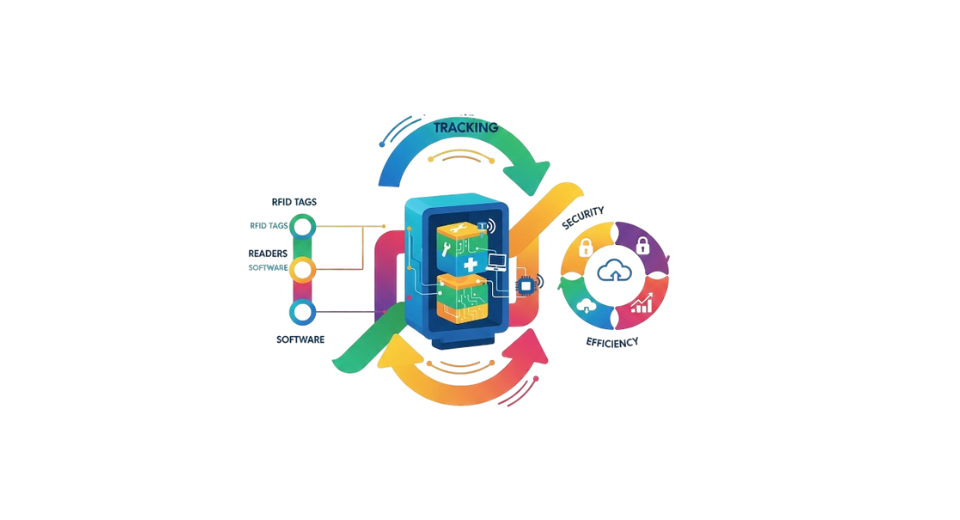
The report “RFID Smart Cabinets Market By Type (Standalone Smart Cabinets and Integrated Smart Cabinets), By Component (RFID Tags, RFID Readers, RFID Antenna, Others), By Cabinet Type (Medication Cabinets, Supply Cabinets, Equipment Cabinets, Inventory Cabinets) and By End User (Hospitals and Clinics, Bio-Pharmaceutical Companies, Manufacturing Facilities, Others)” is expected to reach USD 6.35 billion by 2033, registering a CAGR of 22.90% from 2026 to 2033, according to a new report by Transpire Insight.
The market for RFID Smart Cabinets is getting increasingly popular as organizations in the healthcare, life sciences, and manufacturing sectors are adopting automated inventory management solutions in a big way. The adoption of RFID-enabled Smart Cabinets in organizations enables efficient handling of high-value materials such as medications, healthcare supplies, equipment, and industrial parts. They are an important solution for minimizing inventory losses in organizations. The demand for the use of RFID smart cabinets is mainly fueled by the increased complexity in supply chains and the need to provide accurate and item-level tracing. Additionally, in healthcare, the focus on patient safety, error reduction, and compliance is driving the uptake of the use of RFID-based storage solutions. Similarly, the pharmaceutical and manufacturing sectors are embracing the use of smart cabinets to improve inventory turns and provide accountability. Technological advancements have further fueled market growth. Compatibility of the RFID cabinet with cloud solutions, enterprise resource planning, and analytical tools has made predictive inventory management and automated replenishment possible. It has further helped enterprises in their movement towards cost-efficient resource allocation from reactive inventory management.
Going forward, the market will benefit from falling component prices for RFID, rising digitalization efforts, and rising adoption within developing nations. With more companies focusing on automation and transparency, RFID Smart Cabinets are turning into a long-term strategic play for improved resilience and scalability within organizations.
The Integrated Smart Cabinets segment is projected to witness the highest CAGR in the RFID Smart Cabinets during the forecast period.
According to Transpire Insight, The smart cabinets with integration form the prominent segment as they can be seamlessly connected with the hospital information system, ERP system, as well as the warehouse management system. Large hospitals, pharmaceutical firms, and manufacturing units require integration solutions to have control and consistency across the enterprise. The smart cabinets have automated replenishment, compliance reporting, as well as analytics capabilities. These functions are important when it comes to handling large volumes.
The dominance in the market is also made stronger by the requirement for interoperability in digital environments, which is increasing. The need for reduced manual intervention and the avoidance of data silos is fulfilled by integrated cabinets, as they help in decision-making. Scaling operations and digital transformation strategy execution are expected to maintain the dominance of integrated smart cabinets.
The RFID Tags segment is projected to witness the highest CAGR in the RFID Smart Cabinets during the forecast period.
The smart cabinet technology is made up of RFID tags. These have been the most dominant segment of the market. Their capacity to track and trace each item has been a source of accuracy and authenticity. Their improvements have been towards becoming more rugged, resilient, and versatile. People have started using these in the healthcare and manufacturing sectors.
However, simultaneously, the reduced cost of tags has contributed towards the growing popularity of item-level tagging, especially in the health care sector and pharmacies, where tracing is of utmost importance. In the wake of the increasing need for inventory accuracy and regulatory oversight, the use of RFID tags will continue to be an integral component of scaleable smart cabinet solutions.
The Medication Cabinets segment is projected to witness the highest CAGR in the RFID Smart Cabinets during the forecast period.
According to Transpire Insight, Medication cabinets are leaders in their product category due to growing worries about patient safety, controlled substance security, and regulatory requirements.” Hospitals are increasingly turning to RFID-enabled medication cabinets to minimize dispensing errors, divert attempts, and recording inaccuracies. “Real-time tracking provides improved accountability and enhanced efficiencies.
This segment enjoys the increasing adoption of automated medication management solutions in acute and specialty care environments. The seamless integration with electronic healthcare and pharmacy solutions helps to reinforce the value proposition and place medication cabinets as an essential part of any healthcare system.
The Hospitals and Clinics segment is projected to witness the highest CAGR in the RFID Smart Cabinets during the forecast period.
Hospitals and clinics account for the largest end-user market, thanks to their large inventory and the need to comply with regulations. Healthcare facilities can efficiently handle their inventory of medications, supplies, and equipment by using smart cabinets from the RFID industry. This can free more time in healthcare facilities to attend to their clients.
Continued investment in healthcare IT and patient safety drives the trend. Hospitals being pressed for cost and resources make RFID smart cabinets an attractive technology that offers ROI through efficiency and cost associated with inventory losses.
The North America region is projected to witness the highest CAGR in the RFID Smart Cabinets during the forecast period.
The market for the RFID Smart Cabinets is predominantly led by the region of North America because of advanced healthcare facilities and technology penetration. The healthcare industry is emphasizing the uses of smart cabinets as they help to focus on medication safety and compliance. The strict healthcare policies and the need to meet these healthcare parameters through the implementation of smart cabinets are steadily promoting the growth of the market. The use of advanced technology is making it possible to integrate smart cabinets effectively into the healthcare information system and maximize operational efficiencies.
The United States continues to be the major growth driver in the North American region due to factors such as a high level of expenditure in the healthcare sector and a focus on digital health and automation. Steady adoption is a characteristic of the Canadian market due to efforts in the modernization of the country’s healthcare system, while Mexico is gradually embracing the use of RFID in the healthcare and industrial sectors. Moreover, the region leverages the presence of major players in the RFID solution industry and the manufacturing of components in the region, ensuring rapid innovation cycles and scalable implementation. With the emphasis on the containment of costs in the healthcare industry, the region of North America is set to lead in the use of RFID smart Cabinet Solutions.
Key Players
The top 15 players in the RFID Smart Cabinets market include Terso Solutions, LogiTag Systems, WaveMark (Cardinal Health), Mobile Aspects, SATO Vicinity, Invengo Technology, Palex Medical, Grifols, Impinj, Avery Dennison, Stanley Healthcare, Nexess, Alien Technology, Spacecode, and Dipole RFID.
Drop us an email at:
Call us on:
+91 7666513636

 inquiry@transpireinsight.com
 APAC:+91 7666513636
 Address





