
Feb 04, 2026
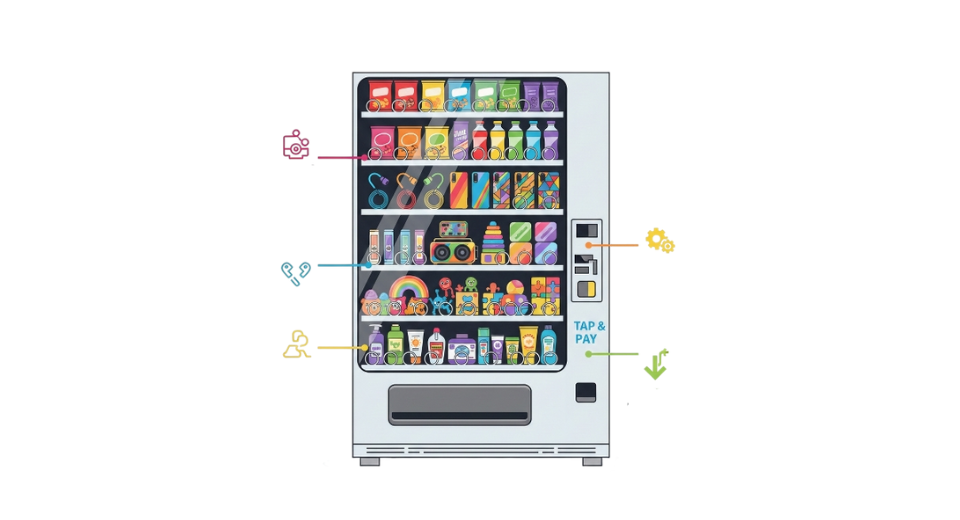
The report “Retail Vending Machine Market By Product Type (Beverage Vending Machines, Snack Vending Machines, Food Vending Machines, Pharmaceuticals Vending Machines, Others), By Technology (Traditional Vending Machines, Smart/AI?Enabled Vending Machines), By Payment Mode (Cash?Based Vending Machines, Cashless Vending Machines) and By Application (Commercial Places, Offices & Workplaces, Public Places, Educational Institutions, Hospitals & Healthcare Facilities, Restaurants, Bars & Clubs, Others)” is expected to reach USD 51.20 billion by 2033, registering a CAGR of 9.70% from 2026 to 2033, according to a new report by Transpire Insight.
The growing need for easy, on-the-go access to food, drinks, medications, and other consumer goods has propelled the global retail vending machine market's recent notable expansion. The market includes a wide variety of devices, including as food, snack, beverage, and multi-product systems, that are placed in public, institutional and commercial settings. The demand for sophisticated vending technology is being driven by consumers' growing preference for automated retail solutions that enable 24/7 access, minimize human interaction, and provide speedier transactions. One of the main factors driving market expansion is technological innovation. Globally, smart and AI-enabled vending machines with cashless payment interfaces, real-time inventory management and Internet of Things connectivity are becoming more and more popular.
While customers enjoy individualized product choices and smooth transactions, operators gain from increased operational efficiency, predictive analytics, and higher customer engagement. In developed areas with high levels of digital literacy and mobile payment adoption, such North America, Europe, and portions of Asia Pacific, this tendency is especially pronounced. Rising disposable incomes, shifting consumer lifestyles, and urbanization all have an impact on the market. Due to steady consumption trends in public areas, businesses, educational institutions, and offices, beverage and snack vending machines continue to dominate product demand. In the meantime, new industries like food and pharmaceutical vending machines are growing in institutional and healthcare settings providing operators with additional sources of income and broadening the market. The market environment is further shaped by regional factors. Asia Pacific is the largest and fastest-growing region because of its dense urban population, high mobile payment penetration, and developing commercial infrastructure, whereas North America and Europe are still mature markets with strong adoption of smart vending systems. Vending machine usage is also rising in emerging economies in South America, the Middle East, and Africa due to urbanization, increased tourism, and modernization of public and commercial infrastructure.
The Beverage Vending Machines segment is projected to witness the highest CAGR in the Retail Vending Machine during the forecast period.
According to Transpire Insight, Beverage vending machines lead the global market due to their consistent consumption trends and widespread adoption across offices, commercial establishments, transit hubs, and educational institutions. For customers who are constantly on the go, these machines provide quick and easy access to a range of beverages, such as water, soft drinks, energy drinks, and specialty coffees. The category is a reliable source of income for operators because to its high frequency of repeat purchases. Additionally, the combination of mobile and cashless payments has improved user experience and operational effectiveness, boosting acceptance in both developed and developing economies.
By offering dynamic pricing, real-time inventory monitoring, and customized promotions, smart beverage vending machines also help the market expand. While consumers gain from touchless and hygienic dispensing choices, operators can streamline supply chains and minimize stockouts. IoT connectivity and AI-powered product suggestions are two examples of technological innovations that are influencing customer behavior and creating new business opportunities in busy areas. Beverage vending machines are becoming more popular around the world because to sustainability measures including energy efficient cooling systems.
TheSmart/AI?Enabled Vending Machines segment is projected to witness the highest CAGR in the Retail Vending Machine during the forecast period.
The capacity of smart and AI-enabled vending machines to combine convenience, operational efficiency, and improved customer experience has made them the fastest-growing technology segment. These devices use IoT connectivity to track sales success, stock levels and maintenance needs in real-time, empowering operators to make informed decisions. Multilingual touchscreens, cashless transactions and dynamic product recommendations are examples of features that have raised customer happiness and engagement. Smart machines are positioned as a premium solution in busy commercial and public areas thanks to the use of AI data which enables predictive replenishment and personalized marketing. Consumers prefer less involvement during transactions, the growing desire for hygienic, contactless solutions has boosted acceptance, especially after the epidemic. Additionally, by using energy-efficient parts and minimizing product waste, smart vending machines help achieve environmental goals. North America, Europe, and Asia Pacific have the strongest global deployment because to their high levels of mobile penetration and digital payment infrastructure. Corporate offices, academic institutions, airports, and hospitals looking to improve service accessibility and streamline retail operations all contribute to growth.
The Cashless Vending Machines segment is projected to witness the highest CAGR in the Retail Vending Machine during the forecast period.
According to Transpire Insight, Due to the growing popularity of mobile wallets, NFC-enabled cards, and app-based payment methods, cashless vending machines are quickly displacing conventional cash-based systems. These devices facilitate quick and safe transactions, satisfying customer demands for ease and speed. Additionally, cashless systems improve consumer engagement and operational efficiency by allowing operators to track sales in real-time, optimize inventory, and offer loyalty programs or customized discounts. In areas like North America, Europe, and Asia Pacific where digital payments are widely used, the adoption is most robust.
In addition to being convenient, cashless vending machines improve hygiene by minimizing the handling of real currency, an aspect that has grown more crucial in settings where public health is a concern. Additionally, the technology makes it easier to integrate IoT connectivity and AI data allowing for dynamic pricing strategies and predictive replenishment. Cashless vending machines are becoming a major growth driver for both established and developing markets as operators concentrate on customer centric solutions. They offer a modernized and scalable substitute for conventional vending infrastructure.
The Commercial Places segment is projected to witness the highest CAGR in the Retail Vending Machine during the forecast period.
Due to their high foot traffic and varied customer needs, commercial spaces such as shopping centers, retail establishments, and entertainment venues are the main application segment for vending machines. These areas are dominated by snack and beverage vending machines, which provide customers and guests with quick and easy access to goods. Smart machine data analytics can be used by operators to improve pricing, stock levels, and product placement. The user experience is further improved by the integration of mobile and cashless payment methods, which guarantee speedy and safe transactions.
As commercial facilities increasingly use multi-product machines to optimize transaction value, the category is anticipated to grow even more. Without depending on manned counters, retailers may generate income continuously and save personnel costs. In order to meet the demands of contemporary consumers for convenience, customization, and environmental responsibility, advanced vending solutions in commercial settings now incorporate touchless interfaces, AI-powered recommendations, and sustainable energy efficient systems.
The North America region is projected to witness the highest CAGR in the Retail Vending Machine during the forecast period.
Due to its robust digital payment infrastructure and high consumer acceptance of automated retail, North America is one of the most developed and technologically sophisticated regions in the worldwide retail vending machine industry. Due to the extensive installation of vending machines at workplaces, retail establishments, educational institutions, and transit hubs, the United States leads regional demand. Due to regular usage and strategic placement in high-traffic areas, beverage and snack vending machines continue to produce the largest revenue share. Early adoption of mobile and cashless payment technologies also benefits the area by improving transaction speed, customer convenience and operator operational transparency.
The swift adoption of intelligent and artificial intelligence-powered vending machines is influencing growth in North America. To maximize inventory management, minimize downtime, and customize product offerings, operators are utilizing IoT connection, real-time monitoring, and data analytics. Hygienic, contactless, and energy-efficient vending solutions are becoming more and more popular in corporate settings and healthcare facilities. Furthermore, the use of next-generation devices with lower power consumption is being encouraged by energy restrictions and sustainability programs. All of these elements work together to make North America a stable but innovative market that presents chances for long-term expansion for both well-established and up-and-coming vending machine manufacturers.
Key Players
The top 15 players in the Retail Vending Machine market include Fuji Electric Co., Ltd., Crane Merchandising Systems Ltd., Sanden Holdings Corp., Azkoyen Group, Royal Vendors, Inc., Seaga Manufacturing, Inc., Bianchi Industry S.p.A., Jofemar Corporation, FAS International S.p.A., Sielaff GmbH & Co. KG, N&W Global Vending S.p.A. (Evoca Group), Westomatic Vending Services Ltd., Automated Merchandising Systems, AUCMA, and Deutsche Wurlitzer GmbH.
Drop us an email at:
Call us on:
+91 7666513636

 inquiry@transpireinsight.com
 APAC:+91 7666513636
 Address





