
Feb 12, 2026
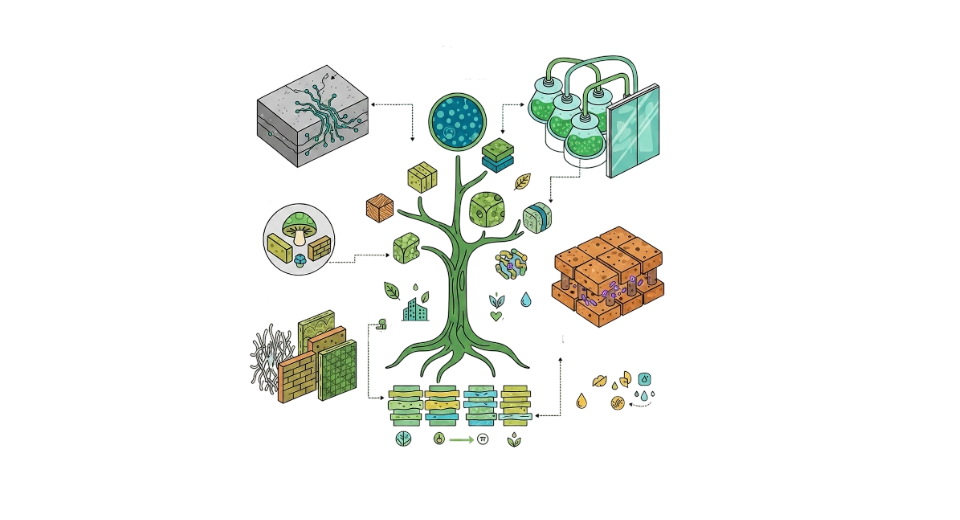
The report “Living Building Materials Market By Material Type (Bio-Concrete, Mycelium-Based Materials, Algae-Based Materials, Bacteria-Based Materials, Bio-Cement, Others), By Construction Type (New Construction, Renovation & Retrofitting), By Application (Structural Materials, Insulation, Flooring, Wall Panels & Bricks, Roofing, Others) and By End Use Industry (Residential Construction, Commercial Construction, Industrial Construction, Infrastructure Development)” is expected to reach USD 48.30 billion by 2033, registering a CAGR of 8.90% from 2026 to 2033, according to a new report by Transpire Insight.
The Living Building Materials Market is witnessing increased attention, as the construction sector is moving towards the use of more sustainable, green, and low-carbon construction materials. Living building materials involve the use of biological processes, bacteria, fungi, algae, etc., in order to make them more durable, self-repairing, and reduce the environmental impact. The growth of the market is impacted by sustainability commitments, especially considering the increased pressure on the construction segment regarding the increase in green house emissions. The need for green, eco-friendly infrastructure is motivating the construction sector towards bio-based infrastructure. Market expansion is heavily influenced by regulatory efforts encouraging the adoption of green building technologies and carbon emission reduction strategies in both developing and developed countries. The focus is on investing in research and development initiatives to ensure the availability of futuristic material technologies that are environmentally beneficial and minimize lifecycle carbon emissions. Living materials provide cost-effective solutions while requiring less type of maintenance and extending the lifespan of buildings that incorporate such materials.
The advances made in material science and biotechnology are fueling the pace of commercializing these technologies. The partnership between construction firms, academia, and tech developers is helping to speed up the move from experimental uses to practical application. Additionally, the inclusion of sustainability in the procurement systems of the construction industry is supporting the application of innovation in material science. Presently, the market has a positive outlook due to the influence of urbanization, updating of infrastructure, and climate-related construction policies. Even though penetration is still at an early stage compared to other construction materials, the rising awareness of environmentally friendly materials for cost-saving strategies is likely to boost the market penetration of composite materials in the future.
The Bio-Concrete segment is projected to witness the highest CAGR in the Living Building Materials during the forecast period.
According to Transpire Insight, Bio-concrete is seen as the leading material type segment of the living building material segment, owing to its ability to resolve both durability and sustainability challenges faced by building construction. The incorporation of microbes, which can close cracks independently and seal structures, minimizes maintenance time and maximizes durability, thus becoming popular due to the construction of infrastructure and commercial buildings. An increase in asset management approaches and investments in enhancing infrastructure has boosted demand for self-healing construction materials, which can help reduce interruptions and repair costs.
Furthermore, bio-concrete fits in well with the progressively changing environmental requirements aimed at reducing the levels of carbon emissions, which contribute to the conventional cement production process. Compatibility of bio-concrete with the conventional construction process is an added advantage towards its scalability, as there is no need to alter the construction process. However, as the microbial technology improves towards better efficiency, bio-concrete is likely to remain at the top of the market in the classification of living materials, especially in the regions where the need to optimize the construction process exists.
The New Construction segment is projected to witness the highest CAGR in the Living Building Materials during the forecast period.
New construction continues to dominate as the major construction type segment due to the increasing trend in incorporating living materials in the initial design and planning phases. This gives room to adopt sustainable materials while ensuring compatibility with green building certifications, energy conservation strategies, as well as regulatory compliance. Also driving the growth in innovative building materials are large-scale urban projects around smart cities.
New construction projects also have the room for variety in terms of materials used, which allows for the incorporation of upcoming technologies more easily than with retrofitted buildings. Developers have also started recognizing the economic benefits of using living materials in the long term. New construction is also likely to continue being the main source of market growth as the issue of sustainability becomes an inherent part of the process.
The Structural Materials segment is projected to witness the highest CAGR in the Living Building Materials during the forecast period.
According to Transpire Insight, Structural materials occupy the foremost position in the application segment due to the rising need for sustainable and durable materials for structural applications. Living materials used for structural purposes play a significant role in ensuring increased longevity along with reduced carbon footprint, which is in line with the sustainable development criteria in the infrastructure and commercial construction sectors.
Also, the advancements made in the field of bio-cement and bacteria-based materials have enhanced their ability to bear loads, making them fit for large-scale infrastructural projects. Structural applications offer higher value to living materials, as the enhancements made will directly reduce operational and maintenance costs. As the construction industry is moving towards a more sustainable approach, structural applications will be the key to the overall acceptance of living building materials.
The Residential Construction segment is projected to witness the highest CAGR in the Living Building Materials during the forecast period.
The most promising end-use sector is the residential sector, driven by the trend of increasing consumer awareness about sustainable living and energy-efficient construction practices. Both consumers and builders are showing a keen interest in eco-friendly products that minimize energy consumption and negative impacts on the environment. The government’s initiative in providing incentives to promote green building projects is another catalyst for the sector.
The segment also has the advantage of an increasing demand for environment-friendly materials for use in constructions that help improve indoor environment quality as well as reduce the maintenance costs of the structures. The living building materials promise potential benefits such as improved performance of the insulation materials as well as lower costs, making the segment a significant growth prospect in the market as it is increasingly becoming a point of differentiation in the mainstream residential real estate market.
The North America region is projected to witness the highest CAGR in the Living Building Materials during the forecast period.
North America represents the regional market leader for living building materials due to strong research capabilities, early adoption of innovative technologies in construction, and supporting regulatory frameworks. The United States is central, with active collaboration across leading biotechnology firms, construction companies, and academic institutions focused on the development of scalable low-carbon materials. Growing investments in sustainable infrastructure and green building certification are accelerating commercialization efforts across the region.
This has been supported by a growing emphasis on lifecycle emissions reduction in public infrastructure projects, thereby encouraging the use of advanced materials that help improve durability, reducing maintenance costs. Canada contributes through environmentally focused construction policies, while Mexico demonstrates gradual adoption supported by modernization initiatives. The focus on technological innovation and sustainability compliance positions North America as one of the leading regional drivers in global market development.
Key Players
The top 15 players in the Living Building Materials market include Ecovative LLC, bioMASON Inc., Prometheus Materials Inc., Green-Basilisk B.V., Ecocem Ireland Ltd., BASF SE, CEMEX S.A.B. de C.V., Heidelberg Materials AG, Holcim Ltd., CarbiCrete Inc., Blue Planet Systems Corporation, Solidia Technologies Inc., C-Crete Technologies LLC, ECOncrete Tech Ltd., and Calera Corporation.
Drop us an email at:
Call us on:
+91 7666513636

 inquiry@transpireinsight.com
 APAC:+91 7666513636
 Address





