
May 11, 2026
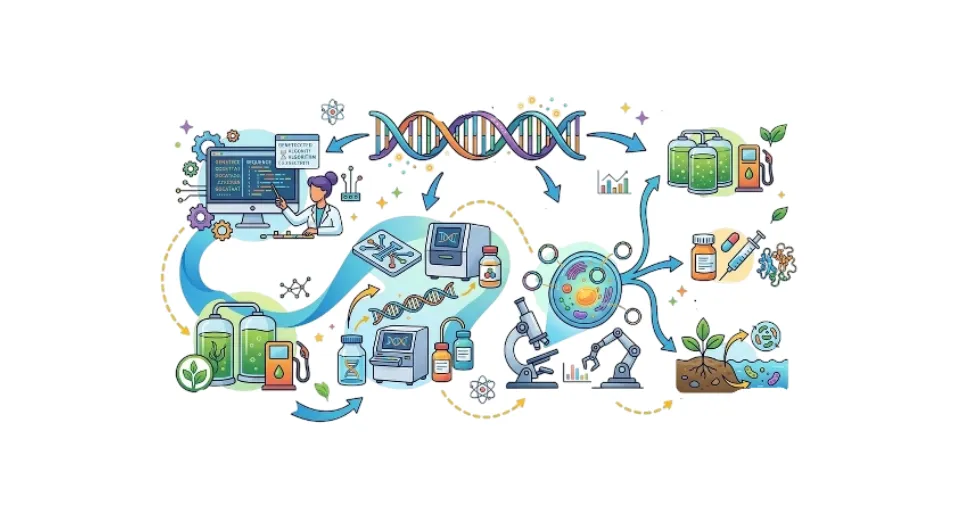
Science and biology are coming together in new ways, and this shift is driving strong growth in the Global Synthetic Biology Market. This field focuses on designing and building new biological systems or improving existing ones for useful purposes. The market reached a value of USD 18.93 billion in 2024 and is expected to grow to about USD 22.28 billion in 2025. By 2033, the market will likely reach nearly USD 70.12 billion, expanding at a CAGR of 17.80% during the forecast period according to Transpire Insight
Many industries now use synthetic biology to solve real-world problems. Researchers and companies design biological parts such as DNA, enzymes, and cells to perform specific tasks. These tasks include producing medicines, improving crops, and creating sustainable materials. Because this approach offers flexibility and innovation, demand continues to grow across the Global Synthetic Biology Market.
Healthcare leads the Global Synthetic Biology Market and accounts for about 44% of total demand. Scientists use synthetic biology to develop new treatments, vaccines, and diagnostic tools. This technology helps create targeted therapies that improve patient outcomes. It also supports faster drug development and better disease detection. As healthcare systems focus on advanced treatments, the use of synthetic biology continues to increase.
Gene synthesis plays a key role in the Global Synthetic Biology Market. It allows scientists to create custom DNA sequences for research and development. This technology supports work in medicine, agriculture, and industrial applications. Genome engineering also supports the market by allowing precise changes to genetic material. These changes help improve organisms or create new biological functions.
Bioinformatics supports synthetic biology by helping researchers analyze large amounts of biological data. With advanced software and data tools, scientists can design and test biological systems more efficiently. This combination of biology and data science improves research speed and accuracy, which strengthens the Global Synthetic Biology Market.
Synthetic DNA is one of the most important products in this market. It forms the building blocks for many biological designs. Scientists use synthetic DNA to create new organisms or modify existing ones. Enzymes also play a major role because they help speed up chemical reactions in biological systems. Chassis organisms, such as modified bacteria or yeast, act as platforms for producing useful products.
Industrial biotechnology is another key application area in the Global Synthetic Biology Market. Companies use synthetic biology to produce biofuels, chemicals, and materials in a more sustainable way. This reduces dependence on fossil fuels and lowers environmental impact. Many industries now explore bio-based production methods to meet sustainability goals.
Agriculture also benefits from synthetic biology. Scientists develop crops that resist pests, tolerate harsh weather, and produce higher yields. This helps farmers improve productivity and reduce losses. Food and beverage industries also use synthetic biology to create alternative ingredients, improve food quality, and develop new products.
North America holds a strong position in the Global Synthetic Biology Market due to advanced research facilities and strong investment in biotechnology. The United States leads in innovation, supported by research institutions and biotechnology companies. Europe also shows steady growth, with countries investing in sustainable technologies and life sciences. Asia Pacific is growing quickly as countries like China, India, and Japan increase investment in biotechnology research and development.
Technology advancements continue to shape the Global Synthetic Biology Market. Automation, artificial intelligence, and advanced lab tools help researchers design and test biological systems faster. These technologies reduce development time and improve results. As tools become more advanced, companies can scale production and bring products to market more quickly.
Challenges still exist in the market. High research costs and complex regulations can slow down development. Ethical concerns about genetic modification also require careful consideration. However, ongoing research and clear regulations help address these challenges and support market growth.
Key companies operating in the Global Synthetic Biology Market include Ginkgo Bioworks Inc., Amyris Inc., Twist Bioscience Corporation, Synthetic Genomics Inc., Intrexon Corporation (Precigen Inc.), Codexis Inc., GenScript Biotech Corporation, Novozymes A/S, Illumina Inc., Thermo Fisher Scientific Inc., Agilent Technologies Inc., Merck KGaA, Evonetix Ltd., Synthego Corporation, and Zymergen Inc. These companies focus on research, innovation, and partnerships to expand their presence in the Global Synthetic Biology Market.
The Global Synthetic Biology Market will continue to grow as industries look for smarter and more sustainable solutions. Advances in healthcare, agriculture, and industrial production will drive demand for synthetic biology applications. As technology improves and awareness increases, this market will play an important role in shaping the future of science and industry.
Drop us an email at:
Call us on:
+91 7666513636

 inquiry@transpireinsight.com
 APAC:+91 7666513636
 Address





