
Jan 03, 2026
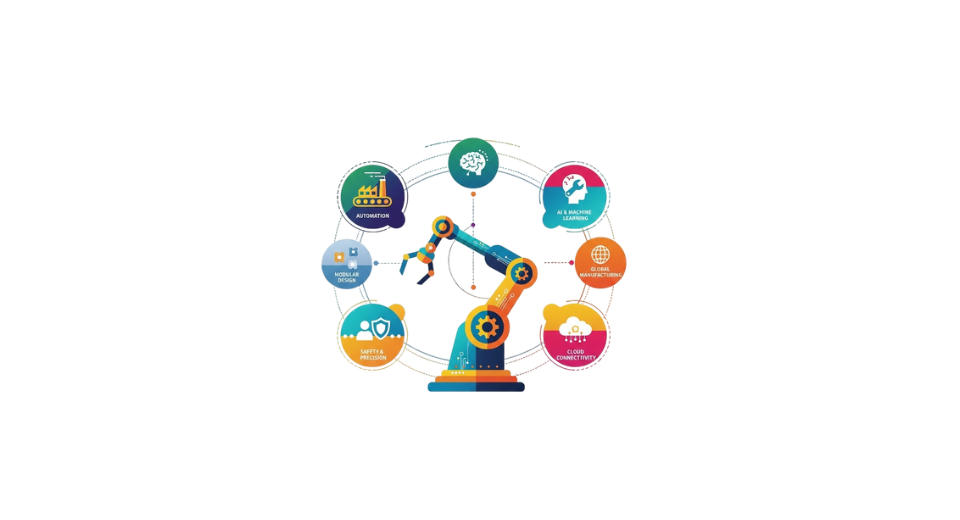
The report “Industrial Robotics Market By Type of Robots (Articulated Robots, SCARA Robots, Delta Robots, Linear Robots, Collaborative Robots, Others), By Payload Capacity(0-5 Kg, 5-50 Kg, 50-500 Kg, Above 500 Kg), By Application (Material Handling, Welding, Assembly, Painting & Coating, Pick & Place, Inspection & Quality Control, Others), By End-Users (Automotive, Electronics & Electricals, Metal & Machinery, Food & Beverages, Pharmaceuticals & Healthcare, Plastics & Chemicals, Others)” is expected to reach USD 45.90 billion by 2033, registering a CAGR of 11.75% from 2026 to 2033, according to a new report by Transpire Insight.
A surge in automation pushes machines into factories faster than ever before. These mechanical helpers, some with swinging arms, others that glide sideways or stack up like towers, take part in building, joining, moving things around, coating surfaces, and even checking quality. Not just clunky tools anymore, they learn from patterns, see what needs fixing, and adjust on their own. Smarts hidden inside link through networks, respond to surroundings, and work alongside humans without fences. Factories now breathe differently, alive with motion shaped by code and sensors watching every move.
Fueled by climbing wages and tougher manufacturing demands, companies chase better output without sacrificing standards. In vehicles, machines already handle most tasks, yet gadgets, tools, meals, and meds still find new roles for robotic help during build, wrap, and check phases. Side by side with people, newer helper bots bring adaptable, secure motion to workshops that never could afford rigid systems before.
Programs like Industry 4.0, smarter factory setups, alongside growing online shopping and automated warehouses, drive the need for robots that move goods or place items precisely. Even so, steep startup costs, difficulties linking systems, plus a shortage of trained workers hold things back. Yet potential in newer markets, niche sectors, along with adaptable robot designs, could keep momentum going over time.
The Articulated Robots segment is projected to witness the highest CAGR in the Industrial Robotics market during the forecast period.
According to Transpire Insight, Flexibility gives articulated robots an edge; their multi-jointed structure supports intricate work like welding, assembly, moving materials, and even painting. These machines adjust easily across industries, whether car plants or gadget factories, fitting tasks where accuracy matters most. Growth trends point upward simply because they help cut reliance on manual effort while boosting output quality. Expect this group to grow faster than others in the coming years.
Faster progress in artificial intelligence, visual sensing systems, and control programs keeps boosting what jointed robotic arms can do, making them swifter, more precise, and even able to work near people. The rise of intelligent manufacturing sites, combined with heavier spending on self-operating assembly setups, pushes these robot types into wider use across countries.
The 5-50 Kg segment is projected to witness the highest CAGR in the Industrial Robotics market during the forecast period.
Mid-sized robots, able to carry loads from 5 to 50 kilograms, are expected to grow fastest in the coming years. These machines fit well where strength and movement matter factories building cars, gadgets, everyday products, or heavy equipment. Their sweet spot lies in how much they can lift without losing agility. Tasks like putting parts together, moving items around, or grabbing and placing objects match their abilities closely.
What's interesting is how more small and medium businesses are turning to cobots and smart automation. These tools work well alongside people, which helps explain their rising popularity. Not only do they handle tasks between 5 and 50 kg, but they also fit smoothly into modern production setups. Because they are flexible and affordable, companies keep choosing them. They link easily with digital factory networks. It turns out that the mix makes a real difference in daily operations.
The Material Handling segment is projected to witness the highest CAGR in the Industrial Robotics market during the forecast period.
According to Transpire Insight, Efficiency jumps when robots move things around. Growth here outpaces others in industrial robotics, simply because warehouses and factories demand faster workflows. Moving goods gets easier with machines that sort and stack without tiring. Speed improves where people once struggled under heavy loads or tight deadlines. Fewer mistakes happen when automated arms take over loading tasks on production lines. Labor expenses shrink as these systems run nonstop through shifts. Accuracy rises in areas packed with boxes, labels, and tight schedules. Demand grows strongest where time matters most: getting items from point A to B without delays.
Faster online shopping demand pushes more companies toward robotic handling systems. Cold storage networks now rely on these machines just as much as digital inventory hubs do. A mix of artificial intelligence and sensor-based tracking sharpens how smoothly operations run. Automated carts work alongside these tools, linking tasks across factory floors. This blend turns out to be one of the strongest forces behind robot use in production worldwide.
The Automotive segment is projected to witness the highest CAGR in the Industrial Robotics market during the forecast period.
Faster growth is expected in car-making, where robots now handle tasks like putting parts together, joining metal, coating surfaces, and moving materials, driven by a push for sharper accuracy and smoother output. Modern cars are packed with intricate designs, pushing factories to lean heavily on automated systems just to meet strict quality demands.
Fueled by shifts in transport tech, car plants now lean more on machines that work like teams. Automation spending climbs as factories go digital across nations. New workflows spark need for older robot types too, not just the newest models. Rising EV output pushes these changes faster than expected.
The North America region is projected to witness the highest CAGR in the Industrial Robotics market during the forecast period.
Ahead of most regions, North America sees strong momentum building in industrial robotics. New factory tech pushes change across production floors. Automation spreads fast through car plants and gadget makers alike. Funding pours into connected systems and digital upgrades. Growth sticks close to innovation paths already unfolding.
Fueled by firm backing from authorities, fresh advances in tech, and shrinking workforces, factories everywhere now move faster toward robotic systems. A push for leaner operations, along with tighter budgets, pushes even smaller firms to adopt these machines. Growth surges where hands once dominated tasks, since precision and speed matter more every day.
Key Players
Top companies include Fanuc Corporation, Kuka Global, ABB Ltd, Yaskawa Global, Mitsubishi Electric, Universal Robots, Epson, Staubli, Omron Industrial Automation, Kawasaki Robots, Comau, Denso Robotics, TM Robotics, Goeke Group, and Svaya Robotics.
Drop us an email at:
Call us on:
+91 7666513636

 inquiry@transpireinsight.com
 APAC:+91 7666513636
 Address





