
Jan 23, 2026
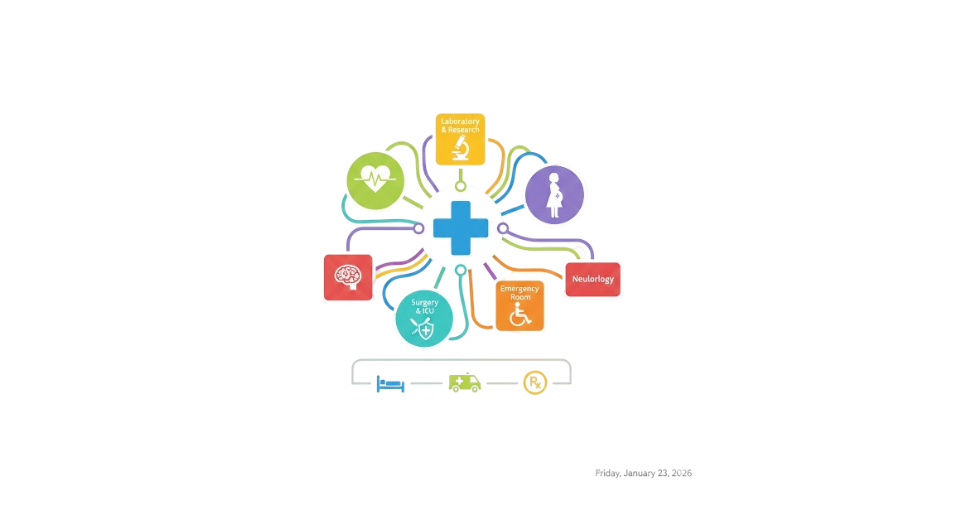
The report “Hospital Facilities Market By Product Type (Medical Equipment, Patient Care Facilities, Laboratory Services, Emergency Services, Diagnostic Imaging, Surgical Facilities), By Application (Inpatient Care, Outpatient Care, Emergency Care, Surgical Services, Diagnostic Services), By Ownership (Public, Private), By End-Users (Public Hospitals, Private Hospitals, Specialty Hospitals, Academic Medical Centers)” is expected to reach USD 345.60 billion by 2033, registering a CAGR of 6.30% from 2026 to 2033, according to a new report by Transpire Insight.
From operating rooms to recovery zones, hospitals hold everything needed for medical care. Because modern treatment demands smooth workflows, layouts now follow how patients move through care steps. Spaces like labs, imaging suites, ERs, and wards connect behind the scenes. When design focuses on both staff needs and healing environments, outcomes often shift subtly but surely. Infrastructure is not just walls; it shapes how medicine works day to day.
Older people need more care now. Because of that, hospitals face bigger workloads. Chronic illnesses add pressure too. Medical centers grow larger to keep up. New buildings follow tougher rules for safety. Quality checks matter more every year. Rules change often. Care focuses on patients first these days. Value counts above all else. Room designs adjust because of it. Staff routines shift slowly. Efficiency becomes a top goal. Stopping infections gains importance. Shorter stays are common now.
Now, hospitals look different because tech keeps changing how they work. New tools like faster scanners, robot-run labs, live patient tracking, and connected building systems shape what gets built today. Money flows in through state budgets, business ventures, or shared efforts between officials and companies. Big projects rise from these mixes of support, pushing medical centers to become stronger, sharper, smarter. What stands now was unthinkable just years ago.
The Diagnostic Imaging segment is projected to witness the highest CAGR in the Hospital Facilities market during the forecast period.
According to Transpire Insight, it spots illnesses fast, guides correct diagnoses, and cuts guesswork in therapy choices. As pressure builds for quicker, sharper, less invasive tests, machines like MRI, CT, ultrasound, and digital X-ray move up the priority list. Chronic illnesses are spreading more widely now, including cancer, brain disorders, and heart issues, pushing medical centers to upgrade their scanning tools just to keep pace.
Now, machines learn faster, so clinics push ahead with new tools. Because smart software reads scans better, staff handle cases quicker. When patients visit local centers instead of long stays, more tests happen each day. Since doctors focus on catching issues early, imaging work grows steadily. As care shifts outside big wards, X-rays and scans gain a central role in planning. With progress piling up, these services now shape how hospitals design their spaces.
The Inpatient Care segment is projected to witness the highest CAGR in the Hospital Facilities market during the forecast period.
Hospital stays remain central to how healthcare facilities operate, thanks to ongoing medical oversight, intricate procedures, and sometimes long healing after surgery. More people now deal with long-term illnesses, serious infections, or health issues tied to aging, filling beds across the country. This steady flow keeps pressure on hospitals to maintain strong inpatient areas, especially ICUs, ready for critical cases. Comfort matters more these days, along with keeping patients safe while boosting treatment results, nudging administrators toward updated room designs and better monitoring systems. New builds often reflect this shift, quietly adapting spaces where care happens around the clock.
Hospital stays are shifting toward more intense medical needs, often demanding sharper results. Because of tougher health cases, intensive care areas grow, alongside rooms built for infection control, plus units fine-tuned for specific illnesses. New ways to watch patients closely help these changes happen smoothly. Even though clinics outside hospitals and treatment at home get more attention now, overnight care still handles tough emergencies without delay. This keeps improvements coming steadily, quietly upgrading what inpatient centers offer.
The Private Hospitals segment is projected to witness the highest CAGR in the Hospital Facilities market during the forecast period.
According to Transpire Insight, More people choose private clinics because they want quicker appointments, better comfort, and quieter rooms. Insurance now covers more treatments, so accessing these places feels less difficult. Comfort matters more today, prompting upgrades in equipment and staff training across many city locations. Some patients value privacy during recovery, leading to quiet zones inside newer buildings. Facilities add extra beds and fresh technology since families expect smooth visits without delays. Growth continues as trust builds slowly through consistent routines and clean environments.
Nowhere else do machines meet medicine so closely as inside private clinics. These centers often open doors first when new tools arrive on the scene. Instead of waiting, they install high-end scanners that see deeper into the body. Tiny incisions replace large cuts because their surgical rooms run on precision gear. Digital records flow smoothly from desk to doctor, cutting delays. Behind each upgrade stands serious money channeled into better performance. Chains of privately owned hospitals push expansion by sharing resources across cities. Even government projects lean on them now, joining forces where needed. Their footprint grows quietly but steadily within healthcare’s evolving shape.
The Public Hospitals segment is projected to witness the highest CAGR in the Hospital Facilities market during the forecast period.
Public hospitals still form a core piece of the facility landscape because they offer medical access at low cost to many people. As more patients seek care, illnesses spread further, and health systems face strain, officials respond by building and improving government-run centers. Even amid changes, these institutions manage vast portions of urgent treatments, overnight stays, and intensive procedures - keeping pressure on physical infrastructure high. Though challenges grow, reliance on such hubs holds steady across nations. Expansion often follows outbreaks, policy shifts, or population spikes in urban zones.
Nowadays, public hospitals keep pushing updates that lift both treatment results and daily operations. Diagnostic tools get sharper when money flows into scanners, digital records, infection defenses, and extra beds. Funds usually trace back to state plans or global aid groups. Even with tight finances hanging around, gradual improvements take shape through team-ups with outside providers who bring skills and gear.
The North America region is projected to witness the highest CAGR in the Hospital Facilities market during the forecast period.
Modern hospitals in North America keep evolving, thanks to steady pushes toward better tech and improved patient experiences. Upgrades happen regularly so medical centers can run high-end scans, treat complex conditions, and operate smart care systems. Because staff pay close attention to safe practices, rules from authorities, and smooth workflows, improvements never really stop. Old buildings get remodeled, new tools arrive often, all tied to staying sharp in real-world healthcare demands.
Ahead of most others, clinics across the area now lean into connected systems and unified treatment approaches. Because machines handle routine tasks, staff can focus more on people while sensors keep track of vital signs without constant check-ins. Buildings that adapt quickly to changing needs are popping up, shaped by efficiency goals and real-time data. Instead of waiting years, upgrades happen faster due to steady funding flows from both government sources and corporate partners. Even universities with teaching hospitals play a role, testing new layouts before they spread wider. What sets this place apart is not just tech but how groups work together without slowing down.
Key Players
Top companies include Siemens Healthineers, GE HealthCare, Koninklijke Philips, Canon Medical Systems, Fujifilm Holdings, Medtronic, Stryker Corporation, Johnson & Johnson, Becton Dickinson and Company, Boston Scientific, Baxter International, Hologic, Abbott Laboratories, Olympus Corporation, Hitachi Healthcare, Roche Diagnostics, Thermo Fisher Scientific, Drägerwerk, Toshiba Medical Systems, and Mindray Medical.
Drop us an email at:
Call us on:
+91 7666513636

 inquiry@transpireinsight.com
 APAC:+91 7666513636
 Address





