
Jan 24, 2026
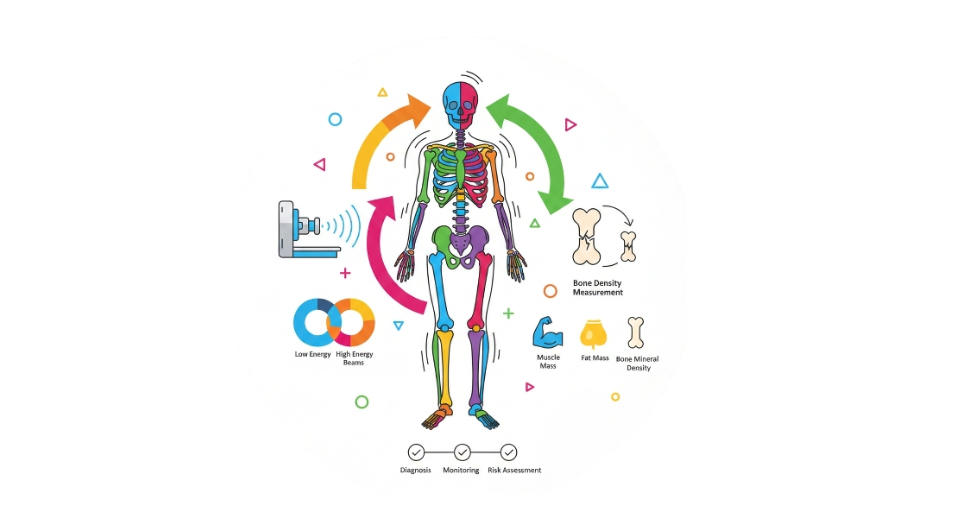
The report “Dual-energy X-ray Absorptiometry Market By Product Type (Central DEXA Systems, Peripheral DEXA Systems), By Technology (Fan Beam Technology, Pencil Beam Technology), Recycling & Recovery Technologies), By Application(Osteoporosis Diagnosis / Bone Density Measurement, Body Composition Analysis, Fracture Risk Assessment / Vertebral Fracture Assessment, Others) and By End-User(Hospitals, Diagnostic Imaging Centers, Specialty Clinics, Research & Academic Institutions, Others)” is expected to reach USD 3.55 billion by 2033, registering a CAGR of 9.40% from 2026 to 2033, according to a new report by Transpire Insight.
The Dual-energy X-ray Absorptiometry market assumes immense significance in line with modern advancements in diagnostic medical imaging, considering that DEXA scanners are recognized as “the gold standard” for diagnosing osteoporosis, as well as evaluating risks concerning fractures, considering factors such as precision, safety, as well as reproducibility. The high demand for bone health assessment services is directly associated with an aging population, an increased prevalence of osteoporosis, and an increased health consciousness of musculoskeletal disorders. With an increased average age of many populations all over the world, bone-related diseases caused by the process of aging are propelling the use of DEXA systems across various health centers. The importance of bone density measurements is being emphasized.
The technology used in DEXA scanners continues to evolve, driven by developments that emphasize faster scan speeds, improved image resolution, and built-in software platforms. The improved efficiency in workflow delivered through these advancements combined with developments like analysis using data analytics, continue to add value to innovation in DEXA technology. On the other hand, the larger market benefits through the expansion of the utilization of DEXA scans for purposes other than osteoporosis evaluation. Further, the utilization of DEXA scans continues to grow, extending to sports medicine and metabolic assessment. With the shift to the 'value-based' delivery of health care, DEXA machines are increasingly positioned for long-term, not short-term, utilization.
The Central DEXA Systems segment is projected to witness the highest CAGR in the Dual-energy X-ray Absorptiometry during the forecast period.
According to Transpire Insight, Central DEXA machines account for most of the DEXA equipment currently deployed in the market. This is mainly because of their high level of diagnostic capability and ability to perform assessments on clinically important axial bone sites such as the hip and spinal regions. Central DEXA machines are mostly deployed for use within hospital facilities in large-volume application environments. The status of DEXA equipment as a clinical standard for osteoporosis diagnosis continues.
Even the increased cost of the central systems is justified with regard to reimbursement potential and the general clinical benefits to the organization. These systems are considered to be a top choice for risk assessment and monitoring. In addition, constant innovation in terms of the features incorporated into the systems keeps them at the top for the type of product.
The Fan Beam Technology segment is projected to witness the highest CAGR in the Dual-energy X-ray Absorptiometry during the forecast period.
Fan beam technology is at the core of the leading technology category, given its ability to perform patient imaging at increased speeds while obtaining high image resolution when compared to alternative forms of technology. Faster patient imaging increases patient comfort while also ensuring efficient handling of increased imaging procedures.
This technology also has the added advantages of improved clarity and precision, which are very important for accurate bone density and body composition analysis. As the efficiency and accuracy requirements for diagnostic facilities have increased, the choice and prominence of fan beam technology have improved, making it the most popular technology in this area.
The Osteoporosis Diagnosis / Bone Density Measurement segment is projected to witness the highest CAGR in the Dual-energy X-ray Absorptiometry during the forecast period.
According to Transpire Insight, The largest application for osteoporosis diagnosis will continue, driven by increased risks of fractures in elderly populations and postmenopausal females. Various clinical recommendations across the world for osteoporosis diagnosis using DEXA for measuring bone density will ensure consistent usage.
The emphasis on preventive medical care is further increasing this segment. Early diagnosis helps control costs associated with fractures, as well as decreased mobility, with future health care expenses under control. Osteoporosis diagnosis continues to fuel growth for this market, as awareness campaigns grow.
The Hospitals segment is projected to witness the highest CAGR in the Dual-energy X-ray Absorptiometry during the forecast period.
The key end user segment for the hospitals, which have the superior diagnostic capabilities and access to a multidisciplinary care team, warrants the primary position for the segment. The patient numbers, along with the intricacies involved in patient management, make the hospitals key adopters for the state-of-the-art DEXA systems.
In addition to this, the stability of the capital investment potential and the current reimburse for diagnostic imaging services also contribute to the benefits of the DEXA equipment. Finally, the expansion of the DEXA systems to various orthopedic, endocrinology, and geriatric treatments creates the strength for the utilization rate, making the hospitals the cornerstones for end-user services.
The North America region is projected to witness the highest CAGR in the Dual-energy X-ray Absorptiometry during the forecast period.
The region that has the highest share in the Dual-energy X-ray Absorptiometry market is North America. This can be attributed to the advanced medical facilities present in the region, the awareness among clinicians, and the adoption of preventive bone health programs. In the region that covers the USA, Canada, and Mexico, hospitals and imaging centers show a high demand for Dual-energy X-ray Absorptiometry equipment. The reimbursement practices that are followed are crucial and ensure that Dual-energy X-ray Absorptiometry finds a high level of usage. However, the United States remains the key driver for the growth of the region, owing to the increasing elderly population, raise in the occurrence rate of osteoporosis, and the high number of available imaging infrastructure at outpatient clinics. With constant upgradation and enhancement in the quality and speed of imaging modalities, such as the adoption of faster fan beam scanners and the aid of artificial intelligence for enhanced image analysis, along with the increasing recognition and adoption rates for preventive and wellness-inspired medical imaging and diagnostics, the North American market is slated to remain at the top in comparison to the rest of the globe.
Key Players
The top 15 players in the Dual-energy X-ray Absorptiometry market include Hologic, Inc., GE Healthcare, OSTEOSYS Co., Ltd., DMS Imaging (Diagnostic Medical Systems Group), Swissray International, Inc., BeamMed Ltd., Medilink International, Fujifilm Holdings Corporation, Furuno Electric Co., Ltd., Medonica Co., Ltd., Scanflex Healthcare AB, Shenzhen XRAY Electric Co., Ltd., Osteometer Meditech Inc., Xingaoyi Medical Equipment Co., Ltd., and Trivitron Healthcare.
Drop us an email at:
Call us on:
+91 7666513636

 inquiry@transpireinsight.com
 APAC:+91 7666513636
 Address





