
Apr 02, 2026
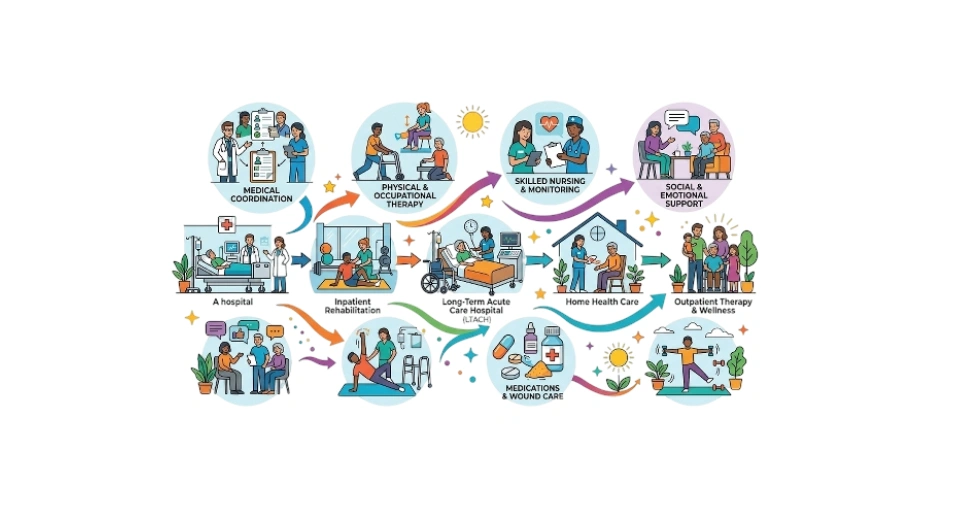
Recovery after hospital treatment often needs continued care, and this stage plays a key role in patient health outcomes. Services that support patients after hospital discharge are part of the Global Post-acute Care Market. This market reached a value of USD 863.8 billion in 2024 and is expected to grow to about USD 919.9 billion in 2025. By 2033, the market will likely reach nearly USD 1448.3 billion, expanding at a CAGR of 6.70% during the forecast period.
Skilled nursing facilities lead the Global Post-acute Care Market and account for about 38% of total demand. These facilities provide medical care, rehabilitation, and daily support for patients who need ongoing treatment after hospital stays. Patients recovering from surgery, illness, or injury often rely on skilled nursing services for proper care. Trained staff, medical supervision, and structured recovery plans make these facilities an important part of the healthcare system.
Healthcare systems today focus more on reducing hospital stays while still ensuring proper recovery. Hospitals discharge patients earlier, which increases the need for post-acute care services. These services help patients continue treatment in a safer and more comfortable environment. This shift reduces pressure on hospitals and improves patient outcomes, which supports the growth of the Global Post-acute Care Market.
Inpatient rehabilitation facilities also play an important role. These centers provide intensive therapy for patients recovering from serious conditions such as strokes, injuries, or surgeries. Patients receive physical, occupational, and speech therapy in structured programs. These services help improve mobility, strength, and independence, which speeds up recovery.
Home health agencies are becoming more popular in the Global Post-acute Care Market. Many patients prefer receiving care at home instead of staying in a facility. Home healthcare services include nursing care, therapy, and assistance with daily activities. This option offers comfort and convenience while still providing professional medical support. Growing demand for personalized care continues to increase the use of home health services.
Long-term care hospitals serve patients who need extended medical attention. These hospitals treat individuals with complex conditions that require longer recovery periods. Patients in these facilities often need advanced medical equipment and specialized care. This segment supports patients who cannot recover quickly and need continuous monitoring.
The geriatric population represents a major part of the Global Post-acute Care Market. Older adults often require longer recovery times and additional medical support. Chronic diseases, mobility issues, and age-related conditions increase the need for post-acute care services. As the global population ages, demand for these services continues to grow.
Adult patients also contribute to market demand, especially those recovering from surgeries, injuries, or serious illnesses. Increasing cases of lifestyle-related diseases and accidents create a steady need for rehabilitation and recovery services. Both adult and geriatric groups depend on post-acute care to regain health and independence.
Public insurance plays a major role in covering post-acute care services. Government healthcare programs support patients who require long-term care and rehabilitation. Private insurance also contributes by covering a wide range of services based on individual plans. Out-of-pocket payments remain important, especially in regions where insurance coverage is limited.
North America holds a significant share in the Global Post-acute Care Market due to advanced healthcare systems and high healthcare spending. The region has well-developed facilities and strong insurance coverage, which supports market growth. Europe also shows steady demand, supported by aging populations and government healthcare programs.
Asia Pacific is emerging as a fast-growing region in the Global Post-acute Care Market. Countries such as China, India, and Japan see rising healthcare awareness and improving medical infrastructure. Increasing life expectancy and growing middle-class populations support demand for recovery and rehabilitation services.
Technology continues to improve post-acute care services. Telehealth, remote monitoring, and digital health records help healthcare providers track patient progress more effectively. These tools allow doctors and caregivers to provide better and more timely care. Technology also supports home healthcare by enabling remote consultations and monitoring.
Healthcare providers also focus on personalized care plans. Each patient has different recovery needs, and customized treatment helps improve outcomes. Rehabilitation programs, therapy sessions, and care routines are designed based on individual conditions. This approach improves patient satisfaction and recovery speed.
Growing aging population, rising need for rehabilitation, and increasing focus on patient recovery will continue to support the Global Post-acute Care Market. As healthcare systems evolve, post-acute care services will remain essential in helping patients recover safely and return to daily life.
Drop us an email at:
Call us on:
+91 7666513636

 inquiry@transpireinsight.com
 APAC:+91 7666513636
 Address





