
Jan 20, 2026
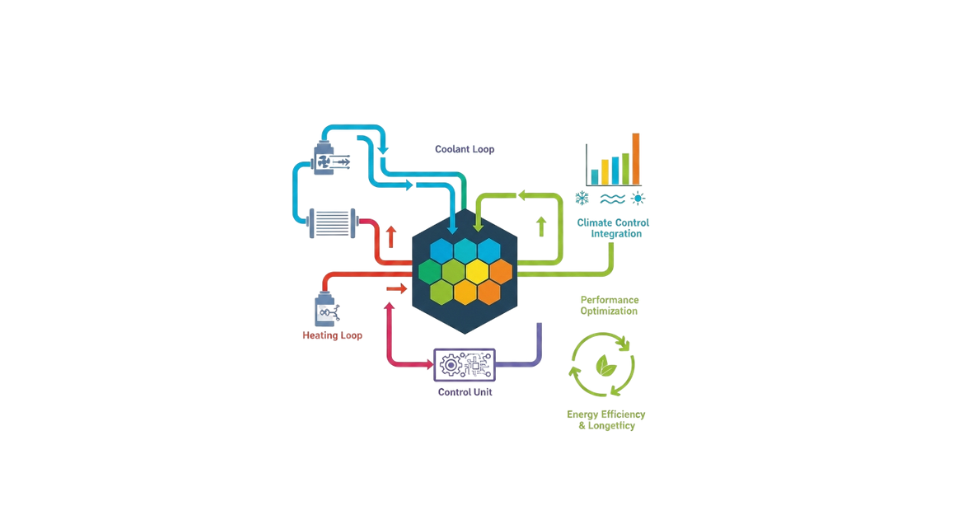
The report “EV Battery Thermal Management Systems Market By Product (Active, Passive), By Application (Passenger Vehicles, Commercial Vehicles)” is expected to reach USD 24.80 billion by 2033, registering a CAGR of 21.10% from 2026 to 2033, according to a new report by Transpire Insight.
The EV Battery Thermal Management Systems market is a very important and swiftly expanding area of the overall electric vehicles market, focused on innovation for controlling the temperature of the battery to provide improved performance, safety, and longevity. Given the growing use of electric vehicles in the global market, the automotive sector has started giving prime importance to thermal management systems capable of managing the high amount of heat produced during the high capacity charging and discharging cycles of the vehicles. The heat management of the EV batteries has now emerged as a crucial area for preventing degradation of the battery cells, improved safety by preventing thermal runaway phenomenon, and improved overall performance of the vehicles in adverse weather conditions.
The increasing market demand is also supported by encouraging government initiatives for electric mobility, new emission-free vehicle subsides, and strict environmental regulations in North American, European, and Asia Pacific markets. Strict regulatory measures are compelling car manufacturers to incorporate effective thermal management solutions for both passenger and commercial electric vehicles and meet consumer demands for performance and safety capabilities of vehicles. Moreover, advancements in fast charging networks are also accumulating pressure on thermal management solutions for maintaining ideal temperatures during high-energy charging influxes. In the electric vehicles for commercial purposes such as logistics vehicles, public transportation buses, and delivery vehicles, there is a growing adoption of advanced thermal solutions that help in providing longer driving ranges and reducing down times. On the other hand, automotive companies offer innovative thermal solutions to optimize range, lower battery guarantees, and increase efficiency.
The Active segment is projected to witness the highest CAGR in the EV Battery Thermal Management Systems market during the forecast period.
According to Transpire Insight, Active thermal management systems are currently the market leaders in the EV battery thermal management systems market because of their considerably superior temperature regulation capability in dynamic usage conditions. Active systems employ liquid coolants, pumps, and controlled airflow systems for the proper handling of thermal generation during charging and discharging of batteries in high-capacity packs of long-range electric vehicles. The active systems possess better temperature regulation capabilities than their passive counterparts and are thus preferred for optimal battery performance, increased efficiency of energy consumption, and better safety in electric vehicles. The capability of active systems for proper handling of extreme thermal generation in extreme weather conditions of hot summers or cold winter months for fast charging of electric batteries makes them totally essential for high-performance electric platforms of electric vehicles. OEMs' efforts for better battery density of electric batteries for increased EV ranges with potential manufacturers encouraging fast charging of EV batteries have further increased the demand for active systems in the EV market. This integration with sophisticated sensors as well as real-time algorithms further adds to its responsiveness, thus allowing batteries to remain within their optimal thermal ranges.
The Passenger Vehicles segment is projected to witness the highest CAGR in the EV Battery Thermal Management Systems market during the forecast period.
The passenger car segment is currently the most prominent segment in EV battery thermal management systems due to the surge in electric passenger car, SUVs, and crossover sales in international markets. The demands of consumers to have extended driving ranges, optimal performance, and enhanced safety have brought battery thermal management to the forefront in this particular sector. The use of battery thermal management systems enables continuous optimum battery functioning in normal daily driving, long-distance journeys, as well as rapid-Charging conditions, thereby directly affecting vehicle reliability and customer satisfaction. With modern passenger EVs likely to incorporate advanced battery thermal management systems in order to provide adequate range support, anything negative affecting thermal management in this area is set to impede consumer acceptance in electric mobility solutions.
Furthermore, the passenger car industry is also adopting thermal management systems in the early design phase of the vehicle to make efficient use of space. This is because the integration of thermal management systems helps to increase the thermal uniformity in batteries. Moreover, regulations pertaining to vehicle safety standards and emission norms are also encouraging the adoption of lithium-ion batteries.
The North America region is projected to witness the highest CAGR in the EV Battery Thermal Management Systems market during the forecast period.
North America is one of the primary markets for EV Battery Thermal Management Systems, primarily aided by the adoption of electric vehicles, sophisticated automotive manufacturing infrastructure, and strict safety regulations. The primary driver for this market within North America is the adoption of range-extending electric passenger cars, as well as the increasing adoption of commercial EVs, which are primarily led by the United States. Large differences in temperatures from low levels of cold to extreme heat experienced within this geographical location are major factors that affect the adoption of thermal management solutions for EV batteries for enhanced performance and reliability. Additionally, initiatives from the U.S. government, as well as investments within the country for EV battery manufacturing, are major factors that are promoting thermal system adoption with EVs as a standard component.
North America enjoys the advantages of existing automotive suppliers, R&D capabilities, and early adoption of fast-charging technology. The growing range of high-power charging networks imposes extra thermal stresses on batteries, which increases the need for active thermal management systems.
Key Players
The top 15 players in the EV Battery Thermal Management Systems market include MAHLE GmbH, Valeo SA, Modine Manufacturing Company, Denso Corporation, Hanon Systems, BorgWarner Inc., Robert Bosch GmbH, Dana Incorporated, Gentherm Inc., VOSS Automotive GmbH, Schaeffler AG, LG Energy Solution, Continental AG, Samsung SDI Co., Ltd., and Grayson Thermal Systems.
Drop us an email at:
Call us on:
+91 7666513636

 inquiry@transpireinsight.com
 APAC:+91 7666513636
 Address





