
Feb 04, 2026
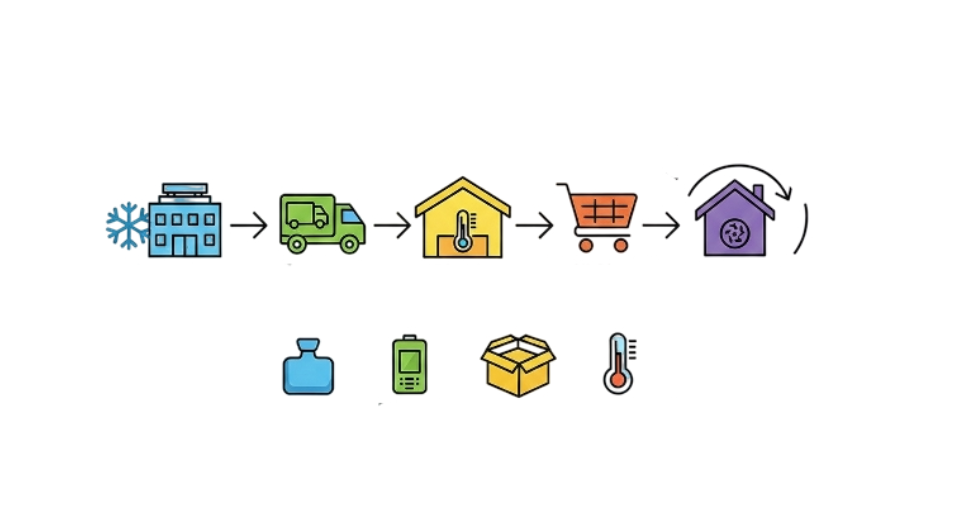
The report “Cold Chain Market By Type (Refrigerated Storage, Refrigerated Transportation), By Temperature Type (Chilled (0°C to 8°C), Frozen (-18°C to -25°C), Deep Frozen / Ultra-Low Temperature (below -25°C)), By Service (Storage Services, Transportation Services, Value-Added Services) and By End Use Industry (Food & Beverages, Pharmaceuticals, Chemicals, Agriculture, Others)” is expected to reach USD 690.0 billion by 2033, registering a CAGR of 12.40% from 2026 to 2033, according to a new report by Transpire Insight.
The worldwide cold chain market has become an essential part of contemporary supply chains, enabling the distribution, storage and transportation of temperature-sensitive goods in the food, pharmaceutical, and industrial sectors. The market is expanding due to rising consumer demand for fresh, frozen, and ready-to-eat foods as well as a developing healthcare industry that depends on biologics, vaccines, and temperature sensitive medications. Strict regulatory frameworks in North America and Europe, which require exact temperature control and traceability to guarantee product integrity and safety throughout the supply chain, are another factor propelling the market. The use of refrigerated storage and transportation systems has been further pushed by growing urbanization and shifting consumer lifestyles. The demand for sophisticated last-mile delivery services is being fueled by the rise of organized retail chains in South America and Asia Pacific as well as the emergence of e-commerce grocery platforms. In order to reduce post-harvest losses and satisfy international quality standards, food exporters are simultaneously using cold chain logistics more and more, which improves international trade prospects.
With IoT-enabled temperature monitoring, AI-driven warehouse optimization, and blockchain-based tracking solutions gaining popularity, technological advancements are revolutionizing cold chain operations. To cut expenses and boost productivity, businesses are investing in data-driven logistics solutions and automated storage systems. Particularly important in pharmaceutical and vaccine distribution networks, these developments enable stakeholders to maintain precise temperature conditions, minimize spoiling, and improve traceability. Because of government incentives, infrastructure investments, and rising demand for perishable foods, emerging economies are expanding quickly. Due to their developed cold chain networks and high per capita consumption, North America and Europe continue to dominate, while Asia Pacific is growing at the fastest rate due to factors like population growth, rising incomes, and changing consumer tastes.
The Refrigerated Storage segment is projected to witness the highest CAGR in the Cold Chain Market during the forecast period.
According to Transpire Insight, The foundation of the cold chain industry is refrigerated storage, which supports high-turnover inventory management for food, medicines, and specialized chemicals as well as long-term warehousing. Large-scale warehouses with sophisticated temperature control and automation, which enable effective handling of goods across various temperature ranges, are what define this market. Due to strict quality standards, North America and Europe dominate this market, whereas Asia Pacific and South America are quickly increasing storage capacity to satisfy rising local and international demand. Robotics, real-time monitoring systems and high-density shelving are increasing operating efficiency and lowering product losses.
Additionally, refrigerated storage is essential for both consumer pleasure and regulatory compliance. The integrity of stored items has become more important due to the growth of organized retail and e-commerce, which has forced cold storage providers to make investments in integrated warehouse management systems, predictive maintenance and end-to-end monitoring. The pharmaceutical industry's need for temperature-sensitive biologics and vaccines, which call for ultra-low temperature facilities, is another factor supporting the segment's expansion. All things considered, maintaining product quality, dependability and supply chain resilience depends heavily on chilled storage.
The Chilled (0°C to 8°C) segment is projected to witness the highest CAGR in the Cold Chain Market during the forecast period.
Because it is widely used in fresh produce, dairy, drinks, and some pharmaceutical items, the chilled category is the market leader. The optimal temperature range for preserving freshness, increasing shelf life, and minimizing microbiological development is provided by chilled storage. Asia Pacific is quickly expanding chilled storage capacity to meet growing urban demand, whereas Europe and North America have the highest adoption rates because to their established retail and food processing infrastructure. Technological developments in automated inventory management, IoT-based temperature monitoring, and energy-efficient cooling all help the industry by reducing spoilage and streamlining processes.
In order to ensure regulatory compliance and satisfy international export regulations, chilled cold chain solutions are becoming more and more important. Precise temperature control is essential for food exporters and pharmaceutical distributors to maintain safety regulations, avoid contamination and retain quality. The demand for chilled storage and transportation has increased due to the expansion of fresh food e-commerce platforms, especially in urban areas where prompt delivery is crucial.
The Storage Services segment is projected to witness the highest CAGR in the Cold Chain Market during the forecast period.
According to Transpire Insight, The cold chain market's main source of income is storage services, which meet the increasing demand for premium, temperature-controlled warehousing. Businesses depend on specialized facilities that provide regulated settings for chemical, pharmaceutical and food items. Because of sophisticated infrastructure and the need to comply with regulations, storage services are highly sought after in North America and Europe. Adoption is accelerating in emerging regions in South America and Asia Pacific due to government efforts to reduce post-harvest losses, growing exports and urbanization. Investing in high-density storage systems and automation increases productivity and lowers operating expenses.
Additionally, storage services provide businesses looking for scalable and adaptable solutions significant advantages. By providing value-added services like inventory management, cross-docking, and quality control, integrated cold storage operators free up enterprises to concentrate on their core competencies. Additionally, by offering centralized hubs for last-mile delivery, cutting delivery times and guaranteeing product integrity, storage services help the growth of e-commerce and retail. The category is a key component of the expansion of the cold chain industry because of its tenacity and steady demand.
The Food & Beverages segment is projected to witness the highest CAGR in the Cold Chain Market during the forecast period.
Due to growing consumer preferences for processed, frozen, and ready-to-eat goods, food and drinks hold the largest proportion of the cold chain industry. Reliable refrigerated storage and transportation are essential for preserving the freshness and preventing spoiling of dairy, meat, seafood, fruits, vegetables and baked goods. Because of their well-established cold chain infrastructure, large consumption rates, and strict regulations, North America and Europe dominate the market. Because of urbanization, rising disposable incomes, and shifting dietary patterns, Asia Pacific especially China, India and Southeast Asia is growing at the highest rate.
In order to preserve product quality throughout storage and transportation, the food and beverage industry also spearheads innovation in inventory control, labeling, and packaging. The need for effective cold chain solutions is further increased by the growth of e-commerce sites and supermarket delivery services. Investing in IoT-enabled surveillance, automated warehouses, and sustainable refrigeration solutions guarantees less food loss, increased productivity, and enhanced supply chain dependability. All things considered, the global cold chain market is still primarily driven by the food and beverage sector.
The North America region is projected to witness the highest CAGR in the Cold Chain Market during the forecast period.
With the United States, Canada, and Mexico leading the way, North America continues to be the world's largest and most advanced cold chain market. Widespread use of automated and Internet of Things-enabled technologies, large reefer fleets, and sophisticated chilled storage and transit infrastructure all help the region. The FDA and USDA have strict regulations that guarantee quality and safety, which further enhances market maturity. High per capita consumption of chilled and frozen goods, a developing pharmaceutical industry and a robust e-commerce ecosystem that demands dependable last-mile delivery services all contribute to North America's dominance.
Through large investments in technology integration, cold storage development, and strategic acquisitions, the United States in particular propels regional growth. To reduce losses and increase efficiency, major operators concentrate on energy-efficient warehouses, sophisticated inventory management, and precise temperature monitoring. North America is anticipated to continue to hold a dominant position in cold chain logistics worldwide as the need for temperature-sensitive products rises.
Key Players
The top 15 players in the Cold Chain Market Lineage Logistics Holding LLC, Americold Logistics LLC, Nichirei Logistics Group, Inc., United States Cold Storage, Inc., Burris Logistics Inc., VersaCold Logistics Services, AGRO Merchants Group, LLC, DHL International GmbH, UPS (United Parcel Service), OOCL Logistics, SSI SCHAEFER, Kloosterboer, NewCold Coöperatief U.A., CWT Limited, and AIT.
Drop us an email at:
Call us on:
+91 7666513636

 inquiry@transpireinsight.com
 APAC:+91 7666513636
 Address





