
Jan 15, 2026
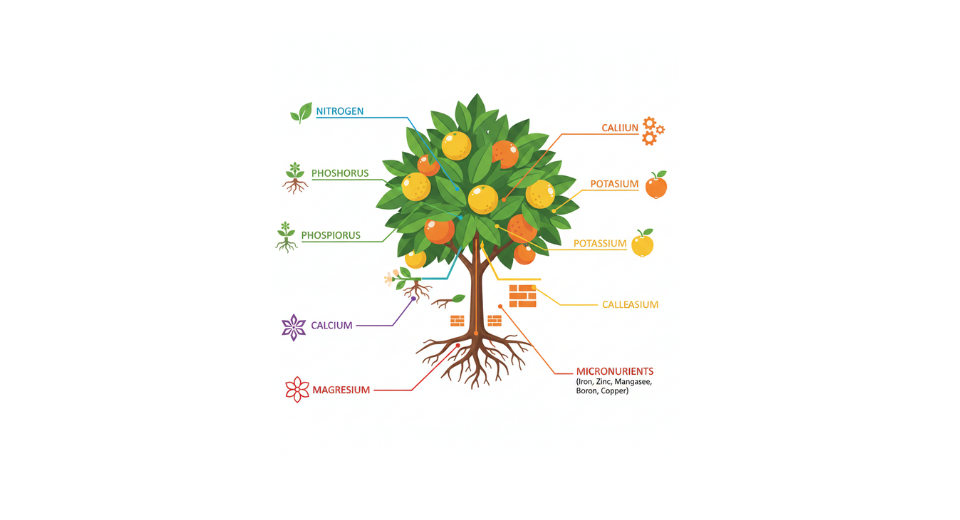
The report “Citrus Crop Nutrition Market By Type (Macronutrients (nitrogen, phosphorus, potassium) and micronutrients (zinc, boron, iron)), By Application (Foliar nutrition, Fertigation, Soil application and others.)” is expected to reach USD 12.2 billion by 2033, registering a CAGR of 7.20% from 2026 to 2033, according to a new report by Transpire Insight.
The global citrus crop nutrition market is witnessing strong momentum as the key objective of the citrus sector, namely optimizing crop yields, improving crop quality, as well as optimizing crop sustainability, has increased importance for growers globally. The key reason for balanced nutrient supply for oranges, lemons, limes, as well as mandarin, apart from other citrus varieties, is that they are perennial in nature. Increasing global demand for fresh as well as processed citric products has been fueling the need for effective crop nutrient management solutions. The production for export markets, especially in North America, Europe, Asia Pacific, and others, has also raised the need for effective nutrient management to ensure quality, size, and shelf life. This has further emphasized the importance of advanced fertilizers and application methods in citric production.
Soil degradation, micronutrient deficiencies, along with stress conditions due to climate change, are increasingly altering the practices of growers towards combined nutrient management practices. Growers are opting for mixtures of macronutrients along with micronutrients, to be applied using soil, foliage, and fertigation techniques. Technological innovation in fertilizers, irrigation systems, and agronomic technology has been adding impetus to the growth of the market. Incentives from governments pertaining to sustainable agriculture practices as well as optimized fertilizer application have also been adding to sustained market demand. Thus, the citrus crop nutrition market has been a critical driver for maximizing citrus production sustainably across the world.
The Macronutrients segment is projected to witness the highest CAGR in the Citrus Crop Nutrition market during the forecast period.
According to Transpire Insight, Macronutrients constitute the prominent area of the citrus crop nutrients market because of their importance in the growth of citrus plants and the production of citrus fruits. Nitrogen, phosphorus, and potassium are required for the growth of citrus plants, and the use of these nutrients cannot be avoided by citrus growers anywhere in the world because of the predictable effects of these nutrients.
Macronutrients enjoy the advantage of familiar agronomy and common application patterns on a consistent cyclic basis during the citrus production season. The adoption of macronutrients in conventional citrus soil application practices combined with modern fertigation applications helps sustain overall volume sales. With citrus production becoming increasingly commercial and production quantity-driven, macronutrients sustain citrus nutrition programs and sustain their dominance in the market at large.
The Foliar nutrition segment is projected to witness the highest CAGR in the Citrus Crop Nutrition market during the forecast period.
Foliar nutrition has recently gained prominence as it is quite effective in terms of applying nutrient deficiency correction at critical growth stages of crops. The concept of foliar spray works in terms of directly applying nutrients on leaf surfaces, which helps in rapid nutrient uptake, thus gaining popularity in micronutrient supplement applications, especially when micronutrient supplies in soil are limited.
The market for foliar nutrients is also supported in its adoption through its preciseness and versatility. Growers have been utilizing foliar applications in order to compensate for deficiency during the seasons, enhance flowering, and encourage fruit set without modifying their soil nutrient programs. As more emphasis is placed on nutrient-use efficiency, foliar applications have become more popular as an alternative or high-impact method of citrus management.
The North America region is projected to witness the highest CAGR in the Citrus Crop Nutrition market during the forecast period.
In North America, the market for citrus crop nutrition is mature and technologically advanced. This is because there are commercial citrus plantations and established agricultural practices. Furthermore, the US leads the demand contribution for citrus crop nutrition due to the presence of vast citrus production capacity within the US. This includes the states of Florida and California, which experience active engagement by citrus farmers in balanced macronutrient and micronutrient nutrition concepts. Other key contributors to the region are Mexico due to the exportation of citrus crops and Canada due to support at the research stage.
North America has displayed notable acceptance and adoption of precision nutrition and fertigation technology with the purpose of optimizing nutritional efficiency and minimizing environmental influence.
The focus on sustainable fertilizer use by regulatory bodies has also spurred interest in the use of optimized nutritional composition and foliar application technology. Increasing focusing on maximizing yields and meeting environmental regulations, North America remains an important market in the global citrus crop nutrition industry.
Key Players
The top 15 players in the Citrus Crop Nutrition market include Yara International, Nutrien Ltd., The Mosaic Company, ICL Group, Haifa Group, EuroChem Group, SQM (Sociedad Química y Minera de Chile), Valagro S.p.A., Coromandel International, Compass Minerals, BASF SE, K+S Group, Compo Expert GmbH, Helena Agri-Enterprises, and Wilbur-Ellis Company.
Drop us an email at:
Call us on:
+91 7666513636

 inquiry@transpireinsight.com
 APAC:+91 7666513636
 Address





